SHABBAT: Modifying a Shabbat timer

As we have explained before (see here) during Shabbat we can’t turn on or off any electrical appliance or lights. However, it is permitted to program a timer (sha’on Shabbat) from Friday, before Shabbat begins, to turn on and off lights or some other electrical appliances.
Modern Rabbis discussed the issue of modifying the time of the timer during Shabbat. For example, if I programmed the timer to turn off the lights at 10.30 p.m., and then I realize that I will need the lights for one more hour, can I reprogram the timer to turn off the lights at 11.30 p.m.?
Many Rabbis would forbid to do this, but Rabbi Obadia Yosef, Rabbi Auerbach and many other Rabbis authorize to reprogram the timer in the following circumstances:
1. First, it should be a manual timer (see for example this) , not a digital timer (see this ).  A digital timer cannot be modified during Shabbat.
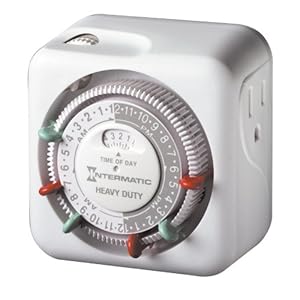
2. When dealing with a manual timer we would be allowed to move the knobs forward, but not back to turn the lights off or even on. We could move the knobs, for example, from 1.30 p.m. to 2.30 p.m.,  but not from  2.30 p.m. to 1.30 p.m..
3. Rabbi Melamed says (Penine Halakha, Shabbat B, p.24) that in exceptional circumstances (sha’at hadaḥaq) most Rabbis would also authorize to reprogram the timer to turn off the lights at an earlier time.  Rabbi Yosef mentions the case of a sick person (even in a non-life threatening situation) for example, if the lights don’t allow him or her to rest.  Similarly, in certain cases (leṣorekh Miṣva)  we would be allowed to reprogram the timer to turn the lights on at an earlier time. Rabbi Yosef mentions as an example,  Limud Tora.
Shabbat Shalom!
Candle lighting in NYC:     4:31 p.m.
Shabbat ends in NYC:         5:38 p.m. 


SHABBAT: Using an elevator on Shabbat

Using a common elevator in Shabbat is not permitted, because the activation of any electrical device is considered a melakha (a Biblical Shabbat prohibition) or at least a rabbinical prohibition (see this).
But what about taking an elevator that has been programmed to stop in every floor and it automatically opens and closes its doors? They are known in Hebrew as ma’alit Shabbat and in Israel, New York and other areas with a significant Jewish population, one can find these elevators in hotels, Hospitals or big apartment buildings.  Are those elevators permitted on Shabbat?
Modern rabbis have analyzed and discussed this issue.
Some rabbis (Rabbi Vozner and others) have forbidden to use it because when a person takes the elevator it forces its  engine to use more electricity causing thereby a (slight) increase in the  consumption of energy.
Rabbi Halperin from Israel, a specialist in Halakha and modern world, holds that it is permitted to go up with an automatic elevator but not down. When going down, the elevator uses also the person’s weight (slightly) as a source of energy.
Most contemporary Rabbis (Rabbi Auerbach, Rabbi Obadia Yosef and others) authorize using an automatic elevator on Shabbat, particularly for a Mitzva, like going or coming from Synagogue, attending Seudot Shabbat, etc.   They considered that the arguments regarding the interaction between the person’s weight and the elevator, in terms of the modification of energy consumption are indirect, incidental and non-deliberate side effects (pesiq resheh, see here) and therefore they do not need to be taken into account. They indicate, however, that when the doors of the elevator are closing, a person should not try to enter into the elevator, because that would cause the doors to be open as a direct result of the person’s  action.
Shabbat Shalom and Chodesh Tob!
Candle lighting in NYC:     7:32 p.m.
Shabbat ends in NYC:         8:38 p.m.
Priceless!
A New York Times article on Shabbat Elevators
Another Landlord Worry: Is the Elevator Kosher?


SHABBAT: Using sound amplifiers on Shabbat


It is not permitted to use sound amplifiers on Shabbat. Some rabbis consider it a Biblical prohibition, and others a Rabbinical restriction.  This prohibition includes the usage of sound amplifiers, even if they were turned on or activated before shabbat.  Therefore, telephones, microphones and other devices that amplify or transmit sound are not allowed on Shabbat (Except, obviously, for a case of an emergency like giving birth, sickness, a security threat, etc.)
What about hearing aids? Those small electronic apparatus that amplifies sound and are worn in  the ear to compensate for impaired hearing.
Some rabbis are opposed to its usage because they consider that they work following the same principle as sound amplifiers. (not by coincidence, the rabbis that forbid the use of hearing aids hold that amplifying sound is forbidden by Biblical, not by Rabbinical law). However, most rabbis in our day, Sephardim and Ashkenazim, authorize wearing hearing aids for those with impaired hearing.  Still, the device has to be activated before Shabbat and when it is removed from the ear before sleep,  it cannot be turned off, and during Shabbat the volume cannot be changed.
Modern rabbis understood that in the case of the hearing device the voice is not directed deliberately into the sound amplifier, as in the case of a telephone device or a microphone. The voice is naturally caught by the hearing device, and that type of action falls into the category of “gerama”, which more or less means anindirect action (“an expected or unexpected forbidden result of a permitted action”. falls under a different category, see for example this)
In this sense, the case of a hearing device is close to the case of an open intercom, activated before Shabbat. Still, most modern rabbis would not authorize the use of an intercom but  in the case of an individual suffering from hearing impairment, the rabbis have authorized the use of a hearing device following the above mentioned conditions.
(Adapted from Penine Halakha, Rabbi Eliezer Melamed, Shabbat B, 16-18)
Shabbat Shalom!
Candle lighting in NYC:    7:41

Shabbat ends in NYC:     8:48 


PROVING MEDIA BIAS, 
from Prager Universtity


SHABBAT: From fire to electricty (Part 4)

The main discussion among contemporary rabbis on the issue of electricity on shabbat is not if using electricity is permitted or forbidden: every Orthodox Rabbi accepts that we are not allowed to directly activate electricity on Shabbat. The debate revolves around the nature of the prohibition: if turning on electricity on Shabbat is a Biblical or a rabbinical prohibition.
 “Rabbi David Tzvi Hoffman states what has emerged as the consensus opinion: the verse (Exodus 35:3) “One may not create a fire on Shabbat in all your dwellings” describes the prohibition against creating fire of any sort. Current flowing through a filament and causing it to glow creates fire despite the absence of a “flame” and regardless of whether that which is on fire is consumed… Based on the position of Rambam, which most commentaries accept, the overwhelming majority conclude that turning on an electric light on Shabbat  violates the biblical prohibition of lighting a flame.”   (Rabbi Michael Broyde, see below)
Most modern rabbinic authorities consider that turning on an incandescent light, –an action which heats a metal filament until it glows–violates a Biblical prohibition because it is considered a Toleda (extension) of lighting a fire.    It is important to clarify for the advanced students that unlike other areas of Jewish Law where post Talmudic Rabbis cannot extend the Rabbinical Talmudic prohibitions to other cases (mar-it ‘ayin, for example),  the extension of a melakha of Shabbat, does not require the particular sanctioning of a Talmudic Bet Din.    It is similar to the application of the Toledot of neziqin(torts, damages,etc), where post Talmudic Rabbinical decisors might apply the Talmudic principles learned from ancient cases, extending them to contemporary circumstances.

Shabbat Shalom!   

Candle Lighting in NYC:    8:13 PM
Shabbat ends in NYC:         9:20 PM

For a comprehensive analysis and discussion of this matter I recommend the following article   The Use of Electricity on Shabbat and Yom Tov    by Rabbi Michael Broyde & Rabbi Howard Jachter  which appeared in the Journal of Halacha & Contemporary Society, No. XXI – Spring 91 – Pesach 5751


SHABBAT: From fire to electricity (Part 3)


Previously, we have explained that lighting a fire on Shabbat is one of the 39 forbidden works or melakhot (see here).  In order to understand the source of the contemporary prohibition of using electricity during Shabbat, we have to examine the ways modern Rabbis have analyzed the similarities between fire and electricity.
The first Halakhic principle to bear in mind is that each one of the 39 melakhot includes ‘toledot’, which means, activities that are also forbidden on Shabbat as an extension of the 39 Biblical prohibitions, either because they are similar to the melakhot in their nature or in what they produce.
Two examples:
1. The melakha of ‘writing’ extends to the act of ‘printing’ (ketiba ‘al yede chotemet) or drawing letters.
2. Trimming the dry branches of a vineyard is forbidden as an extension of zorea’, planting (sic!), since the objective of this trimming is to facilitate the tree’s growth.
The question now is if we should classify the activation of an incandescent light (=light produced by heat) as an extension (tolada) of the Biblical prohibition of lighting a fire .
Modern Rabbis have expressed different views on this matter.
Most Rabbis have classified the turning-on of an incandescent light as the extension of the prohibition of lighting a fire. They based their opinion in the fact that two thousand years ago the Rabbis already ruled against using on Shabbat a “heated metal-pot removed from the fire” to heat water (See Shabbat 41a) .
Based on that Mishna and other Talmudic sources Maimonides asserted: “One who heats a metal-bar to temper in it water has violated the Biblical prohibition of lighting a flame” .
This is the closest Halakhic precedent we have in which a ‘heated element’, other that direct-fire is considered as fire itself, i.e., a tolada of lighting a fire.
(to be continued…)
Shabbat Shalom!!!
Candle lighting in NYC:  8:12 PM
Shabbat Ends in NYC:     9:20 PM
 READ: “Your airplanes shall rest on Shabbat”  Recalling the day when Menachem Begin stopped Israel’s national airline, El Al, from flying on Shabbat by Yehuda Avner from Aish


SHABBAT: From fire to electricity (Part 2)


Last week we explained that there are 39 categories of melakhotor creative activities, which we are not allowed to perform on Shabbat. One of them is called: hab’ara, which mean to light a fire.  We also explained that lighting fire was singled out in the Tora, unlike the other 38 melakhot, and we offered one explanation for this (see here)


Before we analyze the similarities and differences between fire and electricity, and in order to better understand them, I must explain first how the exceptional nature of fire vis-a-vis the rest of the melkahot was viewed and interpreted.


In the time of the haskala (European illuminism, 19th century) many reformers argued that the reason the Tora did not authorize to light a fire was because in Mosaic times lighting a fire constituted an exhausting work: fire was started with stones, and it was a lengthy and exhausting process. That is why it was forbidden. And this is why, the first reformers reasoned, it should be permitted today, when we can obtain fire with a simple match.


Jewish tradition, however, never identified melakhot with prohibitions associated necessarily with physical effort. On the contrary: if you live in the 12th floor of an apartment building, you should walk up the stairs. It is the creative nature of the act what might define it as a melakha, not the physical effort that it demands.


This idea, applied to our case, could be illustrated by rabbi Sa’adia Gaon’s (882-942) explanation of the pasuq “Do not light a fire in your houses on the day of Shabbat” (Shemot 35:3). He translated this pasuq: “Do not even light a fire on Shabbat… “even” because, hab’ara–which in Biblical Hebrew means “lighting a fire from a previous fire” not from stones–is the easiest conceivable melakha, i.e., the epitome of an effortless and a minimal creative activity. The Tora singled out hab’ara to convey that even an effortless but minimally creative act is still forbidden on Shabbat.
(to be continued…)
SHABBAT SHALOM
Candle lighting in NYC:   7:44
Shabbat ends in NYC:       8:53
Click HERE to WATCH and ENJOY
Israel in timelapse
A unique tour of Israeli landscapes.


SHABBAT: From fire to electricity (Part 1)


There are 39 categories of forbidden activities in Shabbat. They are called melakhot. Melakhot are not necessarily hard work (see here), but (most of them) creative activities or modifications in nature.
One of the 39 melakhot is “lighting” a fire (hab’arat esh).   The special thing about “lighting” is that while none of the other forbiddenmelakhot was specified in the Tora, lighting a fire  was singled out in a special pasuq: lo teba’aru esh (Shemot 35:3) “Do not light a fire…on the day of Shabbat”.. The rabbis  reasoned that lighting was single out as an example of a melakha and they learned from it that each melakha is a prohibition in itself.
It could also be argued that perhaps fire was singled out as an example, because fire is nature’s most important agent of modification: metals are modified by fire, food is prepared with fire, cold is defeated with fire. And later on, with fire men produced machines moved by vapor and heat, which brought about the major sources of energy, which brought industrialization and the beginning of modern technology (Penine Halakha).
During Shabbat we elevate ourselves above the level of altering, modifying and improving the physical world. We rest from our working routine to modify, advance and improve our individual and family values and spiritual lives.
During Shabbat we are forbidden to light or ignite any fire. Regardless of its size or intensity. It could be a big fireplace or a small match.
Also, any way of producing a fire is forbidden: using a match, a lighter or even by solar heat through a magnifier glass, etc.
The Tora also forbids on Shabbat to transfer a fire from an existing fire or even to increase an already ignited flame by adding oil, wood, gas, etc.
(to be continued)
Shabbat Shalom!
Candle lighting in NYC:  7:37 PM
Shabbat ends in NYC:   8:46 PM
ONE OF THE MOST BEAUTIFUL and INSIGHTFUL PRESENTATIONS I HAVE EVER WATCHED!
“How Simple Ideas Lead to Scientific Discoveries”   by TED


SHABBAT: Cooking from Yom Tob to Shabbat


Erub Tabshilin means “mixing of [cooked] foods,” whereby one prepares a plate with food prior to a Jewish Holiday (Yom Tob) which will be followed by a Shabbat. This year the seventh day of Pesach will be followed by a Shabbat, so we need to arrange the Erub.
Cooking is allowed on Jewish Holidays as we learn from Shemot 12:16 “…do no do any work on these days (Yom Tob=Holidays), except preparing food for everyone to eat-that is all you may do”. We can cook whatever will be used for consumption during that day, but we cannot prepare or cook food to be consumed after that particular day of the Holiday.  Thus, when a Holiday occurs on Friday we cannot cook from Yom Tob to Shabbat, unless the Erub Tabshilin is performed. 
Erub Tabshilin consists of cooking prior to Yom Tob (in our case, today!) some food for Shabbat. Today, Thursday April 12, around 7.00 PM (NYT) we put aside a plate with cooked and baked food prior to Yom Tob, keeping this food for Sabbath. Then, since some food is already prepared for Shabbat, the cooking that will take place on the holiday itself will be considered a mere addition, an extension (the word ‘erub‘ means in this and other contexts “extension”) to the cooking that has already begun before the Holiday started. When we start cooking for Shabbat before the Holiday begins, our rabbis authorized to continue cooking and preparing food from Yom Tob to Shabbat.
According to our community’s Minhag we place at least one cooked egg and one Matza in a plate. (Many people will add also meat, rice or other types of food). 
The following Berakha is recited–generally by the husband–while holding the plate (Erub) in one’s hands:  
“Baruch Ata A-donay E-lohenu Melech ha’Olam Asher Kiddeshanu beMitzvotav veTsivanu AL MITZVAT ERUB”
בָּרוּךְ אַתָּה יְיָ אֱלֹהֵֽינוּ מֶֽלֶךְ הָעוֹלָם, אֲשֶׁר קִדְּשָֽׁנוּ בְּמִצְוֹתָיו, וְצִוָּֽנוּ עַל מִצְוַת עֵרוּב
Then we read the following text which says that by doing this‘erub we are allowed to do all necessary cooking from Yom Tob to Shabbat. 
בַּדֵין עֵרוּבָא יְהֵא שָׁרֵא לָֽנָא לַאֲפוּיֵי וּלְבַשּׁוּלֵי וּלְאַטְמוּנֵי וּלְאַדְלוּקֵי שְׁרָגָא וּלְתַקָּנָא וּלְמֶעְבַּד כָּל צָרְכָּֽנָא, מִיּוֹמָא טָבָא לְשַׁבְּתָא
Then we place the plate in the refrigerator. 
For the concept of ‘erub to make sense, we have to actually eat that food at some point during Shabbat (April 13th at night, or April 14th).
Every household should do the Erub Tabshilin but if one forgets, cooking from Yom Tob to Shabbat will still be permitted relying on the ‘erub that the community Rabbi said, in which he normally would include all community members.
(In Yom Tob we can cook by lighting a fire from a fire lit before Yom Tob. This is done by leaving a candle lit from today, before the Holiday begins)
* Candle lighting today Thursday April   12th  at 7:14 PM (NYC )
* Candle lighting tomorrow Friday April 13th  at 7:15 PM (NYC)
* Shabbat and Pesach end Saturday April 14th at  8:24 PM (NYC)
√ MYC’s OMER SHEET 
√ OMER REMINDER for BBM (Shlomo Nouriely)
√ OMER REMINDER by EMAIL (UMJCA)
√ OUR COMMUNITY’S MINHAGUIM FOR SEFIRAT
 HAOMER (These restriction DO NOT apply during Pesach!) 


SHABBAT: At-risk youth and Shabbat dinner


A core predictor of which families produce children who grow up to be described as “mentchen” (=decent and good) children is the amount and quality of time spent by parents with their children.
In a fascinating series of studies that have recently received media attention, researchers have found a direct correlation between the number of times a week parents eat dinner with their children and the risk of abusing drugs. Families that eat dinner together once a week have children with lower risk for drug-abuse than those that never do.
With each increasing night that parents and children eat together, drug abuse risk decreases to the point that there is virtually no risk for drug abuse in families in which parents and children dinner together every night.
The importance of eating dinner together is not the ‘eating’ or dinner; it’s the uninterrupted, focused interaction that seems to bear such valuable fruit”
(From the book ‘Balanced Parenting’ by R. and D. Pelcovitz).
Shabbat dinner–among other things–creates a sense of belonging and responsibility: a young adult who spends quality time with his family feels strongly part of the family and will think twice before doing a wrong thing. Because he realizes that whatever negative action he might do, it will bear unwanted consequences for all his beloved ones. On the contrary, when the bond between the young man or woman with her family is weak, when the parents are there just to criticize, warn and punish and there are no bond-building experiences, the young adult will think more about pleasing his friends than about respecting or not damaging his family.
Shabbat dinner is a heaven-given gift to Am Israel, which not only enriches our souls but also strengthens our family.
Shabbat Shalom!
Candle lighting in NYC: 5:22
Shabbat ends in NYC: 6:31
WATCH
Yemenite Kiddush for Shabbat lunch


SHABBAT: Juice and snow

Today is the 7th day of Adar I, 5771

One of the 39 prohibited tasks of Shabbat is threshing, in Hebrew ‘dash’. Threshing is the process of loosening the edible part of cereal grain from the scaly, inedible chaff that surrounds it. It is the step in grain preparation after harvesting and before winnowing, which separates the loosened chaff from the grain.

As we’ve explained, every melakha includes also similar operations. But it is a little tricky to establish (or knowing) what is included and what not, within the principles of each melakha.

In the case of ‘threshing’, it includes all actions where ‘food’ is intentionally extracted from its natural inedible container.

A few examples:

Squeezing a fruit on Shabbat is forbidden. We can not make orange juice, either by hand, or by a juice squeezer. But lemon is considered an exception, because is only used as juice. So, it is permitted to squeeze lemons by hand for lemonade, salad dressing, etc.

It is forbidden to ‘melt’ snow on Shabbat when the intention is drinking the water. That will be an action similar to extracting juice from a fruit. However (if needed) it is permitted, to apply melting salt on snow or ice on Shabbat, because we don’t need the water, we just need to get rid of the snow. (Yalkqut Yosef, Shabbat 3, 358).

It is also permitted to use ice on a drink, because the melting happens by itself, there is no ‘extraction’.

Shabbat Shalom!!!

Candle ligting in NYC: 5:07

Shabbat ends in NYC: 6:16


Dear readers.

Halakha of the Day will be momentarily suspended. It will resume B’H in a few weeks.

For websites with daily Shiurim or Halakhot, check the mega portal:

http://www.babakama.co.il/en/


Rabbi Yosef Bitton. YMJC | 130 Steamboat Rd. | Great Neck | NY | 11024