Halloween and Abraham Abinu

Halloween is celebrated in the United States and many other countries around the world on the night of October 31st. People place pumpkins and candles at the entrances of their homes, and children go out to collect sweets and candies. Seemingly, there is nothing wrong with this innocent celebration. Because dressing up and receiving free candy is fun, many Jewish parents allow or even encourage their children to celebrate Halloween. That is why I decided to write about the origins of Halloween and show how its celebration is modeled after pagan rituals. It still preserves all the elements related to idolatry.

THE EXPLOITATION OF FEAR
Maimonides explains in the first chapter of Aboda Zara that the rituals of idolatry were conceived by sorcerers or pagan priests—professional demagogues—for their own benefit, by manipulating the masses and taking advantage of people’s fears and innocence. That is why pagan rituals are always associated with superstition, magic, and esoteric beliefs.

The fear of death was always the pagan priests’ favorite subject of exploitation. The deepest human vulnerability—“What happens to those who die? Where are they? Do dead people come back and affect us?”—paved the way for ordinary people to perform or submit to any rite, no matter how irrational or absurd, to protect themselves from these imaginary fears.

Halloween is no exception to this rule. In fact, it is the rule, because the word Halloween literally means “the day of all the (dead) spirits.”

THE ORIGIN OF HALLOWEEN

Halloween has its origins in Celtic culture. Celtic magicians, called “Druids,” made people believe that evil spirits and the spirits of the dead visited the world of the living on this day. According to the Druids, the dead were like Hollywood zombies—harmful and dangerous. Their spirits returned to this world with grievances, thirsty for blood and eager to take someone with them.

To appease these spirits and avoid “tragedies,” the Druids taught the people to carve pumpkins into the shape of skulls to acknowledge and welcome the dead. Candles were then lit inside the pumpkins to help the spirits find their way in the world of the living. Cats were considered essential on Halloween because, according to the Druids, these animals could sense and smell the presence of invisible hostile spirits. However, black cats were to be avoided—or even killed—because witches were believed to be reincarnated as black cats. The Druids also taught that, besides the dead, the devil himself might appear that night, arriving from hell.

THE NIGHT OF THE ZOMBIES
So, what did people have to do to save themselves from zombies, witches, and the devil? They had to bribe those evil spirits. And who disguised themselves as those terrifying figures? The Celtic priests! The Druids wore masks and costumes to look like zombies and devils. At night, they went from house to house—and that’s when their business began. They demanded a human sacrifice from the homeowners. But if a family refused to offer one of their members, the “kind” Druids would allow them to redeem the sacrifice with gifts—food or money—in England and Ireland.

In short, something had to be paid to the Celtic magicians for protection so they would not curse you or your family. And people, terrified, gave the Druids whatever they demanded.

This, in a nutshell, is the story of Halloween.

HALLOWEEN AND OUR CHILDREN

All the elements that were part of the ancient pagan Halloween are still present in today’s celebration. In the modern version, children “replace” the Druids: they dress up as dead people, witches, or devils and go door to door demanding gifts. This pagan ritual is called “trick or treat,” which means: “Either you give me a ‘treat’—a gift—or I’ll play a ‘trick’ on you, a harmful prank, a curse, or something that will hurt you.” Throwing eggs at someone’s door is a very common illustration of this idea.

As you can see from this brief description, Halloween might seem fun or innocent, but it is deeply rooted in one of the most primitive forms of idolatry: the cult of death. Halloween also reminds us how corrupt pagan leaders once used the natural fear of death to exploit innocent people.

For all these reasons, we Jews should avoid participating in Halloween—actively or passively. There is nothing holy or positive about it.

LA RÉSISTANCE

Thinking as an educator—I believe that Halloween is an excellent opportunity to teach our children about the true nature of idolatry and our duty to stay away from it. How so?

By explaining to them that idolatry, the greatest offense against God, was very common in ancient times. We Jews have opposed the falsehood of idolatry since the day our patriarch Abraham destroyed the idols of his father Terach.

However, it is often difficult to explain paganism and its abuses, because the primitive ‘aboda zara’ has almost disappeared.

Halloween is an opportunity—especially related to this week’s Parasha: Lekh Lekha—for our children to recognize the superstitions of ‘aboda zara’, understand their falsehood, and become aware of the importance of staying away from them. In doing so, we will feel even more privileged to be the descendants of our heroic patriarch Abraham Abinu.


RIBBI SAADIA BENZAQUEN: Rabbi of Rabbis


Some men are more angels than men. That was the case with Ribbi Saadia Benzaquen z”l, my first teacher. He led the beautiful synagogue on Piedras Street, which only filled up on Rosh Hashana and Yom Kippur, because his beloved Moroccan-Argentine community—of which my father and grandfather were part—did not have many regular attendees for daily or even weekly Tefilot. Rabbi Benzaquen was a great leader, a visionary with ambitious goals for the Jewish people. He believed that the community in Argentina urgently needed young, well-trained rabbis who could face the challenges of the present day—rabbis fluent in a sufficiently sophisticated vocabulary to speak to young professionals who were increasingly assimilated and no longer understood the older rabbis. He wanted to develop rabbinic leaders who were eloquent and capable of expressing the timeless ideas of the Torah in modern language.

This was the mid-1970s. I believe that Ribbi Saadia, like many other geniuses, was ahead of his time. He did not have institutional support to create an orthodox rabbinic training program, but that did not stop him from pursuing his dream. Far from giving up, he personally set out to train his own students, motivating them to study Torah with the goal of receiving rabbinic ordination.
I was one of those privileged students. In 1980, Ribbi Saadia learned that Rabbi Yaakob Eljarrar z”l, originally from Spanish Morocco, was starting a Kolel for Dayanim—a school of advanced rabbinic studies—and he asked him to organize a special rabbinic program for three of his students. At age 19, I had the privilege of being one of them. I left my studies at Yeshiva University halfway through and went to Israel, to the Kolel on 4 HaTurim Street, next to the Mahane Yehuda market in Jerusalem. The Kolel, I believe, was called Zekhor LeDavid and housed the library of the famous Ribbi Itzchak Bengualid, the luminary of the Jewish community in Tetuan—the city where my grandparents and Ribbi Saadia were born.

At Ribbi Saadia’s request, Rabbi Elcharrar found us the best possible teacher: the now-famous rabbi of Baqaa, Jerusalem, and current candidate for Chief Rabbi of Israel, Rabbi Eliyahu Abergel Shelita. Under the direction of Rabbi Abergel and Rabbi Elcharrar, and with the constant supervision of Ribbi Saadia, his son Rabbi Abraham Benzaquen, Rabbi Mijael Acrich and I studied intensively for several years. We passed four exams at the Chief Rabbinate of Israel and received rabbinic ordination, thus fulfilling one of Ribbi Saadia’s dreams.

But this was only one part of what he did for us. He also gave us solid training in one key area for any community rabbi: public speaking. This began a bit earlier, when I was 15 years old. My childhood had taken place in Castelar, in the province of Buenos Aires. After my Bar Mitsva, which was celebrated at the Piedras synagogue—Ribbi’s sanctuary—my parents decided to move to the capital. They were concerned that my sisters and I be in a Jewish environment. They bought a small apartment on Chacabuco Street, in the San Telmo neighborhood, choosing that location exclusively for its proximity to the Piedras synagogue.

The meetings where he trained us in public speaking took place on Shabbat afternoons. It is hard to describe what it was like to spend a Shabbat with Ribbi Saadia. After lunch with my family, I would rush to his house on Sargento Garay Street. Entering the building was an adventure, because the doorman was never available. I can see myself shouting at the top of my lungs from the ground floor to the second: “Alberto! Albertooo! Albertooooooo!” I kept yelling until Abraham would hear my screams and come down to open the door.

Once inside, we studied Gemara and Mishna Berura until it was time for seuda shelishit, which, due to circumstances, we had to eat before Minha. Ribbi Saadia would sit at the head of the table, for many years alongside his father Abraham and his dear wife Raquel, who spent more time standing than sitting, attending to her honored guests: Ribbi Saadia’s handful of students. Doña Raquel would serve us delicious sweet pastries, syrup-soaked and fluffy, and an intoxicatingly fragrant herbal tea with lemon verbena (Yerba Luisa) . On special occasions, we also enjoyed fiyuleas, crispy rolled pastries also drenched in syrup.

After the majestic seuda shelishit, we would all walk together to the synagogue on Piedras. Normally, it should have taken us ten minutes to get there, but we never took less than half an hour. Why? Because Ribbi Saadia would stop to greet every single neighbor he met on the way. Everyone: the newspaper vendor, the pharmacist, the greengrocer, the women washing the sidewalks, and the men sitting outside a bar playing cards. He knew them all by name. And his greeting was never a formal “good afternoon,” but a whole conversation centered on them: the neighbors, their parents, their children, their relatives. Ribbi Saadia would ask about everyone with genuine interest. The neighbors, as you can imagine, showed great respect and admiration for this very special man who took an interest in all of them. It was a half-hour of pure Kiddush Hashem.

When we finally arrived at the synagogue, Ribbi Saadia would have us sit upstairs, in the seats reserved for the “future rabbis” and for Samuel Chocrón, his secretary, assistant cantor, and practically his adopted son. We would pray Minha, and then came the moment we had all been waiting for: public speaking. There were three or four of us delivering a derasha (rabbinic sermon), which had to last around five to ten minutes. We prepared as best as we could, following Ribbi Saadia’s guidelines: that what we said should be clear and relevant, and that our speech should have a message applicable to the complex realities of modern life.

They say public speaking is the number one human fear—stronger even than the fear of death or snakes. Forcing us to do it was the best (or only) way to help us overcome that fear. We had two strategic advantages. First, the synagogue was not particularly full. In fact, besides us, there were maybe seven or eight elderly men, most of whom could easily fall asleep. In that ideal oratory laboratory, we could take risks without fear of embarrassment, because even if our speech was a disaster—which was not uncommon—“nothing happened.” I remember one time while delivering my derasha, I had a mental block. My brain froze, completely paralyzed—I didn’t know how to continue. Since it was Shabbat, we were required to memorize our speeches and couldn’t read from notes. I stood silently for what felt like an eternity—probably a full minute. It was a little embarrassing, but soon forgotten. The intensity of the mishap was as low as the number of listeners.

The second strategic element was Señor Gozal. A very special person. A partner—or perhaps accomplice—of Ribbi Saadia in our oratory training. Sr Gozal (I am not sure I ever knew his first name) was an older man, but with tremendous presence. Tall, thin, energetic, impeccably dressed, wearing a stylish brown hat. The closest thing I can recall to an English gentleman. Sr Gozal had a penetrating gaze and paid full attention to everything we said. But not passively—his eyes never left the speaker and sometimes widened dramatically, raising his thick eyebrows in a gesture of approval. Naturally, I—and I think all of us—couldn’t help but speak directly to Sr Gozal. He was the audience. We aimed for the highest prize: his approving smile, which felt like a standing ovation emanating from his face.

His constant encouragement was incredibly motivating for us, the aspiring speakers. To our delight, when we had all finished our speeches, the experts—Ribbi Saadia and Señorr Gozal—would gather to review them aloud, analyze them, and inevitably praise the high quality of the content, the brilliance of the ideas, and the excellence of the speakers. It was a flood of compliments, which we naively believed, and which helped inflate our confidence, reduce our fear of public speaking, and inspired us to try harder the next Shabbat.

This is how Ribbi Saadia Benzaquen trained us to speak in public—and to be better rabbis for a world moving at an ever-faster pace.

By Rab Yosef Bitton


VAYISHLACH: What is the meaning of the name Israel?

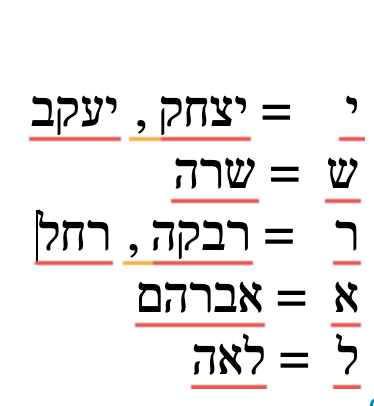
In Parashat VAYISHLACH we read that Ya’akob fought with an angel and the angel blessed him, and changed his name from Ya’akob to Israel. ‘Israel’ became the alternative name of Ya’akob but also the name of the Jewish nation. But is it fair? That we the Jewish people are named ‘exclusively’ after Yaakob? Why aren’t we called the people of Abraham, the founder of the Jewish people? How about Itschack? The middle generation is always the most challenging! Wait a minute: the Jewish status of a person goes after the mother! Whatever religion the mother is, that is also the child’s. So why aren’t we called the people of Sarah or Ribkah or Rachel or Lea? Why are we named AM ISRAEL exclusively after Ya’akob?

NOW, take a closer look at the spelling of the word ISRAEL (in Hebrew!) and you will find ALL the names of our three patriarchs and our four matriarchs: ‘Yod’ for Itzchack and Yaakob, ‘Shin’ for Sarah. ‘Resh’ for Ribkah and Rachel. ‘Alef’ for Abraham and ‘Lamed’ for Lea.
 
They are all there!
 
Israel is indeed the perfect name for us.


VAYERA: Sodom and Gomorrah and the Bible as History

THE DISCOVERY OF THE CENTURY

As a teenager, I remember reading an exciting book called “The Bible as History” (I read it in Spanish “Y la Biblia tenia razón”), which first introduced me to the fascinating world of Biblical archaeology. The book, written by a German author who fought against the Nazis, Werner Keller (1908 -1980) was published in 1955. With the limited information available to him in those days, the author did an excellent service to Biblical studies since he first demonstrated that no archaeological discovery contradicts the Tora narrative. And secondly, despite the thousands of years that have passed, solid evidence of Biblical stories and accounts continues to appear. But Keller predicted something about two Biblical cities, and fortunately, he was wrong. I quote: “Today we can affirm, with complete certainty, that any search for Sodom and Gomorrah that is intended to be carried out in the future will be completely useless since the enigma of the ruin and disappearance of both cities cannot be clarified.” (Page 47, Spanish edition). 

Very recently, in 2018, a group of modern archaeologists discovered the remains of Sodom near the Dead Sea. Moreover, they have also been able to verify, in an extraordinary way, the nature of the catastrophic event that led to its destruction. The story is exciting, but I will need the reader’s patience to explain it in detail.

THE WEALTH OF SEDOM 

The Torah mentions Sedom (en English Sodom) in the Perashiyot that we have read these last weeks, Lekh-Lekh and Vayera. Abraham and Lot had a lot of cattle. So much so that both shepherds fought over territory, to avoid escalating the conflict, Abraham proposed to Lot to separate from each other: Abraham would go east if Lot wanted to go the west, and vice versa. The Tora then describes what led Lot to decide where to move: “Genesis chapter 13: 10: “Then Lot looked up and saw the entire Jordan Valley, as far as Tzohar, which was a fertile land, like a garden [blessed by ] God, like the land of Egypt. This is how [this area] was before God destroyed Sodom and Gomorrah… Lot established himself in the plains and spread his tents as far as Sedom.” The first thing we learn from this text is that this area was very fertile, which is in complete contrast to the extreme aridity and salinity of the surroundings of the Dead Sea. The second reference says that Sedom was like Egypt. What is this referring to?

SEDOM AND THE NILE  

Two particular points characterize Egypt. 1. First, unlike all the other countries in the Middle East, Egypt does not depend on rain; it depends on the Nile. And droughts, therefore, do not affect it. For this reason, Egypt was the favorite destination for those who fled other regions, escaping droughts and hunger. The Tora alludes to the migrations of our patriarchs to Egypt several times. 2. There is an area in the North of Egypt known as the Nile Delta. There, the Nile divides into channels, transforming the entire area into an extraordinary, fertile, prosperous natural garden. This is probably the Goshen area (archaeologists call this place Avaris), where the Jews lived when they came in the times of Yosef. Before the destruction of Sedom and its surroundings, the Jordan River might have had similar water channels that formed a delta around the city and fertilized the region. This area must have been prosperous and independent of rain on both sides of the Jordan River. And it is, therefore, logical to expect travelers, or refugees, to seek shelter in Sedom, as the Tora tells us that happened with the foreigners that Lot welcomed into his house.

FOR RICH GUYS ONLY

The Tora then relates the terrible habits of the inhabitants of the city of Sodom: 13:13: “The men of Sodom were wicked and committed grave sins against God.” These “sins against God,” as we see in the story of Lot, were more like “crimes against humanity,” the abuse of foreigners—murder, robbery, sexual violence, etc. — that it was “normalized” because, as the Tora says: everyone participated in attacking the foreigners to “from the young to the elderly .”On the one hand, the population was very prosperous. On the other hand, they were ruthless, selfish, and infamous for their immorality (hence the famous word “sodomy”). God punished Sedom and its surroundings with extinction. God destroyed the city, its surroundings, and “all the vegetation of the land” and disappeared. The question that has not yet been resolved is how God destroyed this city.

ARCHEOLOGY

For many years, archeologists believed that the cities of Sodom and Gomorrah were located south of the Dead Sea. And they supposed that the ruins of these civilizations were not found because the Dead Sea swallowed the cities. That’s why Keller said no one would ever discover these cities. He also assumed incorrectly that an earthquake had destroyed these civilizations. However, when describing the destruction of Sedom, the Tora mentions that “fire fell from heaven”, which does not happen as a consequence of an earthquake. Was then a meteorite that destroyed these cities? Well, a meteorite would have left an enormous crater. None was found. Another interesting fact is that Abraham saw the aftermath of the Sedom cataclysm from his place, Hebron. Abraham saw “smoke as from a furnace” rising from that area. Did Abraham see something similar to a mushroom cloud produced after a nuclear explosion? If so, what could have caused that?   

So, where was the city of Sedom located, and what was the nature of the cataclysm with which God punished these cities? 


Eruv Tavshilin for Shemini Atzeret 5785 (Cooking in Yom Tov for Shabbat)

Understanding the Concept of Eruv

It is permitted to cook on a Jewish holiday (Yom Tov), as we learn from Exodus 12:16: “…No work shall be done on these days [=Yom Tov], except to prepare food for everyone to eat; this alone may be done.” However, our sages explained that it is only permitted to cook on Yom Tov what will be consumed during Yom Tov; one cannot prepare or cook on Yom Tov food that will be consumed after that particular day. Therefore, when a holiday falls on Thursday/Friday, as it does this year, we are not allowed to cook on Yom Tov for Shabbat unless we prepare an eruv tavshilin.

The eruv tavshilin consists of:

  • Preparing some cooked and baked food before Yom Tov.
  • Declaring that we are preparing this food for Shabbat.
  • Keeping that food for Shabbat.
  • Eating that food during Shabbat. This way, we begin to cook for Shabbat before the holiday starts, and we continue preparing that food on Yom Tov for Shabbat.

How Do We Do It? Following these principles, this is what we do:

Preparing: Today, Wednesday, October 23, in the afternoon before the Holiday begins, we should set aside a plate with some cooked food and a piece of bread and save this plate for Shabbat. This plate is what we call the eruv. Since some food has already been prepared for Shabbat before Yom Tov, the cooking that takes place during Yom Tov will be considered an extension (the word eruv in this context means “extension”) of the food that was already prepared before the holiday began.

Declaring: The following blessing is recited while holding the plate with the food (eruv) in one’s hands: “Barukh Ata A-donay E-lohenu Melekh ha’Olam Asher Qiddeshanu beMitzvotav veTzivanu AL MITZVAT ERUV” בָּרוּךְ אַתָּה ה’ אֱ-לֹהֵֽינוּ מֶֽלֶךְ הָעוֹלָם, אֲשֶׁר קִדְּשָֽׁנוּ בְּמִצְוֹתָיו, וְצִוָּֽנוּ עַל מִצְוַת עֵרוּב Then, the following text is recited, establishing that by preparing this eruv, we are permitted to do all necessary work and cook on Yom Tov for Shabbat: בַּדֵין עֵרוּבָא יְהֵא שָׁרֵא לָֽנָא לַאֲפוּיֵי וּלְבַשּׁוּלֵי וּלְאַטְמוּנֵי וּלְאַדְלוּקֵי שְׁרָגָא וּלְתַקָּנָא וּלְמֶעְבַּד כָּל צָרְכָּֽנָא, מִיּוֹמָא טָבָא לְשַׁבְּתָא.

Storing: After reciting the blessing, we place the eruv in a safe place or in the refrigerator and keep it until Shabbat.

Consuming:  For the eruv to be valid, we must eat that food at some point during Shabbat. Usually Seuda Shelishit.

The general practice is to prepare the eruv with a boiled egg and a piece of bread. Many people also add meat, rice, and other types of cooked foods to their eruv  .


New Year 2024: Celebrating Circumcision?

THE ORIGIN OF THE CIVIL NEW YEAR

The 2024 New Year will begin tonight at 12:00 a.m. on January 1st. According to Christian tradition, New Year’s Day celebrates the circumcision of Yeshu (Jesus). Yeshu was obviously Jewish, and his family circumcised him according to the rules of the Tora on the eighth day after his birth, counting from December 25. Ironically, the practice of circumcision was annulled early in the early years of Christianity.

Because?

In his book “The History of Christianity”, Paul Johnson explains that many Romans were attracted to monotheism and Jewish ethics. But there were elements of Judaism that scared them and kept them away from conversion. Examples: They were not willing to stop earning money on Saturdays. They were also not willing to sacrifice pork (a very popular food in Europe). And the idea of being circumcised terrified them. Especially for this last reason, not many Romans converted to Judaism (it should be noted that Jews, although we accept converts, never actively seek them). Johnson says that the early Christian apostles actively sought to convert the Romans to their new variant of Judaism and realized that if they adapted it and made it easier, thousands of Romans would convert to a “light version” of Judaism. And this is how the church reformed Jewish law, allowing the consumption of meat from any animal, reinterpreting the prohibition of working on Saturdays, and replacing the feared circumcision with the comfortable baptism. It was ironically in Yerushalayim, at the Christian council of Jerusalem in the year 50, that circumcision was definitively annulled. Until then, the first Christians were not very different from sects of dissident Jews, such as the Tsadokim or the Mityavnim, for example. But after the annulment of the Berit Milah, circumcision, which represents the first act of loyalty towards God’s covenant with Abraham and his descendants, Christianity definitively separated itself from Judaism.

THE CELEBRATION OF THE NEW YEAR

Rabbi Terumat Hadeshen (1390-1460) and Ramah (1530-1572), both from Western Europe, referred to the Christian New Year’s Day as a Christian religious holiday, which they called: “the eighth day of Christmas” ( Apparently this is also how Christians in the Middle Ages defined it (see Darjé Moshe, Yoré De’á 148: 12) and considered it aboda zará, an idolatrous practice. At that time it was evident that the Jews did not participate in the “celebration” of the new year, because it had an entirely religious meaning, like Christmas, and mainly because the new year implicitly celebrates the abolition of the covenant of circumcision, which was obligatory for Yeshu the Jew but not for his followers.

For Jews living in Christian lands, the new year was not a civil celebration, as it is today. It was a not very happy day, in which religious speeches from New Year’s masses called for an increase in persecution against the Jews.

THE POPE AND THE JEWS

To illustrate this point, we will examine what happened during the papacy of Gregory XIII (1502-1585), who instituted the new calendar, known as the “Gregorian calendar,” and popularized the celebration of the new year in Catholic countries. Each new year, Gregory enacted new laws against the Jews, symbolizing the abolition of circumcision, the fundamental covenant of Judaism, and its replacement. It is not surprising, then, that for Pope Gregory – remembered for having prohibited Jews from practicing medicine and treating Christian patients – the conversion of the Jews, that is, forcing them to abandon their original covenant, has been an issue. central during that day.

On January 1, 1577, Pope Gregory These proselytizing speeches were given by apostate Jews who had converted to Christianity.

On New Year’s Day 1578, Gregory forced the Jews to pay a special tax to finance a “House of Conversion,” conceived with the intention of converting them to Christianity.

On January 1, 1581, Gregory ordered his troops to confiscate all Jewish books in the possession of the Roman Jewish community.

And this is just one example.

Our historical memory of the New Year is not precisely associated with the “celebration” mode, but rather with oppressive measures, intolerance and persecutions.

THE ORIGIN OF THE JEWISH NEW YEAR

We Jews celebrate our new year on the first day of the month of Tishri. Why? On that day, God created Adam, the first man. The creation of the material world (the universe, our planet, life, etc.) is celebrated weekly on Shabbat. And once a year, on the 1st of Tishri, we Jews celebrate the creation of humanity. For this same reason, the Jewish New Year is also known as Yom haDin, the day of judgment. According to our Sages, on that day, humanity is judged, individually and collectively. During the day of Rosh HaShanah, the Shofar is blown, the Jewish way of announcing that God is the King and the Supreme Authority whom we must obey without reform. Their laws. And committing ourselves to observe his commandments from the moment we are born through the practice of circumcision.

Rabbi Yosef Bitton


WORLD CUP: Lions, elephants, and why I do not want Morroco to win

Please ignore this article if you are not following Qatar’s World Cup.


BEING A MESS-ANIC JEW 

As an Argentinean rabbi,  I am thrilled –euphoric!– that Argentina made it to the final. And Im very happy that the final match, the last World Cup for the national hero, Lionel Messi,  is played on a Sunday and not on a Shabbat, as happened with several previous games. But what leads me to write these lines is not my national affiliation but my indignation as a Jew for a specific issue that takes place in the World Cup and my fear that antisemitism gets normalized for the 3 or 4 billion people in the world that are watching these games.

At first, I was happy that Morocco won impossible games. It is also kind of personal. Moroccan blood runs through my veins because my paternal grandparents, z”l were born in Tetouan, Morocco. But after the initial charm, I started to get disappointed and feel very uncomfortable with Morocco. Why?

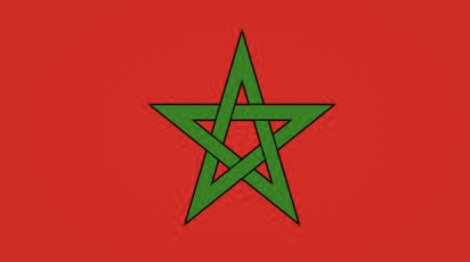
Because of this 

What you see above is NOT the Moroccan flag. This is the Morrocan flag.

Incredibly, the Moroccan national team players are not celebrating their victories with their own flag but with the Palestinian one! 

So that no naive person has any doubts: in the Arab world, this flag or the slogan FREE PALESTINE does not represent an innocent gesture of empathy with another country or oppressed people but a declaration against the existence of the Jewish state. As Israeli journalists in Qatar were told over and over again. “You are not welcome here… There is only Palestine. Not Israel.”   In other words: empathy with Palestinians is not about territorial claims or advocating for territories in exchange for eternal and lasting peace between the state of Israel and its neighbors. FREE PALESTINE is a euphemism to express that “Israel should not exist”, and that it must disappear from the map. And the Jews: throw themselves into the sea.  The FREE PALESTINE flag means FREE PALESTINE (all Israeli territory!) OF JEWS.  So, does this flag means that Morrocans (or Muslims?) hate Jews more than they love their country ??

If it were Iran or Lebanon’s national teams, I would have understood a little more about their antagonism to Israel because, after all,  those countries are “officially” enemies of Israel. But it hurts so much because it is MOROCCO: one of the few Arab countries that made peace with Israel and has open diplomatic relations with Israel. What’s going on there? 


THE DOUBLE STANDARD OF QATAR

And then, of course, there is the cynicism of Qatar. This government has silenced by decree all political demonstrations in this World Cup. No Ukrainian flags have been seen, for example. Qatar has banned dissident Iranians from speaking out against its repressive government. They also opposed any demonstration against human rights violations in Qatar. And they suppressed any complaints about the deaths of between 500 and 6,500 (depending on who you ask) foreign workers who lost their lives in accidents due to the hasty construction of the lavish stadiums for the World Cup (see here). Qatar claims it does not want politics in its World Cup. And for this reason, Roi Ben Shlush, an Israeli man who wanted to take a selfie with the Israeli flag in Qatar stadium, was immediately approached by four policemen who told him “that displaying the Israeli flag in Qatar is a crime. That Israelis are not welcome. That the Israeli flag is not welcome.” They threw us in the trash, Roi explains in this video (minute 1:18). Any political demonstration in Qatar is prohibited because “You must not mix politics with sports!”. But there are always exceptions. Or better said, one exception: the Jews. In Qatar, protesting against the existence of the Jewish state has been completely normalized. In the most watched event in the world these days, anti-Semitism has been Kosherized and turned into the pathetic cause that unites all the Arab countries of the world, even Sunnis and Shiites!

Do you understand now why I don’t want Morocco to win? Because beyond sports, if Morocco wins, it will be an antisemitic circus, a party of hate towards the Jewish state.


WHY DO ARABS HATE ISRAEL?

Arab antisemitism is not circumstantial. It’s cultural. My friend Professor Mordechai Kedar explains that delegitimizing Israel is a religious duty for Muslims. Why? Because for Islam, political and military superiority reflects religious superiority. That is to say, the true religion is the one that wins, controls, and governs the other religion. This reasoning, which may seem strange to us, explains the paradox many people naively mention. “The Arabs treated the Jews very well in the Arab countries where they lived.” This may be true, but something needs to be clarified: in Arab countries, Jews were “dhimmis”, that is, second-class citizens living under the authority and wings of Islam and with limited rights. Muslim accept Jews or Christians as long as they are “subjected”, or surrendered  (this is the real meaning of the word “islam” = surrendering )  to Muslim rule. But the case of the State of Israel is different. Accepting that the Jews govern the Arabs is heresy for the Arabs, as the founding charter of Hamas explicitly clarifies (see below). Accepting a Jewish State, regardless of its size, in arab land would be equal to believing that Islam is inferior to Judaism!

If this explanation is true, then I’m not sure it will ever be possible to be a lasting, “normal” peace between Israel and the Arab countries (I heard this week in a class from Bar-Ilan Professor David Pasig that the peace deal between Israel and Egypt is NOT really a “peace” agreement: Egypt’s Islamic authorities, says Pasig, only allowed Egyptian President Anwar Sadat to sign “a truce” with Israel).

If this explanation is real, if the Arab’s rejection of Israel is based on religious considerations, the Arab-Israeli conflict and hatred will never end. Furthermore: not recognizing this sad reality can be very dangerous for the Jewish state. Why? Because if I try to find the Western Mentality logic to the Palestinian or pan-Arab anti-Semitism and I assume, for example,  that they won’t hate us anymore if we cede some territory to them, or if I assume that “sincere dialogue will bring peace”, as many secular Jews who understand nothing of religion believe, I can cause irreparable damage to Israel.


WHAT CAN ISRAEL DO?

The Moroccan national team is known as the “Lions of the Atlas” (a mountain range in Morocco). So I’ll use this motif to explain a very depressing idea about the nature of this specific form of antisemitism. Imagine a man, lost in the Atlas Mountains, encounters a lion. Lions in that area of the world are reputed to be the most aggressive cats. The lion approaches and the man tries to explain to the lion why he should not attack him. He tells the lion: “I belong to the lion’s protection society. I fight against lions extinction. I am here looking for a protected area where you lions can live in peace, without fearing the hunters”.  But as valid as this man’s arguments are, the lion, who obviously doesn’t understand human language, keeps getting dangerously close to the man with murderous eyes and a hungry face. What is the only thing this man can do to stop the lion? What in the world can dissuade the lion from eating this guy alive? The only thing this man can do is to “transform himself into an elephant,” into an animal bigger and more powerful than the lion, into a creature that the lion is afraid to attack. An elephant will force the lion to reassess his chances of winning the battle, activate his survival instincts, reconsider and return to his pride.

If Arab hatred of Israel is cultural, visceral, and religious, the only thing that Israel can do to preserve the “peace” (or a truce) with its neighbors is to understand that the Middle East is a jungle. And only the strongest survive in the jungle.


UNDERSTANDING FREE PALESTINE

I present here some abstracts from the founding Charter of Hamas. Hamas is affiliated with the Muslim Brotherhood, the organization that rules Qatar.  Unlike other Palestinian organizations, Hamas does not hide its true intentions. 


Article 2 of Hamas’ Charter defines Hamas as a “universal movement” and “one of the branches of the Muslim Brotherhood in Palestine”.[1][21][28][29]

Article 6 Hamas is uniquely Palestinian,[1] and “strives to raise the banner of Allah over every inch of Palestine, for under the wing of Islam followers of all religions can coexist in security and safety where their lives, possessions and rights are concerned.” It claims that the world will descend into chaos and war without Islam, quoting Muhammad Iqbal.[1][21]

Article 7 describes Hamas as “one of the links in the chain of the struggle against the Zionist invaders” and claims continuity with the followers of the religious and nationalist hero Izz ad-Din al-Qassam from the Great Arab Revolt as well as the Palestinian combatants of the First Arab-Israeli War. It adds a hadith claiming that at the Day of Judgment all Jews will be killed.[1][29]

Article 8 The Hamas document reiterates the Muslim Brotherhood’s slogan of “Allah is its goal, the Prophet is the model, the Qur’an its constitution, jihad its path, and death for the sake of Allah its most sublime belief.”[1][21]

Article 9 adapts Muslim Brotherhood’s vision to connect the Palestinian crisis with the Islamic solution and advocates “fighting against the false, defeating it and vanquishing it so that justice could prevail”.[1]

Article 11 Palestine is sacred (waqf) for all Muslims for all time, and it cannot be relinquished by anyone.[1]

Article 12 affirms that “Nationalism, from the point of view of the Islamic Resistance Movement, is part of the religious creed”.[1]

Article 13 There is no negotiated settlement possible. Jihad is the only answer.[1]

Article 14 The liberation of Palestine is the personal duty of every Palestinian.[1]

Article 15 “The day that enemies usurp part of Muslim land, Jihad becomes the individual duty of every Muslim”. It states the history of the Crusades into Muslim lands and says the “Palestinian problem is a religious problem.”[1]

Article 18 Defines the role of women as homemakers and child-rearers, providing education and moral guidance to men.[1]

Article 20 Calls for action “by the people as a single body” against “a vicious enemy which acts in a way similar to Nazism, making no differentiation between man and woman, between children and old people”.[1]

Article 22 Makes sweeping claims about Jewish influence and power.[1][30] It specifically claims that the Jews were responsible for instigating multiple revolutions and wars, including the French RevolutionWorld War I, and the Russian Revolution. It also claims that Jews control the United Nations, and that they are supported by “the imperialistic forces in the Capitalist West and Communist East.”[1]

Article 27 Praises the PLO but condemns its secularism.[1]

Article 28 Conspiracy charges against Israel and the whole of the Jewish people: “Israel, Judaism and Jews”.[1][30] It claims that “Zionist organizations” aim to destroy society through moral corruption and eliminating Islam, and are responsible for drug trafficking and alcoholism.[1]

Article 31 Describes Hamas as “a humanistic movement”, which “takes care of human rights and is guided by Islamic tolerance when dealing with the followers of other religions”. “Under the wing of Islam”, it is possible for Islam, Christianity and Judaism “to coexist in peace and quiet with each other” provided that members of other religions do not dispute the sovereignty of Islam in the region (dhimmis).[1]

Article 33 calls upon Muslims worldwide to work for the liberation of Palestine.[1]


If you need more information, please, read this excellent detailed article :  https://www.camera.org/article/hamas-charter/


Thanksgiving to God, by George Washington.

“WHEREAS it is the duty of all nations to acknowledge the Providence of Almighty God; to obey His will, to be grateful for His benefits, and humbly to implore His protection and favor; and,  
  
“WHEREAS both Houses of Congress have by their joint committee requested me to recommend to the people of the United States a day of public Thanksgiving and prayer, to be observed by acknowledging with grateful hearts the many signal favors of Almighty God, especially by affording them an opportunity to establish a form of government for their safety and happiness: …a day devoted by The people of these States to the service of that great and glorious Being who is the beneficent author of all the good that was, that is, or that will be…
  
“Now, therefore, I do recommend and assign Thursday, the 26th day of November next, to be devoted by the people of these States to the service of that great and glorious Being who is the beneficent author of all the good that was, that is, or that will be, that we may then all unite in rendering unto Him our sincere and humble thanks for His kind care and protection of the people of this country .. for the great degree of tranquility, union and plenty, which we have since enjoyed; … for the civil and religious liberty with which we are blessed and the means we have of acquiring and diffusing useful knowledge; and in general for all the great and various favors which He hath been pleased to confer upon us.
“And, also that we may then unite in most humbly offering our prayers and supplications to the Great Lord and Ruler of Nations, and beseech Him to pardon our national and other transgressions, to enable us all, whether in public or private stations, to perform our several and relative duties properly and punctually…
  
“To promote the knowledge and practice of true religion and virtue, and the increase of science among them and us, and generally to grant unto all mankind such a degree of temporal prosperity as He alone knows to be best.
“Given under my hand at the City of New York the third day of October in the year 1789.
George Washington”
American Rabbis have discussed the celebration of Thanksgiving.
In this article “Is Thanksgiving Kosher?” Rabbi Michael Broyde explains the various Halakhic opinions on Thanksgiving’s celebration  
The following lines by Rabbi Broyde summarize his conclusion:
“Thus, halacha law permits one to have a private Thanksgiving celebration with one’s … friends and family. For reasons related to citizenship and the gratitude we feel towards the United States government, I would even suggest that such conduct is wise and proper”.


What is a Perozbul, and why you should sign one?

This year that is coming to an end, 5782, has been a Shemita year.  In addition to the restrictions of working the land in Israel and transacting with produce from the land of Israel,  the Tora also prescribes that each Jew shall renounce his or her right to recover a debt from any other Jew.  This means that, as soon as Rosh HaShana commences next week, if I have lent money to another Jew, I now will have the obligation to never charge this person this money.  It is a beautiful precept and one that allowed Jews to start fresh.  It is a sort of biblical bankruptcy protection that allowed people to push the reset button at least once every seven years.
But, wait, so does this mean that cousin Jim will never need to pay back the $500 I lent him?
During the first century of the common era, before the Second Temple was destroyed, Hillel the Elder, the foremost sage of his generation and head of the Jewish Supreme Court at that time, realized that Jews were refraining from making any loans during the Shemita year.  After all, why lend money that becomes unrecoverable if not paid back before Rosh HaShana?  Actually, the Tora already foresaw this possibility, and warned us not to refrain from making loans during this year; but Hillel saw that people were still not lending.  Paradoxically, poor people were harmed by this precept because now there were no loans available.  Hillel came up with a legal device that permits lenders to recover on their loans even after the Rosh HaShana following Shemita.  The device is called “Perozbol,” (also “prozbol”, “prozbul”, or most people call it “pruzbul”) and we employ it to date.
In essence, the Biblical precept says that one needs to “let go” of the borrower (“Shamot Kol Ba’al Mashe Yado”) and refrain from demanding the repayment of the debt.  However, if a debt is recognized by a court (say, if the lender sued the borrower and the court agreed that the debt needs to be repaid), this “debt” is now in a way an obligation to the court, not to the lender.  It is a matter of justice more than personal debt.
Hillel’s device then is to declare before a Jewish court the debt in question so that it is recognized officially by a court even before it is due.  If Jim owes me $500, I should then – after the loan but before Rosh HaShana – write a document to a Jewish court declaring before them that this money is due and that the lender intends to recover it whenever.  This declaration is called Perozbol.  By doing this, the debt survives the Shemita, and the lender is not transgressing the precept; after all, the lender will not demand the repayment of the debt – the court will – and so there will be nothing to be “let go” (“Shamot”).
A few notes:
· The Shemita debt forgiveness applies to actual loans, but not to debts that are owed due to services received, goods purchased or legal damages owed
· The Perozbol device is only permissible while the laws of Shemita are rabbinical (these laws will regain their biblical status once the majority of Jews live in Israel); otherwise, loans really need to be forgiven
· The borrower needs to have some real estate; this is so that the debt may be assigned to a court (the court can only assume a debt that can be attached to a real estate lien)
· The court to whom one delivers the Perozbol should be a court with authority to make liens and to seize property
· It is proper and appropriate to repay one’s debts next year even if the lender did not do a Perozbol; in such case, the borrower should be clear that this is not a repayment but rather a gift
· It is also proper and appropriate to forgive one’s loans, especially if the borrower could use the relief of not having to repay what is owed
by Rabbi Jacob Bittón
PRINTABLE FORM
 
The form we present here requires the signature of two suitable witnesses, the lender should also do a qinyan (one form requires the ender to sign). The lender can keep the form with him. 
 
https://halachayomit.co.il/Pruzbul-English.pdf


NEW TRAINING PROGRAM FOR RABBIS