Ribbi Abraham Eben Ezra (1089-1164): Tora and Mathematics

We continue with the presentation of the class “Four Giants of Sepharad” by Hakham Yosef Faur z”l, about four rabbis that deeply impacted the character and content of the Sephardic tradition.

HIS LIFE

Ribbi Abraham Eben Ezra was born in the city of Tudela, in Navarro, in northern Spain, in 1089. Ibn Ezra was very close to Ribbi Yehuda Halevi, who was about 14 years older than him, and his son Isaac married the daughter of Yehuda haLevi (or according to others, Ribbi Abraham married his daughter). He refused to accept money from others and materially, he was always very poor. He tried to engage in commerce but was never successful in his business. He wrote in. one of his poems that he was so unfortunate in business that if he would “starts selling shrouds, people will stop dying.”  Rabbi Eben Ezra traveled the world for more than three decades. First he visited North Africa: Morocco, Algeria, Tunes. Then he visited Europe: Italy, France and England. Then the Middle East: Egypt, Persia, Iraq. During his many trips he always visited and stayed in the local Jewish communities, that upon recognizing his great knowledge of Tora treated him with great respect. His journeys were not an impediment for his writing. Quite the opposite, it seems that Ribbi Abraham wrote particularly during his travels, and more than once dedicated his works to local communities or their patrons. It is said that in France he met Rabbenu tam (1100 – 1171) and in Egypt he met Maimonides (1135 -1204). He died in 1164 and according to Rabbi Abraham Zakuto in his Sefer haYohasin, he was buried in the land of Israel.

COMMENTARY TO THE TORA

Rabbi Eben Ezra wrote more than 60 books on many different subjects. His best known work is his commentary on the Tora (the Pentateuch). This work was innovative for its methodology. Analyzing the “peshat”, that is, the literal meaning of the text based on a rigorous linguistic analysis of the words. Rabbi Eben Ezra avoided the permanent reference to the Midrashim in his explanations, as Rashi does when he explains the Tora, since he considered that it was not necessary to repeat in a commentary what the reader can find in the Midrash. He also criticized some allegorical comments that, in his opinion, “go around the point in circles instead of focusing on the point itself”, that is, in the literal and grammatical sense of each word. The literal meaning should be carefully considered and should be examined not only by analyzing the root of the word but also the context, the location of the term in the verse, and the other instances in which that word appears in the Bible. This literal interpretation was an innovation. The Rabbi clarified that his (new) methodology did not apply to the words of the Tora that refer to any precept or commandment, since the interpretation in these cases is exclusively that which we received in the oral Tora and is recorded in the Talmud.

ASTRONOMYWhat is less known is that Rabbi Eben Ezra also wrote dozens of books on scientific subjects. For example, “The book of the foundations of the astronomical tables” a work that Rabbi Abraham originally wrote in Latin. This indicates that he had a very deep knowledge of this language, in which scientific wisdom was transmitted at that time. Rabbi Eben Ezra also belonged to the scientific community of his time.

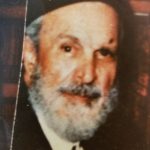
NAVIGATIONHe also wrote a treatise on the astrolabe, an instrument that allows to muse the position of the stars for orientation, and which was essential for navigation. The astrolabe was in the Middle Ages what a GPS is today. The photo we posted above is an illustration showing Rabbi Eben Ezra (in the middle) with an astrolabe in his hands. The book was called in Hebrew: Keli HaNechoshet, “the copper instrument,” which was the metal used to build the astrolabe.

MATHEMATICS.He also wrote several books on mathematics, such as “The Book of Numbers,” which deals with arithmetic. In this work he presents the decimal system and the way it is used, anticipating by several decades the famous Italian mathematician Fibonacci (1170 -1240). It should be noted that thanks to his numerous trips around the world, Rabbi Eben Ezra became one of the main contributors to the popularization of the decimal system in the Jewish communities and in the Western world. He was also one of the first to present and explain the number “zero”, which he drew with a circle and called in Hebrew “galgal” (circle or wheel).
In his lecture on the giants of Sepharad the Hakham Faur z”l explained that for Eben Ezra the Tora and scientific knowledge are not contradictory: on the contrary, they complement each other and necessitate each other in order to appreciate the Wisdom of Creator. The fact that the universe can be understood and explained mathematically with predictable and unchangeable formulas and laws that are accesible to our God-designed mind reveals the existence of the Intelligent Creator of the Cosmos. Maimonides explored this idea in depth in Yesode HaTora, chapter 2, where he shows how this observation brings us closer to love and fear God. For more on the fascinating topic of mathematics /physics and the intelligent fine tuning of the Universe, I recommend the book “Just six numbers” by Martin Rees .

POETRYFinally, Rabbi Eben Ezra is also known as one of the great Jewish poets of all times. Some of the poems he composed 800 years ago are still well known to us and we continue to sing them to this day. For example, AGADELKHA ELOQE KOL NESHAMA. KI ESHMERA SHABBAT and LEKHA ELI TESHUKATI, a very profound poem with which we inaugurated the Yom Kippur liturgical service and which was also used to be recited as a Viduy in the last moments of life.


A journey to the heart of Ribbi Yehuda haLevi (1075-1140)

I continue sharing with you one of the classes of my dear uncle, Hakham Yosef Faur, z”l. Rabbi Faur had a passion for history and particularly the history of the Jews of Spain. In this class he referred to “Four Giants of Sepharad”. Previously, we spoke about Rabbenu Bahiya. Today we will talk about Ribbi Yehuda haLevi, born in Toledo (or Tudela), Spain, 1075.

THE CUZARI

Ribbi Yehuda was a prominent philosopher, and his most famous book is the Cuzari. A work written in the form of a dialogue, questions and answers, between King Bulan, from the Khazar empire and Rab Isaac haSangari. King Bulan, who did not practice any religion, summoned an Imam, a Christian priest, a rabbi and a philosopher (equivalent today to an atheist thinker) and asked each one to present their arguments. In the end, King Bulan thought that the rabbi’s arguments were the most convincing, and he decided to convert and convert the subjects of his empire to Judaism. The historical and philosophical principles that the Jewish Sage transmitted to King Bulan constitute the content of the book of “The Cuzari”. This widely documented mass conversion took place in the 8th century. And the Jewish empire of the Khazars (the first “independent Jewish state” after the destruction of the second Bet haMiqdash, sic.!) continued for around 200 years after this event.

POETRY AND THEOLOGY

Apart from his philosophical work, Ribbi Yehuda haLevi is also known for his poetic work. To understand the importance of poetry in 11th century Spain we need a brief introduction. For the Arabs the Quran is the most revered book. And the proof of the superiority of the Quran (and Islam over other religions) is the perfection of the Arabic language. “There is no Arabic more perfect than the Arabic of the Quran, and there is no language more perfect than the Arabic language.” But how can anyone prove that one language is superior to another? In the Middle Ages the answer was: “poetry”. The Arabic language has a certain plasticity, which Western languages, for example, ​​do not have. This allows to create a type of “metric” poetry, where the verses are written with mathematical precision.

A four words verse may be written, for example, in this way:

FIRST WORD (two syllables): 1. Half vowel, open syllable. 2. Long vowel, closed syllable.

SECOND WORD (two syllables): 1. Open syllable, long vowel. 2. Closed syllable, long vowel.

THIRD WORD (two syllables): 1. Half vowel, open syllable. 2. Short vowel, closed syllable.

FOURTH WORD (two syllables). 1. Long vowel, open syllable. 2. Short vowel, closed syllable.

In this type of Arabic poetry, the art is to write all verse maintaining the same structure. But to preserve this sophisticated structure, which among other things facilitates the adaptation of these poems to a wide variety of melodies, something had to be sacrificed: the content of the poem. In any case, this metric, impossible in other languages ​​such as Spanish, Latin or Greek, demonstrated the superiority of Islam.

DUEL OF THE POETS

Rabbi Faur explains that the Rabbis of Spain, then under Muslim rule, responded to this challenge that threaten the credibility of Judaism. The famous sages Yona Ibn Jannah, Hasday Ibn Shaprut, and many other grammarians of the Hebrew school of Córdoba (X and XI century) began formulating the grammatical rules of Biblical Hebrew and made it possible to compose metric poetry in Hebrew, something that until then was not very common. The Jewish Sages composed Hebrew poems that were as elaborate as the poems in Arabic. But with one advantage: Arabic poetry sounded very good, but it said nothing, since it was extremely difficult to force content into such closed structures. Hebrew poetry, however, in addition to preserving the sophisticated metric structure, was extremely rich in content. In fact, the four words example of metric poetry that I mentioned above corresponds to the first stanza of “A-don o-lam a-sher ma-laj,” a poem adaptable to a wide variety of melodies thanks to its perfect metric, with a very profound theological content (It was composed, according to some opinions, by the famous poet Ribbi Shelomo Ibn Gabirol, 1028 -1051).

A JOURNEY TO THE HEART OF RIBBI YEHUDA HALEVI

Rabbi Faur ends his exposition on Yehuda haLevi explaining that he developed a new genre of poetry (in Spanish is called: género sionida) that is, the poetry that expresses the love of the Jewish people for Zion, and the desire to return to Yerushalayim. Rabbi Faur says that in this way Ribbi Yehuda haLevi became the pioneer of modern Zionism.

One of Ribbi Yehuda haLevi’s most celebrated poems is “My heart is in the Orient”.

Let’s see one stanza of this beautiful and famous song.

לִבִּי בְמִזְרָח וְאָנֹכִי בְּסוֹף מַעֲרָב אֵיךְ אֶטְעֲמָה אֵת אֲשֶׁר אֹכַל וְאֵיךְ יֶעֱרָב אֵיכָה אֲשַׁלֵּם נְדָרַי וֶאֱסָרַי, בְּעוֹד צִיּוֹן בְּחֶבֶל אֱדוֹם וַאֲנִי בְּכֶבֶל עֲרָב יֵקַל בְּעֵינַי עֲזֹב כָּל טוּב סְפָרַד, כְּמוֹ יֵקַר בְּעֵינַי רְאוֹת עַפְרוֹת דְּבִיר נֶחֱרָב

«My heart is in the East [Israel]; while I am at the end of the West [Spain].

How could I feel the taste of what I eat; how could I enjoy sweetness [on my palate, while I’m not in the Land of Israel]?

How am I to fulfill my promises and vows [in the Bet haMiqdash] while Zion is under the yoke of Edom [= Christendom. During the first crusade, in 1099, Christians conquered Jerusalem], and I am here, trapped in the bonds of Arabia?

How easily I would abandon all the pleasures of Spain, to delight my eyes seeing the dust of the ruins of the destroyed Sanctuary… ”.

At the end of his days, and after a very difficult journey, Rabbi Yehuda haLevi fulfilled his dream and arrived in Jerusalem. It is said that as soon as his eyes finally saw the ruins of the Bet haMiqdash, he was killed by an Arab rider, near the Western Wall. It is for this reason that the stairs leading down from the Old City to the Kotel are named in his honor “Ma’alot Rabbi Yehuda haLevi” .


Rabbenu Bahiya Ibn Paquda (1045-1120) and the duties of the heart

I want to share with you a class from the Hakham Yosef Faur z”l that I recently heard titled “ Four Sephardic Giants” . The class was given in Miami, 1998. Rabbi Faur mentions four rabbis who lived in the golden age of Sephardic Jewry, between the 9th and 13th centuries of the common era. Each of these rabbis, presented in chronological order, introduced an innovative idea that forged the millennial tradition of the Jews of Spain and their descendants.

The first Hakham he mentions is Rabbenu Bahiya Ibn Paquda, born in Zaragoza, Spain, around the year 1045. We do not have much information about his life but we do know that it was Dayan, a judge in the rabbinical court; a honorary position that in those times was exercised pro bono.His main work is Hobot haLebabot, “The Duties of the Heart”, in which the author systematically formulates the principles of Jewish ethics. The book was written in Arabic and translated into Hebrew by the famous Rabbi Yehuda Ibn Tibbon.

What is this book about?

As we know, the Tora contains 613 commandments.Rabbi Ibn Paquda divides the commandments into two categories: 1. The precepts that we carry out in a physical way, with our body, our assets, etc. (חובות האברים). 2. The commandments we carry out with our hearts (חובות הלבבות).
It was the first time that a rabbi recorded this differentiationWe will start from the second category.

DUTIES OF THE HEARTThe author affirms that the most important commandments of the Tora are fulfilled with “the heart”, that is, our psychological, emotional and intellectual apparatus (today we would say “brain” or “mind”).
Some examples.
1. SHEMA ISRAEL: “Hear, oh, Israel, HaShem is our God, and he is One.”This verse demands us to “know” that God exists and that He alone exists. This command does not order us to do anything specific. However, it is an absolutely transformative commandment.Ancient man perceived that natural forces were independent of each other and confronted each other: darkness vs. light; disease vs. health; evil vs good, war vs. peace, death vs. birth. To the pagan man it was absolutely evident that these forces came from different origins. They imagined that the multiple “gods” were waging war against each other in an eternal cosmic conflict. In this polytheistic universe, human beings are mere involuntary spectators of these mythological wars, over which they have no have control. For most ancient myths of creation, the world was not deliberately created, it appeared accidentally, product of the battles between the gods. Life for the pagan man had no transcendental meaning. The goal was to satisfy his urges and to prevent the gods from unleashing their anger on humans.Jewish monotheism, which today we take for granted, was entirely counter-intuitive. It was impossible for the ancient man to perceive the power of a unique CREATOR, with no other forces in charge of this world. Knowing that there is only one God, a Creator, brings the individual to a different level of understanding. God is behind good forces of “nature” and behind what we perceive as bad. The Creator fashioned an intelligent design, in which He (deliberately) established a pattern of opposing forces which operate together to maintain a permanent balance. Moreover, a monotheistic man knows and recognizes that much is beyond his comprehension. Knowing the existence of an intelligent Creator imbues life with purpose. And it pushes us to find it and reach it. Jewish monotheism is evolution. Or revolution. The “Shema Israel” as a commandment demands a total transformation of our “heart”, of our thoughts.
2. VEAHABTA ET HASHEM ELOQEKHA: “You shall love HaShem your God.”You cannot possibly love God with all your heart if you are constantly bitter. If you don’t value everything you have. Rabbi Faur explains that this Mitzva, “loving God”, cannot be fulfilled unless one is happy. And being happy requires an existential transformation. Being happy does not consist in having everything I want but in appreciating everything I have. A person can have money, family, health and be unhappy, because he or she has not developed the intelligence necessary to appreciate life. This commandment is not performed in a physical way, but like the previous one, it is absolutely and comprehensively transformative. Probably, more than any commandment that we do with our body.
3. VEHAHABTA LEREAKHA CAMOKHA, “You shall love your neighbor as you love yourself.” To love, in this sense, is to accept. This formative commandment tells me that just as I love myself in spite of my multiple shortcomings, I must learn to love my peers in spite of their shortcomings.

DUTIES OF THE BODY
In the first part of the book, the one that refers to the “physical” commandments, the author points out that these precepts also have as their objective, directly or indirectly, the improvement of the heart. One should not observe the precepts of the Tora in a mechanical and cold way. We must do it with an open heart. And these commandments , in turn, will have a positive effect in our hearts. “The heart is nourished by our good deeds”. 

My most favorite prayer
I want to end by introducing a text from the book Hobot HaLebabot, heshbon hanefesh, Chapter 3. It is a short and very original prayer. Normally, when you pray, you ask God to fulfill your wishes. For example, if you are going to a job interview, you will pray to God to help you to get that job, because you believe this job is beneficial for you. This special prayer, which used to be printed in some Sephardic Sidurim like Bet‘ Obed and (I think) Tefilat haHodesh, teaches us that the correct way to pray is “to surrender” the final decision to God. Recognizing that you need God’s assistance not just to fulfill your request but also to ignore some of those requests, when HE KNOWS that they are not beneficial for you .In this prayer we ask God to listen “selectively” to our request, because He knows better. It ends by declaring: You know me better than I know myself. Your decision, HaShem, is better than mine. What You decide I will humbly and gratefully accept.

“My God, I present myself before You without ignoring my smallness and my insufficient knowledge of Your greatness and Your transcendence. I know that You are infinite and exalted, and I am a mere creature of very little importance. I am too insignificant to praise You and sing to You or bless Your Name, which is sanctified by the most elevated angels. The only thing that gives me the courage to address You is that You have commanded me to pray, and thus You have allowed me to praise Your exalted name according to my limited understanding. And that is why I address You with all humility. And I recognize that when I pray and I beg You to listen to my requests, I know that You know better than I what is best for me, and what are the best ways for my life. I also know that when I expressed my needs, I do not do that so that You would know them, since everything is known to You, but I express my requests so that “I” become aware of my permanent dependence on Your assistance, and my trust in You. So, I declare that if, out of ignorance, I request something that is not good for me or that does not benefit me, I accept Your choice instead of my choice. And I surrender to You the decision to listen (or ignore) what my heart asks of you. Because Your determination is wise, enduring and supreme. As King David said: “God, my heart is not arrogant, my gaze does not rise in haughtiness, I do not pretend to understand things that are too big and mysterious for me.” Therefore, I have given myself to you, “like a baby who breastfeeds and depends entirely on his mother …” (Tehillim 131: 1-2) »


Recommended classic Jewish books


Rabbi Ya’aqob Castro (1525-1612) and the Jewish community of Egypt

FROM SEPHARAD TO EGYPT

Rabbi Ya’aqob Castro was a Tora scholar, a rabbinical judge, an author  and a leading lawmaker (poseq) in the Cairo Jewish community. 

The Castro or “de Castro” family was originally from southern Spain. At the time of the expulsion they escaped to Portugal and from there, many members of that family arrived in Turkey, North Africa, Egypt, etc.

The father of Rabbi Castro (some historians say he was his uncle) was the famous Abraham de Castro (died in 1520, see here). Abraham de Castro was one of the most prominent Jews of his time. He was the manager of the Royal Mint of the Turkish Sultan Suleiman the Magnificent (1494-1566), the most powerful man in the world in those years. In his honor, the Sultan agreed to reinforce the walls of Jerusalem adding several rows of solid rock to the original wall. This stones are still there to this day.

HIS TEACHERS

Rabbi Ya’aqob de Castro belonged to a wealthy family. Apart from being a  rabbi, Rabbi Castro also engaged in trade, something that was common among rabbis living in Egypt, such as Rabbi David ben Zimra or Rabbi Isaac Luria(the Ari haQadosh) who dealt with import and export of pepper and grains.

Rabbi Ya’aqob was a student of two great luminaries: the illustrious Rabbi David ben Zimra (Radbaz), and Rabbi Levi ibn Habib (Ralbah) of Yerushalayim. Rabbi Ya’aqob is also known by his acronym Mahariqash (מהריק”ש), and he is considered the last “Chief Rabbi” of Egypt, that is, the rabbinical authority accepted by all the communities of the country, including the two most important: Cairo and Alexandria. At that time most of the Jews of Egypt were musta’arabim, that is, indigenous of Egypt; while the community of the Sepharadim, that is, the refugees of the expulsion from Spain, was just beginning.

RABBI CASTRO AND RABBI CARO

In 1570, he visited the city of Sefat in Israel, where he was invited to the home of Rabbi Yosef Caro (1488-1575), the author of the Shulhan Arukh. In his writings, Rabbi Castro describes his encounter with Rabbi Caro and relates, probably with deep emotions,  seeing with his own eyes Rabbi Caro acting in accordance with the customs that he himself had established in the Shulhan Arukh.

Rabbi Castro wrote several books. We will mention two of them.

“Erekh Lehem.” Glosses and comments that Rabbi Castro wrote in the margins of his manuscript copy of the Shulhan Arukh. In these notes he expresses his opinion, and sometimes his objections, to some halakhic determinations of Rabbi Yosef Caro. The reputation of Rabbi Castro was so high that in Egypt his opinion had more weight than that of Shulhan Arukh himself.

LIFE IN THE JEWISH COMMUNITY OF EGYPT

Another of his works is “Ahole Ya’aqob”, a book of rabbinical responsa on real cases that happened in his community. This book also presents the Halakhic debates between Rabbi Castro and some of his contemporaries, which allows us to have a better vision of his legal thinking.

It should also be noted that this book of Rabbinical questions and answers is a priceless source of information for historians to learn a little more in detail about the social and community life, and the difficulties of the Jewish community in Egypt in the 16th century.

SOME EXAMPLES

One of the Taqanot, or community decrees, that Rabbi Castro mentions in one of his answers, is related to the mores and etiquette that should be observed in the celebration of wedding parties. Apparently, in some weddings, gentile dancers were hired as part of the celebration; this caused more than once some improper attitudes. Rabbi Castro, together with the other rabbis of the city, forbade this practice and encouraged the community to hire only musicians, and not dancers.

Another controversial issue that appears in his questions and answers is the legal status of the claim of a wife who refused to live in the house of her in-laws, in a situation where there was no mistreatment from their part. Rabbi Castro debated with another very famous Egyptian rabbi, Rabbi Hayim Kafusi, about considering this claim as a justified cause for divorce.

Finally, I will mention a more sensitive topic. Rabbi Castro dealt with the case of two young married men, members of his community, who went out of town in a business trip and disappeared. Two Egyptian men, father and son, testified that these merchants were attacked and killed by a gang of 12 assailants. The Halakhic question was whether this testimony was enough to declare the wives of these merchants as widows, and allow them get married again. Rabbi Castro adopted a more strict opinion, since the evidence was ambiguous, and he considered that the witnesses could obtain a personal benefit from his testimony. Rabbi Kafusi confronted Rabbi Castro and presented an more permissive opinion so that these two women would not be trapped (agunot) in a situation without a possible solution.


Rabbi Abraham Azulay (1570-1643) and the Sultan’s Sword in Hebron

From FES to HEBRON

Rabbi Abraham Azulay (also “Azulai) was born in the city of Fes, Morocco, in 1570. The city of Fes was a very important Jewish center where many Jews found refuge when they escaped the expulsion from Spain.

The family of Rabbi Azulay also came from Spain (Castilla). Living in Fes was far from being in a paradise. Apart from the constant persecution by Muslim extremists, the area was very poor and often suffered from long droughts. Rabbi Shaul Serero says that in the Jewish community of Fes, between 10 and 20 people died every day… of starvation. After one long drought that lasted for more than 3 years, Rabbi Azulay left Fes and headed towards the land of Israel. Traveling by sea was extremely dangerous. When rabbi Azulay arrived near the port of Capotakia (Port Said) a great storm destroyed his ship and all his belongings sank. Miraculously, Rabbi Azulay survived and arrived (presumably swimming) to the coast. This miracle was never forgotten by Rabbi Azulai. And as a sign of his eternal gratitude to HaShem for this miracle, Rabbi Azulay designed his signature in the shape of a boat (see illustration above).

From HEBRON to GAZA

Once he arrived in Israel he settled in the city of Hebron (also known as Kiryat Arba) where he met with the great rabbis of that time such as Rabbi Eliezer Arha and others. But a terrible epidemic broke in 1619 and rabbi Azulay had to leave the city of Hebron and he moved to Yerushalayim. But the plague also reached Jerusalem, and Rabbi Azulay moved to the city of Gaza where he lived for some years. At that time 70 Jewish families lived in Gaza. Some families were engaged in agriculture and others in commerce, since Gaza was part of the trade route between Syria and Egypt. The Rabbi of Gaza between 1620-1625 was the illustrious rabbi Israel Najara (a native of the Spanish city Nájera), who befriended rabbi Azulay .  In Gaza, Rabbi Azulay wrote two of his most famous books: a commentary on the book of the Zohar “Hesed LeAbraham” (“The goodness that God did with Abraham”, in reference to the fact that he himself, Abraha, was twice saved from the terrible epidemic that claimed so many lives). He also wrote “Ba’ale Berit Abram”, a mystical commentary on the Tora.

COMMENTARY ON THE MISHNA

Rabbi Azulay is known for his mystical writings  but he also wrote a few traditional rabbinical works.  One of the least known books of Rabbi Azulay, is “ahaba bata’anuguim”, a beautiful and extensive commentary on the Mishna. In this book, unfortunately not as well known as his books on mysticism, Rabbi Azulay explains the elementary meaning of the words and ideas of the Mishna  —following the footsteps of Maimonides— incorporating the commentaries of the Talmud, the midrashim and other famous books, including Geonim, Rishonim and the Shulhan Aruch. He also mentions the teaching of some rabbis who lived in Erets Israel on those days , and of whom nothing else is known to us, like Rabbi Soleiman Ohana and Rabbi Yosef Ashkenazi, the “Tana from Safed”.  This book was republished in Israel recently (1985, Seder Neziqin). It was edited among others by Rabbi Masud Ben Shimon ( had the privilege to study under him in my youth)  and the introduction of this new edition was written by none other than Rabbi Obadiah Yosef (see the book HERE.    We also present HERE a link where you can download the comment of Rabbi Azulay on the Mishna of Pirque Abot, (courtesy of hebewbooks.org).

When the plague ended, Rabbi Azulay returned to Hebron, where he lived until the end of his days.

THE SWORD IN THE CAVE of MAKHPELA

In 1643 the Sultan of the Ottoman Empire, Mohamed IV, the most powerful man on earth in those days, visited the land of Israel and came to Hebron, and following the Muslim tradition, went to pray in Me’arat HaMakhpela, the cave where Abraham, Yitshaq and Ya’aqob are buried. At the time, there was a very deep hole on the floor of the hall dedicated to Yitshaq Abinu, through which there was access to the interior of the original cave of Makhpela. But nobody entered there, since it was considered very dangerous, perhaps due to the absence of oxygen, the presence of toxic gases, etc. The Sultan came very close to the hole and when he bent to take a closer look his valuable sword, made of gold and ornamented with diamonds,  fell down the hole. The Sultan sent a pair of soldiers tied with ropes to bring the sword back, but both died. The local Arab leaders decided that they would not risk the lives of other Muslims and demanded the Jews, under the threat of extermination, to bring back the Sultan’s sword. Rabbi Azulai, who was 73 years old at that time, volunteered for the risky task and after an incredible experience he was able to recover the sword of the Sultan (see the full story on the Hebron webpage, http://en.hebron.org.il/history/ 228).

HIS DEATH

Rabbi Azulay died the day after he emerged from the depth of the cave of Makhpela,  Friday Ereb Shabbat, Perashat Haye Sara (that is, today!).

Rabbi Abraham Azulay is buried in the old cemetery of the city of Hebron. His grave, as was the custom in Hebron, carries no inscription, not even his name (I think this was done as a gesture of deference to our Patriarchs, buried in that city).

One of his great-grandchildren was the famous Rabbi Hayim Yosef David Azulay, also known as the Hida (1724-1806).


Rabbi Ya’aqob Kholi (1689-1732) and the book that changed the Sephardic communities

Rabbi Ya’aqob Kholi (many pronounce his surname incorrectly: Culi or Koli, etc.) was born in Yerushalayim in 1689. His father was Ribbi Makhir Kholi, who belong to a family living for generations in Crete, today the largest island in Greece. Crete belonged for a long time to the Kingdom of Venice until 1645, when it was conquered by the Turks. In 1650 Rabbi Makhir Kholi emigrated to Israel and settled in Yerushalayim. He married the daughter of the famous rabbi Moshe ben Habib, who was the Rishon leTsion, that is, the chief rabbi of the Sepharadim in Erets Israel. Rabbi Moshe ben Habib was the grandson of the famous Rabbi Ya’aqob ben Habib, the author of the book ‘en ya’aqob (see this ).
Rabbi Kholi studied for a few years with his grandfather, and received a great influence from him. In those days, the situation of the Jews in Israel was disastrous, politically and financially. Rabbi Ya’aqob moved to Constantinople, Turkey, to publish his grandfather’s manuscripts, but in the end he stayed there. In Constantinople he met the famous rabbi Yehuda Rosanes. Rabbi Kholi became one of his main students and soon after Rabbi Rosanes assigned him as Dayan (rabbinical judge) of Constantinople. Rabbi Rosanes died in 1727 leaving behind a vast literary work written by hand. Rabbi Kholi took upon himself to publishing the books of his teacher, and also those of his grandfather, knowing that this difficult task would require many years of dedication, and he will have to postpone the writing and publication of his own books. In 1728 he published Parashat Derakhim by Rabbi Rosanes, and in 1731 Rabbi Kholi published the most famous book of Rabbi Rosanes Mishne laMelekh, a commentary on Mishne Tora of Maimonides.
THE ME’AM LO’EZ
Then he dedicated himself fully to write and publish his revolutionary book: Me’am Lo’ez.
Me’am Lo’ez is a monumental anthology of Midrashim and Halakhot (Jewish Law), organized according to the weekly section. Apart from the rich Talmudic material, Rabbi Kholi introduces in his book many autobiographical notes and anecdotes, which makes the reader feel transported to the ancient Sephardic communities of the Balkans. By reading this book one can also feel that Jews were victims of permanent abuses and persecution, and the Me’am Lo’ez comforted them. Rabbi Kholi, for instance, taught that Jews should see the Shabbat as an “island of peace”, a 24-hours opportunity to disconnect from sadness and adversity and enjoy peace and family. To his readers, most of them living in difficult conditions, he advised to practice Hesed (kindness, charity) with those who were in a worse situation. Rabbi Kholi insists that the best antidote to face personal difficulties is not self-compassion, but to opening the heart and help those who are poorer, or assist widows and orphans and visiting the sick.
The special thing about this book is that unlike other books it was not written for Jews with advanced Tora knowledge, but for ordinary Jews. Even, or especially, for Jews who did not understand Hebrew.
THE BOOK THAT MADE LADINO FAMOUS
Me’am Lo’ez was written in Ladino, that is, old Spanish with some Hebrew words, written with Hebrew letters. I copy below the first line of the introduction to Me’am Lo’ez, which can be seen in the picture above, so that the reader can have a taste of the sweet style of this beautiful language.
דיקלארו דיל ארבע ועשרים אין לאדינו דאנדו אה אינטינדיר איל ריז’ו די לה וידה קי דיב’י ריז’ירסי לה פירסונה סיגון קומאנדו לה ליי סאנטה
Transliteration: “Declaro del arba ve’esrim en Ladino dando a entender el reg’o de la vida que debe reg’irse la persona segun comando la ley santa”
Translation: The Me’am loe’z is “the declaration [=exposition] of the twenty-four [books of the Hebrew Bible, what we today call Tanakh] in Ladino, to make understand the regiment of life by which a person must be led, as commanded by the Holy Law [the Tora].”
At that time, the eighteenth century, Ladino was the colloquial language of the Jews in Turkey, Greece and many communities in the Middle East. Me’am Lo’ez represented an educational revolution and became immensely popular in Sephardic communities since every man or woman, who knew how to read Hebrew letters, had now the opportunity to study Tora, something that until then was unthinkable.
EDITIONS OF THE MEAM LOEZ
Rabbi Kholi published the first edition of his book in 1730, in the city of Constantinople. But his work remained unfinished. Rabbi Kholi died in 1732, at the very young age of 43 years. He only managed to complete the book of Genesis and two thirds of the book of Shemot.
But his work was so popular and necessary that his students did not allow his passing to mean the end of his book. And just as Rabbi Kholi dedicated himself to publishing the books of his teachers, his students and followers continued to write and complete “the twenty-four books” that Me’am Lo’ez was intended to cover, in the same style as the original work.
Some examples.
Rabbi Ytshaq Magriso completed the book of Exodus (Shemot) and wrote the commentary on the books of Leviticus and Numbers.
Deuteronomy was written by Rabbi Ytshaq Bekhor Agruiti.
The book of Yehoshua was written by Rabbi Rahamim Menahem MiTerani.
The book of Esther by Rabbi Rafael Hiya Pontremoli.
Rabbi Shemuel Kravitzer (aka “Rabbi Shmuel Yerushalmi”, 1992-1997), completed many missing books of Me’am Loez and translated parts of it to Hebrew.
Rabbi Aryeh Kaplan, who died in NY in 1983, translated Me’am Lo’ez from Ladino to English.

MY FAMILY and the MEAM LOEZ

The book Me’am Lo’ez has a special place in my heart. First, because from my mother’s side we are descendants of Rabbi Kholi (“Kholi” was also the surname of my maternal grandmother, Sofia Aurora Joli, from Damascus, Syria, z”l).
On the other hand, my wife’s grandfather, Ribbi Shemuel Chocron, z”l, from the city of Melilla, Spain, received his great Tora erudition  “exclusively” from the Me’am Lo’ez.  R. Shemuel lived in Franco’s revolution time and was forced to retire from his work in 1937, at a very young age. R. Shemuel’s parents owned the complete set of the Smyrna edition of Me’am Lo’ez (more than ten very large books) in Ladino, and R. Shemuel dedicated himself, for the rest of his life, to study Me’am Lo’ez every day for eight hours or more. He mastered the books to the point that he knew it by heart. I had the great merit of knowing Ribbi Shemuel and seeing when my wife Coty, or one of her seven sisters, read the Me’am Lo’ez to him — when he was not able to read by himself because of his old age, and I saw first hand when he corrected a mistake or completed the next sentence by heart. Ribbi Shemuel, and I guess that there were many, many like him, became a “direct” student of Ribbi Ya’aqob Kholi. My love and admiration for Me’am Lo’ez grew exponentially when I saw the impact that this book had on my wife’s grandfather. Beyond the Tora knowledge he had acquired, the Tora lessons of Me’am Lo’ez shaped his personality and made Ribbi Shemuel a role model of decency, integrity, nobility, kindness without limits, love of Tora and fear of God.
This past Sunday was the anniversary of Ribbi Shemuel ben Mordekhai Chocron, and I dedicate today’s Halakha of the Day to his memory.


Rabbi Hayim Vital (1543-1620) and the Dilemma of the True Cabalists

HIS FAMILY
Rabbi Hayim Vital was born in the city of Tsefat (Safed, Israel) in 1543. His father was Ribbi Yosef Vital, an expert scribe (sofer). The Tefillin written by Ribbi Yosef were very appreciated by Ribbi Yosef Caro, author of the Shulhan Arukh and chief rabbi of Safed in those times, not only for the sanctity and purity of that great Hakham who wrote them but also for having been written following some very ancient traditions, for example, the letter kaf sofit (peshuta = extended) written with the upper part rounded, not rectangular (ך). Rabbi Moshe Galante wrote that more than a thousand pairs of Tefillin had arrived in the Jewish community of Egypt from Safed, written by the famous “Calabrian rabbi”. The Vital family was originally from Calabria, so Rabbi Yosef and his son Rabbi Hayim were known as the “Calabrian” rabbis (calabreses).
SAFED (צפת)
The city of Safed became one of the most important destinations for many Jews who arrived from the Iberian Peninsula after the expulsion from Spain (1492) and Portugal (1497). In the year 1540 there were 5,000 Jews in the city of Safed, 719 families. Rabbi Vital’s teacher was the famous Rabbi Moshe Alshekh, also from Safed. When Rabbi Yosef Caro passed away, he was succeeded by Rabbi Alshekh, who inherited from Rabbi Caro the authority to order new rabbis. Rabbi Alshekh granted his ordination only to one Rabbi: that is Rabbi Hayim Vital. While Rabbi Hayim Vital is best known for his writings on Qabbala, his early studies were conventional rabbinical studies. His son, Rabbi Shemuel Vital, tells in his book “Source of waters of life” (be-er mayim hayim) that his father only allowed himself to start studying Qabbala when he had completed his advanced rabbinical studies , which includes a total mastering knowledge of all Talmudic and Halakhic works, which usually takes many decades of dedication.
THE GREAT TEACHERS
In Safed Rabbi Hayim also studied with the famous cabalist rabbi (mequbbal) Moshe Cordobero (Ramak) until the year 1570, when Rabbi Yitshak Luria, known as the Ari haQadosh, arrived to the city of Safed from Egypt. The Ari haQadosh is considered one of the most famous cabalists in history. According to rabbi Vital, while the works of the first cabbalists — from Nahmanides (1270) to the Ari himself — were formulated on the basis of the human intellect, the teachings of his master, the Ari, were revealed by divine inspiration. In the year 1572 the population of the city of Safed was decimated by a terrible plague that also claimed the life of the Ari HaQadosh at the young age of 38 years. After the death of the Ari, Rabbi Hayim Vital was recognized as his principal student and his successor.
FROM JERUSALEM TO DAMASCUS
In 1578 rabbi Vital left Safed and settled in Yerushalayim (Jerusalem). There he founded his own academy and helped the community along with other great Talmudic luminaries such as Rabbi Betsalel Ashkenazi, of Egypt, author of Shita Mequbetset and teacher of his teacher, the Ari haQadosh.
In 1597 Rab Hayim Vital moved to the city of Damascus, Syria, to serve as rabbi of the community of Sephardic Jews who had arrived from Sicily, Italy. His main mission in that community was to teach the bases of Tora to Jewish families, many of whom were returning to Judaism after having lived in panic of the Spanish Inquisition for one, two or more generations.
Rabbi Hayim Vital died in Damascus in 1620, at the age of seventy-seven.
HIS WORK
The Ari haQadosh did not write his teachings, but taught his Qabbala privately to a small select group of students. With the authorization of his teacher Rabbi Vital took notes that after the death of the Ari he organized, drafted and edited those notes, but by express will of the Ari, he did not publish them. For many years Rabbi Vital’s main work “Ets HaHayim” remained “buried” (גנוז), and the rabbi did not authorized its publication. Rabbi Tsemah tells in his book that a very wealthy individual improperly obtained the book of Rabbi Vital and published 100 copies of it without his permission.
TO TEACH OR NOT TO TEACH?
One of the most controversial issues in this area (to this day) is the question of publication and promotion of Qabbala’s books and ideas. The Hebrew word “qabbalá”, which means “reception”, indicates that cabalistic knowledge must be received by the student directly from his teacher, and not through the study of a written text (or a video on Youtube …). The popularization of esoteric knowledge carries the serious risk that the mystical knowledge be trivialized, or worse, used by unscrupulous individuals for material or personal gain. This happened unfortunately more than once. For example, in the times of the false messiah, the impostor Shabetay Tsevi (1666), who used cabalistic concepts to defend and promote his false messianic claims.
When Qabbala is popularized it can be exploited by charlatans and unscrupulous individuals, as it happens even in our days, because most people do not know what the Qabbala is about, and therefore, they have no way to distinguish between the master and the impostor. Although one of my teachers taught me the following idea which can help a little but in this area:“He who knows it does not say it; and he who says it does not know it”
xxxxxxxxxxxxxxxxxxxxxxxxxxxxxxxxxxxxxxxxxxxxxxxxxxxxxxxxxxxxxxxxxxxxxxxxxxxxxx
SHA’ARE QEDUSHA
Rabbi Vital wrote many books. One of his most accessible works, for those who master basic Hebrew, is Sha’are Qedusha, a book of Musar (Jewish ethics) that inspires the reader to practice love and dedication to HaShem, studying His Tora and deepening in the meaning of the prayers
To read online Sha’are Qedusha click HERE


Rabbi Refael Aharon Ben Shimon and the Ashkenazi community of Cairo

Rabbi Refael Aharon ben Shimon was born in Rabat, Morocco in 1847. His father and main teacher was Rabbi David ben Shimon. In 1854 his family decided to emigrate to Israel and settle in Yerushalayim. There, in addition to his rabbinic studies, Rabbi Ben Shimon learned European languages. Besides Hebrew and Arabic, the Rabbi spoke fluently Italian, French and Spanish. In 1890 he was invited to serve as the Chief Rabbi of the important Jewish community of Cairo, where he would stay until 1921.
Rabbi Ben Shimon was a pioneer in assessing and determining the status of new Halakhic innovations of the modern world. Both in the area of ​​technology and new social trends.
In his most famous book, umitsur debash (see here ) the Rabbi examined the legality of new issues. For example: the use of electricity and matches in Yom Tob; the use of funeral wagons driven by gentiles to bury a dead person during Yom Tob; the evaluation of the engineering of the water supply system of the Nile River in Cairo, to asses if those waters could be used in a Mikve, (מים שאובים) etc. He also dealt with social sensitive issues such as prevention of suicide; the status of children of mixed marriages and the legality or nullity of marriages performed in private ceremonies. In this last case, for example, many7 marriages ended up being fraudulent, because the husbands surprisingly and without warning, disappeared from the country, and returned to Europe, leaving these young wives abandoned and unable to remarry (עגונות).
The way that Rabbi Ben Shimon approached this case is a good example of his admirable Halakhic attitude and his humility. The Rabbi decided to forbid and nullify these marriages (הפקעת קידושין), but despite the fact that in 1893 the Pasha (Turkish Sultan) designated him as the exclusive rabbinical authority of Egypt, he understood that this important halakhic decision could not be taken without consensus. Rabbi Ben Shimon then consulted with Rabbi Eliyahu Hazan of Alexandria and also with Rabbi Mendel HaCohen, who was the rabbi of the Ashkenazi community in Cairo. All agreed to invalidate these private ceremonies and free these women from their state of ‘aguna.
Let’s look a little more in detail at the Ashkenazi community in Cairo (sic.). This community was created as a result of the progroms that affected Europe throughout the 19th century. The community had its own synagogue and kept its customs and traditions. Rabbi Aharon Mendel HaCohen arrived in Cairo from Tiberia, Israel. He and Rabbi Ben Shimon were very good friends and worked together for the benefit of the entire Jewish community. Rabbi Ben Shimon had Rabbi Mendel as part of his Rabbinical court and always sought his consent. The relationship and camaraderie between these two rabbis was known throughout the Jewish world as an example of teamwork and mutual respect between a Sepharadic and an Ashkenazi rabbi, something that was not very common at the time.
In 1903, Rabbi Mendel along with Rabbi Zvi Makowsky (vaashiba shofetaikh) wanted to re-establish the Sanhedrin (hiddush hasemikhá) in Israel. That is to say, a Supreme and universal Rabbinic Court that, among other things, would (i) resolve all the disagreements between rabbis, Sepharadim, Ashkenazim, etc., and arrive at a uniform, final and mandatory Halakhic decision for all. Also (ii) it would officially assign the Rabbis who would serve in communities of the diaspora on behalf of this Sanhedrin.
Rabbi Ben Shimon, while enthusiastic about the idea, was a little skeptical, and in a beautiful letter addressed to his colleague Rabbi Mendel (which can be found in nehar mitsrayim heleq bet, pp. 583-587), he tried to dissuade him. The opposition of Rabbi ben Shimon was based solely on practical considerations: in present times, he said with pain, there are so many divisions among the Jews, that it will be impossible to persuade all rabbinical leaders to renounce to their local authority and assign a court above them. Unfortunately, Rabbi Ben Shimon was right and the project never came to fruition.
In 1921 Rabbi Ben Shimon emigrated with his family to Israel and settled in Tel-Aviv. His house was also his synagogue and the rabbis of Tel-Aviv consulted with him permanently on the most delicate subjects of Jewish law.
Rabbi Ben Shimon died in 1928 and was buried in the Mount of Olives in Jerusalem.


Rabbi Abraham de Sola (1825–1882) the Sephardic pioneer of Tora UMada.

Rabbi Abraham de Sola (1825–1882) was a Canadian rabbi, an orientalist, and a prominent scientist. Rabbi de Sola was recognized as one of the most influential leaders of Sephardic and Orthodox Judaism in North America during the second half of the nineteenth century, at a time when the struggle between the Orthodox and Reform wings of the community was at an acute stage.

His father was Rabbi David Aaron de Sola, a famous rabbi from the Sephardic community of London, and his mother was the daughter of Rabbi Raphael Meldola.

In 1847, at the age of 21, Rabbi de Sola arrived in Montreal, Canada, from London, and there he served as the rabbi of Shearith Israel, the Spanish and Portuguese community. In 1852, he married Esther Joseph, whose father was one of the earliest Jewish settlers in Montreal.

Rabbi de Sola soon established himself at the center of Montreal’s English-speaking intellectual community. An eloquent, popular, and prolific lecturer, and a man of broad interests, he frequently addressed the Montreal Mercantile Library Association, the Montreal Literary Club, the Numismatic and Antiquarian Society of Montreal (of which he was elected an honorary member), the Montreal Mechanics’ Institute, and the Natural History Society (which he served as president in 1867–68), as well as several organizations associated with McGill University.

In 1848, Rabbi de Sola was appointed lecturer, and in 1853 professor, of Hebrew and Oriental literature at McGill University in Montreal (the most prestigious university in Canada), and he eventually became the senior professor of its Faculty of Arts. In 1858, in recognition of his extraordinary scholastic accomplishments, McGill conferred upon him the degree of LL.D. (Legum Doctor, an honorary doctorate degree).

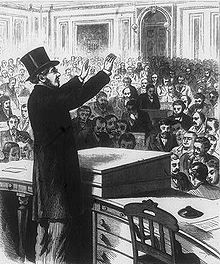
In 1873, by invitation of President Ulysses S. Grant, Rabbi de Sola opened the United States Congress with a prayer. He became the first British subject to open the U.S. House of Representatives with a prayer.

Rabbi de Sola was a pioneer in what is known today as Tora uMada’, the way of looking harmoniously at science and Judaism.

He was a very prolific writer and the author of dozens of books, articles, and papers.

Among them:

  • Behemoth haTemeoth: The Identification and Classification of the Prohibited Animals of Leviticus, Montreal, 1853.

  • Biography of David Aaron de Sola, the late senior rabbi of the Portuguese Jewish community in London, Philadelphia, 1864.

  • Critical Examination of Genesis III.16; Having Reference to the Employment of Anæsthetics in Cases of Labour, published in the British American Journal of Medical and Physical Science, Montreal, 1849.

  • The Day of Atonement: A Sermon Delivered in the Synagogue Shearith Yisrael, Montreal, published in Occident and American Jewish Advocate, Philadelphia, 1848.

  • A Few Points of Interest in the Study of Natural History, Canadian Naturalist and Geologist, 1868.

  • God’s Judgments on Earth: A Sermon Delivered in the Synagogue Shearith Yisrael, Montreal, During the Prevalence of Asiatic Cholera.

  • Hebrew Authors and Their Opponents, Jewish Chronicle, London, 1849.

  • History of the Jews of Poland, Jewish Messenger, New York, 1870.

  • History of the Jews of France, After Bégin and Carmoly, Jewish Messenger, New York, 1871.

  • An Inquiry into the First Settlement of Jews in England.

  • Life and Writings of Saadia Gaon, Cincinnati, Ohio, 1881.

  • The Mosaic Cosmogony (Creation of the Universe), Jewish Messenger, March 1870.

  • Notes on the Jews of Persia Under Mohammed Shah, Occident and American Jewish Advocate, 1850.

  • Observations on the Sanitary Institutions of the Hebrews as Bearing Upon Modern Sanitary Regulations, Canada Medical Journal and Monthly Record of Medical and Surgical Science, Montreal, 1852.

  • The Revelation at Sinai: Its Possibility and Necessity, a sermon delivered in the synagogue Shearith Yisrael, Montreal.

  • The Righteous Man: A Sermon Commemorating the Bestowal of Public Honors on Sir Moses Montefiore by the City of London; Preached in Montreal, on Shabbat Noah 5625, Montreal, 1865.

  • Life of Shabethai Tsevi, the Pseudo-Messiah, Jewish Messenger, March 1869.

  • Yehuda Alcharizi and the Book Tachkemoni, Jewish Record, Philadelphia, 1879.

He died in New York in 1882 and was buried in Montreal.

There is a street bearing his name: Rue Abraham-De Sola, in Côte-Saint-Luc, Montreal.

For a more detailed biography of this exceptional rabbi and for an impressive list of his articles and publications, see:
https://www.general-anaesthesia.com/people/abraham-de-sola.html

Canada’s first rabbi, Abraham de Sola, supported obstetric anaesthesia in defiance of diehard traditionalists. Like Professor James Simpson, de Sola reinterpreted the key passage of Genesis 3:16. In three articles for a Canadian medical journal, Rabbi de Sola explains how God had ordained that woman should bring forth children with “toil” or “labour,” not pain. Unfortunately, other biblical passages are less ambiguous. The injunction “Thou shalt not suffer a witch to live” (Exodus 22:18) cost millions of women their lives. The fateful words caused untold suffering over several centuries. England and Scotland were mostly spared the worst excesses of the 15th–17th century European witch-hunts. But after seeking some kind of succour for the birth of her twins, gentlewoman Eufame MacAlyane was burned alive as a witch in 1592 on the order of Scottish King James I, author of Demonologie (1597). James later became James VI of England (1603–25). Happily, the King’s descendant, Queen Victoria, did not suffer a similar fate after soliciting chloroform for the birth of her son Prince Leopold. Indeed, the use of chloroform by the Queen contributed to the wider social acceptance of obstetric analgesia and anaesthesia in Victorian Britain, though this influence is debated and hard to quantify.

Rabbi Abraham de Sola delivering the opening prayer at the House of Representatives on January 9, 1873