BAMIDBAR: Manna and Humanitarian Aid in Gaza

The Tora recounts that during the forty years the people of Israel lived in the desert, God provided them with a miraculous food called man (manna). This heavenly bread fell each morning in the desert and nourished the Jews sufficiently, daily, and directly. It could not be stored —except for Shabbat— nor hoarded, traded, or negotiated. Its purpose was not only nutritional but also educational.

The man came to break the chains of material and psychological dependency on Pharaoh, who until then had given them bread in exchange for keeping them enslaved. That dependency was part of a system of total control.

The man broke that system, as sustenance no longer came from the oppressor but directly from God. It wasn’t a transaction. It didn’t come with conditions. It didn’t create slaves. It was the bread that liberated an entire nation from tyranny.


THE BUSINESS OF HUMANITARIAN AID

Today, amid a terrible war that began with the October 7 massacre, Israel is once again doing what no one else would: being the exception to the rule. This time, by feeding the enemy — giving food to those who still hold malnourished hostages and who murdered Israeli civilians and swore to destroy the country.

Many —rightfully— ask: Why feed them without first demanding the release of the hostages that Hamas still holds?

The official answer came from Prime Minister Netanyahu: this food distribution operation, coordinated with the United States through the GHF (Gaza Humanitarian Foundation), also has a key strategic objective — to break the dependency of Palestinian civilians on Hamas and thus deprive the terrorist organization of its most powerful weapon.


THE MERCHANTS OF HUNGER

Just like Pharaoh in Egypt, Hamas rules by controlling hunger. Until now, Hamas managed the food distribution coming from allied humanitarian organizations like UNRWA —or food that it outright stole, moved to its storage facilities, and then sold to civilians at exorbitant prices. With that money, they financed terrorism, kept their militants satisfied, and blackmailed the civilian population with food. Hundreds of thousands of people lived under Hamas domination to access so-called “humanitarian aid.”

Now, for the first time, the people of Gaza are receiving bread that —like the man— no longer passes through the criminal and enslaving hands of tyranny and is given without demanding anything in return.


THE END OF HAMAS?

This Israeli-American aid program represents an existential threat to Hamas and its grip on Gaza. And so far, it is working very well. In just three days, Israel has distributed over 1,300,000 food rations — unconditionally and with no strings attached.

Signs of panic are already visible within Hamas, while a glimmer of hope is rising among the population, which is beginning to overcome its fear and break free from the pharaonic terrorist organization.

For the first time, Gazans are expressing gratitude to the United States and Israel, to Trump, and Abu Yair (=Netanyahu).

The man falling from Israel’s sky is now descending upon the desert of Gaza — and it is showing both Palestinians and the world who builds and who destroys, who enslaves and who liberates, who gives and who blackmails with hunger.

Will it work?


TERUMA: Are Jews generous?

FORCED LABOR

In this week’s Parasha, Teruma, we begin reading about the Mishkan or Tabernacle, which was the Temple built by the people of Israel in the desert. The Mishkan contained several sacred artifacts (כלים), including the Ark of the Covenant, which housed the two Tablets of the Law; the Menora and a special Table (shulchan hapanim); and the incense altar. All these objects were made of pure gold. Additionally, there were other artifacts and vessels in the Tabernacle made of silver or copper, beams of a special acacia wood, and curtains crafted with very fine fabrics.

The question that arises is: where did Moshe acquire these precious metals and other materials necessary for constructing the Mishkan? When pagan kings constructed temples, often dedicated to themselves, they would tax or confiscate the people’s wealth to do so. Moreover, labor was imposed upon them: slaves, prisoners of war, or the families of the kingdom would send their children to work for the crown for several months or years. The Jewish people experienced this for several generations in Egypt. One might have expected, therefore, that following this example, Moses would have forced the people to pay high taxes and recruit labor by force to construct the tabernacle.

VOLUNTARY WORK

However, in the desert, things were quite different. Moshe did not have to resort to taxation or force people to work, as the Jewish laborers came “voluntarily.” They “donated” the woods, fabrics, precious metals, and other necessary materials. Moshe merely had to make a request for these donations, and the people responded with generosity that came straight from the heart. The Torah (Shemot chapter 25) attests to this by stating, “HaShem spoke to Moshe saying: Tell the children of Israel to take/donate an offering for Me; you will take the donation of everyone whose heart moves him to do it.” But how did the Jewish people react to Moshe’s call? We find the answer ten chapters later in the Torah, which devotes a significant amount of space to detailing every aspect of the Bet haMiqdash’s construction (as well as recounting the unfortunate episode of the golden calf, but that is a separate matter). In Shemot chapter 35, the Torah states, “the children of Israel, all the men and all the women whose hearts moved them to donate something for the construction that HaShem asked the children of Israel to do through Moshe, who brought a voluntary offering.”


THE OPPOSITE OF DEFICIT

The Torah recounts an extraordinary event, likely unique in the history of philanthropy. Not only was nothing missing, but in the end, there was a surplus of donations. This is described in the 36th chapter of Shemot, where it says that the people brought their freewill offerings every morning, and the men in charge of the sanctuary work reported to Moshe that the people were bringing more than was needed. Moshe then declared that no further donations were necessary, as the materials were already abundant.

The word “surplus” is not often used when it comes to non-profit donations, but the people of Israel were so generous that there was excess. One must also consider where the Jewish slaves obtained such valuables. The Torah tells us that before leaving Egypt, the Jews claimed compensation from the Egyptians for their years of work, and were given objects of great value. This was the first time that the Hebrew slaves owned such items, and it is not typical for someone to part with something of value when they have it for the first time.

The generosity shown by the Jewish people is incredible and unparalleled in ancient history, and perhaps even in modern times. It is also noteworthy that the Jewish leaders declared the surplus and did not keep it, as a king or ruler might have done. This reflects the honesty of the Jewish leaders, as described in Perashat Pequde.

The history of generosity and altruism that began in the Mishkan is repeated every day by the Jewish people around the world. While we may not hear much about these acts of kindness, they are often done anonymously, without recognition or fanfare.


ANONYMOUS CHARITY

Beyond the kindness represented by giving in abundance, the epitome of altruism and generosity is anonymity. Nobody in the Mishkan wanted their name to be mentioned on a special plaque or something similar. The Mishkan was consecrated to Bore Olam, the Creator, and the offerings were completely anonymous. This reminds me of a true story that I witnessed in Israel. It involves a way of practicing Tsedaqa that I consider admirable since it includes three elements: generosity, anonymity, and surplus.

A generous man, let’s call him Mr. Cohen, travels to Israel every year to give Tsedaqa, among other things. As we know, the highest way to practice Tsedaqa is to help the poor people of Israel. Throughout the year, Mr. Cohen “sets aside” some of his income for this generous purpose. Once in Israel, Mr. Cohen visits cities and neighborhoods where there are poor or needy Abrejim or people without many resources. He goes to the neighborhood store (every year he tries to visit a different neighborhood) and asks the storekeeper if he gives credit to his customers, which is very common in Israel. The grocer shows him a notebook with the debts of dozens of families, usually with many children, who have significant debts with the grocer on account of the food they buy for their children: bread, milk, sugar, spreadable cheese, tomatoes, and cucumbers – the staple diet of a low-income family in Israel.

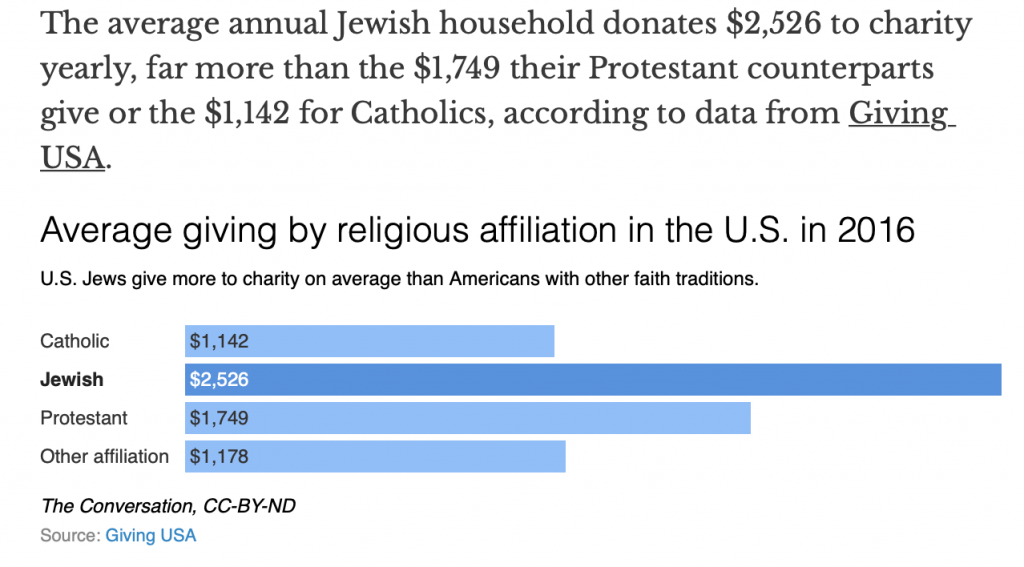
Mr. Cohen writes the grocer a check for the value of the debt and then leaves another 5,000 Shequels for the expenses of the most needy families. This story of generosity and altruism that began in the Mishkan repeats itself permanently. Far from the anti-Semitic prejudice that Jews are greedy, statistics show that our co-religionists outperform members of other religions in acts of philanthropy. If we do not hear more about these acts of kindness, it is because the most important acts of philanthropy are carried out anonymously, without any interest in appearing, just as in the Mishkan.


TERUMA: Respect For What You Were

This week’s Parasha describes among other things the Ark of the Covenant, or aron haberit. The Ark was inside the Qodesh HaQodashim, the most sacred area of ​​the Mishkan or tabernacle.

What was inside the Ark of the Covenant? Among other things: a scroll of the Tora, a sample of the man and the rod of Aron haKohen. The Ark also contained the two Tablets with the Ten Commandments. But what happened with the first set of tablets  that Moshe broke when he saw the People of Israel worshiping the golden calf? 

What happened with the remains or pieces of the broken first Tablets? Our Rabbis assert that the fragments of the first tablets were also placed inside the Ark, next to the second Tablets (לוחות ושברי לוחות מונחים בארון).

And what can we learn from the fact that both the new Tablets and the remains of the first Tablets were in the same sacred place, same category?

1. We learn that an element that had qedusha (holiness) cannot be discarded in a dishonorable way.  This is why religious objects that carry the name of HaShem – say a Sefer Tora, Tefilin, a Mezuza – when can no longer be used they cannot be thrown away. We keep them until they can be buried. That is why in every synagogue there is a Geniza, usually a large box, where these and other religious objects or books that are no longer used are placed. And eventually all these elements will be taken to a cemetery where they are buried. According to Shulhan Arukh, a sefer Tora that has some unfixable imperfection (pasul) should be buried next to a Talmid Hakham.

2. The Hakhamim also learned  a great lesson from the fact that the remains of the old Tablets were kept next to the new tablets. If a respected Tora scholar is affected  by Alzheimer or senility, and loses his knowledge and wisdom he should still be treated with the same respect.  This individual is like the old broken Tablets. The content is gone and the  wisdom completely shattered. And still we should not stop honoring him!  

We learn from the fact that the Ark contained in the same place the new and the old “broken” tablets that we owe this person the same respect and honor that we gave him before. 

“Am Israel” is a leading example in terms of how much values honor parents, scholars and elders, regardless of their present mental condition. It is important to keep this in mind because we live in a society that appreciates and honors people, only when they are useful. 

Our Tora teaches us to honor not just what a person is but also what a person was.


MISHPATIM: Human Law vs Divine Law

ואלה המשפטים אשר תשים לפניהם
   כי תקנה עבד עברי
 
This week’s Parasha contains many Mitsvot, almost all of them belonging to the category of “Mishpatim”, Civil Law.
 
It is worth analyzing the first letter of this Parasha, the VAV, which in Hebrew fulfills the function of “and …”, a conjunction. The Sages always pay attention to the presence of this word and explain what might be the association between the text before the ”and” and the text that follows “and.” The Sages of the Midrash indicate that this Parasha is the thematic continuation of the previous Parasha. The conjunction “and” indicates the Divine origin of these Mitsvot: just as the precepts of the previous Parasha, the Ten Commandments, were promulgated by HaShem on Mount Sinai, the laws of this Parasha are also of Divine origin. Before the Tora was given, Moses judged the people according to his own criteria, which, while (undoubtedly) of impeccable morals, it was ultimately a human criterion. At the beginning of this Parasha, God tells Moshe that these new laws, God’s laws, will now be the laws “that you shall teach and through which you shall judge the Jewish people.” First lesson: Human criteria, no matter how honest they may be, are not sufficient. Not only because these laws can be subjective but also because they are “relative.” That is, they change according to time, fashions, cultures, and many other psychological, sociological, etc. factors. Only a Divine law can be eternal, universal, and with values that never go out of style.

But there is something even more fascinating. This a great example to show why human beings “need” Divine laws. The laws presented here in Mishpatim constitute the first biblical legal code. A pre-constitution with 53 articles. I would like to compare just one aspect – which could easily go unnoticed – between the code of laws presented in Mishpatim and other modern codes of laws. The American Constitution, for example, and I estimate that it is the case for most constitutions of civilized countries, begins with government-related issues: the formation of Congress, the authority of the Senate, and everything related to the President and the Government. In the Tora, there are also laws of the state, of the court, of the priests, of the king, etc. But, very significantly, the first code Mishpatim begins with the laws of the most vulnerable individual: the Hebrew slave, in English, the “indentured servant”. A man or a woman who, due to their poverty or debts, works as servants until they pay off what they owe. This form of slavery was extremely common in the past. In any case, because of their debts,  these individuals were poorer than the poor. And in terms of their status, they were the “least important” people in society and, therefore, the most exposed to abuse by their masters or employers.

And incredibly, the first topic, the first law presented in the Mishpatim code, is not that of the powerful individuals or rulers, but the laws of the slaves! This law speaks about the rights of the slave: the maximum term of servitude, that the salve should be treated without violence or abuse, he (especially “she”) shall not be discriminated against or forced to do humiliating work; the slave shall be compensated at the end of his work and indemnified if the boss injures him, etc.  THIS IS ABSOLUTELY UNPRECEDENTED IN THE HISTORY OF MANKIND.  AND UNIQUE. Especially in the ancient societies contemporary to the Tora, 3500 years ago.  Let’s take, for example, the famous Code of Hammurabi, which speaks about slaves, not their rights, but their obligations to serve their masters with loyalty and the severe punishments for disobedience. For instance, the last article of the Code of Hammurabi, number 282, says: “If a slave is found guilty of saying to his master, ‘You are not my master,’ his ear shall be cut off” (see other similar examples here).

Why does the Tora begin with the rights of the weakest? Simply because it was not written by the “sovereign” or “tyrant” of the time but by God. And the God of Israel focuses first and mainly on the rights of the weakest! As we see in this case and also a little further on in this same Parasha: the Tora severely emphasizes the prohibition of abuse or exploitation of the most unprotected, the widows and orphans. Exodus 22:21-23 states, “Do not abuse the widow or the orphan. Because if you do, when they cry out to me, I will certainly hear their cry… and my anger will be aroused against you…”

Only the Tora, a Divine Law, is concerned more and primarily with the rights of the most vulnerable, of those who have less.


YITRO: Serving God or Using God?

DUTIES OF THE BRAIN
This Shabbat we will read the Parasha Yitro, which contains the Ten Commandments, a subject of inexhaustible depth.
One example. The First commandment is the most difficult to understand as a commandment, because it is not formulated as an order. It does not specify any action that we should perform. And it does not start with the words “You Shall Not…”, such as “You Shall Not Kill”. It seems to be, rather, an introduction to what is about to come. “I am HaShem your God, who delivered you from the land of Egypt, from the house of slaves.”
Following Maimonides, it is usually explained that this commandment expresses our duty to “believe” in God. And it should not be a surprise that the Tora commands about something that is related to “thoughts” and feelings and not to action. Think of the last of the Ten Commandment, the prohibition to envy, that also refers to an emotion that we must control, a virtual reprogramming of our brain.

TO BELIEVE IS TO DO
Once we understand that this commandment is not commanding any “action” let’s review again what its content is. According to Maimonides (see here) believing in God means to “know that God is our Eloqim,” that is, to accept God as the Supreme Authority that we must obey. This commandment teaches us that it is God, and not humans, who defines what is right and what is wrong. Knowing that He is our Lawgiver implies that we should follow His guidance in our behavior and choices. There is a very important difference between the popular definition of “believing in God” and the Jewish definition of “accepting His authority”. As Jordan B. Peterson explains, when journalists repeatedly ask him if he believes in God: the simple verbal statement “I do believe in God” or “I do not believe” is practically irrelevant. Why? Because it is possible to “declare our faith in God” while referring to an imaginary “god” in our mind, and not to the God of the Bible. Let me explain: Imagine someone that believes in God but ignores His Commandments. Ignores or does not care to follow His laws and guidance. This individual actually believes in a God “for emergencies only”. Is that considered a real “faith” in the God of the Tora?

Is that the God of the Tora? Can this be considered real “faith”?

REREADING THE FIRST COMMANDMENT
Too many superstitious people of all religions (including ours!) profess this type of belief in a god that serves you but that we don’t need to obey. Perhaps that is why in His “official presentation” to His people in Mount Sinai, i.e., the First Commandment, God introduces Himself first as “Eloqekha”, “Your Authority”, :”Your Sovereign”, who demands certain behavior, guides you, and rewards the righteous and punishes the sinners. It is true that apart from being “Eloqekha” our Legislator and Sovereign, God is also our redeemer: the First Commandment mentions that He saved us from the Egyptian slavery!
But the main message of the First Commandments is about obedience, not prayer. It focuses on accepting God as our Authority. And it was formulated in this way perhaps to avoid that type of immature relationship in which God only exists to solve my problems.
“Serving” God is not like serving idols. Pagan gods demands nothing from your personal conduct. Idols do not care what you do with your life. They do not expect from you obedience but tributes. Because they do not care about you. They just use you. And they let you to use them when you need it. The relationship between pagan gods and pagans is strictly a quid pro quo relationship.

GOD AS A PARENT
But HaShem does not ask anything from us in return for His good advice. Te entire relationship between God and us is not a relationship of convenience but a relationship of love. We obey Him because we trust that Him. Our relationship with God is like the relationship between children and parents. I completely trust that whatever God asks me to do or not to do is ultimately for my own good. The ultimate expression of faith, of believing in God consists in acting in a way that is consistent with His existence. It is what I “do” what expresses my faith (or my lack of faith), more than what I say or believe.


Challa, Manna and Parnasa

After leaving Egypt and entering the desert, the Israelites began to suffer from a shortage of food and water. At that moment, one of the greatest miracles in biblical history took place: God caused manna (in Hebrew, man) to descend — a miraculous food with unique nutritional properties. Through Moshe, God instructed the people on how to handle this “food from heaven.” These instructions were not technical but educational. For centuries, we Jews have applied these divine lessons to the way we think about our work and how we relate to money and material possessions.

There are three fundamental teachings regarding the manna — all of them are still deeply relevant to modern life.


ACCEPTING DEPENDENCY

The first message of the man is that all food and material wealth ultimately “comes from heaven.” This does not mean we are exempt from working to earn our livelihood. The manna did not fall at the entrance of the Israelites’ tents — nor was it delivered by Amazon. They had to step outside and make an effort to gather it. The key lesson is to remember that, even though we work and exert ourselves, our sustenance (parnasa) is decided by Heaven — just like the manna. A farmer may work from sunrise to sunset planting his fields, but if God doesn’t send rain, he won’t harvest anything. A businessman may be intelligent and hardworking, but his income can be affected if he gets sick or has an accident.

The first lesson from the manna is this: we must believe that, in the end, it is HaShem who determines what we will have to eat and whether we will have just enough or, B” H, even more than enough. Emuna — faith — is essential for facing and overcoming one of the most common mental health challenges: anxiety. When we don’t actively cultivate faith, fluctuations in the economy, changes in employment, salary, or business can destabilize us. We must go out and make the necessary effort to “gather the manna,” but we must also know and accept with emuna that what we receive — whether a lot or a little — is exactly what God has determined for us.


THOU SHALT NOT ACCUMULATE

In the desert, it was forbidden to hoard manna. Each person was to collect only what they needed for that day. If someone collected more than necessary, the excess would rot. As a result, no one compared their portion to that of their neighbor.

This second lesson speaks to the modern tendency to accumulate material goods compulsively. Hoarding reflects a lack of faith, a lack of appreciation, and ingratitude toward HaShem’s generosity — which is not finite. Emuna means being happy with what one has. This mindset protects us from one of the most destructive emotional conditions: envy and jealousy.

The segula — the spiritual power — of the manna reminds me of a foundational truth: I don’t need to look at my neighbor and believe that his abundance somehow diminishes mine. The essential goal in life is not to have everything I want but to want everything I have.


NOT ON SHABBAT

On Fridays, the people were instructed to collect a double portion of manna — for that day and for Shabbat — because the manna would not fall on Shabbat. This taught them that there was no need to work on Shabbat in order to have what to eat.

Any Jew who observes Shabbat knows that it’s possible to miss out on business deals or professional opportunities by not working on the seventh day. A Jewish merchant may lose potential sales or unique offers due to Shabbat observance. As the Romans once noted, Shabbat is not necessarily “good for business.”

But what greater demonstration of faith in HaShem could there be than refraining from work on Shabbat, with the conviction that “I will not earn more than what has already been designated from Heaven for me and my family”?

That is why each Shabbat, we remember the manna — in the two loaves (challot) that we prepare and in the way we cover them from above and below.

The segula of the manna teaches us to strengthen our faith in HaShem, to adopt moderation in our consumption habits, and to avoid the trap of material excess.


BESHALLACH: The Bones of Yosef, the Danube River and the Shoah

Founded in 1989 in Israel, ZAKA was originally formed to respond to terror attacks and deal with the retrieval, identification and burial of the deceased.
(Written in February 2019)
ויקח משה את עצמות יוסף עמו

The most incredible thing about our Tora is its actuality and relevance: the fact that in its immortal lines, we read events and stories that occurred thousands of years ago, and suddenly, boom! We find something very similar in the latest news from that week’s newspapers… Sometimes it’s just a matter of opening our eyes and discovering these “coincidences”. One example.

YOSEF AT THE BOTTOM OF THE NILE

This Shabbat in Parashat Beshallach we read about the Jews’ departure from Egypt. And one of the first things that this Parsha tells us is that before leaving Egypt, Moses took “the bones (the remains) of Joseph” with him to be buried in the land of Israel. The Sages of the Talmud give us some details of this event. Firstly, all agree that Joseph’s remains were not buried in the Valley of the Kings, in a pyramid, like the remains of the Pharaohs and other essential people of Egypt. Joseph’s remains were thrown into the Nile River. And Moses had to rescue his body from the bottom of the river. The Sages debate the reason why the bones of Joseph were thrown into the river by the Egyptians. The Gemara in Sota says that the Egyptians, aware that Joseph had saved the country’s economy, wanted to use Joseph’s bones as an esoteric element, an amulet, throwing his body into the Nile in a metal chest so that Joseph’s body would “bless the Nile”. Like when some people throw coins into the Fonte de Trevi with the hope that the money in their pockets will multiply. Midrash Tanchuma presents a radically different opinion, which I think it might be closer to the Peshat: Yosef’s remains were disinterred from his luxurious tomb and thrown into the Nile as an act of disdain by the new Egyptian leader, a revisionist Pharaoh who blamed the Jews for all their miseries, towards the great Jewish leader. Regardless of the reason why Yosef’s body was thrown into the river, the Sages explain that before leaving Egypt, Moses took the time to refloat Joseph’s bones from the bottom of the Nile, carry him and bringing his bones to Israel. Miraculously, Moses was able to retrieve Yosef’s remains and were buried in the land of Israel (Shekhem).

WATER, WITH JEWISH BLOOD

The Nazi invasion of Hungary in 1944 caused the largest, fastest, and most efficient mass deportation and murder in human history. In just eight weeks, about 424,000 Hungarian Jews were deported to Auschwitz-Birkenau. Within six months, over half a million Jews, 565,000, were killed in these and other concentration camps. The Jews who remained in Hungary were not faring better. Between December 1944 and January 1945, the Hungarian police forces known as the “Crossed Arrows” took thousands of Jews out of the ghettos of Budapest and murdered them in cold blood. Men, women, elders, and children were executed on the banks of the Danube, and their bodies were thrown into the river. Before killing them, the Hungarian police forces made them take off their shoes and tied their hands with their shoelaces, so they couldn’t escape by swimming.  The bodies of thousands of Jews—it is estimated to be no less than 3,500, although some say 20,000!—lie in the murky depths of the Danube. On April 16, 2005, Hungary erected a monument in memory of the victims of these terrible killings. It is called “Shoes on the Danube Bank.”

THE VOICE THAT COMES FROM THE BED OF THE RIVER

A few days ago, I was very moved when I read in an Israeli newspaper that a group of Israeli divers, volunteers from ZAKA, the Israeli organization that is responsible for rescuing the bodies or remains of Jews (dead soldiers in combat, terrorism victims, etc.) and give them a proper burial, was in Hungary for a biblical-sized project: to rescue from the riverbed the bones of the Jews murdered in 1944-1945 and to take them to the land of Israel. See here .  I couldn’t hold back my tears, and it was impossible for me not to connect this holy rescue mission with the story of Yosef from the Parashah of this week!

The operation in Budapest will not be easy. It looks like to refloat these mortal remains will require a miracle (something that for Jews is already part of our daily reality), like the one that Moses performed when exhuming the bones of Yosef.

But regardless of the success of this mission, I am so proud to belong to Am Israel because we not only respond to a brother’s call when they need our help and assistance: we are also capable of hearing the inaudible voice of our dead—of Yosef, or of the Jews murdered in Budapest—from the bottom of a river, rescue them from oblivion and bringing their bodies home.

אשרי העם שככה לו אשרי העם שה‘ אלקיו


BESHALLACH: Miriam, and the audacity of hope

ותקח מרים הנביאה את התוף בידה

Miriam, Moshe’s (Moses) sister, was probably the most optimistic person in the history of Am Israel. I believe that when our Sages say that the Jews were able to leave Egypt thanks to the merit of virtuous women, they were referring especially to Miriam.

Miriam’s career as a prophetess of optimism began at an early age: when she was a child. At that time his father Amram, who was a well-respected leader in the Jewish community, decided that after Pharaoh’s decree ordering the killing of all newly born Jewish boys, he would separate from his wife in order not to bring more children to the world. “Why having more children? To see them die? Amram reasoned”. All the Jewish husbands saw what Amram did and decided that they would also stop having children. But when everyone saw death, despair and pessimism, a woman, a little girl named Miriam, saw the same things from a different perspective. Miriam visualized the possibility of a better future. And she told her father: “Pharaoh condemned only the male children to die, but your acts and your example would also condemn the women of Israel to extinction.” Miriam’s words had a big impact on her father. Amram returned to his wife Yokhebed and thus Moshe was born. All Yehudim of Egypt followed Amram’s example.  And Israel was saved from this self-extinction thanks to the audacity of a little girl named Miriam.

When Moshe was born, and before the Egyptian officers took him from his mother’s arms, Yokhebed, his mother, took him to the Nile River. After placing the basket with his baby on the river Yokhebed disappeared, perhaps not to see her baby die …. But once again, when everyone saw the inevitable and tragic end of the baby, a young girl named Miriam had the audacity of hope. And guided by an unreasonable but prophetic optimism, she followed her brother’s basket and saw wit her eyes that her stubborn optimism crystallized. Moshe was rescued by the last person anyone had imagined: Batya, Pharaoh’s  daughter. Miriam was present at the scene and suggested to the adoptive mother that the baby be nursed by a Hebrew woman before being taken to the palace. What we sometimes do not realize is that it was thanks to the providential intervention of Miriam that Moshe was raised by his own mother and that this is how Moshe knew he was Jewish!.  And so it was that one day he decided to go out and help his brothers …. It was thanks to Miriam that Moshe was born, and it was thanks to Miriam and her optimism that Moshe became the leader of the Jewish people.

In this week’s Parasha we find another evidence of Miriam’s incredible optimistic spirit. The departure from Egypt was very quick. Almost surprising. “You have to leave NOW, in the middle of the night. And you will have to travel with whatever you are wearing, and leave everything else behind.”  Men mainly thought about carrying things of value …. and the ladies, I imagine, must have been thinking of bringing food for their families. As we all know, there was not even time to wait for the dough to rise. At that moment people thinks with fear about all the potential  dangers of venturing into the desert: Will we have food, water, shade? What about wild animals or snakes or scorpions? At the time of leaving Egypt everyone was thinking about the risks of the unknown journey and the dangers of the Divine adventure. With one exception: Miriam. When Miriam packaged her belongings, the first thing she prepared was the TUPIM (a kind of “tambourine”). But why brining musical instruments? Why carrying extra weight? Once again, when everyone saw dangers and difficulties, Miriam dared to think differently. Miriam took the tambourines because she thought of celebrating. It was not yet known that HaShem was going to open the sea and the people of Israel would cross into their freedom. But even though she was not sure what exactly would be celebrating, Miriam had the audacity to think about freedom, victory, and celebration! And she said to herself, “We must be prepared to sing to HaShem and thank Him for all He has done for us.” And so it was. When the people of Israel crossed the sea, Miriam went out with her TUPIM to celebrate freedom and invite everyone to sing in gratitude to HaShem.

As they left Egypt, when they all imagined the dangers of the journey, Miriam had the audacity of hope. Miriam visualized freedom, victory, celebration and gratitude to HaShem.


BO: Death, as the last resort

The story of the ten plagues is fascinating not only for its content but also for the sophistication of its narrative. The plagues begin with the confrontation of a shy Moses and an arrogant Pharaoh.

BLOOD
When Moshe turns the Nile River into blood, Pharaoh’s reaction consists of indifference and pride. The god “Nile”, one of the principal deities of Egypt, has been defeated, damaged, and wounded. The fishing industry collapsed. Pharaoh –who fed the Nile god with the bodies of the Hebrew infants–now sees with his own eyes how the blood emerges as a testimony of this genocide. But Pharaoh is (or acts as if he was) unimpressed. Far from conceding, he asks his magicians to replicate what appears to be a great act of illusionism, a formidable magic trick performed by Moshe and Aharon. When the magicians replicate the act, the monarch declares victory. He turns his back on Moshe (vayifen) and proudly retreats to the comfort of his palace, thinking that his wizards have won the contest.

FROGS
In the second plague, things begin to affect Pharaoh personally. A massive number of frogs came out of the river and invaded the homos or regular Egyptians and Pharaoh’s palace and rooms. Egyptians worshipped frogs as the gods of reproduction. But that power of reproduction is now out of control, infesting and damaging Egypt. The wizards, once again, can reproduce the plague. But Pharaoh realizes – a little late – that what he needs from his magicians is not just a demonstration that they can replicate the trick. He needs them “to stop the plague”, and control the frogs! When the wizards fail to do that, Pharaoh sends for Moses and Aharon and begins to negotiate. He lies. He tells them that if they stop the plague of frogs, he will accept their demands. Then, when the frogs leave, Pharaoh hardens his heart and breaks his promise, probably thinking that Moshe has exhausted all his magic and doesn’t let the people go.
LICE
The third plague is lice. Pharaoh confirms what he already suspected: his illusionists cannot stop the plagues. His wizards have been defeated, and he realizes that his gods have been affected. The Egyptians revered insects as the invisible, magical manifestation of divine spirits. And now those gods were also turning against the Egyptians.
THE ECONOMY
Egypt is the most prosperous and powerful nation in the Middle East. The only land in that arid region that, thanks to its mighty Nile river, does not depend on rain to survive. By the seventh plague, mentioned in our weekly Parasha, the Egyptian empire is in ruins, and Pharaoh’s advisers declare the plagues a national disaster. Everything that contributed to Egypt’s prosperity collapsed: first, the fishing industry, then the livestock, and now, the last plagues — hail and locust — destroyed the harvest. Now more desperate, Pharaoh wishes to continue the negotiations and is willing to offer more concessions, but at this point, Moshe does not give in.
DARKNESS
When the ninth plague, darkness, arrives, Egypt is completely paralyzed. This plague also has a devastating psychological effect on Pharaoh and his people. Why? Because the primary God of the Egyptians was “Ra”, the sun god. Egyptians are now witnessing the humiliating defeat of Egypt’s supreme God and discovering that no imaginary deity has any real power. Paganism collapsed. The plagues demonstrated that the Egyptian gods and deities were nothing but imaginary powers. Egyptians -and most importantly: the Hebrews– are beginning to understand that the invisible God of the Jews controls all forces of nature.
THE LAST RESOURCE
Then we have the last plague: the death of the firstborn, which brought the most severe psychological, devastating effect on Egyptian culture and theology. Egyptians were obsessed with death and claimed they possessed the secrets of immortality. When a nobleman: a Pharaoh, a priest, or a firstborn (who fulfilled priestly functions) was about to die, preparations would be made in advance to assist their spirits in their journey to immortality: bodies were mummified, servants were sacrificed, and treasures would be placed next to the nobleman’s body. Sometimes, a pyramid would be built to protect the body until reanimation happens. But when death was not natural but sudden, like in the Tenth Plague, these preparations for eternity were not obtained. With the end of the firstborn, the illusion of immortality came to an end.

WHO SAID THE WORD “DEATH” FIRST?
Finally, there is something else we should notice in the tenth plague. During the first eight plagues, Pharaoh defied Moshe and tried to humiliate him but never threatened Moshe with death. In the ninth plague, however, Pharaoh tells Moses. “You can leave, you and your people, the elderly and children, but you must leave your livestock here.” Pharaoh still plays games. He agrees to let the Jerw go, but in his terms and conditions: Do not take your assets with you as a guarantee that you will return. Moshe rejects the offer. And at that moment, the very nervous Pharaoh losses his patience, and “death” is mentioned for the first time: (Shemot, Exodus, 10:27): “Get out of here — he says to Moshe– and never see me again because the day that you would appear before me, you will die.” The death of the firstborn was the last resort, convincing Pharaoh to let the Hebrew slaves go. All the other warnings were ignored and failed to subdue the arrogance of the tyrant dictator. But it was not Moshe, but Pharaoh, who put “death” on the negotiating table for the first time.


VAERA: Pharaoh and His Gambling Problem

Every time I read this Parasha, I feel perplexed and fascinated by the behavior of Pharaoh. During the plagues, Pharaoh even admitted that he was wrong and said: “I have sinned before HaShem, your God … and now, please forgive my sin only this time, and pray to HaShem your God, to take away this mortal [plague from me].”  but as soon as the plagues disappear, Pharaoh changes his mind and refuses to let the people of Israel out of Egypt.
What’s going on? Why does Pharaoh behave in such an irrational, suicidal way?
Two explanations.
The first is a theological explanation. HaShem intervenes in the ‘heart’ of Pharaoh. It influences his decision and triggers his “stubbornness”. According to Rabbi Don Isaac Abarbanel, HaShem did this not to compromise Pharaoh’s free will but to preserve it. Let me explain: If God would reveal Himself to us, and we could see and experiment His Presence beyond any doubt, would anyone dare not observe Shabbat, for example? Would anyone even think about eating non-Kosher food, and challenging God, so to speak, face to face? If our knowledge of God was absolute, we could not choose to obey or disobey Him. Certainty of His existence would turn us into robots (or “angels”, but that is for another conversation), incapable of disobeying a Divine order. In this sense, the invisibility of HaShem, His deliberate concealment, allows us to maintain our ability to choose and disobey or the merit of obeying Him. Back to Pharaoh. Pharaoh was “the only person who knew” when each plague would begin and when it would end because Moshe reported directly to him. The evidence of Divine intervention, His “existence”, was overwhelming for Pharaoh. Undeniable. Technically,  Pharaoh should have become a robot, deprived of free will, unable to disobey, ergo, “free of responsibility.” Therefore, to preserve Pharaoh’s ability to choose –and make him accountable for his YES or his NO– HaShem intervenes in his thoughts making his “heart”  stubborn and uncompromising, and in this way restoring his ability to choose. Thus, Pharaoh becomes again responsible for what he chooses. Maimonides explains that this type of intervention in human thought is not the rule. A King’s case is an exception.
The second explanation is rooted in psychology, precisely the behavior of a gambling addict. When an addict reaches a point of no return, they exhibit self-destructive behavior, continuing to gamble despite the obvious consequences. In the same way, after the fifth plague, Pharaoh could no longer go back and let the Israelites leave without losing all his remaining prestige and credibility. He has reached a point of no return and continues to gamble with the fate of his people.
I believe we can also explain the behavior of Pharaoh in this way. After the fifth plague, Pharaoh’s position had become untenable. He had already caused immense suffering and loss for his people, and if he were to allow the Israelites to leave, he would lose whatever remained of his prestige and credibility. But instead of acknowledging the hopelessness of his situation, Pharaoh continues to gamble, refusing to admit defeat and releasing the Israelites. Pharaoh knows that he has reached a point of no return. And he decides to continue gambling. I believe it is possible to explain that Divine intervention brought the possibility of Pharaoh’s free will,  but the “gambling effect” also influenced Pharaoh’s behavior and refusal.
What happened to Pharaoh is a great lesson for all: 1. We must identify possible points of no return in any area of our lives. 2. We must avoid falling into any downward spiral of self-destruction. 3. And if we ever, recklessly, find ourselves in such a spiral, we should learn from this story of Pharaoh that it is better to stop on time in one piece than to keep running towards the cliff.