CHAYE SARA: Finding a wife for Isaac

This week’s Parasha is about the last days of Abraham Abinu. After taking care of the burial of his wife Sarah, Abraham has a critical mission: to get a wife for his son Isaac (Ytshaq). Much is at stake. Finding a woman worthy of Isaac will allow Abraham’s legacy, his covenant with HaShem, to continue for posterity. But if the wife does not accompany Isaac in Abraham’s way, everything will be lost. At that time, as today, the children’s education and Jewish continuity depended primarily on the wife. For this challenging mission, Abraham sends his most loyal servant, Eliezer. He arrives in Haran, the land where Abraham comes from, and where he still has some relatives. Eliezer begs HaShem to guide his steps. And he proposes to do a “test” to find the future wife of Isaac. Eliezer heads towards the well. And he tells himself that when he arrives, he will ask one of the young women for some water to drink. If the woman agrees and also offers water for his camels, this would be a sign that she is a suitable wife for Isaac.

The rabbis are divided in their opinion regarding this event: Some, like Maimonides, say that Eliezer showed a lack of judgment: we cannot “put God to the test” (לא תנסו). A Jews should never say, for example, “HaShem, You are Almighty, and it is within your power to determine which way the coin will fall. I am not sure whether I should buy this house. Therefore, HaShem, I am going to toss a coin so that You reveal Your will to me: if it is Your will that I buy this house, make the coin fall ‘heads’. And if it is not Your will, let it be ‘tails’. “Maimonides indicates that this seemingly impeccable reasoning was part of the rhetoric used by idolaters to “force their gods to reveal their will”, which they then manipulated at will, claiming that they were following their god’s instructions.

Other Rabbis, while agreeing in principle with Maimonides’ opinion, say that in this case, Eliezer did not try to test God but to test the character and personality of the girl. After all, Eliezer didn’t ask for an arbitrary identifying sign: he did not say, for example, “if I see a young woman wearing a dress with flowers, she will be the one HaShem wants for Isaac,” or something like that. Eliezer set out to identify “qualities” that would test the girl’s good character.

As additional support for this second opinion, we should notice what virtues Eliezer hoped to see in Isaac’s future wife. 

Eliezer looked for the virtues of Abraham Abinu.

1. When Abraham welcomes guests, he offers them less than he ultimately gives them. Abraham offered them “a piece of bread and some water.” But in the end, he feasted them on tender meat, freshly baked bread, and delicious desserts. Part of the virtue of a Tsadiq (a righteous man) “is to do more than what he promises” (the opposite of politicians!).

2. Abraham served his guests with “enthusiasm” (זריזות). One of the ways to measure our enthusiasm is to see how quickly we do things. If a child or a teenager has to get up at dawn to do a task that he does not want to do, he will surely get up very slowly, dress in slow motion, with total reluctance, etc. But if he has to get up at dawn to fly to Disneyland, he will surely do that without delay, dressed up quickly and with great enthusiasm. When Abraham received his guests, the Torah tells us that Abraham “hurried” and said to his wife: “Hurry, mix the flour and prepare the cakes.” And then Abraham “ran” to his cattle and “hurried” to prepare the meat …

1. When Eliezer saw Ribqa he asked for water. Ribqa “hurried” to the fountain and said: “Drink, my Lord.” And she said, on her own initiative: “I am going to give your camels to drink, too.”

2. “And she “hurried” and “ran” to the source of water and watered the camels until they quenched their thirst”. 

This exceptional behavior is typical of people who practice chesed, acts of kindness at the highest possible level: They do more than they are asked or expected to do. They do more than they promised to do. And when they do their good deeds, they do it with enthusiasm, passion, and selflessness.

Ribqa passed the character test, reached the bar established by Abraham Abinu, and graduated with flying colors.


CHAYE SARA: The Beginning Of Prayer

ONE CREATOR
Abraham Abinu discovered God by observing Creation. “There must be an Intelligent Creator,” Abraham reasoned, Someone who brought this wonderful world into existence (יש אדון לבירה). This idea, already very innovative, was followed by another revolutionary declaration by Abraham: “There is only one God.” Against all his contemporary logic, Abraham affirmed that opposing natural forces are not a reflection of gods fighting against each other. In Abraham’s view, light and darkness, health and disease, and birth and death came from the same Source. Believing in only one God was insane! Perhaps blasphemy and a lack of respect for the other gods because Abraham’s God demanded exclusivity.

GOD IS INVISIBLE
And as if this was not enough, Abraham also claimed that idols were false representations of God. “The true God cannot be seen. He does not have a body. He is invisible,” Abraham affirmed. This statement was the most dramatic one. Today in 2022, we understand God’s invisibility without any problems. We know, for example, that radio waves, microwaves, WiFi, cellular technology, etc, are invisible to our eyes. Many things we don’t see exist in a dimension that we cannot perceive with our eyes. But 4,000 years ago, who would believe in something that cannot be seen, touched, or represented? Who would believe that something or someone invisible is responsible for the existence of everything visible? I would say that this was the most spectacular innovation of Abraham’s monotheism and the most difficult idea to explain to others.

HE CARES, AND HE LISTENS TO US
But there is an aspect of Jewish monotheism (or Jewish theology) that, according to the literal reading of the biblical text (peshat) Abraham Abinu only discovered over time. That the Creator “cares” about human beings, and He intervenes in our lives and might even change the natural course of events when we ask Him to do so. It seems that at the beginning, Abraham was not fully aware of this and that is why Abraham did not pray to God when he needed His intervention. For example, Abraham leaves the comfortable life of Haran. He emigrates to Israel, and when he arrives, the land suffers a severe drought, and he decides to emigrate to Egypt, and once there, his wife Sarah is kidnapped. Now, in both instances, Abraham did not pray. Abraham did not ask God to grant him the blessing of the rain, nor did he implore God to help him get his wife Sara back. Why?

SUFFERING WITHOUT PRAYING
The text’s silence indicates that Abraham did not fathom that a human being could ask God for His intervention to change a natural or a personal event. If we put ourselves in the context of Abraham’s generation, pagans did not expect the gods to care about humans. First, the gods always demanded gifts and sacrifices from men and had no empathy, love, or concern for human beings. These mythological gods were very busy fighting against each other and had no interest in helping men. On the contrary, they sometimes competed with humans for natural resources such as rain, light, or women. Amid a pagan society, praying must have been entirely counterintuitive And something that Abraham could not deduce from his intelligence or observation. Abraham had to be instructed by God to pray.

THE BEGINNING OF THE PRAYER
Following the literal sense of the text strictly, it is God who first mentions the concept of prayer (lehitpalel). When Sara was kidnapped a second time by the monarch of Gerar, Abimelekh God punished the king with severe afflictions and appeared to Abimelekh in his dream. God reveals to the king that Sara is a married woman. Abimelekh says that he did not know that, and then God tells him what to do (Genesis 20: 7) “Now, return the woman to her husband, who is a prophet, and [ask him] to pray for you and you will not die” Genesis 20:17: “Then Abraham prayed to God and God healed Abimelekh.” This is the first formal prayer in the Tora. Previously, Abraham invoked God’s name (vayqra beshem HaShem; nebarekh sheakhalnu mishelo, tiquen tefilat Shacharit, etc.) to recognize Him and to announce His existence to the rest of the world. And he also intervened in Sodom and Gomorrah, questioning Divine justice and negotiating the salvation of the righteous, but technically he did not pray. It seems God taught Abraham to pray (as He did with Moshe and the 13 middot). Abraham then learned that it is possible to pray to God and expect, for example, that He would change the natural course of a disease and cure a human being, like Abimelekh, thanks to his prayer.

APPRECIATING PRAYER
We are familiar with prayer, and it seems natural that God would care about and listen to us. But listening to prayers is not something we should naturally expect from the Creator of the universe. Prayer is an incredible privilege and a gift given to us because HaShem loves us as a parent loves his children. Abraham and his followers learned this lesson very quickly. In this week’s Parasha, Chaye Sare, we find Eliezer, Abraham’s servant, praying and asking the Creator’s assistance to find a suitable wife for Yitschaq. Later, we find Yitschaq praying for a son. And Yaaqob praying for Divine protection. And the rest is history…


LEKH LEKHA: Why Abraham?

This week’s Parasha begins with a Divine call to our patriarch Abraham, “Lekh Lekha”: Leave your land and go to the land that I will show you [Canaan, Israel]. God speaks to Abraham and invites him to leave his land and settle in a new land, Israel, where HaShem will bless him with a multitude of descendants. Very nice indeed!  But the biblical text keeps its silence at a sensitive point. “Why Abraham?” What did Abraham do to deserve God’s attention?

CHOICE OR DETERMINISM? 

For those who are familiar with the style of the Tora, the absence of an explanation as to why people do what they do is the rule rather than the exception. Similarly, the Tora only sometimes reveals why HaShem does what He does. The biblical text does not explain, for example, the reasons for many Divine precepts. Why certain animals are pure or impure, etc. similarly (and I believe this is the most dramatic example), the Tora never reveals why God created the world. I’m not sure what the reason for that is. Still, it is notorious that Biblical Hebrew does not have the word why (the word lama, for instance, indicates the purpose of the action, not the intention of the subject; and something similar happens with the term madua’). Perhaps, as I once heard, this has to do with the belief in the absolute freedom of choice (for God and man). Providing the “why” will suggest certain determinism and limitations in the process of making choices. 

Or perhaps, as Rabbi Menashe ben Israel explains, the Tora wants to leave the task of “why” to us. We, the readers, need to find the answers to the why. Every generation can contribute with their point of view on the text, discovering new levels of understanding of the Book of HaShem. This would not be possible if the “whys” were explicit.

Let’s go back to our initial question. Why did God choose Abraham?

ABRAHAM MADE THE FIRST MOVE

The first answer is the story that every Jewish child learns at a tender age. Terach, Abraham’s father, was manufacturing and selling idols. Statues of the mythological gods that represented the different forces of nature. I imagine that “idolatry” must have been a great business (like “art”) because all the seller needed to make a good profit was to convince the buyer that one idol had more powers than the other, and for that, the customer had to pay a higher price! Terach must have been a great salesman. But when Terach wanted to teach his business to his son Abraham, something unexpected happened. Instead of helping his dad, Abraham challenged him with an impeccable but disastrous-for-business logic: “How can you claim that these idols are our creators if they were made yesterday with our own hands? Why should we consider these statues as gods since they cannot see, listen or speak? Abraham’s father was furious with his son. He was not fit for that type of business. Eventually, God “called” Abraham and invited him to move to His land because of Abraham’s honesty. And Abraham accepted the invitation.

HASHEM CALLED FIRST

The second answer concerns a text we recite EVERY day in our Tefilla in the mornings. “You are HaShem, our God, You chose Abram, and You took him out from Ur Casdim, and You changed his name to Abraham, and You found that his heart was faithful to You” אשר בחרת באברם והוצאתו מאור כשדים … ומצאת את לבבו נאמן לפניך. According to this pasuq (Nechemia, 9: 7-8.) God first chooses Abraham, almost arbitrarily, and then He finds out that Abraham is His faithful servant. Ironically, although we recite this pasuq daily, this viewpoint is less known (or less popular) than the first one. According to this interpretation, HaShem sought Abraham, and He prepared him and trained him to become the patriarch of the nation of Israel through the challenges and difficulties (nissiyonot) that Abraham had to experience throughout his life.

ADOPTING A CHILD

Rabbi Hayim Sabato from Yeshiva Bircat Moshe in Maale Adumim (Israel) says something exciting. The text describing the past of Abraham Abinu (at the end of last week’s Parasha) is very short in detail. Except for one circumstantial but revealing point: Haran, the brother of Abram, dies, and his orphan son Lot becomes now part of Abraham’s family. Abraham adopted Lot as his son. This supreme act of kindness made Abraham worthy of the Divine call.

WHO ANSWERED HASHEM’S CALL?

My favorite, a fourth opinion, is the beautiful interpretation of Rabbi Yehuda Alter (1847-1905) in his Book Sefat Emet. There, he says that “HaShem did not speak exclusively to Abraham, HaShem was announcing permanently and to many people His call to leave the land of Casdim and go to Israel, for those who wanted His blessing (המאמר’ לך לך’ שנאמר מהשם יתברך לכל האנשים תמיד). But people rejected God’s call or ignored it. And the only one who “picked up the phone”, and responded affirmatively to God’s call, and the challenges that taking this call would imply, was Abraham Abinu. I love this response for many reasons. But especially for its relevance. HaShem is permanently calling us. He constantly invites to follow Him. To follow His ways. His Voice is in His Book. The call of HaShem is in His Tora. And if we want to follow the steps of Abraham Abinu, all we have to do is open the Book and listen to His Voice.

 We become God’s chosen when we answer His call.


MATTOT – MAS’E: Tora and Human Sacrifices

וְאִם־לֹ֣א תוֹרִ֗ישׁוּ אֶת־יֹשְׁבֵי֙ הָאָ֣רֶץ מִפְּנֵיכֶ֔ם וְהָיָ֣ה אֲשֶׁ֣ר תּוֹתִ֗ירוּ מֵהֶם֙ לְשִׂכִּים֙ בְּעֵ֣ינֵיכֶ֔ם וְלִצְנִינִ֖ים בְּצִדֵּיכֶ֑ם וְצָֽרְרוּ֙ אֶתְכֶ֔ם עַל־הָאָ֖רֶץ אֲשֶׁ֥ר אַתֶּֽם־יֹשְׁבִ֖ים בָּֽהּ׃

Our Parasha tells us that when the people of Israel were about to enter the land of Canaan, the Torah warned them about a subtle and destructive danger: the naïve tolerance of pagan cultures and the mistake of allowing them to remain in the land.

The message was clear:

“…if you do not expel the inhabitants of the land when you settle in it, those you allow to remain will be like thorns in your eyes and like spikes in your sides, and they will cause you suffering in the land where you live.” (Bemidbar 33:55)

The Torah does not justify the expulsion of these nations because of abstract religious differences. The issue was that the peoples of Canaan had crossed an irreversible moral line. They practiced violence, human trafficking, ritual prostitution, and — especially — human sacrifice, including the immolation of their own children to their bloodthirsty idols.

In contrast, the Torah brought into the world an unprecedented ethical revolution. In a world where gods demanded human blood, the Torah proclaimed that serving God means helping others, elevating morality, and making sacrifices of all kinds — to preserve life! God taught Abraham Avinu that He does not want human sacrifices, but rather justice, compassion, and righteousness. From that moment on, Judaism became a beacon of morality in a world that applauded barbarism.

Is this message still relevant?

Unfortunately, yes. And it seems more than ever. Israel is surrounded by extremist ideologies that present themselves as monotheistic religions but act with the violence and immorality of the ancient pagan nations of Canaan. Hamas and other jihadist movements do not seek coexistence; their goal is genocide — the complete elimination of any Jewish presence from the “Islamic land,” as clearly demonstrated on October 7.

To achieve their goals, Hamas is willing to do anything: violence, lies, victimization, and especially their favorite weapon — human sacrifice.

HUNGER IN GAZA:

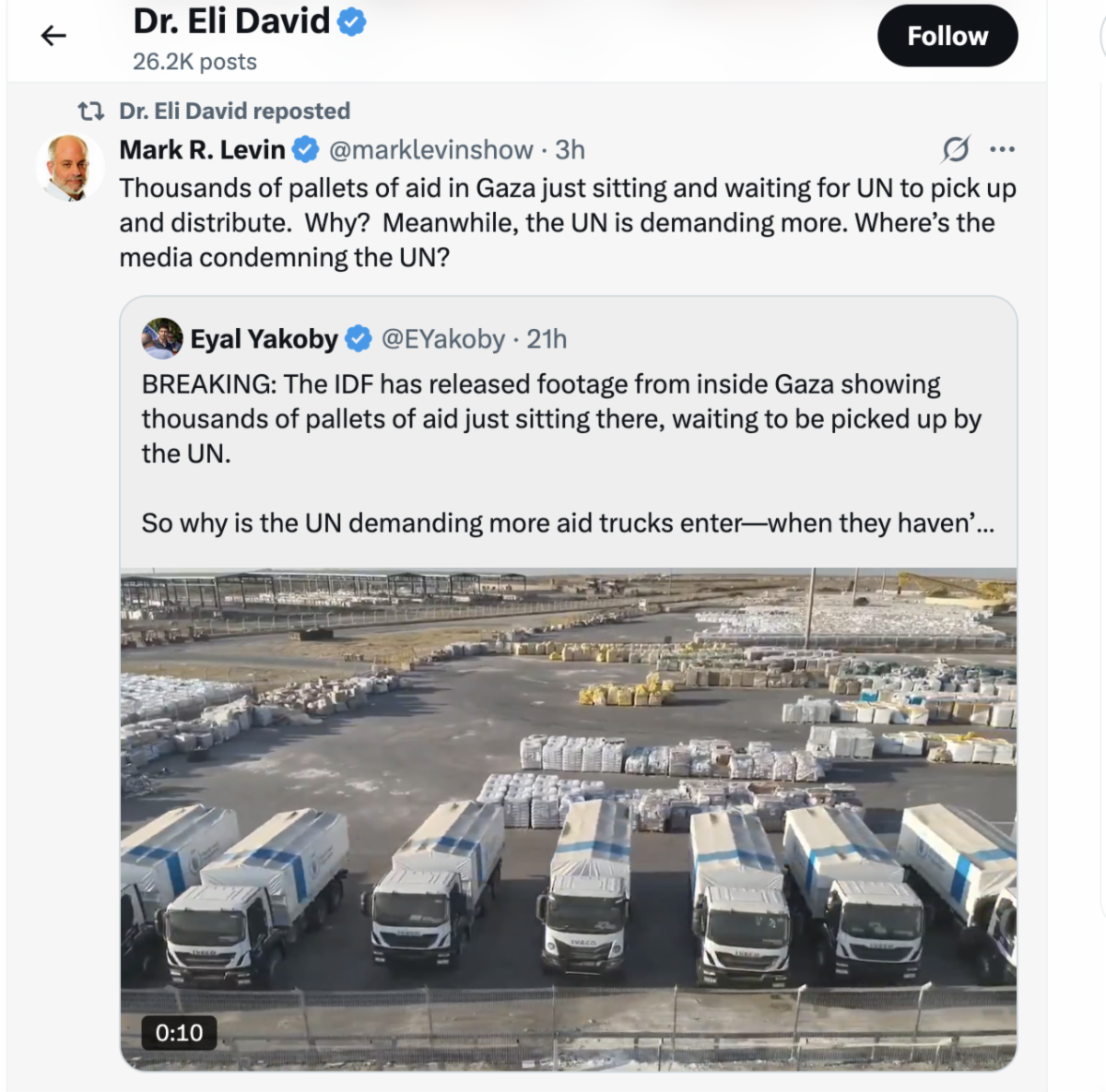
The lie of the international “hunger in Gaza” campaign is one example. According to official COGAT figures, from October 7, 2023 to July 2025, more than 520,000 tons of food, water, medicine, and humanitarian supplies have been transferred. This aid has been stolen by Hamas, who stockpile it and then sell it at exorbitant prices, taking advantage of their own civilians. Just two days ago, drone footage exposed thousands of aid trucks and containers parked inside Gaza, with food beginning to rot under the sun.

Why isn’t that food used to end hunger in Gaza? Because Hamas benefits from the narrative of hunger and has no problem letting its own people starve in the process.

They do not seek to alleviate suffering, but to create it, manipulate it, and export it as images for social media. Hamas films malnourished children in order to accuse Israel. The true cause of hunger in Gaza is not Israel. It is Hamas — and its pagan ideology of human sacrifice.

VICTIMIZATION

The entire world is calling for a ceasefire in Gaza. Appeals for “peace” and to end the “intolerable” suffering of Palestinian children multiply every day. And with unprecedented cynicism, the media blames Israel for this tragedy. Very few dare to say the obvious: all this suffering could end tomorrow if Hamas simply returned the Israeli hostages —20 alive and 30 bodies— that it has held since October 7.

I believe there is no clearer proof than this: blaming Israel —instead of Hamas— for the war in Gaza exposes Hamas’ cynicism and the antisemitic complicity of the rest of the world. There is no greater contrast, and no clearer evidence of the difference between Israel and Hamas, than the fact that Hamas is willing to sacrifice tens of thousands of human lives for a strategic victory, while Israel is willing to sacrifice territory, strategic advantages, prisoners —whatever it takes— to save the life of even one of its hostages.

Hamas does not want a ceasefire because it needs to keep feeding its narrative of victimization. The world is complicit and refuses to see that Hamas sacrifices its own children and celebrates their deaths as if its god were thirsty for their blood. This is not resistance. It is violent paganism disguised as religion.

THE CHILDREN OF GAZA

Hamas has turned the children of Gaza into human shields. It fires rockets from schools, hospitals, and residential neighborhoods, knowing that when Israel responds, it will be accused of war crimes. It does not protect its population — it deliberately places them in harm’s way in order to later exploit the images of dead children as a propaganda tool.

Thousands of civilians, including children, have been sacrificed by Hamas — not by mistake, but by strategic decision and theological justification (jihad).

Hamas indoctrinates children from a young age. It teaches them to hate Jews, to glorify death, to self-immolate. It trains them to become suicide bombers. In its education system, martyrdom is the goal. Palestinian childhood has been corrupted and replaced with a cult of death. Hamas does not educate children to live — it teaches them to kill and to die.

And they have crossed the Rubicon. There is no turning back. There is no way to fix this culture.

The more children suffer or die, incredibly, the more sympathy Hamas gains from those who hate Israel — and the more rewards it reaps from the international community, such as France’s recent recognition of a Palestinian state.

There is no other nation on the planet that uses its own children as cannon fodder with such coldness and systematic perversion. No one else trains children to die as human explosives. This is the 21st-century version of human sacrifice — practiced only by Israel’s enemies.

Solution?

The Torah stated it with absolute clarity more than three thousand years ago: when a society crosses these lines, there is no cure, no salvation, no possibility of redemption:

“If you do not expel the inhabitants of the land… they will be like thorns in your eyes and like spikes in your sides.” (Bemidbar 33:55)

Today, just as in biblical times, the solution is not the utopia of coexistence, nor peace agreements with those who are willing to kill their own children for political gain.

The only realistic path to peace for Israel is to adopt the plan proposed by the Trump administration and other leaders with a similar biblical vision: voluntary —or incentivized— emigration of the Palestinian population from Gaza.

And if I may suggest a destination where Palestinians could live in peace, harmony, and feel at home — I believe the best option is Macron’s France.

Bienvenue à tous

SHABBAT SHALOM


KORACH: How Do You Measure Victory in the Middle East?

The conflict between Israel and Iran is not over yet. We are currently in a ceasefire after an overwhelming Israeli victory in the “Twelve-Day War,” a conflict in which Israel succeeded, at the highest possible level, in achieving its objectives: destroying Iran’s nuclear program and neutralizing its ballistic missiles.

Israel also demonstrated the incredible capability of its air force, which, within just a few hours, gained total control of Tehran’s skies. The Jewish Air Force proved to be unmatched by any other air force in the region. Israel also used its missile and drone defense systems with considerable effectiveness. It showed the incredible logistical and emotional preparedness and discipline of the Jewish State regarding its shelters—better than any other country in the world—and its citizens’ training to mobilize immediately upon hearing sirens and alarms. This readiness has saved thousands of lives that could have been victims of Iranian missiles.

It has been an incredible victory for Israel, and Iran knows it. The world knows it, too. There are still post-war negotiations between the U.S. and Iran to ensure that Iran does not continue its nuclear programs or missile production.

What else needs to happen now?

Suppose we visualize the most optimistic scenario of this story, which is still unfolding. In that case, some suggest an expansion of the Abraham Accords, potentially including countries such as Oman, Kuwait, Saudi Arabia, and even Syria and Lebanon.

This week, giant billboards appeared in Tel Aviv showing Trump, Netanyahu, and Arab leaders promoting normalization with Israel under the slogan of the “Abraham Alliance” (see image above).

But until these messianic images crystallize, we must be realistic. First and foremost, we must recognize all variants of enemies: perhaps peace agreements can be signed with moderate Muslim states, such as Bahrain or the Emirates, but it is extremely dangerous to make agreements with Islamic or Islamized states. Because a state or an Islamic organization—such as Iran, the Houthis, Hezbollah, Hamas, or Al Qaeda—will not abandon their objective of destroying Israel. In any hypothetical “peace agreement,” they will use the strategy of taqiya, the religiously permitted lie in Islam, for political and military purposes. That is, to sign a peace agreement today with the hidden intention of attacking tomorrow.

If we forget this, then we have not learned the lessons of October 7.

Israel handed over Gaza to Hamas, free of Jewish presence. During those 20 years of supposed “peace,” Israel helped as much as it could to rebuild and benefit the inhabitants of Gaza. It yielded and looked the other way (hajalá) in the face of provocations from Gazans. Meanwhile, Hamas, instead of building their state with unlimited resources at their disposal, armed itself to the teeth, dug tunnels, and meticulously planned the massacre of 2023. We cannot allow ourselves to fall into the same trap again.

How can we avoid repeating this terror?

From the perspective of Judaism—and also of Israel’s modern situation—there is a fundamental teaching: the least Jewish word in the dictionary is “akhshav,” ( עכשיו ) “now,” as in the phrase “Peace Now” or “Hostages Now.” That mentality of resolving an immediate problem and leaving the consequences for our grandchildren is not part of the Jewish vision. Our patriarch Yaacob acquired the birthright from his brother Esav, a future blessing, which Esav sacrificed for a bowl of lentils NOW. That scene is not just a historical account; it is a warning. The Jew knows very well that there is nothing worse than sacrificing the future for immediate benefit. Even more so when those benefits come from political actors of very dubious reputation.

In any peace agreement that is signed, especially with its immediate neighbors, Israel cannot repeat the mistake of negotiating “land for peace.” The land conquered since October 7 in Lebanon, Syria, and Gaza is not only a strategic guarantee, a security zone, a demilitarized strip CONTROLLED BY ISRAEL that keeps our enemies away from our borders and makes them less dangerous.

The land conquered by Israel is mainly the best insurance policy to prevent future hostilities. It is the most significant punishment for the perpetrators of the October 7 attack and their allies, which may deter them from committing the same mistake again.

Anwar Sadat cynically boasted that he gave Begin what he wanted most: a signed paper, and in exchange, he obtained what he wanted most: the land of Sinai. The documents signed today could be violated tomorrow, especially when governments change in the Arab signatory countries or even in the governments of those countries guaranteeing such agreements. But land does not change. It does not move. It remains there. It functions as a security buffer, essential for the defense of Israeli territory.

If there is going to be a peace settlement, let it be “paper for paper.” And let the land, conquered with the blood of our young soldiers, remain untouched. As it was in the days of Yehoshua Bin Nun, land obtained is consecrated land; it is not negotiable.

IN THE MIDDLE EAST, VICTORY IS MEASURED BY THE LAND GAINED IN BATTLE. AND DEFEAT BY THE LAND LOST.

We owe it to our grandchildren and to the brave soldiers of Israel who gave their lives to conquer it.

כָּל־הַמָּקוֹם אֲשֶׁר תִּדְרְכוּ כַף־רַגְלְכֶם בּוֹ לָכֶם יִהְיֶה
מִן־הַמִּדְבָּר וְהַלְּבָנוֹן מִן־הַנָּהָר נְהַר פְּרָת וְעַד הַיָּם הָאַחֲרוֹן יִהְיֶה גְּבֻלְכֶם׃

Every place that the sole of your foot will step upon [=that you conquer] will be yours; from the desert [of the Negev in the south] and to Lebanon, from the Euphrates River to the western sea [the Mediterranean], will be your territory.

Debarim 11:24


KORACH: The Story Of Two Influencers

2025

THE MYSTERY OF ON

On Ben Pelet is a mysterious character in the Tora. Practically nothing is known about him. This week’s Parasha mentions him in the context of Korach’s rebellion: On is a leader from the tribe of Reuben who joins Korach to question Moshe’s political role. After they present their case against Moshe, the anti-Moshe coalition prepares for the next day: in the morning it will be decided – providentially – who is the true leader of Israel. The next day, the Divine Presence reveals itself, confirming Moshe’s designation. Korach, his henchmen, and his followers were punished and lost their lives. The Tora lists those who died in the insurrection, but On Ben Pelet is not mentioned among the dead. Why? What happened to On?

WHY and MORE WHY

One of the most special elements of biblical narrative is that the Tora tells us what the characters said or did in the story, but almost never clarifies why they acted the way they did. Why did Cain kill Abel? Why did the spies refuse to continue into Israel and demoralize the people? In these and many other cases, the text remains silent. It is the Sages of the Talmud or the Midrash who fill these textual gaps with interpretations – historical or allegorical – philosophical ideas or grammatical deductions. And with great humility, they always leave space open for other ideas and opinions. Thus, the Tora always has more to offer. And in every generation it invites “the reader” to become “the writer” and discover a new interpretation of the text.

INFLUENCERS

The Sages explain that behind Korach’s rebellion was his wife. It was she who, out of ambition, jealousy, and envy, pressured him to rise up against Moshe. She not only supported his rebellious thoughts but incited him day after day. She filled his head with words that fed his resentment and pride, making him feel that Moshe and Aharon had taken from him what he deserved. According to the Midrashim, this influencer told him it wasn’t fair that his cousin held all the power and that he, being equally important and from a prestigious lineage, had no leadership role. She awakened in him the desire for greatness until Korach could no longer see reality clearly. The ambition she cultivated in him was what ultimately led to his downfall.

In contrast, the Midrash recounts that On Ben Pelet was saved by his wife. After Korach and his followers confronted Moshe, On returned home and told his wife that the next day the leadership issue would be resolved and that he would try to become one of the leaders of the people. But his wife was unimpressed by the possibility of political prestige. She acted with intelligence and common sense. When her husband expressed his plans, she discouraged him from going against Moshe. This influencer acted not only with common sense but with great strategy. First, she convinced him that regardless of who would be the next leader to replace Moshe, he would still remain in a secondary position. His role would not change, and Korach just wanted to use him.

THE STRATEGY OF ON’S WIFE

Although On agreed with his wife, he told her he still had to be there because he had already committed himself to Korach and his friends. His wife, seeing that On was determined to continue with his plan, said nothing but decided to take matters into her own hands.

What did On’s wife do? Surely that night, she kept him awake as long as possible. And before he went to sleep, she gave him very strong wine, which made him sleep longer than usual. In the morning, when his friends came to get him and wanted to enter the house to wake him up, On’s wife deliberately let her hair down – something a married Jewish woman only does in front of her husband – and out of modesty, On’s friends stayed waiting outside. They asked his wife to wake him up.

I imagine they must have shouted to her from outside the tent, telling her it was already late and the uprising was about to begin. And she must have responded: “Don’t worry. You go ahead; I will wake my husband and he will join you shortly.” And so she managed to keep her husband asleep for a couple more hours: just enough time for the tragic rebellion to end. Thus, with great intelligence and feminine influence, she saved her husband’s life.

Korach’s wife fed her husband’s ambition to rebel against Moshe and led him to his destruction, while On’s wife used all her intelligence, charm, and influence to save him from ruin. And she succeeded!


2020

THE MYSTERY OF ON

On Ben Pelet is a mysterious character. Virtually nothing is known about him. This week’s Parasha mentions him in the context of the Korach rebellion: He is a leader of the tribe of Reuben who, along with Korach, questions the political role of Moshe. After they present their case against Moshe, this anti-Moshe coalition (רק לא משה) prepares for the next day: in the morning, it will be decided – in a Providential way – who the real leader of Israel is. The next day, the Divine Presence confirms Moshe’s appointment. And Korach, his accomplices, and his followers were severely punished and lost their lives. The Tora names those who perished in the insurrection. But On Ben Pelet is not mentioned among the deceased. Why? What happened to On?

WE DO NOT KNOW WHY 

One of the most special characteristics of the biblical narrative is that the Tora tells us what the characters in the story said or did, but it almost never mentions “why” individuals acted the way they acted: Why did Cain kill Abel? Why did the spies reject Israel and demoralize the people? On these and many other occasions, the text remains silent regarding the “why”. The Sages of the usually come to the rescue and fill these textual gaps with novel interpretations – historical or allegorical- philosophical ideas or grammatical insight. And with great humility, they said there is always room for new ideas and opinions. And this is how in every generation, we “the readers” are invited to become “the writers,” discovering new hidden angles of the text.

A SIXTH SENSE

Going back to On Ben Pelet, the Midrash says that On was saved by his wife. After Korach confronted Moshe, On Ben Pelet returned to his house and told his wife that the next morning the matter of leadership would be resolved, and he would try to become one of the heads of the community. On’s wife was not carried away by the ambition of political prestige. Incidentally, the Sages also said that Korach’s wife , out of envy and personal ambition, was the one who pushed her husband to accuse Moshe of nepotism and usurpation of power. She convinced Korach to do everything possible to replace him. On’s wife, on the other hand, acted in the opposite way. She discouraged her husband from going against Moshe. On’s wife proceeded, not only with common sense but also with great intelligence. When her husband told her of his plan, she strategically explained to him that no matter the first leader, he would remain in second place. His case was a lost cause.

ON’S WIFE STRATEGY

Her husband agreed. However, he said he still needed to be present because he gave his word to Korach and his friends…. Seeing that On was determined to go ahead with his plan, the wife said nothing to him, but she decided to take matters into her own hands. What did On’s wife do? That night, she kept him awake for as long as possible. And before going to sleep, she gave him a very strong wine to drink, which made him sleep more than usual. In the morning, when his friends came looking for him and wanted to go into his house to wake him up On’s wife deliberately let her hair down –something a married Jewish woman only does in front of her husband– and On’s friends had to wait outside *. At that moment, they must have asked the wife, shouting from outside the tent, to wake On up, that it was already late, that the riots were about to begin. And she must have told them: “Don’t worry! You go ahead, and I will wake my husband right away. He will meet you there promptly”. She managed to keep her husband asleep for a couple of hours until the end of the mutiny. And thus, with intelligence and feminine intuition, she saved her husband.

While Korach’s wife encouraged her spouse to rebel against Moshe, leading her husband and her entire household to destruction, On Ben Pelet’s wife used all her intelligence, her charm, and every trick in the book to save his life!


I vividly remember watching an episode of the TV show Little House on the Prairie many decades ago. In this particular episode, “The Handyman” (Season 4, Episode 4), which originally aired in 1977, a man approached the Ingalls’ house. Caroline, Michael’s wife, was the only one at home as her husband was away. Unlike her usual practice of tying her hair back, Mrs. Ingalls had her hair loosely flowing – it was the first time she was seen with her hair down. Upon seeing her, the man commented on her hair and made her feel uncomfortable. This scene would serve as an incredible illustration of a part of our story.


KORACH: Four Words That Can Save Your Life

It is not enough just to learn the meaning of this verse (pasuq). I would recommend that you memorize it. Or print it out and keep it in your desk, purse, or wallet. It is a very short pasuq, which belongs to the Parasha that we will read in a few weeks (Pinehas), but it refers to what happened in our week’s Parasha KORACH. The pasuq consists of only 4 simple words. “UBNE QORAH LO METU”. Which literally means “And the sons of Korach did not die.” i.e., they survived.

What does this short text refer to?

CHILDREN vs FATHER

Carried away by his ambition, envy and bad advice, Korach decided to rebel against Moshe and Aharon and removed them from their leadership. Korach was not alone . More than 250 people accompanied him on his rebellious adventure. The end of Korach was horrifying: he died swallowed by the earth. And the people who were with Korach suffered the same fate. However, as this pasuq mentions, the children of Korach were the exception: they survived! Why? The sons of Korach, who were already adults, joined the movement led by their father and participated in the protests and demonstrations against Moshe. However, “at the last minute,” when the time came for the final showdown against Moshe, they woke up. Realizing that what they were about to do was an act of insanity and that if they didn’t back down “right now”, the damage was going to be irreparable! Korach’s children survived because they repented just in time, in the final minute.

And I think about the moral challenges that all of us experience daily.

ANGER MANAGEMENT

Sometimes we get carried away by anger and we may be about to raise our hands and physically harm someone or seriously offend or insult someone with damaging words. Sometimes these impulsive acts of physical or extreme verbal violence can have irreversible consequences no just for the victim but also for the offender. In one impulsive act that lasts less than a minute one can condemn himself or herself to suffer the consequences of what he did for the rest of his life.

LETHAL ATTRACTION

Other times we let ourselves be carried away by our passions and low instincts. We get emotionally close to someone we should not … our common sense is clouded and so, in a brief moment, we might let ourselves be dragged into an instinctive act and we can ruin our name and that of our children, and destroy our family.

THINK BEFORE YOU TWEET

Sometimes we are about to send a text that we write while angry, where we express or unwind from our own frustration. We do it more to vent out than to convey a message to others. And perhaps we do not measure or calculate the consequences of what we sent. There are famous cases of political personalities or celebrities who lost their jobs due to an impulsive Twitter that, once sent and seen by one single follower, they were never able to make disappear. You can ruin your life (and or someone else’s life) via WhatsApp, Twitter or Instagram, just by sending an inappropriate picture.

Sometimes, we might not realize the seriousness and irreparability of sending a wrong “text” or a “picture” because unconsciously we assume that acts that carry far-reaching negative consequences are very difficult to execute…. and clicking “send”, seems so easy!

THE LAST RESOURCE

The odd thing is that in many, if not most, famous cases of people who sent an inappropriate Twit for example, the sender realizes his or her mistake a few seconds AFTER sending the message!

We must remember that our names and reputation can be saved by remembering the lesson of this pasuq “AND THE CHILDREN OF KORACH SURVIVED”, that’s is, they saved their lives because they realize the potential consequences of their actions a brief moment BEFORE the facts. They backed off and were saved.

I recommend memorizing these four little words and if ח”ו you are about to fall into the destructive trap of your own impulses, say this Pasuq to yourself and remember “the last minute wisdom” that saved the lives of the children of Korach and that can save yours.

וּבְנֵי־קֹרַח לֹא־מֵתוּ
UBNE QORAH LO METU

But the children of Korach, survived!


Who Needs Bomb-Shelters?


SHELACH LEKHA: The Locust Generation

The psychological defeatism of the generation of the desert is also reflected in a detail I hadn’t noticed for many years: the spies saw themselves as tiny as insects—but why didn’t they describe themselves as ants, bees, or wasps, insects that the Tora mentions in other contexts? Why did the spies use locusts as a metaphor?

It occurred to me that they compared themselves to locusts because locusts have no sting—in other words, they cannot defend themselves or protect their colony. In a certain way, and quite subtly, they were admitting their numerical strength—let’s remember that the devastating effect of locusts happens only when they arrive in swarms of millions. Still, individual locusts are entirely harmless and vulnerable.

The men of the generation of the desert, Freud might say, saw themselves as locusts because they believed they were incapable of defending themselves—let alone achieving victory!

If we want to analyze it even more subtly, according to the culinary culture of the time, locusts were edible (many species are kosher), and unconsciously, they were describing themselves as food for the enemy.

Caleb and Yehoshua, on the other hand, presented the opposite view when they said, “Lachmenu hem”—the enemy is our bread—meaning: “they’re a piece of cake.”


SHELACH LEKHA: From the Desert Generation to the Generation of Victory

דור הנצחון                                                  דור המדבר


The Jewish people were in the desert, just days away from reaching the Promised Land. God instructed Moshe to send twelve men, leaders of the tribes, to scout the territory of Israel and plan the most effective way to conquer it. The spies returned from their mission and showed the people the fruits of the land of Canaan. Everyone was delighted.

But what followed was inconceivable and unexpected: ten of the twelve scouts expressed total pessimism about the possibility of conquering the land flowing with milk and honey: LO NUKHAL. “We will not be able to conquer it! The inhabitants are too strong. They are giants. We are small and insignificant—like grasshoppers. We won’t make it!”

Yehoshua and Caleb, two of the scouts, tried to reason with the people and presented more or less the following arguments: “We are not just any nation. We are the people of God. Have you already forgotten who brought us out of Egypt just a year ago? Do you remember the ten plagues? Don’t you realize that God is guiding us and will help us conquer the land? Do not be afraid! ALO NA’ALE! We will succeed in conquering it!”

TISHA BEAV

The story ended badly. The people cried, screamed, and protested against Moshe and Aharon. Yehoshua and Caleb tried to calm them, but the crowd refused to listen and nearly stoned them. God had to intervene directly to prevent a collective uprising. There were casualties. God punished that generation in the worst possible way—karma: they would wander in the desert—as they wanted—until they vanished and were replaced by the next generation.

For years, I wondered what led the ten spies to be so pessimistic. The Torah, true to its style, leaves this question open to interpretation. I read a lot about this episode. At first, I couldn’t understand how they became paralyzed by fear. It was illogical. And not only because HaShem was with them. Even from a practical, pragmatic point of view—without relying on miracles—they had everything in their favor! The Israelite army had 600,000 soldiers: huge, even by today’s standards! In the Book of Yehoshua, we see that the Canaanite peoples had populations of 20,000, 30,000, or 50,000, and in fact, they were afraid of Israel.

And if they weren’t going to fight to conquer the Land of Israel—what was the plan B? Return to Egypt? Stay in the desert?

The idea of doing nothing was suicidal.

I’m convinced that the problem wasn’t ideological or military—it was psychological. The spies were part of the Generation of the Desert, and most of them—as shown by the proportion of 10 out of 12—suffered from a slave mentality and inferiority complex. The fear and panic of confronting another person—something they had been conditioned not to do—overcame them and paralyzed them. During the 210 years we were enslaved in Egypt, our mindset changed. The generation of the desert grew up with the conviction that they could not—and should not—defend themselves. And they were never able to overcome that.

GENERATIONAL SHIFT

Until 1948, the Jewish people lived in captivity—the Galut, or Diaspora—which lasted 1,900 years! In exile, we were subjected to all kinds of persecution, abuse, and subjugation. We lived on borrowed time and space. We had to apologize for our existence. We tried to stay invisible in order to survive. It was forbidden to draw attention to ourselves. We got used to not disturbing anyone. We had no rights, and it never occurred to us to demand them. That mentality of 2,000 years of exile became part of our character—and some still haven’t let go of it. Outside of Israel, and even within Israel, many still suffer from this defeatist mindset or inferiority complex that leads us to always see the enemy as stronger. Or the other is better. Or more righteous than us.

These past few days, like all of you, I’ve been glued to the news from Israel. And among other things, I heard analysts explain why Israel didn’t attack Iran 20 or 30 years ago—when it was much easier and far less dangerous. The answer I kept hearing was always the same: fear. Fear, because despite having a powerful army, we still saw ourselves as grasshoppers. Or fear that something might go wrong. Fear of Iran’s reaction, and especially fear of the world’s response: “What will they say?” That fear was paralyzing. That fear, in the long term, was suicidal.

TRANSFORMATIONAL TRAUMA

I believe that October 7 was, for many Jews, a transformational trauma. We were forced to realize that if we don’t defend ourselves, no one else will.

Prime Minister Netanyahu also transformed. He woke up—or became much braver—and showed that he had overcome his Galut-fear. Israel invaded Gaza, something it had feared doing for twenty years. To me, that invasion was the turning point. From that moment, under Netanyahu’s leadership, Israel—for the first time in its history—was not afraid of the demonization it always faces in the media: false accusations of killing Palestinian children, of deliberate genocide, of attacking hospitals, etc. In the past, fear of global public demonization paralyzed us. It made us retreat—surrendering wars we had won. Hamas counted on our terror of “what the world will say.”

FROM GAZA TO IRAN

For the first time in many years, Israel was not paralyzed by fear of global opinion. We realized we would not change it anyway. We saw that the anti-Israel protests began on October 8! While we were still bleeding—long before we even started to defend ourselves! The October 7 massacre changed us. The future of our children mattered more than international criticism. And we invaded Gaza. We dared to withstand the criticism of literally EVERY nation on Earth. Those were mentally epic days! Later, Netanyahu also dared to act with enormous chutzpah, committing an unprecedented act of insubordination: disobeying a direct order from the United States. When Biden told him “DON’T” and forbade him from advancing into Rafiah—threatening to cut off weapons supplies—Netanyahu became a lion who refused to be intimidated. And to the world’s surprise, he charged forward. And so did our soldiers, inspired by unmatched bravery.

Then came the deliberation over attacking Hezbollah. The leaders of the desert generation—politicians, journalists, and ex-generals who appear daily on Channels 11, 12, and 13—all said: LO NUKHLAL, “We can’t do it” ” They kept warning against attacking Hezbollah, saying there would be tens of thousands of casualties.

And then Netanyahu gave the order to the Mossad to carry out Operation BEEPERS—the boldest intelligence mission in history.

Then we moved on to Syria, where Israel preemptively destroyed the entire military infrastructure, even capturing territory and declaring that it would not be returned.

October 7 marked –or produced– the generational shift.

We went from being the Generation of the Desert—Dor haMidbar—to becoming the Generation of Victory—Dor haNitsachon. The generation that lost its fear. That fought, conquered, and defended the Land of Israel.

These are historic days because of the events we are witnessing—the elimination of the nuclear threat from Iran. And they are biblical times because we have become the generation of Yehoshua and Caleb.

YEHOSHUA STRIKES BACK

That new generation—very soon, after the war—will also replace the desert generation in the political sphere.

And we will live in a safer State of Israel, less apologetic, less self-doubting, and more proud of its Jewish identity.

Today, with the faith and courage of Yehoshua and Caleb, we can bring their words to life when they said:

“…to the entire congregation of the children of Israel: ‘The land we passed through to scout is exceedingly good. If God desires us, He will bring us to this land and give it to us—a land flowing with milk and honey. Do not rebel against God, and do not fear the people of the land, for they are like bread to us… God is with us. Do not be afraid!'” (Bemidbar 14:8–10)


וַיֹּאמְרוּ אֶל כָּל עֲדַת בְּנֵי יִשְׂרָאֵל לֵאמֹר הָאָרֶץ אֲשֶׁר עָבַרְנוּ בָהּ לָתוּר אֹתָהּ טוֹבָה הָאָרֶץ מְאֹד מְאֹד
אִם חָפֵץ בָּנוּ ה׳ וְהֵבִיא אֹתָנוּ אֶל הָאָרֶץ הַזֹּאת וּנְתָנָהּ לָנוּ אֶרֶץ אֲשֶׁר הִוא זָבַת חָלָב וּדְבָשׁ
אַךְ בַּה׳ אַל תִּמְרֹדוּ וְאַתֶּם אַל תִּירְאוּ אֶת עַם הָאָרֶץ כִּי לַחְמֵנוּ הֵם סָר צִלָּם מֵעֲלֵיהֶם וַה׳ אִתָּנוּ אַל תִּירָאֻם