KI TETSE: Walking, with your eyes wide open

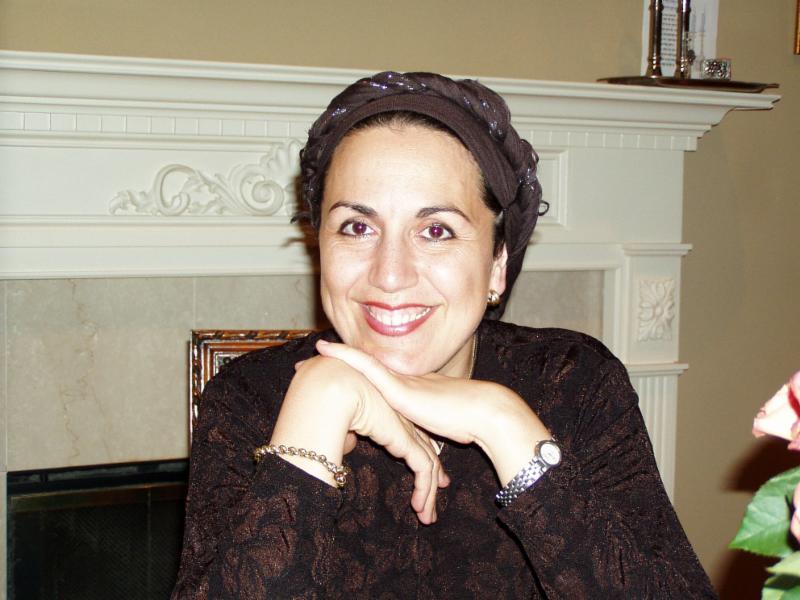
 By Rabbanit Coty Bittón

 
לֹא תִרְאֶה אֶת שׁוֹר אָחִיךָ אוֹ אֶת שֵׂיוֹ נִדָּחִים וְהִתְעַלַּמְתָּ מֵהֶם הָשֵׁב תְּשִׁיבֵם לְאָחִיךָ
 
 
When our oldest son was five, we were fortunate to live in the Jewish quarter in Yerushalayim, the Old City. We used to spend our afternoons together with his three siblings in the park. I remember one time when we were planning to leave the house, and I realized that we had forgotten his tricycle in the park the previous day. My son was obviously very upset. And so was I since we had just bought it for his birthday. We went back to look for it in the park but it wasn’t there, and we considered it lost. It was very disappointing!

A couple of days later my husband came home and told my son that they were going for a short trip to town. Although I did not like the idea since our child was already in his pajamas and ready to sleep, I trusted my husband; he told me they would be back soon. Indeed, half an hour later the “three of them were back home: my husband, my son and his tricycle. There are no words to describe my son’s happy face!

It happened to be that on his way home my husband read on one of the neighborhood’s boards (luach modaot) a note saying that a tricycle was found and that whoever lost it could recover it, by giving a matching description. We took the opportunity to explain to our children about the Mitzva that appears on this week’s Perasha, Ki Tetse. It is called “hashabat abeda” , returning a lost object. We all appreciated how wonderful it is when you belong to a society where you know that everybody cares about everybody else!

In any other culture or civilization, you transgress the law when you steal or damage your fellow’s property. And, as long as you don’t cause any harm, you are a model citizen. Our Tora demands much more from us. It is not enough to abstain from damaging others. I have to CARE about someone else’s property as if it were my own.

If for example, I find a lost object I must take care of it and “find” the owner. In a Jewish society when you find something lost that can be identified (a 10 dollars bill, for example, cannot be “identified”; but a wallet, can), you can not keep it. You have to bother and pick it up, take it home, write the note, post it on the neighborhood’s board and be willing to welcome all those who would come and claim for their lost object until someone can identify it (simanim) beyond a reasonable doubt.

In Moreh Nevukhim, Maimonides explains that the primary purpose of this Mitzva is to positively affect the character of the individuals of the Jewish people. The Tora trains us and helps us to develop a degree of sensitivity towards others, which will make us walk with our eyes open to detect the needs of others. Is there anyone here who needs my help? We respect the privacy of others, but we must be careful that this does not lead us to a level of indifference. “It’s not my business” should be applied to many privacy issues in the lives of my friends and acquaintances, but not in situations where my assistance is needed. As in the case of hashabat abeda, I have to be willing to offer help, even when it has not been requested.

When we teach our children about this Mitzvah, we train them to be sensitive. “Is your friend sad? Is he going through a difficult time? Ask if you can help.”  “A new student came to school. Open your eyes, ‘see’ her. She might be scared or embarrassed. She does not know the teachers or other students. Try to approach her and be her friend.”

 
To fulfill the Mitzvah of hashabat abeda you cannot close your eyes and ignore what happens around you. You must develop a special sensitivity to identify the needs of others and be willing to invest your time and effort to help and assist.
.

SHABBAT SHALOM

ABOUT THE AUTHOR
Rabbanit Coty Bitton is a certified marriage and family counselor. Her weekly Tora classes are rich in relationship advice and home improvement. Her Shalom Bayit and parenting workshops combine modern psychology and Torah knowledge. Her email address for referrals and consultations is: cotybitton@yahoo.com


Give your children everything they need; not everything they want

“When HaShem your God brings you into the land he promised to your fathers, Abraham, Isaac and Jacob…a land with large, flourishing cities that you did not build, with houses filled with all kinds of good things, that you did not provide; with wells that you did not dig, and with vineyards and olive groves, that you did not plant –  when you eat, and you are satisfied, do not forget HaShem, who brought you out of Egypt, out of the land of slavery.” Deut. 6:10-12

The people of Israel are ready to enter the Promised Land. They will have to fight for it. But HaShem already promised them that He will join them in the battlefield. No one doubts they will succeed in defeating the enemies and conquering the land. The Tora, therefore,  is not concerned about war, fighting, military strategies, simply because the Almighty will be on our side. But the Tora is concerned about peace. About the potential side-effects of “inherited prosperity”. The Israelites will be coming to cities that are fully functional. They won’t even need to build the houses where they will live; the wells, are already filled with water, and the trees, vineyards and olive groves, are already planted and bearing fruits.

This scenario, which seems to be the greatest material dream for any mortal, is tricky. It might become a dangerous spiritual trap. The Tora warns the people of Israel against a a psychological phenomenon known as “affluenza”, that is, the negative side-effects or wealth. Affluenza might take place when one has what he or she needs, wants and  wishes. And the most common strand of affluenza affects people who have not worked and made huge sacrifices for what they have; but rather, they have inherited their wealth from others. Those who worked hard for what they have, usually appreciate what they have. Moshe Rabbenu understands that AM ISRAEL is in a similar situation. They will inherit everything for free. With no effort. And Moshe rabenu teaches them this valuable lesson: Beware of inherited well. Do not forget WHO gave it to you, and what HE expects from you: appreciation and kindness.

Many parents wrongly believe that giving their children everything they want without demanding any effort from them, is a way of loving them and for our kids to experience everlasting happiness. But showering our kids with riches and asking them nothing in return, kids will be exuding gratitude and appreciation, and eventually they will imitate them and feel a tremendous need to give and share with others. Many times, however, parents discover that far from raising happy and thankful sons and daughters, they have raised spoiled children, who do not feel any need to express gratitude and far from become great philanthropist they are always asking for more, and instead of contributing in producing wealth, they feel entitled to freely receive everything they want.


MISHPATIM: Where you sit, matters

אם כסף תלוה את עמי את העני עמך לא תהיה לו כנושה לא תשימון עליו נשך
“When you lend money to (someone from) My people, the poor person who lives next to you, you shall not oppress him, and do not take interest from him.” Shemot 22:24
In this week’s Parasha we have a large number of Mitsvot. Many of these Mitsvot refer to our attitude towards our neighbor. Among them is our obligation to assist the needy.
AVOIDING ECONOMIC COLLAPSE
The rabbis described this commandment, tsedaqa, explaining that there are eight categories of material assistance to the needy. The highest category is to help someone to avoiding financial collapse before he gets in a situation where he needs to ask for assistance. How do you do that ? For example: a) Offering work to someone who lost his job. b) Lending money to someone who does poorly in his or her business preventing his falling.
Referring to this second case, the Tora says that the creditor should not charge interest for the loan. Also, the creditor can’t harass the debtor, for example, going to his home, or embarrassing him in front of his family or friends, etc.
MY PEOPLE
Another important lesson we learn from this verse is related to a little word that might go unnoticed. That little word is ‘ami (עמי), “My People”
God speaks of the poor as “My People”, that is, the people of God. The Sages said the following: “HaShem is very different from a human being. In most cases, when someone has a poor family member, he does not like to be seen with him or her, because he does not want to be identified with the poor …. but when someone has a rich relative, runs to him, tries to take a selfie with him,  and does everything in his power  to show himself in his company. Why? Because being next to the rich and powerful enhances his own image and prestige … HaShem acts differently: when He says “My People” he is not referring to the richest and most powerful but to ‘the poor among you’.   HaShem sides with the poor, identifies with them, and teaches us to do the same.
YOUR SEAT AND YOUR IMAGE
It is not uncommon, unfortunately, that people who are not wealthy – especially if they are publicly known to be needy- are literally left out. At a social event or a party, not many wants to sit at their table. Everyone wants to be in the company of the rich, and be seeing with them.
This pasuq teaches us that we should learn from God and treat those who have less than us with a special deference. Providing material help is important, but it is also important to help the feelings of this who have less than us!  This Pasuq teaches us that we should behave toward those who have less than us in the same way you would like to be treated if you were in that condition.
This beautiful verse teaches us a huge lesson.   HaShem is with the poor, and identifies His presence with the most needy. Being or sitting next to those who have less is a great act of humility, kindness, empathy and above all, an act in which we imitate one of the attributes of our Creator. 


ANTISEMITISM: Jews, a Separated and Powerful People

Yesterday we began to analyze the origins of anti-Semitism in this week’s Parasha (see this). We mentioned that the people of Israel were prolific and enjoyed an economic well-being. The Jews had not committed any act of treason or anything  to deserving Pharaoh’s hatred. According to what the text of the Tora (peshat) tells us the causes of Pharaoh’s antagonism had to do with a new political situation, an opposition to the previous government, which was friendly with the Jews.
We will now discuss the way in which this type of antagonism became a form of a verbal anti-Semitism, that is, the malicious and false accusations against the Jews .


Pharaoh, as explained yesterday, first ignored the contributions of Yosef to the welfare of Egypt.


Now, Pharaoh begins his speech (Shemot 1:9):
הנה עם בני ישראל רב ועצום ממנו: “Pharaoh said to his people: Behold, a people, the children of Israel, are many and powerful from us”


In this pasuq the Tora subtly records the first two accusations of Pharaoh towards Israel.


FIRST ACCUSATION “A people within a people”
“Pharaoh said to ‘his’ people: Behold, a ‘people’, the children of Israel….”. Almost four long generations had passed since the time the children of Israel came to Egypt (Levi, Qehat, ‘amram). And Ya’aqob’s family has not assimilated into the Egyptian culture and society. The Jews remained as a united people. What was the strategy to avoid assimilation into the powerful and attractive Egyptian society?


There are many elements mentioned on this matter, either by the Tora or by the Sages. We will mention just four illustrations.


1. אנשי מקנה In Parashat Vayggash we see how Yosef insists that his brothers should introduce themselves to Pharaoh as what they are: shepherds. Shepherding was a taboo profession for Egyptians. The children and grandchildren of Ya’aqob, with the consent and blessing of the previous Pharaoh, reside then in a separate land, Goshen, where they could graze their cattle without offending the sensibilities of the Egyptians. This also avoided social and religious assimilation with the general society.


2. איש וביתו באו: The first thing this week’s Parasha tells us is that the children and grandchildren of Ya’aqob did not come to Egypt as single bachelors. The Tora specifies that they came with their wives. In this way they avoided marrying Egyptian women, which would have been the first step into total assimilation.


3. להורות לפניו גושנה. Our Sages say that Ya’aqob sent one of his sons, Yehuda, before his family arrive to Egypt, to establish bate midrashot, Jewish educational institutions. Jewish education has always been seen by our Hakhamim as the number one element  to avoid assimilation.


4. … לא שינו את שמותם The Israelites kept their Jewish clothing, their language and their Hebrew names. These three elements were also critical for staying together and avoid assimilation into Egyptian society.


Now, in his effort to hurt the Jewish people, Pharaoh maliciously “denounced” Jewish unity as Jewish treachery. “They are a people apart > they will betray us”. Said Pharaoh.  Pharaoh was the first, but it was certainly not the last, to use the argument that the Jews “are a people within a people” in order to generate antagonism against the Jews .


We can also see, from the point of view of Israel, for the first time, the double challenge of staying as Jews in a gentile society, doing our utmost for avoiding assimilation, while being exposed for that same reason to the possibility that the tyrant in power would use our Jewishness as an excuse to accuse and persecute us.


SECOND ACCUSATION: “They stole our money”.
רב ועצום ממנו “they are many, and very powerful, from us.”
The second charge, completely fabricated, is that Jews were rich and powerful “from us”, in other words, because they have taken “our” money. Pharaoh accused the Jews of having taken away the Egyptians’  money. The Jews were probably prosperous, but nothing indicates that it was because they stole Egyptian money.    In fact, as we know,  Yosef saved Egypt from ruin and starvation.  Thanks to Yosef Egypt was a superpower.


At no time Pharaoh refers to the Jews prosperous situation or to Yosef extraordinary management abilities in a positive way, saying as the Chinese say today about the Jews: “Look at the Jews and learn from them how to succeed. The Jews give priority to studying. They are hard workers. They are never lazy. They don’t spend money unnecessarily. They believe in saving for the future. “.  Everything Pharaoh said was: “The Jews are rich because they took our money”. Sounds familiar?


This accusation was repeated thousands of times in the history of the Jewish people while in exile.   One example: Martin Luther (1483-1546): “The Jews … became rich by our sweat and blood, and we get poorer by this exploitation.”


Of course all these anti-Semitic arguments collapse when one notes that 41% of Nobel laureates in economics are Jewish (while Jews constitute less than 0.02% of the world population). Or when you see the commercial success of Israel, “the Jew among the nations,” which does  prosper by its own sweat and its  entrepreneurial capacity (see Startup Nation).


In our Parasha we find the first signs of the anti-Semitic propaganda, which unfortunately will be repeated again and again throughout our exile among the nations.


SHEMOT: The Beginning of the Jewish People and the Beginnings of Antisemitism

We have just finished the book of Bereshit, Genesis. Bereshit is not a book of laws. It is a book that tells us how humanity began and particularly how the “family” of Israel (Bene Israel) was formed. And in Shemot, in the first chapter, we see that the “family” of Israel was transformed into the “people” of Israel. In our Parasha we find for the first time the word, עם ‘am: people, nation, to define “Israel”.

These words הנה עם בני ישראל “here is a people, the children of Israel” is mentioned for the first time by Pharaoh, and in a very particular context. Pharaoh refers to the people of Israel in a negative, hostile tone. Today we would say in an “anti-Semitic” way. Pharaoh speaks to his people convincing them that the Jewish people are a great threat to Egypt, and presents them with a plan for the elimination of the Jews. Is it not ironic, and incredible, that the anti-Semitic message of the “final solution” appears in the first and same scene in which “the Jewish people” is born?

How did anti-Semitism start in Egypt? What did the Yehudim do wrong to deserve this treatment from Pharaoh?

There are several and diverse answers to this question. Following one of these interpretations, we could say that this is a fairly common political phenomenon.

In Shemot 1:8 the Tora gives us the first clues: “And a new Pharaoh arose in Egypt, who did not know [=deliberately ignored] Yosef.” Who was this new Pharaoh, and why would he choose to ignore Yosef and his enormous contribution to saving Egypt? When a new government, say “the opposition,” assumes the presidency, it is natural that all allies of the previous government automatically become antagonistic to the new government. Example: In a few hours the United States will have a new president, Donald Trump, and it is possible that the countries that President Obama privileged, for example: Iran, will not enjoy the same privileges with President Trump. Something similar, but in the opposite direction, I believe, will take place with Israel, BH.

Back to our Parasha. Imagine that a new Pharaonic dynasty emerged in Egypt, or as some commentators such as Rabbi Shemuel D. Luzzato (Shadal) said: the Egyptians regained the power that had been usurped by the Hyksos two centuries before. In any of these cases, it would be logical that the Jewish people, loved by the previous government, would now be seen with animosity and suspicion by the new government. This hypothesis allows us to learn an enormous lesson about anti-Semitism. Hatred toward Jews does not necessarily happen because of something wrong that we Jews have done. The causes of anti-Semitism are not always the same. For Hitler י”ש, Jews were the worst because we were communists; for Stalin because we were capitalists, etc. Anti-Semitism arises for reasons that are far beyond what Jews are, were, do or avoid doing. When we are in exile, and a government treats us well, it does not mean that the next government will automatically treat us well, even if we do not do anything wrong to deserve to be mistreated. This happened hundreds of times in the history of the Jewish people in exile. We lived in peace, tranquility and relative prosperity in Spain until 1492. Something similar happened in Germany before 1938. Until a new Pharaoh emerged in Spain, Germany, England, France, etc.
It is also interesting to see (and compare with the present) how anti-Semitic propaganda is developed, that is, how the tyrant justifies his desire to eliminate the Jewish people.
The Tora tells us that the new Pharaoh לא ידע את יוסף “did not know [= chose to ignore] Yosef”: The first thing the tyrant does to justify his animosity is to ignore the contributions of the Jewish people. And the more important these contributions have been, the more effort the sovereign will make to ignore them. The Nazi government ignored the participation and loyalty of the Jews who fought for the “motherland” Germany during the First World War. They ignored the contribution of Jewish scientists and doctors and other men of science and the arts who contributed greatly to the pre-Nazi Germany being one of the most advanced countries in Europe. The Spanish kings ignored the contribution of the Jews in the medical fields, think of Lorenzo Badoz, the doctor who saved the life of Queen Isabel, astronomy and navigation, the studies and inventions of Rabbi Abraham Zacuto, which allowed Columbus to reach America, etc.  Today, the world systematically ignores the enormous contributions of the state of Israel to the modern world. Israel stands out in the fields of medicine, technology, agriculture, computing, optics, irrigation, etc., as you can see in this chart:

And instead of Israel being the most admired country in the world, for its incredible contributions to mankind despite being a country in constant war, and the only country in the world whose existence is threatened, Israel – the Jew among the nations – was considered by the BBC in 2016 as the country that most “threatens world peace.”

Anti-Semitic propaganda did not change. In any case, it became more sophisticated.

שבת שלום


Gaining the respect of those who practice a different religion

In this week’s Parasha we find Abraham, our first patriarch, in a long conversation with the Hittites, one of the peoples who lived in the land of Canaan. Abraham wants to buy a piece of  land in Qiryat Arba, ​​Hebron, to bury Sara, his wife, who recently passed away.
MONOTHEISM AND ANTISEMITISM
In the negotiations between Abraham and the Hittites, we see that the leaders of this pagan and very violent nation treated Abraham with great respect. And what is more: they call Abraham “Nasi Eloqim, “You are a representative of God among us”. This is very weird since pagans were not known for being open-minded about other “gods” .   The mythological gods competed with each other to demonstrate their supremacy.  And Abraham not only practiced a different religion: his religion was “monotheistic”, which means that excluded the ver claim that other gods exists. In other words, while other people proclaimed: “My gods are more powerful than your gods”, the religion of Abraham implied that: “Your gods, simply, do not exist”. This should have been considered by the Hittites as an offensive cult. And I assume that they knew that Abraham was a “monotheistic activist”,  an iconoclast that had destroyed the idols of his own father!   For this vert reason, monotheism, Jews were for centuries hated, persecuted and seen as closed minded and exclusivist.
Abraham was different even on the physical realm. Now he had circumcision, which made him different from others.
In those times there was no religious tolerance. We saw for example in the case of Yosef and his brothers in Egypt, that the Egyptians did not eat at the same table of Jews, because they considered their diet something abominable.
How was it then that Abraham, being so different to the Hittites, was respected by them, and surely by other peoples of the region too?
BELIEF or CHARACTER
I think that the Hittites respected Abraham because Abraham was kind, respectful and humble.
1. KINDNESS: Abraham, who was seen by pagans as the representative of God on earth, would have had every reason to act with superiority towards other peoples. Demand, for example, to receive offerings and gifts, as happened with Malqi Tsedq, a priest to whom Abraham gave his tithe. But Abraham, far from expecting others to assist him materially, dedicated himself to serving others. He sat at the entrance of his famous tent waiting to host travelers who needed shade, bread and water.
2. RESPECT: God spoke to Abraham, and promised him and his descendants the land of Canaan. But Abraham never behaved arrogantly in front of the inhabitants of Canaan. His unconditional faith in HaShem could have prompted him to say to the pagans who inhabited the land: “This land will be mine.” Abraham treated them with dignity and honor. Abraham represented the epitome of this type of noblesse oblige, “the closer you are to God, the more you need to respect and show deference to those who are less religious than you”.
3. HUMILITY: The humility of Abraham becomes much more evident when we compare Abraham, as our Sages did, with Bil’am. Bil’am was a pagan prophet. HaShem communicated with Bil’am, as he did with Abraham. But this privilege, instead of making Bil’am more humble,  made Bil’am to look down at all other people. Bil’am said to himself: If God spoke to me, who could be compared to me?  Bil’am’s arrogance made him behave with disdain toward others. He was not willing to help unless he saw some material gain for it. He was demanding and ambitious and had contempt for others. All this due to his “spiritual superiority”.
IMITATING GOD
Although Abraham had different ideas, which he knew were “superior” to the people who lived around him, Abraham was generous and he was willing to help anyone in need.  Abraham even asked God to spare the lives of people who were spiritually and morally inferior to him: the people of Sodoma and Gomorra.  Abraham treated everyone with respect and deference, regardless of the faith they professed.
This is why Abraham had no enemies and was never judged negatively for his different beliefs. On the contrary, thanks to his excellent behavior toward others, Abraham became the inspiration for other people: Abraham is really the biggest INFLUENCER ever, who taught the world to identify the true and only God.


The Perils of Inherited Wealth

When HaShem your God brings you to the land that He promised to your parents Abraham, Isaac and Jacob … you will inherit lands with great cities that you did not build; with houses full of all kinds of good things, that you did not work for them; with wells of water that you did not dig and with vines and olive groves that you did not plant, so when you eat and feel [comfortable and] satisfied, be careful not to forget HaShem, your God, who took out of Egypt, the house bondage! «

Deut. 6: 10-12

The people of Israel are getting ready to enter the Promised Land. They will have to fight to conquer it, but HaShem promised them that He will join them in the battlefield. On the military plane, thus, success is guaranteed. “With the help of God”, literally, they will conquer the land of Israel. In speaking to the people, Moshe is not concerned with war but with peace. And more specifically for the side effects of prosperity in times of peace. 

The land they are going to be given is fully functional. Jews will not be forced to spend the next few years working hard to build their cities, their walls, their houses and sow their fields. After conquering the land they will “inherit” cities that are fully operative; wells and cisterns filled with water; fields with grain ready to be collected, and trees and vineyards bearing fruit. But this, which seems to be the fulfillment of every a man’s greatest dream, can become a trap from a spiritual or psychological point of view. The Tora warns the people of Israel against the phenomenon that some call “affluenza”.

On June 15, 2013, 16 years old Ethan Couch, killed four people while driving intoxicated. He was indicted on four counts of manslaughter. But was not sent to prison. Instead, the Judge sentenced him to 10 years of probation and therapy after this attorney argued that Couch suffered of “affluenza”, that is to say, he didn’t know boundaries because his rich parents didn’t set any, and he therefore needed rehabilitation instead of prison (this is , by the way, a great example of what Theodore Dalrymple mentions in his book: “Admirable Evasions, how psychology undermines morality”. Thanks to Dr Sauly Harari for this great book!).    

Those who are most exposed to contract affluenza are people who have everything they want “by inheritance.”  These privileged individuals did not need to earn their money by working hard. The great effort was made by the parents. And many parents (wrongly) believe that allowing their children to enjoy material abundance without doing enough to deserve it, is good for their children. Parents innocently think that privileged children will always display  great appreciation to their benefactors and be eternally grateful to them. What’s more: many parents think that since their children have received so much, and know the great feeling of being the recipient of an abundance of blessings, they will naturally learn to be generous, considerate and magnanimous with others, imitating what their parents did for them.

But it often happens that far from having educated their sons and daughters to be grateful, kind and considerate,  “giving them everything they want without demanding efforts from them”  accomplishes the exact opposite effect: children become spoiled; do not appreciate or value of what they received; tend to take everything for granted and might become selfish and self centered.  Moreover: many children that get used to receiving everything effort-free, do feel the need “to give” back or give to others. Rather, they are always expecting to receive more.  And behave as if the entire world is there to please them, like their parents did.

This was Moshe Rabbenu’s main fear. He worried that something similar could happen with the inheritance that God is giving for free to the people of Israel. They might  be affected by “affluenza” and become selfish, demanding, spoiled and ungrateful. And this is why he warns us: Beware of the effects of wealth, especially inherited wealth. Never forget “WHO” gave you everything you have.

God expects two things from us:

First of all, that we learn to value what we have, and we that learn to express our appreciation permanently. So, for example, every time we enjoy or eat something we bless (= acknowledge) God before we benefit from it. Or, every time we finish eating a meal we express our thanks to God out loud and in an elaborate prayer called “Birkat haMazon.” These Mitzvot / gestures will keep our sense of appreciation awake and alert. 

Second, beyond appreciation HaShem also demands to behave as He does. Instruct us to “imitate His generosity” by sharing the gifts we received from Him with those who have less than us. When we give to others, we naturally learn to appreciate more what we have received and inherited from Him.

SHABBAT SHALOM


NO, To Religious Hypocrisy

נפש כי תחטא ומעלה מעל בה ’וכחש בעמיתו בפקדון או בתשומת יד או בגזל או עשק את עמיתו
והיה כי יחטא ואשם והשיב את הגזלה אשר גזל או את העשק אשר עשק

And HaShem spoke to Moses saying: When someone sins and commits a mistake … deceiving his neighbor … for theft, or for extortion … he will return what he took by stealing, or what he obtained by extortion, and [just] then he will bring to the priest his atonement offering … for HaShem
Leviticus 5: 22-25

This week’s Parasha TSAV continues with the description of the qorbanot: the sacrifices that were offered at the Bet HaMiqdash, and that had various functions. Some were part of the daily service of the Jerusalem Temple. Others were offered during the festivities, and some qorbanot were individual offerings, to thank God. There were also sacrifices that were an atonement for some transgression. Let’s see an example of this last category.

The Tora describes the asham guezelot, a sacrifice that was brought when someone stole and then repented and confessed its crime. The sacrifice, in this case was the last step of his atonement, the way in which his fault was finally forgiven.
There is a very important point about this qorban that teaches us about the moral height of the Jewish people and our Tora.
The Tora clarifies that the qorban or sacrifice was to be offered only “after” having restituted what was stolen to the victim. In this way the Tora affirms that the qorban, a religious act, cannot replace restitution, an act of human justice. As in the case of Yom Kippur, one cannot claim that God will forgive his or her faults towards his neighbor unless he first obtain forgiveness from his neighbor. He must first settle his debt with the victim of his crime and only after that, he has the right, and duty, to seek religious atonement.

The Midrash Tanchuma says that this idea is explicitly formulated in the words of King David in Tehillim, Psalm 24. There, the greatest King and poet of Israel asks: ‘מי יעלה בהר ה Who is the individual that deserves to rise to the mount HaShem, and stand in the place of His sanctuary? . Entering the Temple of Yerushalayim was not appropriate in all circumstances. King David’s immediate response was: נקי כפיים  “An individual whose hands are clean”, and the Midrash Tanchuma (Parasha 1) explains: “Only a person whose hands are clean of robbery or theft has the right to enter the Temple of Jerusalem”.

The God of Israel does not accept sacrifices and offerings coming from corrupt people, before these people corrected their actions. Sacrifices, as any other religious act, cannot be offered as a bribe to God. It is unacceptable bringing an offering to God to seek Divine forgiveness without first having repaired the damage he caused to another individual, and having obtained his or her forgiveness first.

Our Parasha, Tehilim and Midrash indicate the same message: “NO” to religious hypocrisy, something that was not uncommon in other peoples and religions.

SHABBAT SHALOM


SHEMOT: A story of Brotherhood and Envy

We finished the book of Bereshit. And this week we start the book of Shemot. The story is more or less known. Bereshit tells how the first Jewish “family”, bene Israel, was formed, while the book of Shemot tells us how the Jewish “people”, ‘am Israel, was formed.
The Tora is not a simple book. Among the things that make the Tora a unique book is that “behind” the main plot you can find hidden sub-stories interwoven with the main plot, but somehow independent of it. I will show you one. The story of Brotherhood vs. Envy
The tension between brothers is already evident from the beginning, Cain and Abel. In this case, envy is generated by looking for Divine attention. HaShem accepted Abel’s sacrifice and rejected Cain’s. And Cain, instead of striving to do it better, as his creator suggested, decided it was easier to kill (literally!) the competition.
Twenty generations later, Yishma’el, according to the Midrash, tried to kill his brother Isaac, Abraham’s favorite.
The children of Isaac, Ya’aqob and Esav, who were twins, compete from the womb for the birthright. After what happened with the blessing of Isaac, Esav threatened Ya’aqob with death. In the end there is a reconciliation between the brothers, but for the brotherhood to be maintained, the brothers, ironically, have to live apart from each other.
The point of highest tension between brothers comes with the sons of Ya’aqob. Yosef, who enjoys the favor of his father, awakens the envy of his brothers.  And this envy is transformed into hatred. And this hatred, into planning the murder of Yosef. In the end, they sell Yosef as a slave, a virtual death sentence.
Twenty years later, the brothers expressed their remorse for what they did and in a huge act of altruism Yosef forgives them. And thus, apparently, the cycle of envy and resentment between brothers, which began with the first inhabitants of the planets, comes a to closure.   But Bereshit is not finished yet. And the story of brotherhood continues. But now it improves The last brothers to be mentioned in Bereshit are the sons of Yosef: Ephraim and Menashe. For the first time it is the grandfather and not the father who assigns the birthright and decides to whom it belongs. Ya’aqob blesses them “putting Efraim, the youngest, before the older, Menashe.”
And when it seems that the wounds are going to reopen, and that Menashe is going to threaten, kill or sell Efraim … none of that happens. Menashe, despite having a valid reason to envy his brother, lives in peace with him. For the first time the love between brothers overcame the power of envy. Menashe successfully passes the test of fraternal envy and the book of Bereshit ends (for this reason, by the way, we bless our children with the blessing of Ephraim and Menashe, wishing them to be good children and also good siblings) .
Now a new book begins, Shemot. Which also has sub-stories interwoven with the main story. The main story tells that Moshe is assigned as the envoy of HaShem to rescue Israel from captivity. Moshe asks for help for his mission and HaShem sends him as his assistant… his brother Aharon! This is a big potential problem Aharon is the older brother. And according to the norms of those days, the older should be the leader of the family, for whatever was necessary …. Now instead, Aharon is going to be Moshe’s assistant, his shadow …
We all suspect now that envy will overcome brotherhood. The most optimistic might assume that Aharon is not going to get angry. Following the steps of Menashe, he will control his envy.But the Tora has a beautiful surprise reserved for us.The reaction of Aharon was unprecedented, and shows us the best of the humankind. Aharon not only that he does not envy the position of Moshe. Aharon is happy for Moshe וראך ושמח בליבו, “And when Aharon sees you, he will rejoice in his heart.”   The book of Bereshit began with fratricide: one brother killing the other. But with Menashe brotherhood evolved into harmony. What could be higher than the acceptance of the other’s success? Aharon changes the history of sibling rivalry by 180 degrees. And taught us one of the most beautiful lessons in life: learn to rejoice for the success of your brother. Be happy for another person’s happiness.


Bil’am, and the lessons he learned from his donkey

BEHIND ENEMY LINES

This week’s Parasha is really unusual. We are not watching the same movie we were watching last week: the events of the Jewish people in the desert. The Tora’s camera now focuses on another scene, behind enemy’s lines. For a brief moment we are privileged witnesses of the dialogues and plans of those who want to destroy us. We see how they perceive us, and how they prepare to confront us.  Three chapters of the Tora are dedicated to giving us a detailed look at the perspective of the adversary. A unique case in the Scriptures.

WHO WAS BILAM?

Although this Parasha is named after the King of Moab, Balaq, the main character is a very mysterious individual named Bil’am (Balaam). Who is Bil’am? According to our rabbis Bil’am was granted nebuá (prophecy), God revealed Himself to him, as He revealed to Moshe Rabbenu (Moses).

But we should not fall into the mistake of thinking that because God communicated with Bil’am, Bil’am resembled Moshe. Actually, the Sages point out, although both Moshe and Bil’am received a similar level of a prophetic message, the experience was processed by each of them in a completely different way.

MOSHE’S EXPERIENCE

The power to communicate with God made Moshe realize how small and limited he was. Moshe had questions, many questions to ask God. One of the issues that puzzled Moshe, for example, was the understanding (or lack of understanding) of God’s justice. How can it be that if God is all good (omnivolent) and all powerful (omnipotent) and yet many righteous men suffer? However, after his encounter with God, this and other questions Moses had disappeared. But NOT because Moshe found a good answer to these issues; but because getting closer to God allowed Moshe to realize his insurmountable limitations. Communicating with God made Moshe Rabbenu understand why he was not able to understand. As he approached the Infinity of God, Moshe became aware of the infinitud of human smallness. Trying to understand “God’s though” is completely beyond the cognitive abilities of a human being, however wise or intelligent he or she might be. That is why after experiencing the revelation of HaShem, Moshe, who was already a humble man, behaved with more humbleness. And it was thanks to the way he was able to process his closeness to God that Moshe became “the most humble man that ever was on the face of the earth” (Bamidbar 12:03).

THE EXPERIENCE OF BILAM

Bilam, on the other hand, also had a close encounter with God. A similar overwhelming epiphany experienced by Moshe Rabbenu. But Bil’am’s reaction to this experience was exactly the opposite of Moshe’s. When God revealed himself to Moshe, Moshe focused on God. But when God revealed to Bil’am, Bil’am focused on himself. Bilam thought that if God communicated with him, it was because he, Bilam, was a very special person. A unique individual. The chosen one. Bilam was convinced that he was the most important man on the face of the planet. And he acted that way. In this Parasha we see Bil’am behaving with extreme arrogance. Bil’am, for example, refers to himself in the third person (only Pharaoh acted on a similar manner). Bil’am also boasted that God spoke “through his mouth,” as if he were His exclusive spokesman. Bil’am boasted of having the ability to destroy an entire nation, Israel, with the power of his word. Bilam thought that he could “force” the Divine will, and “make God  do whatever he wanted.” At one point he uttered the most arrogant phrase that has been written in the Tora,  yode’a da’at ‘Elion, “[I am Bil’am], the one who understands the mind of the Almighty.”

A RELIGIOUS EXPERIENCE

We see how the same spiritual experience, the revelation of God, affected Bilam and Moshe Rabbenu in completely opposite ways. Moshe became the most humble man in history. And Bilam, the most arrogant.

A religious experience, ironically, can be “parve”, neutral. There are religious leaders, of all faiths, who use their spiritual talents to help, to teach, to inspire. And there are others who in Bil’am’s fashion, see their religious investiture as a way of feeling above others. Some religious leaders pretend to posses supernatural powers, and use them to take advantage of their naive congregants. 

Nothing new under the sun…

WHEN DONKEYS SPEAK

As for Bil’am’s conceited pretensions, our Rabbis pointed out that Bil’am received a lesson of humility from his donkey. When Bil’am was on his way to meet Balaq riding his donkey, the animal saw an angel, which frightened the donkey and made it turn off the road. Bil’am punished his donkey and threatened it with his sword. God, then, “opened the mouth of the donkey” and she revealed to Bilam that she had seen an angel.

Our rabbis explained:

Bil’am boasted that God “spoke through his mouth.” Now, Bilam saw that even a donkey, who was never considered a very intelligent animal, could also speak and convey a Divine message, if God wanted it that way. Bil’am was not superior to his donkey!

Bil’am also claimed that he could destroy the entire nation of Israel with its magical curses. But then why did he have to resort to his sword to kill his donkey? Bil’am’s superpowers were fake news! 

Finally, Bil’am claimed that he understood the Mind of God. However, God shows Bil’am that he did not even understand the mind of his own donkey!

SHABBAT SHALOM