One of the foods that we serve in the Pesach Seder is the Haroset. A paste typically made with a mixture of fresh fruits, nuts and wine.
Unlike other foods that are served during the Seder, such as the Maror or the Matza, the Haroset is not mentioned in the Tora. The Mishna — the work that records the oral tradition of the Jewish people, written around the year 200 of the common era — indicates that the Haroset should be served at the Seder table, but it does not indicate what the function of the Haroset is.
This is not uncommon: many times a tradition, or even a Mitzva from the Rabbis (midibre soferim), was widely practiced, while the reason for that Mitzva was lost or forgotten, and the rabbis of the Talmud attempted to rediscover the original reason again.
CHAROSET AS AN ACCESSORY
The Rabbis debated the reason of the Haroset. According to some opinions the Haroset is not a Mitsva per se but an accessory to the bitter herbs or Maror. The Talmud records five different herbs, like lettuce, that could be consumed as Maror to remember the bitter flavor of slavery. Some of these plants contained an acid that could be harmful for digestion (geonim). Some Sages explained that the Maror was dipped in the Haroset in order to neutralize the harmful effects of the acid. According to another opinion, one of the herbs that can be used for Maror (chazeret) contained a worm, that the Haroset was able to eliminate.
A TRIBUTE TO JEWISH WIVES
תחת התפוח עוררתיך. דרש רב עוירא, בשכר נשים צדקניות שהיו באותו הדור נגאל ישראל ממצרים
Sota 11a
According to Ribbi Eliezer bar Ribbi Tsadoq the Haroset, although eaten with the Maror, is not a mere accessory to alleviate the effects of the Maror but a mandatory food (mitsva) to have at the Seder. And as such, the Haroset has “a meaning in its own”. The Haroset, Ribbi Elazar said, usually prepared with apples, reminds us of a very significant event. Pharaoh decreed the death of all newborn Jewish children. But this did not discourage the heroic women of Israel to be with their husbands and become pregnant. At the time of delivery, the Jewish mothers would go to the apple fields and give birth hidden “under the apple trees”. Miraculously, the Midrash explains, God mitigated their pain at the time of giving birth and the Egyptians guards did not hear the crying babies. According to this opinion, the Haroset is a tribute and a reminder to the women of Israel who acted with bravery and heroism. Thanks to their wisdom and sacrifice, the Jewish people grew stronger instead of “disappearing” for lack of procreation, as Pharaoh intended.
HAROSET and BRIKCS
Another opinion, the best known and the most accepted, is that the Haroset represents the mud (טיט) that every day Jewish slaves had to gather with their hands to produce the bricks, used for the construction’s projects of Pharaoh. This was a very arduous and humiliating. The images of our hands and feet soaked in the mud, are part of the collective memories of our people. A reminder of the slavery and oppression we suffered for more than a century. Maimonides echoes this last opinion. And thus, in his recipe for Haroset he does not include “apples” as one of the required ingredients. What Maimonides does say is that the Haroset paste should be made with tebalin, herbs, to visually represent the straws that were added into the mud in the process of building the mud-bricks.
JEWISH BLOOD
There is also an opinion in the Talmud of Yerushalayim that says that the Haroset symbolizes the blood of Jewish children killed by Pharaoh and his Egyptian executioners. This idea was mentioned by Rabbi Moshe Isserles (Ram”a, 1530-1572) as the reason for the Ashkenazi custom of adding red wine to the Haroset.
It is possible to connect all these above mentioned reasons (procreation; the making of bricks, and the killing of Jewish children) recalling a tragic Midrash (which in a post-Shoa time, I see no reason for not to taking it in its literal sense) that says that when a Jewish slave did not produce his due quota of bricks, the Egyptians would take one of his children and replaced the missing bricks with his or her little body.
JEWS IN EGYPT: From Prosperity to Slavery
PHASE 1: Forced labor
EXODUS 1:11 Then the Egyptians assigned over them taskmasters to weaken them with hard work. And the Jews built for Pharaoh the fortified cities of Pitom and Ramses.
In the first phase of Pharaoh’s “final solution”, the people of Israel were not yet technically enslaved by Pharaoh. In fact, in Exodus Chapter 1:11-12, the word “slavery” or “enslavement” is not mentioned in the text. However, the text emphasizes the word “taxes”. The Israelites indeed worked for Pharaoh, building Pitom and Ramses. But at this point, this form of forced labor was a legal and legitimate procedure. The Egyptian monarch– ironically since the time of Yosef– was the Lord and Master of all Egyptians, Jews included. Pharaoh, therefore, had the absolute right to demand from his subjects any kind of service: joining the army to defend his territories, or working on the construction projects that the sovereign deemed necessary. As we saw in Pharaoh’s speech, Jews were foreigners, and were not trusted by the Egyptians; therefore they had to contribute with labor in lieu of, for example, serving in the Egyptian army. In this first phase, the work of the Jews consisted in building the cities of Pitom and Ramses, which according to the most accepted interpretation, were fortifications for military use- garrison cities. These fortifications were not built with common mud-bricks as houses or temples were, rather they were built with carved stones. We could asume that Jews worked in the quarries extracting the rocks, carving them, carrying the heavy stones, and mounting them on top of each-other.
We also need to keep in mind that, although taxing the Jews was seemingly a completely legal act, the true ultimate purpose behind this forced labor was not the building of the garrison cities. When Pharaoh delivered his infamous speech (Exodus 1: 9-10) warning his people about the threat that Jews represented to Egypt due to their increasing growth and wealth, he proposed a strategic plan to outsmart (הבה נתחכמה לו) and weaken the Jews both physically and financially. Forcing them to work in construction and abandon their own jobs; as well as forcing them to sleep in the fields far from home, would do the job. In this sophisticated, non-violent way, the power and the birth-rate of the Jews would be significantly reduced.
However, as the Tora explicitly says in the following verse, Pharaoh’s plan did not produce the expected results.
EXODUS 1:12. But the more they oppressed [the Jews] the more the Jews multiplied and grew. And the Egyptians felt threatened by the children of Israel.
Pharaoh’s plan failed. The people of Israel did not become weaker, rather they grew stronger, and continued to reproduce. It is at this point that Pharaoh decides to start Phase 2 of his plan: slavery.
EXODUS 1:13 And then the Egyptians enslaved the children of Israel with chattel (parekh).
PHASE 2: Chattel Slavery
Here for the first time our text mentions “enslavement”, vaya’abidu, redefined with a crucial word: “parekh”, meaning “chattel slavery”. That is, unconditional and indefinite submission of the slave to the master.
To better understand this phase let us remember that in the first phase, “forced labor”, Jews had to fulfill an assigned mission: building Pharaoh’s projects. I believe that at this point Jews did not necessarily have to work directly for Pharaoh. Surely, they had to pay for the building material, but perhaps they were allowed to hire workers to do these constructions for them. And more importantly, once the building project was finished, they could return to their lives and routine.
However, in the second stage, “parekh” the Israelites were not assigned a specific job. We see that the Egyptians were intimidated by the Jews, therefore it would not have been difficult for Pharaoh to declare them as “the enemies” of Egypt. Jews were probably captured and taken as war prisoners —probably chained— and forced to work endlessly for the Egyptians- 24 hours a day. They were now at the complete mercy of their masters, who controlled their lives.
Visualizing this scenario is very difficult to do in our comfortable lives nowadays. I was only able to think more realistically about this by remembering what I know from the Shoah. The first time I read a comparison between Egyptian slavery and the Holocaust was in Elie Wiesel’s book, “Job: Ou Dieu dans la tempête” (French). Following Wiesels line of thought, I imagine that at this second phase; the houses, property and assets of the Jews were confiscated by the government, and handed over to Pharaoh or to the common Egyptian man. Jewish men, women and children, must have been forcibly captured and removed from their homes and taken into “ghettos” or fortifications. Similar to the European Jews in 1940. But instead of being taken into labor camps, many of them were probably given over to the Egyptian civilians as free laborers. This fact- not very well known- that the Jews were handed over to the Egyptians, was mentioned by Rabbi Wisser, the Malbim (Russia, 1809 – 1879). He explains the word “Egypt”, Mitzrayim, mentioned in this verse: “And the Egyptians enslaved the children of Israel.” In other words, similar to how Daniel Goldhagen describers in his book “Hitler’s Willing Executioners”, ordinary Egyptian civilians were accomplices of Pharaoh’s regime. The Malbim writes: “ Jews were taken as chattel slaves, but they no longer worked for the monarch [the government], but for the population in general. The Israelites were now the slaves of the slaves [of Pharaoh] and were obligated to do any work that any Egyptian asked of them“.
Exodus 1:14: “And [the Egyptians] embittered the life [of the children and Israel, forcing them to do] the hardest works, [such as the extraction of the] mud and [the making of] the bricks …
This verse describes the special and brutal way which the Egyptians treated their Jewish slaves. The biblical text mentions here the word vayimareru, “and they embittered their lives”. From this Hebrew word comes the word “maror” the bitter herbs that we eat the night of the Pesach Seder to remember the bitterness of Egyptian slavery. But what was the source of this animosity? A Master usually takes care of his or her slave. For the sake of comparison, think about the African slaves taken into America in the 18th and 19th centuries. These slaves were traded at a high price. The masters, indeed, exploited them in the cotton or tobacco plantations but they also took care of them. This was not done out of compassion for the slaves, rather out of the master’s convenience. Taking care of the slaves was similar to taking care of one’s assets . In some sense, the masters treated these slaves as well as they treated their animals.
But our text describes bitterness… there seem to be something personal about this mistreatment. One possible explanation is this: For several decades, from the time of Yosef until the new Egyptian dynasty that ruled over Egypt, Jews had a privileged life. They lived in a safe and fertile area, Goshen, where they enjoyed wealth and prosperity. And it is very possible that many wealthy Hebrews had Egyptian servants working for them! And remember that Pharaoh’s speech included the accusation that Jews gained their wealth from exploiting ordinary Egyptians! Now, Pharaoh is gifting the common Egyptians with Jewish slaves, their wealthy former masters. The resentment is now unleashed into the most terrible revenge: the “rich” Jews were now absolutely vulnerable, free laborers beneath their feet of resentful Egyptians.
THE HARDEST JOBS
The enslavement of the Jews in Egypt was not the classic type of slavery in which the master buys and sells slaves in the market. Jews were treated like enemies, and potential traitors who would be willing to join the enemy in the event of a war. The Egyptians must have felt therefore that their job was not only to take revenge. Jews, ultimately, had to be eliminated. How could they do that? Our text briefly mentions that the Egyptians assigned the Jews to the most unhealthy and risky jobs. Tasks that nobody else in Egypt was willing to do. The example mentioned in the Tora is “chomer ulbenim”, mud and bricks. Probably the most exhausting and lethal job in Egypt. These mud-bricks were made by mixing the mud with the Nile’s silt, and perhaps with manure, stirring it with their hands and feet for 4 or 5 days, until the it reaches the point of fermentation. Then, the straw is mixed into this mud to make the bricks stronger, more solid and durable. All this work was done in the swamps of the Nile, a river infested with crocodiles, hippos, mosquitoes; and under a scorching desert sun that burned the skin.
Maimonides explains that the Sages introduced the Mitsva of Charoset to bring to memory these terrible times. The brown paste recalls the color and texture of the mud. The vinegar the bitterness or tears. And the tebalin, edible herbs or spices , cut in thin and long pieces, which were part of Maimonides’ Charoset recipe, remind us visually of the straw mixed in the mud, a national memory of a slavery that we can not forget.
GENOCIDE
Understanding the nature of what the Charoset represents (the mud-bricks) is key to comprehend the ultimate goal of our slavery in Egypt. Same as in the Europe of the Shoah, in Egypt, we were treated as enemies. A Jewish life in Egypt, like in Europe, had no value. Not even labor value. Jewish slavery in Egypt can only be understood when thinking about concentration camps. Those who were not killed upon arrival had to work endlessly. In those camps there were no infirmaries to care of the sick or wounded laborers. If they got sick they were executed, or left to die. And were then replaced by the next prisoner. In Egypt and in Germany, there was an endless supply of Jewish workers. Jews were absolutely disposable.
The prisoners were “used” as free laborers until they died of hunger, disease or exhaustion. Jewish prisoners were deliberately subjected to the most dangerous and unhealthy jobs, such as the extraction of slit from the Nile or coal from the Mauthausen mines. Because for Germans as well as for Egyptians, the aim was not the product of the Jew’s labor. The ultimate goal was the final solution. This type of labor with purpose to kill has a unique name in Hebrew: “abodat parekh”, and it has a unique name in German: Vernichtung durch Arbeit, “extermination through work”, an expression that to the best of my knowledge, was used exclusively to describe the practice of the Nazi’s in concentration camps, killing the Jewish prisoners by means of forced labor.
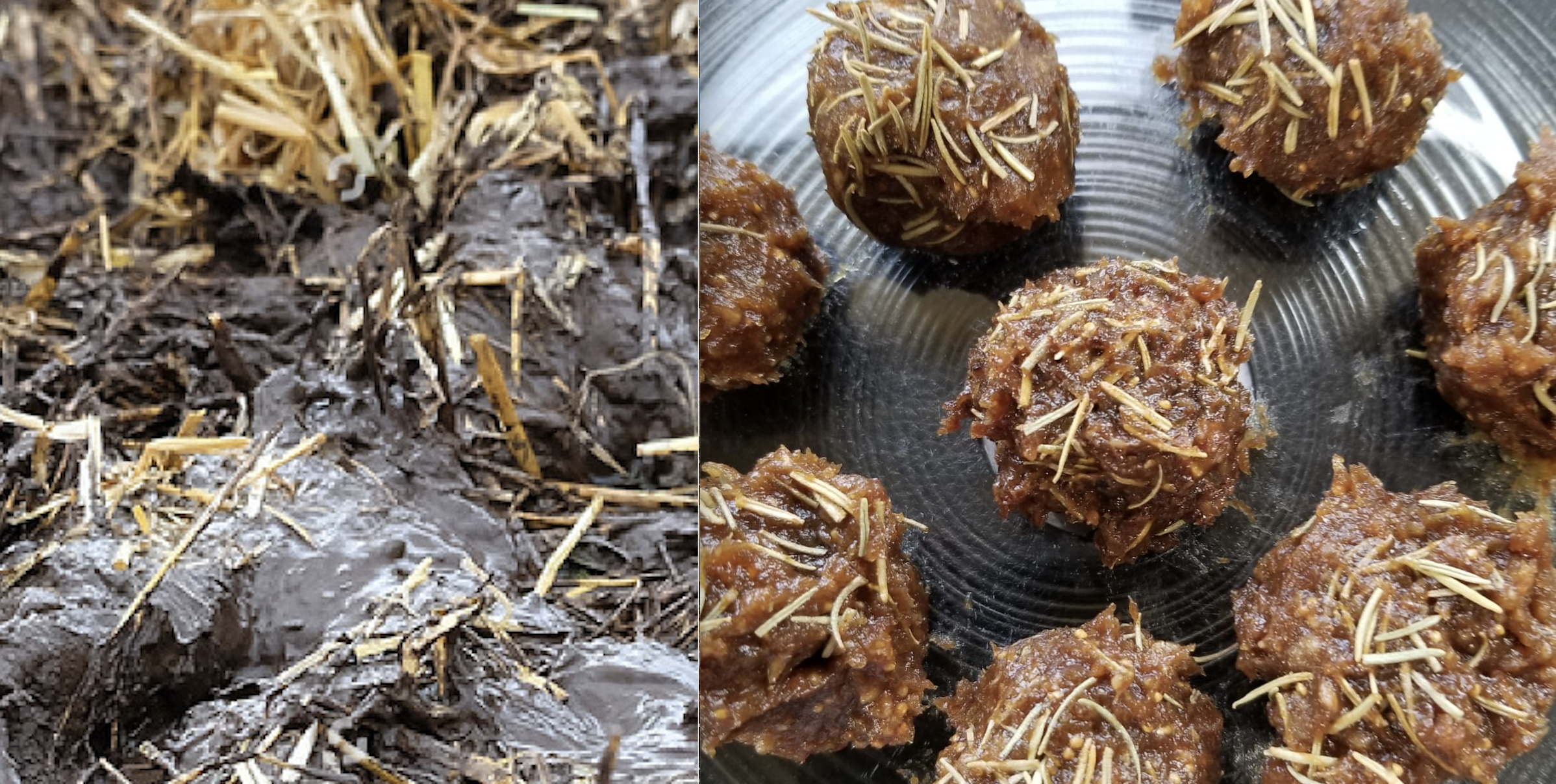
In this image you can on the left side a picture of mud mixed with straw, used for mud-bricks, and on the right side a picture of the Charoset I made following Maimonides recipe to visually represent our slavery in Egypt (I used Rosemary’s leaves).
What does the word Pesach really mean?
ועבר ה’ לנגף את מצרים וראה את הדם על המשקוף ועל שתי המזוזת ופסח יהוה על הפתח ולא יתן המשחית לבא אל בתיכם לנגף שמות יב: כג
ופסחתי עליכם. אין פסיחה אלא חייס, שנאמר כצפרים עפות כן יגן ה’ צבאות על ירושלים גנון והציל פסוח והמליט ישעיה לא
Mekhilta d’Rabbi Yishmael 12:13
PESACH, MATZA, MAROR
Rabban Gamliel says that there are three words which must be exposed in the Seder to fulfill the minimum obligation of teaching our children the story of our Exodus from Egypt: Pesach, Matza and Maror.
Maror represents the taste of slavery.
Matza, the taste of freedom; obtained through Divine intervention.
But what is Pesach?
What does “Pesach” mean, and what does it teach us today?
Pesach was a sacrifice, an animal offering. But unlike the sacrifices mentioned in our week’s Parasha, Vayiqra, the sacrifice of Pesach had a very unique purpose. A lamb, a young sheep, had to be sacrificed by the Jewish slaves in the 14th Of Nissan and the Jews had to mark the doorposts of their houses with its blood. Jewish houses with the blood in the doorpost will not be affected by the plague sentencing the first-born to death.
MENTAL FREEDOM:
This Pesach sacrifice represents what the Jewish people had to do to deserve their physical freedom. And this is why.Sociocultural changes usually take many years or decades to occur. In the case of the Jewish people, it all happened in just a few hours. On the 10th of Nissan, God ordered the Jews to take a sheep and sacrifice it on the 14th of Nisan. Remember, that the Egyptians worshiped many animals because they believed animals possessed some supernatural powers given by the gods. Sheep, especially the adult male called “ram”, represented virility and the power of procreation. The Israelites were now facing a serious challenge. God told them to take one of the Egyptian “gods” and sacrifice it, roast it and eat it! And by doing so the Israelites would prove toGod, but mainly to themselves ,that they were “free” of the idolatrous culture of the Egyptians. On the other hand, bear in mind that we Israelites lived completely integrated into the Egyptian society for 210 years! And there were obviously influenced and exposed to all the kinds of superstitions of the aboda zara (idolatry) society. Killing a lamb, therefore, represented an extraordinary difficult choice, an extraordinary act of courage. After all their own masters considered the ram “a god”! And if a slave naturally fears his masters, how much more he would fear his master’s god! In the eve of Pesach, however, the Jewish people overcame their psychological fear, choose to follow HaShem’s command, and sacrificed the lamb. And in that one single act they freed themselves from the culture of idolatry and superstitions. That night, by doing the Pesach sacrifice, we Jews abandoned Egypt mentally, and we showed HaShem that we were ready to follow Him.
PROTECTION:
All the above refers to the Pesach sacrifice. But we still need to understand the meaning of the word “Pesach”. In English Pesach is usually translated as “Passover” (i.e., passed over, skipped), meaning that when HaShem was causing the death of the Egyptian firstborn , He passed over the houses of the Jews and did not affect them. However, according to Rabbi Menashe Ben Israel (1604-1677) and other commentaries, the idea of “Pesach” in the Tora is a little deeper, and at the same time, less known. In his opinion, the word “Pesach”, and its verb “Pasach”, should not be understood as “passed over” but as “protected”. The Targum Onkelos translated “pasach” for chayis cared for, watched, protected. Even the septuagint translated “pesach ” as protected. Also the Mekhilta says: en pesicha ela chayis. (see yeshaya’hu 31:5, and Tehilim 61:5). What did really happen in Pesach? Did God “passed over” the houses of the people of Israel while He was killing the first born egyptians, as the English word Passover seems to mean?
Accordingly, this is then what happened: HaShem unleashed the tenth plague, an epidemic that the Tora calls “mashchit”, which caused the death of the firstborn (See Shemot 12:13 and 12:23). HaShem “Protected” (pasach ‘al) the Israelites’ houses, which were marked with blood on the doorposts, and did not allow this deadly plague to affect the Jewish firsborn. The most important idea of “Pesach”, therefore, is to remind us that God constantly and directly protects the people of Israel. We celebrate this supernaturalprotection the night of 15th of Nisan, the night of the Seder. This night is also known in the Tora as lel shimurim, lit. “The Night of Protection”.The survival of the Jewish People challenges statistics and logical predictions. The most persecuted human group in the history of mankind exists thanks to God’s miraculous and permanent protection. And that is what we celebrate in Pesach.
כימי צאתנו מארץ מצרים הראנו נפלאות
The Exquisite Historical Precision Of The Biblical Account
שלשה דברים לא שינו ישראל במצרים, שמותם ומלבושם ולשונם
Many archaeologists and scholars have spoken out against the objections of Biblical criticism and dedicated themselves to demonstrating the historical precision and credibility of the Book of Books. Whether through new archaeological discoveries which corroborate the biblical narrative —which are becoming more numerous and more solid— or through textual arguments. Let’s first see some examples of this second type of argument.
TEXTUAL CORROBORATION
The Tora tells us that Yosef, son of Ya’aqob, was sold as a slave by his brothers to merchants who took him to Egypt. After a dramatic story of false accusations, imprisonment, an encounter with Pharaoh and the interpretation of his mysterious dreams, Yosef is elevated to the position of Vizier (Prime Minister) of Egypt. Yosef is an excellent administrator, saves Egypt from ruin, and leads the Pharaonic empire to a great prosperity. To evaluate the corroboration of any ancient text, historians confront the text with its historical context. An author of the year 1000 who pretends to pass as the author of a text of the year 500 will not be able to capture the context with the fidelity of the real author of the year 500. Involuntarily, but inevitably, the apocryphal author will fail while presenting some details of the story, revealing thus his real time and his geography. On the other hand, when a text is confronted with the context and culture of its time, and the details prove to be genuine, the text is considered authentic. Researchers have analyzed the Biblical text in this manner and demonstrated the Tora’s exquisite precision with respect to its historical setting and context. One of these researchers is the archaeologist and Egyptologist Kenneth Kitchen, born in 1932 and author of the famous book: “On the reliability of the Old testament” . l will mention now one of the many examples Kitchen presents to illustrate this methodology.
HOW MUCH WAS PAID FOR YOSEF?
In antiquity, slavery was common, and there was an international market value for slaves. Kitchen shows that the price of slaves in Shekalim, an international currency in the Middle East, fluctuated over time. Around the year 2000 before the common era, the price of a slave was 10 shekels. Later, around 1750 BCE, the price of a slave in international markets increased to 20 shekels. In 1500 the slaves were bought for 30 shekels. And in the year 750 for 50 shekels. According to the traditional calculations, Yosef lived around the year 1750. Moshe, around 1500. According to biblical criticism the story of Yosef and the Exodus was written in the year 750 BCE. The Tora mentions that the price that was paid for Yosef was 20 shekels, exactly the amount of money that was paid in the international market at that specific time. (Bereshit 39:28) And when the Tora speaks of the redemption of slaves (Shemot 21:32) in the time of Moshe, around 1500 BCE, the Torah mentions that the price of a slave was 30 shekels. In the year 750 BCE when King Menahem rescues the Jews enslaved by the Assyrians, he paid 50 shekels per slave (Kings 2: 15:20).Kitchen shows in this way the absence of anachronisms in the Bible — common in apocryphal texts. In the Biblical account the numbers are very accurate, and compatible with different historical periods.
YOSEF’S INSTALLATION
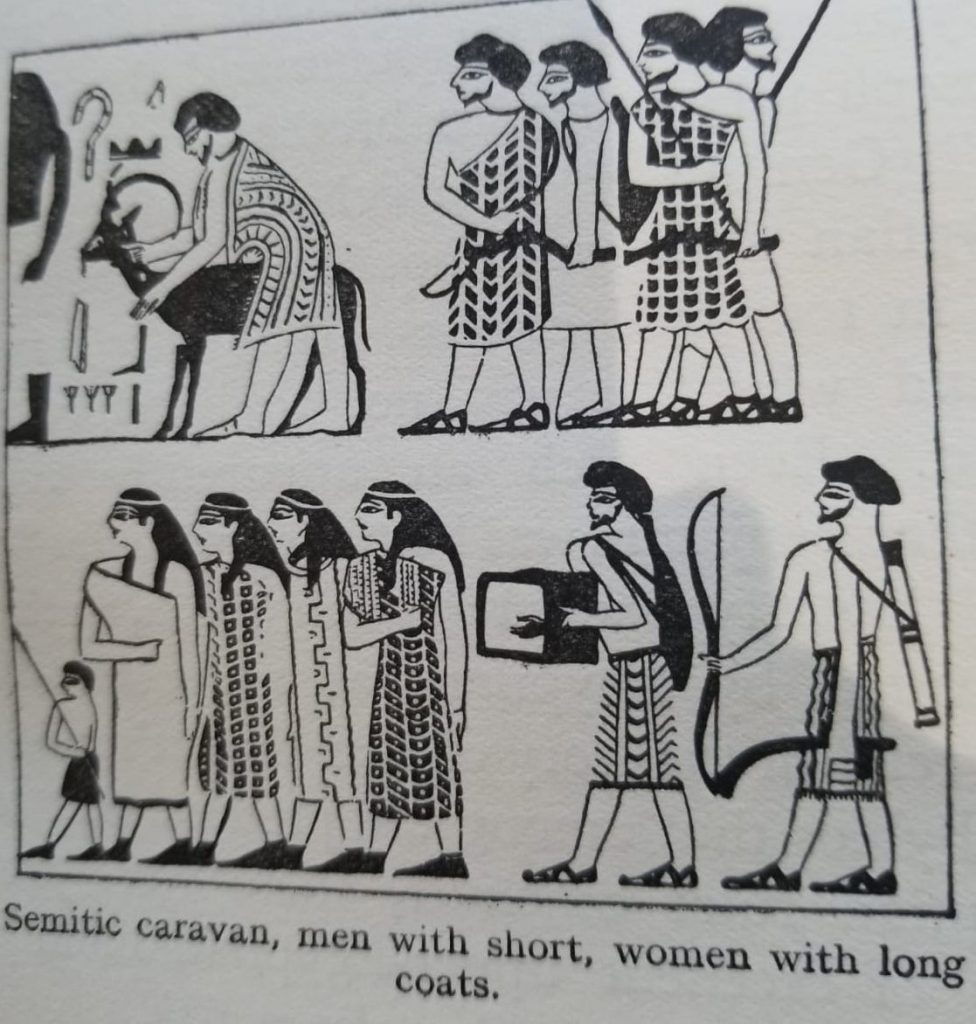
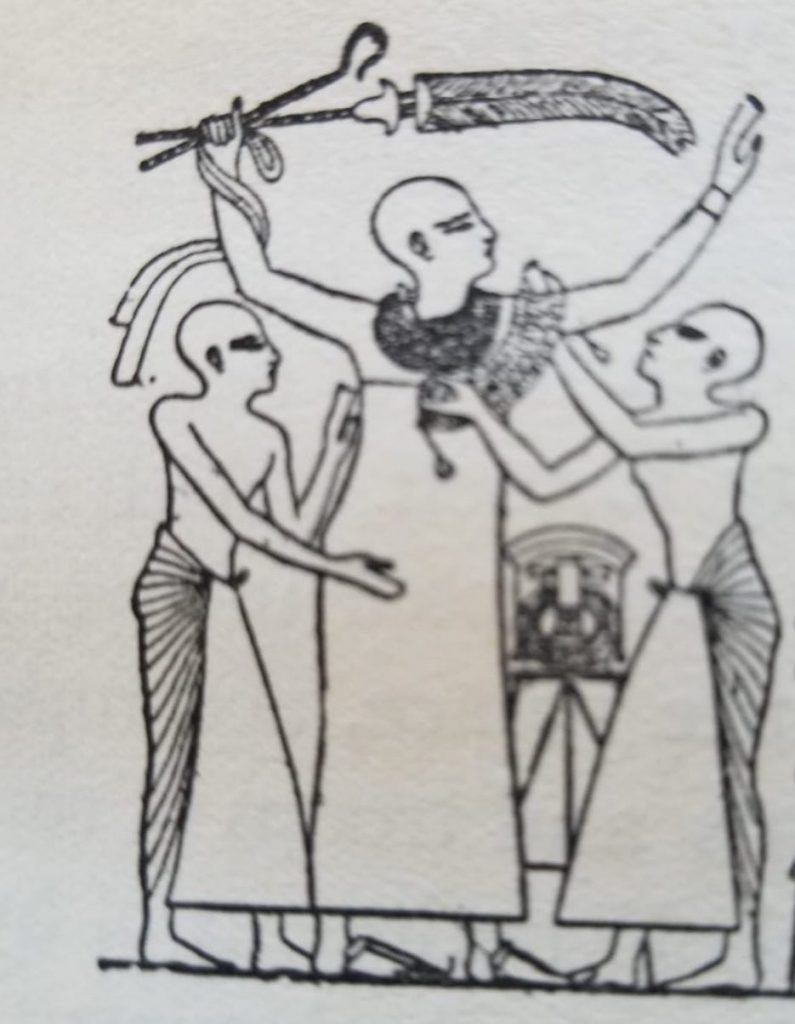
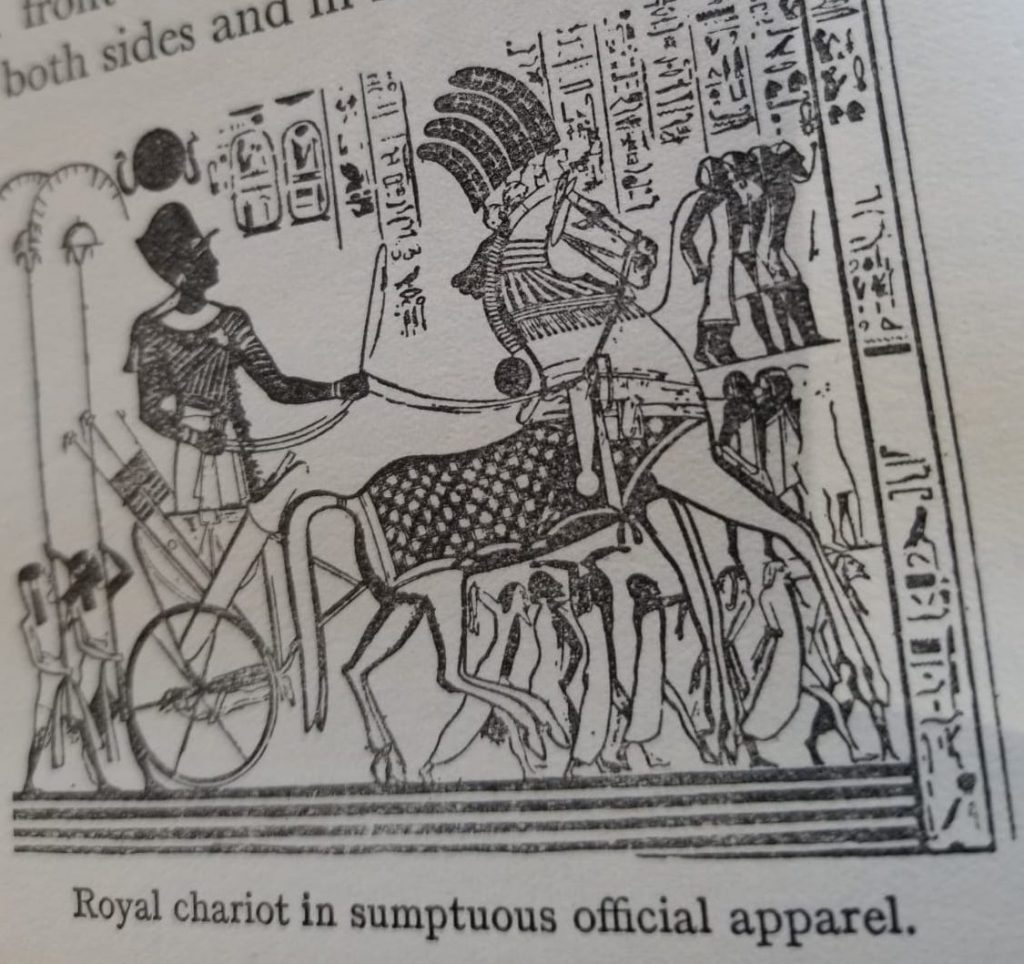
A somewhat similar method is that used I think for the first time by the great (but unfortunately unknown) orientalist, philologist and egyptologist Abraham Yehuda, a Sephardic Jew born in Baghdad 1877. Let’s see some examples that Yehuda mentions in the story of Yosef. The Tora tells in Bereshit 41 that when removed from prison Yosef was shaved. Yahuda explains that shaving entirely the face and head was a typically Egyptian custom (according to my tour guide in my last visit to the Egyptian gallery in the Met, Egyptians shaved their head to protect themselves from the intense heat and insects). Semites, however, grew their hair and their beard. But when a Semite or another foreigner had to come and present himself before the King, had to look presentable, for a Hebrew that mean: clean shaved. Similarly, semites, like Yosef, wore robes made of colored fabric, which covered the entire body while Egyptians wore plain, white or transparent tunics that covered half body (see illustrations). Egyptian dignitaries wore linen tunics, as the Tora mentions with Yosef. At the time of his coronation Pharaoh gives Yosef a ring, dresses him with a gold necklace and then, as was customary in Egypt, Yosef was paraded in a Royal Carriage to be officially installed in his new position. An Egyptian that served as a government official needs to have a title of nobility, which was inherited from father to son, or obtained by marriage. At the time of his installation Pharaoh marries Yosef with Asenat daughter of the priest of On for this very purpose, following strict Egyptian protocol. Finally, when Pharaoh designates Yosef as Vizier Yosef goes through a process of “naturalization”. Pharaoh changed his name from Yosef to Tsafenat Pa’aneah, a typically Egyptian name that according to Yahuda means “The feeder for all Egypt. “ Yehuda presents all these facts and many more in great detail and presents some illustrations of these formal ceremonies with drawings and Egyptian reliefs of the time, to show the exquisite precision and historical accuracy of the biblical story.
To be continued
Semitic immigrants arriving in Egypt. Could this be the way Yosef’s brothers and their families looked when arriving to Egypt?Ceremony of coronation of a Vizier. Shaved, dressed with white linen and receiving a gold necklace, as it is said of Yosef.The royal carriage introducing the dignitaries to the people
Slavery, Mud and Straws
“And [the Egyptians] embittered the life [of the children and Israel, forcing them to do] the hardest works, [such as the extraction of the] mud and [the making of] the bricks …”
Exodus 1:14
PAYBACK TIME
For several decades, from the time of Yosef until the new Egyptian dynasty (the 18th?) that ruled over Egypt, Jews had a privileged life. They lived in a safe and fertile area, Goshen, and enjoyed prosperity and good health. Food was abundant for the Jews. And this material wellbeing is reflected more than once by the Tora by mentioning the exceptional high birthrate of the children of Israel. The new Pharaoh sought to curb the power of the Jews—and their demographic growth—by imposing excessive labor taxes to impoverish and weaken them. But he did not succeed. Then, Pharaoh went on to the second stage of his plan. Declaring the Jews officially as the public enemy, and assigning them as “the slaves of the people”. Visualizing this scenario is very difficult from our comfortable residences. It can only become more real —and scary — if we think about the Shoah. The first time I read a comparison between what happened in Egypt and what happened in Europe 1939-1945 was in Elie Wiesel’s book, “Job: Ou Dieu dans la tempête” (French). Following Wiesel line of thought, I imagine that at this point the houses, property and assets of the Jews were confiscated by the government and handed over to Pharaoh or the Egyptian aristocracy. Jewish men, women and children, must have been forcibly removed from their homes and taken to “ghettos” or fortifications, where they were chained, and then given to the Egyptian citizens as free labor. This little-known point, that the Jews were handed over to the common people as slaves, is mentioned among others by Rabbi Wisser, the Malbim (Russia, 1809 – 1879) who writes “the Jews were taken as chattel slaves, but they no longer worked for the monarch [the government], but for the population in general. The Jews were now the slaves of the slaves [of Pharaoh] and were obligated to do any work that any Egyptian asked of them. “ Our verse describes the ways the Egyptians treated their Jewish slaves. “And the Egyptians embittered their lives with hard work.” There was something personal about this mistreatment of the Jews. Animosity. Resentment. How did this happen? The new Pharaoh, a revisionist, changed the narrative and demonized Yosef and his descendants like the Nazis demonized the Jews. The Hebrews were categorized as “Persona non grata”, “The enemies of the people”. He surely used his propaganda to misrepresent Yosef, not as the hero who saved Egypt from famine, but as the villain who took advantage of the Egyptian famine in favor of a foreign Pharaoh (an Hikso?) and of his own family. And something else.The Jews were prosperous. Instead of looking at the efforts Jews had made to earn their prosperity, or the sacrifices they made to save their gains, the Egyptians accused the Jews of dishonesty and abuse. This resentment was now translated into the most terrible revenge: the “rich” Jews were now absolutely vulnerable, free labor in the hands of the resentful Egyptians, who enjoyed having them beneath their feet.
THE HARDEST WORK
The jobs assigned to the Jews were, of course, the worst taasks. The most unhealthy and risky jobs, that nobody else in Egypt was willing to do. The first example mentioned in the Torah is the “homer ulbenim”, mud and bricks. Apparently, of all the hard work that there was to do in Egypt, the most humiliating, exhausting and lethal was that of producing the bricks. The bricks of Egypt were made of two materials: mud, or silt, and straw. This way of making bricks is universal. Mud and straw bricks are still produced to this day in poor areas almost everywhere in the planet . The Jewish slaves had to extract the mud from the Nile, which was rich in minerals. Transport it, mix it with manure, and stir it with their feet and hands for 4 or 5 days, until the mud reaches the fermentation point. Then, straw was introduced into this mud to make it stronger, more solid and durable. All this work was done in the swamps of the Nile, a river infested with crocodiles, hippos, mosquitoes, and under a scorching desert sun that burned the skin.
HAROSET
Maimonides explains that the Sages introduced the Mitsva of Haroset to represent these terrible times. The brown paste recalls the color and texture of the mud. Vinegar, the taste of bitterness. And the tebalín, the edible herbs or spices (cut in thin and long pieces), which Maimonides indicates that should be introduced in the Haroset, remind us of the straw. The extraction of mud and the manufacturing of bricks with straw was the hardest, most humiliating and most lethal work that Jewish slaves had to carry out, for generations. In the Seder, when we see the Haroset, the image of the cruelest slavery awakens in our collective mind, as a national memory that we can not forget…
Egypt and the Zoo. By Shemuel Bitton
The most important event in Jewish history is the Exodus, the freedom from Egypt. We mention it during the Shema Israel, during Kiddush, during many Mitsvot and all the three major Jewish holidays are based on it. There were many miracles that happened when the Jews were leaving Egypt. But what was the most impressive miracle? Was it the Ten Plagues, or the splitting of the sea? Was it in the Man that fell on the dessert on the way to Erets Israel? Or perhaps, was it something which we do not even realize was a miracle to begin with.
In order to understand this miracle, we should think about animals in a zoo. Do they know they are trapped? Well, if they were taken from the wild, then they know what freedom looks like: roaming free in the jungle and hunting. But what about a wild animal that was born in a cage? An animal whose parents and great grandparents were born and raised in captivity? They never lived in the wild and they don’t know any home besides for the zoo. I’m sure they cannot be thinking about going back to the jungle. They do not know any better than the zoo.…
Now, think about the Jewish people in Egypt. They had already lived as slaves for many generations. But in an unexplainable way, they “complained” about slavery. In other words, they realized they were slaves and they realized there is something called freedom! This is a huge deal!
What was their inspiration to strive for freedom?
We can try to look at the reason why slaves in the USA were able to overcome this, and run away in the 19th century. Looking at most of these runaway slaves, almost none of them were slaves born into slavery, without a previous taste of freedom. Most runaway slaves were either taken into slavery after being free for a time, or they have had encountered freedom in a different situation. Like Fredrick Douglas, one of the most famous runaway slaves and a leader of the Abolitionist Movement. He was born into slavery. What encounter did he have in his lifetime that made him fight for freedom? Douglas’ encounter with freedom came through education. At the age of 12, his master’s wife, Sophia Auld, taught Fredrick to read. Douglass described her as a kind and tender-hearted woman, who treated him “as she supposed one human being ought to treat another”. It was this kind and loving treatment that opened Douglas’s eyes. Her husband, Hugh, foresaw the consequences and disapproved of the tutoring, claiming that literacy would encourage slaves to desire freedom.
What was that one thing that kept the Jewish people aspiring and praying to HaShem for freedom?
There is a famous that credits Jewish women for our liberation from Egyopt: “ בזכות נשים צדקניות נגאלו בני ישראל ממצרים” “Thanks to righteous women, the Israelites were saved from Egypt”.
What did the women do in Mitsrayim? Men were at work all day under the sun, getting sunburnt, and getting whipped with lashes, while doing excruciating work. This made them be physically slaves and mentally slaves. They had zero resting time and zero control over their choices.
But, there was one daily space of freedom: when they arrived home at the end of daylight. The Jewish wives wanted their homes to be a slavery free environment, physically and mentally. And they made a huge sacrifice. They would go to the Nile during the day and gather some fish from the overflown shore. Then, they would make a nice delicious real dinner for their husbands, who were eating only Matsa during work. Then the wives would use the fish oil and make a cream for the husbands backs and heal the sunburn and bruises from the whips. When the Jewish men arrived home, they were served a freemen’s dinner, and they were taken care as if they were free men, not slaves. These acts of love from their spouses made them realize that slavery wasn’t how life was supposed to be. Freedom, not slavery, was normal, and they had to figure out how to end it right away. This is when they prayed to HaShem, complained about slavery, and asked HaShem to gran them freedom. The rest is history.
My name is Shemuel Bitton and I am writing up this Halakha of the Day in honor of an amazing organization that has a kind of a similar goal. Chai Lifeline helps out kids with cancer and other illnesses. They do such amazing work helping these families with anything imaginable and one of the most incredible things they do is hosting a camp for all of these kids. In these camps, they allowed these kids to experience happiness and freedom, in others words, they help them to feel better and inspire them to aspire more happy times. These incredibly positive environments give them the extra motivation to fight as hard as possible and to pray to HaShem to get healthy.
I will be running a marathon very soon and would truly appreciate your help to reach my goal and assist this wonderful organization.
Tizku Lemitzvot and may we always be striving for more in life.
The 3 Most Important Ideas to Discuss at the Seder
פסח, מצה ומרור
There are 3 key concepts that should be mentioned in the Seder:
1.Pesah, 2.Matsa and 3.Maror.
Pesah, represents what HaShem did for us.
Matsa, is what we, the people of Israel, did to deserve our freedom.
Maror, is what the Egyptians did to us.
PESAH
According to Rabbi Menashe Ben Israel, the word Pesah in the Tora does not mean that HaShem “passed over” the houses of the Yehudim but “protected” them (as the Targum Onqelos hayis translates. This is why I prefer not using the term “Pesah”). When HaShem sent the tenth plague, the death of the firstborn, (משחית, a mortal plague, see Shemot 12:13 and 12:23), which in theory should have affected all the firstborn of Egypt, Gentiles or Jews, indiscriminately, HaShem “protected” (pasah) the houses of the Jews, and prevented this plague from affecting the Jewish firstborn. Pesah, then, is the festival in which we celebrate the constant, direct and supernatural protection that HaShem grants the people of Israel. This selective protection (hashgaha peratit) to the Jewish people that we celebrate on the night of the 15th of Nisan (in Hebrew known as ליל שימורים) since then watches over Am Israel to this day. HaShem protects the people of Israel in a supernatural way. The existence of Israel defies statistics or the most logical predictions. The Jewish people, is the most persecuted and harassed human group in the history of mankind. “Logically”, we should have disappeared a long time ago ח”ו, but “thanks to HaShem”, literally, we are still here!. The people and the state of Israel exist miraculously, despite all those who raise their voices and their weapons to destroy us, because just as it happened on that night of the 15th of Nisan, HaShem continues to protect us. This is what we celebrate in Pesah.
MATSA
The Matsa represents what the Jewish people did to deserve our freedom. On the 14th of Nisan, HaShem ordered the Yehudim to leave Egypt and head towards the desert.
This seems a non-brainer. Who would not want to stop being a slave? But we must take into account an element that occupies a very important place in Pesah, but for some reason, not much is said about it.
Egypt was the most modern, most prosperous, most stable and safest country in the world at that time.
In Egypt, even though we were slaves, we had water and food, which was not common in other parts of the world, where many times even ordinary people died of hunger or thirst, for example, in times of drought. Egypt was almost not affected by droughts. Egypt has the blessing of the Nile, the longest river in the world, a natural and stable resource, which provided water, irrigation for plants and fish in great abundance.
There is another factor that is also not usually mentioned. I am reading a very interesting book called “1177 BCE”, which describes the invasion of the “peoples of the sea”, savage tribes from the European coasts and islands, into the coasts of the Mediterranean. These devastating invasions, the sort of which were not uncommon in those times, destroyed virtually all civilizations of that time. Egypt survived these invasions (the people of Israel too, but this is a matter for another day …) thanks to its powerful army, which was able repel the attack of these fearsome invaders. Egypt was, at that time, a very strong country militarily.
We have to understand something that sounds a bit ironic: it was not easy for the Yehudim to abandon the prosperity, stability and security of Egypt – despite the slavery – and go to the desert, to a dry land, without water, without food, without plants or fruits, with poisonous snakes, scorpions, enemies, desert bandits, etc.
When the order to depart was given, the Yehudim could have doubted, debated, delayed the departure (להתמהמה), since we were heading towards a very dangerous place.
Our great merit is that we did not delay our departure but we rather rushed to leave, with great enthusiasm and loyalty to HaShem, trusting only in the promise of His protection. The last hours before leaving, we quickly prepared as much food as we could, so hastily that we could not wait for the dough to raise and bake bread … We left Egypt carrying only a few Matsot with us.
The Matsa, thus, reminds us of this merit: that we did not hesitate to leave Egypt and go to the unknown, surrendering ourselves faithfully and lovingly in the hands of Bore Olam.
This great merit of the people of Israel is mentioned with much emphasis by the prophet Yirmiyahu, when he said in the name of HaShem, referring to the departure from Egypt: “I remember your merit of your youth; your unconditional love [for Me]: when you followed me to the desert, to a dry land [without water, and without food] … “ (Jeremiah 2: 2).
To be continued….
SHABBAT SHALOM
For the merit of virtuous women the children of Israel were freed from Egypt
CHAPTER 1
15: The king of Egypt said to the Hebrew midwives, whose names were Shiphrah and Puah, 16: “When you are helping the Hebrew women during childbirth on the delivery stool, if you see that the baby is a boy, kill him; but if it is a girl, let her live.” 17:The midwives, however, feared God and did not do what the king of Egypt had told them to do; they let the boys live. 18: Then the king of Egypt summoned the midwives and asked them, “Why have you done this? Why have you let the boys live?” 19: The midwives answered Pharaoh, “Hebrew women are not like Egyptian women; they are vigorous and give birth before the midwives arrive.” 20: So God was kind to the midwives and the people increased and became even more numerous. 21: And because the midwives feared God, he gave them families of their own.22: Then Pharaoh gave this order to all his people: “Every Hebrew boy that is born you must throw into the Nile, but let every girl live.”
CHAPTER 2
1: Now a man of the tribe of Levi married a Levite woman, 2: and she became pregnant and gave birth to a son. When she saw that he was a fine child, she hid him for three months. 3: But when she could hide him no longer, she got a basketfor him and coated it with tar and pitch. Then she placed the child in it and put it among the reeds along the bank of the Nile. 4: His sister stood at a distance to see what would happen to him.5: Then Pharaoh’s daughter went down to the Nile to bathe, and her attendants were walking along the riverbank. She saw the basket among the reeds and sent her female slave to get it. 6: She opened it and saw the baby. He was crying, and she felt sorry for him. “This is one of the Hebrew babies,” she said. 7: Then his sister asked Pharaoh’s daughter, “Shall I go and get one of the Hebrew women to nurse the baby for you?” 8:“Yes, go,” she answered. So the girl went and got the baby’s mother. 9:Pharaoh’s daughter said to her, “Take this baby and nurse him for me, and I will pay you.” So the woman took the baby and nursed him. 10:When the child grew older, she took him to Pharaoh’s daughter and he became her son. She named him Moses,saying, “I drew him out of the water.”
More ideas and educational material for a succesful Seder
As we explained yesterday, our mission in the Seder night is to “teach” the Hagada, not only “read” it. To teach the Hagada, among other things, we must make the Hagada relevant, even for those of our guest who might be unfamiliar with Jewish history. We must show that the story of the Hagada is not part of a forgotten past, but surprisingly contemporary. With this idea in mind, we will analyze now a short passage from the Haggadah. This four words paragraph describe the strategy the Egyptians used to enslave us without any internal opposition.
The pasuq says: וירעו אותנו המצרים ויענונו (Deut. 26: 6). Usually this verse is translated as “the Egyptians did bad to us”, in the sense of “they treated us badly”. But you should notice that this word yare’u is written in the Hif’il, a transitive verbal construction. When understood in this way, this word means: “And the Egyptians did US bad” , in other words, “they made us look bad”, or in just one word” They “demonized” us. As my son Ya’aqob writes in his commentary to the Hagada, Pharaoh “the dictator, singles out the People of Israel as an irrationally evil entity, who is to blame for all the misfortunes of this dictator’s subjects. The propaganda of Pharaoh is nonsensical. Basically, he tells his people: “The ‘other’, this People of Israel, is very cunning. We must be more cunning than they are. If not, then if and when we are attacked, the Israelites will join our enemies, out of sheer malice. Their goal in joining our enemies will be to harm us, nothing more. In fact, after they attack us, they will leave the land! “. ‘The Jews are bad’. They are irrationally bad, repeated Pharaoh numberless times… Pharaoh succeeded in eradicating the positive impression Joseph had left on Egypt just a few years ago. Without Joseph, Egyptians would have perished in the worst famine to have ever affected them. At the time, they acknowledged it: “you have saved our lives!”-they admitted to Joseph. But Jewish contributions to society can be forgotten as swiftly as the time it takes for an irrational message of hatred to reach the ears of subjects in a dictatorial system. “
This phenomenon, demonization> anti-Semitism, was initiated by Pharaoh, but was repeated countless times. In 1492 Queen Isabella of Spain expelled the Jews , who had been so instrumental in making Spain prosperous, and who even helped the Queen in the war against the Mores. Before expelling the Jews, we were demonized throughout Europe, not only as “deicide” (murderers of a god) but also as poisoners of wells, usurers, and murderers of gentile children for ritual purposes, i.e. baking Matsot with gentile blood …
In 1506, in Lisbon, Portugal there was a great drought. And the crowd blamed the Jews for the drought. More than 2,000 Jews were tortured and massacred “for causing the drought.” Unfortunately, the list of episodes of this sort is very, very long. And unfortunately, it did not end there in the Sixteenth Century. Just look at the website: www.memritv.org , and you will see that in the Arab world, Jews are still demonized and accused of all the world’s ills. Here is an example.
Today, this demonization is systematically applied against the State of Israel, which is the “Jew” among the nations of the earth”. Israel is vilified, and falsely accused of all imaginary evils. The rise of anti-Zionism in the world is not, as is often rationalized, the consequence of the “demonic” actions of the State of Israel, rather, anti-Semitism is the cause of the systematic demonization of the State of Israel.
As the reader will appreciate, the subjects and ideas of the Hagada, besides describing our history, are absolutely current and relevant. This was just one example.
Now, when you explain the Hagada and its historical events, do not forget that the main message of Pesah, is to strengthen our faith in HaShem (Emuna). Despite the demonization, slavery and tortures we suffered, HaShem protected us, saved us from enemies more powerful than us, and rescued us with great miracles. It is true that in every generation a new enemy comes to wipe us off the map. But HaShem rescues us, He saves us from their hands. HaShem is “the main protagonist” of the Seder night. And that’s why the Hagada does not mention Moshe, lest anyone think that a human being saved us and freed us from Egypt but Him.
EDUCATIONAL MATERIAL FOR THE SEDER
√ To find games for children, including a huge list of questions for Pesah you can visit this website.
√ For a beautiful idea to cross the sea at the Seder, and other creative way to make your children enjoy the most special night of the year, see here what Mr Raymond Kassin emailed me yesterday. Thank you.
√ Rabbi David Sutton of New York, sent me his Hagada companion in English, which emphasizes our duty to strengthen our Emuna . See here
√ For more advanced students, I recommend this fantastic commentary on the Haggadah written by Rabbi Don Ytsjaq Abarbanel (1437-1508). See here . This Haggadah begins with 100 questions, or discussion topics (she’arim), which are solved or addressed throughout his commentary. Do not miss the introduction, where Rabbi Abarbanel tells his incredible (and tragic) personal history.
√ Recommended Hagada 5777: See this Hagada from rabbi Israel Yaaqob Algazi (1680-1757). See how he explains in Ha Lahma Anya our obligation to be kind and generous with the needy as He was with us when he took us out of Egypt.
The beginnings of Antisemitism: DEMONIZATION
The origins of anti-Semitism can be traced back to Ancient Egypt. The anti-Jewish attitude of Pharaoh was not directly related to something the people of Israel had done wrong. Pharaoh’s antagonism to Jews had to do with a new political situation: Pharaoh’s opposition to the previous government, which was friendly to the Jews, especially because of Yosef.
This is the first example of an incredible paradox that repeated itself numberless times in Jewish history. Being loyal to a present local government leaves Jews exposed to the whims of a new government, coming from the opposition. Let me explain: In exile, Jews were always very loyal to the local government. And thus, for example, when the son of the previous king succeeded his father, Jews were respected by the new monarch, for the loyalty Jews had shown towards his father. But if the previous King was not succeeded by his son, if the previous King, for example, was dethroned or overthrown by the opposition, now the Jews would have to pay for their loyalty to the previous government.
Is this what happened in Egypt when a new Pharaoh came to power? Everything seems to indicate so. And based on the plain narrative of the Biblical text (peshat) now the new Egyptian King inspired in the heart of the masses a new antagonism to the Jews. And this when, for the first time, we will find a very distinctive element of anti-Semitism: anti-Semitic propaganda.
In Parashat Ki-Tabo the Tora refers in one word, to this type of anti-Semitism. It tells us that before torturing us with hard labor the Egyptians yare’u otanu (וירעו אותנו המצרים ויענונו). This sophisticated Hebrew word vayare’u is usually translated as “damaged us” or “they did bad to us” . But there is another possible reading of this word, without forcing the delicate semantics of this term. Rather than translating “they did bad to us” this verse might be telling us something deeper: the Egyptians “made us bad”, i.e., “made us look bad” or in one word, “demonized us.” They spoke ill of us and falsely accused us of horrible acts. Pharaoh demonized us suggesting that Jews became rich by robbing the Egyptians. Or that because Jews are a separate people, their loyalty to Egypt is questionable…. This fake propaganda was necessary to justify their case for persecuting, killing and destroying us.
The demonization of the Jews was, and unfortunately still is, the first step in any Antisemitic campaign. For centuries Jews were falsely blamed for the most heinous crimes: poisoning wells of water (in the time of the Bubonic plague, 1350), killing a god, killing children to eat their blood in the Matza, etc. Some of these ridiculous allegations, incredibly, are still spread until today. The “demonization” of the Jews was, is and will remain a prerequisite to pursue and condemn the Jews.
Pharaoh continues his inflammatory speech:
הבה נתחכמה לו: “The Jews are smart, let us outsmart them” The Jews had a reputation for being smart, studious, a people who appreciate the value of education. Pharaoh does not deny this. But in his anti-Semitic rhetoric Pharaoh “demonize” the intelligence of the Jews and presents it as a kind of negative and evil “cunning” which will eventually lead them to betrayal.
ונוסף גם הוא על שונאניו ונלחם בנו ועלה מן הארץ
“They will join our enemies, they will fight against us and abandon the land”. Pharaoh’s speech is a typical demagogic discourse of a dictator. Note that Pharaoh does not address his court or his cabinet (‘abadav) as he does when threatened by the plagues. He speaks directly to the people (on national TV).
Pharaoh ends his speech with the most popular, harmful and unfounded anti-Semitic accusation. “The Jews will betray us, they will join our enemies and take our wealth with them.” Pharaoh is trying to sow fear in the Egyptian population, and like many other tyrants he used the essential characteristic of the Jewish people, their sense of community and unity, to demonize them. The greatest strength of the Jewish people is used by the anti-Semite as their greatest vulnerability. Thus, even it is a lie, it is credible to accuse of disloyalty a people that resists assimilation ….