Singing the Hallel in Yerushalayim

Pesach was celebrated with great joy in the times of the Bet haMiqdash (the Temple of Jerusalem, destroyed in the year 68 of the Common Era). Hundreds of thousands of Jews came to Yerushalayim from all corners of Israel to sacrifice the Qorban Pesach (a sheep or goat) on the 14th of Nisan. They stayed with relatives, acquaintances, or often wherever there was room. The houses in Yerushalayim were open to all who needed a place to stay. Only when there was no more room available would a red cloth be hung above the door to announce it.

Today, we remember this beautiful act of hospitality when we say at the beginning of the Haggadah: “Let all who are hungry come and eat; let all who need come and celebrate Pesach with us.”
In the homes of Yerushalayim, people gathered in groups of families, friends, and guests called Haburot (singular: Habura). Each Habura, which could consist of 50, 60, or even up to 100 people, would partake of the same Qorban.

The lamb was brought on the afternoon of the 14th of Nisan to the Bet haMiqdash by one or two representatives of each Habura, and it was sacrificed while the Hallel was recited.

There is a beautiful custom, still practiced today in a few communities, that was observed for centuries in remembrance of this Hallel on the eve of Pesach. Do you know when people used to bake the Matsot used for the Pesach Seder? On the 14th of Nisan! That is, in the afternoon of the eve of Pesach, at the very time the Qorban was sacrificed. This is in fact the ideal time to prepare Matsot—just as we prepare Halot on a regular Friday afternoon. And while preparing the Matsot, the family would sing the Hallel!

Let’s return to Yerushalayim. After being slaughtered, the animal was roasted whole and brought back home. That night, already the 15th of Nisan, the Seder was conducted—very much like we do today. The Haggadah was read, the Ma Nishtana questions were asked, and a large meal was served, including other offerings such as the Korban Hagiga, and all accompanied, of course, by Matsa, Maror, and Haroset. People reclined on couches or cushions and ate like nobles. They drank four cups of tempered wine, toasting to our salvation, redemption, freedom, and our assignment as the chosen people.

At the end of the meal, before midnight, the Qorban Pesach was distributed as the Afiqoman (the final course or “dessert”) among all members of the Habura. Everyone had to eat at least a portion the size of an olive (Kazait).

Today, we remember the Qorban Pesach by placing a shank bone on the Pesach tray (or a chicken leg among Ashkenazim). At the end of the Seder, we also eat an additional portion of Matsa, the Afiqoman, saying: “We eat this Matsa in memory of the Qorban Pesach, which was eaten when one was already satisfied.”

After eating the Qorban Pesach, we recited the Birkat haMazon, the blessing of gratitude to HaShem for our food.

Towards midnight, once the Pesach meal was complete, something truly “magical” happened. People would go up to the terraces of their homes and from there, looking toward the Bet haMiqdash—illuminated by the full moon—they would sing the Hallel, the Psalms of Tehillim recited to thank HaShem for freeing us from Egypt.

I believe this was the most beautiful moment of the night: the voices of hundreds of thousands of Yehudim, the entire Jewish People, coming together to sing the Hallel, all at once, with one melody, filling the holy city with that extraordinary song. The Gemara says that the voices of this multitudinous chorus were so powerful that the city literally “trembled.”

To preserve the memory of that beautiful Hallel and make it part of our national memory, we all sing the Hallel together in the synagogue before the Seder begins.

May HaShem grant us the merit to sing the Hallel next year, all together, in Yerushalayim, with one voice before our Bet haMiqdash. AMEN.

יהי רצון שנזכה לחגוג את חג הפסח בבנין בית תפארתינו במב”י, אמן


Why Four Cups?

DRINKING LIKE KINGS

The Sages of the Mishna said that during the Pesah Seder, “we must see ourselves (act, behave, perform) as if we had just left Egypt.” This means that on the Seder night, we must “act” as people who, in opposition to slaves, live as free and prosperous citizens (bene chorin).

For this performance to be as authentic as possible, firstly, we sit leaning on the left, which was how royalty nobles and aristocrats would sit at that time (see here). Secondly, we drink FOUR cups of wine in one meal. This amount of wine was not standard in a family of moderate means, not even on festive occasions. But it was expected at a banquet of the aristocracy, where wine was served several times: 1. Before dinner –at the reception–, 2. Then, as an appetizer. 3. During dinner, and 4. After dinner as a dessert. The Seder mirrors a festive banquet of noble citizens. We must bear in mind that for us Jews, during 2,000 years of exile, wealth and prosperity was not the rule but the exception. For most people, it was not easy to afford four glasses of wine per guest (this is why the Mishna specifies that public food funds could be used to provide the poor with four glasses of wine per person). And still, we do this so that during the night of the Seder, we “feel the freedom by displaying prosperity,” what Maimonides and the Sages call: The way of the free people “דרך חרות.”

THE FOUR BLESSINGS OF THE SEDER

There is another practical reason for the four cups. During the week, it is customary to drink less wine. Generally, wine and meat are reserved for celebrations, especially for Shabbat and Holidays (Yom Tob). In these occasions, wine usually accompanies the recitation of the prayers and blessings we recite to celebrate these happy moments. On Shabbat, for example, a glass of wine accompanies the recitation of the Qiddush and Birkat haMazon (that is, the blessing after eating a full meal with bread). And we do the same on other festive occasions. For example, we have two glasses of wine at a wedding ceremony: one for the Birkat Irusin and another for the Sheba Berakhot (seven blessings of the bride and groom). Likewise, in a Berit Mila (circumcision), we recite the berakha over a glass of wine.

Wine is associated with joy and celebration.

We celebrate the four steps of the process of redemption from Egypt.  When HaShem promised to deliver the Jews from Egyptian slavery, the Tora used four terms to describe our redemption (Exodus 6:6-8): a) “I shall take you out…” b) “I shall rescue you…” c) “I shall redeem you…” d) “I shall take you…”

WHY IS THIS NIGHT DIFFERENT?

There are similarities and differences between the Seder and other regular celebrations.

1. Unlike the Qiddush that we recite on Shabbat or other celebrations where only one person is required to taste the wine, ALL adult participants must drink the four cups at the Pesah Seder.

2. The four cups are assigned to different parts of the Seder, particularly the parts of the Haggada associated with celebration.

1. FIRS CUP: Qiddush.

2. SECOND CUP: Birkat haGeula (blessing of gratitude for our redemption) , at the end of the Haggadah, before dinner (ga-al-Israel). This is a special blessing for Pesach, in which we thank HaShem for having delivered us from Egypt.

3. THIRD CUP: After Birkat HaMazon, the blessing of gratitude after eating a full meal

4. FOURTH CUP: At the time of the Hallel, the recitation of the Psalms of praise to HaShem for having rescued us from Egypt.

Wine Before a Meal

The Gemara in Berakhot (pereq shishi) explains that wine can have an aperitif effect and that a person feels more hungry after he drinks (tuba garir). “… every restaurant knows that if you get a drink first, you’re going to eat more,” says Robert Considine, one of the authors of a study on obesity at the Indiana University School of Medicine in Indianapolis. Considine and his colleagues found that alcohol motivates a particular area of ​​the brain —the hypothalamus— that makes you focus on food aromas, compared to other odors. The hypothalamus produces hormones that help govern various body functions, including hunger, and directs the brain “to pay more attention to food after consuming a drink”.


A Powerful Lesson From the Maror

Rabban Gamliel indicates that “Maror” is one of the three central concepts we should pass on to our children in the Seder, along with Matsa and the Pesach sacrifice. The Maror, the bitter vegetables we eat in the Seder, reminds us of how the Egyptians demonized us, enslaved us, and made us suffer. But why is it so important to transmit this “painful” lesson to the next generation on the night of the Seder? Should we not focus exclusively on “celebrating” our freedom? There are several reasons why we should remember tonight the meaning of the Maror.

There are several reasons why we should remember the meaning of the Maror.

First, when debating the order in which the story of the exodus should be told, our Sages understood that we have to mention the bad things that happened to us and that these bad memories should be mentioned first. Why? Because in this way, we will better appreciate the good things that happened to us. The better we realize the horrors of slavery, the better we will appreciate the gift of freedom.

Second, hatred towards the Jewish people symbolized in the Maror, is not something of the past. Somehow our children must know that our destiny as a chosen people involves being exposed to demonization and persecution. It is an integral part of the package of belonging to the People of God.

And thirdly, I think there is an additional, very important reason to preserve the memory of our suffering. The Tora teaches us to positively channel the memories of the pain we suffered in Egypt. How? By doing everything possible to ensure other people do not suffer. To me, this idea and its timing represent a revolution in human thinking. Here’s why.

In the past, a particular pattern always repeated itself. Civilizations that were oppressed and enslaved fought for their freedom, and then, upon triumph, their first “need” was revenge: to make their persecutors endure what they had suffered. However, the story did not end there. Once the formerly oppressed people became stronger and more powerful, they dedicated themselves to capturing other peoples, enslaving them, and making them suffer as they had. This sadistic behavior is a well-known psychological phenomenon. Statistics show a very high rate of “abusive” people (in every sense) who have been abused in the past.

The Tora introduces a moral revolution—a 180-degree shift in perspective.

What is the Mitzva mentioned in the Tora more than any other commandment? “And you shall love [= care about, take care of] the stranger [= the poor, the needy, the people most exposed to abuse], because you were strangers in the land of Egypt.” In a counter-intuitive, almost supernatural way, the Tora teaches us to transform the memory of our suffering into virtue. Instead of nurturing or justifying a subconscious thirst for revenge and abuse, we, the people of God, should become extra kind to those in need. The Tora tells us: You know what suffering means; therefore, do not let other people suffer. Why? Because you are better qualified than those who did not suffer to understand what humiliation, poverty, and oppression mean.

We, Jews, teach our children from a young age to preserve the memory of our affliction and process it to do whatever we can to prevent others from suffering.

I know many very good and generous people. But, honestly, the most generous, kind, compassionate, and angelic people I have met are Holocaust survivors. Among them, for example, Rabbanit Esther Jungreis z”l, who dedicated her life to inspiring others to do kindness. Or Yehuda Lindenblatt, from Manhattan Beach, a first responder in Hatzalah, a man dedicated to saving lives. Over the years, I have met many Holocaust survivors and have been shocked by their kindness and altruism. These elders suffered the inconceivable. Their families were destroyed. Following the common pattern of “abused” becoming “abusers”, Shoah survivors should have become the most abusive people on the planet. But in fact, quite the opposite is true! And I think all the credit goes to our Tora. This incredible idea that the Tora instilled in our minds from an early age: TAKE CARE OF THOSE WHO SUFFER, BECAUSE YOU PERSONALLY KNOW WHAT SUFFERING MEANS. This idea, counter-intuitive in terms of human psychology, is nothing but Divine—one that, Seder after Seder, became part of our character and DNA.

רמב”ם הלכות עבדים א ו

ל עבד עברי אסור לעבוד בו בפרך ואיזו היא עבודת פרך זו עבודה שאין לה קצבה ועבודה שאינו צריך לה אלא תהיה מחשבתו להעבידו בלבד שלא יבטל מכאן אמרו חכמים שלא יאמר לו עדור תחת הגפנים עד שאבא שהרי לא נתן לו קצבה אלא יאמר לו עדור עד שעה פלונית או עד מקום פלוני וכן לא יאמר לו חפור מקום זה והוא אינו צריך לו ואפילו להחם לו כוס של חמין או להצן ואינו צריך לו אסור ועובר עליו בלא תעשה שנאמר לא תרדה בו בפרך הא אינו עושה לו אלא דבר קצוב שהוא צריך לו וכן העכו”ם שנמכר לו אם רדה בו בפרך הרי ישראל מצווין למנעו ואם הניחוהו עוברים בלא תעשה שנאמר לא ירדנו בפרך לעיניך ואין אנו נזקקין לכנוס לרשותו של עכו”ם ולבדוק אחריו שלא יעבידנו בפרך שנאמר לעיניך בזמן שאתה רואה.

Rambam (Maimonides), Laws of Slaves, Chapter 1, Law 6

It is forbidden to work a Hebrew slave with rigor. What is considered rigorous work? Work that has no set limit and work that is not necessary but is intended only to keep the slave busy so that he is not idle. From this, the Sages said that one should not say to the slave, “Tie up the vines until I come back,” for he has not given him a limit. Instead, he should say, “Tie up the vines until this specific time” or “Until this specific place.”

Similarly, he should not say to him, “Dig in this place,” when it is not needed. Even heating a cup of hot water or cooling it down when it is not needed is forbidden, and it is a violation of a negative commandment, as it says, “You shall not work him with rigor.” This means that he only does a defined task that is necessary for him. Also, for a non-Jew who bought a Hebrew slave, Israelites are commanded to prevent it if he works him with rigor. If they allow it, they transgress a negative commandment, as it says, “He shall not work with rigor in your sight.”

  NEVER SPEAK IN ANGER
by  Rabbanit Esther Jungreis z”l
Rebbetzin Esther Jungreis on Anger


HEBREW & ENGLISH ESSENTIAL HAGGADAH FOR PESACH 2020

We want to begin by reminding everyone how important and critical it is to keep social distancing, even from our own family members, especially those who are above 60 or immunocompromised. Many of us will have to have this year Seder separated from our family members FOR THEIR OWN PROTECTION. And by protecting our loved ones this year,  B”H, next year, we can celebrate all together.  

We realize that in many household people will spend this Pesach with their nuclear family: father, mother, children. And for many parents, especially young parents, this will be the first time that they will be running the Seder on their own.  

The text of this Haggadah has been prepared for this particular scenario. And because not everyone is able to read the entire Haggadah in Hebrew, in this version we have preserved what I consider to be the most representative and known texts in the original Hebrew, and the rest we presented it in English. We also brought here an abbreviated version of Birkat haMazon. 


If for you this version of the Haggadah is still difficult to follow, you should know that under present circumstances you can surely rely on the plain halakha that allows to recite the entire Haggadah in English, or in any language that you understand. 

We hope that this text of the Haggadah will serve its purpose just for this year. 

We pray that next year, we will celebrate Pesach with all our family members and read and sing the entire Haggadah together, B”H, in Yerushalayim. 

 קדש


The cups are rinsed and then filled with wine (it is customary to add three drops of water to each cup of wine). Then, the Kiddush is said while standing 


אֵלֶּה מועֲדֵי ה’  מִקְרָאֵי קדֶשׁ, אֲשֶׁר תִּקְרְאוּ אתָם בְּמועֲדָם: וַיְדַבֵּר משֶׁה אֶת מעֲדֵי ה’  אֶל בְּנֵי יִשְׂרָאֵל:

סַבְרִי מָרָנָן:

עונים: לְחַיִּים

בָּרוּךְ אַתָּה יי אֱ-לֹהֵינוּ מֶלֶךְ הָעוֹלָם, בּוֹרֵא פְּרִי הַגֶּפֶן.

בָּרוּךְ אַתָּה יי אֱ-לֹהֵינוּ מֶלֶךְ הָעוֹלָם, אֲשֶׁר בָּחַר בָּנוּ מִכָּל עָם, וְרוֹמְמָנוּ מִכָּל לָשׁוֹן, וְקִדְּשָׁנוּ בְּמִצְוֹתָיו. וַתִּתֶּן לָנוּ יי אֱ-לֹהֵינוּ בְּאַהֲבָה,  מוֹעֲדִים לְשִׂמְחָה, חַגִּים וּזְמַנִּים לְשָׂשׂוֹן, אֶת יוֹם חַג הַמַצּוֹת הַזֶה, וְאֶת יוֹם טוֹב מִקְרָא קֹדֶשׁ הַזֶּה, זְמַן חֵרוּתֵנוּ בְּאַהֲבָה, מִקְרָא קֹדֶשׁ, זֵכֶר לִיצִיאַת מִצְרָיִם. כִּי בָנוּ בָחַרְתָּ וְאוֹתָנוּ קִדַּשְׁתָּ מִכָּל הָעַמִּים, מוֹעֲדֵי קָדְשֶךָ בְּשִׂמְחָה וּבְשָׂשׂוֹן הִנְחַלְתָּנוּ. בָּרוּךְ אַתָּה יי, מְקַדֵּשׁ  יִשְׂרָאֵל וְהַזְּמַנִּים.


בָּרוּךְ אַתָּה יי אֱ-לֹהֵינוּ מֶלֶךְ הָעוֹלָם, שֶׁהֶחֱיָנוּ וְקִיְּמָנוּ וְהִגִּיעָנוּ לַזְּמַן הַזֶה.


Now, sit down and drink the wine while leaning on your left side


ורחץ


Now, the hands are washed but the berakha “Al netilat Yadaim” is not said 


כרפס


Take a small amount of celery and dip it into vinegar and say the following berakha before eating it


בָּרוּךְ אַתָּה יי אֱ-לֹהֵינוּ מֶלֶךְ הָעוֹלָם, בּוֹרֵא פְּרִי הָאֲדָמָה.


יחץ


Split the middle Matzah in two, and conceal the larger piece to use it for the afikoman.


מגיד 


Now, hold the broken Matza and recite the following (some hold the three matzot in their hands) 


הָא לַחְמָא עַנְיָא דִי אֲכָלוּ אַבְהָתָנָא בְּאַרְעָא דְמִצְרָיִם. כָּל דִכְפִין יֵיתֵי וְיֵיכֹל, כָּל דִצְרִיךְ יֵיתֵי וְיִפְסַח. הָשַׁתָּא הָכָא, לְשָׁנָה הַבָּאָה בְּאַרְעָא דְיִשְׂרָאֵל. הָשַׁתָּא הָכָא עַבְדֵי, לְשָׁנָה הַבָּאָה בְּאַרְעָא דְיִשְׂרָאֵל בְּנֵי חוֹרִין.


Now, the cups and rinse and filled with wine for the second time. Put aside the seder plate.  The youngest person in the family should read the following


מַה נִּשְּׁתַּנָה הַלַּיְלָה הַזֶּה מִכָּל הַלֵּילוֹת, שֶׁבְּכָל הַלֵּילוֹת אֵין אֶנוּ מַטְבִּילִין אֲפִילוּ פַּעַם אֶחָת והַלַּיְלָה הַזֶּה שְׁתֵּי פְעָמִים.

שֶׁבְּכָל הַלֵּילוֹת אָנוּ אוֹכְלִין חָמֵץ אוֹ מַצָּה, והַלַּיְלָה הַזֶּה כּוּלוֹ מַצָּה.

שֶׁבְּכָל הַלֵּילוֹת אָנוּ אוֹכְלִין שְׁאָר יְרָקוֹת, והַלַּיְלָה הַזֶּה מָרוֹר.

שֶׁבְּכָל הַלֵּילוֹת אָנוּ אוֹכְלִין ושוֹתִין בֵּין יוֹשְׁבִין וּבֵין מְסֻבִּין, והַלַּיְלָה הַזֶּה כֻּלָנו מְסֻבִּין.


The Seder Plate is returned to its place and we continue reading the Haggada. The matzot should be covered when reading the Haggadah and covered when we lift the cups of wine


עֲבָדִים הָיִינוּ לְפַרְעֹה בְּמִצְרָיִם, וַיּוֹצִיאֵנוּ יי אֱ-לֹהֵינוּ מִשָּׁם בְּיָד חֲזָקָה וּבִזְרוֹעַ נְטוּיָה. וְאִלּוּ לֹא הוֹצִיא הַקָּדוֹשׁ בָּרוּךְ הוּא אֶת אֲבוֹתֵינוּ מִמִּצְרָיִם, עדֲיִן אֲנַחְנוּ וּבָנֵינוּ וּבְנֵי בָנֵינוּ מְשֻׁעְבָּדִים הָיִינוּ לְפַרְעֹה בְּמִצְרָיִם. וַאֲפִילוּ כֻּלָנוּ חֲכָמִים, כֻּלָנוּ נְבוֹנִים, כֻּלָנוּ יוֹדְעִים אֶת הַתּוֹרָה, מִצְוָה עָלֵינוּ לְסַפֵּר בִּיצִיאַת מִצְרַיִם. וְכָל הַמַרְבֶּה לְסַפֵּר בִּיצִיאַת מִצְרַיִם הֲרֵי זֶה מְשֻׁבָּח.


THE STORY OF THE FIVE RABBIS

It happened once [on Pesach] that Rabbi Eliezer, Rabbi Yehoshua, Rabbi Elazar ben Azariah, Rabbi Akiva and Rabbi Tarfon were reclining in Bnei Brak and were telling the story of the exodus from Egypt that whole night, until their students came and said to them, “The time of [reciting] the morning Shema has arrived.”

Rabbi Elazar ben Azariah said, “Behold I am like a man of seventy years and I have not merited [to understand why] the exodus from Egypt should be said at night until Ben Zoma explicated it, as it is stated (Deuteronomy 16:3), ‘In order that you remember the day of your going out from the land of Egypt all the days of your life;’ ‘the days of your life’ [indicates that the remembrance be invoked during] the days, ‘all the days of your life’ [indicates that the remembrance be invoked also during] the nights.” But the Sages say, “‘the days of your life’ [indicates that the remembrance be invoked in] this world, ‘all the days of your life’ [indicates that the remembrance be invoked also] in the days of the Messiah.”


THE FOUR SONS 

Blessed be the Place [of all], Blessed be He; Blessed be the One who Gave the Torah to His people Israel, Blessed be He. Corresponding to four sons did the Torah speak; one [who is] wise, one [who is] evil, one who is innocent and one who doesn’t know to ask.

What does the wise [son] say? “‘What are these testimonies, statutes and judgments that the Lord our God commanded you?’ (Deuteronomy 6:20)” And accordingly you will say to him, as per the laws of the Pesach sacrifice, “We may not eat an afikoman [a dessert or other foods eaten after the meal] after [we are finished eating] the Pesach sacrifice (Mishnah Pesachim 10:8).”

What does the evil [son] say? “‘What is this worship to you?’ (Exodus 12:26)” ‘To you’ and not ‘to him.’ And since he excluded himself from the collective, he denied a principle [of the Jewish faith]. And accordingly, you will blunt his teeth and say to him, “‘For the sake of this, did the Lord do [this] for me in my going out of Egypt’ (Exodus 13:8).” ‘For me’ and not ‘for him.’ If he had been there, he would not have been saved.

What does the innocent [son] say? “‘What is this?’ (Exodus 13:14)” And you will say to him, “‘With the strength of [His] hand did the Lord take us out from Egypt, from the house of slaves’ (Exodus 13:14).'”

And [regarding] the one who doesn’t know to ask, you will open [the conversation] for him. As it is stated (Exodus 13:8), “And you will speak to your son on that day saying, for the sake of this, did the Lord do [this] for me in my going out of Egypt.”


It could be from Rosh Chodesh [that one would have to discuss the Exodus. However] we learn [otherwise, since] it is stated, “on that day.” If it is [written] “on that day,” it could be from while it is still day [before the night of the fifteenth of Nissan. However] we learn [otherwise, since] it is stated, “for the sake of this.” I didn’t say ‘for the sake of this’ except [that it be observed] when [this] matza and maror are resting in front of you [meaning, on the night of the fifteenth].


מִתְּחִלָּה עוֹבְדֵי עֲבוֹדָה זָרָה הָיוּ אֲבוֹתֵינוּ, וְעַכְשָׁיו קֵרְבָנוּ הַמָּקוֹם לַעֲבוֹדָתוֹ, שֶׁנֶּאֱמַר: וַיֹאמֶר יְהוֹשֻעַ אֶל כָּל הָעָם, כֹּה אָמַר יי אֱלֹהֵי יִשְׂרָאֵל: בְּעֵבֶר הַנָּהָר יָשְׁבוּ אֲבוֹתֵיכֶם מֵעוֹלָם, תֶּרַח אֲבִי אַבְרָהָם וַאֲבִי נָחוֹר, וַיַּעַבְדוּ אֱלֹהִים אֲחֵרִים. וָאֶקַח אֶת אֲבִיכֶם אֶת אַבְרָהָם מֵעֵבֶר הַנָּהָר וָאוֹלֵךְ אוֹתוֹ בְּכָל אֶרֶץ כְּנָעַן, וָאַרְבֶּה אֶת זַרְעוֹ וָאֶתֵּן לוֹ אֶת יִצְחָק, וָאֶתֵּן לְיִצְחָק אֶת יַעֲקֹב וְאֶת עֵשָׂיו. וָאֶתֵּן לְעֵשָׂו אֶת הַר שֵּׂעִיר לָרֶשֶׁת אֹתוֹ, וְיַעֲקֹב וּבָנָיו יָרְדוּ מִצְרָיִם.


Blessed be the One who keeps His promise to Israel, blessed be He; since the Holy One, blessed be He, calculated the end [of the exile,] to do as He said to Avraham, our father, in the Covenant between the Pieces, as it is stated (Genesis 15:13-14), “And He said to Avram, ‘you should surely know that your seed will be a stranger in a land that is not theirs, and they will enslave them and afflict them four hundred years. And also that nation for which they shall toil will I judge, and afterwards they will go out with much property.'” 

Cover  the matza, lift up the cup and say:

וְהִיא שֶׁעָמְדָה לַאֲבוֹתֵינוּ וְלָנוּ, שֶׁלֹּא אֶחָד בִּלְבָד עָמַד עָלֵינוּ לְכַלּוֹתֵנוּ, אֶלָּא שֶׁבְּכָל דּוֹר וָדוֹר עוֹמְדִים עָלֵינוּ לְכַלוֹתֵנוּ, וְהַקָּדוֹשׁ בָּרוּךְ הוּא מַצִּילֵנוּ מִיָּדָם.

Put down the cup of wine from your hand and uncover the matza.

THE STORY OF CAPTIVITY AND REDEMPTION

Go out and learn what Lavan the Aramean sought to do to Ya’akov, our father; since Pharaoh only decreed [the death sentence] on the males but Lavan sought to uproot the whole [people]. As it is stated (Deuteronomy 26:5), “An Aramean was destroying my father and he went down to Egypt, and he resided there with a small number and he became there a nation, great, powerful and numerous.” 

“And he went down to Egypt” – helpless on account of the word [in which God told Avraham that his descendants would have to go into exile]. “And he resided there” – [this] teaches that Ya’akov, our father, didn’t go down to settle in Egypt, but rather [only] to reside there, as it is stated (Genesis 47:4), “And they said to Pharaoh, ‘To reside in the land have we come, since there is not enough pasture for your servant’s flocks, since the famine is heavy in the land of Canaan, and now please grant that your servants should dwell in the Land of Goshen.'” 

“As a small number” – as it is stated (Deuteronomy 10:22), “With seventy souls did your ancestors come down to Egypt, and now the Lord your God has made you as numerous as the stars of the sky.” 

“And he became there a nation” – [this] teaches that Israel [became] distinguishable there. “Great, powerful” – as it is stated (Exodus 1:7), “And the Children of Israel multiplied and swarmed and grew numerous and strong, most exceedingly and the land became full of them.” 

“And numerous” – as it is stated (Ezekiel 16:7), “I have given you to be numerous as the vegetation of the field, and you increased and grew and became highly ornamented, your breasts were set and your hair grew, but you were naked and barren.” 

“And the Egyptians did bad to us” (Deuteronomy 26:6) – as it is stated (Exodus 1:10), “Let us be wise towards him, lest he multiply and it will be that when war is called, he too will join with our enemies and fight against us and go up from the land.” 

“And afflicted us” – as is is stated (Exodus 1:11); “And they placed upon him leaders over the work-tax in order to afflict them with their burdens; and they built storage cities, Pithom and Ra’amses.” 

“And put upon us hard work” – as it is stated (Exodus 1:11), “And they enslaved the children of Israel with breaking work.” 

“And we we cried out to the Lord, the God of our ancestors, and the Lord heard our voice, and He saw our affliction, and our toil and our duress” (Deuteronomy 26:7). 

“And we cried out to the Lord, the God of our ancestors” – as it is stated (Exodus 2:23); “And it was in those great days that the king of Egypt died and the Children of Israel sighed from the work and yelled out, and their supplication went up to God from the work.” 

“And the Lord heard our voice” – as it is stated (Exodus 2:24); “And God heard their groans and God remembered His covenant with Avraham and with Yitschak and with Ya’akov.” 

“And He saw our affliction” – this [refers to] the separation from the way of the world, as it is stated (Exodus 2:25); “And God saw the Children of Israel and God knew.” 

“And our toil” – this [refers to the killing of the] sons, as it is stated (Exodus 1:24); “Every boy that is born, throw him into the Nile and every girl you shall keep alive.” 

“And our duress” – this [refers to] the pressure, as it is stated (Exodus 3:9); “And I also saw the duress that the Egyptians are applying on them.” 

“And the Lord took us out of Egypt with a strong hand and with an outstretched forearm and with great awe and with signs and with wonders” (Deuteronomy 26:8). 

“And the Lord took us out of Egypt” – not through an angel and not through a seraph and not through a messenger, but [directly by] the Holy One, blessed be He, Himself, as it is stated (Exodus 12:12); “And I will pass through the Land of Egypt on that night and I will smite every firstborn in the Land of Egypt, from men to animals; and with all the gods of Egypt, I will make judgments, I am the Lord.” 

“And I will pass through the Land of Egypt” – I and not an angel. “And I will smite every firstborn” – I and not a seraph. “And with all the gods of Egypt, I will make judgments” – I and not a messenger. “I am the Lord” – I am He and there is no other.

“With a strong hand” – this [refers to] the pestilence, as it is stated (Exodus 9:3); “Behold the hand of the Lord is upon your herds that are in the field, upon the horses, upon the donkeys, upon the camels, upon the cattle and upon the flocks, [there will be] a very heavy pestilence.” 

“And with an outstretched forearm” – this [refers to] the sword, as it is stated (I Chronicles 21:16); “And his sword was drawn in his hand, leaning over Jerusalem.” 

“And with great awe” – this [refers to the revelation of] the Divine Presence, as it is stated (Deuteronomy 4:34), “Or did God try to take for Himself a nation from within a nation with enigmas, with signs and with wonders and with war and with a strong hand and with an outstretched forearm and with great and awesome acts, like all that the Lord, your God, did for you in Egypt in front of your eyes?” 

“And with signs” – this [refers to] the staff, as it is stated (Exodus 4:17); “And this staff you shall take in your hand, that with it you will preform signs.” 

“And with wonders” – this [refers to] the blood, as it is stated (Joel 3:3); “And I will place my wonders in the skies and in the earth: 

THE TEN PLAGUES

And when he says, “blood and fire and pillars of smoke” and the ten plagues and “detsakh,” “adash” and “ba’achab,” he should pour out a little wine from his cup.

blood and fire and pillars of smoke.”

Another [explanation]: “With a strong hand” [corresponds to] two [plagues]; “and with an outstretched forearm” [corresponds to] two [plagues]; “and with great awe” [corresponds to] two [plagues]; “and with signs” [corresponds to] two [plagues]; “and with wonders” [corresponds to] two [plagues].

These are [the] ten plagues that the Holy One, blessed be He, brought on the Egyptians in Egypt and they are:

אֵלּוּ עֶשֶׂר מַכּוֹת שֶׁהֵבִיא הַקָּדוֹשׁ בָּרוּךְ הוּא עַל הַמִּצְרִיִים בְּמִצְרַיִם, וְאֵלוּ הֵן:

דָּם. צְפַרְדֵּעַ. כִּנִּים. עָרוֹב. דֶּבֶר. שְׁחִין. בָּרָד. אַרְבֶּה. חֹשֶׁךְ. מַכַּת בְּכוֹרוֹת.

רַבִּי יְהוּדָה הָיָה נוֹתֵן בָּהֶם סִמָּנִים:

דְּצַ”ךְ. עַדַ”שׁ. בְּאַחַ”ב.

THE MIRACLES

Rabbi Yose Hagelili says, “From where can you [derive] that the Egyptians were struck with ten plagues in Egypt and struck with fifty plagues at the Sea? In Egypt, what does it state? ‘Then the magicians said unto Pharaoh: ‘This is the fingerof God’ (Exodus 8:15). And at the Sea, what does it state? ‘And Israel saw the Lord’s great handthat he used upon the Egyptians, and the people feared the Lord; and they believed in the Lord, and in Moshe, His servant’ (Exodus 14:31). How many were they struck with with the finger? Ten plagues. You can say from here that in Egypt, they were struck with ten plagues and at the Sea, they were struck with fifty plagues.” 

Rabbi Eliezer says, “From where [can you derive] that every plague that the Holy One, blessed be He, brought upon the Egyptians in Egypt was [composed] of four plagues? As it is stated (Psalms 78:49): ‘He sent upon them the fierceness of His anger, wrath, and fury, and trouble, a sending of messengers of evil.’ ‘Wrath’ [corresponds to] one; ‘and fury’ [brings it to] two; ‘and trouble’ [brings it to] three; ‘a sending of messengers of evil’ [brings it to] four. You can say from here that in Egypt, they were struck with forty plagues and at the Sea, they were struck with two hundred plagues.” 

Rabbi Akiva says, says, “From where [can you derive] that every plague that the Holy One, blessed be He, brought upon the Egyptians in Egypt was [composed] of five plagues? As it is stated (Psalms 78:49): ‘He sent upon them the fierceness of His anger, wrath, and fury, and trouble, a sending of messengers of evil.’ ‘The fierceness of His anger’ [corresponds to] one; ‘wrath’ [brings it to] two; ‘and fury’ [brings it to] three; ‘and trouble’ [brings it to] four; ‘a sending of messengers of evil’ [brings it to] five. You can say from here that in Egypt, they were struck with fifty plagues and at the Sea, they were struck with two hundred and fifty plagues.” 

כַּמָה מַעֲלוֹת טוֹבוֹת לַמָּקוֹם עָלֵינוּ!

אִלּוּ הוֹצִיאָנוּ מִמִּצְרַיִם וְלֹא עָשָׂה בָּהֶם שְׁפָטִים, דַּיֵינוּ.

אִלּוּ עָשָׂה בָּהֶם שְׁפָטִים, וְלֹא עָשָׂה בֵאלֹהֵיהֶם, דַּיֵינוּ.

אִלּוּ עָשָׂה בֵאלֹהֵיהֶם, וְלֹא הָרַג אֶת בְּכוֹרֵיהֶם, דַּיֵינוּ.

אִלּוּ הָרַג אֶת בְּכוֹרֵיהֶם וְלֹא נָתַן לָנוּ אֶת מָמוֹנָם, דַּיֵינוּ.

אִלּוּ נָתַן לָנוּ אֶת מָמוֹנָם וְלֹא קָרַע לָנוּ אֶת הַיָּם, דַּיֵינוּ.

אִלּוּ קָרַע לָנוּ אֶת הַיָּם וְלֹא הֶעֱבִירָנוּ בְּתוֹכוֹ בֶּחָרָבָה, דַּיֵינוּ.

אִלּוּ הֶעֱבִירָנוּ בְּתוֹכוֹ בֶּחָרָבָה וְלֹא שִׁקַּע צָרֵינוּ בְּתוֹכוֹ, דַּיֵינוּ.

אִלּוּ שִׁקַע צָרֵינוּ בְּתוֹכוֹ וְלֹא סִפֵּק צָרְכֵנוּ בַּמִּדְבָּר אַרְבָּעִים שָׁנָה, דַּיֵינוּ.

אִלּוּ סִפֵּק צָרְכֵּנוּ בַּמִּדְבָּר אַרְבָּעִים שָׁנָה וְלֹא הֶאֱכִילָנוּ אֶת הַמָּן, דַּיֵינוּ.

אִלּוּ הֶאֱכִילָנוּ אֶת הַמָּן וְלֹא נָתַן לָנוּ אֶת הַשַׁבָּת, דַּיֵינוּ.

אִלּוּ נָתַן לָנוּ אֶת הַשַּׁבָּת, וְלֹא קֵרְבָנוּ לִפְנֵי הַר סִינַי, דַּיֵינוּ.

אִלּוּ קֵרְבָנוּ לִפְנֵי הַר סִינַי, וְלֹא נָתַן לָנוּ אֶת הַתּוֹרָה, דַּיֵינוּ.

אִלּוּ נָתַן לָנוּ אֶת הַתּוֹרָה וְלֹא הִכְנִיסָנוּ לְאֶרֶץ יִשְׂרָאֵל, דַּיֵינוּ.

אִלּוּ הִכְנִיסָנוּ לְאֶרֶץ יִשְׂרָאֵל וְלֹא בָנָה לָנוּ אֶת בֵּית הַמִקְדָּשׁ, דַּיֵינוּ.

How much more so is the good that is doubled and quadrupled that the Place [of all bestowed] upon us [enough for us]; since he took us out of Egypt, and made judgments with them, and made [them] with their gods, and killed their firstborn, and gave us their money, and split the Sea for us, and brought us through it on dry land, and pushed down our enemies in [the Sea], and supplied our needs in the wilderness for forty years, and fed us the manna, and gave us the Shabbat, and brought us close to Mount Sinai, and gave us the Torah, and brought us into the land of Israel and built us the ‘Chosen House’ [the Temple] to atone upon all of our sins.


THE THREE THINGS WE NEED TO MENTION IN THE SEDER


רַבָּן גַּמְלִיאֵל הָיָה אוֹמֵר: כָּל מִי שֶׁלֹּא אָמַר שְׁלֹשָׁה דְּבָרִים אֵלּוּ בַּפֶּסַח, לֹא יָצָא יְדֵי חוֹבָתוֹ, וְאֵלוּ הֵן: פֶּסַח, מַצָה, וּמָרוֹר.

Look at the shank bone and say

The Pesach [passover] sacrifice that our ancestors were accustomed to eating when the Temple existed, for the sake of what [was it]? For the sake [to commemorate] that the Holy One, blessed be He, passed over the homes of our ancestors in Egypt, as it is stated (Exodus 12:27); “And you shall say: ‘It is the passover sacrifice to the Lord, for that He passed over the homes of the Children of Israel in Egypt, when He smote the Egyptians, and our homes he saved.’ And the people bowed the head and bowed.” 

Hold the matza in your hand and say 

This matza that we are eating, for the sake of what [is it]? For the sake [to commemorate] that our ancestors’ dough was not yet able to rise, before the King of the kings of kings, the Holy One, blessed be He, revealed [Himself] to them and redeemed them, as it is stated (Exodus 12:39); “And they baked the dough which they brought out of Egypt into matsa cakes, since it did not rise; because they were expelled from Egypt, and could not tarry, neither had they made for themselves provisions.” 

Hold the maror [lettuce] in your hand and say 

This maror [bitter greens] that we are eating, for the sake of what [is it]? For the sake [to commemorate] that the Egyptians embittered the lives of our ancestors in Egypt, as it is stated (Exodus 1:14); “And they made their lives bitter with hard service, in mortar and in brick, and in all manner of service in the field; in all their service, wherein they made them serve with rigor.” 

בְּכָל דּוֹר וָדוֹר חַיָּב אָדָם לִהַרְאוֹת אֶת עַצְמוֹ כְּאִלּוּ הוּא יָצָא מִמִּצְרַיִם, שֶׁנֶּאֱמַר: וְהִגַּדְתָּ לְבִנְךָ בַּיּוֹם הַהוּא לֵאמֹר, בַּעֲבוּר זֶה עָשָׂה יי לִי בְּצֵאתִי מִמִּצְרַיִם. שֶׁלֹּא אֶת אֲבוֹתֵינוּ בִּלְבָד גָּאַל הַקָּדוֹשׁ בָּרוּךְ הוּא, אֶלָּא אַף אוֹתָנוּ גָּאַל עִמָּהֶם, שֶׁנֶּאֱמַר: וְאוֹתָנוּ הוֹצִיא מִשָׁם, לְמַעַן הָבִיא אוֹתָנוּ, לָתֶת לָנוּ אֶת הָאָרֶץ אֲשֶׁר נִשָׁבַּע לַאֲבוֹתֵינוּ.


Cover the matzot , lift the cup of wine and say


לְפִיכָךְ אֲנַחְנוּ חַיָּבִים, לְהוֹדוֹת, לְהַלֵּל, לְשַׁבֵּחַ, לְפָאֵר, לְרוֹמֵם, לְהַדֵּר, וּלְקַלֵּס, לְמִי שֶׁעָשָׂה לַאֲבוֹתֵינוּ וְלָנוּ אֶת כָּל הַנִסִּים הָאֵלּוּ. הוֹצִיאָנוּ מֵעַבְדוּת לְחֵרוּת, וּמִשִּׁעְבּוּד לִגְאֻלָּה, ומִיָּגוֹן לְשִׂמְחָה, וּמֵאֵבֶל לְיוֹם טוֹב, וּמֵאֲפֵלָה לְאוֹר גָּדוֹל, וּמִשִּׁעְבּוּד לִגְאֻלָּה. וְנֹאמַר לְפָנָיו הַלְלוּיָהּ.


הַלְלוּיָהּ. הַלְלוּ עַבְדֵי יי, הַלְלוּ אֶת שֵׁם יי. יְהִי שֵׁם יי מְבֹרָךְ מֵעַתָּה וְעַד עוֹלָם. מִמִּזְרַח שֶׁמֶשׁ עַד מְבוֹאוֹ מְהֻלָּל שֵׁם יי. רָם עַל כָּל גּוֹיִם יי, עַל הַשָּׁמַיִם כְּבוֹדוֹ. מִי כַּיי אֱ-לֹהֵינוּ הַמַּגְבִּיהִי לָשָׁבֶת, הַמַּשְׁפִּילִי לִרְאוֹת בַּשָּׁמַיִם וּבָאָרֶץ. מְקִימִי מֵעָפָר דָּל, מֵאַשְׁפֹּת יָרִים אֶבְיוֹן. לְהוֹשִׁיבִי עִם נְדִיבִים, עִם נְדִיבֵי עַמּוֹ. מוֹשִׁיבִי עֲקֶרֶת הַבַּיִת, אֵם הַבָּנִים שְׂמֵחָה הַלְלוּיָהּ.

בְּצֵאת יִשְׂרָאֵל מִמִּצְרַיִם, בֵּית יַעֲקֹב מֵעַם לֹעֵז. הָיְתָה יְהוּדָה לְקָדְשׁוֹ, יִשְׂרָאֵל מַמְשְׁלוֹתָיו. הַיָּם רָאָה וַיָּנֹס, הַיַרְדֵּן יִסֹּב לְאָחוֹר. הֶהָרִים רָקְדוּ כְאֵילִים, גְּבָעוֹת – כִּבְנֵי צֹאן. מַה לְּךָ הַיָּם כִּי תָנוּס, הַיַּרְדֵן – תִּסֹּב לְאָחוֹר? הֶהָרִים – תִּרְקְדוּ כְאֵילִים, גְּבָעוֹת – כִּבְנֵי צֹאן? מִלִּפְנֵי אָדוֹן חוּלִי אָרֶץ, מִלִּפְנֵי אֱלוֹהַּ יַעֲקֹב. הַהֹפְכִי הַצּוּר אֲגַם מָיִם, חַלָּמִיש – לְמַעְיְנוֹ מָיִם.


בָּרוּךְ אַתָּה יי אֱ-לֹהֵינוּ מֶלֶךְ הָעוֹלָם, אֲשֶׁר גְּאָלָנוּ וְגָאַל אֶת אֲבוֹתֵינוּ מִמִּצְרַיִם, וְהִגִּיעָנוּ הַלַּיְלָה הַזֶּה לֶאֱכָל בּוֹ מַצָּה וּמָרוֹר. כֵּן יי אֱ-לֹהֵינוּ וֵאלֹהֵי אֲבוֹתֵינוּ הַגִּיעֵנוּ לְמוֹעֲדִים וְלִרְגָלִים אֲחֵרִים הַבָּאִים לִקְרָאתֵנוּ לְשָׁלוֹם, שְׂמֵחִים בְּבִנְיַן עִירָךְ, וְשָׂשִׂים בַּעֲבוֹדָתָךְ. וְנֹאכַל שָׁם מִן הַזְּבָחִים וּמִן הַפְּסָחִים אֲשֶׁר יַגִּיעַ דָּמָם עַל קִיר מִזְבַּחֲךָ לְרָצוֹן, וְנוֹדֶה לְךָ שִׁיר חָדָש עַל גְּאֻלָּתֵנוּ וְעַל פְּדוּת נַפְשֵׁנוּ. בָּרוּךְ אַתָּה יי גָּאַל יִשְׂרָאֵל.

Drink the cup of wine while leaning on the left

Portions for the Seder

WINE: We drink 4 cups throughout the Seder, reclining on the left. Minimum quantity of wine per cup is rebi’it, approximately 3 oz. per cup. If needed, wine could be diluted 1/3 or if needed, grape juice could be used. 

MATZA: Minimum portion for Matza is kazayit. In abodat yad Matza, Circled Matza, that is 1/4 of matza per portion. Machine Matza, square matza, 1/3 per portion. We eat minimum 3 (or, preferable, 4) portions of Matza during the Seder, while reclining on the left.

MAROR: The minimum portion of Maror is also kazayit. That is, a whole large Romaine lettuce leaf, or two Romaine lettuce stems (or half of a medium size endive).


רחצה

Now, we wash the hands and recite the blessing.

בָּרוּךְ אַתָּה יי אֱ-לֹהֵינוּ מֶלֶךְ הָעוֹלָם, אֲשֶׁר קִדְּשָׁנוּ בְּמִצְוֹתָיו וְצִוָּנוּ עַל נְטִילַת יָדַיִם. 

מוציא מצה

Hold the two whole Matzot and the broken Matza together and say:

בָּרוּךְ אַתָּה יי אֱ-לֹהֵינוּ מֶלֶךְ הָעוֹלָם הַמּוֹצִיא לֶחֶם מִן הָאָרֶץ

The broken matza is placed back on the table, and while holding the upper whole Matza and the broken middle matza say:  

בָּרוּךְ אַתָּה יי אֱ-לֹהֵינוּ מֶלֶךְ הָעוֹלָם, אֲשֶׁר קִדְּשָנוּ בְּמִצְוֹתָיו וְצִוָּנוּ עַל אֲכִילַת מַצָּה

Take a piece of matza of the upper Matza and the same amount from the broken Matza, dip them in salt and eat while leaning on the left. The extra Matzot on the table can also be used. Everyone has to eat at least the equivalent of one half (½) of a circle handmade Shemura Matza, or two thirds (2/3) of a regular square machine Shemura Matza to fulfill the mitzva at this point. 

מרור

Take a piece of lettuce (kazayit), dip it in the Charoset (Halig) and say the following berakha 

בָּרוּךְ אַתָּה יי אֱ-לֹהֵינוּ מֶלֶךְ הָעוֹלָם, אֲשֶׁר קִדְּשָנוּ בְּמִצְוֹתָיו וְצִוָּנוּ עַל אֲכִילַת מָרוֹר

Eat the maror without leaning on the left side

כורך

Take a piece of the lower matza (minimum  ¼ Circle Shemura Matza or 1/3 of Square Machine Matza)   and a piece of lettuce (minimum equivalent of 1 large romaine lettuce), dip it in the Charoset, and eat leaning on the left,  after saying the following:

מַצָּה וּמָרוֹר בְּלֹא בְרָכָה, זֵכֶר לַמִּקְדָּשׁ, בְּיָמֵינוּ יְחֻדָּשׁ, כְּהִלֵּל הַזָּקֵן שֶׁהָיָה כּוֹרְכָן וְאוֹכְלָן בְּבַת אַחַת, לְקַיֵּים מַה שֶּׁנֶּאֱמַר: עַל מַצּוֹת וּמְרוֹרִים יֹאכְלוּהוּ

שולחן עורך

Now, dinner is served. We eat and drink at will. We also eat an egg in remembrance of Korban Chagiga. 

צפון

After dinner, we eat a portion (kazayit) of the Afikoman (the hidden half matza) after saying the following. The minimum to eat is ¼ Circle Shemura Matza or  1/3  of Square Machine Matza, other matza on the table may be used as well. 

זֵכֶר לְקָרְבַּן פֶּסַח הַנֶּאֱכָל עַל הַשָׂבָע

Now we rinse the cups, fill them with wine, and recite the Birkat haMazon, the grace after meal. This is an abbreviated version of Birkat haMazon that you can say,  if it is difficult for you to recite the normal Birkat haMazon. Birkat hamazon could also be said entirely in English. 

ברך

בִרְשׁוּתְכֶם 

נְבָרֵך (בעשרה: אֱ-לֹהינוּ) שֶׁאָכַלְנוּ מִשֶּׁלוֹ:

המסובים עונים: בָּרוּךְ (בעשרה: אֱ-לֹהינוּ) שֶׁאָכַלְנוּ מִשֶּׁלוֹ וּבְטוּבוֹ חָיִינוּ:

המזמן: בָּרוּךְ (אֱ-לֹהֵינוּ) שֶׁאָכַלְנוּ מִשֶּׁלּוֹ וּבְטוּבוֹ הַגָּדוֹל תָּמִיד חָיִינוּ

בָּרוּךְ אַתָּה יי אֱלֹהֵינוּ מֶלֶךְ הָעוֹלָם הָאֵל הַזָּן אוֹתָנוּ וְ אֶת הָעוֹלָם כֻּלּוֹ בְּטוּבוֹ בְּחֵן בְּחֶסֶד בְּרֶוַח וּבְרַחֲמִים רַבִּים נֹתֵן לֶחֶם לְכָלבָּשָׂר כִּי לְעוֹלָם חַסְדּוֹ וּבְטוּבוֹ הַגָּדוֹל תָּמִיד לֹא חָסַר לָנוּ וְאַל יֶחְסַר לָנוּ מָזוֹן (תָּמִיד) לְעוֹלָם וָעֶד כִּי הוּא אֵל זָן וּמְפַרְנֵס לַכֹּל וְשֻׁלְחָנוֹ עָרוּךְ לַכֹּל וְהִתְקִין מִחְיָה וּ מָזוֹן לְכָלבְּרִיּוֹתָיו אֲשֶׁר בָּרָא בְרַחֲמָיו וּבְרֹב חֲסָדָיו כָּאָמוּר פּוֹתֵחַ אֶתיָדֶךָ וּמַשְׂבִּיעַ לְכָלחַי רָצוֹן בָּרוּךְ אַתָּה יְיָ הַזָּן אֶת הַכֹּל.

נוֹדֶה לְּךָ יי אֱלֹהֵינוּ עַל שֶׁהִנְחַלְתָּ לַאֲבוֹתֵינוּ אֶרֶץ חֶמְדָּה טוֹבָה וּרְחָבָה בְּרִית וְתוֹרָה חַיִּים וּמָזוֹן עַל שֶׁהוֹצֵאתָנוּ מֵאֶרֶץ מִצְרַיִם וּפְדִיתָנוּ מִבֵּית עֲבָדִים וְעַל בְּרִיתְךָ שֶׁחָתַמְתָּ בִּבְשָׂרֵנוּ וְעַל תּוֹרָתְךָ שֶׁלִּמַּדְתָּנוּ וְעַל חֻקֵּי רְצוֹנָךְ שֶׁהוֹדַעְתָּנוּ וְעַל חַיִּים וּמָזוֹן שָׁאַתָּה זָן וּמְפַרְנֵס אוֹתָנוּ

ועַל הַכֹּל יי אֱלֹהֵינוּ אֲנַחְנוּ מוֹדִים לָךְ וּמְבָרְכִים אֶת שְׁמָךְ כָּאָמוּר וְאָכַלְתָּ וְשָׂבָעְתָּ וּבֵרַכְתָּ אֶת יי אֱלֹהֶיךָ עַלהָאָרֶץ הַטֹּבָה אֲשֶׁר נָתַןלָךְ בָּרוּךְ אַתָּה יי עַל הָאָרֶץ וְעַל הַמָּזוֹן

רַחֵם יי אֱלֹהֵינוּ עָלֵינוּ וְעַל יִשְׂרָאֵל עַמָּךְ וְעַל יְרוּשָׁלַיִם עִירָךְ וְעַל הַר צִיּוֹן מִשְׁכַּן כְּבוֹדָךְ וְעַל הֵיכָלָךְ וְעַל מְעוֹנָךְ וְעַל דְּבִירָךְ וְעַל הַבַּיִת הַגָּדוֹל וְהַקָּדוֹשׁ שֶׁנִּקְרָא שִׁמְךָ עָלָיו אָבִינוּ! רְעֵנוּ זוּנֵנוּ פַּרְנְסֵנוּ כַּלְכְּלֵנוּ הַרְוִיחֵנוּ הַרְוַח לָנוּ מְהֵרָה מִכָּלצָרוֹתֵינוּ וְאַל תַּצְרִיכֵנוּ יי אֱלֹהֵינוּ לִידֵי מַתְּנוֹת בָּשָׂר וָדָם וְלֹא לִידֵי הַלְוָאָתָם אֶלָּא לְיָדְךָ הַמְּלֵאָה וְהָרְחָבָה הָעֲשִׁירָה וְהַפְּתוּחָה יְהִי רָצוֹן שֶׁלֹּא נֵבוֹשׁ בָּעוֹלָם הַזֶּה וְלֹא נִכָּלֵם לְעוֹלָם הַבָּא וּמַלְכוּת בֵּית דָּוִד מְשִׁיחָךְ תַּחֲזִירֶנָּה לִמְקוֹמָהּ בִּמְהֵרָה בְיָמֵינו.

אֱ-לֹהֵינוּ וֵאלֹהֵי אֲבוֹתֵינוּ, יַעֲלֶה וְיָבוֹא יַגִּיעַ יֵרָאֶה וְיֵרָצֶה יִשָּׁמַע יִפָּקֵד וְיִזָּכֵר זִכְרוֹנֵנוּ וְזִכְרוֹן אֲבוֹתֵינוּ, זִכְרוֹן יְרוּשָׁלַיִם עִירָךְ, וְזִכְרוֹן מָשִׁיחַ בֶּן דָּוִד עַבְדָּךְ, וְזִכְרוֹן כָּל עַמְּךָ בֵּית יִשְׂרָאֵל לְפָנֶיךָ, לִפְלֵטָה לְטוֹבָה לְחֵן לְחֶסֶד וּלְרַחֲמִים לְחַיִּים טוֹבִים וּלְשָׁלוֹם בְּיוֹם חַג הַמַּצּוֹת הַזֶּה בְּיוֹם טוב מִקְרָא קֹדֶשׁ הַזֶּה

זָכְרֵנוּ יי אֱ-לֹהֵינוּ בּוֹ לְטוֹבָה, וּפָּקְדֵנוּ בוֹ לִבְרָכָה, וְהוֹשִׁיעֵנוּ בוֹ לְחַיִּים טוֹבִים בִּדְבַר יְשׁוּעָה וְרַחֲמִים; חוּס וְחָנֵּנוּ, וַחֲמֹל וְרַחֵם עָלֵינוּ, וְהוֹשִׁיעֵנוּ כִּי אֵלֶיךָ עֵינֵינוּ כִּי אֵל מֶלֶךְ חַנּוּן וְרַחוּם אָתָּה

וְתִבְנֶה יְרוּשָׁלַֽיִם עִירָךְ בִּמְהֵרָה בְיָמֵֽינוּ. בָּרוּךְ אַתָּה יְהֹוָה. בּוֹנֵה יְרוּשָׁלָֽיִם . אָמֵן:

בָּרוּךְ אַתָּה יי אֱלֹהֵינוּ מֶלֶךְ הָעוֹלָם, לָעַד הָאֵל אָבִינוּ, מַלְכֵּנוּ, אַדִּירֵנוּ, בּוֹרְאֵנוּ, גּוֹאֲלֵנוּ, קְדוֹשֵׁנוּ קְדוֹשׁ יַעֲקֹב, רוֹעֵנוּ רוֹעֵה יִשְׂרָאֵל, הַמֶּלֶךְ הַטּוֹב וְהַמֵּטִיב לַכּל, שֶׁבְּכָל יוֹם וָיוֹם הוּא הֵיטִיב לָנוּ, הוּא מֵיטִיב לָנוּ, הוּא יֵיטִיב לָנוּ, הוּא גְמָלָנוּ הוּא גוֹמְלֵנוּ הוּא יִגְמְלֵנוּ לָעַד, חֵן וָחֶסֶד וְרַחֲמִים וְרֶוַח וְהַצָּלָה וְכָלטוֹב.

עוֹשֶׂה שָׁלוֹם בִּמְרוֹמָיו הוּא בְרַחֲמָיו יַעֲשֶׂה שָׁלוֹם עָלֵינוּ וְעַל כָּל עַמּוֹ יִשְׂרָאֵל וְאִמְרוּ אָמֵן.

 כּוֹס יְשׁוּעוֹת אֶשָּׂא וּבְשֵׁם יְהֹוָה אֶקְרָא.

סַבְרִי מָרָנָן. בָּרוּךְ אַתָּה יי אֱ-לֹהֵינוּ מֶלֶךְ הָעוֹלָם בּוֹרֵא פְּרִי הַגָּפֶן.

We drink the third cup of wine while reclining on our left side

Now, we pour the fourth cup of wine and we recite the Halel

הלל

שְׁפֹךְ חֲמָתְךָ אֶל הַגּוֹיִם אֲשֶׁר לֹא יְדָעוּךָ וְעַל מַמְלָכוֹת אֲשֶׁר בְּשִׁמְךָ לֹא קָרָאוּ. כִּי אָכַל אֶת יַעֲקֹב וְאֶת נָוֵהוּ הֵשַׁמּוּ.

Since they have consumed Ya’akov and laid waste his habitation (Psalms 79:6-7). Pour out Your fury upon them and the fierceness of Your anger shall reach them (Psalms 69:25)! You shall pursue them with anger and eradicate them from under the skies of the Lord (Lamentations 3:66). 

Not to us, not to us, but rather to Your name, give glory for your kindness and for your truth. Why should the nations say, “Say, where is their God?” But our God is in the heavens, all that He wanted, He has done. Their idols are silver and gold, the work of men’s hands. They have a mouth but do not speak; they have eyes but do not see. They have ears but do not hear; they have a nose but do not smell. Hands, but they do not feel; feet, but do not walk; they do not make a peep from their throat. Like them will be their makers, all those that trust in them. Israel, trust in the Lord; their help and shield is He. House of Aharon, trust in the Lord; their help and shield is He. Those that fear the Lord, trust in the Lord; their help and shield is He. 

יי זְכָרָנוּ יְבָרֵךְ, יְבָרֵךְ אֶת בֵּית יִשְׂרָאֵל, יְבָרֵךְ אֶת בֵּית אַהֲרֹן. יְבָרֵךְ יִרְאֵי יי, הַקְּטַנִים עִם הַגְּדֹלִים. יֹסֵף יי עֲלֵיכֶם, עֲלֵיכֶם וְעַל בְּנֵיכֶם. בְּרוּכִים אַתֶּם לַיי, עֹשֵׂה שָׁמַיִם וָאָרֶץ. הַשָּׁמַיִם שָׁמַיִם לַיי, וְהָאָרֶץ נָתַן לִבְנֵי אָדָם. לֹא הַמֵּתִים יְהַלְלוּ יָהּ וְלֹא כָּל יֹרדֵי דוּמָה. וַאֲנַחְנוּ נְבָרֵךְ יָהּ מֵעַתָּה וְעַד עוֹלָם. הַלְלוּיָהּ

I have loved the Lord – since He hears my voice, my supplications. Since He inclined His ear to me – and in my days, I will call out. The pangs of death have encircled me and the straits of the Pit have found me and I found grief. And in the name of the Lord I called, “Please Lord, Spare my soul.” Gracious is the Lord and righteous, and our God acts mercifully. The Lord watches over the silly; I was poor and He has saved me. Return, my soul to your tranquility, since the Lord has favored you. Since You have rescued my soul from death, my eyes from tears, my feet from stumbling. I will walk before the Lord in the lands of the living. I have trusted, when I speak – I am very afflicted. I said in my haste, all men are hypocritical. 

מָה אָשִׁיב לַיי כָּל תַּגְמוּלוֹהִי עָלָי. כּוֹס יְשׁוּעוֹת אֶשָּׂא וּבְשֵׁם יי אֶקְרָא. נְדָרַי לַיי אֲשַׁלֵּם נֶגְדָה נָּא לְכָל עַמּוֹ. יָקָר בְּעֵינֵי יי הַמָּוְתָה לַחֲסִידָיו. אָנָא יי כִּי אֲנִי עַבְדֶּךָ, אֲנִי עַבְדְּךָ בֶּן אֲמָתֶךָ, פִּתַּחְתָּ לְמוֹסֵרָי. לְךָ אֶזְבַּח זֶבַח תּוֹדָה וּבְשֵׁם יי אֶקְרָא. נְדָרַי לַיי אֲשַׁלֵם, נֶגְדָה נָא לְכָל עַמוֹ. בְּחַצְרוֹת בֵּית יי, בְּתוֹכֵכִי יְרוּשָלַיִם. הַלְלוּיָהּ. 

הַלְלוּ אֶת יי כָּל גּוֹיִם, שַׁבְּחוּהוּ כָּל הָאֻמִּים. כִּי גָבַר עָלֵינוּ חַסְדוֹ, וֶאֱמֶת יי לְעוֹלָם. הַלְלוּיָהּ. 

הוֹדוּ לַיי כִּי טוֹב, כִּי לְעוֹלָם חַסְדּוֹ.

יֹאמַר נָא יִשְׂרָאֵל, כִּי לְעוֹלָם חַסְדּוֹ. 

יֹאמְרוּ נָא בֵית אַהֲרֹן, כִּי לְעוֹלָם חַסְדּוֹ. 

יֹאמְרוּ נָא יִרְאֵי יי, כִּי לְעוֹלָם חַסְדּוֹ. 

מִן הַמֵּצַר קָרָאתִי יָּהּ, עָנָּנִי בַמֶרְחַב יָהּ. יי לִי, לֹא אִירָא – מַה יַּעֲשֶׂה לִי אָדָם. יי לִי בְּעֹזְרָי וַאֲנִי אֶרְאֶה בְּשֹׂנְאָי. טוֹב לַחֲסוֹת בַּיי מִבְּטֹחַ בָּאָדָם. טוֹב לַחֲסוֹת בַּיי מִבְּטֹחַ בִּנְדִיבִים. כָּל גּוֹיִם סְבָבוּנִי, בְּשֵׁם יי כִּי אֲמִילַם. סַבּוּנִי גַם סְבָבוּנִי, בְּשֵׁם יי כִּי אֲמִילַם. סַבּוּנִי כִדְבֹרִים, דֹּעֲכוּ כְּאֵשׁ קוֹצִים, בְּשֵׁם יי כִּי אֲמִילַם. דָּחֹה דְּחִיתַנִי לִנְפֹּל, וַיי עֲזָרָנִי. עָזִּי וְזִמְרָת יָהּ וַיְהִי לִי לִישׁוּעָה. קוֹל רִנָּה וִישׁוּעָה בְּאָהֳלֵי צַדִּיקִים, יְמִין יי עֹשָׂה חָיִל. יְמִין יי רוֹמֵמָה, יְמִין יי עֹשָׂה חָיִל. לֹא אָמוּת כִּי אֶחְיֶה, וַאֲסַפֵּר מַעֲשֵׂי יָהּ. יַסֹּר יִסְּרַנִי יָּהּ, וְלַמָּוֶת לֹא נְתָנָנִי. פִּתְחוּ לִי שַׁעֲרֵי צֶדֶק, אָבֹא בָם, אוֹדֶה יָהּ. זֶה הַשַּׁעַר לַיי, צַדִּיקִים יָבֹאוּ בוֹ. 

אוֹדְךָ כִּי עֲנִיתָנִי וַתְּהִי לִי לִישׁוּעָה.  אוֹדְךָ כִּי עֲנִיתָנִי וַתְּהִי לִי לִישׁוּעָה 

אֶבֶן מָאֲסוּ הַבּוֹנִים הָיְתָה לְרֹאשׁ פִּנָּה. אֶבֶן מָאֲסוּ הַבּוֹנִים הָיְתָה לְרֹאשׁ פִּנָּה 

מֵאֵת יהוה הָיְתָה זֹּאת הִיא נִפְלָאֹת בְּעֵינֵינוּ.  מֵאֵת יהוה הָיְתָה זֹּאת הִיא נִפְלָאֹת בְּעֵינֵינוּ 

זֶה הַיּוֹם עָשָׂה יְהוָה נָגִילָה וְנִשְׂמְחָה בוֹ.  זֶה הַיּוֹם עָשָׂה יְהוָה נָגִילָה וְנִשְׂמְחָה בוֹ

אָנָּא יי, הוֹשִיעָה נָּא. אָנָּא יי, הוֹשִיעָה נָּא. 

אָנָּא יי, הַצְלִיחָה נָא. אָנָּא יי, הַצְלִיחָה נָא. 

בָּרוּךְ הַבָּא בְּשֵׁם יי, בֵּרַכְנוּכֶם מִבֵּית יי. בָּרוּךְ הַבָּא בְּשֵׁם יי, בֵּרַכְנוּכֶם מִבֵּית יי 

אֵל יי וַיָּאֶר לָנוּ, אִסְרוּ חַג בַּעֲבֹתִים, עַד קַרְנוֹת הַמִּזְבֵּחַ. אֵל יי וַיָּאֶר לָנוּ. אִסְרוּ חַג בַּעֲבֹתִים, עַד קַרְנוֹת הַמִּזְבֵּחַ 

אֵלִי אַתָּה וְאוֹדֶךָּ, אֱלֹהַי – אֲרוֹמְמֶךָּ. אֵלִי אַתָּה וְאוֹדֶךָּ, אֱלֹהַי – אֲרוֹמְמֶךָּ

הוֹדוּ לַיי כִּי טוֹב, כִּי לְעוֹלָם חַסְדּוֹ. הוֹדוּ לַיי כִּי טוֹב, כִּי לְעוֹלָם חַסְדּוֹ

Hallel HaGadol, Songs of Praise and Thanks

You can replace the English: “Since His kindness is forever” for כִּי לְעוֹלָם חַסְדּוֹ

הוֹדוּ לַיי כִּי טוֹב, כִּי לְעוֹלָם חַסְדּוֹ Thank the Lord, since He is good, since His kindness is forever. Thank the Power of powers since His kindness is forever. To the Master of masters, since His kindness is forever. To the One who alone does wondrously great deeds, since His kindness is forever. To the one who made the Heavens with discernment, since His kindness is forever. To the One who spread the earth over the waters, since His kindness is forever. To the One who made great lights, since His kindness is forever. The sun to rule in the day, since His kindness is forever. The moon and the stars to rule in the night, since His kindness is forever. To the One that smote Egypt through their firstborn, since His kindness is forever. And He took Israel out from among them, since His kindness is forever. With a strong hand and an outstretched forearm, since His kindness is forever. To the One who cut up the Reed Sea into strips, since His kindness is forever. And He made Israel to pass through it, since His kindness is forever. And He jolted Pharaoh and his troop in the Reed Sea, since His kindness is forever. To the One who led his people in the wilderness, since His kindness is forever. To the One who smote great kings, since His kindness is forever. And he killed mighty kings, since His kindness is forever. Sichon, king of the Amorite, since His kindness is forever. And Og, king of the Bashan, since His kindness is forever. And he gave their land as an inheritance, since His kindness is forever. An inheritance for Israel, His servant, since His kindness is forever. That in our lowliness, He remembered us, since His kindness is forever. And he delivered us from our adversaries, since His kindness is forever. He gives bread to all flesh, since His kindness is forever. Thank the Power of the heavens, since His kindness is forever. (Psalms 136) 

The soul of every living being shall bless Your Name, Lord our God; the spirit of all flesh shall glorify and exalt Your remembrance always, our King. From the world and until the world, You are the Power, and other than You we have no king, redeemer, or savior, restorer, rescuer, provider, and merciful one in every time of distress and anguish; we have no king, besides You! God of the first ones and the last ones, God of all creatures, Master of all Generations, Who is praised through a multitude of praises, Who guides His world with kindness and His creatures with mercy. The Lord neither slumbers nor sleeps. He who rouses the sleepers and awakens the dozers; He who makes the mute speak, and frees the captives, and supports the falling, and straightens the bent. We thank You alone.

Were our mouth as full of song as the sea, and our tongue as full of joyous song as its multitude of waves, and our lips as full of praise as the breadth of the heavens, and our eyes as sparkling as the sun and the moon, and our hands as outspread as the eagles of the sky and our feet as swift as deers – we still could not thank You sufficiently, Lord our God and God of our ancestors, and to bless Your Name for one thousandth of the thousand of thousands of thousands, and myriad myriads, of goodnesses that You performed for our ancestors and for us. From Egypt, Lord our God, did you redeem us and from the house of slaves you restored us. In famine You nourished us, and in plenty you sustained us. From the sword you saved us, and from plague you spared us; and from severe and enduring diseases you delivered us.

Until now Your mercy has helped us, and Your kindness has not forsaken us; and do not abandon us, Lord our God, forever. Therefore, the limbs that You set within us and the spirit and soul that You breathed into our nostrils, and the tongue that You placed in our mouth – verily, they shall thank and bless and praise and glorify, and exalt and revere, and sanctify and coronate Your name, our King. For every mouth shall offer thanks to You; and every tongue shall swear allegiance to You; and every knee shall bend to You; and every upright one shall prostrate himself before You; all hearts shall fear You; and all innermost feelings and thoughts shall sing praises to Your name, as the matter is written (Psalms 35:10), “All my bones shall say, ‘Lord, who is like You? You save the poor man from one who is stronger than he, the poor and destitute from the one who would rob him.'” Who is similar to You and who is equal to You and who can be compared to You, O great, strong and awesome Power, O highest Power, Creator of the heavens and the earth. We shall praise and extol and glorify and bless Your holy name, as it is stated (Psalms 103:1), ” [A Psalm] of David. Bless the Lord, O my soul; and all that is within me, His holy name.” The Power, in Your powerful boldness; the Great, in the glory of Your name; the Strong One forever; the King who sits on His high and elevated throne. He who dwells always; lofty and holy is His name. And as it is written (Psalms 33:10), “Sing joyfully to the Lord, righteous ones, praise is beautiful from the upright.” By the mouth of the upright You shall be praised; By the lips of the righteous shall You be blessed; By the tongue of the devout shall You be exalted; And among the holy shall You be sanctified. 

And in the assemblies of the myriads of Your people, the House of Israel, in joyous song will Your name be glorified, our King, in each and every generation; as it is the duty of all creatures, before You, Lord our God, and God of our ancestors, to thank, to praise, to extol, to glorify, to exalt, to lavish, to bless, to raise high and to acclaim – beyond the words of the songs and praises of David, the son of Yishai, Your servant, Your anointed one.

יְהַלְלוּךָ יי אֱ-לֹהֵינוּ כָּל מַעֲשֶׂיךָ, וַחֲסִידֶיךָ וְצַדִּיקִים עוֹשֵׂי רְצוֹנֶךָ, וְעַמְךָ בֵּית יִשְׂרָאֵל, בְּרִנָה יוֹדוּ וִיבָרְכוּ וִישַׁבְּחוּ וִיפָאֲרוּ אֶת שׁם כְּבוֹדֶךָ. כִּי לְךָ טוֹב לְהוֹדוֹת וּלְשִׁמְךָ נָאֶה לְזַמֵּר, ומֵעוֹלָם וְעַד עוֹלָם אַתָּה אֵל: בָּרוּךְ אַתָּה יי מֶלֶךְ מְהֻלָּל בַּתִּשְׁבָּחוֹת

Drink the fourth cup while leaning to the left

The, recite last blessing. 

Blessed are You, Lord our God, King of the universe, for the vine and for the fruit of the vine; and for the bounty of the field; and for a desirable, good and broad land, which You wanted to give to our fathers, to eat from its fruit and to be satiated from its goodness. Please have mercy, Lord our God upon Israel Your people; and upon Jerusalem, Your city: and upon Zion, the dwelling place of Your glory; and upon Your altar; and upon Your sanctuary; and build Jerusalem Your holy city quickly in our days, and bring us up into it and gladden us in its building; and we shall eat from its fruit, and be satiated from its goodness, and bless You in holiness and purity. [On Shabbat:And may you be pleased to embolden us on this Shabbat day] and gladden us on this day of the Festival of Matsot. Since You, Lord, are good and do good to all, we thank You for the land and for the fruit of the vine. Blessed are You, Lord, for the land and for the fruit of the vine

נרצה

Completed is the Seder of Pesach according to its law, according to all its judgement and statute. Just as we have merited to arrange it, so too, may we merit to do [its sacrifice]. Pure One who dwells in the habitation, raise up the congregation of the community, which whom can count. Bring close, lead the plantings of the sapling, redeemed, to Zion in joy.

לְשָׁנָה הַבָּאָה בִּירוּשַָׁלָיִם



WHAT SHOULD YOU DO TO MAKE YOUR SEDER MORE ENGAGING?

YOUR MISSION

April 15, Friday night, and April 16, Saturday night, we will celebrate the two PESACH SEDARIM (“Seder” in singular). These will probably be the two of the most important nights of the year. During those nights we will fulfill a very special Mitsva: והגדת לבנך, telling our children the story of Pesach: Our history. Our beginnings. Our identity.  To do that we have to recite and “teach” the Hagada to our children and our guests.  During these two nights, we become educators. And masters of ceremonies. As such, we need to organize and program the Seder in advance!

A few tips.

DIVIDE AND CONQUER 

My first recommendation is to divide the Hagada, so that everyone, children, family members, and guests, participate of the Seder. This is essential to capture and maintain the attention of our audience.

For that, we must do our homework ASAP.

1. First we have to divide the Hagada into sections or texts, like, “Abadim hayinu”, “The 4 sons,” “The 10 Plagues”, etc.

2. Once you divide the Hagada, you have to decide who can be the best candidate for each part of the Hagada. “Ma Nishtana” for example, is obviously a must for the kids. “The 4 sons” can be read, translated and / or explained by an adult. “The 10 plagues” can be played by children and adults, etc.

3. Once we are clear about our strategy for the Seder we have to text or WhatsApp asap to our guests and assign them the part of the Hagada we want them to read or explain.

For adults, for example, you may want to ask them to prepare a paragraph of the Hagada in Hebrew and English, and briefly discuss some of the ideas of the text. We should recommend them to search material for these texts, asking Rabbis, Tora scholars, and / or searching online). Apart from preparing the texts, adults can also present some interesting subjects such as “Why do drink 4 glasses of wine?, Why do we eat reclined? What does the Haroset represent” ?. etc. YOU CAN USE OUR WEBSITE FOR MANY OF THESE TOPICS: See here

Young children should be asked to sing (and perhaps explain) parts of the Hagada that are usually sung, as “Ma nishtana” or “Had Gadya”, etc. A good idea is to ask younger children, from 3 to 7 years old, to draw (before Pesah) some parts of the Hagada, bring their drawings to the Seder, and explain to their audience the significance of their artwork. This will make them feel very important.

THE SEDER MUST NOT BE BORING

The most important goal of the night is to engage the children. Ideally, they should remain awake “willingly” until the end of the Seder.

We try to achieve this by keeping the AFIQOMAN, and the prizes, for the end of the night.

Children should act and play certain parts of the Hagada, for example, the ten plagues. To make “visible” the 10 plagues we can bring plastic frogs, animal masks, ping pong balls for “hail”, black sunglasses for “darkness”, etc.

Organize educational games for children, apart from Afiqoman, like a Pesach treasure hunt. But the game has to be brief and limited to the place where the Seder is taking place. I also recommend, especially when there are many children in the Seder, to have 10-20 simple questions and answers ready, with small prizes, to reward the correct answers. Each time the Seder is about to spin out of control or is getting bored, or when everyone’s attention is needed, you can ask one of those questions, showing the prize first. In that way, you will regain control over the Seder whenever necessary. Examples of questions: “Who can say the 10 plagues? What was the name of Moshe’s Rabbenu’s grandfather?  Who can mention three foods that are Hamets?”

THE SECRET: 

The secret for a successful Seder is “anticipation and preparation”. We cannot improvise and divide the texts at the Seder night, or expect our guests to participate in an intelligent way, spontaneously, without giving them time to prepare.

Start TODAY, divide the Seder, knowing in advance who will be your guests, divide the roles, organize the plays, the texts, the songs, ask the children to do the drawings, buy the ping-pong balls, etc. and write to your guests and family, describing their specific mission.


How To Drink Four Cups Without Getting drunk?

שתה ארבעה כוסות אלו מיין שאינו מזוג יצא ידי ארבעה כוסות ולא יצא ידי חירות


SIZE MATTERS

One might wonder: if the Seder requires four full cups of wine, and if a “full cup” means what it means today — somewhere between 8 and 12 oz. — wouldn’t drinking four of them leave a person intoxicated? After all, four standard glasses of wine at an average alcohol level is enough to be considered legally drunk.

We know that the Seder is meant to be an experience of joy and gratitude to HaShem for our freedom — but certainly not an occasion for intoxication. To understand why this concern is misplaced, we need to look briefly at the history of wine drinking, going back approximately 2,000 years to when the guidelines of the Seder were formulated by our Sages.


THE SIZE OF THE CUP

The wine cups used in antiquity were very different from the glasses we use today. As seen in the image above, there has been a dramatic increase in the size of wine glasses from the 17th century to the present day. The Sages of the Talmud specified that the cups used for the blessings of the Seder — and for all other religious ceremonies requiring a cup of wine — must be no smaller than a revi’it: approximately 3 oz. (86 ml. according to most opinions). That is a substantially smaller quantity than what we typically consider a cup of wine today.


PURE OR DILUTED WINE?

Maimonides (Hilchot Chametz uMatza 7:9) explains that the wine consumed at the Seder must be mazug — diluted with water. The ratio recommended by the Sages of the Talmud, and by Maimonides himself, may surprise the modern reader: 3 parts water to 1 part wine.

The reasoning is straightforward. The Sages taught that for wine to serve as an expression of freedom and nobility, it must be consumed in a pleasant, healthy, and moderate manner — what they called שתייה ערבה, a “pleasing drink.” Maimonides is explicit on this point: if one drinks four cups of pure, undiluted wine at the Seder, one has technically fulfilled the obligation of drinking the four cups, but has failed to fulfill the obligation of cherut — of conducting oneself on the night of the Seder as a free and noble individual.

Maimonides also establishes a precise minimum: across all four cups combined, the total amount of pure, undiluted wine must be no less than one revi’it — approximately 3 oz. The rest of each cup may be water. The requirement, in other words, is not that each individual cup contain a full revi’it of pure wine, but that the total pure wine content distributed across all four cups together reaches that minimum.


WHY SO MUCH WATER?

This may seem strange to us today. In our time, diluting wine is associated with poor quality. In antiquity, however, the opposite was true. Pure wine — yayin chai — was considered undrinkable, or at the very least unsuitable for refined and educated people.

This was not only a Jewish view. A friend who attended one of my classes — M.B., an expert in wines — pointed me to a Wikipedia article on the Greek krater, the vessel used for mixing wine at ancient symposiums. The Greeks followed a nearly identical practice, mixing wine with water at a ratio of 1 part wine to 3 parts water — precisely what the Talmudic Sages prescribed. Drinking ákratos, undiluted wine, was considered in ancient Greece “a serious error of judgment,” sufficient to characterize a person as a drunkard or someone lacking moderation and principles. Ancient Greek writers held that a 1:3 ratio was the optimal mixture.

The same article addresses the obvious question of how such a diluted mixture could still taste like wine. The explanation offered is that ancient wines were likely produced to a much higher concentration than modern wines — made from dehydrated grapes, with significantly higher alcohol and sugar content — and could therefore withstand substantial dilution while retaining their character and flavor. Rashi and Maimonides make a similar observation, noting that the wine of Talmudic times was considerably stronger than the wine we have today.


WHAT SHOULD WE DO TODAY?

Contemporary practice reflects these realities while remaining faithful to the underlying principles.

The minimum cup size has not changed — a revi’it, approximately 3 oz., remains the standard.

On the question of dilution, Rabbi Ovadia Yosef zt”l and other contemporary poskim explain that we should not add water in the proportions prescribed by the Talmud, because modern wines lack the concentration to sustain such dilution without losing their flavor entirely. Rabbi Yosef’s position is that more than half of each cup must consist of wine, so that the taste, essence, and in some cases the color of the wine still prevails. The maximum amount of water will vary depending on the type and quality of wine being used.

In my own experience, mixing a medium-quality wine — one not produced with added water — with up to one third water satisfies both essential requirements: it tempers the wine, as the halacha demands, while preserving its flavor and color. But the precise proportion will depend on the wine, and some experimentation is worthwhile.


Why do we recline at the Seder?

 
A UNIQUE SITTING POSITION
The Pesach Seder is a very special celebratory dinner in which we have certain traditions, like consuming certain foods or drinks,  to help us recreate the experience of slavery and freedom. We do this following the indication of the Sages who said “…in every generation we should feel as if we ourselves had left Egypt.” The Seder abounds in symbolisms related to experiencing as much as possible physical slavery and physical freedom. One of these symbols is a physical gesture, a sitting arrangement or position we adopt when we eat at the Seder to express (and / or feel)  cherut  “feeling free by displaying prosperity”, which in the past usually came together.  This sitting position is known in Hebrew as haseba, leaning, reclining. The Talmud, Maimonides, the Shulhan Arukh, and practically all rabbis indicate that it is an obligation to eat the Matsa, drink the four glasses of wine, and eat the festive meal while leaning on our left side. Let’s now see the origin and history of this custom. In ancient times, common people would sit on the floor to eat. In other places, like Athens or Rome (where slaves constituted around 80% of the population) slaves were not even allowed to sit on the floor: they had to eat while standing.
At the time the Rabbis of the Talmud established the traditions of Pesach, the nobles, the royalty, and the aristocracy of Rome ate in a “triclinium”, especially when they celebrated an important occasion. It should not be surprising then that the arrangement of the tables and seats modeled the arrangements of the contemporary royalty and aristocracy.   
 
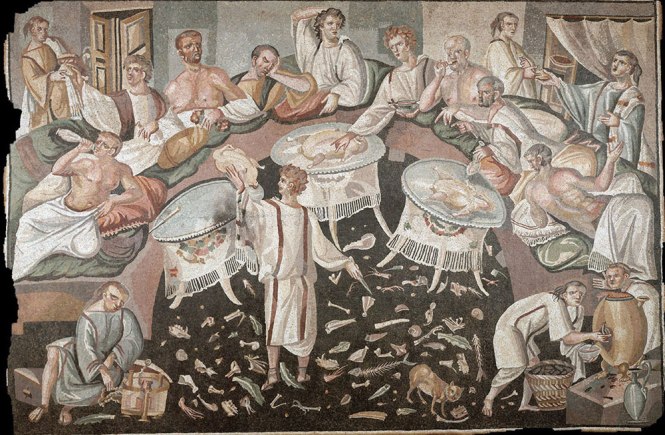
THE ROMAN TRICLINIUM
The triclinium consisted of three or six couches organized in a U-shaped manner, which were “wide enough to accommodate three diners who reclined on their left side on cushions”. The tables, where the food was served, were small semi-individual tables.
You can see here, in this old Roman mosaic, an ancient Roman triclinium. A Jewish triclinium, like the one conceived for Pesach, must have looked like this, but obviously with much more decorum, cleanliness, and good manners.
 
 
As you can see, the couches were arranged in a “U” shape manner, which was “ wide enough to accommodate three diners who reclined on their left side on cushions” (see this).  In the center, you can see three tables where the food is served. We can now understand better that when the Sages said, for example, that the table should be “lifted” (עוקרים את השולחן) in order to awaken the attention of the children, they literally referred to lifting and removing the individual small tables (called then: qe’ara) where the food was served. You can also see that people used their hands to bring food into their mouths (forks were invented after the 15th Century). And they also recline on the left side. Why on the left? Simply because most of the diners are “righty” and therefore they recline on the left and naturally use their right hand to eat. Additionally, the sages explained, that if a person reclines on his right side while eating, he risks choking with the food (perhaps, the risk was greater than usual for people who were not used to eat reclining). Now we can understand a little better the symbolism of the haseba. The Sages of the Talmud established that to feel free on this night we should recline as the nobility and the aristocracy do. Even poor Jews should feel the night of the Seder as free, important and well-off people, by reclining comfortably on the left side when eating.
 
FROM TRICLINIUMS TO TABLES
Over time the habit of eating in the triclinium fell into disuse. And some rabbis, like the Raaban (Abraham ben Nathan de Provence, France, 1155-1215), proposed to interrupt this custom, since in Europe the nobles sat on chairs, around a table. The vast majority of the rabbis, however, held that we should not discontinue this ancient custom. And that if we do not recline while eating the Matsa or drinking the glasses of wine, we will not be fulfilling our obligation to its fullest. Some rabbis reassigned the tradition of reclining into a different category: shinui, that is, doing something unusual during the Seder to awake children’s attention and provoke their questions. 
 
THE BEGINNING OF FEMINISM
Another issue that was discussed for centuries is whether women also had to recline while eating. The Talmud says unambiguously “no”.   This is better understood when we take into account that at that time, as you can see in the mosaic, it was not part of the protocol for decent women to recline in the triclinium. The Talmud, however, mentions some exceptions, such as isha chashuba, an important woman. In the Roman Empire there were some women who belonged to the elite and were known as “roman matrons” (matronita in the Talmud) who would fully participate in the triclinium. Some rabbis of the Middle Ages, especially in Europe (Tosafot, Rema, etc.) thought that in their own times (12-16 century) all women should recline, since “all our wives should be given the status of important women” …. And who would argue with that?!  Over time, the original tradition was “readjusted”, and nowadays men and women, in all Jewish communities, are equally obligated to recline while eating and drinking at the Seder.


The Role of Women in the Exodus Story

CIVIL DISOBEDIENCE
The Sages wondered: how was it possible for the Jews to escape from Egypt? Being a slave in Egypt was like being in a high security prison or a concentration camp, from which you cannot escape alive. The answer to this question seems to be very simple: we left Egypt thanks to the miraculous intervention of HaShem, our God. And, of course, Moshe and Aharon his brother. But to our surprise the Sages of the Midrash formulated a different answer: בזכות נשים צדקניות נגאלו ישראל ממצרים “It was for the merit of virtuous women that the Jewish people were liberated from Egypt.” To understand the logic and beauty of this statement we must open the Tora and read carefully Exodus 1:15 to 2:10 (see here).  In this text, we read Pharaoh’s order to the midwives to kill Jewish babies, but they refused. These two women, Shifra and Puah, represent the first recorded example in the Bible, and I believe in human history, of civil disobedience. The Tora clearly states that it was thanks to the courage of these women that the Jews did not disappear and were able to survive and multiply.
 
THE MOTHER, THE DAUGHTER AND THE STEPMOTHER
The Tora also tells us about three other women of great courage and valor, who played a fundamental role in our departure from Egypt. Moshe’s mother, Yochebed, who decided to have a child despite Pharaoh’s decree to murder all newborn Jewish boys. When it was no longer possible to hide her child from her, Yochebed placed her little baby in a basket. And that basket was found by Pharaoh’s own daughter, who in a second and very brave act of civil disobedience against her own father, rescued the Jewish baby and adopted him as her own son. The Torah also mentions another woman, Miryam, Moshe’s sister, who watched the basket that carried her little brother across the Nile and when Pharaoh’s daughter rescued him, she suggested getting a Hebrew woman — Moshe’s own mother — to nurse her adopted son. Moshe was breastfed and raised by his own mother during the first years of his life, and this is how he learned about his Jewish identity. Each of these three brave women played a critical and fundamental role, directly or indirectly, in the liberation of the Jewish people from Egypt.
 
THE GREATEST QUESTION
There is also a beautiful Midrash that asks: How did the children of Israel realized that they had to aspire and pray for their deliverance? In other words: how did they realize that they were slaves, in a society where everyone was a slave? The question seems absurd today. Unless we remember Plato’s cave. If a person is born, grows up and lives his whole life in the depth of a dark cave, he will never know what “light” is. But he won’t know what darkness is either. Since the identification of darkness is only possible when one sees the light. Without knowing the light, darkness becomes the natural condition of existence. Jewish slaves were born, raised and lived for several generations in slavery (140 years, according to Maimonides). How was it possible, then, that it occurred to them to aspire to freedom?
 
HEROES AMONG US
Also in this case, the Midrash grants the main credit to the Jewish wives. The sages explained that every day, Jewish women went to the Nile and collected small fish that accumulated on the river bank. With these fish they prepared a tasty meal and also a special balm. In the evenings, Jewish wives would visit their husbands at the construction sites. The Egyptians deliberately did not let the men to return to their homes to prevent population growth. The wives prepared and embellishing themselves as best they could in front of copper mirrors and when they met their husbands, they rubbed their backs, battered by the sun and the whip with the balm they had prepared; they served their husbands the tasty food they had prepared and spent the night with them, unseen by the Egyptians, in the apple orchards.
 
IDENTIFYING DARKNESS
While Egyptian masters went to great lengths to humiliate and dehumanize Jews, breaking their spirits and making them feel doomed to be slaves for life, Jewish women doubled down on their efforts to inspire in their husbands a sense of dignity. They rose to this tremendous challenge and did their best to make them feel that they were NOT destined to be slaves but “family men”, and that they could be happy and have a life of dignity. In other words: Jewish wives inspired their husbands to see the light in the dark cave, so that they would understand that they were living in darkness: and that slavery was not the “new normal.” It was this noble and valiant effort by the women of Israel that prevented Jewish men from accept their status as slaves, as did all other enslaved peoples, and aspire for freedom. It was thanks to the virtuous women of Israel, their courage and their wisdom to strengthen their husband’s spirits in the most difficult moments of our history, that our freedom from Egypt was possible.


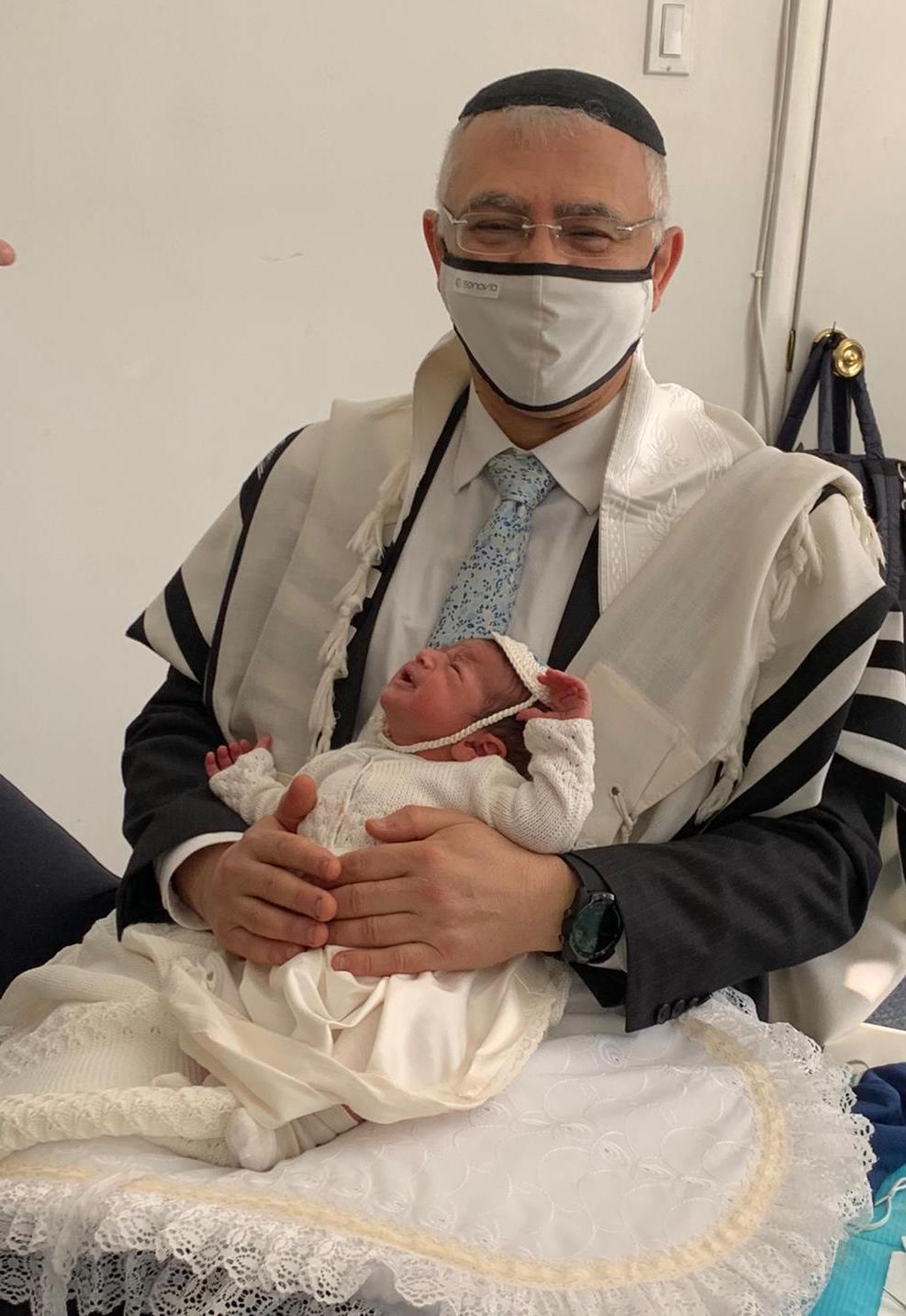
Dedicated to my daughter Orit and her husband, Dr. Adam Harari, on the occasion of the Berit Mila of our new grandson Yosef Yaakob Harari


The Forgotten Ingredient of the Haroset

To understand the original meaning of the Haroset, and its profound educational value, we will have to forget for a few moments the recipe of our own Haroset, and focus our attention on the three basic ingredients indicated by the Sages.

When Maimonides mentions the Haroset he says first that we prepare a paste with figs, dates, raisins or similar fruits. These soft fruits (or softened with cooking) are mushed, and then mixed with vinegar. And to this paste we then add the tebalín, or herbs.

Now that we know what the three ingredients of the Haroset are – fruits, vinegar and herbs – we will try to understand the reason of each one of them.

FRUITS, FOR THE TEXTURE OF MUD

Maimonides says (see text below) that the Haroset should remind us of the mud with which (or “in” which, as we shall see later) our fathers worked day and night, in the horrific Egyptian slavery. When you mush these fruits, part of that paste will surely remain in your hands. In a a similar way, the hands, feet and probably the entire body of the Hebrew slaves was never clean of mud. It always remain in their body. The fruits we use for the Haroset, dates, figs, etc. are soft and easy to mush, because the mission is to recreate a meal representing the mud (חרוסת זכר לטיט).

VINEGAR, FOR THE FLAVOR OF SLAVERY 

The Sages also indicated that sourness should be perceived in the flavor of Haroset. That’s why in the original recipe vinegar, and not wine, is added to the Haroset. The sour taste of vinegar, obviously, is reminiscent of the bitter taste of our slavery, something that is explicitly mentioned in the Tora (וימררו את חייהם “And the Egyptians made the life of the Jewish slaves bitter…”. It is interesting to notice that originally, in the Talmud, the sweet taste of Haroset is not emphasized, although it is recognized as the expected flavor of a paste made from the mentioned fruits, which are sweet. Actually the rabbis emphasized that we should not be used too much Haroset to dip the Maror, the bitter herb, in it so that the sweetness of the Haroset does not neutralize its flavor.

HERBS (TEBALIN) FOR THE VISUAL MEMORIES OF SLAVERY

The least known ingredient of the Haroset is the one that Maimonides calls tebalin, that is, herbs. Herbs are generally used as aromatic additives or flavorings, sometimes they are mentioned as tablinín, spices. But in the specific case of the Haroset, Maimonides indicates that the herbs should not be ground or cut into small pieces, as is usually done when one uses spices for cooking. The best Kept secret of the Haroset is to introduce in it pieces of herbs that would resemble the “straw” (in Hebrew teben) that was used with the mud to produce there mud-bricks. The purpose of the tebalín, then, is not to add flavor or aroma to the Haroset, but to recreate a visual effect: “mud with straw” (טיט ותבן). The presence of the herbs / tebalin, is then essential to recreate the symbolic meaning of the Haroset. On this point the Talmud does not register any debate. To the extent that the Gemara in Pesahim relates (see text above) that when people came to the markets to shop for Pesah, the traders of Jerusalem announced: “Come and take (for free) the herbs to fulfill the mitzva [rabbinic commandment of Haroset]”

THE FUNCTION OF THE TEBALIN

Since the effect of these herbs must be visual, there is no specific indication as to what type of herbs or vegetables to be used. Some rabbis mentioned cinnamon, ginger, or hyssop twigs, but making it clear that they should not be powdered but cut into pieces. The Maharil (136-1427) was perhaps the most explicit, saying that herbs or spices should be cut into long, thin pieces (מחותכין ארוכין) to represent the “straw”.

Nowadays, for some reason (that I still ignore) almost all recipes of Haroset include ground spices an/or aromatic herbs and the visual effect that the Haroset must awake in our memory has fallen into oblivion. I will do my best to …


The Importance of Haroset for Maimonides

Imagine a formal dinner in an upscale restaurant. The table will include the customary condiments:  salt, pepper, and perhaps some olive oil. Now imagine Maimonides’ table for the Pesah Seder. On his table, there is ONE element that literally replaces “all” other condiments and dressings that night: Haroset, the exclusive dip meant to accompany all the symbolic foods that we consume on the Seder night.

Let us examine how and when the Haroset is consumed at the Pesah Seder according to Maimonides:

KARPAS WITH HAROSET

After inaugurating the Pesah Seder with the Kiddush, the first thing we eat is a piece of Karpas, or celery. In ancient times, it was common for a festive dinner to begin with an aperitif (celery or other fresh vegetables) before serving the main dish in order to stimulate the appetite. Now, the general custom in the Seder is to dip the karpas in vinegar (or water with salt) to remind us of the bitter tears that we shed in our Egyptian captivity. According to Maimonides, however, the karpas should be dipped in the Haroset! Anyways, remember that for Maimonides’ Haroset recipe included a significant amount of vinegar, which gave his Haroset an acidic flavor.

MATSA WITH HAROSET

The second time Haroset is used, as per Maimonides, is when we recite the blessing for the Matsa (Motsi-Matsa). We dip the Matsa in the Haroset instead of using salt as we usually do when we say haMotsi for bread. This gesture reminds me of a beautiful custom that is practiced in some families during Rosh haShana: to express our wishes for a good and sweet year, when saying haMotsi, the bread is dipped in honey or sugar instead of salt. However, while dipping the bread in honey or sugar in Rosh haShana is a popular tradition or folklore, the dipping of the Matsa in the Haroset, for Maimonides, is a formal, practically an “halakhic”, requirement.

MAROR WITH (A LITTLE BIT OF) HAROSET

Nowadays, the Haroset is used firstly to dip the Maror, the bitter herb. In this case, the rabbis indicate that the amount of the Haroset should be minimal, so that the flavor of the Haroset does not deprive us of experiencing the bitter taste of the Maror. Some rabbis wrote that after dipping the Maror in the Haroset, the Haroset must be removed from the Maror so that only a superficial layer remains on it. Maimonides clarifies that in this case, when spreading the Maror with Haroset, we are fulfilling a rabbinic precept, although we do not say a specific blessing for it. According to some opinions, this is because of the rulings of iqar and tafel, which determine that we say blessings on the main food -in this case, the Maror (‘al akhilat maror) as opposed to its accessories– in this case, the Haroset.

MATSA AND MAROR WITH HAROSET

Finally the Haroset is also added to the Korekh, the sandwich of Matsa and Maror that reminds us of the qorban pesah, the lamb that was consumed during the Seder of Pesah with Matsa and Maror in the times of the Bet haMiqdash. As in the case of the Maror, the use of the Haroset in the Korekh is also practiced by all the Jewish communities. As we already explained, the Haroset is not mentioned in the Tora, and is rather a ritual food related to the Pesah Seder which was established by the rabbis. The Haroset carries a tremendous meaning in its taste, its texture and its looks, and it conveys a very tangible representation of the slavery we want to remember in the Seder.

TEXTS WHERE MAIMONIDES MENTIONS HAROSET

מ’ת, הלכות חמץ ומצה, פ’ח 

ה’ב :מתחיל ומברך בורא פרי האדמה, ולוקח ירק ומטבל אותו בחרוסת

ה’ח: בזמן הזה, שאין שם קרבן, אחר שמברך המוציא לחם חוזר ומברך על אכילת מצה, ומטבל מצה בחרוסת ואוכל, וחוזר ומברך על אכילת מרור ומטבל מרור בחרוסת ואוכל, ולא ישהה אותו בחרוסת שמא יבטל טעמו, וזו מצוה מדברי סופרים, וחוזר וכורך מצה ומרור ומטבל בחרוסת ואוכלן בלא ברכה זכר למקדש.