EMUNA: Can you design 7,275,650,514 different faces?

אין צור כאלקינו

Last week we explained what the Hebrew word Tsur (צור) means when used referring to HaShem. We said that Tsur means “rock”, and it is sometimes used to refer to God as our Protector, like the rock that protects the soldier from the arrows of his enemies. But in its original metaphorical sense, Maimonides said, Tsur alludes to the rocky mountain, or the Mother-Rock from which all stones originate. Thus, when we refer to HaShem as Tsur, we mean to say that He is our Origin, our Creator. For example, in the Amida, we used this beautiful expression: TSURENU, TSUR HAYENU to say that “HaShem is our Creator, the Source/Creator/Origin of our lives. ”

Let us see now a third explanation of the word Tsur. This explanation is based on the fact that the word TSUR is grammatically associated with the word TSURA, form o design, and TSAYAR, designer, artist.

The Gemara in Berakhot analyzes the verse in Shemuel (I 2: 2) in which Hanna praises HaShem saying אין צור כאלקינו “There is no Tsur like our God.” Here, again, one could understand Tsur as Source or Origin.  Hanna used this word in gratitude to God Who gave her a son, Shemuel. However our Rabbis made a derasha, a non-literal (or a literary) interpretation of the word Tsur. They said: Here we should understand Tsur (=creator) as Tsayar (=Artist or Designer). “There is no craftsman like our God.” The Gemara elaborates and says that while a human being can design nice figures or sculptures, only HaShem can design something as perfect as a human being, who breathes and thinks (like baby Shemuel, that HaShem just gave to Hanna!). The Sages particularly praised the wisdom (or art) of our Creator referring to the phenomenon of pregnancy: HaShem can create a human being who breathes (Shemuel), inside another human being (Hanna).

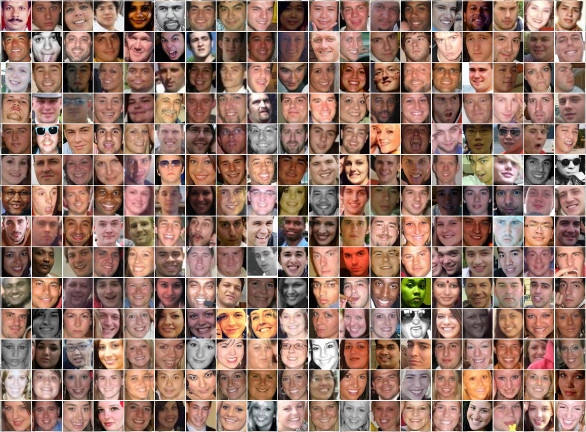
In Masekhet Sanhedrin (38a) the Hakhamim formulated a similar idea, inspired by the same pasuq. They said: “when a person wedges coins, using the same mold, all are identical, but when HaShem designs people with the same mold, they all look different. ”  HaShem uses the same exact mold: a nose, two eyes and a mouth, and with these few elements he designs over 7 billion different faces!

אין צור כאלקינו – אין צייר כאלקינו

When we say Tsur referring to HaShem, we need to remember that He is the Supreme Creator, the incomparable Designer of the world and its unique creatures.


Rabbi Yosef Albo (1380-1444) and the Disputation of Tortosa

Rabbi Albo’s was born in Monreal del Campo, a town in Aragon, Spain.  He was the student of the famous Sephardic rabbi and philosopher Hasdai Crescas. Rabbi Albo was the author of a very important book: Sefer ha’Iqarim, The book of Principles.  Among other things, in this book he reformulates the thirteen principles composed by Maimonides into three main “roots” or foundations.
These three “roots” are
1. Belief in the existence of God.
2. Belief in revelation (that the Torah is the word of God).
3. Belief in Divine retribution, as related to the idea of the immortality of the soul.
The difference between Rabbi Albo’s “roots” and Maimonides’ principles is basically technical.  Rabbi Albo also mentions the beliefs in God’s unity, incorporeality, God’s independence of time, and God’s perfection. But he considers these to be branches of the first principle, not roots.
Sefer ha’iqarim also delves into the  subject of the extent of our knowledge (=epistemology).  In his words:  “human intellect can not attain perfect knowledge and ethical conduct, since its power is limited…  therefore, of necessity, there must be something above human intellect through which knowledge and conduct can attain to a degree of excellence that admits of no doubt.” That “something” is of course, Divine revelation, i.e., the Tora.
THE DISPUTATION OF TORTOSA

Rabbi Yosef Albo is also remembered for his participation in the infamous “Disputa de Tortosa”.

This theological “debate” took place in the city of Tortosa,  Spain. It lasted for 67 sessions, between February 7, 1413 and November 13, 1414.  The debate was organized by the initiative of Pope Benedict XIII, also known as “Papa Luna”.
Twenty-two rabbis, representing the main communities of Aragon were compelled to attend the dispute, which was held entirely in Latin.  Rabbi Astruc haLevy, Rabbi Moshe ben Abbas and Rabbi Yosef Albo were among these sages. Rabbi Albo represented the Jewish community of Monreal del Campo.   The main speaker among the Jewish sages was rabbi Vidal Benveniste, who was fluent in Latin.
The man responsible to carrying out the dispute from the Christian side was Jerónimo de Santa Fe שר”י an apostate Jew who converted to Christianity. He aimed to demonstrate that the Talmud supported the idea that the Messianic prophecies were met with the coming of Jesus.  To sustain these absurd claims, Jerónimo would use forged Talmudic texts and interpret the Midrashim arbitrarily.
Soon, the rabbis found out that the idea of a disputation was a farce.  The rabbis were not allowed to defend themselves. When the rabbis tried to expose the forgeries of Jerónimo, the arbiters would claim that Jerónimo, a former Tora scholar,   was considered by them as the greatest expert in Talmudic literature. At one point, the Pope himself confessed to the rabbis that they were not expected to expose the Jewish faith and cause troubles to the Christians. They were brought there to be indoctrinated in the true Christian faith, so at their return to their cities, they will be expected to instruct their community members to embrace the Catholic faith.
While all these tortuous sessions were taking place, and taking advantage of the absence of the religious leaders, the Christian missioners would go to the Jewish cities and proclaim that “the rabbis were defeated”. In the Kingdom of Aragon, the most notable missioner was the infamous anti-semitic Vicente Ferrer (canonized as a saint in 1455).   Jews were asked to choose between the sword and the cross. The Jewish neighborhoods were looted, thousands of Jews were killed and many more were forced to convert to Christianity.
Finally, Jeronimo claimed victory. And his triumph, certainly, was endorsed by the arbiters and the Pope.  Following the Disputation, the Pope signed two edicts (bulls) 1. “Against Judaeos” to encouraged the forced baptism of Jews and 2. “Etsi Doctoris Gentium”, an executive order to burn all Jewish books, especially the Talmud.
In conclusion, far from being an objective theological debate, the Disputation of Tortosa was a cynical propagandistic attempt of the Church to  loot and convert the Jews of Aragon.


SPECIAL EDITION: The Touro Synagogue

Today, I had the pleasure to pray in the beautiful Touro Synagogue in Newport, Rhode Island. 
In 1658, approximately 15 Jews from Barbados settled in Newport.  Several Jewish merchants flourished through trade with American ports, the West Indies, England, and West Africa. By far the most successful was Mr. Aaron Lopez, who emigrated from Portugal in 1752. He gained renown as an accomplished merchant, shipper, and manufacturer.
The first Congregation was called Yeshuat Yisrael (Salvation of Israel), it was established in 1756. Peter Harrison, a Newporter and one of the colonies’ most distinguished architects, designed the exquisite two-story brick building with a central bimah based on the Synagogues of Amsterdam and London. The Synagogue accommodated approximately 30 Jewish households or 200 people. Rabbi Hayim Caregal (see this) was brought by Mr Aaron Lopez in 1772 from Hebron, Israel, to serve the Jewish community of Newport. His inaugural speech was published in the  Newport Mercury. It was the first Jewish sermon published in North America.
In 1781, President George Washington visited the synagogue when it housed Rhode Island’s General Assembly and Supreme Court. When he returned to Newport on August 17, 1790, Washington received a congratulatory letter from the Hebrew congregation, written by the Hazan Moses Seixas. Washington’s reply was perhaps America’s most important expression of religious liberty, proclaimed “For happily, the government of the United States, which gives to bigotry no sanction, to persecution no assistance, requires only that they who live under its protection should discern themselves as good citizens, in giving it on all occasions their effectual support.” 
As Newport’s economy declined Jews sought opportunities elsewhere. In 1822, Moses Lopez, the last Jew in Newport, departed for New York City. In that same year Abraham Touro provided funds to maintain the synagogue in memory of his father, Isaac, who had been the congregation’s first ḥazan. In 1854, the magnanimous bequest by Abraham’s unmarried brother Judah, of New Orleans, provided for the perpetual care of the synagogue and cemetery. 
In Honor of the hatan and kala, Mr Ralph Dweck and his wife Naomi Tawil, who got married last night in Newport, Rhode Island. 


Senile parents, a case study from the Talmud

The rabbis of the Talmud addressed the question of honoring one’s parents when they are senile or mentally disabled.

They examine a case of a famous rabbi, Rab Asi, who lived with his elderly senile mother. He took very good care of her and did whatever he could to please her, honor her and not to contradict her. The Talmud illustrates his mother’s erratic behavior: and Rab Asi’s reaction: one day she asked him for jewelry and he brought her some. Another day she ask him to look for a husband for her. Trying to appease her, he told her, he will look for one… The situation got to a point where her requests were increasingly eccentric and her behavior turn more violent. Rab Asithen decided to leave her.

The Rabbis first explained that Rab Asi did not abandon her but left her with a kind person whom he hired to take care of his mother.

The rabbis explain that Rab Asi believed that otherwise, in those circumstances, he will be forced to disrespect his mother and perhaps be coerced to physically restrain her.

They also explained that, for some reason, Rab Asi’s mother’s behavior would turn more aggressive in his presence but with somebody else she will be calmer.

Based on this precedents the rabbis conclude that in certain circumstances the son or daughter might leave his elder parents under the care of another individual.

Obviously, each case is completely different from the other and must be addressed specifically. I strongly advice that in no circumstances children will make this kind of decisions based just on intuition. Rather, they should consult with a social worker and with a Rabbi to determine what is the best thing one can do for his or her parents.

Mr. Jack Ezrahian sent me this beautiful video clip in Farsi.

For those who do not understand Farsi: The father asks a few times: ‘what is that?’ The son answers “Gonjeshk” a bird. After a few times repeating the same question, the son gets very angry at the father and yells at him “I told you, it is just a bird, nothing else!”
The father goes and comes back with his diary and asks his son to read one of the pages in a loud voice. The son reads: “My son is almost 3 years old and we went to the park. My son asked me 21 times ‘what is that?’ And I answered him each time “Gonjeshk” with patience. And each time he asked the question again,I hugged him and answered him back, because I love my son so much”.

The end does not require translation…