YOM MEORI, a sad poem for Tisha beAb

יוֹם מְאוֹרִי

יוֹם מְאוֹרִי חָשַׁךְ בְּגֵרוּשׁ קַסְטִילְיָא אוֹי לִי עַל שִׁבְרִי שֶׁבֶר יְרוּשָׁלַיִם אַל תִּזְכְּרִי עוֹד אֲהָה עָלַי וְאוֹיָה לִי כִּי לְשֶׁבֶר קַאסְטִילְיָא לֹא נִמְצָא צֳרִי מִפּוֹרְטוּגַל נִשְׁמַע קוֹל נְהִי בְּמָרָה אֲהָה עָלַי וְאַלְלַי כִּי אֵין שֶׁבֶר כְּשִׁבְרִי וּמָזוֹר כִּמְזוֹרִי עַז פָּנִים מֶלֶךְ קָשֶׁה מְנֻוָּל שְׁמוֹ אֲהָה עָלַי וְאוֹיָה לִי שָׁכַח שֵׁם אֱלֹהֵי יִשְׁעִי וְאוֹרִי יְלָדִים הָאוֹמְרִים בְּכָל יוֹם שְׁמַע יִשְׂרָאֵל אֲהָה עָלַי וְאַלְלַי אוֹמְרִים לָעֵץ הָקִיצָה וְלָאֶבֶן עוּרִי הַמְיַחֲדִים בְּכָל יוֹם ה’ אֶחָד אֲהָה עָלַי וְאוֹיָה לִי אָמְרוּ אָב בֵּן וְרוּחַ אֲשֶׁר הוּא יוֹצְרִי קִיְּמוּ וְקִבְּלוּ אֲבוֹתָם כָּהֵם אֲהָה עָלַי וְאַלְלַי אָמְרוּ שְׁלוֹשָׁה אֵלֶּה הֵם כִּתְרִי וּנְזִירִי סִפְדוּ וּנְהוּ נְהִיָּה עַל בֵּית הַתְּפִלָּה אֲהָה עָלַי וְאוֹיָה לִי אֵיךְ סִפְרֵי הַקֹּדֶשׁ נִטְמְנוּ בַּעֲפָרִי וַחֲכָמִים חֲסִידִים וְאַנְשֵׁי מַעֲשֶׂה אֲהָה עָלַי וְאַלְלַי אָמְרוּ בְאִישׁ מֵת שַׂמְתִּי אֲנִי שִׂבְרִי נַחֲמֵנוּ הָאֵל בְּקָרוֹב בִּתְשׁוּעָה בִּמְקוֹם אֲהָהּ אָרִים בִּתְרוּעָה בְּבוֹא יִנּוֹן וְאֵלִיָּה גוֹאֲלִי

My day of light turned into darkness, with the expulsion of Castilla. Woe to me for my suffering!

Don’t remind me of the destruction of Jerusalem anymore, because for the destruction of [the Jewish communities of] Castilla I haven’t found a remedy.

From Portugal a voice is heard crying with bitterness, because there is no destruction like mine and exile like my exile.

The wicked and cruel king [of Portugal Manuel] “menuval” his name, imposed the uprooting of the name of my God, my Savior, my Light!

The children who used to say every day “Shema Israel” , now say to the wood [the cross] “Rise!” and to the stone [the statues of the christian saints] “wake up!” .

Those who used to say “God is one” now say “the father, the son and the spirit” are my creator.

Their parents [also] had to accept [the forced conversion to avoid death] and they had to say: “These three are my crown and my glory.”

Cry and decree mourning for the [abandoned] Synagogues, and for the sacred scrolls [of Tora] that had to be buried in the dust.

And for the pious sages and men of action, who have been forced to say: “In a dead man I put my hope.”

May God soon console us with His salvation, and that instead of crying “AHA” may we sing with joy, with the arrival of our Messiah and Eliahu HaNabi.


Jeremiah and the destruction of the First Temple

The first Bet haMiqdash, the Great Temple of Jerusalem, was destroyed on the 9th day of the month of Ab of the year 586 before the common era, about 2600 years ago.
 
THE ROD OF YEHUDA
 
Our Sages explained that the enemies of Israel are like the rod with which God punishes the people of Israel for their transgressions. Therefore, when we fast in memory of the destruction of the Bet haMiqdash, we do not do it to remember the lost battles or to demonstrate our resentment against the enemy, but to become aware of our collective responsibility in these events and reflect on what we did wrong to deserve God’s abandonment. HaShem’s presence departs from us when we abandon the Torah and its paths of goodness. And without His protection, we are exposed and vulnerable to the enemy.
 
The first Bet haMiqdash was destroyed for three main reasons: the Jews of that generation worshipped other gods (abodá zará), practice murder with impunity (shefikhut damim), and were involved in sexual promiscuity (gilui arayot). These are the three cardinal sins in Judaism.
 
To warn the people, God comminuted with his prophets, to warn His nation that they were heading down the wrong path. The prophets passionately spoke to the people, especially the king and the aristocracy, and conveyed “God’s point of view” about their behavior. The prophets denounced injustice and warned that if they continued down the wrong path, HaShem would distance Himself from them and they would fall into the hands of the enemy, who is always lurking. These adversaries of Israel will act without mercy and God warns that he will not prevent it.
But the Jewish people did not listen to the prophets… and the city of Jerusalem was destroyed.
 
THE PROPHET OF ANATOT
In the last years of the first Bet haMiqdash, the most prominent prophet was Yirmiyahu (Jeremiah) who lived in the times of Yoshiyahu, of Yoyaqín, of his son Yoyakhín, and of the last king of Yehuda: Tsidqiyahu.
 
Below we present a brief example of Jeremia’s words to the Jewish people, which show us the state of immorality that prevailed in the society of Yehudá.
Yirmiyahu warns the king and the people of the inevitable consequences of their wrong actions:
 
“Thus said HaShem, … Practice justice and righteousness, free the oppressed, do not humiliate or mistreat foreigners, orphans, and widows… do not shed innocent blood. … If [you reconsider, and you correct your actions] and do as I tell you, you will continue to have Jewish kings to govern you, kings who will continue to arrive in their luxurious chariots and horses at this beautiful palace, accompanied by officials and the people… But if you do not heed these warnings, [the enemy will take over this city, destroy it] and this beautiful palace will be turned into ruins.”Chapter 22:1-13
 
 
In another occasion, Yirmiyahu addresses the King and the royalty of Judea (Judea in Hebrew is “Yehuda”, the official name of the Jewish state in those times) and denounces two things: first, that the royalty abused the poor, and second, that they were exceeding in their materialism. It is very interesting to note that Yirmiyahu never criticized the comfort and luxury enjoyed by people who earn their money honestly. The Jewish prophet is clearly not advocating the king’s voluntary austerity. His message is, firstly, that all money should be earned honestly, and secondly, that the wealthy could not abuse their servants: that workers should be treated with dignity and respect.
 
Addressing the king and other members of the nobility, Jeremiah says in chapter 22:13-17 “Woe to you [the king, and the aristocrats], who build your palaces and tall buildings on the basis of abuse and injustice. You make others work without paying them their wages…you say: ‘I will build myself a large mansion, with large rooms on the upper floor’… you open windows, and cover your walls with cedar, and paint them red… Do you think that being a king consists of living surrounded by cedar? [True, your ancestors also] enjoyed a life [with luxury]; but [unlike you, they] acted with justice and righteousness… always attentive to protect the rights of the poor and oppressed… this is what is called “knowing God” [acting aware of the Divine presence] … but you only care about ill-gotten gains; you let the innocent die, and oppress and exploit [the poor of] your own people.”
 
HOW DID IT HAPPEN? 
To understand what led the people of Israel to abandon the Tora, we have to go back to the times of King Menashe. Menashe ruled in Judah. His reign was the longest, and in some ways, the worst of all. In his eagerness to make peace and enjoy the economics benefits of being part of the powerful Assyrian Empire, Menashe transformed Judah into an Assyrian province in every sense. He imported the Assyrian gods and cult, and systemically tried to eradicate the Tora and the observance of the Mitsvot. And he succeeded. Two generations of Jews were totally uprooted from any Jewish practice and distanced from God and His Tora. Yehuda never completely recovered from that. The Bet haMiqdash was used for the worship of idols, and the Kohanim (priests) who refused to serve idols were expelled or eliminated.
The Jewish judges, famous for their sense of fairness, also assimilated and no longer judged with the justice of the Tora. They followed Assyrian justice, which always favor the most powerful. After Menashe, his son Amon reigned. He was as bad as his father, but at least he ruled for a short period of time: two years.
Amon was succeeded by Josiah (Yoshiyahu 640-610 BCE). He implemented an extraordinary religious revolution to serve God again. The story of Josiah is fascinating. In his time, while making certain repairs on the walls of the Bet haMiqdash, they found a hidden Sefer Tora (Torah scroll). After more than 60 years of religious abandonment, it seems that there was no other book of Tora in existence. Upon reading the Tora for the first time in his life, King Josiah was moved and decided to serve HaShem again. Thus began a process of national Teshuba (repentance), which was partially successful.
This is when the prophet Jeremiah begins his mission, trying to convince the Jewish people to return to religious observance.
 
We will now see some illustrations of his prophecy and his warnings about the idolatrous immoral practices that the people were prcaticing from the times of Menashe.
 
In chapter 10 of Jeremiah we read:
“Do not follow the example of other nations, nor be frightened by the signs of heaven (=astrology), as those nations do. The practices of those people is vanity. They cut wood in the forest, a sculptor carves it with his chisel, then they adorn it with silver and gold, they secure it with nails and hammer so that it does not fall [and they worship this piece of wood as if it were a god!]. The idols are like scarecrows in a field planted with melons; they cannot speak, and they have to be carried because they do not walk. Do not fear [superstition] those idols, who do no harm or do good to anyone. [Understand that] HaShem is the true God, the God of life, the eternal King…
 
In chapter 17, we see how Jeremiah tries to persuade the people to observe Shabbat again. The Judeans were so assimilated that for them, Shabbat was just another day. The Assyrians, who were very sharp merchants, had contributed to this assimilation by mocking those Jews who did not work on Shabbat, accusing them of being lazy. HaShem orders Jeremiah to stand at the entrance of the Jerusalem market on Shabbat and say this to the people:
 
“King, and people of Judah, inhabitants of Jerusalem who enter through these gates, listen to the word of HaShem… on Shabbat, and for the sake of your own lives, do not bring your goods [to sell or trade] through the gates of Jerusalem… do no work on this day. Consecrate the Shabbat, just as I ordered your ancestors’…”
 
ABANDONMENT OF THE TORA
Jeremiah was very clear that the abandonment of religious observance was also responsible for the decay of the legal system and the cessation of social justice. Especially for the protection of the rights of the needy: the poor, widows, and orphans. There is a phrase that is repeated over and over again in the prophecies of Jeremiah: yedi’at HaShem, “knowing HaShem”. For Jeremiah, knowing HaShem means 1. Knowing that HaShem is permanently observing us and making us accountable for our actions. 2. “imitating God”, which is the highest expression of Jewish spirituality. 
 
But how does one imitate God? Jeremiah reminds the people what the Tora says: HaShem is the protector of orphans and widows, He bestows kindness with the needy and liberates the oppressed. This message is repeated dozens of times in the book of Jeremiah. In chapter 9 we see a very brief example: 
 
“Thus says HaShem, let not the wise man glory in his wisdom, nor the mighty man glory in his strength, nor the rich man glory in his riches. But let him who glories glory in this, that he understands and knows me, that I am the LORD who practices steadfast love, justice, and righteousness in the earth. For in these things, I delight, says HaShem.”
 
In the days of King Jehoiakim, HaShem spoke to the prophet Jeremiah and told him to go to the Bet haMiqdash and convey this message:
 
“God says, …thus you shall say… to all [those who come from] the cities of Judah …do not omit a single word [of what I tell you]. Perhaps they will listen and repent of their evil ways. If they do so, [I too] will desist from the evil I intended to do [to the Bet haMiqdash and Jerusalem] because of their evil deeds. You shall warn them that thus says HaShem: ‘If you do not obey me or abide by the law that I have given you, and if you do not listen to the words of my servants the prophets, whom I have sent time and time again and you have disobeyed, then I will do to this house what I did to Shiloh'”. Chap. 26: 1-6
 
Now, the prophet declares what his mission truly is. HaShem sent the prophets to save His people, to spare them from the consequences of their wrongdoing. The prophecy he announces is the destruction of the Bet haMiqdash (Temple), that could suffer the fate of the Tabernacle of Shiloh, which was destroyed by the Philistines during the time of the prophet Shemuel. However, if the people repent and if the leaders correct their actions, destruction of the Temple can be prevented…
 
THE MISSED OPPORTUNITY
But how did the people at the Bet haMiqdash react to the words of Jeremiah? Did they pay attention to Yirmiyahu’s warning to correct themselves? Exactly the opposite! The Priests and the false prophets, the leaders of the Bet haMiqdash, condemned Yirmiyahu to death! They claimed that the young prophet threatened their authority and leadership and they branded him as a rebel and an instigator. They accused Yirmiyahu of demoralizing the people and working for the enemy because while the false prophets announced that everything was fine, Yirmiyahu was indirectly inciting a rebellion against the established religious leadership of the Temple. With great hypocrisy, the priests and false prophets said: “How is it possible that this man says that the Bet haMiqdash will be destroyed? Does he think that HaShem does not have the power to prevent the destruction of His Sanctuary?” 
Yirmiyahu was publicly beaten and miraculously saved his life.
 
But as we have already explained, for HaShem the actual building of the Bet haMiqdash, its walls, its enclosures, and its stones mean nothing if the people did not behave with integrity! People who acted badly cannot come to the Bet haMiqdash to cleanse the sins they continue to commit. Religious ritual, if not accompanied by upright and honest behavior, is cynicism and sacrilege.
 
The strong words of Yirmiyahu against this hypocritical attitude speak for themselves:
 
“Correct your behavior and your actions, and I [God] will let you continue living in this land. Do not trust the deceptive words that [the false prophets] repeat: ‘This is the temple of the Lord! This is the temple of the Lord! This is the temple of the Lord! [that will never be destroyed]’. If you correct your behavior and your actions, if you practice justice with each other, if you do not oppress the foreigner or the orphan or the widow, if you do not shed innocent blood in this place, nor continue to worship other gods … then I will let you continue living in this land, the land that I gave to your ancestors forever… [but] you … keep stealing, killing, committing adultery, swearing falsely, burning incense to [the pagan god] Baal, and following [the immoral practices] of other foreign gods, and then come and stand before Me, in this house that bears My name [the Bet haMiqdash], and say: ‘[Here] we will be safe’ [God will protect us and not let anything happen to His house], only to continue committing all these abominations! Do you think this house that bears My name is a den of thieves [a refuge for criminals]?”. Cap 7: 3- 11
 
The Jews did not listen to Yirmiyahu and missed the opportunity to absorb the prophet’s message and repent. Shortly thereafter, the city of Jerusalem and its Temple were destroyed.
 
The words of Yirmiyahu, sadly, were not heeded in his generation. But they were written for future generations as a testimony for us all.
 
Tonight and tomorrow, we will observe the 9th of Ab, the day of national mourning, dedicating ourselves to introspection, to remember the mistakes of our ancestors to correct them and never repeat them again

The Roman Colosseum and the Jews

The Bet haMiqdash, the great Temple of Jerusalem, was destroyed and burnt down by the army of Titus, the son of Vespasian, on 9 of Ab of the year 68. The Temple continued to be consumed by the flames also on the following  day, the 10th day of Ab.

THE CIRCUS AND THE JEWS

The historian Flavius ​​Josephus, who witnessed the destruction of Yerushalayim, writes that the Romans killed 1,100,000 Jews during the years of the siege of Jerusalem. Titus also took 97,000 Jews captives. These prisoners were part of the spoils of war and were “used” primarily for exhibition and entertainment. Josephus relates that when Titus arrived at Caesarea, he organized public games, the infamous Roman circus, where 2,500 Jewish prisoners were killed, forced to fight against hungry wild beasts or against professional gladiators. Titus continued with these games, killing thousands off Jews, until he arrived to Rome.

THE MARCH OF TRIUMPH

Once in Rome, Titus was received as a great hero by his father, the Emperor Vespasian. Together they organized a procession of victory for having defeated an enemy as audacious and powerful as the Jewish people, since as everyone knew, the Jews, though divided, fought with all their intelligence, perseverance and audacity. The Romans also organized a grand parade where the Jewish prisoners were publicly humiliated, and the treasures of the Bet haMiqdash were exhibited: the shulhan hapanim, a table of pure gold from the Sanctuary, and especially the famous Menora, also made of pure gold. The last item that was exhibited was a Sefer Tora, which for the Romans symbolized their triumph against the Jewish faith.

Defeating the Jews is a mission impossible… when HaShem is with us. As the Sages explained, no one can beat us except when we become unfit of HaShem’s presence among us, i.e., when we abandon the  paths of HaShem, as it happened in the first Bet haMiqdash, or when we figth among ourselves, as it happened in the Second Bet haMiqdash.   Then, we “disconnect” from HaShem and remain at the mercy of the enemy.

THE ARCH OF TITUS

For Rome, the triumph against the Jews was extremely significant. To understand it a little better let us remember that around that period of time the Romans defeated the Macedonians, the Greeks, the Gauls, the British and the Germans. They also triumphed in Spain, Sicily and Carthage. But only the victory against the Jews was celebrated in such a special way. The monument that the Romans erected, the oldest , the most splendid and the only one that still exists is the famous Arch of Titus, in the Via Sacra, which celebrates the triumph over the Jews. This arch, which among other decorations features 12 Roman soldiers carrying the Menora taken from the Bet haMiqdash, was designed to humiliate the Jewish captives brought from Jerusalem, making them parade under the Arch as a sign of defeat.

MINTING HUMILIATION

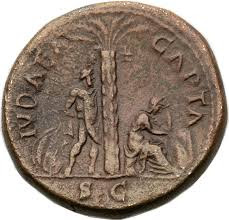
The Romans also minted new coins to celebrate their victory over the Jews. These famous coins (see below) show a woman, “Judea”, sitting under a dry palm, with her hands tied, and on the other side of the palm tree, a victorious Roman soldier. The coin says: “Judea capta” (“The province of Judea, has been captured”).

THE COLOSSEUM

With the spoils taken from Judea and from the Bet HaMiqdash,  the Romans increased their wealth remarkably, and in the time of Vespasian Rome lived in opulence for several years. A few years ago (2001), a Latin text was discovered, stating that Vespasian financed the construction of the infamous Coliseum in Rome with the treasures stolen from Jerusalem and Bet-haMiqdash (see HERE). The  prisoners of war were being killed for amusement,

Now a few words of nehama (consolation) for the day after the 9th of Ab.

THE ARCH OF TITUS

For hundreds of years the Jewish community of Rome refused to walk under the Arch (In 1555 Pope Paul IV forced the Jews to swear allegiance to him there, under the Arch of Titus). However,  on the 5th of Iyar, May 14, 1948, the Jewish community of Rome, led by the chief Rabbi of Rome, marched under the Arch, but in the opposite direction, as if history was now turning back, and the Jewish people returning back from their exile in Rome to their home in Israel.

THE MENORA

In 1949 the Menora of the Arch of Titus was chosen as the official symbol of the new State of Israel.

JUDEA CAPTA

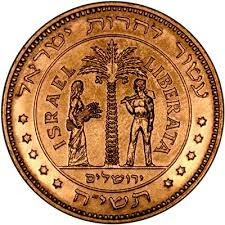
In 1958, to commemorate the 10 years of its establishment, the State of Israel minted a new gold coin, very similar to the one that Vespasiano did, but with a different meaning. In this coin (bottom right) you can see a woman “Judea”, standing, next to a blossoming palm with a baby in her arms. At her side, on the other side of the palm tree, a man is seen, coming from working and or about to plant a new tree. The text says: “Israel liberata” (Israel is now free!) . And in Hebrew it says: “Ten years of the independence of Israel, Jerusalem, 1958”.

MAY HASHEM GRANT US OUR COMPLETE REDEMPTION, SOON IN OUR DAYS. Amen!

JUDEA CAPTA
ISRAEL LIBERATA
ARCH OF TITUS
THE COLISEUM 


What Tragic Events We Remember On The 9th of Ab?

This coming Saturday night, August 6th and Sunday August 7th,  we will commemorate Tish’a beAb, the Jewish National Day of Mourning.

Our rabbis mentioned five tragedies that happened on the 9th of Ab

1. HET HAMERAGELIM (ca. 1450 BCE): When the Jewish people were in the desert, on their way to the promised land, the crisis of the ten explorers took place. Upon their return from spying the land of Canaan, the explorers  tried to convince the people that it was going to be impossible to conquer the land. The Jews, in a horrible act of ungratefulness, reproached God for having liberated them from Egypt. They also hinted that the Almighty would not be able to help them conquer the Land of Israel and defeat the peoples who inhabited it. God decreed that all those over the age of 20 would not enter the Promised Land, but would be condemned to wander in the desert for forty years until they died. The night the Jewish people cried and complained to HaShem, demonstrating their lack of appreciation and trust in Him, was the night of the 9th of Ab.  

2. HURBAN HABAYIT HARISHON (586 BCE): In the times of King Hizqiahu, on the 10th of Tebet the Babylonian seized the city of Jerusalem. The siege persisted for two years and a half. People had no provisions, food or wood. Thousands died from starvation or epidemic outbreaks. On the 9th of Tamuz  the Babylonians destroyed the wall and entered the city, pillaging, killing and destroying. Still, the Bet haMiqdash kept functioning, and sacrifices were offered. On the 17th of Tamuz, for the first time since the days of the Exodus, the daily sacrifice (qorban haTamid) was discontinued. On the 7th of Ab, the Babylonians entered the Bet haMiqdash and profaned it. On the 9th of Ab, close to sunset, the Babylonians ignited the fire which burned our Bet haMiaqdash during that night and the whole following day.  Thousands of Jews were slaughtered, enslaved or exiled to the Babylonian empire. The story of the destruction of Jerusalem and its desolation is narrated in Megilat Ekha.

3. HURBAN HABAYIT HASHENI (68 CE): On the year 68 of the common era, on the 17th of Tamuz the Romans broke the walls which protected Jerusalem. During the following three weeks they pillaged the city, destroyed everything they saw and kill tens of thousands of Jews.  On the ninth of ab, after desecrating the Sanctuary, Titus HaRasha destroyed our Second bet HaMiqdash. Hundreds of thousands of Jews were killed, sold into slavery or exiled. The rabbis explained that the Jews were divided and fighting among themselves (sinat hinam).  They explained that the Romans destroyed a Bet haMiqdash that “was already destroyed”, because when the Jews are not united HaShem’s presence does not rest within them.

4. NILKEDA BETAR (135 CE): In the year 135 of the common era, the jews revolted again against the Roman empire.  This time with the approval of great Rabbis and jewish leaders, among them, rabbi Akiba.  Bar Kokhba revolt was crushed by Roman Emperor Hadrian. The city of Betar (Sephardim call it “Bee-ter”), which was the Jews’ last stand against the Romans, was captured by the enemy on Tish’a be-Ab. Hundreds of thousands of Jews, or according to the Gemara , millions,  were slaughtered and their bodies left unburied.

5. NEHERASH HAHEKHAL: Around the same period, also on a ninth of Ab, the Temple’s holiest area and its surroundings was plowed by the Roman general Turnus Rufus. Jerusalem was turned into a pagan city, and renamed Aelia Capitolina. Access to Jerusalem was forbidden for Jews.

OTHER TRAGIC EVENTS WHICH HAPPENED ON THE 9th of AB

1096

The First Crusade  started on the 9th of Ab of 1096, killing 10,000 Jews in its first month and destroying Jewish communities in France and the Rhineland. 1.2 million Jews were killed by this crusade.


1290

The Jews were expelled from England on 9th of Ab, July 18th, 1290 .

1492

In 1492, the Jews were expelled from Spain, after living there for more than 6 centuries.    The edict of Expulsion forced the Jews to leave the country by the end of July. Tish’a beAb was august 1st. There are different versions regarding the number of jews who lived in Spain in the golden era, before the expulsion. There are those who mention that at least there were 250 thousand Jews in Spain. While the historian Juan de Mariana mentioned that there were 800 thousand Jews in Spain. Other sources stated that there were approximately 600,000 Jews in Spain.  200,000 remained there as “conversos”. 200,000 were killed or died while fleeing from Spain and Portugal (they were expelled from Portugal in 1497) and 200,000 managed to escape and establish themselves in Morocco, Alger, Tunis, Turkey (Turkey was the biggest colony of Spanish refugees), Greece, Egypt, Syria, Erets Israel (Safed and Jerusalem), etc.

IN MODERN DAYS

 Germany entered World War I on August 1-2, 1914 , 9 of Ab, which caused massive upheaval in European Jewry and whose aftermath led to the Holocaust.

On August 2, 1941, 9 of Ab, SS commander Heinrich Himmler formally received approval from the Nazi Party for “The Final Solution.” As a result, the Holocaust began during which almost one third of the world’s Jewish population perished.

On July 23, 1942, 9 of Ab, began the mass deportation of Jews from the Warsaw Ghetto, en route to Treblinka.

On the 10th of Ab the following events took place:

AMIA bombing of the Jewish community center in Buenos Aires, killing 85 and injuring 300 on 18 July 1994.

Israel’s unilateral disengagement plan, also known as the “Disengagement plan from Gush Qatif”, the “Gaza expulsion plan”, or haHitnatkut, began 10 Ab,  15 August 2005.


The 9th of Ab and Religious Hypocrisy

This Shabbat morning (July 17th) we will begin reading the book of Debarim and at the end we will read a special Haftara from the book of Yesha’ayahu (Isaiah). This Haftara is known as “Chazon” (from its first word) and by extension the Shabbat before the 9th of Ab is called Shabbat Chazon. This text of the Haftara is found in the book of Isaiah 1: 1-27, and is a prophetic vision in which this great Jewish prophet rebukes the inhabitants of Jerusalem for their lack of integrity and corruption.

The Haftara describes the sins that caused God to ignore their prayers and pleads and eventually led to the destruction of our first Bet haMiqdash. By reading and remembering the mistakes of our ancestors, we can reflect on our own behavior, improve our actions, and deserve to see our Bet haMiqdash rebuilt very soon, in our days.

Among the points the prophet mentions, his criticism of religious hypocrisy is worth recalling.

1: 14-15: “Thus said the prophet to the people of Yerushalayim in the name of haShem: [Thus says God], when you stretch out your hands in prayer, I will take My eyes away from you; Even if you offer Me many prayers, I will not listen to you, [because] your hands are full of blood. “

Yesha’ayahu denounces the corrupt people who kill steal, cheat in their businesses, practice bribery and corrupt justice, and simultaneously pray to God, expecting God to hear their prayers! As the prophet Yesha’ayahu says: these people came to the Temple, “with their hands stained with blood,” and offered sacrifices, as if God could be bribed with gifts or offerings in order to ignore their wrongdoings. These individuals, who were possibly very powerful, had a very immature and pagan idea of God. Yesha’ayahu explained to them that there cannot be a divorce between what a person does and how he prays. A Jew cannot practice all kinds of immoralities, and then go to the Temple and pray as if nothing had happened and everything is fine. As if God does not know, or is not interested, in his affairs outside the Temple. This is a completely pagan concept, in which the pagan gods are limited to the affairs within the sanctuary and had no involvement in the lives of their worshipers.

Yesha’ayahu explains to them that this is unacceptable: that honesty and morality, and the protection of the weakest, is an imperative religious obligation. And if a person behaves piously in the Temple but is corrupt in his business, he is a hypocrite! And HaShem detests religious hypocrisy more than non-religiosity. God is not secluded in the Temple. He knows what we do. He rejects the prayer of the corrupt and demands that our life be honest and virtuous not only in the Temple, but also (or especially) outside it.

Yesha’ayahu also tells them that they are not condemned to be forever ignored by God. He explains to them that if a corrupt person repents, improves his behavior and becomes honest, HaShem will accept him or her again. For this situation to be reversed and for God to be willing to listen to their prayers, they need to change: (1: 16-17) “… Purify yourselves [of your wrong deeds]. Stop doing evil, learn to practice justice, seek righteousness, defend the oppressed, fight for the cause of the orphan, and defend the widows.”

When HaShem sees our repentance ,He accepts us again and hears our prayers. This is what we can do to have the merit of seeing our Bet haMiqdash rebuild again.


The prophet Jeremiah, and the opportunity we missed.

In the days of King Joakim, HaShem spoke to the prophet Yirmiyahu and told him to go to Bet haMiqdash and transmit this message:
CAP 26: 1-6 “Thus says HaShem, … speak to all [those coming to the Temple from] the cities of Yehuda  … do not omit a word. Perhaps they will listen and repent of their evil ways. If they do that, [I will also] repent of the evil that I thought to do [with Bet haMiqdash and Yerushalayim] because of their wicked deeds. Warn them, that thus says HaShem: ‘If they do not obey and behave by the law which I have given them, and if they do not listen to the words of my servants the prophets, whom I have sent again and again, and they have disobeyed, then will I make this house what I did to Shiloh. ‘ “

Here the prophet shows what his mission really is. The prophecy that announced the destruction of the Bet haMiqdash, at this time, can still be avoided. HaShem sent the prophets to save His people from the consequences of their wrongdoing. It might happen to the Bet haMiqdash what happened to the Mishkan of Shilo, which was destroyed by the Philistines in the days of the prophet Samuel. But if the people repent and correct their behavior, destruction can still be avoided!
The question is: How did people react to these words? Did they listen to the warnings of Yirmiyahu and correct themselves?
The Priests, and false prophets, who were the leaders of the Temple wanted to execute Yirmiyahu. They saw that this new prophet threatened their authority and leadership, and began to lynch Yirmiyahu. How did they justify this? They accused Yirmiyahu of being the bearer of bad news. The false prophets announced that everything was fine. They presented Yirmiyahu as a heretic and demanded his execution. The hypocritical priests and the false prophets said: How can this man say that the Bet haMiqdash will be destroyed? Does he think that HaShem does not have the power to prevent the destruction of His Sanctuary?
But, as we have explained, the building Bet haMiqdash, its walls, enclosures, ceilings, etc. meant nothing if the people who dwell in the Sanctuary did not live their lives with integrity. People who acted viciously in their daily affairs, could not come to the Bet-haMiqdash expecting an instantaneous cleansing from the sins that they were still consciously practicing. The religious ritual, if it not accompanied by a good religious behavior, can become a form of cynicism and sacrilege.
Yirmiyahu’s strong words against this hypocritical attitude speak for themselves:
CAP 7: 3- 11 “Amend your ways and your wrongdoings, and I’ll let you go on living in this country. Do not trust the deceptive words [that the false prophets] repeated: ‘This is the temple of the Lord, the temple of the Lord, the temple of the Lord [which will never be destroyed]’…. but if you correct your behavior and your actions, if you practice justice with one another, if you do not oppress the stranger or the orphan and the widow, if you do not shed innocent blood in this place, if you do not follow other gods … then I’ll let you go living … in the land that I gave to your ancestors forever …. [But, so far] you … steal, you kill, you commit adultery, you swear falsely, you burn incense to the Baal, and you follow other gods … and then you come and appear before Me in this house that bears my name [=the Bet haMiqdash] and you say: “[Here] we’ll be safe ‘, and then you go on committing all these abominations! Do you believe that this house that bears My name is a refuge of thieves? “.
We, the Yehudim of that generation, missed the opportunity to do Teshuba, to absorb the prophet’s message and repent. And soon the city of Jerusalem and its Temple were destroyed.
Yirmiyahu words, unfortunately, were not heard in his generation. But they were written for future generations. For us. In these coming days, which are days of national mourning, our primary mission is to dedicate ourselves to introspection, remembering the mistakes of our ancestors to correct them and never repeat them again.


zekher lahurban: Remembering His house in our homes

As we have explained yesterday, the Rabbis enacted a number of ordinances in order to remind us of the destruction of the Holy Temple. The underlying principle is that when a person has the good fortune of arriving at some occasion that gives him a sense of gratification, he must remember that his joy is incomplete, for the Temple still lies in ruins.
Therefore, the sages instituted that when a person builds a house for himself and arrives at its final stage, the whitewashing of the walls, he must remember that the house of the nation, the Holy Temple, still lies in ruins. And in remembrance of the destruction of the Holy Temple he must leave a square cubit of wall unwhitewashed.
A cubit is approximately half a meter, or 1.5 ft, and therefore, in practice, a square half meter of wall must be left without whitewash. Similarly, if a person covers his walls with wallpaper, he must leave a square half meter of wall without whitewash and without wallpaper. If possible, the unwhitewashed space should be situated on the wall opposite the entrance so that whoever enters the house can see it. 
When one does not build a house but buys a house from someone else, does he need to scrape off some of the wall in order to uncover a square cubit?
It depends. If the person who built the house was a Jew, he was obligated to leave a square cubit of wall unwhitewashed. Therefore, If he did not do so, the buyer must now scrape off the whitewash. However, if the original owner was a non-Jew, he was not obligated to leave an unwhitewashed area, and the buyer is exempt from scraping off a square cubit of whitewash (shulhan ‘arukh, OH 560:1. For more details read here Rabbi E. Melamed, penine halakha).
I think that in this last case and in every other case when technically there is no obligation to scrape off the wall, it would be proper to hang a picture or a decorative painting of Yerushalayim or the Bet haMiqdash to educate ourselves and our children to remember the Hurban.


Shabbat Shalom!

Candle lighting in NYC:   8:03 pm
Shabbat ends in NYC:     9:03 pm

Click here to read


“EU’s broken Mideast compass”
Boycott of Israel cheap way to score points with oil-producing Arab states and Europe’s Muslim population
by Noah Beck


What happened on Tish’a be-Ab?

Tish’a be-Ab is the Jewish National Day of Mourning. On Tish’a be-Ab every Jew must feel as if he or she is in mourning for his or her loved one.  Besides bringing ourselves to a mood of mourning, we must also reflect on our collective accountability for the tragic events which took place on Tish’a Be-Ab and the ways to amend our personal behavior (teshuba) to atone for our sins and the sins of our ancestors.  
On this day, five tragedies occurred to Am Israel
1. HET HAMERAGELIM (1312 BCE): The Jews in the desert accepted the slanderous report of the ten explorers. They cried for a whole night complaining to God for having taking them out of Egypt and hinting that the Almighty won’t be able to bring them the Land of Israel. The generation who left Egypt was condemned to die in the desert. The night on which they cried, was Tish’a be-Ab.
2. HURBAN HABAYIT HARISHON (586 BCE): The First Temple was destroyed and burned on the ninth of Ab by the Babylonians, led by Nebuchadnezzar. Thousands of Jews were slaughtered, enslaved or exiled to the Babylonian empire. The story of the destruction of Jerusalem and its desolation is narrated in Megilat Ekha.
3. HURBAN HABAYIT HASHENI (68 CE): The Second Temple was also destroyed on Tisha be-Ab. The Romans led by Titus destroyed the city. Hundreds of thousands of Jews were killed, sold into slavery or exiled.
4. NILKEDA BETAR (135 CE): The Bar Kokhba revolt was crushed by Roman Emperor Hadrian. The city of Betar (Sephardim call it “Bee-ter”), which was the Jews’ last stand against the Romans, was captured by the enemy on Tish’a be-Ab. Over 100,000 Jews were slaughtered and their bodies left unburied.
5. NEHERASH HAHEKHAL: Around the same period, also on a ninth of Ab, the Temple’s holiest area and its surroundings was plowed by the Roman general Turnus Rufus. Jerusalem was turned into a pagan city, and renamed Aelia Capitolina. Access to Jerusalem was forbidden for Jews.


Click here to read


“Kamtza and Bar Kamtza” 
 the events that led to the destruction of the Second Temple.