DOÑA GRACIA MENDES (Part 5) and Yosef Nasi, Lord of Tiberias


LONG BEFORE HERZL
In 1536, when the inquisition arrived in Portugal, Doña Gracia and her brother-in-law Diogo Mendes moved to Flanders (Antwerp) and transferred all their assets and businesses there. Yosef Nasi, Gracia’s nephew, joined them and when Diogo passed away, he was left in charge of managing the international trade company and the bank: “Casa Mendes”. His contacts were at the highest level possible. He had diplomatic and commercial relations with Maximilian, the nephew of Emperor Charles V; with Henry II the king of France, and rubbed shoulders with the European nobility. His ultimate goal was to move all of their fortune and assets to Turkey and avoid the greedy eye of the inquisition that wanted so badly to confiscate his possessions. In 1554 he finally arrived in Constantinople, where he was able to openly practice Judaism. There he married his cousin and fiancée, Reina, the daughter of Doña Gracia Mendes. And now, with Yosef Nasí by her side, Doña Gracia decided to fulfill the biggest and most ambitious project of her life. A project that could be considered messianic: to establish a “sanctuary city” for all the Jews of the world in the land of Israel.
 
DOGS AND JEWS
There have always been Jews in Israel. They were an unwanted minority. Parias and persona non grata. In the small city of Tsefat, Safed, in the north of Israel, an important Rabbinical center led by Rabbi Yosef Caro was developing, which would later also become a center for Qabbala study. The Jews of Tsefat were mostly Sephardic refugees who, after very dangerous journeys, had managed to reach Israel (I tell this in more detail in my book “Forgotten Giants”). In Yerushalayim Jews –very few–lived in an absolutely miserable situation. Jerusalem was a city over which, Christians and Muslims had fought, for centuries. The Jews who sacrificed themselves to live in the Holy City were hated by both. I am copying literally (and without euphemisms) a document that will give us an idea of ​​the situation of the Jews of Jerusalem at that time. This horrible text belongs to the book “Il trattato di Terra Santa e dell’Oriente” written by a contemporary Franciscan priest named Francesco Suriano: “These dogs, the Jews, are trampled, beaten and tortured, as they deserve. They live on this earth in conditions of such humiliation that words cannot describe. And particularly in Jerusalem… where even the Muslims treat them worse than dogs.”
 
TIBERIA: A GHOST CITY
The city of Tsefat was in the municipality of Tiberias, which belonged to the Ottoman empire. But Tiberias itself was practically in ruins. It was a place that nobody was interested in. The Christians did not want it and the Muslims had no claim to it. The destroyed city that had been the most important rabbinic center in Israel for 800 years (200 to 1000) was now abandoned and served as a refuge for bandits and criminals. Doña Gracia then had a wonderful idea: she offered the Sultan to take care of the city of Tiberias, populate it, and develop it commercially in a way that would produce taxes for the royal treasury. In the year 1558 Suleiman gave Doña Gracia the concession of the city and appointed Yosef Nasí as “The Lord of Tiberias”, the governor of the city, who would enjoy total independence to do what he wanted, while the collection of taxes –1,000 gold pieces per year-– was maintained. The project of Doña Gracia and Don Yosef, which had the approval of the Sultan, was that once the city was built, all the Jews of the world would have a place to settle and live in peace and security. Especially those who needed it most urgently: the anusim, the Sephardim refugees from Spain and Portugal, who lived escaping from one place to another in Europe, practicing a religion that had been imposed on them by force. This project would be the realization of Doña Gracia’s greatest dream: after having saved thousands of Jews from the inquisition and captivity, closing the circle, and giving her beloved people the opportunity to live free and safe, IN THE LAND OF ISRAEL!
 
THE FIRST KEREN KAYEMET
In 1561 Yosef Nasí together with Rabbi Yosef Ben Aderet began the construction of the walls, something essential for the safety and security of the city. They set out to beautify Tiberia and develop it commercially. Just as the Keren Kayemet leIsrael did 400 years later, they began by planting trees: orange trees, pines, and white mulberry trees for silkworm breeding, a very profitable industry that would develop in Tiberias. Don Yosef Nasí also invited the most important Jewish manufacturers in Europe, especially from Venice, to transfer their textile factories to Tiberias. His plan was for Tiberias, “the Jewish State” to become the international center of the textile industry. They also founded a Synagogue and a Bet ha-midrash, a Torah study house, led by Rabbi Elazar ben Yohai.
 
ALIYA AND FREE TICKETS!
The word that the Jews would have their own “safe place” created enormous enthusiasm. Don Yosef sent ships to various European cities to transfer the anusim for free on his ships. Many Jews, those of Ancona for example, were so poor that they did not have the money to get to the port. There are documents that show Rabbis who collected money to send Shelichim, to locate these Jews and assist them economically so that they could reach European ports and continue the journey toward Ertz Israel. Additionally, a very beautiful mansion was being built in Tiberias: the residence where Doña Gracia Mendes would live, when she very soon come from Turkey.
 
In December 1564 the city’s protective walls, which exist to this day, were finally finished. The first Jews began to arrive from Portugal, Italy and Turkey, to the promised land, which was now an earthly paradise, where the fresh evening wind perfumed the beautiful city with the scent of pine and orange trees.
 
To be continued
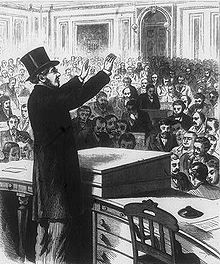


Rabbi Abraham de Sola (1825–1882) the Sephardic pioneer of Tora UMada.

Rabbi Abraham de Sola (1825–1882) was a Canadian rabbi, an orientalist, and a prominent scientist. Rabbi de Sola was recognized as one of the most influential leaders of Sephardic and Orthodox Judaism in North America during the second half of the nineteenth century, at a time when the struggle between the Orthodox and Reform wings of the community was at an acute stage.

His father was Rabbi David Aaron de Sola, a famous rabbi from the Sephardic community of London, and his mother was the daughter of Rabbi Raphael Meldola.

In 1847, at the age of 21, Rabbi de Sola arrived in Montreal, Canada, from London, and there he served as the rabbi of Shearith Israel, the Spanish and Portuguese community. In 1852, he married Esther Joseph, whose father was one of the earliest Jewish settlers in Montreal.

Rabbi de Sola soon established himself at the center of Montreal’s English-speaking intellectual community. An eloquent, popular, and prolific lecturer, and a man of broad interests, he frequently addressed the Montreal Mercantile Library Association, the Montreal Literary Club, the Numismatic and Antiquarian Society of Montreal (of which he was elected an honorary member), the Montreal Mechanics’ Institute, and the Natural History Society (which he served as president in 1867–68), as well as several organizations associated with McGill University.

In 1848, Rabbi de Sola was appointed lecturer, and in 1853 professor, of Hebrew and Oriental literature at McGill University in Montreal (the most prestigious university in Canada), and he eventually became the senior professor of its Faculty of Arts. In 1858, in recognition of his extraordinary scholastic accomplishments, McGill conferred upon him the degree of LL.D. (Legum Doctor, an honorary doctorate degree).

In 1873, by invitation of President Ulysses S. Grant, Rabbi de Sola opened the United States Congress with a prayer. He became the first British subject to open the U.S. House of Representatives with a prayer.

Rabbi de Sola was a pioneer in what is known today as Tora uMada’, the way of looking harmoniously at science and Judaism.

He was a very prolific writer and the author of dozens of books, articles, and papers.

Among them:

  • Behemoth haTemeoth: The Identification and Classification of the Prohibited Animals of Leviticus, Montreal, 1853.

  • Biography of David Aaron de Sola, the late senior rabbi of the Portuguese Jewish community in London, Philadelphia, 1864.

  • Critical Examination of Genesis III.16; Having Reference to the Employment of Anæsthetics in Cases of Labour, published in the British American Journal of Medical and Physical Science, Montreal, 1849.

  • The Day of Atonement: A Sermon Delivered in the Synagogue Shearith Yisrael, Montreal, published in Occident and American Jewish Advocate, Philadelphia, 1848.

  • A Few Points of Interest in the Study of Natural History, Canadian Naturalist and Geologist, 1868.

  • God’s Judgments on Earth: A Sermon Delivered in the Synagogue Shearith Yisrael, Montreal, During the Prevalence of Asiatic Cholera.

  • Hebrew Authors and Their Opponents, Jewish Chronicle, London, 1849.

  • History of the Jews of Poland, Jewish Messenger, New York, 1870.

  • History of the Jews of France, After Bégin and Carmoly, Jewish Messenger, New York, 1871.

  • An Inquiry into the First Settlement of Jews in England.

  • Life and Writings of Saadia Gaon, Cincinnati, Ohio, 1881.

  • The Mosaic Cosmogony (Creation of the Universe), Jewish Messenger, March 1870.

  • Notes on the Jews of Persia Under Mohammed Shah, Occident and American Jewish Advocate, 1850.

  • Observations on the Sanitary Institutions of the Hebrews as Bearing Upon Modern Sanitary Regulations, Canada Medical Journal and Monthly Record of Medical and Surgical Science, Montreal, 1852.

  • The Revelation at Sinai: Its Possibility and Necessity, a sermon delivered in the synagogue Shearith Yisrael, Montreal.

  • The Righteous Man: A Sermon Commemorating the Bestowal of Public Honors on Sir Moses Montefiore by the City of London; Preached in Montreal, on Shabbat Noah 5625, Montreal, 1865.

  • Life of Shabethai Tsevi, the Pseudo-Messiah, Jewish Messenger, March 1869.

  • Yehuda Alcharizi and the Book Tachkemoni, Jewish Record, Philadelphia, 1879.

He died in New York in 1882 and was buried in Montreal.

There is a street bearing his name: Rue Abraham-De Sola, in Côte-Saint-Luc, Montreal.

For a more detailed biography of this exceptional rabbi and for an impressive list of his articles and publications, see:
https://www.general-anaesthesia.com/people/abraham-de-sola.html

Canada’s first rabbi, Abraham de Sola, supported obstetric anaesthesia in defiance of diehard traditionalists. Like Professor James Simpson, de Sola reinterpreted the key passage of Genesis 3:16. In three articles for a Canadian medical journal, Rabbi de Sola explains how God had ordained that woman should bring forth children with “toil” or “labour,” not pain. Unfortunately, other biblical passages are less ambiguous. The injunction “Thou shalt not suffer a witch to live” (Exodus 22:18) cost millions of women their lives. The fateful words caused untold suffering over several centuries. England and Scotland were mostly spared the worst excesses of the 15th–17th century European witch-hunts. But after seeking some kind of succour for the birth of her twins, gentlewoman Eufame MacAlyane was burned alive as a witch in 1592 on the order of Scottish King James I, author of Demonologie (1597). James later became James VI of England (1603–25). Happily, the King’s descendant, Queen Victoria, did not suffer a similar fate after soliciting chloroform for the birth of her son Prince Leopold. Indeed, the use of chloroform by the Queen contributed to the wider social acceptance of obstetric analgesia and anaesthesia in Victorian Britain, though this influence is debated and hard to quantify.

Rabbi Abraham de Sola delivering the opening prayer at the House of Representatives on January 9, 1873


TAANIT ESTHER: Why Do We Fast Today?

 כל עבדי המלך ועם מדינות המלך יודעים אשר כל איש ואשה אשר יבוא אל המלך אל החצר הפנימית אשר לא יקרא אחת דתו להמית
When Queen Esther was informed of Haman’s decree, the Persian prime minister, in order to eliminate the Jewish people, she decided to speak to King Ahashverosh and persuade him to reverse that royal edict. But this mission was not simple. Rabbi Moshe Almosnino explains that Esther did not know if Ahashverosh and Haman thought alike, and both wanted to carry out this genocide, or if the king had been tricked by Haman to write that terrible edict. Esther, then, decided to invite the king along with Haman to a banquet (5: 4) to obtain the information she needed: if she discovered that Ahashverosh was in complicity with Haman, she would try to dissuade Haman. And if she discovered that Ahashverosh had been deceived by Haman, then he would expose Haman before Ahashverosh, hoping to gain the favor of the king. This was undoubtedly a high-risk mission.
But there was a previous step to this mission, which was even MORE risky: Esther had to speak to the King. We probably think that for Esther this was the easiest part of her mission, since she was the Queen, and lived in the palace. But in the Persian Empire no one could approach the king without being invited. Why? Because it was the king’s exclusive prerogative to summon his subjects, including the queen. And Esther had not been called by the king for a month (4:11). The only option left to Esther was to appear directly before the king. But this, which also seems simple, was very risky! If someone entered the area of ​​maximum security of the king (hatser hapenimit) without being called by the king had to be executed before reaching the king. Let me explain: The Persian kings had next to them their “Praetorian guard” armed with long axes, ready to execute on the spot any person who might threaten the physical integrity of the king. The Persian emperors were obsessed with their personal safety, and with good reason. Ahashverosh himself ended up being killed by one of his own bodyguards, Artabano. The Persian law (dat) established that anyone entering the security zone of Ahashverosh should be executed immediately (4:11), unless the king himself, once he detected that person’s presence, stop his guards before execution and extended his scepter as a sign of royal pardon. This rule also affected the queen. Since not few times the Queens were part of the plot to assassinate the king.
Esther also knew that this king, Ahashverosh, had already dethroned (and perhaps executed) the previous queen, Vashty (1:19) and that he would not hesitate to get rid of her if he thought it was necessary.
In other words, “approaching the king” to talk to him and ask for a hearing was a suicide mission. Esther, with good reason, feared for her life and for the success of her delicate mission: to save her people from genocide, but she had no other choice. There was no one else who could do anything to access the king and try to stop Haman’s decree.
To save her people, Esther decided to risk her life (4:16) and she embarked on a suicide mission. But before that, Esther asked all the Yehudim to fast with her and for the success of her mission for three days (tsumu ‘alai, 4:16) on the 13th, 14th and 15th of Nisan. Fasting, along with Tefila, is what our Tora and our rabbis instructed us to do in difficult circumstances. At the request of Esther, all Jews fasted for three consecutive days and prayed for the success of Esther. As we all know, with the help of HaShem, Esther’s “mission Impossible” was successful.
Eleven months later, on the 13th of Adar, a day like today, when the Yehudim had to fight and defend themselves against the enemies who sought to eliminate them, they also prayed to HaShem and fasted for the success of their mission. The custom of fasting before battle is very old, and according to our Sages it goes back to the wars waged by Moshe Rabbenu. Why fasting before the battle? To demonstrate and declare our belief that victory in the battle does not come from our physical strength but from the help of HaShem, our God.
In memory of the fasting days mentioned in the Megilla (דברי הצומות וזעקתן) we observe today the fast of Esther. The fast concludes at nightfall, after reading Megillat Esther.


PESAH EVE: Preparations for today and tomorrow

SUNDAY, APRIL 9, 2017.

As we have explained before (see this) one of the biblical prohibitions of Pesah is to own Hamets, to keep hamets in our possession during Pesah. To avoid this, we clean our houses and other properties (car, office, etc.) before Pesah and take out all the Hamets food that we found. Then, tonight, when the first stars come out (in NY at 8.00pm), we do the Bediqat Hamets, that is, the last inspection to look for any Hamets food that could have been left in our property after cleaning. Remember that we have to get rid of edible Hamets, suitable for human or animal consumption. Medical pills or pills that are swallowed with water, perfumes, cosmetics, cleaning supplies or any inedible item, may remain in our possession during Pesah, regardless of its composition.

Hamets utensils, clean of any visible Hamets, should be stored in a closed place until after Pesah. There is no need to include them in the selling of the Hamets or get rid of them.

BEDIQAT HAMETS: How do we do the Bediqat Hamets? With the help of a candle or a flashlight, we search in our home every place where we could have brought, eaten or stored food. We should look especially in the kitchen and all food storage spaces, such as the pantry, refrigerator, freezer and places where food is usually stored. Remember that our mission is to look for “food” Jamets: sweets and candies with Hamets, cookies, pastries, frozen foods, protein drinks, cereals, and alcoholic drinks made from grain (beer, whiskey, most vodkas, etc).

Before beginning the bediqa we say this berakha (blessing)

“Barukh Ata A- donay, E-lohenu Melekh ha’Olam Asher Quiddeshanu beMitSvotav veTsivanu Al Bi’ur Hamets”

At the end of the bediqa we keep in a safe place the Hamets that we are going to “eliminate” tomorrow morning,  and the Hamets that we will consume tomorrow at breakfast.

And then we say the first Kal Hamira, the formula to renounce to the possession of any Hamets that belongs to us and we have not found in the Bediqa.

KAL HAMIRA DEIKA BIRSHUTI, DELA HAZITEH VEDELA BIARTEH, LIBTIL VELEHEVE HAFQER KE’AFRA DEAR’A.

“All Hamets or leavening substance that belongs to me, that I have not seen or eliminated, should be considered ownerless as the dust of the earth”

MONDAY, APRIL 10, 2017

BIUR JAMETS (Getting rid of the Jamets). In the morning, we can only eat Hamets until the fourth hour of the day (in NY approximately, until 10.00am). Once we finish eating the Hamets, we pick up the remains of the Hamets and put it together with the Hamets that we found yesterday, and we proceed to “eliminate / dispose of it“ . This can be done by throwing the Hamets to the birds, or to the fish or throwing it in a public garbage. The classic way of disposing of the Hamets is by burning it. According to the Rabbis of the Qabbala this represents  that we are willing to overcome our arrogance and purify our souls from any traces of pride.

When finishing the elimination of the Hamets we proceed to its last annulment (= to declare it without owner). And once again we pronounce the statement “Bitul Hamets”, but in more detailed:

KAL HAMIRA DEIKA BIRSHUTI, DEHAZITEH VEDELA HAZITEH, DEBIARTEH VEDELA BIARTEH, LIBTIL VELEHEVE HAFQER KEAFRA DEAR’A.

“Any Hamets or leavening substance that belongs to me, that I have seen or have not seen, that have eliminated or that I did not removed, should be considered without owner as the dust of the earth”

The elimination, in any of its forms, and this declaration to renounce to our Hamets has to be done until the fifth hour of the day. In New York that’s about 11:00 in the morning. The selling of the Hamets must be done before the fourth hour of the day as well. For more information on the selling of Hamets seehere. After 11.00am NYT,  we can no longer consume or make any sale or cancellation of the Hamets.

TO SEE THE TIMES IN OTHER CITIES CLICK   here

AKHILAT MATSA: On the eve of Pesah we should not eat Matsa. We reserve the flavor of the Matsa for its ideal moment: the night of the Seder. We can eat Matsa ‘ashira, also known as Egg Matsa or sweet Matsa (Ashkenazi Jews do not consume Egg Matsa on Pesah eve).Tomorrow we should not eat a meal in the afternoon, to reserve our appetite for the night of the Seder.

TA’ANIT BEKHOROT: On the eve of Pesah we observe the fast of the firstborn. Firstborn men should fast as a recognition of the protection of HaShem, when in the last plague all the firstborn of Egypt died, and the firstborn of Am Israel were saved. However, since this is not a mandatory fast (it was not promulgated by the Torah or by the Rabbis of the Gemara) it is customary to avoid this fast by participating in a festive religious ceremony. For example a Berit Mila or a Pidion. But since these occasions cannot be anticipated, it is customary for the communities to organize a Siyum Masekhet, a conclusion of a Talmudic treatise, an event considered festive and meritorious enough to avoid this fast. After participating in this fast the first-born may eat on the eve of Pesah normally.

To See More Halakhot and Ideas for Pesah see  HERE


More ideas and educational material for a succesful Seder

As we explained yesterday, our mission in the Seder night is to “teach” the Hagada, not only “read” it. To teach the Hagada, among other things, we must make the Hagada relevant, even for those of our guest who might be unfamiliar with Jewish history. We must show that the story of the Hagada is not part of a forgotten past, but surprisingly contemporary. With this idea in mind, we will analyze now a short passage from the Haggadah. This four words paragraph describe the strategy the Egyptians used to enslave us without any internal opposition.
The pasuq says: וירעו אותנו המצרים ויענונו (Deut. 26: 6). Usually this verse is translated as “the Egyptians did bad to us”, in the sense of “they treated us badly”. But you should notice that this word yare’u is written in the Hif’il, a transitive verbal construction. When understood in this way, this word means: “And the Egyptians did US bad” , in other words, “they made us look bad”, or in just one word” They “demonized” us.  As my son Ya’aqob writes in his commentary to the Hagada, Pharaoh “the dictator, singles out the People of Israel as an irrationally evil entity, who is to blame for all the misfortunes of this dictator’s subjects. The propaganda of Pharaoh is nonsensical. Basically, he tells his people: “The ‘other’, this People of Israel, is very cunning. We must be more cunning than they are. If not, then if and when we are attacked, the Israelites will join our enemies, out of sheer malice. Their goal in joining our enemies will be to harm us, nothing more. In fact, after they attack us, they will leave the land! “. ‘The Jews are bad’. They are irrationally bad, repeated Pharaoh numberless times… Pharaoh succeeded in eradicating the positive impression Joseph had left on Egypt just a few years ago. Without Joseph, Egyptians would have perished in the worst famine to have ever affected them. At the time, they acknowledged it: “you have saved our lives!”-they admitted to Joseph. But Jewish contributions to society can be forgotten as swiftly as the time it takes for an irrational message of hatred to reach the ears of subjects in a dictatorial system. “
This phenomenon, demonization> anti-Semitism, was initiated by Pharaoh, but was repeated countless times. In 1492 Queen Isabella of Spain expelled the Jews , who had been so instrumental in making Spain prosperous, and who even helped the Queen in the war against the Mores. Before expelling the Jews, we were demonized throughout Europe, not only as “deicide” (murderers of a god) but also as poisoners of wells, usurers, and murderers of gentile children for ritual purposes, i.e. baking Matsot with gentile blood …
In 1506, in Lisbon, Portugal there was a great drought. And the crowd blamed the Jews for the drought. More than 2,000 Jews were tortured and massacred “for causing the drought.” Unfortunately, the list of episodes of this sort is very, very long. And unfortunately, it did not end there in the Sixteenth Century. Just look at the website: www.memritv.org , and you will see that in the Arab world, Jews are still demonized and accused of all the world’s ills. Here is an example.
Today, this demonization is systematically applied against the State of Israel, which is the “Jew” among the nations of the earth”. Israel is vilified, and falsely accused of all imaginary evils. The rise of anti-Zionism in the world is not, as is often rationalized, the consequence of the “demonic” actions of the State of Israel, rather, anti-Semitism is the cause of the systematic demonization of the State of Israel.
As the reader will appreciate, the subjects and ideas of the Hagada, besides describing our history, are absolutely current and relevant. This was just one example.
Now, when you explain the Hagada and its historical events, do not forget that the main message of Pesah,  is to strengthen our faith in HaShem (Emuna). Despite the demonization, slavery and tortures we suffered, HaShem protected us, saved us from enemies more powerful than us, and rescued us  with great miracles. It is true that in every generation a new enemy comes to wipe us off the map. But HaShem rescues us, He saves us from their hands.  HaShem is “the main protagonist” of the Seder night. And that’s why the Hagada does not mention Moshe, lest anyone think that a human being saved us and freed us from Egypt but Him.
           EDUCATIONAL MATERIAL FOR THE SEDER
√ To find games for children, including a huge list of questions for Pesah you can visit this website.
√ For a beautiful idea to cross the sea at the Seder, and other creative way to make your children enjoy the most special night of the year, see here what Mr Raymond Kassin emailed me yesterday. Thank you.
√ Rabbi David Sutton of New York, sent me his Hagada companion in English, which emphasizes our duty to strengthen our Emuna .  See here
√ For more advanced students, I recommend this fantastic commentary on the Haggadah written by Rabbi Don Ytsjaq Abarbanel (1437-1508). See here . This Haggadah begins with 100 questions, or discussion topics (she’arim), which are solved or addressed throughout his commentary. Do not miss the introduction, where Rabbi Abarbanel tells his incredible (and tragic) personal history.

√ Recommended Hagada 5777: See this Hagada from rabbi Israel Yaaqob Algazi (1680-1757). See how he explains in Ha Lahma Anya our obligation to be kind and generous with the needy as He was with us when he took us out of Egypt.


PESAH: The Eight Commandments of Pesah

Pesah is less than a month away. The first Pesah Seder will be held B’H Monday night, April 10, 2017. The laws and traditions of Pesah are so many and so diverse that our Rabbis indicated that 30 days before Pesah we should start studying the laws and customs of Pesah.  So, we’re already a little bit behind schedule
Today, we are going to review the “Biblical” Mitsvot of Pesah. That is, the seminal laws of this festival, from which all other details and Halakhot of Pesah emerge.
In his introduction to MT Hilkhot Pesah, Maimonides describes one by one the commandments of the festival, listing a total of 8 biblical Mitsvot related to Pesah. It is important to note that this list does NOT include the Mitsvot related to the Pesah sacrifice (qorban Pesah).
There are three positive commandments and five prohibitions related to Pesah.
THE THREE POSITIVE COMMANDMENTS OF PESAH ARE
אכילת מצה 1. Eating matsa on the first night of Pesah (in the Diaspora, it automatically becomes the obligation to eat matsa during the first two nights of the festival). For the rest of Pesah, it is forbidden to eat hamets, but there is no formal obligation to eat matsa.
2 והגדת לבנך. Tell our children during the first night of Pesah (in the Diaspora, the first two nights) the story of our slavery in Egypt and our miraculous redemption. This story is narrated in the Haggada of Pesah. This Mitsva includes many other Mitsvot and traditions, such as drinking the four cups of wine, eating the maror, etc.
3 השבתת חמץ. Renounce to the possession of our hamets on the eve of Passover, that is the 14th of Nisan  (Monday April 10th) before noon. In the coming days, we will explain this Mitsva in detail.
THE FIVE PROHIBITIONS OF PESAH ARE
4 איסור אכילת חמץ. The prohibition of eating hamets during Pesah. This prohibition also includes se-or, or natural yeast.
5 איסור אכילת תערובת חמץ. The prohibition against eating any food containing hamets during Pesah. The Gemara cites as examples of food containing hamets the Kutah haBabli, a type of cottage cheese (cottage= כותח?) which contained bits of bread, and shekhar haMadi, an alcoholic beverage made from grain, like beer.
6 בל-יראה. The prohibition of owning hamets during Pesah, regardless of where that hamets is found.
7 בל -ימצא. The prohibition of owning hamets during Pesah. As the reader can see, these two Mitsvot, 6 and 7 are in fact identical, there is no difference between them and they apply exactly in the same way. This is an exceptional case in the entire Tora.
8 איסור אכילת חמץ ערב פסח אחר חצות היום. The prohibition of eating hamets on Pesah eve from noon. The rabbis extended this prohibition to two hours before noon. So on Monday April 10th hamets can be consumed only until the end of the fourth hour of the day. It is important mentioning that these “hours” are not fixed 60 minutes hours, but “daylight hours” which are obtained by dividing by twelve the daylight period of the day (from dawn to dusk).
In the coming days B’H we will have the opportunity to define and explain in depth each one of the eight Mitsvot of Pesah


Rabbi Abraham Antebi (1765-1858) and the earthquake that devastated Aleppo

Rabbi Abraham Antebi ז”ל was born in Aleppo (Aram Tzoba), Syria, in 1765. He was a descent  of Jews expelled from Spain who settled in the city of En-Tab, now known as Antep, located in the south of Turkey. His great-great-grandfather, Hakham Rahamim (1554-1627), emigrated from En-Tab to Aleppo, and hence the origin of his last name Antebi.

In his youth he studied mainly with his father, Hakham Itzhaq Antebi, of the great sages of Aleppo. In 1817 he was appointed Rabbi and Superior Judge of all Aleppo, a position he held for more than 40 years.

Rabbi Antebi was a prolific author. His works deal mainly with halakha (Jewish law), derushim (speeches and sermons) and musar (Jewish ethics). He also composed several poems and songs of religious character. But no less than for his works, he was noted for his passionate dedication to the welfare of his community that in those years was in a very difficult situation.

In 1824 an earthquake devastated the city of Aleppo and about a thousand Jews died (in those days, the community did not exceed 10,000 people) and those who were saved, including the Rabbi, had to camp in improvised tents outside the city and live there for 18 months. At that time Rabbi Antebi wrote his first book, which he called Yosheb Ohalim,  “Seated in the Tents”. This book contains sermons on the weekly sections of the Tora in which it combines, in a very creative way, the halakhic analysis, the biblical stories and the hagadic narratives (stories and parables of the sages). In those improvised tents, without his  books, Rabbi Antebi wrote his work quoting all sources from his memory.

The main problem Rabbi Antebi faced as a community leader was the general impoverishment of the community. Revenue fell, prices rose and the Ottoman Empire demanded more taxes. There are many stories about how the Rabbi dedicated all his efforts to supporting the needy. In his musar books Ohel Yesharim and Hochma Umusar he writes extensively about how each Jew is guarantor for his Yehudi brothers and should not ignore them in their times of trouble. He also wrote that one of the reasons for the bad economic situation of the Aleppo Jews was because people were only engaged in trade and had no professions. The Rabbi exhorted parents to provide their children with a profession and not be content with just training them in trade.

One of the Rabbi’s most important books is Mor Vahalot, questions and answers on innumerable cases that appeared in the community and required an authoritative rabbinical opinion.

Let’s look at one of these questions (H.M. 2).

The custom of the Jewish courts in Aleppo was that the chief Rabbi of the city, then Rabbi Antebi, judged individually the various monetary conflicts, without being accompanied by two other judges (dayanim), which was the common practice of the other rabbinical judges.

The Rabbi was questioned for this procedure. It was not a legal problem, since according to the halakha the litigants can accept to be judged by a single dayan, but still there was an “ethical” problem. The famous rabbi Rabbi Shabetai Hakohen (the Shakh, Poland, seventeenth century, in HM 3, 10), based on the Shulhan Arukh and the Talmud of Jerusalem, wrote that although technically the rabbinical judge can judge for himself, it is not right that a judge would do so, unless he is a great expert in rabbinical jurisprudence. But it does not end there. Rabbi Shakh goes on to say that no one today can be considered as a “great expert” as it was in the time of the Talmud. Since with the passing of the generations the knowledge of Tora has diminished. Therefore today no rabbi should judge individually. And many prominent rabbis adopted the Shakh’s opinion.

At this point Rabbi Abraham enlightens us with his halakhic vision. Rabbi Antebi disagreed with the vision of the Shakh. These are some of his words:

“Contrary [to what Rabbi Shakh said], it is more common to find an expert in our generations than in the generations of the Talmud, since the whole expertise [of the Talmud sages] was based on memory and oral transmission. In those times to be an expert was not very common. The same is not true in our generation, because all [the law] is already written in the books and [the Sages] did not leave any great or small matter without recording it. Therefore, if a rabbinical judge knows how to legally analyze[the case at hand] and he is familiar with the books of the posqim (halakhic lawmakers), there is no doubt that he can be considered a “great expert” in law.

Rabbi Abraham Antebi died in Aleppo in 1858 at the age of 93, and is remembered to this day as one of Aleppo’s greatest luminaries.

Written for Halakha of the Day by Abraham Sacca, son of Rabbi Isaac Sacca of Buenos Aires, ARGENTINA


ESTHER 2:7 Mordekhai’s Moral Character

“אַשְׁרֵי שֹׁמְרֵי מִשְׁפָּט  זה מרדכי
עֹשֵׂה צְדָקָה בְכָל עֵת שגדל יתומה בתוך ביתו
In one of his best books, “Intellectuals”, the famous historian Paul Johnson describes the ideas of great thinkers and philosophers such as Voltaire, Rousseau or Carl Marx. Johnson also writes about the private lives of these intellectuals and demonstrates their selfishness and cynicism. These great ideologues did not live according to the altruism they preached. Those values were for their writings, their readers and the masses. All these thinkers claimed that they sought the good of humanity, but in their private lives proved the opposite.
Mordekhai, one of the main protagonists of Megilat Ester, is one of the national heroes of Am Israel. He was a great political and religious leader in the city of Shushan, where the Jews had begun to assimilate. But what do we know about Mordekhai’s personal life?
On the one hand we know the prestigious ancestry of Mordechai. According to the text (peshat) of the Megilla, Mordechai was a descendant of the captives from Yerushalayim around 600 BCE in the time of King Yoyakhin. In this first exile,  15 years before the destruction of the Bet haMiqdash, the Babylonian King Nebukhadnetsar captured the aristocracy and the nobility of Yerushalayim, among them the great-grandfather of Mordekhai, Quish, of the tribe of Binyamin.
In his book Leqah Tob, Rabbi Yom Tob Tsahalon opens our eyes to a very important detail that teaches us something about the private life of Mordechai and his moral character. The Megilla tells us that Mordekhai adopted her niece Esther, an orphan from father and mother, and raised and cared for her as her own daughter.
Rabbi Tsahalon quotes the Midrash that describes the enormous merit of adopting a child. The Sages analyze a verse from Tehilim that says: אשרי שמרי  משפט עשה צדקה בכל עת, “Blessed are those who … practice Tsedaqa every moment.”  The Sages took this verse seriously and asked themselves: Is it possible to practice Tsedaqa literally “at all times”? And the answer is: YES. When a family adopts a child the adoptive parents do Tsedaqa (especially in the sense of Hesed) literally 24/7. In other words, adopting a child is the highest and “insurmountable” exercise of Hesed.
It is interesting that the Tora hints something similar in reference to Abraham Abinu. The text describing the early private life of Abraham Abinu is very poor in details. Except for one circumstantial but revealing point: Haran, the brother of Abram, dies leaving his son Lot orphaned. But then we see that וילך אתו לוט, Lot became part of Abraham’s family: Abraham adopted Lot as his own son!
Following this idea, it is as if all we need to know to find out the kind and altruistic character of Mordekhai is that he adopted Esther. And the same could be said of Abraham and Lot.
It is true that we human beings are complex creatures, and that it is not easy to know a person’s character for one of his or her acts. But there are exceptions. And I believe that for the Sages adopting a child is one of these exceptions.
I remember that several years ago (20?) we spent Pesah in a hotel located in Gush Qatif, which today unfortunately is part of Gaza …. The last day of the Hag, we sat next to a large family, with a particularity that could not go unnoticed. They had three children with Down syndrome. My wife and I were astonished at the extraordinary warmth these children enjoyed. First, they were the focus of attention of the whole family, parents, grandparents and older siblings. Everyone smiled at them and gave them lots of affection. In addition, each of these children was being attended by a personal assistant -one assistant per child! – who worked for this family. And then we found out the most extraordinary thing about this incredible family: these 3 children were adopted! Adopted by a family that already had its own children, some of them already married. This was a family that evidently had enough means, and they decided to “invest” their money, their time and their love not in ONE but in THREE children with special needs, and give them the best possible life. We never saw these family again, nor did we found out their names or where they lived.  But what else do you need to find out to know that they were “human angels”?
 
 
Dedicated to the memory 
of  Selli bat Lulu ז”ל


ESTHER 2:5 The Last Jew of Shushan

איש יהודי היה בשושן הבירה
We are approaching Purim, the day we celebrate the miraculous salvation of our people in the days of the Persian Empire. We will celebrate Purim, BH, on Saturday, March 11th at night, and on Sunday the 12th.
The story of Purim is narrated in detail in a wonderful book called “Megilat Esther” which we read twice during Purim.
Each year I try to read a new book that explains the Megilla. Last year I studied, and shared with the readers, the book of Rabbi Moshe Almosnino, “Yede Moshe”. This year one of my students, R. Nathan Zabulani, brought me from Israel the new edition of the book “Leqah Tob”, written by Rabbi Yom Tob Tsahalon (see  here). One of the two special features of this book is that it was published by its author when he was only 17 years old (sic!). Which means that he wrote this book as a prodigious young teenager.
Rabbi Tsahalon gives us a very generous account of Mordekhai’s personality when he explains the pasuq איש יהודי היה בשושן הבירה “There was a Jewish man in the capital city of Shushan” (pages 27-30 of the new edition).
In the following lines I will explain, in my own words, what the Rabbi says about Mordekhai.
1. Political leader. Firstly, Mordekhai was the representative of the Jewish people before King Ahashverosh, an extremely delicate position. Let me explain: the empire of Ahashverosh (486-465, before the common era) was the greatest in the history of mankind. It stretched from India to Greece, and from what is now southern Russia to Ethiopia. There were hundreds of nations in this gigantic empire. And every nation had its representative in the Kings Court . Mordechai represented all the Jews of the empire: hundreds of thousands (or more!). The Jews, as we shall see later, were not concentrated in one or two cities, but because they were involved in international trade, they were scattered throughout the Persian empire. Representing the Jewish people probably involved dealing with taxes, religious affairs and security issues, which could surely make the difference between life and death for the Jews. This is also the time when tens of thousands of Jews were returning to Israel to build the second Bet-haMiqdash. They suffered the harassment and the permanent political boycott of multiple enemies. “Representing the Jews” included the representation no less than 50,000 Jews who lived in the Holy Land, and were in the midst of rebuilding Yerushalayim and the Temple.
2. Religious leader. Mordekhai was also the religious leader of the Jews of Shushan, which was the capital of the Persian empire, as if it were today Washington D.C.  Mordekhai had an official position in Sha’ar HaMelekh, the KIng’s Court, where all matters of state, political, financial, judicial, military, etc. were handled. (And where the constant conspiracies against the King were orchestrated). Mordechai “mingled” with the King’s advisers and with the entire political elite of Shushan. And all this while living a strict life of Jewish observance. Mordekhai was also the “darshan” “speaker”  (we would say “Rabbi” today) of the Jewish community of Shushan (דורש טוב לעמו). He taught them Tora, try to keep them away from assimilation and bring them closer to HaShem.
3. The last Jew of Shushan. Rab Tsahalon suggests that unlike the Jews who lived in other cities of the Empire that were observant, those who lived in the capital were very assimilated. The Rabbi mentions the Midrash that says that the Jews who attended Ahashverosh’s banquet, to which all the citizens of Shushan were invited, did not observe Kashrut. And while they were not idolaters, that is, they did not formally convert to another religion, they were not opposed to the practice of it either. For example, if there was a procession of aboda zara (idolatry) and all the inhabitants of Shushan kneel in honor of an idol, the Jews of Shushan had no problem to participate actively of that event. Rabbi Tsahalon explains that the expression  “איש יהודי היה “should be understood not as “There was a Jewish man … ” but as” There was only one Jewish man left, i.e., who had not assimilated, in the city of Shushan.”   Had it not been for Mordekhai, assimilation would have ended with the cosmopolitan Jewish community of the capital of the Persian Empire.
(To be continued…)
 
Dedicated to the memory of 
Yaakov Yashar 
ben 
Chacham Moshe ז”ל


AMIDA, FOURTEENTH BERAKHA: Jerusalem, a city and its soul

תשכון בתוך ירושלים עירך כאשר דיברת
Restore Your presence to Yerushalayim, Your city, as you have promised,
And may the Throne of David, Your servant, soon be reinstated by You.
 
And build [Yerushalayim], for ever; soon, in our days.
Blessed are You, HaShem, who builds Yerushalayim.
In this blessing we ask HaShem 1. To return His Presence to Yerushalayim (Jerusalem). 2. To reinstate the Throne of David. 3. To [re]build the city soon in our day, and that Yerushalayim will never again be destroyed (binyan ‘olam).
This triple request alludes to the spiritual and political aspects of Jerusalem.
“Restore Your Presence …”
First, Yerushalayim is the city of the Bet-haMiqdash, the Great Temple, where the Presence of HaShem could be felt. We Jews believe in the Omnipresence of God (= God is everywhere). However, the Rabbis affirm that in the Bet-HaMiqdash there was a “Special Manifestation of the Divine Presence”, in Hebrew: Shekhina. What is that manifestation of God’s Presence? King Solomon, the wisest of all men and the king who built the Bet-haMiqdash, confessed his impossibility to fully understand how the Divine Presence dwells within the walls of the Great Temple, when he said in his inaugural Tefila: “How would it be possible to conceive that You God might dwell here on earth? Behold, the heavens and the heavens of the heavens [the universe] cannot embrace [Your Presence], how much less this house [the Bet-haMiqdash] that I have built for you?! (1 Kings 8:27). However, if the reader ever visited the Western Wall (the Kotel, which was one of the outer walls of the Temple), he or she would surely have felt “overwhelmed” by an incomparable sense of closeness to HaShem. That feeling experienced in the Wall, is just a tiny echo of that Divine Manifestation that was felt in the Bet-HaMiqdash. The “Divine Presence” is now in a state of exile (גלות השכינה). And in this Berakha, the first thing we ask HaShem is to return His Presence to Yerushalayim.
“And may the Throne of David, Your servant, soon be restored by You.”
In addition to being the spiritual center of the Jewish people, Yerushalayim was (and BH today is!) also the political capital of the Jewish Nation. All national institutions functioned in Yerushalayim (an American citizen should think of Washington D.C.). The king of Israel had there his palace, his personal residence (like the White House). The Bet haDin-haGadol (=the Supreme Court of Justice) operated in Yerushalayim. And Yerushalayim was also the city of the Sanhedrin (= the Congress of the Jewish People). When in Tisha b’Ab we mourn for Jerusalem we mourn not only the destruction of the Bet-HaMiqdash but also for the eradication of all our political and governmental institutions. Therefore, in this Berakha, when we pray to HaShem for the restoration of Yerushalayim, we also ask for the restoration of the Jewish government (= the Throne of David).
“And build [Yerushalayim], for ever, soon in our day.”
We conclude by asking HaShem to rebuild the city of Yerushalayim. This is a request that sounds superfluous in our days, since BH the city of Yerushalayim is rebuilt and is so beautiful… However, Yerushalayim is still incomplete. Without the Bet-haMiqdash, the Presence of HaShem is not felt in its fullness. The Bet-HaMiqdash is the soul, the spirit of Yerushalayim. That is why we continue to ask HaShem to allow us to seeing Yerushalayim fully rebuilt “soon in our days”. And just think about this: if Yerushalayim is today the most beautiful city in the world, without its “full spirit”,  imagine how beautiful Yerushalayim will be once the Bet HaMiqdash will be restored!
“As you promised …”
I’m ending with this text, although it is mentioned at the beginning of this Berakha. The prophet Zekharia lived when the Yehudim returned to Yerushalayim from Babylon (6th century BCE). In those days, the city was completely ruined, desolated, without Bet-haMiqdash, without the Presence of HaShem. Zekharia (2:14) told the people to be patient, and that HaShem promised to return once His People will return:  רָנִּ֥י וְשִׂמְחִ֖י בַּת־צִיּ֑וֹן כִּ֧י הִנְנִי־בָ֛א וְשָׁכַנְתִּ֥י בְתוֹכֵ֖ךְ נְאֻם ה  “Rejoice and be happy, Oh daughter of Zion [Jewish people], for behold I [HaShem] will return, and My Presence will dwell among You, thus says HaShem. ”  And although it was a very slow and difficult process, the Bet HaMiqdash was finally rebuilt, despite the general disbelief, and these words of HaShem were fulfilled in the days of Zekharia. Using the text from Zekharia, we pray for these words to be fulfilled also in our days.  AMEN!

