Recommended classic Jewish books


What Is The First Commandment Teaching Us?

I am HaShem your God, who rescued you from the land of Egypt, from the house of slavery Exodus 20: 1

COMMANDMENT OR PREAMBLE?

The first commandment is presented to us in a somewhat ambiguous way. Understanding what this command says is not easy. Why? Because unlike the other nine commandments, it is not enunciated in the imperative mode as an order or a precept. It seems more like God introducing Himself to His people. The text says: “I am HaShem your God, who rescued you from the land of Egypt, from the house of slavery “. This commandment is not indicating, apparently ,something we have to do or not do, as in the case of “Honor your parents”, “You shall not steal”, “You shall not kill”. It does not transmit a direct order.
That is why the rabbis have long debated the nature of this commandment. For some, like Nahmanides or Rabbi Hasdai Crescas, the first commandment does not express a specific precept but asserts the existence of God “I am HaShem your God”. Seen in this way, the first commandment is the implicit prerequisite for the acceptance of all other commandments. It is a preamble to the commandments that follow. It is not a commandment in itself.
Maimonides, on the other hand, maintains that the first commandment indicates a specific precept in spite of not being formulated in the imperative mode. We will try to understand, then, what this famous Sephardic rabbi explained.

HOW MANY COMMANDMENTS ARE THERE?

The Talmud, in the tractate Makot, explains that there are 613 precepts of the Tora. 611 of them were transmitted through Moshe (Moses), while the remaining two were transmitted “directly” by HaShem (God) to the Jewish people. And those two precepts are: the first and the second commandment (אנכי ולא יהיה לך). Let’s briefly analyze this affirmation of the Talmud.
1. What reveals that these two commandments were conveyed directly by God is that they are the only ones formulated in the first person of the singular: “I am HaShem your God”, “There will be no other gods before Me”. From the third commandment it is Moshe, not God who addresses the people of Israel, and the reference to God is in the third person. The text of the third commandment says: “You shall not pronounce the Name of God in vain” and it does not say “You shall not pronounce My name in vain”.2. According to this Talmudic text, the first commandment must clearly be considered as a precept, one of the 613 Biblical laws, and not as an introduction or preamble. In his famous book Sefer haMitsvot, the book that presents the 613 precepts of the Tora, Maimonides mentions the first commandment as the very First Law (Mitsva) of the Tora.Following now with Maimonides opinion our next question will be: What is the specific order that this commandment is expressing when it says “I am HaShem your God”?

THE EVOLUTION OF FAITH (emuna)

Traditionally it is assumed that the first commandment, when seen as a precept, expresses our duty to “believe in the existence” of God. Not everyone agrees. Belief in the existence of God must be seen, rather, as the implicit foundational hypothesis of the Ten Commandments, especially in their original historical context. When revealing the 10 Commandments God is speaking to the people of Israel, in the first person! Should it be necessary, then, that while God is speaking to His people, He would be ordering them to believe in His existence?
There is something more.The most specific biblical reference about the beginning of the faith of the Jewish people is found in the text that relates the crossing of the Red Sea. Before God revealed the 10 Commandments.“And God saved Israel in that day from the hand of the Egyptians. And Israel saw the Egyptians dead on the seashore. And [when the people of] Israel perceived the great power that God had done against the Egyptians, the people feared God, and [then the people] believed in God and in Moses His servant “EXODUS 14: 30-31.
When the Children of Israel crossed the sea and saw that God closed the sea on top of the Egyptian army, the Tora states for the first time that the children of Israel believed in God (and in Moshe). Seeing the lifeless bodies of their powerful oppressors on the seashore, the people were able to free themselves from the psychological intimidation exercised by those who until then had the power to decide, as if they were gods, who lives and who dies. The Jews had the possibility of fearing God and believing in Him once they understood that the Egyptians were mere mortals.
All this confirms that the “belief” in God was already part of the mental patrimony of the Jews before receiving the Commandments. 
And if this is so, what is the first commandment teaching us then?

To be continued


Portions for the Seder

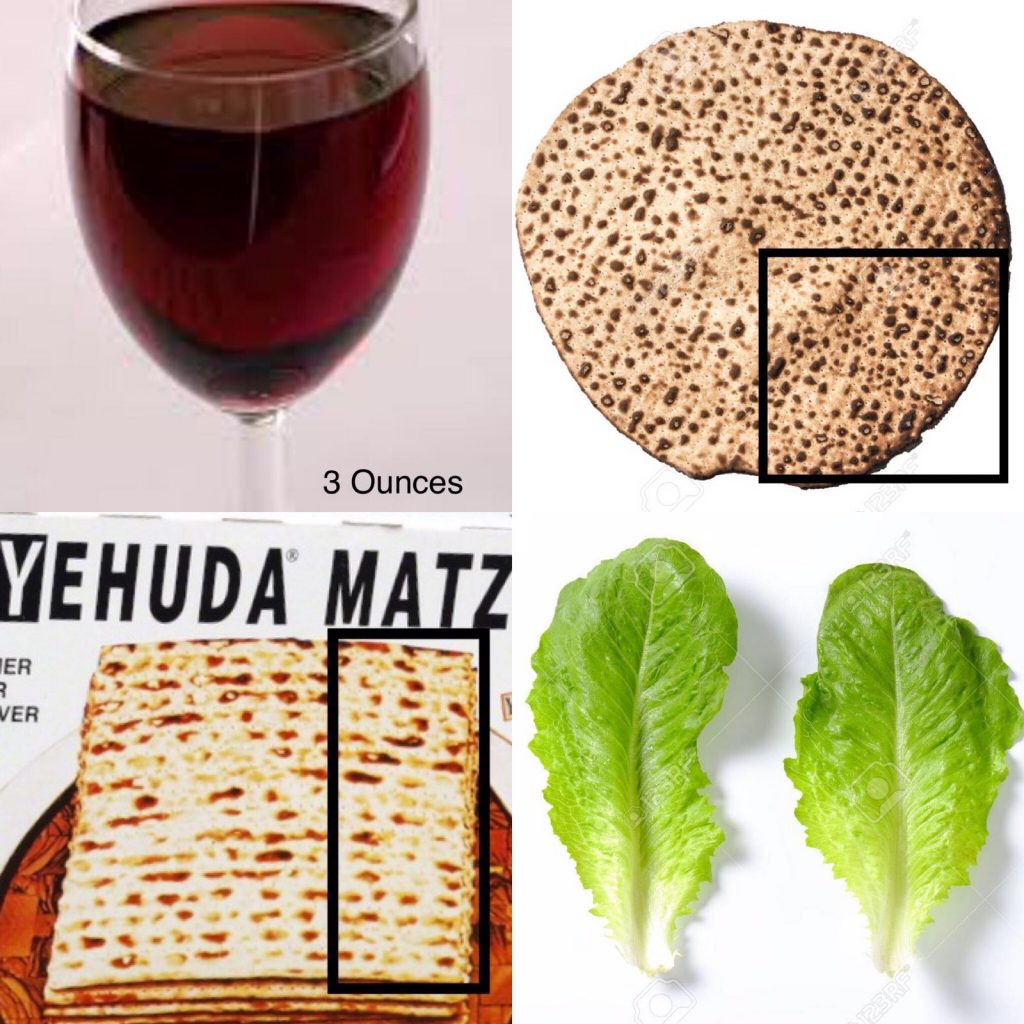
WINE: We drink 4 cups throughout the Seder, reclining on the left. The minimum quantity of wine per cup is rebi’it, approximately 3 oz. per cup.  For more information, see here.

MATZA: Minimum portion for Matza is kazayit. In abodat yad Matza, circle Matza, that is is 1/4 of matza per portion. Machine Matsa, square matza, 1/3 per portion. We eat a minimum 3 (or, preferably, 4) portions of Matza during the Seder, while reclining on the left.

MAROR: The minimum portion of Maror is also Kazayit. That is, a whole large Romaine lettuce leaf or two Romaine lettuce stems (or half of a medium size endive).


Slavery, Mud and Straws

“And [the Egyptians] embittered the life [of the children and Israel, forcing them to do] the hardest works, [such as the extraction of the] mud and [the making of] the bricks …” 

Exodus 1:14

PAYBACK TIME

For several decades, from the time of Yosef until the new Egyptian dynasty (the 18th?) that ruled over Egypt, Jews had a privileged life. They lived in a safe and fertile area, Goshen, and enjoyed prosperity and good health. Food was abundant for the Jews. And this material wellbeing is reflected more than once by the Tora by mentioning the exceptional high birthrate of the children of Israel.
The new Pharaoh sought to curb the power of the Jews—and their demographic growth—by imposing excessive labor taxes to impoverish and weaken them. But he did not succeed.
Then, Pharaoh went on to the second stage of his plan. Declaring the Jews officially as the public enemy, and assigning them as “the slaves of the people”. Visualizing this scenario is very difficult from our comfortable residences. It can only become more real —and scary — if we think about the Shoah. The first time I read a comparison between what happened in Egypt and what happened in Europe 1939-1945 was in Elie Wiesel’s book, “Job: Ou Dieu dans la tempête” (French). Following Wiesel line of thought, I imagine that at this point the houses, property and assets of the Jews were confiscated by the government and handed over to Pharaoh or the Egyptian aristocracy. Jewish men, women and children, must have been forcibly removed from their homes and taken to “ghettos” or fortifications, where they were chained, and then given to the Egyptian citizens as free labor. This little-known point, that the Jews were handed over to the common people as slaves, is mentioned among others by Rabbi Wisser, the Malbim (Russia, 1809 – 1879) who writes “the Jews were taken as chattel slaves, but they no longer worked for the monarch [the government], but for the population in general. The Jews were now the slaves of the slaves [of Pharaoh] and were obligated to do any work that any Egyptian asked of them. “
Our verse describes the ways the Egyptians treated their Jewish slaves.
“And the Egyptians embittered their lives with hard work.” There was something personal about this mistreatment of the Jews. Animosity. Resentment. How did this happen? The new Pharaoh, a revisionist, changed the narrative and demonized Yosef and his descendants like the Nazis demonized the Jews. The Hebrews were categorized as “Persona non grata”, “The enemies of the people”. He surely used his propaganda to misrepresent Yosef, not as the hero who saved Egypt from famine, but as the villain who took advantage of the Egyptian famine in favor of a foreign Pharaoh (an Hikso?) and of his own family.
And something else.The Jews were prosperous. Instead of looking at the efforts Jews had made to earn their prosperity, or the sacrifices they made to save their gains, the Egyptians accused the Jews of dishonesty and abuse. This resentment was now translated into the most terrible revenge: the “rich” Jews were now absolutely vulnerable, free labor in the hands of the resentful Egyptians, who enjoyed having them beneath their feet.

THE HARDEST WORK

The jobs assigned to the Jews were, of course, the worst taasks. The most unhealthy and risky jobs, that nobody else in Egypt was willing to do. The first example mentioned in the Torah is the “homer ulbenim”, mud and bricks. Apparently, of all the hard work that there was to do in Egypt, the most humiliating, exhausting and lethal was that of producing the bricks.
The bricks of Egypt were made of two materials: mud, or silt, and straw. This way of making bricks is universal. Mud and straw bricks are still produced to this day in poor areas almost everywhere in the planet .
The Jewish slaves had to extract the mud from the Nile, which was rich in minerals. Transport it, mix it with manure, and stir it with their feet and hands for 4 or 5 days, until the mud reaches the fermentation point. Then, straw was introduced into this mud to make it stronger, more solid and durable. All this work was done in the swamps of the Nile, a river infested with crocodiles, hippos, mosquitoes, and under a scorching desert sun that burned the skin.

HAROSET

Maimonides explains that the Sages introduced the Mitsva of Haroset to represent these terrible times. The brown paste recalls the color and texture of the mud. Vinegar, the taste of bitterness. And the tebalín, the edible herbs or spices (cut in thin and long pieces), which Maimonides indicates that should be introduced in the Haroset, remind us of the straw. The extraction of mud and the manufacturing of bricks with straw was the hardest, most humiliating and most lethal work that Jewish slaves had to carry out, for generations. In the Seder, when we see the Haroset, the image of the cruelest slavery awakens in our collective mind, as a national memory that we can not forget…


37 Years Without a Grave

In 1982, during the first Lebanon War, the young sergeant Zachary Baumel z”l, fell together with his brothers in arms who operated the same tank, in the battle of Sultan Yaaqov. For years it was presumed that Baumel was no longer alive, but his body did not appear. Last week, soldiers from the Russian army stationed in Syrian territory, exhumed Baumel’s remains and took them to Moscow, where they were positively identified by Israeli pathologists. Prime Minister Benjamin Netanyahu was urgently called to Moscow where, on Thursday, April 4, Russian Army General Valery Gerasimov led the ceremony in honor of Baumel, being the first time in Russian history that the highest command of the army carries out a service of this level to honor a foreign soldier. The remains of Baumel, along with his talit qatan, were taken from Moscow to Israel and buried with all the honors in the Har Hertzel military cemetery.

This Shabbat I was thinking about the Baumel family and what it meant for them to have been able to bury their son.

To understand a little better the great relief they will have felt, I had to remind myself what I experienced in 1994. I was the rabbi of Agudat Dodim, a Syrian community in Buenos Aires, Argentina. I spent almost 10 days in the basement of Ayacucho Street (the Rambam School) with more than 80 families who were waiting to receive news of their missing loved ones. We all sensed the worst, yet there was something inexplicable, an illogical hope, that can only be understood when one lives through these extreme circumstances. The families, almost without exceptions, clung to the illusion that their loved ones were alive, that they had survived the explosion, that somehow they had left the rabbles and were walking around the streets, disoriented, in shock and amnesia, waiting to be found. Everyone embraced this “irrational fantasy”, a deep denial; fruit of the deep love we feel for our loved ones, that refuses to disappear.
Now imagine being in this torturous state of mind, but for 37 years. Imagine Miryam Baumel, Zachary’s mother, and the uncountable times she has clung, awake or in her dreams, to the illusion that her son is alive, in prison, or lost, disorientated, with amnesia or abandoned.
It is impossible to conceive the psychological torture that a a family member, especially a parent, lives in a situation like this. Burying the body of a loved one brings that relief, and allows the true mourning to begin, even 37 years later.

Beyond the deep emotional aspect, the recovery of the remains of Baumel is seen as a victory for the state of Israel. Why? Because in this case Israel did not have to pay any “price” to recover the body of a fallen soldier. For example, Israel freed 1,000 terrorists in exchange for one Israeli soldier, Gilad Shalit. These released terrorists, it has been demonstrated, involve the risk of more terrorism against Israel. And still, at the moment of truth, Israel was willing to pay that price for the life of a soldier. What is less known is that Israel has also released terrorists in exchange for “the bodies” of Israeli soldiers. Simply to bury him in the Holy Land (qeber Israel) and bring some relief to his family. Our enemies know our nobility (which they see as “weakness”) and exploit it infinitely. To this day, Hamas has in its possession the remains of two Israeli soldiers – Hadar Goldin and Oron Shaul – which they cynically keep as bargaining chips for “future negotiations”. In the case of Baumel, Israel did not have to release any terrorists for his body. The Russian army gave Israel the remains of Sargent Baumel z”l, without asking for anything in exchange, and with all due respects.

יהי זכרו ברוך


ESTHER 9:26. What does “Purim” mean?

על כן קראו לימים האלה פורים על שם הפור

When Haman decided to eliminate the Jewish people, he “casted lots” to determine what day would be designated to carry out his evil plan.

This is how the text of the Megilla describes this event:
“In the twelfth year of King Ahashverosh, in the first month, the month of Nisan, the pur (that is, the lot) was cast in the presence of Haman to select a day and month. And the lot fell on the twelfth month, the month of Adar.

The Persian custom is to celebrate the beginning of spring, Nouruz, which marks the new year. The first month of the Persian and Babylonian year was the month of Nisan, towards the end of March. Historians report that on the sixth day of that month the coronation of the king (or Emperor) was formally renewed as well as the king’s oath of loyalty to his people. On the ninth day of Nisan, the Persians continued their festivities by exhibiting statues and idols of pagan deities and celebrated with drinks, dances, etc.Then, starting on the 10th of Nisan, the citizens consulted wizards and astrologers about their resolutions for the new year. The key point was to determine which days in the coming year were auspicious for weddings, doing business, starting new ventures, etc. The magicians threw small stones, “purim” at random which revealed the fate of the days of the coming year. Once the times were determined, they claimed that nothing could change it …
With this interesting historical information in mind we can better understand the details of what happened with Haman.

הוא חודש ניסן

The evil minister Haman wanted to make sure that his genocidal project would be carried out successfully; and for that there was nothing better than having the advice of the astrologers, חכמים יודעי העתים, the most qualified men in the empire to determine what was the best day for their plans to succeed. In the month of Nisan, in the twelfth year of King Ahashverosh’s reign, 474 BCE, the magicians “cast the lots in front of (= for) Haman, who sought to carry out his plan that same year, and the date of the genocide was set on the eleventh month, Adar.”

הפיל פור

Purim is the plural of “pur”. There are those who say that pur is a Persian word, which indicates a kind of container where the lots were drawn. “Pur” can also mean in Hebrew a small stone. When a rock breaks into pebbles, or when a bread crumbles into crumbs, the Hebrew verb “p / r / r” (לפורר, פרורים etc.) is used. These small stones were thrown (להפיל) at random— falling on one of their sides, like dice, or on a special place, similar to a roulette -to indicate what the fortune-tellers would reveal to their clients. This routine, as well as other similar practices such as the famous oracles, were very common among the Pagans. They were associated with practices of idolatry (divination, cleromancy, etc.) which our Torah obviously forbids.

הוא הגורל

The Megila mentions that “these little stones” were used as a kind of lottery, or “goral”. The Tora mentions and approves of the use of draw to resolve or prevent conflicts; The allocation of land in Israel was established by this type of “goral”. See https://halakhaoftheday.org/2018/08/22/yona-16-7-who-loaded-the-dice/
This is similar to a draw in which the parties agree to abide to the result, as a way to solve, decide or assign. (something similar is done in sport events when a coin is flipped to decide which of the two teams will start the game, etc.)

PURIM and YONA

The mention of the “goral” in Megilat Ester reminds us of what happened to the prophet Yona. When Yona tried to escape from his Divine mission by fleeing Israel on a ship, and HaShem caused an unusual storm that threatened to destroy the ship, the sailors decided to “cast lots” so that the stones would reveal who was to blame. When we studied that text, I explained that although it is forbidden to assume divine intervention, and or read a Divine message in a matter that is left to chance, on that specific occasion, God intervened so that “the lots would assign the blame on Yona” and so the prophet would resume his important mission. It is very possible then that by connecting “Pur” or Purim with the “goral” the Megila subtly alludes to the event of Yonah, indicating that in the lots of Purim we should also see the Divine intervention.

THE LATEST POSSIBLE TIME

Rabbi Eben Ezra explains that the Divine intervention determined that furthest month from Nisan, the last month of the year, would be chosen, so that the Jews would have the opportunity to repent of their wrong deeds —since they had assimilated and turned away from the Tora — to deserve to be saved.In the end, the genocidal plan of Haman was thwarted, and that same day, the 13th of Adar, which was designated “by casting lots” as a bad day for the Jews, became a day of salvation in which the Yehudim managed to get rid of the enemies that were looking for our destruction.
In this way, the name of the festival, “Purim”, reminds us that it is not the little stones, dices, luck or chance what determines the destiny of the people of Israel, but our behavior, and the Divine Providence.


ESTHER 2:16 The Four Missing Years in The Megila

וַתִּלָּקַח אֶסְתֵּר אֶל-הַמֶּלֶךְ אֲחַשְׁוֵרוֹשׁ, אֶל-בֵּית מַלְכוּתוֹ, בַּחֹדֶשׁ הָעֲשִׂירִי, הוּא-חֹדֶשׁ טֵבֵת–בִּשְׁנַת-שֶׁבַע, לְמַלְכוּתוֹ

The first words of the book of Esther mentions a date: The third year of Ahashverosh. “And it happened in the days of Ahashverosh, the one who reigned from India to Ethiopia, a total of 127 provinces, in the third year of his reign, the king made a feast to [entertain] all his ministers and subjects, the armies of Persia and Media, the governors and the leaders of the provinces, for 180 days … “

This party was followed by another more modest celebration of only seven days, to which all the people of Shushan were invited. It was in this second celebration, during the last day of festivities, that Ahashverosh got drunk and sent for his wife Vashti to show off her beauty. Vashti refused to obey the king’s order, and then, according to the provisions of the rigid Persian law, the king had to order her dethronement (and possibly her execution).

The next time-reference is found in the second chapter. The subjects of the king organize the search for the next queen, and bring, in some cases by force, all the young and pretty girls of the empire, for the king to select one of them as his consort. On that occasion, Esther, a young Jewish woman, orphan of father and mother, was chosen by the king. The text indicates the new date when it describes the coronation of Esther: “On the tenth month, Tebet, of the seventh year of the reign of Ahashverosh.

Unlike what happens with other Biblical books, the book of Esther can be confronted to numerous contemporary non-Jewish historical sources, that not only confirm the historical accuracy of Megillat Esther but also help us to understand some apparent “loopholes” in the text.

From the third year the Megillah jumps to the seventh year. Why? What happened during those 4 lost years?

Let’s see.

First of all we must remember the identity of Ahashverosh. And for that, nobody better than the Jews of Iran, direct descendants of the protagonists of the Purim story. Persian Jews identify King Ahashverosh with “Khashayarsha”, the fourth Persian emperor. Known in English as “Xerxes”, or Ahasuerus, who reigned between the years 486-465 before the common era.

Ahashverosh is famous in world history for having organized, directed and led in person the largest military expedition in the history of mankind, trying to defeat Greece and thus expand the Persian Empire to the rest of Europe.

The Greek historian Herodotus (484-425, BC, considered the father of modern history) begins his detailed historical accounts with Ahashverosh and his attempted invasion of Greece. He says that the Persian emperor prepared an army of five million souls. To be more precise: 5,283,220 men, between soldiers and auxiliaries of soldiers. Apart from a fleet of 1,207 ships, which accompanied the army from the coast.

How long did that war last?

According to Herodotus, 4 years! Including the intense preparations for an invasion of such magnitude, for example the colossal construction of two floating bridges in the Bosphorus Strait. See here .

Even though Ahashverosh conquered and reduced Athens to ashes, his invasion of Greece failed miserably. Ahashverosh fell into a trap set by the Greek general Themistocles, tempting him to enter with his ships in the Strait of Salamis. There, Ahashverosh lost about 500 ships, and decided then to retire and return, defeated, to Persia.

Since then Ahashverosh gave up his conquest of Greece and instead dedicated himself to supervise pharaonic constructions and endless extensions of his palace.

Now we can better understand several things mentioned in Megillat Esther.

1. That the book of Esther, with exquisite historical precision, does not mention those four years (that is, from 483 to 479 BCE) since Ahashverosh was not in the palace but overseas, training, building  and  fighting (also remember that “officially” the emperor is the main protagonist of Megillat Esther).

2. It is probable that the first “party” mentioned was not a party but an intense “strategic gathering” where the emperor summoned the armies, from all corners of the empire, to prepare his ambitious military campaign. Herodotus relates that in the army of Ahashverosh there were soldiers from 46 nations (including Yehudim). In the picture above, you can see a Persian relief showing the ethnic variety of the soldiers of Ahashverosh. The most important evidence that shows that this party was not a normal celebration is that the guests were mainly the armies of Persia and Media (חיל פרס ומדי). Also, it is striking that the text does not describe the sumptuous details of this “party”, as it does with the next celebration, where the decorations, the alcoholic beverage, the luxurious utensils that were used to serve and drink the wine are mentioned, etc.

3. It is possible that in this case “party” is a euphemism for a “gathering”. We explained last time that Esther’s text seems to have been written with local sensitivities in mind. It is not surprising then, that the Megilla would not mention (or risk to remind the Persian rulers) the preparation of the military expedition that failed and that everyone preferred to forget …


ESTHER 1:4. King Achashverosh and King Solomon

אחשורוש … בא לישב על כסא שלמה ולא הניחוהו
The first thing that the book of Esther reports is about a party (mishte) that King Ahashverosh offered to entertain all the rulers, the ministers and the subjects (‘abadav) of his 127 provinces Empire. This feast was celebrated in the third year of his Kingdom , once Ahashverosh finished quelling all the rebellions against him and felt established on his throne.
After the Megilla gives us the technical details of this feast (Chapter 1: 1-3) it explains the purpose of the big celebration (1: 4): Ahashverosh wanted to “show off his wealth and the honor [or glory] of his Kingdom (‘osher kebod malkhuto) in front of all his guests.
On the last day of the party, the King gets drunk and sends for his wife Vashti to appear before the men. The Megilla delicately and euphemistically explains why Ahashverosh called Vashti. “To show off her beauty in front of the people and the nobles, as she was beautiful “. Vashti refused to fulfill the order of the King, and at this point begins the plot that will conclude not only with the dethronement of Vashti, but also with the humiliation of King Ahashverosh, due to his impulsiveness, and his lack of wisdom.
Last week we explained that the book of Esther contains two parallel narrations: the official version, Persian friendly; and the hidden version, the Jewish narrative, which conveys the Jewish point of view on the events narrated in the common text. We also said that to “discover” this second text we must find the key words that direct our attention to similar contexts ion the Tanakh that deepen our understanding of what the Megilla superficially says.
The book Meguilat Setarim, by Bar Ilan Bible professor Yonatan Grossman, explains that in this text the text very subtly compares Ahashverosh with King Solomon.
Let’s see. The book Melakhim Alef (Kings I) writes that during the third year of his Kingdom (2:39), once king Solomon exacted justice from the last of his father’s enemies, Shim’i ben Guera, and he felt safe in his throne (2:46), the King held a party (mishte) and invited all his subjects (‘abadav, 3:15). So far everything looks the same. Except for the meaning of two similar words: “עושר וכבוד”, wealth and glory. On this point King Ahashverosh and King Solomon are at two different extremes.
When King Solomon was about to occupy his throne he had a dream. And in that dream HaShem offered to fulfill any of his wishes. Solomon, who could have opted to have wealth or fame, asked God to grant him “wisdom”, an intelligent heart to guide his people with righteousness and justice. God granted Solomon wisdom, and as we know, King Solomon became for the Jewish people the wisest man that ever existed. The biblical text also records that God appreciated what King Solomon did NOT ask for, and rewarded him with it (3:12): “Also what you did NOT ask of me, I will grant you: wealth and honor.”
Now we can close the circle. The author of the Megilla assumes that we will identify those two words “wealth and honor”, and connect the dots between Ahashverosh and King Solomon.
1. Ahashverosh held a party to celebrate his wealth and honor. Solomon, to celebrate his God-given wisdom.
2. The honor of Ahashverosh depended on his subjects noticing his wealth, and praising him for that. This is why he so desperately needed to show off his riches, his trophy wife, etc. For the Jewish King, on the other hand,  wealth and glory were dispensable. He did not care about his own image. Solomon wanted wisdom for the benefit of his subjects.
3. At the end of the party, Ahashverosh gets drunk, makes some grotesque mistakes and ends up making a fool of himself, in front of his entire empire. His wealth and glory did not help to enhance his image because he lacked wisdom.  King Solomon, on the other hand, asked for wisdom, and God, in the end, also grants him wealth and honor.
We see now how the author of Esher subtly tells us what he thinks of Ahashverosh, by directing our minds to King Solomon story. Our Sages noticed all this and said with few but very significant words, that Ahashverosh wanted to sit on the throne of King Solomon, but he never succeeded to do so (Esther Rabba 1:11).


ESTHER 9:20: One Book and Two Stories

“ויכתב מרדכי – היא המגילה הזאת כמות שהיא”

We still have some time before Purim, and especially this year, 5779, that we have two months of Adar, and Purim is celebrated in the second. This year Purim falls on March 20 and 21.
But although it is still long before Purim I would like to start writing about Purim. More specifically about the book of Esther (Megillat Esther). I am fascinated by this book, because it has some unique elements. It was not written like virtually all the other books of the Tanakh, in the land of Israel, under a Jewish government, but as it explicitly says in the text, it was written in Shushan, the capital of the Persian Empire.
This text, although written in Hebrew, was not a private text “for Jews only”. It was “published” and sent to the Jewish communities of all the provinces of the Persian Empire. Therefore, the book had to be known also by non-Jews. Including Persian government officials. And for that reason we must assume that the text was written taking into account the imperial sensitivities and avoiding to offend the Persian ruler and Persian laws and traditions. When this simple point is taken into account we can better understand some particular aspects of this book.Two examples:
1. The preferential treatment of King Ahashverosh. On the surface, it seems that the main protagonist of the Purim story is King Ahashverosh. The book begins and ends with his praises. And his name, Ahashverosh, or more commonly “The King”, is the name that most appears in the Megilla. The text not only treats the King with utmost respect and honor. His actions, his character, his decisions, are never criticized; something very uncommon in the Bible, that always mentions the faults of its heroes, so that we learn to avoid the same mistakes. And Ahashverosh did not lack defects. He was weak in character, and could not make one decision for himself. He made grotesque political mistakes. He was ostentatious and insatiable. Addicted to alcohol, women and parties. But in the text there is no explicit criticism of the King. The monarch is not blamed for any of the entanglements that he provoked. On the surface, the King is presented as a hero, who was carried away by the bad advice of the wicked Haman. And at the last moment had the wisdom to reverse his wrong decree and do justice. All this diplomatic effort is better understood if we assume that the author of Megillat Esther knew that this book will reach the hands of the officers of the emperor, or the enemies of the Jews. 
2. The next element that sets Megillat Esther apart from all the other books of the Hebrew Bible (Tanakh) is that the name of God is NOT mentioned. How is it possible that the miraculous salvation of the Jewish people has not been explicitly attributed, as it always is, to Divine intervention? Identifying God behind the story, especially a miraculous salvation of the entire Jewish nation, is the unambiguous essence of the Torah! Moreover: if we look closely at the text we will see that not only God’s name is absent. In fact, no miracle, no ritual or religious act, Jewish or Persian, is explicitly mentioned. Example: when Esther is about to risk her life and she asked all the Jews of Shushan to gather for her, she asks them to “fast”! And the expected, normal, natural action and verb “to pray”, is conspicuously absent! It is as if the book of Esther had been written on a “secular” level, rather than on a Jewish level, avoiding very carefully to crossing the limits of what is called today, “the separation between church and state …”
All these mysteries, I think, are resolved if we assume that the book of Esther was written taking into account the sensitivity, and possible censorship, of the King, and for that same reason the religious aspects, which are the “Jewish nationals” elements of the story, could not be mentioned explicitly.
Only once we understand these points we can move on to the next level.
3. The book of Esther has two narratives, a Persian, and a Jewish one. The Persian version is “the official story”. The one that is read superficially. The Jewish version is what the author really wants to convey. It is subliminal. You have to read between the lines. The text is full of allusions to other biblical events, easily recognizable by a reader who knows the Bible fairly well. And when the reader identifies these “allusions” the words of Megillat Esther become like hyperlinks, and a secular Persian story converts into a sacred Biblical text. This Jewish subtext shows us among other things, the sacrifice of Esther and the courage of Mordecai. It reveals with no censorship the vanity and the materialism of Ahashverosh, so that we learn to move away from those vices. And above all, it helps us to un-cover the Providential Divine Intervention, the main message of this, and of every Biblical book.
To be continue


Egypt and the Zoo. By Shemuel Bitton

The most important event in Jewish history is the Exodus, the freedom from Egypt. We mention it during the Shema Israel, during Kiddush, during many Mitsvot and all the three major Jewish holidays are based on it. There were many miracles that happened when the Jews were leaving Egypt. But what was the most impressive miracle? Was it the Ten Plagues, or the splitting of the sea? Was it in the Man that fell on the dessert on the way to Erets Israel? Or perhaps, was it something which we do not even realize was a miracle to begin with.

In order to understand this miracle, we should think about animals in a zoo. Do they know they are trapped? Well, if they were taken from the wild, then they know what freedom looks like: roaming free in the jungle and hunting. But what about a wild animal that was born in a cage? An animal whose parents and great grandparents were born and raised in captivity? They never lived in the wild and they don’t know any home besides for the zoo. I’m sure they cannot be thinking about going back to the jungle. They do not know any better than the zoo.…

Now, think about the Jewish people in Egypt. They had already lived as slaves for many generations. But in an unexplainable way, they “complained” about slavery. In other words, they realized they were slaves and they realized there is something called freedom! This is a huge deal!

What was their inspiration to strive for freedom?

We can try to look at the reason why slaves in the USA were able to overcome this, and run away in the 19th century. Looking at most of these runaway slaves, almost none of them were slaves born into slavery, without a previous taste of freedom. Most runaway slaves were either taken into slavery after being free for a time, or they have had encountered freedom in a different situation. Like Fredrick Douglas, one of the most famous runaway slaves and a leader of the Abolitionist Movement. He was born into slavery. What encounter did he have in his lifetime that made him fight for freedom? Douglas’ encounter with freedom came through education. At the age of 12, his master’s wife, Sophia Auld, taught Fredrick to read. Douglass described her as a kind and tender-hearted woman, who treated him “as she supposed one human being ought to treat another”.  It was this kind and loving treatment that opened Douglas’s eyes. Her husband, Hugh, foresaw the consequences and disapproved of the tutoring, claiming that literacy would encourage slaves to desire freedom.

What was that one thing that kept the Jewish people aspiring and praying to HaShem for freedom?

There is a famous that credits Jewish women for our liberation from Egyopt: “ בזכות נשים צדקניות נגאלו בני ישראל ממצרים”  “Thanks to righteous women, the Israelites were saved from Egypt”.

What did the women do in Mitsrayim? Men were at work all day under the sun, getting sunburnt, and getting whipped with lashes, while doing excruciating work. This made them be physically slaves and mentally slaves. They had zero resting time and zero control over their choices. 

But, there was one daily space of freedom: when they arrived home at the end of daylight. The Jewish wives wanted their homes to be a slavery free environment, physically and mentally. And they made a huge sacrifice. They would go to the Nile during the day and gather some fish from the overflown shore. Then, they would make a nice delicious real dinner for their husbands, who were eating only Matsa during work. Then the wives would use the fish oil and make a cream for the husbands backs and heal the sunburn and bruises from the whips. When the Jewish men arrived home, they were served a freemen’s dinner, and they were taken care as if they were free men, not slaves. These acts of love from their spouses made them realize that slavery wasn’t how life was supposed to be. Freedom, not slavery, was normal, and they had to figure out how to end it right away. This is when they prayed to HaShem, complained about slavery, and asked HaShem to gran them freedom. The rest is history.  

My name is Shemuel Bitton and I am writing up this Halakha of the Day in honor of an amazing organization that has a kind of a similar goal. Chai Lifeline helps out kids with cancer and other illnesses. They do such amazing work helping these families with anything imaginable and one of the most incredible things they do is hosting a camp for all of these kids. In these camps, they allowed these kids to experience happiness and freedom, in others words, they help them to feel better and inspire them to aspire more happy times.  These incredibly positive environments give them the extra motivation to fight as hard as possible and to pray to HaShem to get healthy. 

I will be running a marathon very soon and would truly appreciate your help to reach my goal and assist this wonderful organization. 

Tizku Lemitzvot and may we always be striving for more in life.

https://www.teamlifeline.org/team-lifeline-miami/shmuelbitton