TESHUBA ¿Is It OK To Feel Shame?

כיצד מתוודה? אומר אנא ה ‘חטאתי עוויתי פשעתי לפניך, ועשיתי כך וכך, והרי ניחמתי ובושתי במעשיי, ולעולם איני חוזר לדבר זה

For Maimonides it is necessary to be specific when you verbalize your wrongdoing or mistakes. Additionally, we need to express (and/or awake) two specific feelings during our confession: “regret” and “shame”  The Viduy is not a mechanical and cold verbal confession, lips service. It must be accompanied by sincere feelings of remorse.

But why should we feel ashamed?

Our rabbis said that “shame” is one of the three elements of the Jewish people’s emotional make-up. They explained that a Jew inherits “genetically” three qualities. 1. A Jew is innately shy and easily feels embarrassed (bayshanim). 2. Jews are innately benevolent (gomle hesed) and 3. Compassionate (rachmanim). The rabbis of the Talmud were so confident about these “genetic character traits” that they claimed if a Jew does not have one of these three characteristics “their ancestors were not present at Mount Sinai” (a euphemism to say that such individual might not be ethnically Jewish).

In addition to considering “shame” as an innate condition of the Jewish character –in contradiction to the “chutzpah” that is supposedly attributed to the Jews– our Hakhamim indicated that “shame” is a necessary step for our Teshuba or repentance.

Maimonides writes that when an individual commits a sin against God, he should confess and say “… I am ashamed of my wrong actions.” The feeling of shame is a critical step in the process os sincere Teshuba. Why? Because unlike the feelings of “guilt” which is intimate and private, we feel “shame” when we know that our bad deeds are known by others. Therefore, feeling “shame” while reciting the Viduy (= confession) before God, means that we really feel the Presence of God at that very moment. HaShem is invisible, and it is extremely difficult to be aware of His constant presence. Therefore, we do not easily feel ashamed when we do something wrong privately, because we are not in front of other people. Now, feeling ashamed of our sins when we are in private before God,  means that we have reached a very high level of Emuna (faith); it means that we have clarity regarding His existence. And that His presence is as real to us as the physical presence of other individuals.

This idea, feeling the Presence of God at the same level that we feel the presence of other people, was famously expressed by Ribbi Yohanan ben Zakai. When his students came to visit him on his deathbed, he blessed them saying: יהי רצון שתהא עליכם מורא שמים כמורא בשר ודם, “I wish you would fear and respect God as you fear and respect men.” His students were puzzled and asked their master:  “And no more than that?” And Ribbi Yohanan explained that feeling the presence of God with the same clarity that we feel the presence of other individuals, demonstrates a very high level of faith.

The greater our awareness of the Presence of God, the greater the feeling of shame that we will feel when we confess our sins to Him. And vice versa.

How Can You Tell That You Are Awake?

MARATHON

Today is the second day of the month of Elul. In a little over a month we will be in Yom Kippur, the day of forgiveness. Yom Kippur is a marathon day, 24 hours totally devoted to “Teshuba”: repenting, asking forgiveness, confessing our faults and making decisions to improve the course of our lives.

In order to get well prepared to this transcendental day we begin with the Teshuba process 40 days before Yom Kippur.

Among Ashkenazi Jews, this preparation consists of listening to the Shofar every day, from today until Yom Kippur, to be inspired by its sound, and begin the process of introspection.

Among Sepharadic Jews, to achieve the mental state necessary for Yom Kippur, we also recite from today the prayers known as “Selihot.” These prayers are recited one hour before the morning prayers.

The heart of the Selihot is the viduy or confession, and the recitation of the 13 Attributes of Divine Forgiveness or Middot. These are also the two most important prayers of Yom Kippur.

ESCAPING and SLEEPING

In the Selihot prayers we also recite religious poems, that inspire us to repent and return to HaShem. The first poem we recite in the morning begins with the words: ben adam ma lekha nirdam, «Son of man, why are you asleep? Wake up, call and pray to your God ».

These words, in Hebrew, בֶּן אָד מַה לְּךָ ָּםרְדָּם “Why are you asleep?” are found in the book of Yona 1: 6. The famous prophet was summoned by God for an important mission. But Yona rejected his Divine mission and tried to flee from God. For that he escapes in a boat. But God sends a storm that threatens to destroy the ship. The captain of the ship summons the crew to do everything possible to calm the storm, among other things, praying. Everyone is there with the exception of Yona. The prophet had fallen asleep, deliberately, ignoring all the dangers around him. Biblical commentators explain that Yona was in a psychological state of “denial” trying to ignore the urgency of the reality in front of him. In this case, the possibility of his own death. The captain finds Yona and yelled at him saying: “ma lekha nirdam, why are you asleep? Wake up, invoke and pray to your God ».

HOW CAN I KNOW IF I AM AWAKE?
These words, “Why are you sleeping?” They were chosen by our rabbis to start the Selijot in order to warn us about the risk of denial or escapism. Like Yoná, many times we also choose to ignore our impending mortality and go to sleep. Selijot’s initial lesson is a call to “wake up.” First of all to remind us that during the month of Elul we will sacrifice an hour of sleep. But mainly to invite us to identify our sleeping consciences.
Now, how can we realize if we are spiritually asleep or awake? What indicates the condition of our consciousness is the depth or superficiality of our deep thoughts.
There are 3 fundamental questions,

1. To what extent do I know and care about what God wants and expects from me?

2. How solid and fluid is my relationship with God?

3. Am I directing my life towards the right goals, with the right values ​​and the right priorities?

If we do NOT spend a significant part of our time thinking about these three points, our consciences are probably “asleep.”

Spiritual awakening consists in refreshing these questions in our mind.

We are spiritually “awake” when these questions take our sleep away.


Repentance and the human condition

In his formidable book Menorat HaMaor, Rabbi Isaac Abohab (14th century, the exact date of his birth and death is unknown) presents in his Fifth Section (volume 2, page 663 of the Nefesh Yehuda edition), the Mitzvah of Teshuba, repentance.

First, Rabbi Abohab explains that according to our rabbis the idea of ​​repentance is essential for the existence and continuity of humanity, both on the Divine and on the social realm. This is based on the notion that man, by nature, is fallible. We were endowed by God with free will, and we can not avoid to err.  Sometimes we act wrong. Sometimes we lie. Sometimes we harm another person, unintentionally or even intentionally. If the possibility of repentance would not exist, if every wrong action we take will irreversibly lead to its consequences, life would be unsustainable.

Let us think of what would happen, in the dimension of our relationship with the Creator, if every time we commit sin to Him we will be immediately punished or condemned to disappear; if there were no possibility of repentance between a transgression and its punishment. If every time we err we will be automatically punished, we would behave like robots, and it would be impossible to keep our free will (choosing to do right or wrong), which is essential for our spiritual growth and to our relationship with God. Teshuba is a space / time for reflection that HaShem allows between the mistake committed and the punishment that we deserve for that mistake. A time we should utilize to admit our error, repent and amend our actions.

Something very similar, and easier to understand, happens in the social realm. Imagine a society with no forgiveness. A society in which every wrongdoing means the irreversible rupture of our relationship with another person. Imagine the absence of Teshuba / forgiveness between parents and children; husband and wife; friends, colleagues, etc. Life, as we know it, would be unsustainable.  The potentiality of repentance creates the possibility of  forgiveness among human beings. Of course, as Rabbi Abohab will later explain,  “forgiveness”, both on the divine and human planes, is conditioned by the seriousness of the error committed: there are forgivable faults,  and faults that are irreversible. Damages to there people done involuntary and others made with premeditation, etc.

Rabbi Abohab, quoting a famous Midrash, says that Teshuba is a foundational element in human society. That Midrash says that the Creator מחריט לפניו אתכל העולם, ולא היה עומד,  “He conceived in His thought worlds without Teshuba and those worlds were not sustainable.” Then He create our world, with the possibility of Teshuba.

Something more about this profound idea of ​​Rabbi Abohab.

When the Midrash says that “the world” would not be sustainable without Teshuba it is not referring to the “natural” world; it refers exclusively to human civilization. In fact, in the dimension of nature, say in the animal kingdom, there is no Teshuba. Nonhuman creatures can not choose to act in a “good” or “evil” way, the act necessarily by instinct. Animals can deceive, guided by their instinct to hunt or survive, but they can not lie with full conscience or premeditation. When there is no free will, the concept of Teshuba does not fit. In the “natural” world there is no reversibility. Nature is governed by the laws of cause and effect. There is no room for reflection between action and consequence. A tumor does not regret its growth. And once Socrates drinks the hemlock, the repentance of his executors cannot stop the effects of the poison, the venom follows its “natural” course. Only in a world with consciousness, i.e., the human world, there is a possibility of reflection and repentance.

All this should help us to understand (and appreciatte!) less superficially what Teshuba is. Same as free will and consciousness, the possibility of correcting what we did wrong is a “supernatural” factor, a gift,  from our Creator.


Leaving An Unfinished Wall To Remember The Bet HaMiqdash

Although our official and collective mourning for the Bet-haMiqdash concludes the day after Tish’a beAb, our rabbis mentioned some traditions associated with mourning that we keep privately and throughout the year as a permanent reminder that our Bet- haMiqdash has not yet been rebuilt.
The Gemara in Baba Batra 60b mentions that when a Jewish individual builds a house the walls should not be decorated with eccentric rugs, mats or other luxurious elements. Thus says Maimonides משחרב בית המקדש, תיקנו חכמים שהיו באותו הדור שאין בונין לעולם בניין מסוייד ומכוייר כבניין המלכים; אלא טח ביתו בטיט, וסד בסיד, ומשייר מקום אמה על אמה כנגד הפתח בלא סיד. “When the Bet haMiqdash was destroyed, the Rabbis of that generation decreed that a Jew should not build a building [= his private residence] and decorate it [luxuriously] like the residences of kings. What must be done is the following: when one [erects the walls and] applies clay and plaster, one should leave a space of one ama [0.5 m, approximately 20 inches] by one ama without plaster [=unfinished]. ” From here, we learn two traditions : 1. We should not decorate the walls of our homes in an eccentric ostentatious manner, out of respect for the Bet haMiqdash that still lies in ruins 2. An unfinished space should be left on a wall near the main entrance of the house. (Bet Yosef, Sh. A., OH 560).
Other rabbis following the Tur’s opinion (Rabbenu Yehiel ben Asher) were less strict and did not limit the type of decoration or design that a one might want to use for his house. In their opinion, when building a private house, it is only necessary to leave at the entrance of the house, in front of the main door, an unfinished, unpainted segment of the wall. Most contemporary rabbis follow this second opinion.
The size of this unfinished segment of the wall is a square of approximately half a meter by half meter. Similarly, when one cover the walls of the house with decorative paper instead of paint, one must still leave a square of half a meter by half a meter without paper.
If possible, this unfinished wall should be the wall opposite the entrance of the house, or as close as possible to the entrance door. So every time we enter the house we see this unfinished wall and we remember that Yerushalayim is still incomplete.
Among Ashkenazi Jews it is customary to leave the unfinished segment of the wall not opposite the door but above the entrance door.
QUESTION: Since the original decree literally said that “when you build your house you should leave and unfinished space” , if one buys a house that was already built by someone else, does one still need to scrap the plaster and uncover a segment of the wall?
It depends. If the person who built and previously lived in that house was Jewish, he had the obligation to leave a wall unfinished, and if he did not, the obligation now falls on the new owner of that house, which must remove a wall segment. However, if the original owner was not Jewish, he was not required to leave an area of ​​the wall unfinished, and technically, the new Jewish owner, has no obligation to do so now (Shulhan ‘Arukh, OJ 560: 1).
In this last case and in any other case where technically there is no obligation to leave a segment of the wall unfinished (a rented house, for example), it is not forbidden to do so.  Some families would hang a picture or a decorative painting of Yerushalayim with the words אם אשכחך ירושלים … “If I forget you, oh Yerushalayim! etc”.  So that each time we enter our home we will remember that the Bet-haMiqdash– the House of HaShem–is still incomplete, and this would motivate us to pray for our Temple to be rebuilt, B’H soon in our days. AMEN!


What do we celebrate on the 15th of Ab?

Today is the 15th of the month of Ab. A very happy and special day.

In the Talmudic treatise of Ta’anit, Raban Shimon ben Gamliel says: “There were no happier days for the people of Israel than on the 15th of Ab and Yom HaKippurim, since in those days the unmarried girls of Jerusalem came out dressed in white to dance in the vineyards. They would say to the young single guys: “Consider who you will choose (to be your wife) ».

The Gemara tells that some young men were inclined to ask out the most virtuous women; other men would go for the pretty girls,  and others for those coming from very good families. Many Jewish couples met for the fist time on the 15th of Ab!

To explain why this specific day was chosen for such a joyful and meaningful event, a day of SHIDUKHIM,  the Talmud mentions what had happened on the 15th of Ab throughout Jewish history.

1. When the people of Israel complained against entering into the land of Israel, all those over the age of 20 were condemned to die in the desert. Forty years later, on the 15th of Ab, this decree was canceled.

2. In order to ensure the orderly division of the Land of Israel among the Twelve Tribes (which were settling in “provinces” or “states” אחוזות או נחלות) marriages between members of different tribes were temporarily restricted.  A woman who had inherited her father’s land in the territory of Yehuda, for example, was not allowed to marry outside her tribe, for example with a person from the tribe of Binyamin. Since this would cause the transferring of land from Yehuda to Binyamin (Bamidbar, Chapter 36). These restrictions were lifted on 15 Ab, and marriages between people from different tribes was allowed.

3. The 15th of Ab was also the day on which the tribe of Binyamin was readmitted into the people of Israel. The members of Binyamin were excommunicated for their behavior in the terrible episode of the rape of a woman from the Gib’ah , (Judges 19-21) an event that shook the community of Israel.

4. In the year 130 ACE Emperor Hadrian changed the name of Israel to Palestine, to definitively erase the name of Israel. He was also planning to transform Jerusalem into a pagan city. He plowed the city, changed its name to Aelia Capitolina, and gave the order to build a house of worship to the roman god Jupiter, on the site of Bet haMiqdash. This led to the revolt of Bar Kokhba, whose army managed to stop the Romans from building that house of worship. For a brief period (from 132 to 135) Bar Kokhba managed to establish an independent Jewish state. A large number of Roman troops were necessary to crush the revolt. Bar Kokhba, at the end, was defeated and he retreated to the city of Biter (Betar), located southwest of Jerusalem. It is estimated that about 400,000 Jews lived at that time in Biter, and all were massacred by the romans  “until their blood reached the Mediterranean Sea.”  As an additional punishment, Hadrian did not allow the bodies of the murdered Jews to be buried. According to Jewish tradition, the bodies, miraculously, did not decompose for a period of three years.

Finally, in July 10 of the year 138, which fall on a 15th of the month of Ab, the evil emperor Hadrian died. And in those days, when a King died, all his decrees were lifted.  The Jews were allowed then to bury the bodies of the Betar massacre. 

With the death of Hadrian, a period of more  tranquility began for the Jewish people, and the hopes of surviving and growing as a Jewish people grew. In the times of Hadrian (the rabbis referred to those days “SHEMAD” -extinction- , because every single Jew was targeted for assassination. Professor Yehoshafat Harkabi asserts that 90% of the Jews of Judea were systematically murdered during the days of Hadrian י”ש) the Rabbis thought to suspend marriages, and avoid bringing more Jewish children into this world, because most probably they would end up being murdered, or forced to live as Gentiles. But after the 15th of Ab of 138, as we were raising from the ashes, weddings were again celebrated in Israel.  


“I remember, when you followed me to the desert…”

The Haftarot are Biblical texts from the Prophets, read after the weekly Tora reading, related content-wise to the Parasha of the week.  During these three Shabbatot, between the 17th of Tamuz and the 9th of Ab, we read three special Haftarot which are not necessarily associated with the content of the Parasha but with the destruction of the Bet haMiqdash. God granted the Prophets of Israel messages and visions to warn the people about their misdeeds and inspire them to amend their ways, to avoid destruction and exile. But even in these messages of rebuke, we can see the love that God professes for Israel. 

Our Haftara (Jer.1) is a great example of both: the warning and the love.  After HaShem appoints Yirmiyahu (Jeremiah) as a prophet, He warns Israel of the upcoming danger: if Israel does not come back to God and stop worshipping idols,  the enemy will come and conquer Jerusalem.   

Despite this harsh words, the Haftara ends (Jer. 2) with a message of hope and the intense love that HaShem has for Israel.

“זָכַרְתִּי לָךְ חֶסֶד נְעוּרַיִךְ, אַהֲבַת כְּלוּלֹתָיִךְ, לֶכְתֵּךְ אַחֲרַי בַּמִּדְבָּר בְּאֶרֶץ לֹא זְרוּעָה”

HaShem says to Israel: 

“You are my beloved and I will always remember what you did in your “youth”.  You were in Egypt for more than two centuries. In all this time you might have forsaken Me. After all, you might have thought that I had abandoned you…but you did not.  Then, I offered to rescue you. To take you to the desert. I offered you freedom, but “freedom in the desert”. A long way from honey and milk. In the most inhospitable place on the planet. No water, no food, no trees, no place to rest. A dangerous environment with wild animals, poisonous serpents and scorpions. You can’t prepare enough supplies of food, and especially water, not even for a short journey in the desert. You did not know where you will sleep, how will you find your way in the wilderness, and how would you protect yourself, your children, your old parents, from unexpected enemies, or from the cold nights or from the  inclement and unpredictable weather. (Illustration: In the year 500 BCE, the well trained and equipped army of the Persian emperor, Cambyses, counting 50,000 soldiers, “disappear” in a similar desert,  buried under a sandstorm. See this).
And since there was no “natural” way to survive in the desert, escaping to the desert was “suicidal”.  But You trusted ME. Completely.  You responded to my call. You followed Me because you love Me. And I will never forget that.”

May HaShem protect Israel and our brave soldiers as He protected our ancestors against all the dangers, animals and enemies, of the unpredictable desert.  

May He bless Israel with strength, victory and peace.


Bil’am, and the lessons he learned from his donkey

BEHIND ENEMY LINES

This week’s Parasha is really unusual. We are not watching the same movie we were watching last week: the events of the Jewish people in the desert. The Tora’s camera now focuses on another scene, behind enemy’s lines. For a brief moment we are privileged witnesses of the dialogues and plans of those who want to destroy us. We see how they perceive us, and how they prepare to confront us.  Three chapters of the Tora are dedicated to giving us a detailed look at the perspective of the adversary. A unique case in the Scriptures.

WHO WAS BILAM?

Although this Parasha is named after the King of Moab, Balaq, the main character is a very mysterious individual named Bil’am (Balaam). Who is Bil’am? According to our rabbis Bil’am was granted nebuá (prophecy), God revealed Himself to him, as He revealed to Moshe Rabbenu (Moses).

But we should not fall into the mistake of thinking that because God communicated with Bil’am, Bil’am resembled Moshe. Actually, the Sages point out, although both Moshe and Bil’am received a similar level of a prophetic message, the experience was processed by each of them in a completely different way.

MOSHE’S EXPERIENCE

The power to communicate with God made Moshe realize how small and limited he was. Moshe had questions, many questions to ask God. One of the issues that puzzled Moshe, for example, was the understanding (or lack of understanding) of God’s justice. How can it be that if God is all good (omnivolent) and all powerful (omnipotent) and yet many righteous men suffer? However, after his encounter with God, this and other questions Moses had disappeared. But NOT because Moshe found a good answer to these issues; but because getting closer to God allowed Moshe to realize his insurmountable limitations. Communicating with God made Moshe Rabbenu understand why he was not able to understand. As he approached the Infinity of God, Moshe became aware of the infinitud of human smallness. Trying to understand “God’s though” is completely beyond the cognitive abilities of a human being, however wise or intelligent he or she might be. That is why after experiencing the revelation of HaShem, Moshe, who was already a humble man, behaved with more humbleness. And it was thanks to the way he was able to process his closeness to God that Moshe became “the most humble man that ever was on the face of the earth” (Bamidbar 12:03).

THE EXPERIENCE OF BILAM

Bilam, on the other hand, also had a close encounter with God. A similar overwhelming epiphany experienced by Moshe Rabbenu. But Bil’am’s reaction to this experience was exactly the opposite of Moshe’s. When God revealed himself to Moshe, Moshe focused on God. But when God revealed to Bil’am, Bil’am focused on himself. Bilam thought that if God communicated with him, it was because he, Bilam, was a very special person. A unique individual. The chosen one. Bilam was convinced that he was the most important man on the face of the planet. And he acted that way. In this Parasha we see Bil’am behaving with extreme arrogance. Bil’am, for example, refers to himself in the third person (only Pharaoh acted on a similar manner). Bil’am also boasted that God spoke “through his mouth,” as if he were His exclusive spokesman. Bil’am boasted of having the ability to destroy an entire nation, Israel, with the power of his word. Bilam thought that he could “force” the Divine will, and “make God  do whatever he wanted.” At one point he uttered the most arrogant phrase that has been written in the Tora,  yode’a da’at ‘Elion, “[I am Bil’am], the one who understands the mind of the Almighty.”

A RELIGIOUS EXPERIENCE

We see how the same spiritual experience, the revelation of God, affected Bilam and Moshe Rabbenu in completely opposite ways. Moshe became the most humble man in history. And Bilam, the most arrogant.

A religious experience, ironically, can be “parve”, neutral. There are religious leaders, of all faiths, who use their spiritual talents to help, to teach, to inspire. And there are others who in Bil’am’s fashion, see their religious investiture as a way of feeling above others. Some religious leaders pretend to posses supernatural powers, and use them to take advantage of their naive congregants. 

Nothing new under the sun…

WHEN DONKEYS SPEAK

As for Bil’am’s conceited pretensions, our Rabbis pointed out that Bil’am received a lesson of humility from his donkey. When Bil’am was on his way to meet Balaq riding his donkey, the animal saw an angel, which frightened the donkey and made it turn off the road. Bil’am punished his donkey and threatened it with his sword. God, then, “opened the mouth of the donkey” and she revealed to Bilam that she had seen an angel.

Our rabbis explained:

Bil’am boasted that God “spoke through his mouth.” Now, Bilam saw that even a donkey, who was never considered a very intelligent animal, could also speak and convey a Divine message, if God wanted it that way. Bil’am was not superior to his donkey!

Bil’am also claimed that he could destroy the entire nation of Israel with its magical curses. But then why did he have to resort to his sword to kill his donkey? Bil’am’s superpowers were fake news! 

Finally, Bil’am claimed that he understood the Mind of God. However, God shows Bil’am that he did not even understand the mind of his own donkey!

SHABBAT SHALOM


The Exquisite Historical Precision Of The Biblical Account


שלשה דברים לא שינו ישראל במצרים, שמותם ומלבושם ולשונם

Many archaeologists and scholars have spoken out against the objections of Biblical criticism and dedicated themselves to demonstrating the historical precision and credibility of the Book of Books. Whether through new archaeological discoveries which corroborate the biblical narrative —which are becoming more numerous and more solid— or through textual arguments.
Let’s first see some examples of this second type of argument.

TEXTUAL CORROBORATION

The Tora tells us that Yosef, son of Ya’aqob, was sold as a slave by his brothers to merchants who took him to Egypt. After a dramatic story of false accusations, imprisonment, an encounter with Pharaoh and the interpretation of his mysterious dreams, Yosef is elevated to the position of Vizier (Prime Minister) of Egypt. Yosef is an excellent administrator, saves Egypt from ruin, and leads the Pharaonic empire to a great prosperity.
To evaluate the corroboration of any ancient text, historians confront the text with its historical context. An author of the year 1000 who pretends to pass as the author of a text of the year 500 will not be able to capture the context with the fidelity of the real author of the year 500. Involuntarily, but inevitably, the apocryphal author will fail while presenting some details of the story, revealing thus his real time and his geography. On the other hand, when a text is confronted with the context and culture of its time, and the details prove to be genuine, the text is considered authentic.
Researchers have analyzed the Biblical text in this manner and demonstrated the Tora’s exquisite precision with respect to its historical setting and context.
One of these researchers is the archaeologist and Egyptologist Kenneth Kitchen, born in 1932 and author of the famous book: “On the reliability of the Old testament” . l will mention now one of the many examples Kitchen presents to illustrate this methodology.

HOW MUCH WAS PAID FOR YOSEF?

In antiquity, slavery was common, and there was an international market value for slaves. Kitchen shows that the price of slaves in Shekalim, an international currency in the Middle East, fluctuated over time. Around the year 2000 before the common era, the price of a slave was 10 shekels. Later, around 1750 BCE, the price of a slave in international markets increased to 20 shekels. In 1500 the slaves were bought for 30 shekels. And in the year 750 for 50 shekels. According to the traditional calculations, Yosef lived around the year 1750. Moshe, around 1500. According to biblical criticism the story of Yosef and the Exodus was written in the year 750 BCE. The Tora mentions that the price that was paid for Yosef was 20 shekels, exactly the amount of money that was paid in the international market at that specific time. (Bereshit 39:28) And when the Tora speaks of the redemption of slaves (Shemot 21:32) in the time of Moshe, around 1500 BCE, the Torah mentions that the price of a slave was 30 shekels. In the year 750 BCE when King Menahem rescues the Jews enslaved by the Assyrians, he paid 50 shekels per slave (Kings 2: 15:20).Kitchen shows in this way the absence of anachronisms in the Bible — common in apocryphal texts. In the Biblical account the numbers are very accurate, and compatible with different historical periods. 

YOSEF’S INSTALLATION

A somewhat similar method is that used I think for the first time by the great (but unfortunately unknown) orientalist, philologist and egyptologist Abraham Yehuda, a Sephardic Jew born in Baghdad 1877.
Let’s see some examples that Yehuda mentions in the story of Yosef.
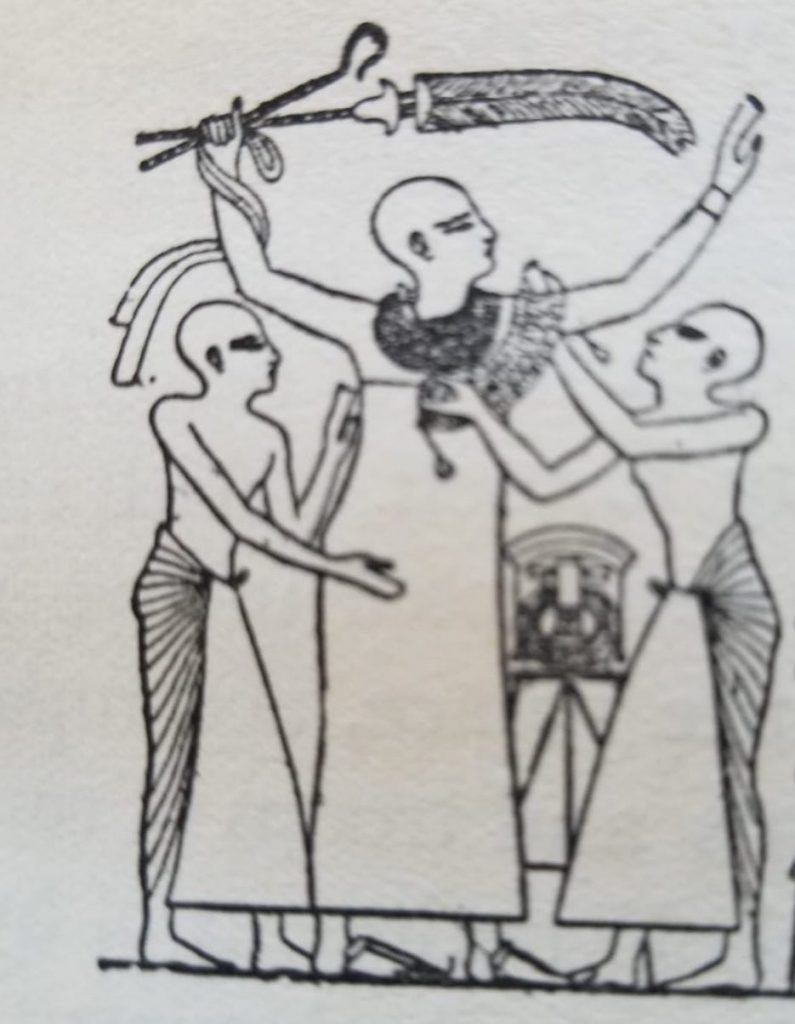
The Tora tells in Bereshit 41 that when removed from prison Yosef was shaved. Yahuda explains that shaving entirely the face and head was a typically Egyptian custom (according to my tour guide in my last visit to the Egyptian gallery in the Met, Egyptians shaved their head to protect themselves from the intense heat and insects). Semites, however, grew their hair and their beard. But when a Semite or another foreigner had to come and present himself before the King, had to look presentable, for a Hebrew that mean: clean shaved.
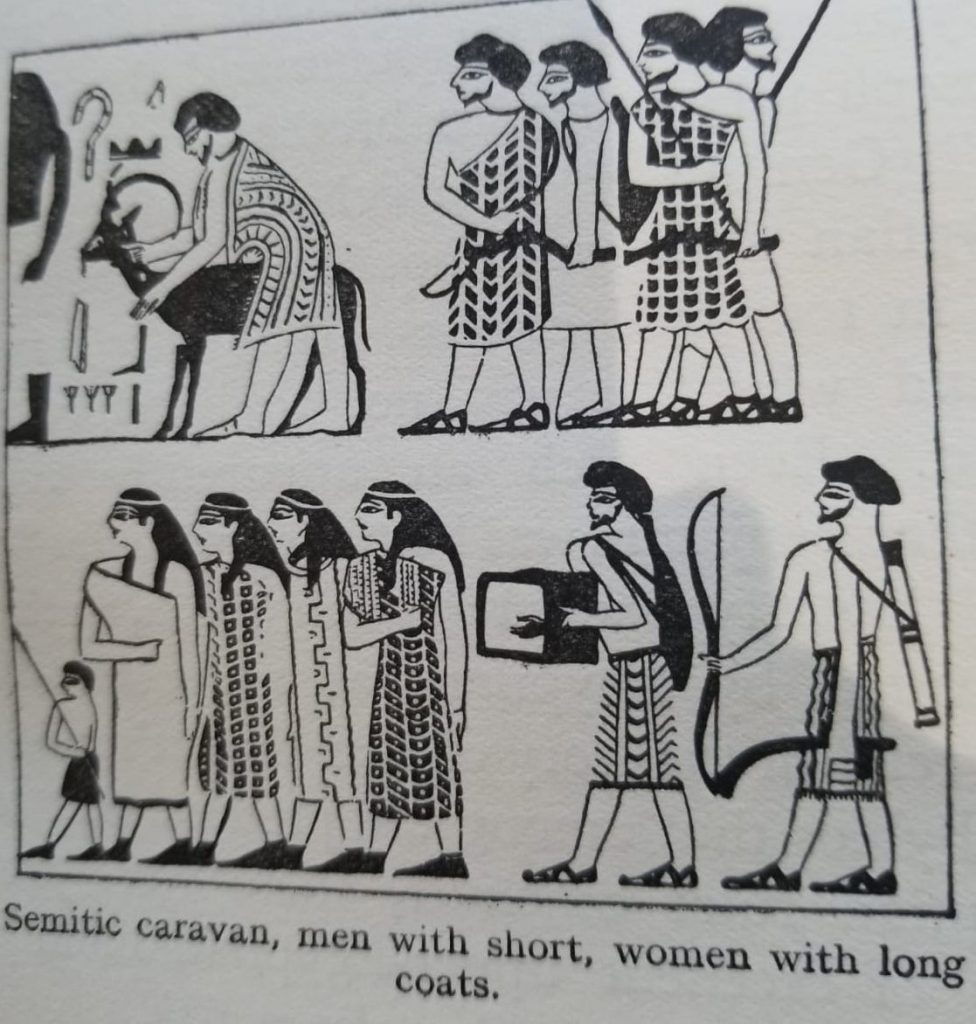
Similarly, semites, like Yosef, wore robes made of colored fabric, which covered the entire body while Egyptians wore plain, white or transparent tunics that covered half body (see illustrations). Egyptian dignitaries wore linen tunics, as the Tora mentions with Yosef.
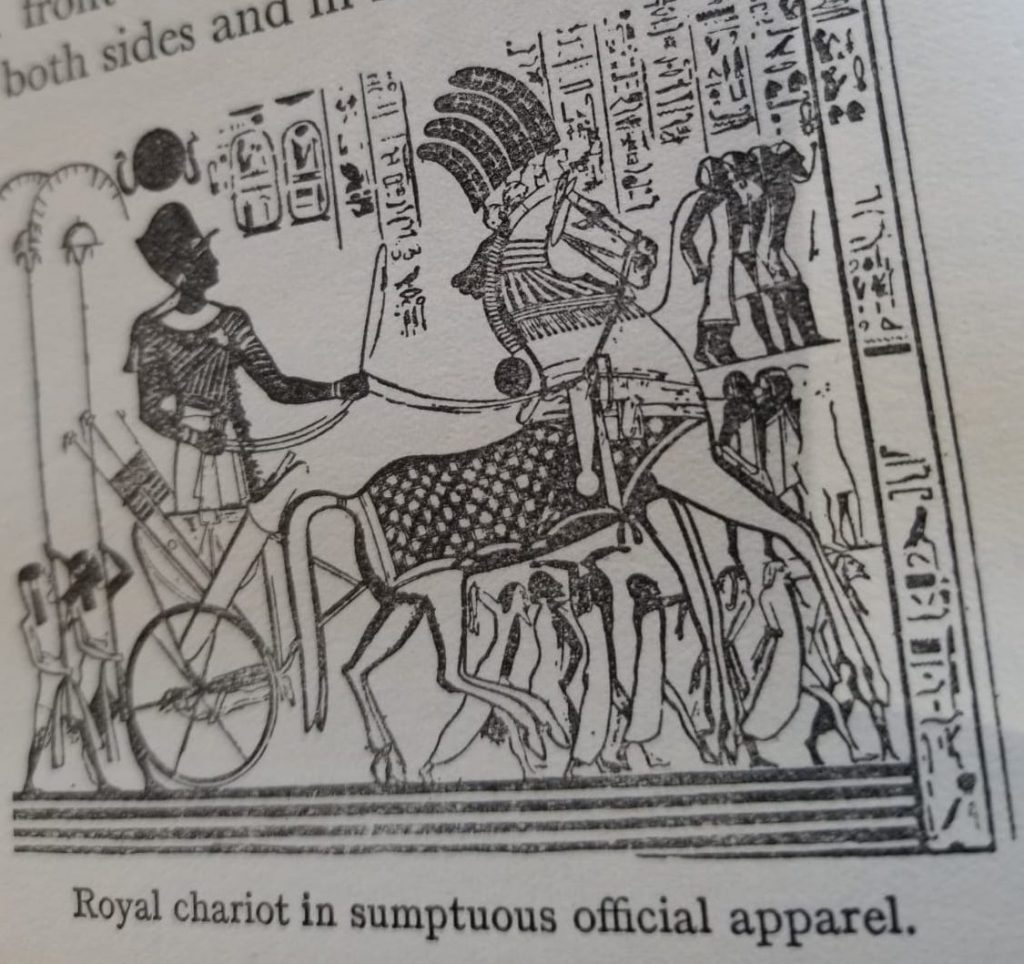
At the time of his coronation Pharaoh gives Yosef a ring, dresses him with a gold necklace and then, as was customary in Egypt, Yosef was paraded in a Royal Carriage to be officially installed in his new position.
An Egyptian that served as a government official needs to have a title of nobility, which was inherited from father to son, or obtained by marriage. At the time of his installation Pharaoh marries Yosef with Asenat daughter of the priest of On for this very purpose, following strict Egyptian protocol.
Finally, when Pharaoh designates Yosef as Vizier Yosef goes through a process of “naturalization”. Pharaoh changed his name from Yosef to Tsafenat Pa’aneah, a typically Egyptian name that according to Yahuda means “The feeder for all Egypt. “
Yehuda presents all these facts and many more in great detail and presents some illustrations of these formal ceremonies with drawings and Egyptian reliefs of the time, to show the exquisite precision and historical accuracy of the biblical story.

To be continued 

Semitic immigrants arriving in Egypt. Could this be the way Yosef’s brothers and their families looked when arriving to Egypt?
Ceremony of coronation of a Vizier. Shaved, dressed with white linen and receiving a gold necklace, as it is said of Yosef.
The royal carriage introducing the dignitaries to the people


Absence Of Evidence Is Not Evidence Of Absence

לא ראינו אינה ראיה

HISTORY AND IDENTITY

One of the most important principles of Judaism is the belief in the authenticity of the Tora, the Hebrew Bible. We Jews consider that the Tora was revealed by God to Moshe (Moses) and transmitted in writing to the people of Israel by the great Jewish leader.
The Tora is essentially a book of precepts. But it also contains historical accounts, from the creation of the world to the death of Moses. The stories of our patriarchs do not belong to old history books that few read. And are not kept in museums, where the epics of extinct civilizations are preserved. From the day we left Egypt, we celebrate our history. The departure from Egypt in Passover; the giving of the Tora in Shabuot, and the journey in the desert in Sukkot. We Jews permanently relive the biblical stories in an experiential way. And by doing so, we do what few others do: we transform our history into our identity.
All this makes clear that a Jew who recognizes his or her own history does not need to find the remains of broken vessels in the Sinai desert to confirm that our ancestors were there. The departure from Egypt, or the experience of captivity, or the journey in the desert, is not information that we Jews possess: it is part of who we are.

BIBLICAL CRITICISM

But this natural way of transforming our history into our identity is in crisis. At least for a large part of our people, who did not had the opportunity to receive a formative Jewish education.I know several students who had the first formal contact with Bible studies in college. All prestigious universities in the United States, and I believe that all over the world, have a Department of Biblical Studies. Universities offer elective courses in the first years of college, and one of these courses could be, for example, “Introduction to the Bible”. Many young students register in these courses thinking naively that they will learn in depth the content of the most influential Book in the history of mankind. They do not imagine that these courses have a very different purpose: to discredit the Bible, to demonstrate that what the Tora says, especially the Hebrew Bible (what non Jews call the Old Testament) is not credible! Is fake news.Biblical criticism basic hypothesis is that Biblical texts are apocryphal, false. Biblical critics asserts that the protagonists of the biblical did not exist. That the Tora was not written when it says it was written, before entering the promised land, but 700 or 800 years later. That the Biblical stories are legends, invented by some obscure anonymous scribes in the Kingdom of Judea, to give the Jewish people a history that unifies them. And that the miracles described in the Book of Books are fruit of the imagination of the Jews.
This way of “studying” the Bible, denying it all historical credibility, is not the exception but regrettably the rule.This is the way the Bible is taught in hundreds of universities around the world, from Harvard to Oxford, and from Cambridge to Tel Aviv. Also the media and most historical documentaries use the hypothesis of Bible Criticism to “present” the Bible.

NEGATIVE EVIDENCE

To demonstrate their theories, academics use resources that are very questionable. One of them is negative evidence: what we did not find, did not exist. 
Let’s see an example:
In the words of the Jewish archaeologist, professor at Tel Aviv University, Israel Finkelstein: Jews were never in Egypt; the captivity did not exist; the Exodus never happened. And what is the evidence to sustain such a hypothesis and disprove the millenary tradition of the Jewish people?That the Egyptian history does not record it. That there are no monuments that show the Exodus, or papyri or books (scrolls) that mention it.
Now, if an individual is not familiar with the scientific methodology, he or she will probably think that this way of presenting the evidence is compelling, and especially, since those who make these claims are “academics,” who supposedly analyze archaeological discoveries with objectivity, and present their conclusions without any agenda.
Nothing could be farther from the truth..…
Let’s see briefly some examples of information that is not revealed when these affirmations are made.

MONUMENTS

The Egyptian Pharaohs did not erect monuments to remember their defeats. The monuments that they erected were to immortalize their triumphs and achievements. Defeats humiliated them; made them feel weak and less powerful than their predecessors. It is absurd to think that a Pharaoh, or for that matter any other monarch of antiquity, would have any reliefs that register events that were humiliating for him.

PAPYRUS

As the great Egyptologist and archaeologist Kenneth Kitchen explains in his book: “On the reliability of the Old Testament”, 99% of Egyptian papyri have been lost. Papyrus is not made to last, they decompose very easily, and especially if they were exposed to water or mud, something that was not uncommon in Egypt, with the floods caused by the rise of the Nile.

OTHER HISTORICAL DOCUMENTS

Several ancient historians recorded in one way or another the history of the Egyptian Pharaohs. The Library that housed all of these ancient writings, an estimated of approximately 400,000 papyri and scrolls, was the Library of Alexandria, in Egypt, which was destroyed by a fire in the time of Julius Caesar (48 BCE).

As we can see, the fact that some archeologists did not find records of Jews in Egyptian monuments, can be explained in many ways and be the consequence of many other factors.  

One of these factors its that archeological discoveries can never be exhausted. And the incredible news is that, against all odds, in recent years archeologists have discovered some solid evidence of the presence of the Hebrews in Egypt, as I will later demonstrate .

To be continued


What does it mean to be Jewish?

ועתה, אם-שמוע תשמעו בקולי, ושמרתם, את-בריתי – והייתם לי סגולה מכל-העמים, כי לי כל-הארץ-. ואתם תהיו-לי ממלכת כוהנים, וגוי קדוש
 
“And now if you are willing to accept My commandments and keep My covenant , you will become My treasure (segula) among all peoples … and you shall be to Me a kingdom of priests (mamlekhet kohanim ) and a holy nation (goy qadosh) “.
 
 
Today we will explain the third term expressed in the election of Israel: goy qadosh גוי קדוש.

GOY: The word “goy”, conventionally used to refer to a non-Jewish person, simply means “people” or “nation.” And in the Tora, it is often used in reference to the people of Israel.

QADOSH: The next word, “qadosh” is impossible to translate into English with a single term. “Qadosh” can mean, depending on the context: sacred, assigned, holy, special, separate, dedicated, unique, different, and more.

In the context of the giving of the Tora, which we celebrate in Shabu’ot, “goy qadosh” means that we are a “consecrated” people, chosen and assigned by God to achieve a particular mission.
 

We were chosen, firstly, to witness the existence of God. In Shabu’ot, when we received the Tora, HaShem revealed Himself to Israel. We did not see any images, but we heard His voice. We were (and are) the only “ear-witnesses” of God’s existence. The proof of the existence of God in Judaism is not based on philosophical or scientific evidence but on our own collective experience at the time of the giving of the Tora. As the prophet Yesha’ayahu so beautifully said אַתֶּם עֵדַי, נְאֻם ה ‘וְעַבְדִּי אֲשֶׁר בָּחָרְתִּי, לְמַעַן תֵּדְעוּ וְתַאֲמִינוּ לִי וְתָבִינוּ, כִּי אֲנִי הוּא, לְפָנַי לֹא נוֹצַר אֵל וְאַחֲרַי לֹא יִהְיֶה “Thus says HaShem [to Israel] You are my witnesses, My servants, whom I have chosen, so you know Me and you believe [in Me] and so you will make known that I am [God], and that there is no God besides Me. ” The Cuzari of Rabbi Yehudah Halevi, a book describing the most basic principles of Judaism, explains that in other religions it is always “one person” (Muhammad, Yeshu, Mary Magdalene, Joseph Smith, etc.) who has the “privilege” to receiving a divine revelation. No nation even dared to “make up” a story of a collective revelation –which would obviously lend more credibility to the alleged revelation– because it would be a fabrication impossible to sustain. In the case of the Jewish people, says the Cuzari, there were 600,000 “eyewitnesses” of HaShem’s revelation on Mount Sinai. Something else. Being the chosen people means being witnesses to the existence of HaShem and knowing that as such, He expects from us an exemplary behavior. HaShem is much more demanding with those who enjoyed the privilege of the “knowledge” of His existence. HaShem examines the behavior of Am Israel with more rigor than other nations.

No one explained this idea better than the prophet Amos (3: 2) . Thus said HaShem, רק אתכם ידעתי מכל משפחות האדמה על כן אפקד עליכם את כל עונתיכם “Only you [the Israelites] I have known (=i’ve chosen) among all the families of the earth. Therefore, I will consider you accountable for all your sins … “ Accordingly, being the chosen people means to have more obligations.  Each Yehudi is a witness to HaShem’s existence. Therefore, if a Jew behaves wrongly, dishonestly, or in an inappropriate way , he disqualifies himself as one of HaShem’s witnesses, generating thus Hillul HaShem, the desecration of the Divine Name. Why? Because one disqualified witness means one LESS witness of the existence of God! In one of his letters (Iggeret Teman) Maimonides explains that the first idea a Jewish parent must teach his or her children is the story of Shabu’ot, מעמד הר סיני, the event that records the revelation of HaShem at the foot of Mount Sinai. Having participated in this event, and having witnessed the Presence of HaShem, it is the first thing that defines us as Jews, and as His chosen people.