Educating Michael

By Rabbanit Coty Bitton

On Friday nights, when we are privileged to have our grandson Michael with us, our family looks forward to watching him play one of his favorite games. After my husband finishes reciting Kiddush, Michael runs around the table, stops by each person, taps their head with his tiny hands, and mumbles a few words.

This is one of the sweetest moments of our Shabbat, watching Michael imitating us – his parents and grandparents – by reciting the blessing of Birkat Kohanim, the Priestly blessing.

And while the sweetness of this moment always warms my heart, lately, I have thought that parents can learn a profound and critical message from the beautiful Shabbat ritual in which we bless our children.

Let me explain. One of the most challenging aspects of 21st-century parenting is finding the balance between expressing our love to our children and establishing a relationship with them in which they respect us as authorities deserving of obedience. Part of our struggle is that our culture emphasizes the value of a loving (“friendly”) relationship between parents and children and does not idealize the importance of discipline and obedience from children to parents.

This leads to a reality in which, as parents, we try to act in a way that appeals to our children – trying to convince them that our way is correct. This often contrasts with our desire to convey to our children that we are the authority in our families and that they need to listen to and obey us, whether they like it or not. Deep inside, we know that we do not need to explain the reasoning behind our decisions or requests, as our children do not always have the maturity to understand or agree with our choices.

Consider the healthy development of children: a two-year-old toddler, for example, must accept that her dinner cannot be lollipops and candies because “dad says so,” no other reasons needed; an adolescent fourteen-year-old will have to respect the “unfair” curfew that his parents decided on. We know that it is for the benefit of our children to have parents and adults in their lives that will protect them from making bad decisions. It is precisely here – in the attempt to have our children feel both love and respect for their parents – that Jewish tradition can be especially precious for our modern times.

Our rituals and Mitzvoth all direct us towards a style of parenting that conveys this delicate balance of parenting. Every time we say the Shema with our children, we verbalize our obligation to see our children as our students. The words “Veshinantam lebanecha vedibarta bam” literally mean, “You shall teach them [that is, the words of Torah] thoroughly to your children, and you shall speak of them”.

By assigning parents the role of educators, Jewish tradition demands that parents see themselves as role models worthy of their children’s respect; our children should see us as authorities from whom they can and must learn proper values and behavior. Education requires chemistry and mutual understanding between teacher and student, but it also requires a certain distance. To be able to teach our children, we need them to have respect for us.

We should work hard to parent in a way that conveys love and warmth, but not without teaching our children that our relationship with them is not horizontal. The benefits of raising obedient children are lifelong and affect the entire family.

As psychologist John Rosemond writes, “Obedient children are happy children, and the parents of obedient children are happy parents.” According to Rosemond the most critical thing needed to raise obedient children is not some expert knowledge of parenting methods. Instead, the success of developing a vertical (and a the same time loving!) relationship between parents and children derives from parents having a confident attitude that they should encourage their children to obey them.

This brings us back to Birkat Kohanim – the blessing parents give their children on Shabbat. This tradition is not only gorgeous and heartwarming for our children, but it is also compelling for the parents’ state of mind. Consider how this ritual is enacted: a parent places his hands on his child’s head and pronounces the blessings that the Kohanim were commanded to convey to the people of Israel. When parents bless their children, they reaffirm their unlimited and unconditional love for their children. But they are also reminding themselves – and their children – that the child is a recipient of her parent’s blessing. It is as if through this blessing, the mother is saying: “I can give you this blessing because I have more experience than you. My life experiences have given me more wisdom and knowledge. And I am commanded by HaShem to teach and educate you in the ways of the Torah”.

This one blessing we give our children on Shabbat conveys a beautiful formulation of how we should approach our most important role, parenting our children. My grandson Michael, who is only two years old, does not yet understand the real meaning of getting a blessing from his parents and grandparents. For now, he is enjoying the special attention he gets from his game! But as he grows older, I hope that this beautiful moment on Shabbatot – when his parents and grandparents hold him while repeating the Biblical words of blessings – will make him feel supremely loved and help him see us as his role models.




GENESIS 1:2. On Darkness and Abysses

והארץ היתה תוהו ובוהו וחושך על פני תהום

And earth was lifeless, with darkness over the surface of the ocean

DARKNESS

After explaining that at the time of its creation planet earth did not possess any kind of life, the text goes on to describe Earth’s atmosphere. Our current atmosphere is clear and bright, composed of 78% nitrogen and 21% oxygen. But the primitive atmosphere with which planet earth was created was different. The Torah describes it with one word “hoshekh” ”, which is usually translated by “darkness”.

The vast majority of classical biblical commentators agree that here “darkness” does not mean “absence of light”, since as in the story of Plato’s cave, one can only speak of the absence of light once light is created. Nahmanides (Ramban) and Eben Ezra proposed that here darkness should be understood as something tangible. Nahmanides compares it with the ninth plague of Egypt, a kind of gas that prevents any kind of light. For Eben Ezra, “that tangible darkness is like a “fog”, toxic and with less oxygen.

Based on these and other opinions we could assert that for the Tora early Earth’s atmosphere was like the present day atmosphere of Venus: formed of three thick layers of dark clouds, are composed of sulfuric acid and carbon dioxide, which do not allow sunlight to reach the surface.

This indication about the primitive Earth’s atmosphere may redefine the previous words tohu vabohu “uninhabited”, a little better. The Tora asserted that there was no life on Earth, and now is saying that the conditions for life are not yet there. In other words, Earth is not only “uninhabited” but at this initial point, because of hoshekh it is also “uninhabitable”.

ABYSS

Almost all biblical translations render the word tehom as “abyss”. And this could be a second example of non-Jewish influences in biblical translations. The word “abyss” is related to the Mesopotamia’s pagan mythology. For example, in the Sumerians creation myths, Enuma Elish, when the gods / monsters fight against each other to death (seeking power or revenge) the defeated or dead god “falls into the abyss”, a legendary bottomless pit from which one cannot return. Also in the Christian tradition the abyss is a place where evil spirits meet, and where Satan eventually will be thrown after defeat.

But in Hebrew the word abyss in this sense does NOT exist (not to be confused with sheol which means “underground grave”). In biblical Hebrew the word tehom is a “geological” term, associated with different sources of water. It can mean the sea, its depths or usually the natural reserves of fresh groundwater. Rashi explains that in our verse the word tehom means the ocean. But we must clarify what the Sages said about the primitive ocean: At the time of its creation Earth surface was covered by “water.” Continental dry-land emerged on the Third Day of creation (every morning, when we set foot on the floor we say a berakha that alludes to this phenomenon: רוקע הארץ על המים). Radaq (see quote below) explained that in its initial phase because planet earth was completely covered with water life could not exist — tohu vabohu— . God did not create our planet with life, but He created it with water. Lots of water.

SCIENCE AND TORA

Once we translate the Hebrew words according to their original meaning we can see some incredible coincidences between what this verse describes in 2 or 3 words and what modern science speculates that occurred at the beginning of our planet.

According to modern science

√ The primitive atmosphere did not allow life. It was dark, lacked free oxygen, and contained ammonia, methane and carbon dioxide.

√ In the beginning early Earth was covered by a huge ocean called Panthalassa. The continents as we know them today, emerged at a later stage.

√ And water? The Tora explains clearly that water was part of the initial inventory of our planet. Modern science, speculations aside, at present time has no demonstrable or convincing explanation of how our planet has so much water….

רד“ק בראשית 1:2

והארץ בתחילת בריאתה לא היתה בשלימותה, כי היתה תהו ובהו – כלומר: ריקה מכל בריאה שלא היתה לא בה ולא עליה, כי היתה כולה מכוסה במים


Viduy, to be or not to be specific?

אומר אנא ה ‘חטאתי עוויתי פשעתי לפניך, ועשיתי כך וכך, והרי ניחמתי ובושתי במעשיי, ולעולם איני חוזר לדבר זה.

Teshuba, the process of repentance in Judaism, includes the confession or viduy, that is, the exercise of articulating with words what we did wrong. This confession is done in private. We do not reveal our sins in front of other people – a priest or a rabbi. We whisper our transgressions without anyone else listening to us. We do not confess our sins because we think that God does not know them: we say them because only when we articulate our faults are we ready to recognize them and take charge.

Now, there is a discussion between two rabbis: When you recite the Viduy do you have to mention in detail all your bad actions (this is the opinion of Ribbí Yehuda ben Babá) or simply state in general terms that you have acted wrongly (this is the opinion of Rabbí Aquibá) ?.

Shulhan Aruch follows the opinion of Ribbi Aquiba and says that it is sufficient to repent in general terms for all the transgressions committed and it is not necessary to specify in detail what we have done wrong. This lenient position is aimed at not discouraging a person who wants to repent but feels that he or she is not capable of (or is not brave enough to) remember all the details of his bad behavior. Demanding a detailed confession “could close the doors of repentance” for many individuals for whom this mission would be emotionally and psychologically very difficult.

Maimonides, however, recommends following the first opinion and indicates that one has to mention in his private confession, within the limits of his memory, all the mistakes he has committed.

Maimonides says that when we recite the Viduy, after describing in general our bad behavior by saying “I was wrong, I sinned and I rebelled” we should describe our transgressions in a more specific way: ועשיתי כך וכך: “I did this and that”.

A detailed confession is obviously more credible, more serious and more sincere than a general statement. Imagine a friend that spoke badly about us, hurt us, offended us, and one day comes and says: “I apologize for everything I did to you.” Obviously, a general apology is a good first step, but I will not have the same effect on the victim as a private and more detailed conversation in which the offender acknowledges in a little more detail what he did to me and takes charge of it. Similarly, every parent knows that it is not the same if my son apologizes in general terms (“today I misbehaved at school!) and when he is capable to describe in detail what he did wrong. A detailed apology is more sincere and more credible.

Therefore, although in practical terms it is sufficient to adopt the position of Ribbi Aqiba and Shulhan Arukh, if possible, one should follow the opinion of Maimonides. To do that, we must devote some time to a deep introspection, and we need to exercise our memory and identify our wrong deeds. We should be willing to face our instinct for denial (self-justification) and our fear of feeling guilty and recognize that we acted foolishly.

The text of the Viduy that we recite during these days of Selihot serves precisely form this purpose: the viduy is a facilitator for this exercise. It is a reminder of the matters and issues for which we have to repent, and the areas we must correct.

If we wish to take this spiritual exercise even more seriously, we should privately write a list of the transgressions that we can remember and read it to ourselves when we say the Viduy during the month of Elul and especially during Yom Kippur.

Knowing that the more we remember, and the more specific we are, the more certain we can be that HaShem will forgive us.

In this regard the rabbis presented us with this beautiful idea: God will remember and NOT forgive us for everything we neglectfully forget and refuse to accept and articulate with words. On the other hand,  in terms of our transgressions towards God (not towards other people!) God assures us that He will forget, forgive and absolve us for all transgressions that we are able to remember and confess.


ABINU MALKENU: You Are Our Father, You Are Our King

We are in a period of time called “The ten days of Teshuba,” the days between Rosh haShana and Yom Kippur, which includes Shabbat Shuba tonight and tomorrow. In preparation for Yom Kippur, in our prayers we ask HaShem again and again to inscribe us in the book of life.

These days we also make a radical change in the Amida text, the main prayer: instead of saying HaE-l haQadosh, “The Holy God” we say HaMelekh haQadosh, “The Holy King.”

These additions and changes help us achieve the right mental state for Yom Kippur.

What does HaMelekh Qadosh mean?

MELEKH: When we say “Melekh,” we shouldn’t be thinking of a king in a fairy tale. We have to think rather of a judge. In a monarchy, the King also acts as the Supreme Judge, the highest authority. The King issues the final verdict on the life or death of his subjects. These days we think of HaShem as the Supreme Judge, knowing that He determines whether or not we deserve to be sealed in the book of life. In Rosh haShana, the Celestial Court inscribes human beings in one of two books:  life or death. But the final verdict is not sealed until the end of Yom Kippur. And I have to seriously consider the possibility that I am appealing a verdict that so far is negative, and I must convince the Judge that if He did not inscribe me in the book of life, He should reconsider. I have 10 days to appeal and invoke HaShem’s clemency, and show that I sincerely regret the wrong things I did. And during these ten days, including this Shabbat, I have to prove to the Supreme Judge that I am capable of being a very good person. Yom Kippur is the day of the final appeal: I will stand before the Supreme Judge, acting as my own lawyer, imploring for my life.

QADOSH: “Qadosh,” is usually translated as “holy.” But in the context of this expression it means “unique,” “different.” In other words, we are saying that although HaShem is a judge, he is a very different judge. Why is HaShem as a judge different from a human judge? Because HaShem is an invisible judge, whom we do not see, but who sees and knows what a human judge does not know and does not see. Unlike a normal judge, HaShem knows what I do in private. HaShem is “unique” because he is a judge whom we cannot deceive with appearances or flattery … He is “unique” because nothing escapes His knowledge. Unlike a human judge, HaShem knows my thoughts, my intentions and my potential.

But if He knows everything, how will my repentance affect His final judgment and His verdict?

ABINU: HaShem as our judge is also “unique” because he is our Creator, our father. When one of my children makes a mistake, the most important thing for me is to make sure he or she has learned the lesson from his bad experience. And once my child has learned the lesson, he probably won’t make the same mistake again. Therefore, when my child spontaneously approaches me,  admits her mistake with sincerity and shows me that he understands that he made a mistake, why would I want to punish him? Quite the opposite! I will hug him, encourage him and show him that I trust him, and that I am very happy he has finally learned his lesson. Similarly, when we approach HaShem in Yom Kippur, He expects us to admit and confess our mistakes and transgressions, showing him that we have learned the lesson. If we do that, He will surely forgive us and spare us from the punishment we deserve. Because apart from being our King, He is our Father: we are his children.

This tremendously important concept is indicated in the beautiful prayer we say all these days: ABINU MALKENU (our Father, Our King), which could be interpreted as: “You are our Father, [apart from being] our Judge.”


Why these four specific plants? (Audio)

Class on the meaning of the 4 species


The 100 Voices Of The Shofar (Tutorial)

יוֹם תְּרוּעָה יִהְיֶה לָכֶם
SHOFAR PRODUCTION
The most important Mitsva of Rosh HaShana is listening to the Shofar. The Shofar is an animal horn that has been modified a) by removing the horn stuffing and b) opening a mouthpiece at the narrowest end of the horn. In this video (in Hebrew) you can see the entire Shofar production process
ערוץ אורות- איך עושה שופר?
TUTORIAL
Now, how do you produce the voices of the Shofar?
You should not place the Shofar “inside” your mouth between your lips, as if you were inflating a balloon. If you blow air into the Shofar in this way the Shofar will not produce any sound. The Shofar should be placed “over the closed lips”, on one side of the mouth (if possible, the right side) or in the middle of the mouth. Once the Shofar is resting on the lips, you have to blow air with the lips tightly pressed, emitting the sound of the letter “P”, while your lips are vibrating
how to blow shofar /2
Do not inflate the cheeks too much. Do not force the lungs inhaling too much air. You have to breathe as normally as possible. The most challenging point is adjusting the mouthpiece of the Shofar on your lips, preventing air from escaping from any other point of the mouth, at finding the correct angle. This requires practice.
Again, the steps to effectively blow the Shofar are:
1. Closing the lips.
2. Make the lips vibrate with the letter «P».
3. Place the mouthpiece of the Shofar on the lips.
4. Keep moving and pressing the Shofar on the lips while you blow, until you find the right angle.
THE VOICES OF SHOFAR (qolot)
Each Shofar has a unique voice, like human beings. And each Shofar emits a single musical note. In Rosh HaShana we produce that note in three different ways, which the Sages call “voices” (or “sounds”, qolot) The first “voice” is called teqi’a. Teqi’a is the longest, uninterrupted and simplest sound. Then we have shebarim, dividing the sound of the Shofar into three short voices, interrupting the air that reaches the Shofar by covering the mouthpiece with the tongue. Finally, we have the teru’a , nine very short voices. To produce the sound of teru’a with tap rapidly the mouthpiece of the Shofar with our tongue, approximately nine times.
In this video (between 6-9 seconds) is the most common way to produce the sound of the teru’a
תקיעת שופר לחיילים בכותל
According to other ancient traditions, in order to produce the teru’a, instead of “tapping” with the tongue (similar to the sound of the letter “T”), you “rub” the mouthpiece of the Shofar (imitating the sound of the letter “L”) with the tongue creating “waves”. The sound here is a little less intermittent. This video shows this way of sounding the teru’a, typical of the Jews of Yemen and many Syrian Jews.
מארי מתיתיה תרועה בת"ת מבשר טוב לילדי עדת תימן בירושלים
THE 100 SOUNDS
The combination of the Shofar sounds for Rosh haShana is as follows:
teqi’a / shebarim-teru’a / teqi’a (4 voices).
teqi’a / shebarim / teqi’a (3 voices)
teqi’a / teru’a / teqi’a (3 voices)
This formula as you can see consists of 10 voices. And it is repeated 10 times during Rosh haShana. 3 times before the Musaf prayer, 3 times during Musaf prayer, 3 times during the Musaf repetition, and one more time after Musaf. Thus, in total, during each day of Rosh haShana we hear the voice of the Shofar 100 times (מאה קולות).


Perfect vs. Imperfect Teshuba

The timing and circumstances of the act of repentance determines the quality and credibility of my repentance.
Maimonides writes in Hilkhot Teshuba 2: 1.“What is considered a perfect and complete repentance? When one is confronted with the same opportunity to repeat the original transgression, but now he does not do it because he has repented … however, when one does not repeat the original transgression, [ and refrains from sinning] because now he fears that other people would find out  … his repentance is accepted, but this is not considered a perfect repentance. “
To explain the ideal scenario of Teshuba, Maimonides brings the example of a man who was involved in an adulterous relationship which now he regrets. What would demonstrate that his repentance is credible?  If he is faced with a similar opportunity to repeat his mistake and now refrains from it because he has reached a new moral conscience and understanding, i.e., he now realizes that being carried away by his impulses will hurt him spiritually and will destroy his family, etc.
However, if the sinner abstains from making the same transgression, not because of a renewed understanding but because now he fears being seen his Teshuba / repentance is accepted, but this kind of repentance is far from ideal. Why? Because this individual did not reach a renewed understanding of what is right and what is wrong: he has repented because he fears being caught.
Another example. An employee was caught in an act of corruption, like stealing money, etc. Many times, after being caught, the disgraced employee might express his remorse and regret for he has done.  This is certainly a brave gesture of repentance. However, this act of repentance is questionable in terms of its credibility. Why? Because the process of repentance and apology did not happen before being caught but as a result of being caught. It is very likely that what is pushing this person to repent is NOT a new moral conscience, but the interest of a reduced conviction, a better sentence, to save the honor of his family, etc.
In this scenario, what would be considered an act of a “perfect” repentance? If this employee, while still doing his job and without any risk of being caught, realizes his mistake by the call of his own conscience; understands that what he was doing was immoral, and now he repents, ask forgiveness and gives the money back, etc. That would be a case of a perfect and credible Teshuba.


BIBLICAL ARCHEOLOGY CLASS # 4

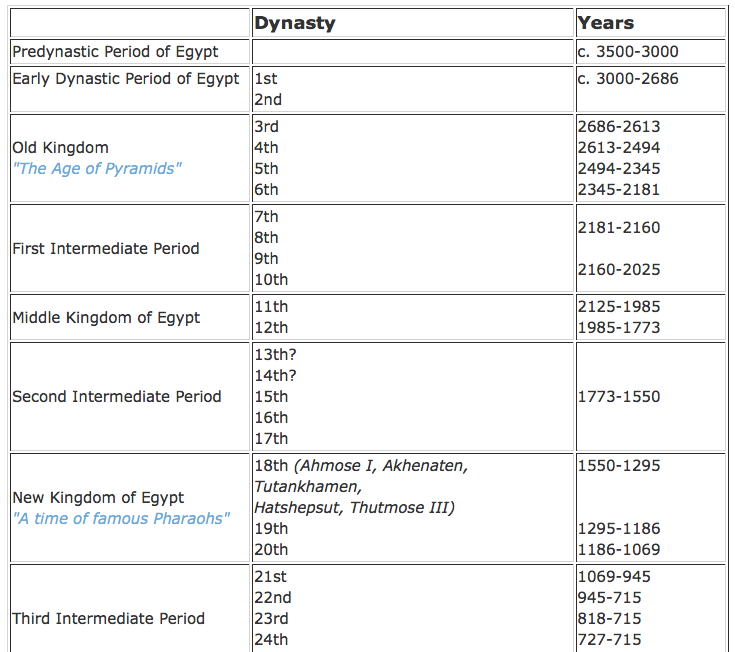
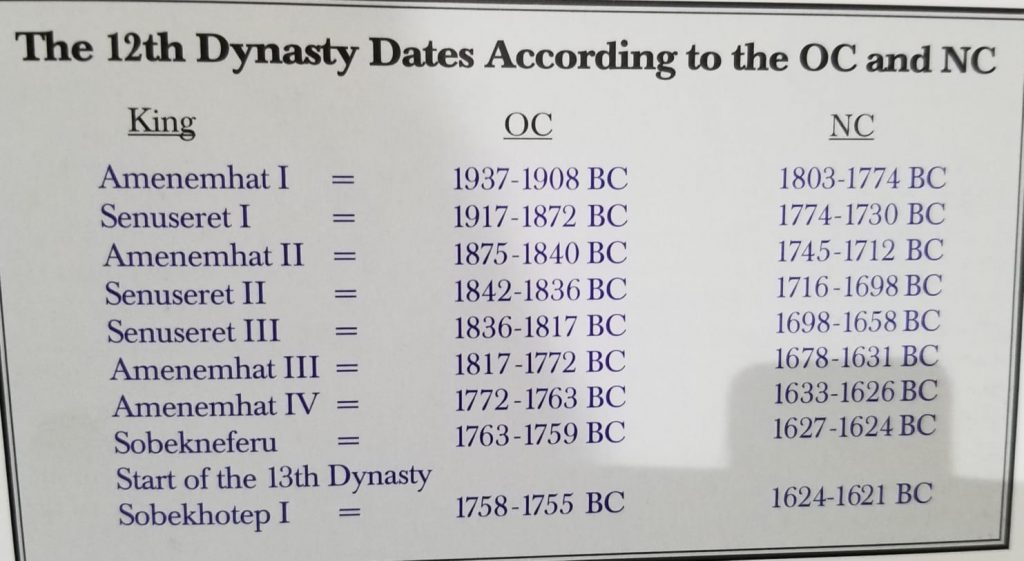
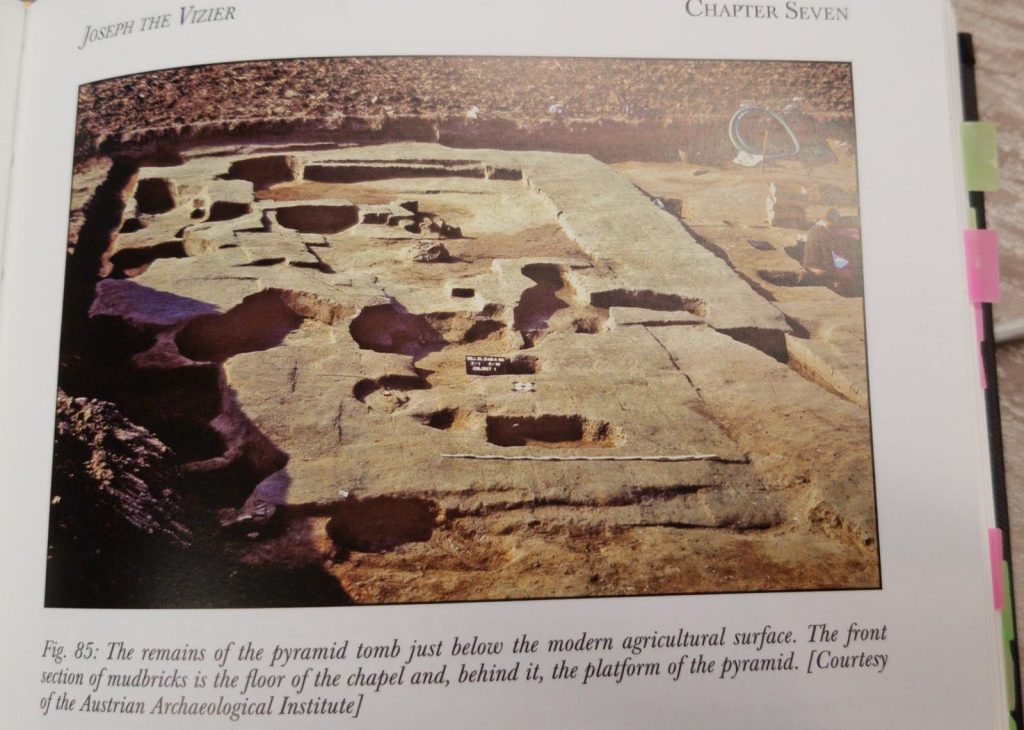
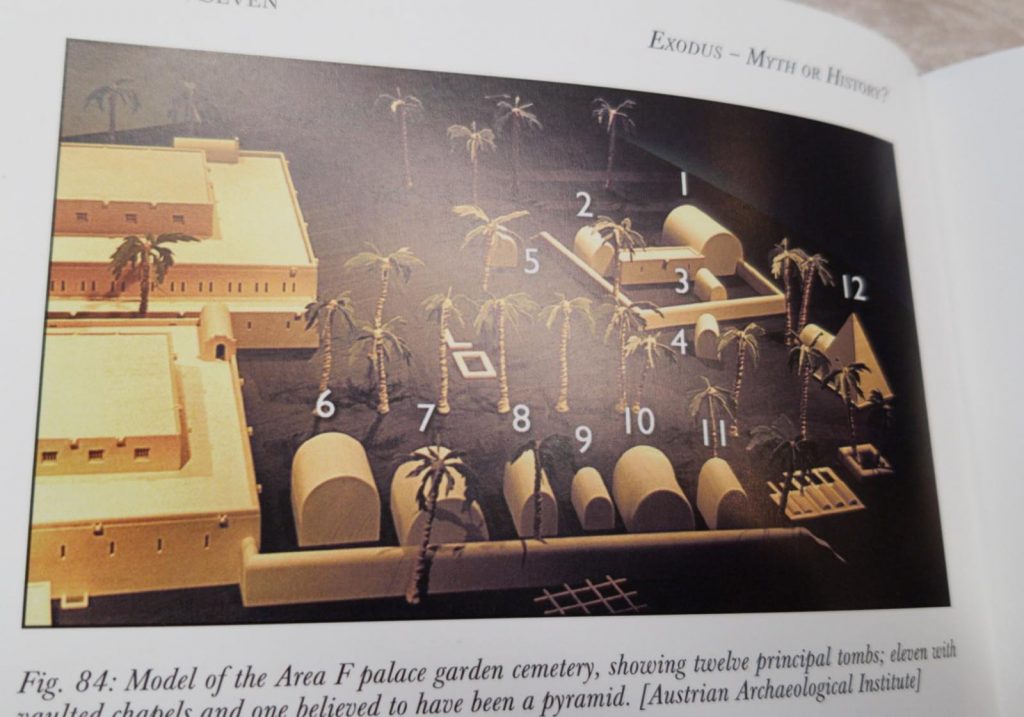
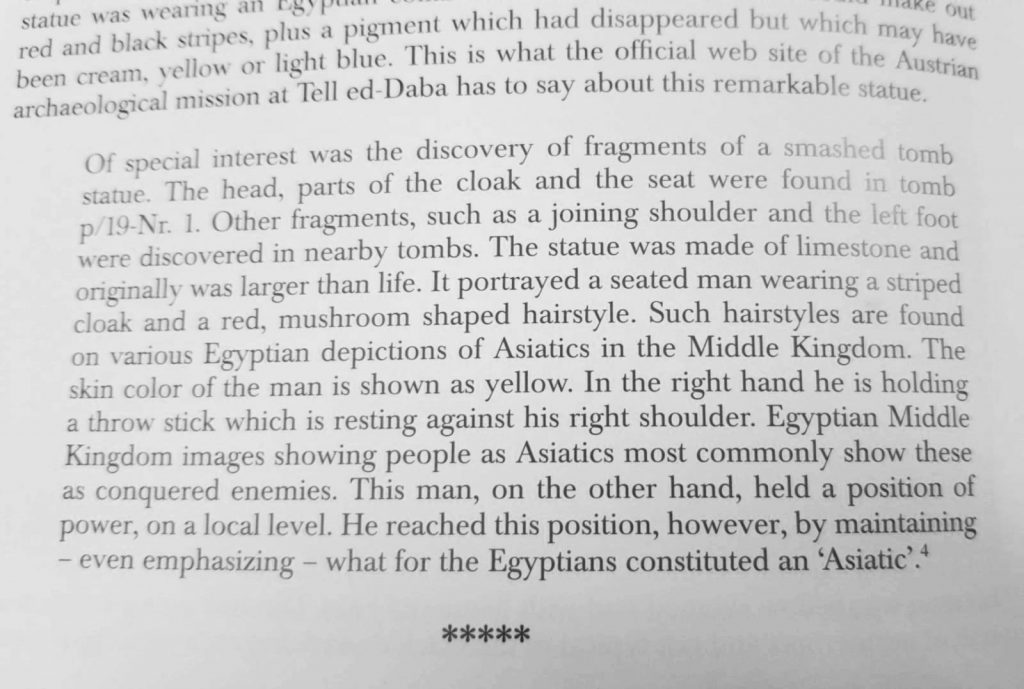
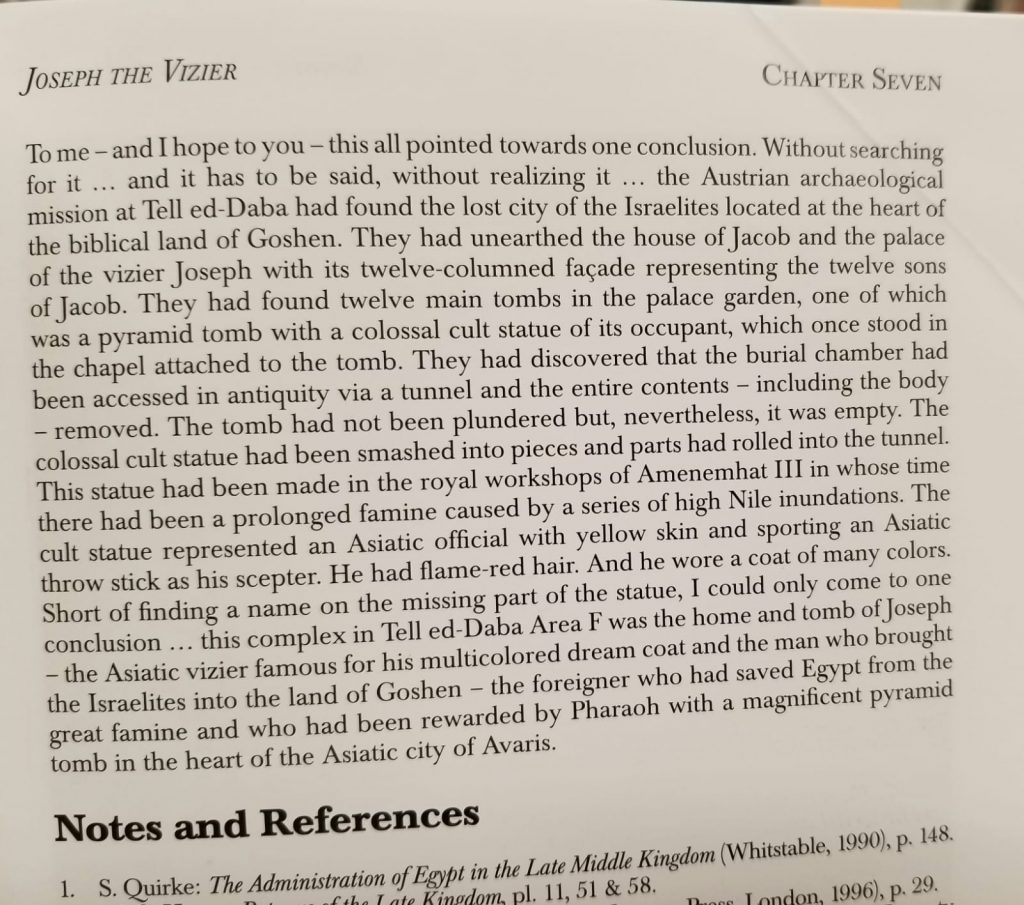
Yosef in Egypt. New archeological findings


TESHUBA: A Worthless Confession

כיצד מתוודה? אומר אנא ה ‘חטאתי עוויתי פשעתי לפניך, ועשיתי כך וכך, והרי ניחמתי ובושתי במעשיי, ולעולם איני חוזר לדבר זה

The Viduy concludes with a commitment to ourselves. After an individual confesses his or her sins and expresses regret and shame for what he has done, he or she must say: ולעולם איני חוזר לדבר זה “And I will never do this again” .  
The idea is that Teshuba must include my commitment to change my behavior. A promise to stop doing this transgression anymore. The final test of Teshuba will take place when I would face a similar scenario, but this time, I would act differently.
To illustrate this point let us imagine a person who drinks too much and often gets drunk. He repents, verbalizes his regret (viduy) and sincerely feels ashamed of what he had done. The question is whether this person is still considering in his mind that he will continue drinking in the future, or has decided to do all what eh can to leave alcohol forever. Without this determination for an improved behavior, his Teshuba process will be incomplete, or perhaps meaningless.
The final test for the credibility of his Teshuba will take place when that individual is faced again with the opportunity to drink. If he refrains from drinking, NOT because someone is preventing him from doing so, but because he determined and decided that he won’t do so again, then his Teshuba is complete.
On the other hand, if a person repents, confesses and is embarrassed by what he did wrong, but plans to continue with the same habit, then the process of Teshuba worthless.
The Sages gave the following example: at the time of Bet haMiqdash there were all sorts of ritual impurities.  The body of a reptile, for example, was a source of ritual impurity or tuma. And purification was achieved by immersing in the Mikve, or ritual bath. Our Rabbis asked – What if someone immerses in the Mikve and emerges from its waters while still holding the dead body of a small reptile in his hands? On the one hand, he immersed himself in the Mikve; on the other hand, he is still holding the original source of his impurity! Is this individual now purified or is he still impure? The answer is very simple: this person is still impure. The immersion in the Mikve was meaningless.  The same holds true, our Sages argue, with regards to an individual who does Teshuba, confesses and repents of what he has done but still holds in his mind the same thoughts that led him to act in a wrong way and has not made the decision to stop these destructive habits that are actually the source and original cause of his “impurity” or transgression.
Real Teshuba, repentance, must include the decision to change.  


ROSH HASHANA in three short lessons. # 3 . We and the Shofar

Rosh haShana is “Yom haDin”, the day of judgment. On this important day we stand before the Almighty knowing that we will be judged by Him. The Synagogue is a courtroom and the Shofar announces that the celestial Court is in session. HaShem is the Judge who examines the records of our behavior during the past year, and must decide whether we deserve or not a new opportunity.
What remains to be explained in a little more detail is what should we do while we listen to the Shofar, while we are judged by God?
The process of Teshuba formally lasts for 10 days from the beginning of Rosh haShana until the end of Yom Kippur. And in this process, each day and each event has a different role.
Once Rosh haShana is over we begin an intense period of repentance, reparation and forgiveness. We ask God for forgiveness and we ask our peers for forgiveness, aiming to repair as much as we can.  The process concludes on Yom Kippur, “the Day of Forgiveness”
But in Rosh haShana requesting forgiveness would be premature. That day I must concentrate on Judging myself in front of God. How should i do that? Trying to visualize  myself, not as I normally do, but as God sees me.
The voice of the Shofar is a wake up call for my consciousness and my memory. When I listen to the Shofar I must look at the mirror and admit my mistakes in my heart (מהרהר בתשובה). This first step, essential for the whole process of Teshuba is called hakarat hahet, “admission of my errors”. At that moment I must take charge of my mishaps without evading responsibility. This self-diagnosis is too serious to be taken lightly: it is a prerequisite for what will come after Rosh haShana: confession, repentance, apology, etc.
I will illustrate with an example what we should be doing when we listen to the Shofar.
One of the most important values ​​in Jewish life is hesed, generosity. Let’s take this value as an example. First I have to recall what I did well and what I did wrong this year in this specific area: Have I dedicated enough of my assets, my time and my effort to help others? Was I present when others needed me? How many people asked me for help and I ignored them? And especially, how many people who needed help and did NOT ask for help (probably out of shame)  I have ignored? When I found out that someone was without a job, did I do everything possible to help? When I knew that someone had no place to be , did I open my house for them?
And to get deeper in my introspection I must include God’s perspective into the equation. Because when I feel that I am displaying my failures in front of HaShem my self-inquiry becomes more serious. For example: Given that HaShem was so generous with me, and He gave me means, health, talents, isn’t He expecting from me to share with others what He gave to me?
The main challenge of Rosh haShana is to judge myself as much as possible in the way that God is judging me. Seeing myself from the balcony,  as He sees me. The more real my perception of God’s perception of me is, the less likely that I will deceive myself clinging to my self-exculpatory narrative, and the more effective my Teshuba will be. And vice versa.