נפש כי תחטא ומעלה מעל בה ’וכחש בעמיתו בפקדון או בתשומת יד או בגזל או עשק את עמיתו
והיה כי יחטא ואשם והשיב את הגזלה אשר גזל או את העשק אשר עשק
And HaShem spoke to Moses saying: When someone sins and commits a mistake … deceiving his neighbor … for theft, or for extortion … he will return what he took by stealing, or what he obtained by extortion, and [just] then he will bring to the priest his atonement offering … for HaShem Leviticus 5: 22-25
This week’s Parasha TSAV continues with the description of the qorbanot: the sacrifices that were offered at the Bet HaMiqdash, and that had various functions. Some were part of the daily service of the Jerusalem Temple. Others were offered during the festivities, and some qorbanot were individual offerings, to thank God. There were also sacrifices that were an atonement for some transgression. Let’s see an example of this last category.
The Tora describes the asham guezelot, a sacrifice that was brought when someone stole and then repented and confessed its crime. The sacrifice, in this case was the last step of his atonement, the way in which his fault was finally forgiven.
There is a very important point about this qorban that teaches us about the moral height of the Jewish people and our Tora.
The Tora clarifies that the qorban or sacrifice was to be offered only “after” having restituted what was stolen to the victim. In this way the Tora affirms that the qorban, a religious act, cannot replace restitution, an act of human justice. As in the case of Yom Kippur, one cannot claim that God will forgive his or her faults towards his neighbor unless he first obtain forgiveness from his neighbor. He must first settle his debt with the victim of his crime and only after that, he has the right, and duty, to seek religious atonement.
The Midrash Tanchuma says that this idea is explicitly formulated in the words of King David in Tehillim, Psalm 24. There, the greatest King and poet of Israel asks: ‘מי יעלה בהר הWho is the individual that deserves to rise to the mount HaShem, and stand in the place of His sanctuary? . Entering the Temple of Yerushalayim was not appropriate in all circumstances. King David’s immediate response was: נקי כפיים “An individual whose hands are clean”, and the Midrash Tanchuma (Parasha 1) explains: “Only a person whose hands are clean of robbery or theft has the right to enter the Temple of Jerusalem”.
The God of Israel does not accept sacrifices and offerings coming from corrupt people, before these people corrected their actions. Sacrifices, as any other religious act, cannot be offered as a bribe to God. It is unacceptable bringing an offering to God to seek Divine forgiveness without first having repaired the damage he caused to another individual, and having obtained his or her forgiveness first.
Our Parasha, Tehilim and Midrash indicate the same message: “NO” to religious hypocrisy, something that was not uncommon in other peoples and religions.
SHABBAT SHALOM
JEWS IN EGYPT: From Prosperity to Slavery
PHASE 1: Forced labor
EXODUS 1:11 Then the Egyptians assigned over them taskmasters to weaken them with hard work. And the Jews built for Pharaoh the fortified cities of Pitom and Ramses.
In the first phase of Pharaoh’s “final solution”, the people of Israel were not yet technically enslaved by Pharaoh. In fact, in Exodus Chapter 1:11-12, the word “slavery” or “enslavement” is not mentioned in the text. However, the text emphasizes the word “taxes”. The Israelites indeed worked for Pharaoh, building Pitom and Ramses. But at this point, this form of forced labor was a legal and legitimate procedure. The Egyptian monarch– ironically since the time of Yosef– was the Lord and Master of all Egyptians, Jews included. Pharaoh, therefore, had the absolute right to demand from his subjects any kind of service: joining the army to defend his territories, or working on the construction projects that the sovereign deemed necessary. As we saw in Pharaoh’s speech, Jews were foreigners, and were not trusted by the Egyptians; therefore they had to contribute with labor in lieu of, for example, serving in the Egyptian army. In this first phase, the work of the Jews consisted in building the cities of Pitom and Ramses, which according to the most accepted interpretation, were fortifications for military use- garrison cities. These fortifications were not built with common mud-bricks as houses or temples were, rather they were built with carved stones. We could asume that Jews worked in the quarries extracting the rocks, carving them, carrying the heavy stones, and mounting them on top of each-other.
We also need to keep in mind that, although taxing the Jews was seemingly a completely legal act, the true ultimate purpose behind this forced labor was not the building of the garrison cities. When Pharaoh delivered his infamous speech (Exodus 1: 9-10) warning his people about the threat that Jews represented to Egypt due to their increasing growth and wealth, he proposed a strategic plan to outsmart (הבה נתחכמה לו) and weaken the Jews both physically and financially. Forcing them to work in construction and abandon their own jobs; as well as forcing them to sleep in the fields far from home, would do the job. In this sophisticated, non-violent way, the power and the birth-rate of the Jews would be significantly reduced.
However, as the Tora explicitly says in the following verse, Pharaoh’s plan did not produce the expected results.
EXODUS 1:12. But the more they oppressed [the Jews] the more the Jews multiplied and grew. And the Egyptians felt threatened by the children of Israel.
Pharaoh’s plan failed. The people of Israel did not become weaker, rather they grew stronger, and continued to reproduce. It is at this point that Pharaoh decides to start Phase 2 of his plan: slavery.
EXODUS 1:13 And then the Egyptians enslaved the children of Israel with chattel (parekh).
PHASE 2: Chattel Slavery
Here for the first time our text mentions “enslavement”, vaya’abidu, redefined with a crucial word: “parekh”, meaning “chattel slavery”. That is, unconditional and indefinite submission of the slave to the master.
To better understand this phase let us remember that in the first phase, “forced labor”, Jews had to fulfill an assigned mission: building Pharaoh’s projects. I believe that at this point Jews did not necessarily have to work directly for Pharaoh. Surely, they had to pay for the building material, but perhaps they were allowed to hire workers to do these constructions for them. And more importantly, once the building project was finished, they could return to their lives and routine.
However, in the second stage, “parekh” the Israelites were not assigned a specific job. We see that the Egyptians were intimidated by the Jews, therefore it would not have been difficult for Pharaoh to declare them as “the enemies” of Egypt. Jews were probably captured and taken as war prisoners —probably chained— and forced to work endlessly for the Egyptians- 24 hours a day. They were now at the complete mercy of their masters, who controlled their lives.
Visualizing this scenario is very difficult to do in our comfortable lives nowadays. I was only able to think more realistically about this by remembering what I know from the Shoah. The first time I read a comparison between Egyptian slavery and the Holocaust was in Elie Wiesel’s book, “Job: Ou Dieu dans la tempête” (French). Following Wiesels line of thought, I imagine that at this second phase; the houses, property and assets of the Jews were confiscated by the government, and handed over to Pharaoh or to the common Egyptian man. Jewish men, women and children, must have been forcibly captured and removed from their homes and taken into “ghettos” or fortifications. Similar to the European Jews in 1940. But instead of being taken into labor camps, many of them were probably given over to the Egyptian civilians as free laborers. This fact- not very well known- that the Jews were handed over to the Egyptians, was mentioned by Rabbi Wisser, the Malbim (Russia, 1809 – 1879). He explains the word “Egypt”, Mitzrayim, mentioned in this verse: “And the Egyptians enslaved the children of Israel.” In other words, similar to how Daniel Goldhagen describers in his book “Hitler’s Willing Executioners”, ordinary Egyptian civilians were accomplices of Pharaoh’s regime. The Malbim writes: “ Jews were taken as chattel slaves, but they no longer worked for the monarch [the government], but for the population in general. The Israelites were now the slaves of the slaves [of Pharaoh] and were obligated to do any work that any Egyptian asked of them“.
Exodus 1:14: “And [the Egyptians] embittered the life [of the children and Israel, forcing them to do] the hardest works, [such as the extraction of the] mud and [the making of] the bricks …
This verse describes the special and brutal way which the Egyptians treated their Jewish slaves. The biblical text mentions here the word vayimareru, “and they embittered their lives”. From this Hebrew word comes the word “maror” the bitter herbs that we eat the night of the Pesach Seder to remember the bitterness of Egyptian slavery. But what was the source of this animosity? A Master usually takes care of his or her slave. For the sake of comparison, think about the African slaves taken into America in the 18th and 19th centuries. These slaves were traded at a high price. The masters, indeed, exploited them in the cotton or tobacco plantations but they also took care of them. This was not done out of compassion for the slaves, rather out of the master’s convenience. Taking care of the slaves was similar to taking care of one’s assets . In some sense, the masters treated these slaves as well as they treated their animals.
But our text describes bitterness… there seem to be something personal about this mistreatment. One possible explanation is this: For several decades, from the time of Yosef until the new Egyptian dynasty that ruled over Egypt, Jews had a privileged life. They lived in a safe and fertile area, Goshen, where they enjoyed wealth and prosperity. And it is very possible that many wealthy Hebrews had Egyptian servants working for them! And remember that Pharaoh’s speech included the accusation that Jews gained their wealth from exploiting ordinary Egyptians! Now, Pharaoh is gifting the common Egyptians with Jewish slaves, their wealthy former masters. The resentment is now unleashed into the most terrible revenge: the “rich” Jews were now absolutely vulnerable, free laborers beneath their feet of resentful Egyptians.
THE HARDEST JOBS
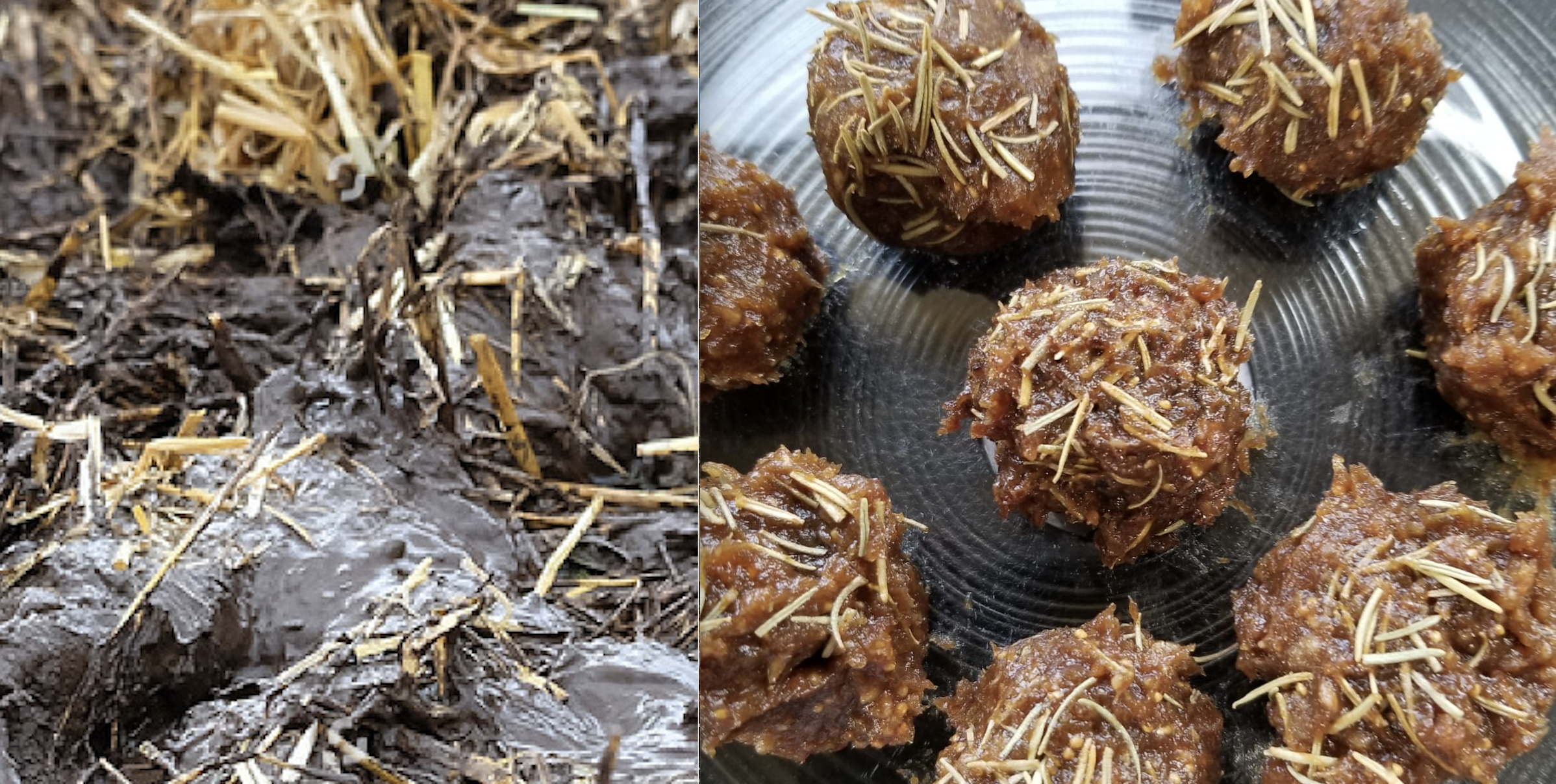
The enslavement of the Jews in Egypt was not the classic type of slavery in which the master buys and sells slaves in the market. Jews were treated like enemies, and potential traitors who would be willing to join the enemy in the event of a war. The Egyptians must have felt therefore that their job was not only to take revenge. Jews, ultimately, had to be eliminated. How could they do that? Our text briefly mentions that the Egyptians assigned the Jews to the most unhealthy and risky jobs. Tasks that nobody else in Egypt was willing to do. The example mentioned in the Tora is “chomer ulbenim”, mud and bricks. Probably the most exhausting and lethal job in Egypt. These mud-bricks were made by mixing the mud with the Nile’s silt, and perhaps with manure, stirring it with their hands and feet for 4 or 5 days, until the it reaches the point of fermentation. Then, the straw is mixed into this mud to make the bricks stronger, more solid and durable. All this work was done in the swamps of the Nile, a river infested with crocodiles, hippos, mosquitoes; and under a scorching desert sun that burned the skin.
Maimonides explains that the Sages introduced the Mitsva of Charoset to bring to memory these terrible times. The brown paste recalls the color and texture of the mud. The vinegar the bitterness or tears. And the tebalin, edible herbs or spices , cut in thin and long pieces, which were part of Maimonides’ Charoset recipe, remind us visually of the straw mixed in the mud, a national memory of a slavery that we can not forget.
GENOCIDE
Understanding the nature of what the Charoset represents (the mud-bricks) is key to comprehend the ultimate goal of our slavery in Egypt. Same as in the Europe of the Shoah, in Egypt, we were treated as enemies. A Jewish life in Egypt, like in Europe, had no value. Not even labor value. Jewish slavery in Egypt can only be understood when thinking about concentration camps. Those who were not killed upon arrival had to work endlessly. In those camps there were no infirmaries to care of the sick or wounded laborers. If they got sick they were executed, or left to die. And were then replaced by the next prisoner. In Egypt and in Germany, there was an endless supply of Jewish workers. Jews were absolutely disposable.
The prisoners were “used” as free laborers until they died of hunger, disease or exhaustion. Jewish prisoners were deliberately subjected to the most dangerous and unhealthy jobs, such as the extraction of slit from the Nile or coal from the Mauthausen mines. Because for Germans as well as for Egyptians, the aim was not the product of the Jew’s labor. The ultimate goal was the final solution. This type of labor with purpose to kill has a unique name in Hebrew: “abodat parekh”, and it has a unique name in German: Vernichtung durch Arbeit, “extermination through work”, an expression that to the best of my knowledge, was used exclusively to describe the practice of the Nazi’s in concentration camps, killing the Jewish prisoners by means of forced labor.
In this image you can on the left side a picture of mud mixed with straw, used for mud-bricks, and on the right side a picture of the Charoset I made following Maimonides recipe to visually represent our slavery in Egypt (I used Rosemary’s leaves).
What does the word Pesach really mean?
ועבר ה’ לנגף את מצרים וראה את הדם על המשקוף ועל שתי המזוזת ופסח יהוה על הפתח ולא יתן המשחית לבא אל בתיכם לנגף שמות יב: כג
ופסחתי עליכם. אין פסיחה אלא חייס, שנאמר כצפרים עפות כן יגן ה’ צבאות על ירושלים גנון והציל פסוח והמליט ישעיה לא
Mekhilta d’Rabbi Yishmael 12:13
PESACH, MATZA, MAROR
Rabban Gamliel says that there are three words which must be exposed in the Seder to fulfill the minimum obligation of teaching our children the story of our Exodus from Egypt: Pesach, Matza and Maror.
Maror represents the taste of slavery.
Matza, the taste of freedom; obtained through Divine intervention.
But what is Pesach?
What does “Pesach” mean, and what does it teach us today?
Pesach was a sacrifice, an animal offering. But unlike the sacrifices mentioned in our week’s Parasha, Vayiqra, the sacrifice of Pesach had a very unique purpose. A lamb, a young sheep, had to be sacrificed by the Jewish slaves in the 14th Of Nissan and the Jews had to mark the doorposts of their houses with its blood. Jewish houses with the blood in the doorpost will not be affected by the plague sentencing the first-born to death.
MENTAL FREEDOM:
This Pesach sacrifice represents what the Jewish people had to do to deserve their physical freedom. And this is why.Sociocultural changes usually take many years or decades to occur. In the case of the Jewish people, it all happened in just a few hours. On the 10th of Nissan, God ordered the Jews to take a sheep and sacrifice it on the 14th of Nisan. Remember, that the Egyptians worshiped many animals because they believed animals possessed some supernatural powers given by the gods. Sheep, especially the adult male called “ram”, represented virility and the power of procreation. The Israelites were now facing a serious challenge. God told them to take one of the Egyptian “gods” and sacrifice it, roast it and eat it! And by doing so the Israelites would prove toGod, but mainly to themselves ,that they were “free” of the idolatrous culture of the Egyptians. On the other hand, bear in mind that we Israelites lived completely integrated into the Egyptian society for 210 years! And there were obviously influenced and exposed to all the kinds of superstitions of the aboda zara (idolatry) society. Killing a lamb, therefore, represented an extraordinary difficult choice, an extraordinary act of courage. After all their own masters considered the ram “a god”! And if a slave naturally fears his masters, how much more he would fear his master’s god! In the eve of Pesach, however, the Jewish people overcame their psychological fear, choose to follow HaShem’s command, and sacrificed the lamb. And in that one single act they freed themselves from the culture of idolatry and superstitions. That night, by doing the Pesach sacrifice, we Jews abandoned Egypt mentally, and we showed HaShem that we were ready to follow Him.
PROTECTION:
All the above refers to the Pesach sacrifice. But we still need to understand the meaning of the word “Pesach”. In English Pesach is usually translated as “Passover” (i.e., passed over, skipped), meaning that when HaShem was causing the death of the Egyptian firstborn , He passed over the houses of the Jews and did not affect them. However, according to Rabbi Menashe Ben Israel (1604-1677) and other commentaries, the idea of “Pesach” in the Tora is a little deeper, and at the same time, less known. In his opinion, the word “Pesach”, and its verb “Pasach”, should not be understood as “passed over” but as “protected”. The Targum Onkelos translated “pasach” for chayis cared for, watched, protected. Even the septuagint translated “pesach ” as protected. Also the Mekhilta says: en pesicha ela chayis. (see yeshaya’hu 31:5, and Tehilim 61:5). What did really happen in Pesach? Did God “passed over” the houses of the people of Israel while He was killing the first born egyptians, as the English word Passover seems to mean?
Accordingly, this is then what happened: HaShem unleashed the tenth plague, an epidemic that the Tora calls “mashchit”, which caused the death of the firstborn (See Shemot 12:13 and 12:23). HaShem “Protected” (pasach ‘al) the Israelites’ houses, which were marked with blood on the doorposts, and did not allow this deadly plague to affect the Jewish firsborn. The most important idea of “Pesach”, therefore, is to remind us that God constantly and directly protects the people of Israel. We celebrate this supernaturalprotection the night of 15th of Nisan, the night of the Seder. This night is also known in the Tora as lel shimurim, lit. “The Night of Protection”.The survival of the Jewish People challenges statistics and logical predictions. The most persecuted human group in the history of mankind exists thanks to God’s miraculous and permanent protection. And that is what we celebrate in Pesach.
כימי צאתנו מארץ מצרים הראנו נפלאות
NISAN: The First Month and the Month of Miracles
חזרנו לקרוא החודשים בשם שנקראים בארץ בבל, להזכיר כי שם עמדנו ומשם העלנו השם
רמב”ן שמות י”ב , 2
The month of Nisan (pronounced Nisán, not to be confused with Níssan, the Japanese automaker!) begins today. In the Hebrew calendar there are 12 months (or 13 when it is a leap year). The month of Nisan is the first of the 12 months of the year, but the new year does not begin in Nisan. In the Hebrew calendar the year begins in the seventh month, the month of Tishri. . January, on the hand, is both, the first month of the months and the first month of the year. A the first month of the months which is not the first month of the year, is a concept that does NOT exist in the Gregorian calendar.
Why is Nisan the first month of the months?
SPRING TIME
Nisan, in Israel and in the northern hemisphere, marks the beginning of spring. And that is how the Bible refers to this month, Chodesh haAbib, the month of spring. The name Nisan also comes from “nitsan”, that in Hebrew means to flourish, since in this month the trees begin to produce their green leaves and their flowers. And it is for this reason that during the month of Nisan we say a special blessing, Bircat haIlanot, the blessing when we see a blossoming fruit tree (See here).
REDEMPTION FROM EGYPT
According to our Sages the main reason why Nisan was assigned as the first month is so that every time we would mention one of the Hebrew months we would remember “Nisan” and the great miracle of our redemption. Thus, when we mention for example “the third month” of the year, we remind ourselves that this is “the third month, counting from Nisan, the month of our redemption”.
Something similar, although in the opposite direction, occurs with the days of the week. The days of the week in Hebrew, as in Portuguese, are counted with ordinals: first day (יום ראשון) for Sunday; second day (יום שני) for Monday, etc. And when we count the Hebrew days we do it in reference to the Shabbat: when we say in Hebrew Yom Sheni (Monday) we are declaring that “today is the second day, counting towards the Shabbat”. So every time we mention a day of the week, we remember Shabbat (in Rabbinical Hebrew we say explicitly שני בשבת).
But why is that in Hebrew we still continue to count the days of the week with ordinal numbers, but we do NOT count the Hebrew months with their ordinal names anymore? Why nowadays we call the months with names? Nisan, Iyar, Tishri, etc. And these names, are not even Hebrew names! They are actually the Babylonian names of the months! .
Why did we Jews abandon the Hebrew Biblical names of the months and adopted the non-Jewish Babylonian names of the months?
THE RETURN OF THE CAPTIVITY FROM BABYLON
Ramban (Exodus 12: 2) explains that we do this to fulfill one of Yirmiyahu’s (Jeremiah) prophecies. Yirmiyahu had the difficult task of announcing to the people of Israel that if they persisted in their abandonment of the Tora, the Bet haMiqdash and Yerushalayim would be destroyed, and that the survivors would be taken as captives to Babylon. And the Bet haMiqdash was destroyed… But he also comforted the people. He announced that HaShem will miraculously bring them back from Babylon to the land of Israel. This great miracle happened 70 years after the destruction of the Bet haMiqdash, when the Persian emperor “Cyrus” (Koresh), announced that HaShem revealed Himself to him and ordered him to rebuild the Bet haMiqdash in Yerushalayim. Cyrus invited all Yehudim who wanted to return to Israel under his protection. And this was considered one of the greatest miracles ever in Jewish history! Moreover, it was compared with the miracle of the exodus from Egypt. Yirmiyahu prophesied the return of the Jewish people to their land saying (16: 14-15) that when HaShem will bring the Jewish people from Babel back to Israel: “… it will no longer be said that HaShem … brought the children of Israel out of the land of Egypt. [The miracle of the exodus from Babel will be so great that from that time] it will be mentioned and remembered that HaShem [miraculously] brought back the children of Israel [to their land] from the land of the north (= Babel) and from all the countries where they had been exiled. “
Our sages understood that this does not mean that the memory of the miraculous redemption from Babel will replace the memory of the redemption from Egypt. Nonetheless, in order to remember the great miracle of the redemption from Babel, ever since we came back to Israel in the times of Cyrus, we began calling the Hebrew months with the Babylonian non-Jewish names. Each time we mention the name of one of the months of our calendar, we remember our exile in Babel and our miraculous redemption from that second captivity.
Today, in 2020, I have one special prayer to Bore Olam. There is a pasuq that says: ובא השמשש וטהר , that refers to the time of sunset and how the Kohen could then be purified. But this pasuq could be also understood like: “when the sun comes, it will purify”… the environment. I hope and pray that this coming spring, the UV rays of the sun, and the higher temperatures that we will have BH with the proximity of the summer, will bring an end to the present pandemia, and we will be soon go back to our routine, Minyanim, Bate Kenesiyot, jobs, communities.
After all, the month of Nisan, the month of Spring, is also the month of the greatest miracles.
Dedicated to the Refua Shelema of all the Cholim and bikhlalam “SHEMUEL BEN RIBKA”.
Why is this Seder different from all other Seders?
BACK TO THE FUTURE
Not a single person on this planet knows what will be happening in the coming days or weeks. But most probably we will be forced to celebrate Pesach in extraordinary circumstances. Mainly because for many families, this will be a Seder without the grandparents, and for many grandparents, a Seder without the joy of their grandchildren.
PESAH IN THE BET HAMIKDASH
It’s ironic because Pesach is always related to “family”. In the times of the Bet haMikdash Pesah was not celebrated only in families but in Chaburot. “Chaburot” were groups of 50 to 100 people that included 1- the nuclear family: father, mother, children. 2- the extended family: grandparents, uncles, cousins. 3- guests And 4- neighbors, who would join together to participate in the same Korban (pesach sacrifice). Additionally, at this time of year, the houses in Yerushalayim were open to all those who needed a place to stay. Why? Because the Korban Pesach was sacrificed in the Bet haMikdash. Therefore, thousands of Jews living outside Yerushalayim would come to the Holy City for Pesach, and needed a place to stay. With no hotels around, most households would host many people – strangers, entire families- coming from other areas. Jewish homes were open for all to come, and when there was no more room available at a house -the exception, not the rule- it was announced by hanging a red cloth on top of the door. We remind ourselves of this great act of collective hospitality when we declare at the beginning of the Haggadah an open invitation for everyone to join and celebrate with us: כָּל דִכְפִין – יֵיתֵי וְיֵיכֹל, כָּל דִצְרִיךְ – יֵיתֵי וְיִפְסַח everyone who wants to participate in our Pesach Seder, should come in and join us.
PESAH IN QUARANTINE
Naftali Bennet, the minister of defense of Israel, explains in a viral video that the single most important insight to bear in mind through this coronavirus pandemic, is that grandchildren need to stay separated from grandparents. FOR THE PROTECTION OF THE GRANDPARENTS (see video at the end of this article). This is sad, but very important because we need to protect the elders, who are the most exposed to the effects of this virus. So, some of us will be forced to stay away from some of our grandchildren this year…. What can we do to alleviate these painful separation? Let me tell you what I’m planning to do:
√ First, I will decorate my dinning room with my grandchildren’s pictures and I will be thinking about them, especially as I sing MA NISHTANA…
√ I will write and email them some short explanations of the Haggadah, in a very clear language. I will ask my children to read it aloud for them on my behalf, if possibly, imitating my voice.
√ I will buy (online) a special gift for this year’s Afikoman, I will take a picture of it, and send it to them via Whatsapp in advance. I will assure them that grandpa will deliver the gifts as soon as this thing is over!
√ I will ask my grandchildren to send me some artistic pictures of the 15 steps of the Seder: one with the cup of the Kiddush, another one doing Netilat Yadayim, or holding and breaking the matzot, etc.
√ I will also ask my grandchildren to draw for me each one of the 10 plagues. They can also make some “masks” (now everyone knows about “masks”) which I will happily wear while reenacting the Makkot!
√ And finally, I will also ask from them to write me a personal letter with their greetings, their wishes, their feelings….
√ I will print all of these out and have everything ready, next to my Haggadah.
TO ZOOM OR NOT TO ZOOM?
And one more thing: I am going to use ZOOM or Facetime! Wednesday April 8th, ONE OR TWO HOURS BEFORE PESACH BEGINS, I am going to invite my grandchildren to a Pre-Seder, we will review each of the steps of the Seder together, we will sit reclined and sing together Ma Nishtna, Abadim Hayinu, Dayenu and all their favorite songs. This educational Seder will end before Mincha. And before Passover begins, I will send them virtual kisses and hugs, and I will say goodbye to them until Saturday night!
I know that seeing them on screen before Pesach is not the same as having them by my side during the Seder.
I know that it is not the same as having all my grandchildren next to me . But, THIS TOO SHALL PASS. And we must visualize that Be”H next year, hopefully in the Bet haMikdash! we will celebrate Pesach all together again with ALL our loved ones: parents, children, uncles, aunts, cousins, grandparents and grandchildren,
AMEN!
The Kaddish
1. As it has been already explained, it is a special merit to have the Tefilot taking place in the house of mourning during the first seven days. However, if it is not possible to get a Minyan in the house, the Abel must participate in the Tefilot in any of the available daily Minyanim of the community. The main participation of the mourner in the Tefilot is by reciting the Kaddish.
2. With the exception of the Kaddish said at the cemetery (Kaddish deHu atid, which is said by the Abelim only at the time of burial) the Kaddish has no direct reference, to death, mourning or tragedy. The main theme of the Kaddish is the Greatness of God, who conducts the entire universe, and especially each individual human being, with careful supervision. In the Kaddish we admit that no matter how much we try to praise God, His true praise will always lie beyond our comprehension. The Kaddish ends with a petition to God to grant us peace, livelihood, good health and forgiveness.
3. The Kaddish is said several times during the services. The mourners normally say two Kaddishim: one is call “Al Israel” and the other one: “Yehe Shelama”. Kaddish Yehe Shelama is also known among Ashkenazim as Kaddish Yatom, the Kaddish said by the orphans. In our community, Kaddish Yehe Shelama it is said two times in Shacharit (the morning prayers), at the end of the services, before “Kave” and after “alenu leashabeach”, and one time in Mincha (afternoon prayer) and ‘arbit (night prayer), before Alenu Leshabeach.
4. Kaddish al Israel, also known as Kaddish deRabanan, includes an additional paragraph in honor of Torah Scholars and their students. This Kaddish is said after a Mishna or any other rabbinical text is studied or recited, and/or after a debar Torah (words of Torah). In Sephardic communities, this Kaddish is usually introduced by the recitation of the Mincha “Rabbi Chananya ben Aqashia omer….”.
5. The Abelim for father or mother say the Kaddish for twelve months, counting from the moment of burial. However, at the end of the eleventh month, the recitation of the Kaddish is interrupted. There are some communities in which this interruption takes one or for two weeks, and others who suspend the Kaddish for the whole twelfth month. In some communities, the Kaddish ‘al israel is still recited by the mourners, even when no other Kaddish is recited.
6. When reciting the Kaddish all the Abelim should say it in unison, following those who said it slower. So not to leave behind those who do not say it as fast. The Kadish is recited exclusively in the presence of a Minyan, a quorum of 10 men older than 13 years, but a boy younger than 13 can say Kaddish for his parents together with other Abelim or with the Chazan.
7. Women do not say Kadish. In case that the deceased did not have sons, or that there are only daughters left, a third-person can be given the duty to recite the Kaddish. When it is not possible for a male to say Kaddish, or when a woman wants to elevate the memory of her loved one, there are other ways to honor the memory of the deceased that Rabbis would recommend. Studying Torah or hosting a class of Torah is probably one of the highest honors one can pay in Jewish tradition.
THE CASE FOR ISRAEL. Class # 1
This is the first class, from 1840 until 1915. We dicussed how Zionism in embebed in our Tora; how the reform movement in 1840 tried to formulated a Mosaic religion withiut a state. 1860-1880 antisemitism pushing Jews to Erets Israel. The numer of Jews in Israel by 1905. The first colonies. 1905-1914 Israel under Ottoman Empire. First World War
MAIN POINTS OF DISCUSSION
We are a Nation. Not a religion! What is the difference?
The Reform Movement: Religion without a State.
Secular Zionism: State without Religion.
TORA: Both are completely integrated. Ribbi Yehuda Bibas.
TESHUBA: Debarim 30. “Collective Return of the People of Israel to God’s Land. Return to Israel is returning to God.
THE JEWISH POPULATION IN ISRAEL FROM 1880
Before 1880: less than 25,000 Jews lived in the land of Israel.
Between 1880 and 1914: tens of thousands of Jews came from Europe escaping persecutions.
Rabbi Isaac HaCohen Kook (1865-1935): the power of anti-Semitism.
Sir Moshe Montefiore (1784 -1885) and the Baron of Rothschild (1845 – 1934): Building colonies and creating jobs.
Eliezer Ben-Yehuda (1858-1922): The miraculous revival of the Hebrew language
1904 a huge wave of Jewish immigration to US. Over 2 million Jews immigrated to the United States,1.5 million of them to New York in 20 years. No support for a Jewish State. Not internal, not external.
FIRST WORLD WAR
What happened on July 28, 1914?
1916: Prime Minister Herbert Henry Asquith and Prime Minister David Lloyd George.
The difference between Catholic and Protestant attitudes to Jews
Arthur Balfour (1848-1930)
Hayim Weizmann (1874-1952)
On April 23, 1920, San Remo, The League of Nations
Rabbi Moshe Mitrani and what to do in times of an epidemic.
THE LIFE OF RABBI MOSHE
Rabbi Yosef de Trani (or Mitrani. Trani is a small town in Puglia, in South Italy, probably the family’s origin was from this city) escaped from Spain at the time of the expulsion in 1492, and reached Thessaloniki, Greece. There, in the year 1500, his son Ribbi Moshe was born. At the age of 18, Ribbi Moshe moved to Erets Israel and settled in the city of Tsefat/Safed where a small Jewish colony was developing; led by the well known Rab Ya’aqob Berab. By the 16 century, Tsefat became the most important Jewish center in the world. And the influence of the Rabbis who were there is still felt today. Rabbi Miterani was one of those influential Rabbis. He was also known by his acronym- Mabbit (מבי”ט (משה בן יוסף טיראני. Around the year 1530, Rabbi Miterani received his Semikha (a renewed rabbinical ordination) from Rabbi Yaakob Berab, along with Ribbi Yosef Caro, the famous author of the Shulhan Arukh. Rabbi Yosef Caro and Rabbi Miterani were inseparable colleagues and served together in the Bet Din (rabbinical Court) of Tsefat, the latter for 54 years. Rabbi Miterani succeeded Rabbi Yosef Caro as head of the Bet Din when Rabbi Caro died in 1575. Rabbi Miterani passed away at the age of 80. He left behind children who followed his rabbinical vocation and wrote several books. His most famous Halacha books are “Qiriat Sefer” and his responsa, “Shut Hamabit” . He also wrote a very particular book called BET ELOKIM, which I want to tell you about today.
BET ELOKIM The book is divided into 3 parts: the first part refers to Tefila- prayer. The second part is about Teshuba-repentance. And the third part, Yesodot- the ideas, beliefs and philosophical foundations of Judaism. In the first part, chapter 16, Rabbi Miterani refers to deber, that is, the deadly epidemics that occasionally appear in the world and affects cities, towns, countries, or in times of globalization- the entire planet. He first describes the most famous epidemics mentioned in the Tanakh. The plague in the times of Pinehas, when 24,000 people died . That of Qorah where 14,700 Jews died. And finally the epidemic that hit Israel in the time of King David, where 70,000 people died.
ADULTS OR CHILDREN? Rabbi Miterani then mentions the epidemics that plagued the world in his own time. Biblical epidemics affected mostly adult men. Death was immediate, sudden, and the plague was short. It could be over in a day. Plagues in Rabbi Miterani’s time, like in our times, were not sudden, but would last for weeks or even months. People died daily, and like David haMelekh himself (see Tehilim Psalm 30) some of those who became ill, recovered. The most dramatic thing that Rabbi Miterani writes is that the plagues and epidemics of his time affected mostly “innocent children” תינוקות של בן רבן. Similarly, the Spanish Influenza in 1918 affected mostly young adults and pregnant women. Today, despite the general madness, we have to be thankful that B”H children are not that vulnerable to this virus. Children and young adults can get the virus and might have symptoms of a common cold. But unlike what happens with the elderly, the young immune system of children and adolescents is effective and usually overcomes this virus.
DO NOT PUT YOURSELF AT RISK Rabbi Miterani says that unlike the divine plagues cited in the Tora, contemporary epidemics may appear to us to be a “natural” phenomenon. The Rabbi quotes doctors of his time who explained that “the rarefied air that one breathes makes one die”. But the final verdict, the Rabbi explains, then and now, is still in the hands of the Creator, as we say in the Tefilot de Rosh haShana. The Rabbi also criticizes those who take unnecessary risks, by negligently exposing themselves to contagion. ” וקצתם שאינם מחויבים אז בעונש ההוא אלא שהם מסתכנים בעצמם לעמוד במקום הסכנה ואינם ראויים לשיעשה להם נס ונדבק בהם החולי ההוא וה‘ יתברך יודע בחירתם וחותמם למיתה “Even if someone was not destined to die, if he stays in a dangerous place where he shouldn’t be, might not be worthy of a miraculous Divine intervention, and he might be condemn to die.” We must take Rabbi Miterani’s words into account and avoiding taking risks. Because today, even if the lives of children and young adults, B”H, are not in danger they can become carriers of this virus, and involuntarily spread it to the elderly by being in contact with them, or with someone who will eventually be in contact with elders. ANYONE CAN BECOME, ח”ו AN INVOLUNTARY POTENTIAL KILLER. Grandparents are the most exposed in this entire pandemic. And we must protect ourselves to protect them. This is very important to bear in mind, especially in our communities where staying in the family many times means staying with the “extended families”, grandparents, grandchildren, cousins, etc. WE ARE FORCED TO DO THE UNTHINKABLE UNTIL THIS PANDEMIC IS OVER: SEPARATE FROM OUR BELOVED FAMILY MEMBERS.
WHAT TO DO NOW? Although Rabbi Moshe leaves open the difficult eternal question of why bad things happen to good people, he explains how we Jews react in times of tragedy. He mentions the areas where we should improve: וירבה בתפילה וצדקה ותחנונים לפני הא-ל יתברך בתשובה ומעשים טובים In my own words, Tefila, praying to God, asking Him to heal those who are sick, and begging Him to protect those who are healthy. Tsedaka, helping and assisting with food, resources, money those who are most affected by this epidemic. Teshuba, repenting of our wrong actions. Trying to improve the observance of His Tora. Ma’asim Tobim, becoming better people. Better parents, better children, better spouses.
We pray that soon, B’H, this epidemic will be over and we will return to normality, which we will now surely value more than ever!
The Importance Of The Name “Jacobo”
בשביל שלושה דברים נגאלו ישראל ממצרים: שלא שינו את שמם, ואת לשונם, ואת לבושם
TETOUAN
To speak of my father, about whom I never dared writing until now; I must begin with my great-grandfather, and make a special emphasis on his name: Ya’akob Bitton z ”l. My great-grandfather (it is his picture you see photographed here) lived in Tetouan- a small city in the North of Morocco with a significant Jewish population. An official 1861 census reports that out of 11,000 inhabitants in Tetouan, 5,000 or 6,000 were Jewish. (https://avotaynuonline.com/2016/08/jews-tetuan-morocco-genealogy-iconography/). Tetouan’ Jews were direct descendants of those expelled from Spain in 1492. Spanish was the most common language in Tetouan but Jews had also their own Judeo-Spanish dialect: Haketia.
This is what I know about my great-grandfather. He lived in Calle del Tesoro # 2. He had a spices shop next to the market. And whenever someone needed paper to wrap the fish, they would get it from him. He was called “Brother Yaakob Bitton, the good one” (Hermano Yaakob Bitton, el Bueno) an honorific title in the Jewish quarter of Tetouan. Why? Because he was always reciting Tehilim and never spoke unnecessarily. This is all I know of my great-grandfather. Including one more detail: indirectly, he saved my father from assimilation.
SAN MIGUEL DEL MONTE
My grandfather Leon z ”l (Yehuda) was the eldest son of Yaakob Bitton. Born in 1895 he had to go out to work since a young age because poverty in Tetouan had turned into starvation. So terrible was the situation that at the age of 13 or 14 my grandfather had to travel alone to Argentina to send some money to his family. I don’t know how many times he traveled back to Tetouan. But I have the document of his wedding, civil and religious, that took place in Tetouan, in 1916. I believe after that, he never returned to Morocco. My grandfather Leon became a very prosperous businessman. He opened a network of clothing stores in various provinces of the country. And he settled with my grandmother in the city of San Miguel del Monte, a small town more than 100 kilometers away from Buenos Aires.
In that little town, to this day, there is absolutely nothing Jewish. There is no community, no synagogue, no school, no Kashrut. I think my grandfather was the only Jew in the entire town.
My father grew up there, and in his childhood, he never saw a mezuza in his house, he never ate Kosher, never learned Hebrew, never even heard a Kiddush. My grandfather’s legacy to my father were his Berit Mila and his name.
In the 1940s my grandfather became very wealthy and was the only person in his small town to own a car and a driver. My grandparents my father and his siblings lived and dressed like millionaires and were the celebrities of San Miguel del Monte.
LANGUAGE, ECONOMY, AND ASSIMILATION
My grandfather represented those thousands of Jews who, for mainly economic reasons, decided to live their lives on their own, with no Jewish community life. I am reminded of the differences between my paternal grandfather and my maternal grandfather, Abraham Faur, z ”l, who arrived from Damascus, Syria, around the same time, 1915. The most notable “advantage” my paternal grandfather had was that he spoke Spanish. And that advantage gave him access to business opportunities anywhere in the then rich country. But this “advantage” also precipitated his assimilation. My maternal grandfather, on the other hand, did NOT speak Spanish, only Arabic. And like 99% of the Syrian Jews who arrived in Buenos Aires, he settled in Barracas,near the port. He went through hardship and financial difficulties but always lived with the community, with other Jews like him, supporting each other.
What saved my grandfather from assimilation?
I believe that what saved my grandfather’s family from total assimilation was that his employees cheated on him and took all his businesses. My grandfather was literally left with nothing but debts. And he had to go to Buenos Aires in search of business opportunities and start from scratch. He never recovered his wealth but, providentially, my grandfather’sfinancial ruin brought my father closer to the Jewish community.
WHAT’S IN A JEWISH NAME?
What saved my father from assimilation?
The most important factor that kept my father’s Jewish identity alive was his name, “Jacobo”. In Argentina, only a Jew could be named “Jacobo”. My father told me that throughout his childhood and adolescence, all he wanted was to be like everyone else but his name gave his religion away. Because of his Jewish name he suffered mocking, bullying and hatred. He tried to change his name and begged his friends to call him “Juan Carlos”, but he did not succeed. At school or at work everyone kept calling him, “Jacobo”, laughing, reminding him that he was a Jew. When he arrived in Buenos Aires, he had no choice but to connect socially with the only people who were not going to bully him because of his name: his Jewish “brothers”. And one night, at a community party in Barracas he met my mom. And the rest is history.
The Sages explained that what kept the Jews from assimilating into Egyptian society, particularly in times of prosperity, was that the Israelites consciously preserved their language, their clothes, and their names, a lesson I will never forget.
In memory of my father, יעקב בר יהודה, in the day of his anniversary
KI TISSA: Coronavirus and Staying Calm. By Rabbanit Coty Bitton.