HAFTAROT BERESHIT
TEACHING OUR CHILDREN RESPECT & RESPONSIBILITY, recommended material for parents
RESPECT FOR POLICE
RESPECT FOR OTHER RACES
MARTIN LUTHER KING
CLASS # 2: Now you see me; now you don’t
AUDIO FILES
YALKUT SHIMONI 171
ויאמר אנכי אלהי אביך נגלה עליו בקולו של עמרם אביו כדי שלא יתירא. באתה שעה שמח משה ואמר עמרם אבי. אמר ליה הקב”ה אתה אמרת שאני אביך ואיני אלא אלהי אביך באותה שעה ויסתר משה פניו.
¿Era judío Cristóbal Colón?
EL APELLIDO
El apellido Colón o Colombo es típicamente judío. Viene del nombre o apellido hebreo Yoná (como “Rabbenu Yoná”) que significa “paloma” o en italiano, “colomba”. Recordemos también que uno de los rabinos más famosos de esa época, y el más importante jurista (poseq) rabínico italiano de todos los tiempos, se llamaba Rabbí Yosef Colón (mahariq, 1420-1480). En España, en uno de los más tempranos autos de fe (1461), fue quemado vivo Tomás Colón, junto con su esposa y su hijo, por cometer el delito de “judaizar” (=realizar alguna práctica judía, como encender velas o cambiarse la ropa un viernes por la tarde, o estar parado silenciosamente frente a una pared –recitando la ‘amidá, etc).
IDENTIDAD SECRETA
Por supuesto que, si Colón era judío, era de esperar que lo ocultara, especialmente si su intención era obtener el apoyo político de la corona de España para sus expediciones. En los tiempos de los reyes católicos Isabel y Fernando, ser judío no era un título que otorgara muchos privilegios en la corte española…. todo lo contrario. Muchos judíos, probablemente más de 200,000, vivían una doble vida. Ellos o sus padres se habían convertido por la fuerza desde que comenzaron los “progroms” en 1391 y vivían exteriormente como católicos, pero en sus casas, en el seno de sus familias, vivían como judíos, muchas veces arriesgando sus vidas. A estos judíos se los llamaba de muchas maneras diferentes: “marranos”, en el lenguaje popular, “conversos”, “cristianos nuevos”, “cripto-judíos” (judíos en secreto) o “chuetas” en el sur de España.
CERTIFICADO DE JUDEIDAD
Hay muchas evidencias que indican la judeidad de Colón, como su firma, etc.
Otras menos conocidas son:
1. En su testamento Colón dejaba el 10% de todos sus ingresos a los pobres y a las doncellas que estén por casarse. Estos gestos corresponden a dos preceptos muy importantes en el judaísmo, ma’aser kesafim, apartar un 10% de nuestros ingresos para caridad. Y dentro de la Mitsva de Tsedaqa, como dice el Shulján Aruj, el acto más meritorio y que tiene prioridad sobre cualquier otra noble caridad, es apoyar a las jóvenes que se van a casar y no tienen medios suficientes para hacerlo (hajnasat kalá, yore de’a 249:15).
2. Colón debía partir del puerto de Palos el 2 de Agosto de 1492. Ese año, el 2 de Agosto era el día de Tisha beAb, el día de duelo nacional del pueblo judío. Colón, por razones que nunca pudieron ser explicadas en términos climáticos, etc. embarcó a sus 90 hombres el 2 de Agosto, pero no partió del puerto hasta el día siguiente, el viernes 3 de agosto, media hora antes de que cayera el sol (comenzara Shabbat). “Casualmente” el 3 de Agosto era también el último día que el infame Edicto de Expulsión establecía para que los judíos eligieran entre convertirse o abandonar España…
3. Todos los financieros que apoyaban a Colon eran judíos practicantes o secretos. Los fondos para la expedición de Colón no venían, como dice la leyenda, “del dinero de las joyas que vendió la reina Isabel”. Colón necesitaba el apoyo político y legal de la reina para conquistar legalmente nuevas tierras, pero el financiamiento tenía que llegar de otro lado. Entre los judíos que apoyaban a Colón estaban por ejemplo, el célebre Rab Don Isaac Abarbanel, uno de los hombres más pudientes de España; el Rab Abraham Zacuto, el astrónomo más famoso de España en esos tiempos, que fue quien le entrego a Colón su astrolabio y su calendario Perpetuo, ambas herramientas nuevas y esenciales para la navegación. Otros donantes de Colón fueron los judíos conversos. Entre muchos otros Luis de Santangel y Gabriel Sanchez. Cuando Colón llega de su primera expedición escribe dos cartas de agradecimiento por el apoyo brindado: una a Sanchez y otra a Santanagel. Colón no escribió ninguna carta de agradecimiento a los Reyes.
Pero , ¿por qué los judíos y conversos españoles apoyaban a Colón?
EL PLAN SECRETO
En su “Diario del Primer Viaje” de 1492, Colón revela su increíble plan maestro. Allí Colón escribe que “con las ganancias de su empresa liberaría Hierusalem y construiría allí la Casa Sancta”. Esto lo dice Colón repetidas veces en sus diarios (ver aquí pag. 294). Lo que movía a Colón a conseguir oro y riquezas, según sus propias palabras, era su deseo de financiar un gran ejército de más de 100.000 soldados, liberar Jerusalem de mano de los moros y “construir allí la casa santa”. Para los cristianos, la conquista de Jerusalén se justificaba con el fin de liberar el santo sepulcro. En términos cristianos, la expresión “construir una casa santa en Jerusalem” no tiene ningún sentido… Evidentemente, como los judíos muy bien sabemos, la construcción de la “Casa Sancta en Hierusalem” no puede ser otra cosa que la construcción del Bet haMiqdash. La intención de Colón, y de los judíos que lo apoyaron con tanto entusiasmo era que con los fondos obtenidos se conquistara Jerusalem y los judíos, incluyendo a los 800,000 judíos que abandonaron España el mismo día que Colón partió del puerto de Palos, pudieran finalmente tener su propia tierra, volver a su hogar, Israel, y ver reconstruida allí su “Casa Sancta” (בבי”א). Esta fue y sigue siendo, la mayor aspiración del pueblo judío, y por la cual, hasta hoy seguimos rezando.
Rab Yosef Bittón
El Rab Abraham Zacuto y Cristóbal Colón
Hay muchas historias fascinantes sobre la contribución del Rabino Abraham Zacuto a las expediciones de Cristóbal Colón. Sabemos que Colón conoció y utilizó las tablas marítimas de Zacuto en su expedición a las Indias (=América ). El Rabino Zacuto también fue instrumental en la obtención de los fondos para las expediciones de Colón y fue él quien introdujo al desconocido Colon a Rabí Don Isaac Abarbanel, quien arregló la primera audiencia entre el famoso navegante y los reyes de España.
Las tablas astronómicas de Rabí Zacuto salvaron la vida de Colón. Durante el último viaje de Colón a America, en febrero de 1504, su pequeña flota quedo abandonada en Jamaica, donde los nativos no querían darle alimentos ni a él ni a sus marineros. Las tablas predecían que el 29 de febrero 1504 habría un eclipse lunar. Colón reunió a los caciques nativos y los amenazó diciendo que si no le entregaban alimentos él haría desaparecer la luna. El eclipse asustó a los nativos y desde entonces respetaron a Colón y le dieron todo lo que necesitaba
Judaism and Aliens
https://youtu.be/ws8-RmyjUTM
Sources for class with rabbi Bitton at Shaare Rachamim, Monday October 11, 2021 / 5782
A problem of language:
MAIMONIDES . MISHNE TORA: Yesode haTora 1: 2.
HOMEWORK
Get Familiar with
GET FAMILIAR WITH JACQUES VALEE:
The Physics of information : You will need this to better understand Maimonides.
GENDER POLITICS, recommended material for parents
RAPID ONSET GENDER DYSPHORIA
ARE MEN AND WOMEN EQUAL?
CAMILLE PAGLIA
IRREVERSIBLE DAMAGE
RECOMMENDED BOOKS


DIFFERENCES BETWEEN GENDERS


BERESHIT: What was God’s last creation?
MATTER: “In the beginning God created heavens and earth”. That is, He created matter: (1) The microcosm, molecules, atoms, and subatomic particles, and (2) the macrocosm: 200 billion galaxies, with 200 billion stars each, with an inestimable number of planets around each star. Within this vast universe, there is a unique and singular celestial body: Earth, a planet located at an exquisitely fine-tuned distance from the sun: the precise distance required to have an average temperature of 14 degrees C, which allows for the existence of water in its liquid form.
LIFE: Then on the Fifth Day, after creating everything necessary to sustain life: Earth’s atmosphere, the oceans, the continents, the plants and fashioning the solar system, HaShem created animals. On that day HaShem created: reptiles, birds, arthropods, amphibians, and fish. What do they have in common, all these creatures? That they are oviparous (egg-laying creatures).
LANGUAGE: In the Sixth Day, HaShem created mammals. And in that same day, God created the first human being. A creature that shares many physical traits with other mammals, but it is distinguished from them by an element that makes it unique and categorically different from other living things: the neshama (soul). To understand what is the neshama, at its most basic level, I prefer to use the word “mind”. Which means: 1. The ability to think and to imagine. 2. Free will: the ability to obey or disobey God, the possibility to chose between good and bad, the ability to repent and ask forgiveness. 3. And one more very important element brought by Targum Onqelos: “ruah memalela“, human beings can “talk”, that is: think with words, enunciate sounds, or write signs, and combine those to create sentences and express ideas or emotions. Ruah memalela is the “linguistic intelligence” man was endowed with.
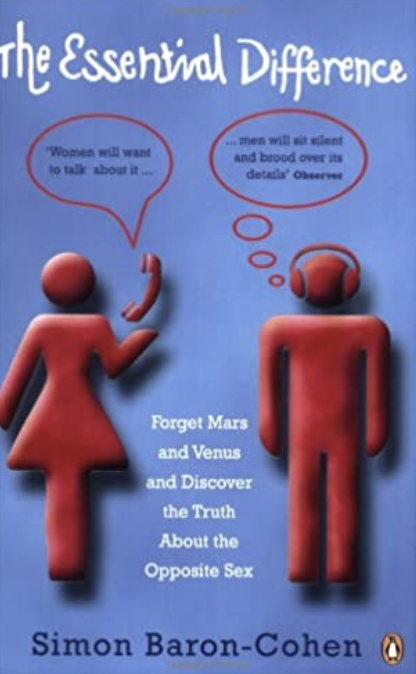
EMPATHY: The story of Creation follows a pattern a progressive (you could almost call it “evolutionary”) order, where each element that is created is greater than the previous, and inferior to the one that will follow. Now, the latest creation of HaShem was not man. The last thing HaShem created was “woman”. Within this scheme of “progressive Creation”, what is that characterizes women? What makes a woman different, in a sense, “superior” than man, in the context of the Creation narrative? Two thousand years ago, the rabbis of the Midrash gave a very compelling explanation. They said bina yetera nitena laisha, woman was given a “superior” intelligence (superior to man’s). What does it mean? Modern neuroscientist Simon Baron-Cohen, among many others, explains that the female brain is structured in a way that communication does not depend exclusively on language. Women are NOT limited to words (1) to express themselves and especially (2) to understand (decipher) what another human being expresses (this is what allows a mother to “understand” the needs of her baby, a being that for two years does not communicate through words). Women, says Baron Cohen, are able to “read” situations and understand what another person feels, wants or needs without the medium of words. More than emotional intelligence, I would call this capacity “communicative intelligence”. Or as Baron-Cohen says: “empathy” (superlative empathy!).Thus, reading between the lines of the story of Creation we can see that HaShem first creates matter, then life, then semantic intelligence and then empathic intelligence. We should realize that the more we understand the world around us, the better we appreciate the infinite wisdom of the Book of Books.
Preparing ourselves for Yom Kippur
We are just a few days away from Yom Kippur, the Day of Atonement, and probably the most important day of the year for a Jew.
In Yom Kippur we can not improvise. We have to prepare ourselves in advance. Besides knowing the details of the day of fast (who must fast, and who should not, and how to proceed when one does not fast, etc.) if we want to experience a “Day of Atonement” we have to delve first into the concept of Teshuba.
Teshuba, the repentance process, consists as per Maimonides of three or four (usually four) steps
1. Hakarat haChet. Recognize that we have done wrong. We must free ourselves from excuses, blame transference (blaming everyone of my mistakes, except myself) and acknowledge that we were wrong. We possibly damaged friends, colleagues and loved ones. And we probably betrayed our pact with HaShem. Without this recognition, repentance (or forgiveness) is not possible.
2. Tiqun. Repair. If we have not caused injury or damage to any individual, we can proceed to step 3. But if we are more humans than angels, and as such, we have done wrong to others (and it does not matter now if it was unintentionally or intentionally, or if the other deserved or not deserved) we must make every effort to repair the damage we have caused. Examples: If we have taken what is not ours, money or other material goods, we must return it. If you have personal debts, unpaid donations, etc. we should pay it NOW. If we hurt someone with our words, offending, speaking ill or making fun of someone, etc. we must arm ourselves with courage and ask forgiveness. If we do not have the courage to apologize personally, we must do it even by phone. Or even by email or WhatsApp. The main thing is that our apologies should not be half apologies, half excuses: they need to be very sincere and delivered with humbleness. Our sages say that if we do not repair what we did wrong to others, or if we did not apologize to those we hurt and offended, we will not be forgiven by God in Yom Kippur.
3. Viduy. In the process of Teshuba, the most important Mitsva of Yom Kippur is the Viduy or confession. On the day of Kippur we must confess before God, quietly, all sins we have committed to Him or to other people. It is very important to keep in mind (or make a super-private list of) the faults we have committed. According to our sages, recognizing our wrongdoings mentally is the first step of Teshuba, which is what we should do when we hear the Shofar in Rosh Hashanah. But this recognition can only be effective when we verbalize it. Only then, when we have the courage to articulate what we did wrong, we can overcome what we did wrong. That is why the sages explained that all I need in order to obtain HaShem’s forgiveness for the offenses I did against Him (shabbat, kashrut, tefila, etc.) is to recognize and articulate my flaws and faults. BH we’ll talk a little more in the coming days about the Viduy.
4. ‘Azibat haChet. the final test of a sincere Teshuba is change. Changing our behavior, our habits, improving the negative elements of our character, this is the final challenge of Yom Kippur. Contemporary Rabbis say that if we can change or improve even a small area of our behavior or personality, and this change is firm and solid, then Yom Kippur and the process of Teshuba were a great success, although there is still a long way to go. Recommendation: when choosing an area to change or improve, we have to choose something that is meaningful but also realizable, and not unattainable. The successful strategy consist of finding an area of change that represents a balance between the transcendent and the attainable.
1. The Prophet and His Mission
יהי דבר ה ‘אל יונה בן אמיתי לאמר
The book of Yona is read on the day of Kippur, in the afternoon, at Mincha prayer. It was chosen by our Sages for that occasion because the story of Yona is intimately related to Teshuba, repentance.
Yona lived around the year 800-780 before the common era, in the time of King Yerob’am ben Yoash. He resided in the Kingdom of Israel (also known as “the 10 tribes”, which separated a century earlier from the Kingdom of Yehuda). The capital of the Kingdom of Israel was the city of Shomron. The situation in Shomron was not very good from the religious point of view. The kings of Israel, in their eagerness for commercial and military success made alliances with neighboring peoples, such as the Phoenicians in Sidon (today’s Lebanon). These alliances had a cultural and religious negative impact . King Achab, for example, married the Phoenician princess Izebel, who imported to Israel and popularized the cult to the idol Ba’al. HaShem sent many prophets to warn Israel of their wrongdoings, such as Eliyahu haNabi or his disciple, Elisha. Yona belongs to this”school” of prophets. However, when God spoke to Yona did not ask him to speak to his own people.
קום לך אל נינוה העיר הגדולה
HaShem asked Yona to go to Nineveh — a non-Jewish metropolis — and communicate His word to the inhabitants of that city.
Nineveh was located on the banks of the Tigris river, today’s Mosul, in Iraq. Nineveh was not a common city. It was the capital of the first empire in history, Assyria, which at the time of the Prophet Yona was at its highest moment.
There is something else about Nineveh: the text calls Nineveh “hair hagedola”, “the big city”. We know that Nineveh was a big town (‘ir gedola) since it took 3 days go on foot form one end to the other. But what does the emphasis “the” big city mean? Today, thanks to modern archaeological discoveries —which again and again confirm everything that our Torah affirms — we can better understand the meaning of this expression. Matt Rosenberg, in a book called “Largest cities through history” indicates that until the year 612 BCE, Nineveh was “the largest city in the world”. It had an area of more than 7 square km. The Old City of Jerusalem, for example, had an area of 0.9 square kilometers, and Shomron, which was larger than Jerusalem, was about 1.5 square kilometers. In addition, Nineveh was a megacity in terms of its population, as it is mentioned at the end of the book. The Hebrew expression hair hagedola therefore does not mean just “a big city” but “the” largest and most important city” in the world. HaShem did not send Yona to deliver His message to a small town. HaShem sent him to the New York City of that time.
וקרא עליה כי עלתה רעתם לפני
In that intimidating metropolis, the Jewish prophet had to denounce loudly their deeds and warn them that God was not willing to ignore and tolerate their wrongdoing anymore.
What were the inhabitants of Nineveh doing wrong? As we will see later in chapter 3, the text talks about chamas. The word hamas in Hebrew means “corruption”: robbery, bribery, abuse, promiscuity, etc. The Torah uses this word to describe the crime committed by the generation of the flood. Our rabbis also observed that other expressions used both here and in chapter 3 regarding the iniquity of Nineveh (‘aleta ra’atam, nehepekhet, etc.) mirror the expressions used by the Torah in the story of Sodom and Gomorrah.
These subtle references leave no doubt about the Divine intention: Nineveh, like the human civilization at the time of the flood, or Sodom and Gomorrah in the time of Abraham, deserved to be destroyed and erased.
Now we can understand better why God sent Yona to Nineveh. The prophet of Israel had to go to the largest city in the world —which was also the most corrupt city—to publicly denounce in the name of God the general state of corruption and convince them to believe that if they would not repent the city will be destroyed. Was this a mission impossible?