THE BOOK OF ESTHER: An Introduction

MYTH or HISTORY?
Unlike some books of the Hebrew Bible which deal with poetry, like Tehilim, or literature, like Job (according to some opinions) the story that Megillat Esther tells, is absolutely factual. Two elements distinguish a true story from a myth or a fiction:  real stories are presented with references of time and space, while myths are not. Myths, we are told,  happened “once upon a time”, that is: in no specific time, and “in a far away kingdom”, in no specific place.  The story of Esther begins precisely by providing us these two coordinates: “This happened during the days of Achashverosh (Xerxes), the King that rules the Persian empire that stretches from India (in the East) to Ethiopia (in Africa)…. In the third year of his Kingdom” (that is 483 b.c.e. Xerxes reigned from 486-465 b.c.e).

MORDEKHAY, OFFICER OF THE KING
One of the elements that makes Megillat Esther unique is that it was not written by a King or a prophet in the sovereign Jewish State, like most of the Bible, but “under the auspices of a non-Jewish government.” According to the text, Esther and Mordekhay, an official of Ahashverosh’s government, wrote the Megillah at the time when Mordekhay was “working” for Ahashverosh. And for this precise reason some things which could be offensive to the sensibilities of the King or the Persian empire were not to be explicitly described. For example, the name of God is not mentioned in the entire book, because Persians had their own gods and religion. For that reason Jewish religious practices like “prayer to HaShem” is also omitted in the Megillah and the text uses instead “fasting”. Obviously, the text cannot directly or indirectly criticize the Persian sovereign. When the text describes Haman’s plan to exterminate the Jewish people, the King appears to be uninformed about the identity of the victims and mislead by Haman’s deception. Towards the end of the story the text subtly credits Ahashverosh with saving the Jews sealing the new decree.  Without realizing that the story of Esther was written in this diplomatic way, and under these circumstances, it is not possible to understand these and other anomalies in a Jewish book.

ONE TEXT, TWO AUDIENCES
There is something else, related to this last point, that makes Megillat Esther a particularly sophisticated book. Megillat Esther is the only book, that I know of, that has been written simultaneously for two different audiences: on the one hand it had to be written to be approved by the scrupulous censorship of the Persian empire, and on the other hand, it had to be understood and appreciated by Jews from all over the world. But how is it possible to do this? How can a text reveal and hide at the same time? I will try to explain it very briefly.  Hebrew terms have a more or less fixed semantics, like in any other language. But beyond the simple meaning of the words, Hebrew language is unique because it is intimately associated with the biblical text. And for any member of the Jewish people who knows (or should know) the biblical text by heart, words, especially infrequent words, and certain combinations or words, invite the reader to establish an immediate mental connection with other texts of the Hebrew Bible. Once the reference text is recognized, the words in the original text take on a new dimension. In this way the author creates two different messages in the same text: a simple one, for the reader who only understands Hebrew, and a more sophisticated one, addressed to the “linguistic community” who recognizes the Biblical text of reference.

WEALTH AND PRESTIGE
One example. The book of Esther begins with the description of a mega-party that lasted for six months and seven days, that King Ahashverosh offered for the generals, ministers and officers of the Persian empire. After giving us the technical details of the party, the text explains the purpose of this great celebration (1: 4): Ahashverosh literally wanted to “show-off his wealth and the glory of his kingdom (‘osher kebod malkhuto) in front of his guests. ” Ironically, on the very last day of the party, the King gets drunk, loses his wisdom, and makes a fatal mistake: he summons his wife, Queen Vashti, to expose her and show her beauty before the men. Vashti refuses to come and this creates a great scandal that ends up being a great humiliation for king Ahashverosh. The King wanted to gain fame and prestige by showing off his great “wealth”, but his lack of wisdom did not allow him to do so.

WISDOM AND PRESTIGE
The words “wealth and glory” used by the Megillah are easily identifiable by those who know the story of the coronation of another king, Solomon. When he is about to ascend to the throne, Solomon had a dream. In that dream God offers to fulfill any of his wishes. Solomon, who could have chosen wealth and glory, like all other kings, asks God to grant him “wisdom,” to guide his people with righteousness and justice. God grants him wisdom, and in the end God also rewards him with “wealth and glory,” ‘osher vekhabod.

LESSON LEARNED!
The contrast between these two kings could not be clearer. The Megillah, through these two strategic little words “wealth and glory”, points out that Solomon, who renounced wealth and honor and sought wisdom, in the end also obtained wealth and honor. On the other hand, Ahashverosh, who pursued wealth to gain glory and prestige, and did not seek wisdom, lost miserably his honor, and despite his great wealth he ended up making a fool of himself in front of his guests and the entire Kingdom.



ESTHER 3:14. Hiding Genocide From The King

 פַּתְשֶׁגֶן הַכְּתָב, לְהִנָּתֵן דָּת בְּכָל-מְדִינָה וּמְדִינָה, גָּלוּי, לְכָל-הָעַמִּים–לִהְיוֹת עֲתִדִים, לַיּוֹם הַזֶּה.

Hiding the inconvenient truth is an essential  part of any political plot.  


The plot of Megillat Esther, at least at its superficial level, only makes sense if we assume that King Ahashverosh was not aware of the content of Haman’s decree. As it happens innumerable times in all kinds of political contexts, monarchies and democracies, ministers, government officials or advisers many times hide certain information from the King or the president due to partisan or personal considerations, etc. Haman not only did not reveal to Ahashverosh that the edict he was about to write decreed the genocide of the Jews, but it is reasonable to assume that he did everything necessary to prevent the content of that edict from reaching the ears of the king.
Rabbi Almosnino in his masterful work Yede Moshé explains one of Haman’s tactics to hide the information from the king, and how this is mentioned with exquisite subtlety by the text of Megillat Esther.

KETAB HADAT
There were two official documents announcing the edict. The first document was the ketab hadat (chapter 3:14). This was the official text. And in spite of not having been written directly by the king, this document was officially read in presence of the king for final approval. According to Rabbi Almosnino, this document was drafted in an ambiguous way. It only mentioned that all the subjects of the empire “should be prepared for that day (להיות עתידים ליום הזה), the 13th of Adar”, awaiting new instructions. Like a modern ad saying “Save the date, instructions to follow” . This document was read publicly in Shushan as well as in all the cities of the Persian empire.
With this ambiguous document Haman made the king think that the final plan was to strip the Jews of their civil privileges and take their properties and assets (לאבדם), and thus, forcing them into slavery. In this way, Haman suggested, the Jews “who disobey the king’s laws and follow their own laws” would be punished, and an important sum of money would be collected for the royal coffers. Haman would have justified the deliberate inaccuracy of this text, explaining to the king that if the edict were more explicit, the Jews would discover its content, escape, hide their property, etc. and the surprise factor would be lost.

PATSHEGEN HAKETAB
The second document was the patshegen of the ketab hadat (chap. 3:13). The word patshegen means: explanation. This second text (called in that verse sefarim) provided the details of the implementation of the ketab hadat and explicitly mentioned that on that day it would be allowed, I quote, “in all the provinces of the king, to destroy, kill and exterminate all Jews, young and old , children and women, on that same day, the thirteenth day of the twelve month, which is the month of Adar, and their possessions would be given to looting. “ Rabbi Almosnino maintains that this second text was written by Haman, without the king’s knowledge, and was sent through the “couriers” to all corners of the empire, together with the first document. However, this second document was not revealed in the capital city, Shushan, to prevent its content from reaching the ears of the King. All that was announced in Shushan was the ketab hadat, the first ambiguous document that only mentioned the date for which citizens should prepare while waiting for new instructions. The king, thus, did not know the nature of Haman’s true plan.
In this way it is also understood why while in all the cities of the empire Jews were in mourning (Esther 4: 3), in Shushan, the city was perplexed, that is, people–Jews and non Jews– were confused because they did not know what that mysterious edict was about.

THE TWO DOCUMENTS
At the beginning of chapter 4, the Megilla says that Mordekhai knew about the content of the second document, and in verse 8 we can clearly see the distinction between these two texts. Verse 4: 8 says that Mordekhi “gave to Hatakh a copy of the Patshegen, [the instructions for the implementation of the] ketab hadat … mentioning the genocide of the Jews, so that Hatakh would show it to Esther, to be notified, and he will send her to see the King, to implore his favor and to intercede before him for her people. ” Mordekhai hands Hataj a copy of the second document,” the patshgen” of the ketab hadat, a document that the common people of Shushan did not know about, to show to Esther and proceed with the plan: INFORMING Ahashverosh that he had been tricked by Haman–who is hiding from the King the genocidal plan– and convince the King to prevent this.

The rest of chapter 4 deals with Esther’s difficulties in reaching the next step: getting an audience with the king.

To read the book of Rabbi Almosnino, see this link. The subject that we explained today is briefly mentioned on pages 452-453 (.רכו ע”ב-רכז)

To read the book of Rabbi Almosnino, see this link. The subject that we explained today is briefly mentioned on pages 452-453 (.רכו ע”ב-רכז)


PURIM: The Holocaust Averted

WHAT HAPPENED ON PURIM?
Tomorrow is Rosh Chodesh — the beginning of the month of Adar. In a few more days we will celebrate the holiday of Purim, remembering once again that some 2500 years ago HaShem saved us from total extermination. Many times we Jews were threatened by a people or a nation; at one time or another, as if threats or persecutions of Jews were something to be expected, common and that does not deserve to be questioned. In any case, what characterizes “Purim” is that at that time, ALL THE JEWS OF THE WORLD lived under “the same roof”: the Persian empire. In 475 BCE, Haman, the prime minister of the Persian Empire and the right-hand man of the Persian Emperor Achashverosh (Xerxes), issued a royal decree ordering the murder of all Jews in the Empire, promising those who participate in the massacres, that they could keep all the properties and money of the Jews. It would have been, God forbid, the first Holocaust. I clarify that I never use the word “Holocaust” lightly: and I reiterate that unlike 1940, in the times of Achashverosh, ALL the Jews of the world lived in the same Empire! Purim, then, could have been חס ושלום the “final solution” every anti-Semite dreamed of. And as it can be seen on the map, the Persian empire (in green) included, among other countries, Egypt, Turkey and also Judea or Yerushalayim where some 50,000 Jews lived at that time. In fact, there were no Jews outside the Persian empire. In that sense, the Jewish people never were so close to being completely erased from the face of the planet.
It is important to realize this historical fact to understand and appreciate the magnitude of the miracle of Purim (פרסום הנס) .
WHEN ALL JEWS WERE PERSIAN
But when and how did we become citizens of the Persian empire?
After leaving Egypt, our ancestors lived for approximately 800 years as a sovereign people in the land of Israel. In the year 586 B.C.E the Babylonian emperor Nebukhadnetsar conquered Yerushalayim. Hundreds of thousands of Jews were murdered or died of starvation or disease. The Bet haMiqdash –or Great Temple of Jerusalem– was destroyed and more than 50,000 Jews were taken as captives and taken to Babylon.
In the year 539 BCE, Cyrus (called Koresh in Hebrew) defeated and conquered the Babylonian empire and proclaimed himself the first emperor of the Persian empire.
In the year 538 B.C. An enormous miracle occurred: the Persian Emperor — inspired by God, as he himself admitted (see below)– invited the Jewish people to return to Yerushalayim and rebuild the Bet haMiqdash. This great event is recorded in the last words of the Tanakh, the Hebrew Bible (see below). Thousands of Jews arrived in Israel led by Zerubabel and in the year 516 BCE, after 70 years of exile, as Yirmiyahu had prophesied, the reconstruction of the second Bet haMiqdash began. Over time the Jewish population of Israel continued to grow and at the time of Purim, in the first half of the 5th century B.C.E. no fewer than 50,000 Jews lived in Israel.
A VOLUNTARY EXILE
But not all Jews resided then in Israel. As it is unfortunately the case today, although everyone “could” live in Israel, the majority of Jews continued to live outside of Israel. Why? Because the Persian empire –the largest empire that existed in the history of mankind– gave the Jews the extraordinary opportunity to establish an international trade network that was very successful. Jews spread to all corners of the Persian Empire, reaching what is now the area of India and China. Taking advantage of the fact that the trade routes were protected by the Persian imperial guard, they set up an international trade network dedicated to export and import between Indochina and the West. Through the famous “silk road”, also protected by imperial guards, they imported silk and gold from China and exported spices, dyes, jade, lapis lazuli, and glass.
THE FIRST BANKERS WERE JEWS
The fact that the Jews were, as Haman confirmed (M. Esther 3:8), “scattered among all the peoples of the Persian empire” facilitated this type of international trade, and allowed the Yehudim to establish a new industry, in which also excelled: credit. A document written (in Hebrew) by a Jew in today’s Turkey could be cashed in India, when presented to another Jew living there. And in this way, those who traded with the Jews, avoided the enormous risk of transporting money, silver or gold over hundreds or thousands of kilometers. There is also a fascinating archaeological evidence about a Jewish family of “bankers” of that time, the Murashu (for more information, see this article ).
All these data is important to understand
1. That Jews lived voluntarily scattered throughout all the confines of the Persian empire.
2. That as a result of the success of their trades, Jews did not intend to return to Israel for the time being. Although it should be noted that they supported Israel financially by permanently sending generous donations to the Bet haMiqdash and to the Yehudim who resided there.
3. That Haman’s edict was not going to affect only the Jews of one city or one province. On Purim, we celebrate that the elimination of ALL JEWS ALL THE WORLD was miraculously averted.
Rabbi Yosef Bitton
THE PROCLAMATION OF KORESH (CYRUS) FIRST PERSIAN EMPEROR
These are the last words of the Tanakh or Hebrew Bible
DIBRE HAYAMIM 36: 22-23
22 “In the first year of the reign of Cyrus, king of Persia, HaShem inspired the heart of the king so that he promulgated a decree throughout his kingdom and thus the word of the Lord that had been announced by the prophet Jeremiah would be fulfilled. Both orally and in writing, the king decreed the following:
23 “This is what Cyrus king of Persia commands:
HaShem, the God of heaven, who has given me all the kingdoms of the earth, and has commissioned me to build him a temple in the city of Jerusalem, which is in Yehudah. Therefore, whoever belongs to Yehudah, let him go [to Yerushalayim to build the Bet haMiqdash], and may [HaShem] his God be with him.”


Rabbi Abraham de Sola (1825-1882), a Forgotten Sephardic Giant

EARLY LIFE

Rabbi Abraham de Sola (1825-1882) was a Canadian Rabbi, an orientalist and a prominent scientist. Rabbi De Sola was recognized as one of the most influential leaders of Sephardic and Orthodox Judaism in America during the second half of the nineteenth century, at a time when the struggle between the Orthodox and Reform wings of the community was at an acute stage.

His father was rabbi David Aaron de Sola, a famous Rabbi from the Sephardic Community of London, and his mother was the daughter of rabbi Raphael Meldola (see this).

In 1847, at the age of 21, Rabbi de Sola arrived to Montreal, Canada from London and there he served as the rabbi of Shearit Israel, the Spanish and Portuguese community.   In 1852 he married Esther Joseph, whose father was one of the earliest Jewish settlers in Montreal.

SEPHARDIC TORA UMADA

Rabbi de Sola soon established himself at the center of Montreal’s English-speaking intellectual community. An eloquent and esteemed lecturer, and a man of broad interests, he frequently addressed the Montreal Mercantile Library Association, the Montreal Literary Club, the Numismatic and Antiquarian Society of Montreal, of which he was elected as an honorary member , the Montreal Mechanics’ Institute, and the Natural History Society, which he served as president in 1867-68, as well as several organizations associated with McGill University.

In 1848, Rabbi de Sola was appointed lecturer, and in 1853 professor, of Hebrew and Oriental literature at McGill University in Montreal –the most prestigious university in Canada– and he eventually became the senior professor of its Faculty of Arts.  1858, in recognition of his extraordinary scholastic accomplishments, McGill conferred upon him the degree of LL.D. (legum doctor, an honorary doctorate degree)

In 1873, by invitation of President Ulysses S. Grant,  Rabbi De Sola opened the United States Congress with a prayer. He became the first British subject to open the US House of Representatives with a prayer.

Rabbi Abraham de Sola was the pioneer in what is known today as Tora uMada’, the way of looking harmoniously at Science and Judaism.


HIS WORKS

He was a very prolific writer and the author of dozens of books, articles and papers.

Among them:

“Behemoth haTemeoth: the identification and classification  of the prohibited animals of Leviticus, Montreal, 1853.

“Biography of David Aaron de Sola”, the late senior Rabbi of the Portuguese Jewish community in London, Philadelphia, 1864.

“Critical examination of Genesis III”. 16; having reference to the employment of anæsthetics in cases of labour,” published in the British American Journal of Medical and Physical Science,  Montreal 1849.

Canada’s first Rabbi, Abraham de Sola, supported obstetric anesthesia in defiance of diehard traditionalists. Like Professor James Simpson, de Sola reinterpreted the key passage of Genesis 3:16. In three articles for a Canadian medical journal, Rabbi de Sola explains how God had ordained that woman should bring forth children with “toil” or “labour”, not pain. See here 

“The Day of Atonement: a sermon delivered in the synagogue Shearith Yisrael, Montreal,” published in Occident, and American Jewish Advocate Philadelphia, 1848.

“A few points of interest in the study of natural history,” Canadian Naturalist and Geologist, .1868.

“God’s judgments on earth: a sermon delivered in the synagogue ‘Shearith Yisrael’ Montreal, during the Asiatic cholera pandemic.

“Hebrew authors and their opponents,” Jewish Chronicle London, 1849.

“History of the Jews of Poland,” Jewish Messenger, New York, 1870..

“History of the Jews of France, after Bégin and Carmoly,” Jewish Messenger New York, 1871.

“An inquiry into the first settlement of Jews in England”

“Life and writings of Saadia Gaon,” Cincinnati, Ohio, 1881

“The Mosaic cosmogony,” (creation of the universe) Jewish Messenger,  March 1870.

“Notes on the Jews of Persia under Mohammed Shah” Occident, and American Jewish Advocate,  1850.

“Observations on the sanatory institutions of the Hebrews as bearing upon modern sanatory regulations,” Canada Medical Journal and Monthly Record of Medical and Surgical Science, Montreal,  1852.

“The revelation at Sinai; its possibility and necessity: a sermon delivered in the synagogue, Shearith Yisrael,  Montreal,

“The righteous man: a sermon commemorating the bestowal of public honors on Sir Moses Montefiore, by the city of London; preached in Montreal, on Shabbat Noah 5625 , Montreal, 1865.

“Life of Shabethai Tsevi, the pseudo-Messiah . . . ,” Jewish Messenger,  March. 1869.

“Yehuda Alcharizi and the book Tachkemoni,” Jewish Record Philadelphia,  1879.


A FORGOTTEN GIANT

Rabbi de Sola died in New York, in 1882 and was buried in Montreal.

There is a street bearing his name: Rue Abraham-De Sola , in Côte-Saint-Luc, Montreal.

For a more detailed biography of this exceptional Rabbi and for an impressive list of his articles and publications, see  this.


Rabbi David Nieto (1654-1720) and the Sephardic community of London

Portrait of Rabbi David ben Pinehas Nieto
 

FROM VENICE TO LONDON
Rabbi David Nieto was born in Venice, Italy, in 1654. At an early age he moved to Livorno, a very important Jewish community at the time, and devoted himself to Tora study. In Livorno, he acted as a rabbi, Dayan and also as a physician , since like many other rabbis in Italy at that time, he studied medicine at the University of Padua. Rabbi Nieto was also a Renascence man: a distinguished scientist, philosopher, physician, poet, mathematician, and astronomer. In 1702 at the age of 48 he was appointed Hacham of the Sephardic Community of London “Sha’ar HaShamayim”. Let us remember that the Jews were expelled from England in 1290, during the reign of Edward I, and did not return for centuries. In 1655, following the intervention of the famous Rabbi Manasseh ben Israel, Oliver Cromwell readmitted Jews to England and thus began what is to this day called the  Spanish and Portuguese Sephardic community and its splendid building, Bevis Marks, the oldest synagogue in England (see here). The first members of this Spanish-Portuguese community in London were mainly Jews from Amsterdam, including some highly successful businessmen. All members of the community spoke and wrote in Spanish or Portuguese, since they or their parents were originally from Spain or Portugal. Rabbi Nieto served the London community until his death in 1728. His son, Rabbi Isaac Nieto, was appointed in his place as rabbi of this community.

HIS FIRST BOOKS
Rabbi Nieto wrote his first book on one of his favorite subjects: the calendar. “Pascologia”, was written in Italian and explains the differences between the Gentile calendars—the Greek Orthodox calendar, the Roman calendars—and the Jewish calendar, showing the miscalculations in the gentile calendar since the first Council of Nicaea. (325) until 1692. Two years later, he published his book “De la Divina Providencia” which explains, among other things, that the concept of “nature”, as opposed to “Creation”, is a secular idea. The way Judaism explains the dynamic between God and Creation is by using the verbal construction “hif’il” which in Hebrew defines when: “A” causes “B” to produce “C”. Thus, for example, when the Sages describe that the Creator produces rain, they formulate the idea using this conjugation. For example: mashib haruach morid hageshem, which means: God (A) produces natural phenomena (“B”) —temperature changes, air pressure air, etc.— that produce wind and rain (“C”). What  Gentiles call “nature” is, so to speak, God’s modus operandi. But nature cannot be confused with God, as Spinoza, a contemporary of Rabbi Nieto, affirmed. This book was highly praised by the famous Hacham Zevi Ashkenazi and by Rabbi Hayim Yosef David Azulai (the “Jidah”).

THE SECOND CUZARI
Rabbi David Nieto’s most famous book is undoubtedly “Matteh Dan” (this is how the author writes these two words in Hebrew). It was written in a bilingual edition: Hebrew and Spanish, and published in London in 1714. In this book, Rabbi Nieto shows the authenticity of the rabbinical tradition (Tora SheBealpe) demonstrating the intellectual integrity of the rabbis of the Talmud. He explains that the disagreements among the Sages—supposed evidence of a faulty tradition—never focus on the essential laws of the Torah (shorashim or roots) but only on the details (anafim or branches) of the commandments, or the new halakhic cases that had no legal precedent. “Matteh Dan” is also called the Second Cuzari, and is divided into five chapters, which the author calls “dialogues”, because it was written in the style of imaginary conversations between a rabbi and a gentile king, “the Cuzari”, the king of the Khazars. Rabbi Nieto explains that the reason he modeled his book after the famous book by Rabbi Yehuda haLevi (1075-1141) is that “…the Cuzari demonstrates the truth of the Written Torah, and this book, which will be called the second Cuzari will prove the truth of the Oral Torah.”

MATTEH DAN, CHAPTER BY CHAPTER
1. In the first dialogue Rabbi Nieto demonstrates that the Oral Torah existed even before the written Torah, and that an oral tradition is always necessary to understand any written law.

2. In the second dialogue, in my opinion the most original of all chapters, Rabbi Nieto proves —using arguments and principles of history, psychology, logic, and even economics— that the Oral Tora could not have been made up by the rabbis, because it benefits no one, particularly the rabbis who transmitted and sanctioned it. Rabbinic Judaism, he says, was received and passed down from generation to generation with extreme care and devotion.

3. The third chapter talks about the different categories of laws included in the Oral Torah. He also explains what kind of laws there is consensus among the rabbis and what laws do not.

4. The fourth chapter shows that the Sages of the Mishnah and the Gemara (חז”ל) had a very deep knowledge of the sciences, such as medicine, physics, biology, etc.

5. The fifth chapter deals with the Hebrew calendar. Knowledge of the calendar demands a very deep expertise on astronomy, physics, mathematics, etc. Because it is the only calendar that combines the lunar year —354 days— with the solar year —365 days— and for this combination to be calculated accurately, it is necessary to know very precisely the exact duration of the moon’s cycle and the exact duration of earth orbit. Rabbi Nieto mentions that the Christian calendar, which is only based on the orbit of the earth around the sun, had to be modified by Pope Gregory XIII in 1582: that year the calendar jumped from October 4 to 15 in 24 hours, and all this was because gentile scientists did not have the exact information of the solar cycle. The Elders of Israel knew the lunar cicle with an accuracy of 5 decimal places, something that was recently confirmed by NASA (see Video below). This is perhaps the most technical chapter in the book, and one that can be difficult for the beginner, but it is a must-read for those who want to know more about the details of our Hebrew calendar, and understand the role that rabbinic tradition plays in it and in many other cases.

WHAT AUDIENCE IS THIS BOOK ADDRESSED TO?
Rabbi Nieto wrote this book for the bene anusim of his time, that is, for the descendants of those Jews who, due to the Inquisition in Spain and Portugal, lived as Christians for generations, and now returned to Judaism and wanted to know more about it. Many Bene Anusim were university students, professionals, doctors, and knew the Bible very well —because of their Christian background— but they were completely ignorant of the Jewish Oral Tora and its principles. Matteh Dan was also written with religious dissidents in mind, such as the disciples of Spinoza and Uriel de Acosta, who criticized Rabbinic Judaism.
Matteh Dan should be required reading for anyone beginning to study the Mishnah and Gemara, or for anyone wishing to understand the most basic principles of normative Rabbinic Judaism.


Rabbi Portaleone And The Four-Hours A Day Tora Curriculum

EARLY LIFE
Rabbi Abraham Portaleone (אברהם משער אריה , 1542-1612) was born in the city of Mantua (Mantova), Italy. The family of Rabbi Abraham was in a comfortable economic position and that allowed the family, among other things, to provide the children with the best possible education, both in Tora and secular studies. The young Abraham began studying Tora with his father, as was the tradition at that time. Then, his father hired for him private tutors who were great Tora luminaries, like Rabbi Moshe Kazés,  and Rabbi Ya’aqob MiPano. He also studied in depth the books and ideas of Maimonides with Rabbi Yosef Sinai. His rabbinic ordination was given to him by his mentor, Rabbi Abraham Provenzal, who was  his constant source of inspiration (רבו המובהק). With him, Rabbi Portaleone emphasizes, he had the merit to study Gemara, that is, the Talmud. Seemingly, this observation seems to be an unnecessary emphasis, unless we remember that the endless persecutions that Jews had to endure in Christian Europe included the confiscation and burning of every copy of the Talmud that the Church and its officers were able to find.  In 1553, for example, the Inquisitors confiscated every copy of the Talmud and in Rosh Hashanah of that year ( September 9th) the Talmud and many other Jewish books were burnt in the Campo dei Fiori. In 1559  by the order of Paul IV, one of the most antisemitic Popes ever,  Jews had to deliver their Talmud or risk to be expelled and their properties confiscated. From April to May of that year, the Church burned between ten and twelve thousand volumes of the Talmud. Thus, throughout the remainder of the sixteenth-century, a complete edition of the Talmud could not be found anywhere in Italy.

DOCTOR IN MEDICINE

Parallel to his Tora studies, the young Rabbi Portaleone studied medicine. For Sephradic and Italian rabbis, practicing medicine became the source of a dignified income. The Portaleone family already had four generations of doctors. Rabbi Provenzal himself taught the young Abraham the basics: physiology, sciences and Latin, the language of academic studies. After three years of intensive studies, Rabbi Portaleone received his Doctor of Medicine degree from the University of Pavia, a city near Milan, at the age of 21 (sic!). In his book Shilte haGibborim he asserts that even during those years that he studied medicine intensively, he never spent a day without studying Tora. And he credits his consistency in Tora studying to the inspiration of Rabbi Provenzal.   At the age of 24, he received his license to practice medicine from 35 doctors in the city of Mantua.  At the beginning he worked under his father in his medical practice and little by little he replaced him, since his father was no longer in good health. In those days, Jewish doctors were forbidden to treat non-Jewish patients, unless they had special permission. In 1573 Pope Gregory XIV granted Rab Portaleone a special dispensation to treat Christian patients. He was also appointed as the Doctor of Don Guglielmo Gonzaga, Duke of Mantova and at his request he wrote two treatises on medicine: the best known is a book about the healing properties of gold. Throughout his life, he also served as the Mohel of the community: he reports to have performed the circumcision of 360 babies. He was also the chief physician of the Jewish community, and treated the needy members of the community for free.

SHILTE HAGUIBBORIM
At the age of 62, Rabbi Portaleone was affected by hemiplegia, a paralysis on one side of the body.  He spent nine months prostrated in bed. When he finally recovered, he began to write his masterpiece, the book “Shilte haGuiborim”. This text was written as a guide for prayer and Tora study for his three children (two of them were also physicians), and most of the book’s 90 chapters are dedicated to the Bet haMiqdash, the Holy Temple of Jerusalem, since the prayers that we recite are actually instead of the service in the Holy Temple. The author describes the  building and architecture of the Temple, the utensils that were used there, the Divine Services, –the sacrifices, the incense, etc.   Shilte haGuibborim is perhaps the most comprehensive  book ever written on the Temple of Yerushalayim.  It is practically an encyclopedia of everything you need to know about the Bet HaMiqdash. In addition, the author enriches our knowledge comparing every topic with contemporary scientific, technical and historical information, showing that the Tora anticipated present knowledge by centuries or thousands of years.  The book describes, for example, the different songs the Levites used to sing, and the musical instruments used in the Temple; gemology and mineralogy to identify the stones Cohen Gadol used to wear. My favorite is the eleven chapters (78-88) he devotes to explore and identify one by one all the plant and species used in the Qetoret (Incense).

MAAMADOT

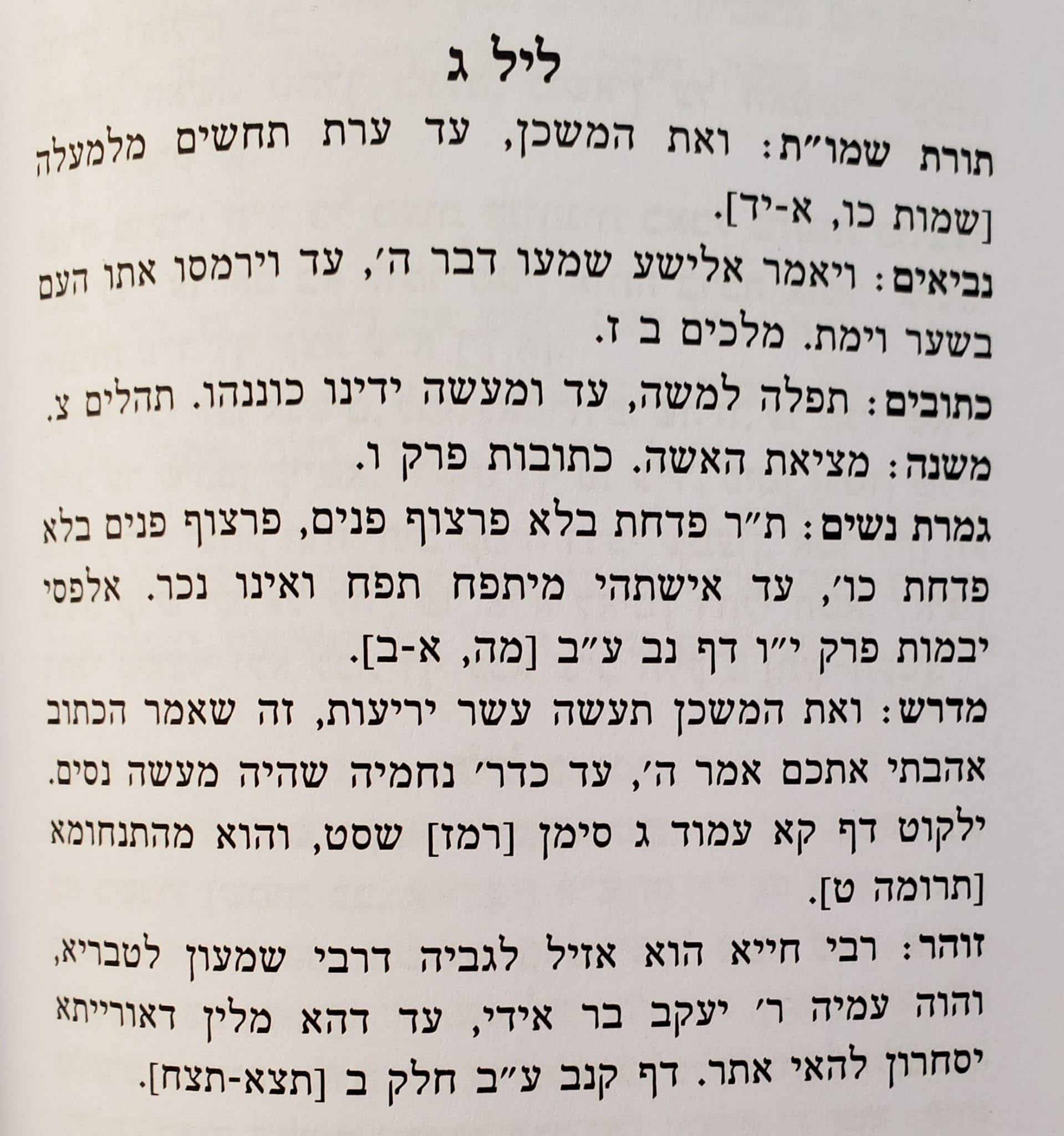
In the times of the Bet HaMiqdash, sacrifices and incense were offered daily. These tasks were performed by the Cohanim and Leviim.  The 24 guards of Priests who served two weeks every year, are known as Mishmarot.  While the services were performed in the Temple, inside the Temple (see main picture) and outside the Temple in towns across Israel. A select groups of volunteers, 24 groups, mostly Israelites, but also Cohanim and Levites,  participated in a different kind of Divine Service: devoting a few hours a day to intense prayer, fasting and Tora study: focusing each day of the week on a different text. These groups were known as  Ma’amadot  (see more information here).     Now, the sacrifices can no longer be offered because the Temple no longer exists, but following the Rabbis’ idea, we “replace” the sacrifices with our prayers: Shacharit, Mincha and Arbit.  From the other side, we don’t need to “replace” the Ma’amadot. Rabbi Portaleone was of the idea that we should “reenact” the Ma’amadot through an elaborated  study program, a Tora curriculum, of texts to be recited and studied every day.  He exhorts his son –and his readers– to adopt this regimen of four hours of Tora study, which he calls Ma’amadot.  The program includes: Biblical verses of the Parasha of the week, the Aramaic translation, texts from the Prophets, the Scriptures (Ketubim),  Mishna,  Talmud, Mdrash  and the Zohar. Unlike the famous book Hoq LeIsrael, Rabbi Portaleone’s daily program is divided into three sections or sessions: the first session, which should last for about two hours, should be studied in the morning (Shacharit). The second session, around thirty minutes, in the afternoon (Mincha). And the night session, which should take an hour and a half, is for the night (Arbit).  According to Rabbi Portaleone, these four hours –a sixth of our day– is the minimum time a Jewish individual needs to devote to the study of Tora.

LEILUY NISHMAT

Abraham ben Shafia Abadi z”l

We present here a text with an example of the Tora program corresponding to Tuesday of the week of Parsahat Teruma, night session.

How did I find this book?

This book came to my hands, literally, from heaven.  Around three months ago, there was a big snowstorm in NY on a Thursday.  The next day,  JFK Airport was closed, and hundreds of Shomer Shabbat Jews got stacked in NY for the weekend.  In our community we hosted for Shabbat 12 young boys and girls from Argentina. And we had also an unexpected guest of honor, also affected by the storm, who visited anonymously our Synagogue: Mr. Shlomo Neeman, the current mayor of Gush Etzion, Israel.  
Among many other things we discussed, he told me about a special Kolel in the city/settlement Karme Tsur, where he and his family live.  In this Kolel, Bet haBehira, the students study EXCLUSIVELY the laws and subjects pertaining to the Bet haMiqdash.     A short time later, Mr. Neeman graciously mailed me a copy of the book Shilte haGibborim, which I never knew before. It is a new modern and beautiful edition, published in 2010 by the Kolel Bet haBehira, with an introduction by Rabbi Shalva, the head of the Kolel, and commentaries by Rabbi Abigdor Neventzal, an expert in the field.
 I’m holding the book right now in my hands…. and I can’t let go! 
The book Shilte haGibborim is unique. I call it “the book of the future”, because B”H, very soon this book will probably serve as the main reference we will use for everything related to the Abodat haQodesh of our Third Bet haMIqdash, תותבב”א
If any reader wants to order the book, or make a donation to this wonderful Kolel כולל בית הבחירה,  you can do it via PayPal using the following email address of the Kolel: “kolelb@gmail.com”.


Rabbi Obadia de Bertinoro (1455-1515), from Italy to Jerusalem

EARLY LIFE

Rabbi Obadiah ben Abraham of Bertinoro, popularly known as “Bartenura”, was born in 1455. He was a student of the famous Rabbi Yosef Colon, מהרי”ק, and served as rabbi of his own city, Bertinoro, in the province of Cesena, Italy. There he also worked as a banker. His name is mentioned at the top of the list of bankers authorized to grant loans to Christian residents in an official document of Pope Innocent VIII, dated February 12, 1485. When he was 30 years old, he decided to move in the land of Israel, and settle specifically in Yerushalayim, Jerusalem. We have a detailed description of his journey to Israel – which in those days was neither easy nor short – since many of the letters describing this trip were found and published, as we will mention later on.

FROM ITALY TO JERUSALEM

At the end of 1486 he left his native city. He went through Rome and Naples and finally arrived in Palermo, Sicily, where he spent three months preaching every Shabbat in the local synagogue. In Palermo, the main city of Sicily, there were around 850 Jewish families, all living in the same quarter located in one of the best areas of town. The Jews were artisans, blacksmiths, and farmers. The community leaders of Sicily tried to convince him to stay as Rabbi of that Synagogue, but he refused the offer because his greatest desire was to settle in Yerushalayim. He traveled through Rhodes, Greece, and Alexandria, Egypt, where he arrived in early 1488. From Alexandria, he proceeded to Cairo, where Rabbi Natan ha-Kohen Shoulal, the chief leader of the local community (naggid), received him with great honors. There, too, he was offered to remain as a rabbi. The leaders warned him that the situation of the Jews in Jerusalem was very precarious and beyond repair, but he again refused. He continued his journey through Gaza— the fourth-largest Jewish city those days (after Jerusalem, Safed, and Hebron)—and from there he moved to Hebron. He finally arrived in Yerushalayim on the eve of Passover 1488. Upon his arrival, he was received by the rabbi of the city, and stayed in his house for the rest of the holiday.

IF I FORGET YOU, OH JERUSALEM…

In those years, Jerusalem was under the control of the Mamluks, a Muslim group that ruled the city until 1517. Some 4,000 Gentile –Muslim and Christian– families lived in Jerusalem. The local Jewish community numbered approximately 70 families.  The wealthiest had fled because of the exorbitant taxes demanded by the Mamlukes. The poor had nowhere to go, and their life became unsustainable. Many were literally starving to death. As Rabbi Obadiah writes: “in the city there were many widows and poor old men…those who have some bread to eat…are considered to be rich…”. Rabbi Obadiah also says that the person who received him upon arrival was an Italian rabbi, Ya’aqob from Colombano. This man was so poor that he was only allowed to eat a piece of bread during Shabbat, while during the week he ate the dried carob pods that the producers discarded after producing the famous syrup known as “carob honey” .

THE SYNAGOGUES

Rabbi Obadiah also writes that a few years before his arrival, there were some 300 Sifre Torah in Jerusalem—ritual Torah scrolls that are read in the Synagogue. But now, virtually all the Scrolls disappeared.   The “me’ilim” , that is, the decorated covers made of fine fabrics that wrap these scrolls; and the decorations that are often made of precious metals, also vanished because the synagogues were frequently looted. The only Synagogue that still operated in Jerusalem was very precarious, narrow and dark. However, the Rabbi notes that the prayers in Jerusalem were not comparable in their beauty to any other place he had prayed. On Saturday mornings, the rabbi writes, “the men rise an hour or two before dawn to sing the sweet religious poetry (baqashot), …then they recited the Kaddish, and then two officiants (chazanim) began the prayers with the recitation of the Shema Israel, at exactly sunrise (vatiquin).

CORRUPTION

Rabbi Bartenura complains about the widespread corruption in Jerusalem. He recounts as an example that a Muslim man killed his own mother, slashing her throat with a knife, in a moment of rage. When they brought him before the local court, the murderer justified himself by saying that he was drunk.  Muslims are forbidden by their religion to drink alcohol, and therefore they do not produce or sell alcoholic beverages. What was then the verdict of the judges? The court blamed the Jewish community for producing wine, which caused this man to get drunk and murder his mother. The judges, who were always looking for some economic benefit, imposed a fine of 6 gold coins on the Jewish community, and the murderer was set free.

FROM YOUR RUINS I WILL BUILD YOU. מחורבותיך אבנך

Rabbi Obadiah committed himself to restore Yerushalayim, and he did that, single-handedly. He had to personally take care of all the material needs of the community. Including, for example, digging the graves in the Jewish cemetery and burying the dead, as no one else was able, or strong enough, to engage in this religious duty. The Rabbi then decided to devote his effort to raising funds for the Jewish community of Yerushalayim. He reached out to his family, friends and acquaintances in Italy, who generously provided him with funds to assist the poor. Over time and thanks to the solidarity of the Italian Jews he was able to establish charitable institutions and medical infirmaries for the sick. Emanuel Hai Camerino of Florence, who was in charge of administrating Rabbi Obadiah’s state in Cesena, would send him 100 ducats (gold coins) every year, to which he added another 25 ducats from his own pocket for charity. In this way the Jewish community grew and also the name of the main benefactor:  Rabbi of Bertinoro. Since he arrived in Jerusalem, he brought a huge blessing to the entire city. Within a few years, thanks to Rabbi Obadiah’s excellent reputation for integrity in Jerusalem, Muslims themselves were turning to him for legal disputes and business disputes, knowing of his wisdom and honesty.

FROM CASTILE TO JERUSALEM

In 1492 the Jewish world was shaken by the news of the expulsion of the Jews from Spain. The refugees soon arrived in Turkey, Egypt, Safed and also in Jerusalem. Rabbi Obadiah became the spiritual leader of these refugees and helped them to support themselves, since they arrived without any money, and in order to stay in the city they had to pay the tax to the Mamluk government, the jiziah, which was charged per person. Which meant that with the increase in the Jewish population, the already heavy taxes increased even more. However, after a few years, these Jews who came from Spain with nothing but had professional skill and training in international trade, began to grow economically, and the Jewish community of Yerushalayim flourished again!  As a token of their enormous gratitude to their benefactor, the refugees from Spain and Portugal granted Rabbi Obadiah of Bertinoro the best gift he could have dreamed of: they built him his own Yeshiba (rabbinical academy) in Yerushalayim! The first Yeshiba in Jerusalem after 1200 years!

Rabbi Obadiah was named “abi hayishub”, patron or maximum benefactor, of the city of Jerusalem.

He died in 1515 and his body rests in the Har HaZetim (Mount of Olives) the most famous cemetery in Yerushalayim.

REVIVING THE HEBREW LANGUAGE

Rabbi Obadiah of Bertinoro is primarily known for his commentary to the Mishnah, a text that comprises the oral rabbinical traditions, that is, the application and details of all the precepts of the Torah. The Mishnah is usually studied in conjunction with the Gemara (Talmud) which explains, expands and elaborates on the details of the Mishna. Maimonides was the first rabbi to write an independent commentary on the Mishnah. Rabbi Obadiah followed his example and wrote his own commentary, which became the most popular for centuries. To the point that it is difficult to find an edition of the Mishnah that does not contain the “Bartenura commentary”.  Rabbi Obadiah’s book was more accepted than Maimonides’ commentary because Maimonides originally wrote his commentary in Arabic, while Rabbi Obadiah’s commentary was written in Hebrew.

Aside from this work, Rabbi Obadiah also wrote a book on Rashi’s commentary to the Tora called amar neqe (See Daniel 9:7, עמר נקא “Pure Wool”). He also wrote three long letters describing in detail his journey and containing invaluable descriptions of the people and customs of the Jewish communities he visited in his journey from Italy to Jerusalem. These letters were addressed to his father and his brother and were published under the name “Darkhe Ẓion” (the Roads leading to Zion, Jerusalem) and “HaMasa le-Eres Yisrael” (The journey to the land of Israel) .


MISHPATIM: Where you sit, matters

אם כסף תלוה את עמי את העני עמך לא תהיה לו כנושה לא תשימון עליו נשך
“When you lend money to (someone from) My people, the poor person who lives next to you, you shall not oppress him, and do not take interest from him.” Shemot 22:24
In this week’s Parasha we have a large number of Mitsvot. Many of these Mitsvot refer to our attitude towards our neighbor. Among them is our obligation to assist the needy.
AVOIDING ECONOMIC COLLAPSE
The rabbis described this commandment, tsedaqa, explaining that there are eight categories of material assistance to the needy. The highest category is to help someone to avoiding financial collapse before he gets in a situation where he needs to ask for assistance. How do you do that ? For example: a) Offering work to someone who lost his job. b) Lending money to someone who does poorly in his or her business preventing his falling.
Referring to this second case, the Tora says that the creditor should not charge interest for the loan. Also, the creditor can’t harass the debtor, for example, going to his home, or embarrassing him in front of his family or friends, etc.
MY PEOPLE
Another important lesson we learn from this verse is related to a little word that might go unnoticed. That little word is ‘ami (עמי), “My People”
God speaks of the poor as “My People”, that is, the people of God. The Sages said the following: “HaShem is very different from a human being. In most cases, when someone has a poor family member, he does not like to be seen with him or her, because he does not want to be identified with the poor …. but when someone has a rich relative, runs to him, tries to take a selfie with him,  and does everything in his power  to show himself in his company. Why? Because being next to the rich and powerful enhances his own image and prestige … HaShem acts differently: when He says “My People” he is not referring to the richest and most powerful but to ‘the poor among you’.   HaShem sides with the poor, identifies with them, and teaches us to do the same.
YOUR SEAT AND YOUR IMAGE
It is not uncommon, unfortunately, that people who are not wealthy – especially if they are publicly known to be needy- are literally left out. At a social event or a party, not many wants to sit at their table. Everyone wants to be in the company of the rich, and be seeing with them.
This pasuq teaches us that we should learn from God and treat those who have less than us with a special deference. Providing material help is important, but it is also important to help the feelings of this who have less than us!  This Pasuq teaches us that we should behave toward those who have less than us in the same way you would like to be treated if you were in that condition.
This beautiful verse teaches us a huge lesson.   HaShem is with the poor, and identifies His presence with the most needy. Being or sitting next to those who have less is a great act of humility, kindness, empathy and above all, an act in which we imitate one of the attributes of our Creator. 


HELBENA: The Qetoret and Chanel 19

קַח־לְךָ֣ סַמִּ֗ים נָטָ֤ף ׀ וּשְׁחֵ֙לֶת֙ וְחֶלְבְּנָ֔ה סַמִּ֖ים וּלְבֹנָ֣ה זַכָּ֑ה בַּ֥ד בְּבַ֖ד יִהְיֶֽה

God said to Moshe: Take aromatic spices, drops [of balsam], aromatic nail and galbanum, spices and pure resin; in an equivalent measure (Ex. 30:34)

IDENTIFYING THE HELBENA

The Torah mentions by name four of the eleven aromatic spices that were used in the making of the Qetoret, the incense that every day impregnated the Bet haMiqdash with a delicious perfume. This incense was offered (haqtara) twice a day in the Temple: in the morning and in the afternoon. The formula, an ultra fine grind powder made with the eleven spices was prepared once a year (pitum haquetoret). Previously, we mentioned the first two species that were part of the Qetoret: the Tsori and the Tsiporen (see below). The third species that the Tora mentions for the preparation of the Qetoret is the Helbena.

As we have seen with the other species, the rabbis (rishonim) did not always agree on the identification of these elements. In his book Shilte haGibborim, a monumental work devoted entirely to all the topics related to the Bet haMiqdash, Rabbi Abraham Portaleone (1542-1612) analyzes what the other sages before him wrote about the Helbena and concluded that in his opinion the Helbena is a plant known as «galbanum». Previously, he mentions the opinion of Maimonides, who says that Helbena is the sap with a honeyed consistency of dark color (debash shachor) that has a very strong fragrance. This sap come from a tree mentioned by Maimonides, whose name in Arabic is Mei’a, and is found in Greece.

SMELLS BAD…. UNLESS YOU MIX IT!

Rabbi Portaleone does something that he usually does not do: he rejects Maimonides’ opinion. Why? First, he identifies the tree Maimonides refer to, mentioning its Latin name “liquidambar orientalis”. Then, he explains that this cannot be the Helbena tree, among other reasons,  because the Sages of the Talmud made it very clear that all the species that were used to make the Qetoret have a very pleasant aroma, with only one exception: the Helbena. And the sap of the “liquidambar orientalis” has a really good smell.  His candidate for Helbena is then the galbanum. First because the name (helbena , galbanum) attest to a similar origin, which makes the identification much more secure.  Second, the rabbi offers a series of evidences and testimonies that help identifying the Helbena with the galbanum. One of the evidences he brings is that people whi live in the forest burn galbanum at night to protect themselves against wild animals. The smell of the burning galbanum is so bad that it drives away snakes and other dangerous animals. He also says that if a person rubs some galbanum on his body, the bad smell of this plant will protect that person from insects bites (see the entire analysis of the Helbena in Shilte haGibborim, Makhon Yerushalayim edition, 2009, par. 347-348).

MODERN USES OF GALBANUM

As the Rabbis explained, when galbanum is used or burned by itself, it produces a very unpleasant smell, but when added tpo the other aromatic substances, galbanum acts as a catalyst, and it actually increases their good fragrance, creating a pleasant and longer-lasting smell. Galbanum is obtained as resin from its flower. It has a sticky, rubbery consistency and a strong sour scent. It seems that galbanum is originally native to Persia. This large perennial plant can grow up to four meters in height. The strong, sour, but distinctive smell of galbanum is still used today in the contemporary perfume industry. Fragrances like “Must” by Cartier, “Vent Vert” by Balmain,  “Vol De Nuit” by Guerlain, and Silver Mountain Water by Creed, and Chanel No. 19.

THE LESSON OF THE HELBENA

The Sages learned and taught us a great lesson from the inclusion of the Helbena among the elements of the Qetoret. Since Biblical times it has been established that when a Jewish community suffers some calamity, such as epidemics or severe droughts, days of community prayer and fasting are declared. These fasts are kept on Mondays and Thursday, until the situation improves. In the treatise of Keritot 6b the Sages established a very interesting rule regarding who should participate in these public prayers. They said that these community prayers cannot be said exclusively by the most pious members of the congregation. In fact, they said that if these community gatherings and fasts do not include among their participants the “sinners” and “rebels” of the Jewish people, the fast does not serve its purpose.

כל תענית שאין בה מפושעי ישראל אינה תענית שהרי חלבנה ריחה רע ומנאה הכתוב עם סממני קטרת

The source that the Sages used for this idea of ​​inclusion is the presence of the sour Helbena among the sweet aromatic spices of the Qetoret. The Helbena by itself has a bitter and unpleasant odor, but when included, it brings out the best of all the other spices. Not all Jews are perfect, but they all need to be represented. The word TZIBUR in Hebrew “congregation”, hides an acrostic with the three categories of Yehudim that make up a congregation: צבור: צ = צדיקים, ב = בינונים, ור = שעים “  The righteous; the individuals of a level of average observance; and the transgressors ”

The fragrance of a community – its spiritual level – will not be ideal if it does not reach-out to those who have gone astray. We must try to bring closer and include those individuals as part of the congregation, through “teshuba” and community participation.  When we see all Jews as parts of the same body, that union strengthen us and makes us worthy of HaShem’s attention and blessing.


Summary of Parashat Shemot

This week we start a new book: Shemot, “Names” or Exodus.
THE BIRTH OF MOSHE
The Tora begins by mentioning the names of Jacob’s sons and telling us that his descendants were very prosperous, fruitful, and powerful in Egypt. But when a new dynasty arose, Pharaoh set out to weaken the Jews and impoverish them. First by taxing them and giving them hard jobs. But no matter how much he oppressed them, the Jews continued to multiply and did not lose their power. Pharaoh then orders the midwives to kill all the newborn Hebrew children. These women, however, defied Pharaoh’s order and let the children live. Pharaoh called the midwives to punish them for not following his orders. The midwives replied that Hebrew women were self-sufficient to deliver their babies. God rewards the midwives for their bravery and fear of Heaven. Pharaoh then orders all his people to take part in the elimination of the Jewish children by throwing all the newborn males into the Nile. When Moshe (Moises) is born, his mother feared for his life, and she puts him in a waterproof basket and leaves the basket floating in the Nile. Pharaoh’s daughter, Batya, is going to bathe in the Nile when she sees the child. She takes it and adopts it as her own. Miriam, Moshe’s sister, who is observing what is happening, offers to bring a Hebrew woman to breastfeed the child. Pharaoh’s daughter accepts her suggestion, and thus Yochebed, Moshe’s own mother raises her own son until he grows up.
MOSHE GOES OUT TO MEET HIS BROTHERS
Moshe lives in the Royal Place. Already an adult, Moshe leaves the palace and feels the suffering of his Jewish brothers. He sees an Egyptian beating a Hebrew. Moses kills the Egyptian and somehow Pharaoh finds out. Moshe is forced to flee. He escapes to Midian and stays there for a time. There he marries Tsipora, Yitro’s daughter and has two sons, Guershom and Eliezer.
GOD REMEMBERS HIS PROMISE
In Egypt the situation of Jewish slaves is getting worse. The people cry out to God and God takes into account the Covenant that he had made with their ancestors. Moshe is herding Yitro’s flocks in the desert when he sees a burning bush that was not consumed by fire. When he came closer to understand what was happening, God spoke to him. God tells him that He has seen the suffering of the Israelites and has decided to liberate them from the Egyptians through Moshe. God gives Moshe instructions. He must gather the Jewish elders and inform them that God would rescue them from Egypt and will bring them back to Israel. Then Moshe must speak to Pharaoh and ask him to let the Jews go out to serve God. However, God warns Moshe that Pharaoh will not agree to this request. But redemption eventually will come, after God punishes Egypt. God presents Moshe with three miraculous tests to perform before the Israelites, so they will believe that God has sent him. Moshe says that he is unfit for this difficult mission, due to his inability to speak eloquently. God then assigns his brother Aharon to be his spokesperson.
MOSHE GOES TO EGYPT
Moshe takes his wife and his two sons and heads to Egypt. God specifies to Moshe what he should say to Pharaoh: “Israel is my first-born son. Let my son go to serve Me. And if you refuse to free him, I will take your firstborn son.”  Moshe meets Aaron, who had come from Egypt to meet him, and together they arrive in Egypt. They gather all the elders and present the evidences that God had sent them.
MISSION NOT ACCOMPLISHED
Moshe and Aharon go to Pharaoh’s palace and ask him to let the Jews go. Pharaoh mocks them and instructs his taskmasters to increase the workload of the Jewish slaves. The Jews could not meet the new demands of Pharaoh and as a result they are brutally beaten. Moses, afflicted and confused, turns to God: “Why have you caused more suffering to this people? And what have you sent me for? For since I have spoken to Pharaoh in Your name, the people are suffering more…. “. God reassures Moshe and replies that he will soon see what God will do with Pharaoh, and that the Egyptian monarch will be forced to liberate the Jews.