My opinion on Israel and the end of democracy

SMOKE SCREEN?

Our beloved State of Israel is currently experiencing a deep crisis: weekly demonstrations against the government, media hysteria, and even threats of military desertion and civil war. This time, it is not an armed conflict with the enemy – though those never cease – but rather a civil protest from the opposition. The political mobilization has declared its goal to prevent “the end of democracy” in Israel. What is happening in Israel that poses such a danger to its democracy? The official story from the opposition is that the new Knesset, or Israeli Parliament, which took office a couple of months ago, is proposing a judicial reform that “will bring irreparable negative consequences to Israel in the short and long term.” Initially, I was concerned about these arguments, but then I applied some basic principles of Talmudic logic, which trained me to differentiate between empty slogans and solid facts. I realized that I have nothing to worry about regarding the future of democracy in Israel. So, what is this reform proposing? Listening to the opposition, one would think that there will be no more elections in Israel, women would not be able to vote, or every man will be forced to wear a Kippa. Let’s start by understanding a little better what the proposed judicial reform is all about. There are four points in the proposal, with the first and most fundamental being that future new judges of the Supreme Court of Justice of Israel shall not be elected through the vote or veto of the judges currently serving in the court. Instead, the new judges shall be elected by the representatives of the people, as happens in all democracies around the world. While there are other details, this is the most relevant issue. I know this because it is the first point the government is addressing, and it is the only point of the reform that the Minister of Justice, Yariv Levin, is unwilling to negotiate.

WHAT IS THIS REFORM GOING TO MODIFY?

So far, the system for electing new judges in Israel is “unique” in the democratic world, and not in a positive way. In Israel, sitting judges have the veto to disqualify new candidates. Let’s compare it with the United States, for example. When a vacancy in the Supreme Court opens up, new justices are nominated by the President, vetted, and after many investigations, inquiries, and public hearings, are approved by the Senate with a majority of at least 51 to 49. SITTING JUDGES DO NOT HAVE ANY SAY, VOTE, VOICE, OR VETO IN THIS PROCESS. On the contrary, they stay completely out of the picture to avoid the perception of a conflict of interest and to allow the process to be genuinely democratic and transparent. With some minor variables, this is the case in almost all democracies worldwide. In Israel, unbelievably, the judges of the Court (in Hebrew BAGATZ) choose the new judges. The candidates are not even subjected to a public hearing by the Knesset! Without these hearings, nepotism, conflict of interest, favoritism, lack of diversity, discrimination, or overrepresentation may remain undetected under the radar. This definitely non-democratic system has allowed the Supreme Court to multiply and perpetuate itself ideologically by choosing new judges from the same ethnicity, the same political views (socialism), and the same religious ideology (secular) as their predecessors. This outrageous fact was denounced a few days ago by the President of Israel, Isaac Herzog, who said that the Supreme Court of Israel “does not have significant Sephardic representation.” I add to that: neither religious nor conservative representation, although these sectors constitute more than 60% of Israel’s Jewish population today! It is clear then that the new proposal for the election of judges is anything but anti-democratic. But why, then, so much scandal? Who can be bothered by the fact that the Knesset would choose the future judges as the rest of the world does? Especially considering that the maximum term of a Knesset is four years (although in practice, it is much less; from 2019 to 2023, for example, the Knesset changed five times!). In four years, three or four judges may retire or resign and need a replacement. This implies that if this Knesset, which is leaning to the right, chooses judges of a similar ideology, the next Knesset, if it leans to the left, will be able to choose its left-leaning judges. And so, the balance is always restored. Take, for example, the case of the US Supreme Court. Thanks to its normal democratic system of electing new judges, a balance in terms of ideological representation will be achieved in the long term. Even if, once in a while, the US court might be 6 to 3, in the long term, the ratio between liberal and conservative judges will normally be 4 to 5 or 5 to 4. This is the new system that the new Knesset is proposing to elect new judges: a transparent and absolutely democratic one, while the present system is definitely not! Why so much noise, then? I believe this relates to the problems of the Israeli left-leaning parties.

IN THE BEGINNING

The modern State of Israel was founded in 1948 by European Zionist Jews who came from a socialist and secular culture. For example, David Ben Gurion and the vast majority of those who signed the Declaration of Independence of Medinat Israel belonged to socialist parties such as Mapai and Mapam, or Maki. These parties founded left-wing institutions such as the Kibbutzim, a social experiment unique in the world that put into practice the communist socio-cultural-economic utopia in its purest form. According to Professor Mordechai Kedar (see see this video for more detailed information), the socialist ideology that prevailed in Israel during those years was the reason why the Soviet Union was the first country in the world to vote in favor of the creation of the new Jewish State. The reason why Czechoslovakia, then a Soviet satellite, was the only country that supported Israel with planes and weapons in its independence war was that a socialist state was supporting another socialist state. Let there be no misunderstanding! The generation of Ben Gurion produced heroes who, although they did not have formal Jewish education, were responsible for founding the wonderful Jewish state that we enjoy today. They were the ones who literally gave their lives for Medinat Israel! We owe them a lot! And I believe that despite his secular ideology, David Ben Gurion did not ignore the religious magnitude of his political achievements. He said, “In Israel, whoever does not believe in miracles is not realistic.” And I think that part of that miracle is that the modern state of the people of the Book , the homeland of the people chosen by God, was founded by Jews who “declared” themselves atheists (I definitely believe that they were not!).

THE DISAPPOINTING PEACE PROCESS

Let’s now return to our topic. Over time, many changes took place in Israel that implied a transformation of the left and a sustained loss of its electoral strength. On the one hand, the fall of the Soviet Union and the collapse of communism meant that the Jewish state grew economically through booming capitalism. Mapai’s socialist platform was transformed, and the national Zionist values that characterized Ben Gurion were replaced by less Jewish and more universal ideas. On the other hand, there was the well-intentioned willingness to dialogue with the Palestinians and concede territories in exchange for peace. However, the average Israeli citizen became tired of seeing that concessions only brought more attacks and wars. Then came the Oslo fiasco and the unilateral withdrawal from Gaza, which did not bring peace to Israel but, on the contrary, led to suicide attacks, terrorism, intifadas, underground tunnels, missiles, etc. This is when many left-leaning pacifist Israelis, such as Gadi Taub or Professor Mordechai Kedar, who believed in a sincere peace dialogue with the Palestinians, woke up from their illusion and realized that they were naive. They understood that on the Palestinian side, there is no partner for peace and that the Palestinians do not want to coexist with Israel but to replace Israel. It was a tough blow for the left, as more and more Israelis leaned to the right or at least to the center. Extreme left-wing parties, such as Shinui, Chadash, and what is now Meretz, became less representative of Israeli society.

RETAINING BUREAUCRATIC POWER

Although the left has been in decline in terms of its electoral power, it has strategically consolidated itself within the “deep state” – powerful institutions that do not depend on the votes of the Knesset. The Israeli left now dominates universities, the air force, elite army groups like the 8200 intelligence unit, the media, the national prosecutor’s office, and the secret services, among others. In this way, the socialist elite has retained much of the power it lost at the polls. The most coveted prize, however, is the Supreme Court. In 1995, Aharon Barak, the President of the Supreme Court, a man who identifies with the left and has recently confessed his complete ignorance of basic Judaism, obtained the authority to veto any law issued by the legislative body, the Keneset, in a questionable manner (see this video). Barak proclaimed his Court of Justice as the supreme authority virtually “above the Keneset”. It should be clarified that Israel does not have a constitution; it is a parliamentary democracy, like England. Therefore, when the Supreme Court rejects a Kenset legislation  it is not because that law is against the constitution, as might happen in the US, for example. In Israel, the Supreme Court can veto a law even if it considers it “unreasonable,” giving the Court an authority higher than the Parliament and seriously disabling the Keneset’s ability to legislate. This does not exist in any democracy, whether constitutional or parliamentary). To ensure that the Court will not change its ideology in the future and will remain faithful to the left-wing philosophy, an election system was established in which current judges can veto new judges. In other words, Barak produced a “judicial coup or dictatorship” with the power to annul laws legislated by any Keneset, especially right-leaning, and maintained its hegemony, cloning itself regardless of the results of democratic elections. Today, according to Israeli journalist Jacob Vardugo, 12 o 13 of the 15 current judges are left-leaning judges! Can you imagine the US Supreme Court with 8 out of 9 conservative or liberal judges with a say and a veto in the election of new judges?

CHANGES
And this “inbalance of power” is exactly what the judicial reform promoted by Justice Minister Yariv Levin wants to modify. They desire a Supreme Court that reflects the serving Knesset, whether right or left. If the demand is for “democracy,” then let the left win the next elections and choose their judges, as it happens in all countries worldwide! Moreover, if the opposition wins the next election, they can “reverse” all the other points of the judicial reform. These are the rules of any healthy democracy. However, the Israeli left is losing more and more supporters, and in the last elections in November 2022, the left-leaning party Meretz did not receive enough votes. For the first time in history, it was left out of the Knesset! This is why the Israeli left is in “panic” mode, organizing demonstrations to survive the “mortal”- but democratic- blow it received . If this analysis is correct, then the opposition to the judicial reform proposed by the new government is not the reason for this crisis, but a new excuse used by the opposition’s leaders who are desperately trying to regain relevance. They are threatening a civil war, withdrawing money from Israel, and trying to destabilize or damage the current government. In this political war, the opposition has many allies in all media outlets, such as channels 11, 12, and 13 (except for channel 14), newspapers such as Haaretz, retired army generals formed with a socialist ideology, former Prime Ministers who have lost relevance, political rivals of Netanyahu, and even right-wing political adversaries. However, the opposition only has 47 seats (without counting the Arab parties) against the government’s 64, which means that the judicial reform will pass through a democratic vote.

FEAR OF DEMOCRACY OR FEAR OF DEMOGRAPHY?

As long as it is done within the law, every attempt to survive politically is valid. But it hurts me that the left is cynically spreading fake news and arguing that all these demonstrations are being held to prevent the “end of democracy”, when in reality, the goal is to prevent the “end of the left’s monopoly” in a Supreme Court that is anything but democratic. The left knows that if the future Supreme Court judges are democratically elected by the Knesset, they will lose representation in the long run. Why? On the one hand, as we have explained, the traditional left lost countless supporters who were disappointed by the insistence on negotiating peace with those who only seek our extermination. But there is something else: the left fears that they are irretrievably losing their electorate due to Israel’s demographic projection. In 1999, the experienced religious and political leader Menachem Porush said the following to his left-leaning political opponents: “Instead of protesting, secular Israelis should have more children… we… every time we open a Talmud Torah or a traditionalist or religious school, they immediately fill up! While secular schools are increasingly empty! Why don’t you help your own schools and institutions grow? Today, left-leaning Israelis have negative birth rates… the biggest tragedy you have created is this low birth rate… have more children and I assure you that we will get along just fine together…”. In the long run, this demographic projection that includes traditionalist and right-wing Israelis will render the left irrelevant. Once we understand this, we will realize that the left’s demonstrations and threats of civil war are not because they fear losing democracy, but because of the panic over the new demographic reality, which was already felt in the last elections. THIS IS THE REAL PROBLEM OF THE OPPOSITION.

In conclusion, no one wants a civil war. The new government does not want to impose religious lifestyles by force or limit individual freedoms. The goal of this new government and the judicial reform is precisely to respect the will of the people expressed through democratic elections, in the present and in the future. The judicial reform is a historic step towards a truly democratic Israel, proudly reclaiming its national and Jewish identity. Towards that end, with God’s help, the State of Israel is heading.



What should we do with our Broken Tablets?

אמר רבי יהושע בן לוי לבניו: הזהרו בזקן ששכח תלמודו מחמת אונסו, שלוחות ושברי לוחות מונחים בארון
ברכות דף ח

THE GOLDEN CALF

In this week’s Parasha the people of Israel experience one of the most shocking events in its long history: the worshipping of the Golden Calf. When Moses ascended Mount Sinai, he announced that he would return in 40 days. On the eve of the 40th day, the people thought that Moses would never return (“no human could survive without food or water for so long”, they thought). To replace Moshe, they built a golden idol, a calf, one of the many Egyptian idols. This was a great sin. Only a few days ago, the people of Israel witnessed the revelation of God at Mount Sinai. And just a few weeks before that, they saw the opening of the Red Sea and the ten plagues in Egypt. How could it be possible that now they come back to idolatry? Moshe was coming down the mountain with the Tablets of the Law, but when he saw the people completely uncontrolled and worshiping an Egyptian idol, he threw the Tablets and broke them into pieces.

THE OLD TABLETS

Today, I will not focus on the most important question: why Moshe broke the tablets? I want to concentrate on something that perhaps seems secondary or irrelevant but has a great moral lesson for all of us. As we know, later on, Moses received a “copy” of the Tablets of the Law. He placed a new set of Luchot in the Ark of the Covenant (Aron haBerit). And the question is: what happened to the first Tablets, the little pieces of the broken Tablets? Perhaps they were left there, abandoned, in the desert, because now they were useless tablets? Our rabbis explain that the remains of the broken tables were collected by Moshe and deposited in the Ark of the Covenant next to the new tables. A famous rabbi of the Talmud, Rabbi Yehoshua ben Levi derived from this action a wonderful lesson in respect to our elders. “This event comes to teach us, he said, that to an old man who lost his memory, we owe the same respect we gave him when his memory was intact …”.

BROKEN MEMORY

Imagine a great Tora scholar, someone who for years was invited to sit in the front row of the synagogue because he taught Tora to others and captivated everyone present with his eloquent speeches. And now, at his advanced age, he lost his eloquence and his memory because of senility or Alzheimer, and he can no longer speak or even reason as before. What type of honor do we owe him in his present situation? Do we still invite him to sit in the front row? Or perhaps, because he has lost his memory and does not have any content to give, we sit him in the back? The unequivocal answer of Rabbi Yehoshua ben Levi is: we honor him as we used to do. Why? Because this old man is like the broken Tablets of the Law, which were no longer intact, complete, or useful, and still Moshe placed the broken, “useless” old Tablets in the same honorable place: inside the Ark! This old man has lost his wisdom. His memory is now broken, and his mind is in one piece anymore. He no longer has any content to share with us. And still, we should honor him exactly as when his memory and mind were intact. This is a beautiful lesson of respect and honor that we learn from a seemingly superfluous detail of the Tora: the placement of the old, broken Tablets.

BROKEN MEMORIES

There might be another answer to why the old broken tablets were not discarded or buried but “treasured” alongside the new ones. Perhaps the Tablets were not buried to serve as a testimony for the Jewish people. So we Jews never forget the greatest sin we committed. And future generations don’t repeat the same mistakes. We all had bad experiences. We all make mistakes. But we should not bury these mistakes in our memory. Rather, we should learn from those negative experiences. With the right mindset, past negative experiences can be transformed into critical lessons for the future. And not only for ourselves but also for our loved ones, friends, and others in need.

In 2016, I received the devastating news that I had been diagnosed with stage 3 colon cancer. It was undoubtedly the most difficult and painful experience of my life. However, with the grace of God, I am now in a much better place and feeling healthier than ever before. Despite my hesitance to talk about it, I am writing about my cancer for the first time today. The memories of chemotherapy, nausea, pain, fatigue, hospital rooms, dizziness, fears, and tears still linger in my mind. Still, I try to keep these broken memories safely stored away from the world, and even my family,  in my personal Ark.

However, there are instances when I open up about my experiences. When? When I meet a community member, a friend, or anyone who was diagnosed with cancer, I feel compelled to show them my scar from the chemo port. The scar may be small, but it carries immense weight for the person sitting across from me. By sharing this vulnerable aspect of myself, I hope to show them that I truly understand what they are going through. As a rabbi, I have always tried to understand and support people with cancer. However, I now realize that despite my best intentions and genuine efforts, there are some things that can only be truly understood through personal experience. My own struggles have given me a new perspective and empathy for those who are facing similar battles. While I may still keep my broken memories in my personal ark, I am now more open to using them as a source of comfort and support for others who are going through difficult times.

.


Purim and the Shoah

DEATH SENTENCE

Purim took place in the year 474 BCE, which corresponds to the 12th year of the Persian Emperor Ahasuerus or Xerxes. At that time, all the Jews of the world lived under the same political roof: the Persian Empire. They were scattered throughout the empire and were very successful in international trade. But now, all the Jews of the empire had been sentenced to death, and the world would be Judenrein, “free of Jews.” This was Haman’s “final solution,” and it was the goal of the Nazis during World War II. Haman’s method of killing Jews was much more effective than the Nazis. Haman did not have to recruit any army or spend a bullet from the empire. His malevolent method was summarized in two words included in the edict: USHLALAM LA-BOZ, which means “on the 13th of Adar, every citizen of the Persian Empire can kill a Jew and keep all their possessions: their properties, their money, their businesses.” Thus, Haman encouraged neighbors to kill their Jewish acquaintances by offering them the guarantee that everything would be legal and the executioners would not suffer any consequences for their crimes. On the contrary, they could keep the belongings of the Jews they killed. The imperial army, it seems, would be on the side of the oppressors, preventing the Jews from defending themselves. All of this is expressed directly or indirectly in the edict Haman signed and sent in the name of King Ahasuerus. The decree established that the genocide of the Jews, the mega-execution of hundreds of thousands of Jews, including the approximately 50,000 Jews living in Israel – which also belonged to the Persian Empire – would take place on the 13th of Adar that year. The letters containing the royal edict were sent 11 months earlier, on the 13th of Nisan. After Esther and Mordecai thwarted Haman’s sinister plan and the evil Persian minister was executed, new official letters were sent announcing that the Jews could defend themselves against their enemies and the law would be on their side. These letters were dispatched on the 23rd of Sivan, 70 days after the first letters were sent.

COULD THE JEWS ESCAPE?

One of the themes that is most difficult to visualize in the history of Purim is what the Jews must have gone through once they heard the death sentence and during the next 70 days until the new decision of the king arrived. Midrashim tells that many gentile neighbors delighted in showing their sharp knives to poor Jewish mothers, warning them that they would use those weapons to kill their little children. The Midrash also explains that the oppressors celebrated the massacre in advance and distributed the property and possessions of the Jews in advance. Rabbi Yom Tob Tsahalon (1559-1619) in his book Leqaj Tob says – when referring to Mordecai’s urgency to cancel Haman’s decree, even though there were 9 months left for its implementation – that the Jews had been “detained” or “enslaved” with the collaboration of the imperial army to prevent them from escaping the empire or liquidating their property, or saving their lives before the 13th of Adar. Thinking about Europe from 1940-1945, it is not difficult to imagine the “concentration camps” where thousands of Jews were concentrated, waiting for the day of their execution. The Yehudim could do nothing more than pray and wait for a miracle, which in the end,  B”H happened. Rabbi Tsahalon also mentions an opinion that the enemies of the Jews had begun to kill the Jews as soon as they received the decree, interpreting the words “velo ya’abor” as authorizing them to kill Jews “until” the 13th of Adar. Hence the urgency of Mordecai and Esther.

HAMAN’S WILLING EXECUTIONERS

Who were the enemies of the Jews? Rabbi Abraham Saba (1440-1508) in his book Eshkol HaKofer suggests another theory: to kill the Jews, Haman recruited his own people, the Agagites, who were ethnic descendants of Amalek. These ancient “anti-Semites” believed, like the Nazis, that their existential mission was to destroy the Jewish people. The Agagites thus became the executing arm, like the SS, of their maximum representative: Haman. Rabbi Saba explains that once Haman was executed for treason, for hiding the details of his diabolical plan from the king, all those who collaborated with Haman would suffer the same fate as Haman: execution by order of the king, as they were considered accomplices in the crime of “treason against the state” committed by Haman. It is possible that the enemies of the Jews were “opportunists,” ordinary people who responded to Haman’s irresistible invitation to “kill a Jew and take his possessions.” During World War II, thousands of ordinary citizens of Poland, Ukraine, Hungary, etc. betrayed their Jewish neighbors to the Nazis to seize their homes and possessions. Once again, what happened in the Holocaust allows us to imagine with more realism what probably happened in Persia 2,500 years ago (for more information, read Daniel J Goldhagen: Hitler’s Willing Executioners).

On Purim, we celebrate that in the end, everything “turned upside down.” That is, not only were we miraculously saved from certain death, but we were also able to liberate ourselves from those who sought our destruction. The high number of oppressors who died – 75,800 – offers us an approximate idea of the magnitude of the Jewish genocide that, thanks to God, was avoided.


Rabbi Yom Tob Tsahalon, Purim and the First Book Ever Printed In Israel

EARLY LIFE

Rabbi Yom Tob ben Moshe Tsahalon (1559-1619), also known by his acronym מהריט” ץ, was a student of Rabbi Moshe of Tirani (the Mabbit) and Rabbi Moshe Alshekh haQadosh. He may have also occasionally studied under Rabbi Yosef Caro, author of the Shulchan’ Arukh. Rabbi Tsahalon was a child prodigy. From an early age, he combined advanced intelligence and a passion for studying Tora. Referring to his learning as a teenager with the Mabbit and Rabbi Alshekh, he writes: “I devoted myself to studying day, evening and night, without interruption … clinging to the dust of the feet of the two great luminaries [his two teachers] and drinking with thirst their words and teachings … [During all this time] I did not rest or pause, and I only dedicated myself to learning the Divine Judgments [the Laws of the Tora] …. I suffered the mockery of my friends when they saw that I was walking so strictly on these good paths; they despised me because I did not do what the youth of my age used to do … but I did not distract myself… since my greatest delight was always to learn Divine Laws … “The effort paid off. When he was 20 years old, the young Rab Tsahalon began to write his Pesaqim, his Rabbinic Responsa, something reserved for very experienced Rabbis. We have evidence that at the age of 25, some of the most important rabbis of that time, such as Rabbi Shemuel Yafe of Constantinople (1525-1595) consulted with the young rabbi Tsahalon, to know his opinion in all kinds of rabbinical jurisprudence cases. Some of those responses were published in the most famous book of Rabbi Tsahalon “She-elot Utshubot Maharitats”. The book was printed in Venice, Italy, in 1694  (see link here). It is a collection of Rabbinical questions and answers on Jewish rituals and legal issues.

THE BEST GIFT FOR PURIM

One of Rabbi Tsahalon’s lesser-known books, but perhaps the most fascinating, is a commentary on Megillat Esther, the Book of Esther. The name of the book is “Leqach Tob”. And I found three reasons to assert that this is an amazing book. 1. Rabbi Tsahalon published this book in the year 1577. Considering that he was born in 1559, he then published his book he was 18! Which means that he wrote this book in his early teens! 2. Like every good book, its content makes this work fascinating: Rabbi Tsahalon bases his commentary on two fundamental elements: 1. The Talmud, and the ideas of the Midrash. 2. a critical and meticulous analysis of the Biblical language, where many times a new meaning can be discovered by rereading the same text with a “mental microscope,” analyzing the almost imperceptible details of the Hebrew words. 3. Finally, what makes this book truly unique is that it was the first book ever printed in the land of Israel! Until the year 1577, there were no printing presses in Israel. Jewish books were printed mainly in Italy (Rome, Ferrara, Venice) or Turkey. The first printing press in the history of Israel was established in Tsefat by Rabbi Eliezer ben Ytshaq Ashkenazi, who had his printing in Lublin (Poland) and Constantinople (Turkey). Anyway, this printing press did not last long, only ten years, in which only the book of Rab Tsahalón and five other books were printed (for the fascinating story of the first printing press in Israel, see the article: “Early Hebrew Printing from Lublin to Safed: The Journeys of Eliezer ben Isaac Ashkenazi” by Marvin Heller). Rabbi Tsahalon dedicated this book to his father as a mishloach manot, a gift, for the festival of Purim.

We will now see a couple of examples of his commentary.

1. RELIGIOUS EXCEPTION One of the most famous questions of the Megilla is why Mordekhai refused to bow to Haman. The Midrash explains that Haman had an idol around his neck, which made him a representative (virtually: a human incarnation) of that god. Therefore, kneeling before Haman would amount to idolatry. The question then is: Why did Mordechai stay at the King’s court? If he could not kneel before Haman, he should have quit his position in the court and not endangered the lives of the Jews of the Persian empire! Rab Tsahalon (page 34) observed that the last words describing what Mordekhai did are written in the future tense, and although in many cases like this, this type of continuous tense can be understood as a past tense, in this particular case, we must preserve the original conjugation. Thus, this Pasuq would say, “All the officers at the King’s court knelt and prostrated before Haman because the King had so ordered … but Mordekhai should not kneel, and should not prostrate [before Haman]. “Thus, Rabbi Tsahalon explains that the King actually granted Mordekhai special permission, a religious exemption, so that Mordekhai, a known Jew, would not have to kneel before Haman. Obviously, Haman was not happy with seeing Mordekhay standing. Despite the King’s exception, Haman felt humiliated and plotted to kill the entire Jewish people in response. When he presents his case to the King, he never mentions anything about Mordekhay’s refusal to bow down. As far as I know, this explanation is unique and original to Rabbi Tsahalon.

2. 70 DAYS OF HORROR When you read the Meguilla, you must make a huge effort to visualize what the Yehudim must have suffered once the edict reached their residence. In that edict, there were explicit instructions that at a certain date, the 13th of Adar, all Jews would be killed. No appeals. No exceptions. This terrible letter from Shushan the 13 of Nisan (11 months before the “execution day”) and it must have arrived after a few days or weeks to all the corners of the empire. Now, what happened once the letter arrived? Were the Jews able to be free and continue with their lives? Were they allowed to escape? Part of the sinister plan of Haman was that the volunteer executors could keep the assets of the victims, so all the prospective volunteers wanted to make sure that no Jew escaped with anything of value until the day of the genocide. The Midrashim tell us that many times after the letter got there, many non-Jewish neighbors showed their sharp knives to the horrified Jewish mothers, mocking them and showing that they would kill their little children with those weapons. The Midrash also explains that the perpetrators celebrated in advance of the massacre and planned how to distribute the Jews’ assets and property possessions. In his book Leqach Tob, Rabbi Tsahalon explains that once the edict was publicly read, the Jews were “detained” or “imprisoned” (משועבדים), probably with the collaboration of the imperial army to prevent them from escaping with their possessions or from saving their lives. Thinking of 1940-1945 Europe, it is not difficult to imagine the “labor camps” where thousands of Jews must have been imprisoned and awaiting the day of their execution. The Jews were not able to do anything to defend themselves. They prayed, fasted, and hoped for a miracle. Which ultimately happened. It took 70 days until the second letter was sent from Shushan reversing the mandate and “condemning to execution all those who planned to execute the Jews”.

You can find this and other original insights of Rabbi Tsahalon in his book Leqach Tob  (hebrewbooks.org).


TETZAVE: The Cohen Gadol and the Responsibility of Wearing a Jewish Uniform

A BRIEF HISTORY OF MORALITY

The first time the Tora refers to clothing, using the most generic word Kutonet, is in the context of creation. After tasting the forbidden fruit, Adam and Eve, the first humans, experienced a “reset” of their minds. Until then, their neshama, ruach memalelah, or verbal intelligence endowed them with the ability to think linguistically–with words–which allowed them to possess a supernatural ability: freedom of choice. While animals “perceive” reality in images (or smells or sounds) and react instinctively to them, human beings process reality with words—that is, they “think.” Humans can see, hear, and then calculate, speculate, contemplate, anticipate, obey, and disobey. By rebelling against the first (and only) Divine order, man, paraphrasing Maimonides, activated the power of his “imagination,” making it an integral part of his thought process. The consequences of this could be potentially disastrous. Now, human supernatural powers, “words” are not used to serve God but to justify disobedience.  Human beings can now “see” the advantages of their abilities for personal benefit. Power can be used to help or do good to others—as the Creator does—and to subdue or oppress others. Sexuality, beyond its two explicit purposes—1. To intimately unite husband and wife, 2. To imitate the Creator in recreating another life—can also be channeled toward abuse, infidelity, rape, etc. By covering his nakedness and differentiating himself from animals, man reminds himself that he must employ his powers for the purpose for which the Creator conceived them.

YOSEF AND THE BURDEN OF REPRESENTATION

The second time kutonet appears in the Tora is when Jacob gives his son a special robe: colored clothing that functions as a uniform and represents the authority granted by his father to supervise the tasks of his brothers and inform them about their behavior. As we already know, the consequences of Jacob’s decision and the humbleness not exercised by Yosef, were crucial in our history. This colored uniform, or kutonet, led us to Egypt and then into slavery. In our Parasha, Tetzave, the kutonet appears for the third and last time in the Tora when describing the Cohen Gadol’s uniform. The Cohen’s clothing, more than a garment to cover nudity, is a uniform that conveys a representative position, and his wearer carries the weight of the responsibility of representation.

THE DOUBLE REPRESENTATION

On the one hand, the Cohen represents the ideal of a Jew: the consecration of one’s life to achieve closeness to (by serving) the Creator. The Cohen Gadol also represented the Jewish people before God. And this was manifested in the twelve stones that he wore on his breastplate, with the names of the 12 tribes of Israel. The Cohanim knew very well that their privileged position implied greater responsibility. And the Tora commands them to be aware that, even involuntarily, one can get carried away by the splendor of his uniform, feeling as if it were an honor displayed to the person and not his office. The consequences can be disastrous. A police uniform, for example, should inspire honesty, trustworthiness, and service. If a police officer were to use the power of his or her uniform for personal gain or abuse of power, he or she would be misrepresenting the uniform, the office, and by extension, dishonoring the entire Police Department.

I remember, as a teenager asking one of my teachers about the benefits and risks of wearing a Jewish uniform while traveling on buses and trains and interacting with non-Jews. I asked my teacher if wearing a cap or a Kippa on the street would be more appropriate. My teacher replied, “It all depends on how you behave.” The Kippa is a catalyst that clearly identifies you as a Jew, unlike a more generic baseball cap or hat. If I behave properly, I will likely fulfill the great Mitzva of Qiddush HaShem, which means elevating God’s name and enhancing the reputation of the Tora and its Divine Author. However, if I behave badly and let myself be carried away by my impulses and imagination more than by my reason and by the Tora among gentiles, I would be transgressing the most serious of all sins in the Tora: Chillul HaShem, affecting negatively the reputation of the Creator.

My teacher added a memorable reflection: “Never forget that to wear the Kippa, you must first have a head!”


Israel’s Supreme Court and the Upcoming Judicial Reform

As a general rule, I tend to steer clear of political issues, but today I’m making an exception. The reason is simple: what’s happening in Israel right now has historical significance that could positively impact the strengthening of the Jewish and democratic character of the State of Israel. And, as a Jew, I feel compelled to weigh in.

The new government of Israel recently announced plans to undertake a comprehensive reform of the country’s judicial system in the coming months, with a particular focus on the Supreme Court of Justice, known as  BAGATZ ( בית דין גבוה לצדק). Led by Minister of Justice Yariv Levin, the reform aims to address a number of conflicting points in the current system. Today I want to focus on one in particular.

Currently, Israel is the only democratic country in the world where judges are not confirmed by the people or their representatives in Congress. In the United States, for example, judges are confirmed by the Senate, and in most European countries, they are either confirmed by political representatives or elected directly by the people. Only in Israel do Supreme Court judges participate in the election of other Supreme Court judges and have the power to veto candidates.

The system works like this: there’s a special commission to elect judges  (הוועדה למינוי שופטים)   that includes three judges from the Supreme Court, two representatives from the Keneset (Israel’s parliament), two representatives from the Ministry of Justice, and two representatives from the country’s Lawyers Association. For a new judge to be confirmed, he or she must receive the votes of seven out of the nine commission members. The problem is that the three representatives of the Supreme Court, all appointed by the President of the Court, always vote as a bloc. This has led to a Supreme Court that perpetuates itself in power by “cloning” itself every time a new judge is elected.

This system has caused a number of problems, one of the most severe being nepotism. Nepotism in the Israeli judicial system is endemic and unlike anything seen in any other country in the world. Why? Because the Supreme Court doesn’t even try to hide it, it’s an open and verifiable operation. The former President of the Israeli Supreme Court of Justice, Aharon Barak, who was responsible for establishing this disturbing system in 1992, has explicitly declared: “The Supreme Court of Justice of Israel is a family, someone who does not belong to that family cannot be allowed to enter it” (see minute 1.10 of the video below). And to make clear that Barak was not “metaphorically” speaking about a family, one can verify the jobs held in the judiciary by Barak’s friends, children, and especially his wife, as you can see in the video below. To identify and begin to understand the endemic nepotism of the judicial system with names and last names, please watch this video made by “The Movement For Governability And Democracy” (https://meshilut.org/en/) a non-profit organization that believes that nepotism and democracy should not go hand in hand.

The State of Israel is a melting pot of Jewish ethnic diversity, religious observance, and ideologies, making it one of the most diverse countries in the world. Sephardic, Ashkenazi; left, right, center; secular, religious, traditionalists, etc. However, this diversity is not reflected in the composition of the country’s highest court, the Supreme Court of Justice. With 15 judges, the court maintains diversity in only one aspect, gender. In every other aspect, especially in terms of ethnicity and religion, the court is anything but diverse. There is a lack of representation from religious or right-wing or Sephardic population segments, despite these groups being the ethnic, religious, and ideological profile of most Israeli citizens, as was demonstrated in the last election this past November. The court is mainly composed of secular and progressive individuals, mostly Ashkenazi Jews, making it a virtual extension of the left-wing political party MERETZ, which has recently lost its representation in the Keneset and represents a tiny percentage of Israel’s population.

The proposed judicial reform aims to change this elitist system by removing the power of the Supreme Court judges to veto the appointment of new judges and giving the power to the people’s representatives in the Keneset. This reform is not an attack on democracy, as some media outlets may suggest, but rather an effort to restore democracy in Israel by making the court more diverse and representative of all sectors of society. This can only happen if judges are democratically elected, as is the case in every civilized democracy in the world.

Another crucial aspect of the proposed judicial reform in Israel is the need to address the overreach and ideological activism of the Supreme Court of Justice. One particularly concerning issue is the concept of “ilat hasbirut” or “the monopoly of commonsense” in my free translation. This non-precedent clause allows the court to make decisions based on their own interpretation of common sense rather than following established legal precedents. This undermines the separation of powers and can lead to the Court making decisions based on their own personal beliefs and ideologies rather than on the letter of the law. This is a crucial and complex issue that needs to be addressed, and I will delve deeper into it in a future article.

The Supreme Court’s nepotism has led to a lack of diversity in the court. The judges are mostly from the same socio-economic background, with similar ideological leanings, and often have personal connections to one another. This lack of diversity has led to a lack of checks and balances, allowing the court to become a tool for advancing a specific agenda rather than serving as an impartial arbiter of justice.

https://www.msn.com/en-us/news/world/israels-judicial-reform-will-strengthen-its-democracy-opinion/ar-AA167Wch

It is disheartening to see the lack of serious and in-depth coverage of the proposed judicial reform in Israel, particularly in English. To truly understand the significance of this reform and why it is necessary for a democratic Israel to avoid a judicial dictatorship, I highly recommend that Hebrew speakers take the time to watch this video: https://youtu.be/aMStvnDwbKc. It provides a comprehensive overview of the problem and solution. For those who may not have the time or patience to watch the full video, I recommend this shorter presentation by Professor Talia Einhorn, an expert in comparative international law, which illustrates the excess power attributed to the Supreme Court: https://youtu.be/IkhdmZOdmcQ. Additionally, for those who read Hebrew, I recommend these articles for a more detailed understanding of the issue. One explains how the judicial veto works: https://www.globes.co.il/news/article.aspx?did=1001435502, and the other describes the problem of lack of diversity in the Supreme Court: https://www.inn.co.il/news/435824. It is crucial that we educate ourselves on the proposed reform and its implications for the democratic and representative nature of Israel’s judiciary.


The Extraordinarily Sad Story of the 10th of Tebet

THE WARNINGS OF JEREMIAS

The fast of the 10th of Tebet reminds us of the siege to Yerushalayim (Jerusalem), the first step that led to the destruction of our Temple, the Bet haMiqdash.

At the beginning of the 6th century BCE, and for several years, the prophet Yirmiyahu warned the people about their corruption: practicing idolatry, desecrating Shabbat, and abandoning the Tora. Yirmiyahu warned the Jews that if they would not change and improve their behavior, “the Bet haMiqdash would be destroyed” by the King of Babylon, Nebukhadnetsar.

When Yirmiyahu announced this in the Bet haMiqdash, the corrupt religious and political leaders got furious since, indirectly, Yirmiyahu was challenging their power and authority. They did not care much about anything else. Thus, far from hearing the prophet’s voice, the Jewish priests and leaders try to execute him. Cynically, they accused him of “blasphemy”. How dare a man that calls himself a prophet imply that HaShem, our Almighty God, would allow His House to be destroyed?

Miraculously Yirmiyahu was saved. And the political leaders, knowing that the army of Nebukhadnetsar was approaching, persuaded the people that their solid military alliance with Egypt, the second superpower in those times, would save them from the Babylonians. Thus, instead of trusting in HaShem and doing Teshuba (repentance), as Jeremiah was begging them to do, they placed their trust in the corrupt leaders, priests and false prophets.

On the 10th of Tebet of 589 BCE, Nebukhadnetsar began to besiege Yerushalayim with his powerful army. The situation was dire because the lack of food, the first natural consequence of the siege, was aggravated by a tremendous drought. The desperate people inside the walled city ate dry grass infested with worms, which brought plagues and fatal diseases.


THE PEOPLE WOKE UP

At that moment of despair, King Tsidquiyahu and the Jewish leaders finally, miraculously, woke up from denial and decided to do something about it. Remembering the words of Jeremiah, the Jewish leaders met at the Bet haMiqdash and proposed a renewed covenant with God. They said: “We are going to free our slaves, and You, please, free us from the army of Babylon.” The slaves they were referring to were Jewish slaves: poor individuals who had become indentured servants to the wealthy landlords of Yerushalayim because they could not pay their debts. Now they and their children were repaying their debts through slavery. According to the Tora, regardless of whether the debt was or was not paid in full, the Hebrew slaves must be released in the seventh year. But these slave-owners did not care to comply with this Mitsva. And to avoid losing the money that was “owed to them”, they enslaved the poor permanently, as other nations did with their slaves. But now, finally, they had reconsidered and repented their wrong actions. And now they declared their slaves free. They prayed to HaShem that for the merit of doing so, He would also deliver them from Nebukhadnetsar’s army.  

AND THE MIRACLE HAPPENED!!!

And miraculously, the Babylonian army left. Yirmiyahu gives us his testimony of this great miracle: he wrote in chapter 37, Pasuq 5. “And Pharaoh’s army departed from Egypt [to Jerusalem], and when the Babylonians, who were besieging Jerusalem, heard that [the Egyptian army was coming], they lifted the siege of Jerusalem [and went to fight against the Egyptians]. Yerushalayim celebrated one of its happiest days! The great miracle had finally happened! The enemy army “disappeared”, and the “pessimistic” prophecies of Yirmiyahu had not been fulfilled. Yerushalayim was safe again!

A STUBBORN NATION

What took place next is discouraging and hard to believe, and we should consider this tragic episode as the main reason for the fast of the Asara beTebet.

When the enslavers saw that the army of Nebukhadnetsar left Jerusalem, they took their slaves back, betraying the covenant they had made with HaShem just a few days before. I imagine they must have said to themselves: “Oh! Now that the enemy has left, we don’t need God’s help anymore”. As if they were completely ignoring God’s intervention and thinking that the enemy left them on their own. 

THE OPPOSITE OF TESHUBA

This terrible “mistake” of our ancestors is narrated in Jeremiah, chapter 34, and is presented as the straw that broke the camel’s back, and precipitated the destruction of Jerusalem.

The prophet says in the name of God: 34:15 “[a short time ago], you repented, and you did the right thing in My sight: each of you proclaimed freedom to your enslaved brothers, and you even made a covenant with Me, in the house that bears My name [the Bet haMiqdash]. 34:16 “But now, you have “repented” [=broke your word with Me!] and you have profaned My Name: each one of you has recaptured the … men and women who were liberated … and forced them to become slaves again. 34:17 “Therefore, says HaShem: You have betrayed Me, you have not granted freedom to your brothers, and now the sword, the plagues, and the famine will be free [to pursue you and reach you] again… 

Meanwhile, the battle in the Negeb between the Egyptian army and the Babylonian army was still undecided. But in the end, the Egyptians were defeated. And Nebukhadnetsar returned to Yerushalayim with his army and surrounded the city for the second time. Hunger, plagues, and death seized Yerushalayim again. After months of futile resistance, the Babylonian army broke the walls, killed, exiled, or enslaved the survivors, and destroyed the city and the Temple.

In times of despair, our ancestors repented for their wrongdoing. But as soon as trouble ended, as soon as the Babylonians disappeared, “they regretted their repentance” and betrayed not only the words of the Tora but also the recent covenant they had made with God.

And this is why we fast on the 10th of Tebet. 

Who Needs To Fast?
√ Minors: boys under 13 years old and girls under 12 years old are entirely exempt from this fast.
√ Pregnant women are exempt from this fast.
√ In many Sephardic communities, the tradition is that after giving birth, women are exempted from fasting for the next 24 months, even when they are no longer breastfeeding their baby. In other Sephardic and Ashkenazi communities, the nursing mother is only excused from fasting mothers for 24 months while she is breastfeeding her baby. Consult with the rabbi of your community regarding the tradition to follow.
√ A person who feels unwell, for example, with flu symptoms or fever, or a person with a chronic illness, such as diabetes, should not fast. Elders should check with their doctors to determine if fasting will affect their health. In this case, they are exempt from fasting.


TEBET 9th: Ezra, The Second-Most-Important Leader Of The Jewish People

One of the events that we remember on the day of Asara beTebet is the passing of Ezra haSofer. Seventy years after the destruction of the Bet haMiqdash, in approximately 516 BC, the Persian Emperor Cyrus allowed the Jews to return to Erets Israel. A total of 42,360 Yehudim came to Israel from Babylon led by Zerubabel (see the book of Ezra 2:64). Years later, more Jews made Aliya inspired by Ezra and Nehemia. Nehemia was the political leader who persuaded the Persian Emperor Artachshasta (Artaxerxes) to allow the walls of Jerusalem to be rebuilt in order to protect the city’s Jewish population and ensure the safety of the Bet haMiqdash (see Nehemia, chapter 1-2). And Ezra bore the enormous responsibility of re-educating the Jews who had come to Israel after living for three or more generations in exile in Babylon, without schools, without synagogues, and in the midst of the local pagan population.

Many Jews had forgotten the Torah, its laws, and its language and adopted the local culture’s values. Once in Yerushalayim, Ezra established the Anshe Kenesset haGedollah, the first Jewish parliament composed of 120 members: sages and prophets. With them, Ezra made a vast number of resolutions to revive the study and observance of the Tora and re-educate the Jewish people. Among other things, Ezra increased the days of the public reading of the Torah; he composed the text of the Amida (main prayer) because people had forgotten how to pray correctly; he modified the typeface (the “fonts”) of the biblical text (ketab Ashuri) to facilitate the study of the Torah by the masses; he established that at the time of the public reading of the Torah it was translated into Aramaic, etc.

Ezra also had to make very dramatic decisions, such as the exclusion of the Samaritans, a mixed semi-pagan population that had lived in Israel since the time of the exile of the ten tribes (722 B.C.E.) and who claimed to be accepted as part of the Jewish people. Ezra also had to deal with the issue of the intermarriage of many of the Yehudim who came from Babylon with their non-Jewish wives. This last dramatic event is narrated in chapters 9 and 10 of the book of Ezra.

Thanks to Ezra’s wisdom, courage, and non-negotiable principles, the Jewish people could survive and re-establish themselves in Israel as HaShem’s nation. Our rabbis considered Ezra as the historical link between the written Torah and the oral Torah. The oral Torah, the tradition that establishes how to observe biblical precepts, had been forgotten in the long Babylonian captivity and was recovered thanks to the efforts of Ezra haSofer. Together with Nehemia, he completed the construction of the second Temple or Bet haMiqdash; They built the protective walls around the city and helped the Jews to re-establish themselves in the land of Israel. Ezra died on a day like today, a 9 of Tebet. Our rabbis considered him the second most important leader of the Jewish people after Moshe Rabbenu.


TAQANOT EZRA HASOFER

The sages of the Talmud mention 10 Taqanot, or rabbinic decrees that Ezra established for the people of Israel who had returned to Israel after a long captivity of two or more generations.

We will now see a few examples.

√ The public reading of the Torah on Monday and Thursday, as well as on Mincha of Shabbat. Monday and Thursday, Tora’s reading is intended to prevent Jewish communities from being for three consecutive days without reading the Tora. And the reading on Mincha of Shabbat is designed for those who cannot attend the Torah reading on weekdays.

√ The establishment of rabbinical courts on Mondays and Thursdays were market days when people gathered in the cities to buy and sell their merchandise.

√ Washing clothes to be used on Shabbat on Thursday (or earlier) so that Friday is free for other Shabbat preparations.

√ A housewife should get up earlier on Friday mornings to bake bread so that there is bread available at home for the poor.

√ Women should wash and detangle their hair before using the Mikve.

√ Street vendors were allowed to go from city to city and sell jewelry, cosmetics, and perfumes to women so that they look their best (this regulation would avoid the monopoly of local merchants, that without competition, might raise the prices of these non-essential items).

WHO IS EXEMPT FROM FASTING ?

√ Minors: boys under 13 years old and girls under 12 years old are entirely exempt from this fast.

√ Pregnant women are exempt from this fast. Lactating women.

√ In many Sephardic communities, the tradition is that after giving birth, women are exempted from fasting for the next 24 months, even when they are no longer breastfeeding their baby. In other Sephardic and Ashkenazi communities, it is only excused from fasting mothers for 24 months while they continue to breastfeed their babies. Check with the rabbi of your community regarding the custom to follow.

√ A person who feels unwell, for example, with flu symptoms or fever, or a person with a chronic illness, such as diabetes, should not fast. Elders should check with their doctors to determine if fasting will affect their health. In which case they are exempt from fasting.


The Septuagint and the Fast of the 10th of Tebet

This coming Tuesday January 3rd, we will observe the Tenth of Tebet, a fast-day that reminds us of three tragic events. The main tragedy we remember on this day is the siege of Yerushalayim, when Nebukhadnetzar, king of Babylon, surrounded Jerusalem with his army, which ended with the destruction of the Great Temple in 586 BCE . There are two other events, less known, that we also remember on this day: The translation of the Tora into Greek (Tebet 8th), and the passing of Ezra haSofer (Tebet 9th).
72 RABBIS WITH ONE VOICE
On the 8th of Tebet, approximately 260 BCE, in Alexandria, Egypt, King Ptolemy ordered 72 Jewish scholars, six representing the 12 tribes of Israel, to translate the Tora into the Greek language. King Ptolemy tried to demonstrate the nonexistence of a solid and homogeneous Jewish tradition and thus had an excuse to delegitimize Judaism and humiliate the people of Israel. For this purpose, the Jewish Sages were assigned to 72 separate work rooms. Thus, the Greek monarch thought it would be impossible for everyone to translate the Tora in the same way. However, all the Sages translated every word of the Tora identically, and the authenticity of the biblical and rabbinical tradition was again demonstrated.
THE ORIGINS OF CHRISTIANITY
But, if at the end of the day, all the Sages agreed on the exact rendition, why is then that the translation of the Tora into Greek is considered a tragedy? In previous years, I referred to the impact this translation had on the development of Christianity (see here). Once gentiles had access to the Jewish Bible, they tried to appropriate it. Let us remember that Christianity was founded with the idea of replacing Judaism, and with that intention in mind, demonized, persecuted, and for a long time did everything in its power to destroy the Jewish people to justify the claim that the Church is the “legitimate replacement” of old Israel (and its “Old” Testament). I recently realized that there were other important reasons, unrelated to Christianity, that justified our Sages’ view of this translation of the Tora as a tragedy: it contributed to the massive assimilation of the Jews to Hellenism, which resulted in a bloody civil war of Jews against Jews in the time of the Hashmonayim.
LOOKING AT YOURSELF IN A GREEK MIRROR
To understand the development of these events, it is necessary to remember certain characteristics of Hellenism. Aristotle (384-322 BCE), according to the words of one of his students, Clearco de Solos, once met a Jewish sage named Shimon (according to our tradition, this Sage was Shimon haTzadiq) and said about him that he was so brilliant “that he looked Greek.” The Greeks saw their culture as the universal reference of knowledge and judged all other civilizations through the prism of Hellenic culture, looking down on any other type of knowledge or lifestyle. After Alexander, the Great conquered the Persian Empire, a process of adoption of Greek culture began, which knew no borders. Conquered peoples quickly adapted to Hellenic society, thus taking advantage of great social and economic advantages. Jews at the beginning, resist. And the Greeks were unable to persuade the Jews about the superiority of their culture since they didn’t have access to our sources. This was until the appearance of the Septuagint…. Once the Tora was translated into the Greek language, the Greeks felt that now they had the tools and the right to evaluate Judaism and “cancel” it.
THE COLOR OF ABRAHAM’S HAIR
The Greeks, who excelled in sports, sculpture, aesthetics, and the art of warfare, questioned the Tora because it was up to the standards of their glorious culture. For example, “the Jewish book says nothing about the benefits of sports competitions! It does not include any theater play, comedy, or praise for sculpture. It does not describe in detail the looks of its heroes, as Hellenic writers do: it does not highlight the beauty of Abraham, Itschaq, or Ya’aqob, and it does not even mention the physical prowess of its main hero, Moses (which, by the way, would be easily defeated by the mighty Hector). The Greeks, accustomed to their myths and legendary heroes, could not conceive that the book of the Jews did not include something similar to the magic armor of Achilles, the superpowers of Hercules, or the spectacular killing of seven heads monster by Argus, the giant with a hundred eyes.  The Tora, the Greeks found out, was not a book of entertainment! It just tells the true stories of humans with no superpowers. And on top of that, the Jewish Book contained laws that ran utterly contrary to the well-established Greek ethical standards: The Tora protected the poor and the slaves —instead of advocating for the rightfully acquired privileges of the powerful and the nobles —. The Jewish book called for mercy toward the strangers instead of encouraging plundering and enslavement for the benefit of the victors. And that incomprehensible Book contained rules, like sexual fidelity or restraint, that were completely incompatible with the liberal woke lifestyle that Greek society so proudly practiced.
A JUDEO-GREEK TRAGEDY
To no one surprise, Greeks had no interest whatsoever in learning the Jewish Book! They perceived the Tora as boring, puritan, and contrary to Hellenic modernity. The real problem, however, was not the Greek’s distaste for our morality but the new perception of our Tora by the less-educated Jews… Once the Greeks saw the Tora through their Hellenic prism, ” many Jews began to see the Tora with those Greek lenses too”. These Jews, who (perhaps unknowingly) were shaped by Hellenic mentality, now felt that their Tora was old-fashioned, and its laws had expired and needed to be abandoned, or at least reformed to fit the standards of “modernity”. That is how a very deep and devastating assimilation process began that affected hundreds of thousands of Jews living in the Greek empire.
THE MIRACLE OF HANUKKA
This process continued for 2 or 3 generations until the Hasmonayim reacted on Hanukkah (175 BCE) and miraculously managed to end this phenomenon. Let us remember once again that Hanukkah represents the triumph of the Jewish people over assimilation, not over anti-Semitism. There was a civil war between Jews who were loyal to the Tora and those who sought the complete integration of the Jews into the Hellenic empire. And although in the end, the Hasmonayim triumphed and the Jewish people regained their values, many Jews disappeared in the assimilation process, as unfortunately also happens today. For this reason, our Sages mentioned the translation of the Tora into Greek as one of the three tragedies for which we fast on the 10th of Tebet.


WORLD CUP: Lions, elephants, and why I do not want Morroco to win

Please ignore this article if you are not following Qatar’s World Cup.


BEING A MESS-ANIC JEW 

As an Argentinean rabbi,  I am thrilled –euphoric!– that Argentina made it to the final. And Im very happy that the final match, the last World Cup for the national hero, Lionel Messi,  is played on a Sunday and not on a Shabbat, as happened with several previous games. But what leads me to write these lines is not my national affiliation but my indignation as a Jew for a specific issue that takes place in the World Cup and my fear that antisemitism gets normalized for the 3 or 4 billion people in the world that are watching these games.

At first, I was happy that Morocco won impossible games. It is also kind of personal. Moroccan blood runs through my veins because my paternal grandparents, z”l were born in Tetouan, Morocco. But after the initial charm, I started to get disappointed and feel very uncomfortable with Morocco. Why?

Because of this 

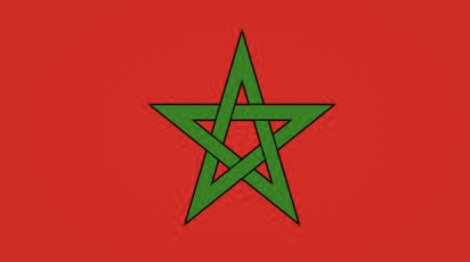
What you see above is NOT the Moroccan flag. This is the Morrocan flag.

Incredibly, the Moroccan national team players are not celebrating their victories with their own flag but with the Palestinian one! 

So that no naive person has any doubts: in the Arab world, this flag or the slogan FREE PALESTINE does not represent an innocent gesture of empathy with another country or oppressed people but a declaration against the existence of the Jewish state. As Israeli journalists in Qatar were told over and over again. “You are not welcome here… There is only Palestine. Not Israel.”   In other words: empathy with Palestinians is not about territorial claims or advocating for territories in exchange for eternal and lasting peace between the state of Israel and its neighbors. FREE PALESTINE is a euphemism to express that “Israel should not exist”, and that it must disappear from the map. And the Jews: throw themselves into the sea.  The FREE PALESTINE flag means FREE PALESTINE (all Israeli territory!) OF JEWS.  So, does this flag means that Morrocans (or Muslims?) hate Jews more than they love their country ??

If it were Iran or Lebanon’s national teams, I would have understood a little more about their antagonism to Israel because, after all,  those countries are “officially” enemies of Israel. But it hurts so much because it is MOROCCO: one of the few Arab countries that made peace with Israel and has open diplomatic relations with Israel. What’s going on there? 


THE DOUBLE STANDARD OF QATAR

And then, of course, there is the cynicism of Qatar. This government has silenced by decree all political demonstrations in this World Cup. No Ukrainian flags have been seen, for example. Qatar has banned dissident Iranians from speaking out against its repressive government. They also opposed any demonstration against human rights violations in Qatar. And they suppressed any complaints about the deaths of between 500 and 6,500 (depending on who you ask) foreign workers who lost their lives in accidents due to the hasty construction of the lavish stadiums for the World Cup (see here). Qatar claims it does not want politics in its World Cup. And for this reason, Roi Ben Shlush, an Israeli man who wanted to take a selfie with the Israeli flag in Qatar stadium, was immediately approached by four policemen who told him “that displaying the Israeli flag in Qatar is a crime. That Israelis are not welcome. That the Israeli flag is not welcome.” They threw us in the trash, Roi explains in this video (minute 1:18). Any political demonstration in Qatar is prohibited because “You must not mix politics with sports!”. But there are always exceptions. Or better said, one exception: the Jews. In Qatar, protesting against the existence of the Jewish state has been completely normalized. In the most watched event in the world these days, anti-Semitism has been Kosherized and turned into the pathetic cause that unites all the Arab countries of the world, even Sunnis and Shiites!

Do you understand now why I don’t want Morocco to win? Because beyond sports, if Morocco wins, it will be an antisemitic circus, a party of hate towards the Jewish state.


WHY DO ARABS HATE ISRAEL?

Arab antisemitism is not circumstantial. It’s cultural. My friend Professor Mordechai Kedar explains that delegitimizing Israel is a religious duty for Muslims. Why? Because for Islam, political and military superiority reflects religious superiority. That is to say, the true religion is the one that wins, controls, and governs the other religion. This reasoning, which may seem strange to us, explains the paradox many people naively mention. “The Arabs treated the Jews very well in the Arab countries where they lived.” This may be true, but something needs to be clarified: in Arab countries, Jews were “dhimmis”, that is, second-class citizens living under the authority and wings of Islam and with limited rights. Muslim accept Jews or Christians as long as they are “subjected”, or surrendered  (this is the real meaning of the word “islam” = surrendering )  to Muslim rule. But the case of the State of Israel is different. Accepting that the Jews govern the Arabs is heresy for the Arabs, as the founding charter of Hamas explicitly clarifies (see below). Accepting a Jewish State, regardless of its size, in arab land would be equal to believing that Islam is inferior to Judaism!

If this explanation is true, then I’m not sure it will ever be possible to be a lasting, “normal” peace between Israel and the Arab countries (I heard this week in a class from Bar-Ilan Professor David Pasig that the peace deal between Israel and Egypt is NOT really a “peace” agreement: Egypt’s Islamic authorities, says Pasig, only allowed Egyptian President Anwar Sadat to sign “a truce” with Israel).

If this explanation is real, if the Arab’s rejection of Israel is based on religious considerations, the Arab-Israeli conflict and hatred will never end. Furthermore: not recognizing this sad reality can be very dangerous for the Jewish state. Why? Because if I try to find the Western Mentality logic to the Palestinian or pan-Arab anti-Semitism and I assume, for example,  that they won’t hate us anymore if we cede some territory to them, or if I assume that “sincere dialogue will bring peace”, as many secular Jews who understand nothing of religion believe, I can cause irreparable damage to Israel.


WHAT CAN ISRAEL DO?

The Moroccan national team is known as the “Lions of the Atlas” (a mountain range in Morocco). So I’ll use this motif to explain a very depressing idea about the nature of this specific form of antisemitism. Imagine a man, lost in the Atlas Mountains, encounters a lion. Lions in that area of the world are reputed to be the most aggressive cats. The lion approaches and the man tries to explain to the lion why he should not attack him. He tells the lion: “I belong to the lion’s protection society. I fight against lions extinction. I am here looking for a protected area where you lions can live in peace, without fearing the hunters”.  But as valid as this man’s arguments are, the lion, who obviously doesn’t understand human language, keeps getting dangerously close to the man with murderous eyes and a hungry face. What is the only thing this man can do to stop the lion? What in the world can dissuade the lion from eating this guy alive? The only thing this man can do is to “transform himself into an elephant,” into an animal bigger and more powerful than the lion, into a creature that the lion is afraid to attack. An elephant will force the lion to reassess his chances of winning the battle, activate his survival instincts, reconsider and return to his pride.

If Arab hatred of Israel is cultural, visceral, and religious, the only thing that Israel can do to preserve the “peace” (or a truce) with its neighbors is to understand that the Middle East is a jungle. And only the strongest survive in the jungle.


UNDERSTANDING FREE PALESTINE

I present here some abstracts from the founding Charter of Hamas. Hamas is affiliated with the Muslim Brotherhood, the organization that rules Qatar.  Unlike other Palestinian organizations, Hamas does not hide its true intentions. 


Article 2 of Hamas’ Charter defines Hamas as a “universal movement” and “one of the branches of the Muslim Brotherhood in Palestine”.[1][21][28][29]

Article 6 Hamas is uniquely Palestinian,[1] and “strives to raise the banner of Allah over every inch of Palestine, for under the wing of Islam followers of all religions can coexist in security and safety where their lives, possessions and rights are concerned.” It claims that the world will descend into chaos and war without Islam, quoting Muhammad Iqbal.[1][21]

Article 7 describes Hamas as “one of the links in the chain of the struggle against the Zionist invaders” and claims continuity with the followers of the religious and nationalist hero Izz ad-Din al-Qassam from the Great Arab Revolt as well as the Palestinian combatants of the First Arab-Israeli War. It adds a hadith claiming that at the Day of Judgment all Jews will be killed.[1][29]

Article 8 The Hamas document reiterates the Muslim Brotherhood’s slogan of “Allah is its goal, the Prophet is the model, the Qur’an its constitution, jihad its path, and death for the sake of Allah its most sublime belief.”[1][21]

Article 9 adapts Muslim Brotherhood’s vision to connect the Palestinian crisis with the Islamic solution and advocates “fighting against the false, defeating it and vanquishing it so that justice could prevail”.[1]

Article 11 Palestine is sacred (waqf) for all Muslims for all time, and it cannot be relinquished by anyone.[1]

Article 12 affirms that “Nationalism, from the point of view of the Islamic Resistance Movement, is part of the religious creed”.[1]

Article 13 There is no negotiated settlement possible. Jihad is the only answer.[1]

Article 14 The liberation of Palestine is the personal duty of every Palestinian.[1]

Article 15 “The day that enemies usurp part of Muslim land, Jihad becomes the individual duty of every Muslim”. It states the history of the Crusades into Muslim lands and says the “Palestinian problem is a religious problem.”[1]

Article 18 Defines the role of women as homemakers and child-rearers, providing education and moral guidance to men.[1]

Article 20 Calls for action “by the people as a single body” against “a vicious enemy which acts in a way similar to Nazism, making no differentiation between man and woman, between children and old people”.[1]

Article 22 Makes sweeping claims about Jewish influence and power.[1][30] It specifically claims that the Jews were responsible for instigating multiple revolutions and wars, including the French RevolutionWorld War I, and the Russian Revolution. It also claims that Jews control the United Nations, and that they are supported by “the imperialistic forces in the Capitalist West and Communist East.”[1]

Article 27 Praises the PLO but condemns its secularism.[1]

Article 28 Conspiracy charges against Israel and the whole of the Jewish people: “Israel, Judaism and Jews”.[1][30] It claims that “Zionist organizations” aim to destroy society through moral corruption and eliminating Islam, and are responsible for drug trafficking and alcoholism.[1]

Article 31 Describes Hamas as “a humanistic movement”, which “takes care of human rights and is guided by Islamic tolerance when dealing with the followers of other religions”. “Under the wing of Islam”, it is possible for Islam, Christianity and Judaism “to coexist in peace and quiet with each other” provided that members of other religions do not dispute the sovereignty of Islam in the region (dhimmis).[1]

Article 33 calls upon Muslims worldwide to work for the liberation of Palestine.[1]


If you need more information, please, read this excellent detailed article :  https://www.camera.org/article/hamas-charter/