Laws and Traditions of the Three Weeks
The rabbis disagree on this last point: are we remembering what happened in the times of King Menashe in the 7th century, before the common era (BCE) or what happened in the time of Apostomus, a Roman general who offended the Jews in public around the year 68 of the common era?
This tragic event might have happened twice. Either way, I’m going to explain here the first interpretation.
The Kingdom of Israel was divided into two kingdoms: Israel and Yehuda. The kingdom of Israel, the lost Ten Tribes, was destroyed in the year 722 BCE. The kingdom of Yehuda is the one who survived. We Jews, Yehudim, descend from the kingdom of Yehuda.
Menashe, king of Yehuda lived from 709 BCE until 642 BCE.
There are two facts that characterized his reign.
1. He was the king who reigned for most time in Jewish history: 55 years.
2. He was probably the worst king in the history of Am Israel. Undoubtedly, the worst king of the Kingdom of Yehuda.
His father was a great Tsadiq, Hizqiyahu, and according to our tradition, his grandfather was the prophet Yesha’ayahu. Menashe converted Yehuda into a vassal state of Assyria (אשור). And this meant that the Yehudim not only obeyed the Assyrian king but also adopted his religion. Menashe dedicated to the systematic elimination of Judaism, including all the Holy service in the Bet haMiqdash. He introduced worship to Ba’al, Asherah, and all the constellations of heaven, which was the idol-worshipping practice of Assyria. He brought to Israel the obot and ide’onim, that is, diviners, sorcerers, idolatrous wizards and all kind of superstitions. He commanded to kill and murder thousands of Yehudim, especially those who opposed his religious reforms. Some say that Menashe murdered his own grandfather, the prophet Yesha’ayahu. Menashe made the Tora to be completely forgotten for two generations.
In Kings II, chapter 21 we see in detail what Menashe did.
Melakhim II 21: 2-6: “Menashe did all what offended HaShem: he practiced the abominable idolatrous practices of the nations which HaShem had cast out before the Israelites. He rebuilt the pagan altars that his father Hizqiyahu had destroyed. He erected altars in honor of Baal and made an image of the goddess Asherah. He prostrated himself before all the stars of heaven and worshiped them … In both courtyards of the Temple of HaShem he built altars in honor of the stars of heaven. He sacrificed his own son in the fire, practiced magic and sorcery, and consulted necromancers and spiritualists. He continually did what offended the Lord, thus provoking His wrath.”
Lets us see now the text that tells us what happened, according to the first version, on the 17th of Tamuz.
Melakhim II 21: 7: “[Menashe] took the image of the goddess Asherah, which he had commanded to make, and set it in the [Temple’s] Sanctuary, in the place where HaShem had said to David and his son Solomon: “In this Temple in Jerusalem, the city that I have chosen from all the tribes of Israel, I have decided to dwell forever.”
When Menashe passed away he was succeeded by his son, Amon, who followed his bad ways. After two years Amon was killed, and his son, Yoshiyahu, the grandson of Menashe, was crowned king. Yoshiyahu was one of the best monarchs of Yehuda. In his days, while making repairs in the Temple of Jerusalem, the workers found a Sefer Tora that had been hidden in the times of Menashe. After reading the Tora, which had been virtually forgotten for more than 50 years, King Yoshiyahu decided to return to HaShem with all his heart, and for the first time in two generations, the Jews returned to the observance and practice of the Tora and Mitsvot. Yoshiyahu uprooted all idolatry and restored HaShem’s service in the Bet haMiqdash.
But in some aspects, the damage that Menashe had caused, was already irreparable. Despite the efforts of King Yoshiyahu, many people had already assimilated the idolatry of the Goyim. Many rabbis believed that the destruction of the first Bet HaMiqdash (586 BCE) was due indirectly to the actions of Menashe.
On the 17th of Tamuz, when we remember the placement of an idol in the Bet haMiqdash, we should also lament and do our own Teshuba for the wrongdoings of our ancestors in the times of king Menashe.
The 17th of Tamuz happens forty days after Shabuot. Moshe ascended Mount Sinai on the 6th of Sivan, and remained there for forty days. The people of Israel made the golden calf on the evening of the 16th of Tamuz, when they thought that Moshe was no longer going to return. When Moshe descended Mount Sinai and saw the Yehudim worshiping the golden calf, he broke the tablets containing the Ten Commandments.
There are many very interesting commentaries regarding this episode. There are those who explain that Moshe destroyed the Tablets to protect the people of Israel. How so? The Second Commandment says, “You shall not have other gods before Me … you shall not make for yourself any image [of idolatry] …”. The Rabbis explained that by breaking the tablets Moshe destroyed the written evidence that documented the terrible “betrayal” of the Jewish people to HaShem, by worshiping other gods. The Rabbis presented the following metaphor: “Imagine a woman who got married and after a few days there were some very negative comments about this woman’s behavior (suspicion of adultery). What did one of her relatives do? He took the Ketuba, the marriage certificate, and destroyed it. He said: it is better that this woman be considered unmarried than married. Likewise Moshe, when breaking the tablets he said: If I do not destroy this [incriminating] document the people of Israel will have no hope of being forgiven. So he broke the Tablets and then he told HaShem, trying to advocate for the people of Israel: Forgive them! They never got to read what was written on the Tablets!”.
Either way, the destruction of the Tablets of the Law meant a great tragedy. Firstly, because it meant not having anymore the Tables of the Testimony written “directly” by HaShem, which once broken were replaced by tables written by Moshe. And secondly because the destruction of the Tablets reminds us of the cause of this misfortune: the worshipping of the golden calf.
Finally, the Rabbis of the Midrash also teach us a positive aspect of remembering the destruction of the Tablets of the Law on the 17th of Tammuz. Ribbí Yehoshua Ben Levi (Masekhet Aboda Zara 4b) said that from the golden calf episode we learn that HaShem is willing to forgive even the most serious offenses. So we should never give up hope and say, “I have committed too many sins. HaShem will never forgive me. I am definitely at a point beyond redemption. ” According to Ribbí Yehoshua Ben Levi no transgression can be more serious than the idolatry practiced with the golden calf. And we see that in the end, after repentance and Tefilot (prayers), HaShem forgave Am Israel.
This is a very suitable message for a day of fasting, which should be dedicated to doing Teshuba: repent of our evil actions and get closer to HaShem.
The 17th of Tamuz is one of the four fasting days in which we remember the events that lead to the destruction of our first Bet haMiqdash (=Temple of Jerusalem) in 586 BCE and the consequent exile.
1. We fast on the 10th of Tebet, when the enemy began the siege of Jerusalem, which provoked untold starvation, epidemics, etc.
2. We observe a day of fast on the 17th of Tamuz because this is when the Babylonians made the first breach in the walls of the city, that is, when they came into the city.
3. After three weeks of battle and agonizing resistance, the enemy finally prevailed. That is why three weeks after the 17th of Tamuz we observe the 9th of Ab, the National day of mourning for the Jewish people. On this tragic day the first Bet haMiqdash was destroyed and burned (the Second Bet HaMiqdash was also destroyed on a 9th of Ab, in the year 68 of the Common Era). Thousands of Jews were killed or died from starvation and the rest were taken captives to Babylonia. A small Jewish population remained in Israel as vassals of the Babylonians.
4. A few years later, a group of Jews killed the Babylonian appointee, Gedaliah ben Ahiqam on the 3rd of Tishri. The consequences were devastating. The Babylonian emperor interpreted this murder as a rebellion against his kingdom and he ordered that the the small Jewish population that had remained in Israel after the destruction of the Temple be also killed or exiled.
These four dates 10 of Tebet, 17 of Tamuz, 9 of Ab and 3 of Tishri were established by our Prophets as days of fasting. In order to remember the destruction of the Bet haMiqdash and our of responsibility, encouraging us to introspect and repent.
It is interesting to notice that around the year 516 BCE, 70 years after the exile, around 40,000 Jews came back to Israel and built the Second Bet-haMiqdash. At that point, the prophet Zekharia and Anshe Keneset haGedola (The first Jewish Congress) canceled these fasting days and declared them days of joy and celebration.
“Thus says HaShem, lord of Hosts: The fast of the fourth month and the fast of the fifth and the fast of the seventh and the fast of the tenth shall [now end and] be to the house of Yehuda seasons of joy and gladness and cheerful feasts…” (Zekharia 8:19)
When the second bet haMiqdash was destroyed, in the year 68 of the CE we started fasting again.
BH, When the Third Bet Hamiqdash will be built, במהרה בימינו, these fast days will be turned again into days of celebration. .
Minors: children under 13 and girls under 12 are completely exempt from this fast.
Pregnant women are exempt from this fast.
Nursing women, in many Sephardic communities the tradition is that after giving birth, women are exempt from fasting for 24 months, even when they are no longer breastfeeding their baby. In other Sephardic communities, and in most Ashkenazi communities, a woman is excused from fasting for 24 months only if she is still nursing her baby.
A person who feels sick, with symptoms of flu or fever, or a person with a chronic illness, such as diabetes, should not fast.
Elders should consult with their doctors to determine if fasting would affect their health. In which case they are exempt from fasting.
In addition, extreme your caution and try to keep yourself indoors protected from heat. In case of any sign of dehydration, nausea, vomits, very dry mouth, etc. DO NOT HESITATE TO BREAK THE FAST.
אֶת-הַכֶּ֥בֶשׂ אֶחָ֖ד תַּעֲשֶׂ֣ה בַבֹּ֑קֶר וְאֵת֙ הַכֶּ֣בֶשׂ הַשֵּׁנִ֔י תַּעֲשֶׂ֖ה בֵּ֥ין הָֽעַרְבָּֽיִם
The rabbis mentioned 5 tragic events that happened on the 17th of Tamuz. One of them was that the daily sacrifice in the Temple was discontinued.
Every day, in the Bet haMiqdash, two sacrifices were offered, one in the morning and one in the afternoon. The daily sacrifice was so important that it was also offered on Shabbat and even on Yom Kippur. This Mitsva was fulfilled uninterruptedly from the time it was commanded to Moshe Rabbenu until the 17th day of Tamuz in the year 586 BCE, that is, for about 700 years.
At the time of the first Bet haMiqdash, the Babylonian army invaded Jerusalem. The walls of the city were destroyed on the 9th day of Tammuz. But the Bet haMiqdash, which was protected by internal walls, continued to operate, and the offering of the daily sacrifice was the best evidence of it. The Gemara says that on the 13th of Tamuz the Cohanim, the priests who were in charge of the public sacrifices, began to run out of animals. The Cohanim tried to bribe the soldiers of the invading army and get the animals at any cost. This worked for four days, until the 17th of Tamuz. That day, for the first time in 700 years, the daily sacrifice was not brought. And the Bet HaMiqdash, though still standing for three more weeks, virtually ceased to function as such.
The Gemara (Yerushalmi Ta’anit Chapter 4) tells us that something similar happened in the days of the second Bet haMiqdash (year 68 of the common era). The Kohanim were trying to acquire animals from the enemy army. Two buckets filled with gold coins were being handed over to them thru the wall. And in return the Romans gave them two Kosher animals for the daily sacrifice. Until one day, the Romans took the gold and in the buckets they placed two pigs, which fortunately jumped out of the bucket before reaching the other side of the wall. This event, however, remained in the memory of the people as a national trauma.
In the famous book “The War of the Jews” (volume 6) author Flavius Josephus writes: “Titus, the Roman general who led the conquest of Jerusalem in the year 68, ordered his army to open a breach in the wall of the city so that its soldiers could access it without difficulties. That day Titus heard that the daily sacrifice had not been offered [for the first time since 516 BCE] and the Jewish people, hearing this sad news was completely demoralized. “
Today, unfortunately, we do not have the Bet haMiqdash. But according to the indication of our prophets, the sacrifices have been replaced by the Tefilot (prayers). The first Tefilla we say in the day is called Shaharit, which comes to replace the morning sacrifice (tamid shel shahar), and the second Tefila of the evening, Minha, replaces the sacrifice of the afternoon (tamid shel ben Ha’arbayim).
We also recite in the mornings a text from Tehilim, religious poems written by King David, called Shir Shel Yom. Every day of the week we recite a different text. And before the recitation we say: “This was the song that the Leviim were singing in the dukhan. The Levites, who were the assistants of the Cohanim, were in charge, among other things of the music and the songs that were sung in the Bet haMiqdash. These poems of Tehilim were sung by the Leviim, a choir of a minimum of twelve men, in the dukhan, which was a platform with three steps, at the moment that the daily sacrifice was offered, in the morning and in the afternoon.
| IN THE DESERT
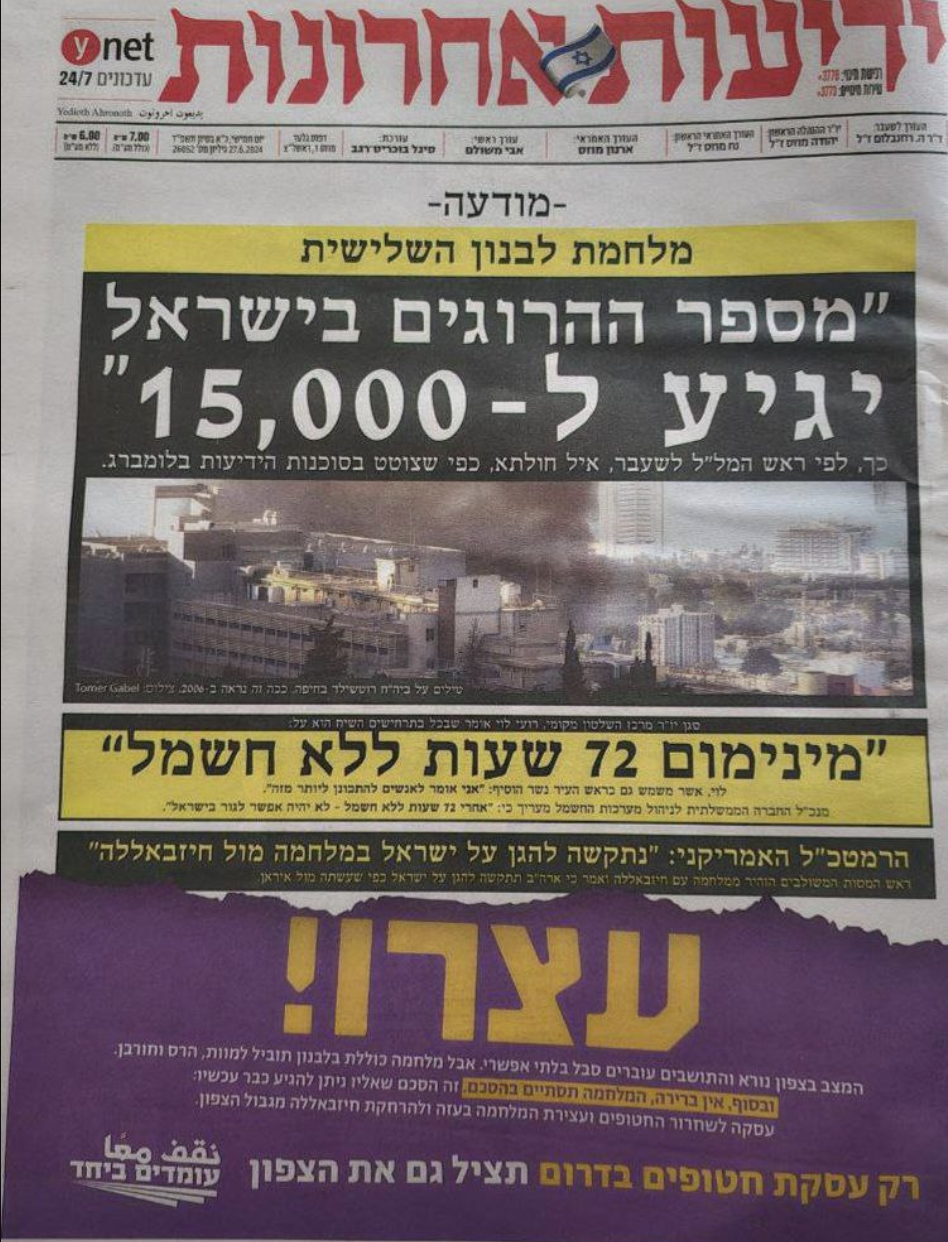
The Jewish people were in the desert, just a few days from reaching the Promised Land. God instructed Moses to send twelve men, the tribes’ leaders, to Israel and explore the territory so they could plan the most effective way to conquer it. The spies returned from their mission and showed the people the fruits of Canaan. They were delighted. What followed was inconceivable and unpredictable: Ten of the twelve explorers expressed tremendous pessimism about the imminent military operation into the land flowing with milk and honey: “We won’t be able to conquer it! The inhabitants are too strong. They are giants. We are small. Insignificant like grasshoppers. We won’t succeed!” The two leaders faithful to Moses, Joshua, and Caleb, tried to reason with the people, offering the following arguments: “We are not just any nation. We are God’s nation. Have you forgotten who brought us out of Egypt just over a year ago? Do you remember the ten plagues? Don’t you realize that God is guiding us and that He will help us conquer the land? Do not fear! ALO NAALE! We will conquer the land!” The story ended badly. The people cried, screamed, and protested against Moshe and Aaron. Joshua and Caleb tried to calm them down, but the mob refused to listen and wanted to stone them. It was a very delicate moment for the Jewish people: they were fighting for their future and that of their children. They needed a lot of emotional encouragement and optimism. But these leaders did the opposite! They spread defeatism. God had to intervene directly to prevent a collective uprising. There were fatalities. God punished that generation in the worst possible way: “karma”. They would have to stay in the desert until they died. The nation will have to wait 40 years: a generational change. It was such a tragic night that we remember it every year on the 9th of Ab. It is the earliest event we remember during the national day of mourning for the Jewish people. For years, I wondered what motivated the ten spies to be pessimistic. The Tora, true to its style, leaves it open for our interpretation. I read and wrote a lot about it. At first, I couldn’t understand why there was such pessimism. It was illogical, mainly because there was no other alternative for the people. There was no plan B. If they did not fight to conquer the land of Israel, what would they do? Go back to Egypt? Stay in the desert? That is suicidal. In recent years, I have convinced myself that it was a psychological issue: the spies suffered from an inferiority complex. Slave mentality. They were afraid, and panic rapidly spread. IN THE KNESSET I arrived in Israel last Monday. As has happened to me before, our experiences in the Jewish State help me understand or attempt a new interpretation of the biblical past based on Israel’s present. I will now try this once again. Perhaps the problem with the ten spies was not fear. It was not unintentional. They did not have a slave mentality but rather ambitions for power. The ten leaders represented the opposition to Moses—the anti-Moses coalition. רק לא משה They did not want Moshe to continue leading the people. They tried to defeat him and take over the government formed by a coalition led by them. The first strategic goal was to remove Moses. Accusing him of leading the people to perdition and not knowing what he was doing. Were they insinuating that Moses only sought his personal benefit and to perpetuate his power? If they managed to discourage the people and convince them that Moses’ plan to conquer Israel would fail, everyone would turn against Moses, which is what happened. Or Moses would resign due to emotional exhaustion, which almost happened. And if anyone finds this interpretation anachronistic, whimsical, or biased, remember what is coming next week: Korach, who, along with the “Reubenites” —the descendants of Jacob’s eldest son, who felt that their elite should run the country’s affairs— openly challenge Moses’ leadership. The political rebellion became entirely explicit. COLLECTIVE DEFEATISM Israel is so beautiful! There is indeed less tourism this year, but tensions are not noticeable in Jerusalem or Tel Aviv. Life continues as usual. The economy is strong and healthy. Real estate prices are not falling, which is a reliable indicator of a healthy macroeconomy. There is no shortage of products. Supoermrkets are full. Prices are higher than last year, but the increase in the cost of living is much lower than that experienced by New York, or, say, Buenos Aires, during this last year. The people of Israel are very united. First, they are united in mourning. They are crying tears for the brave soldiers, the heroes of Israel, who are sacrificing their lives in this war. Thousands or tens of thousands attend the funerals to honor their national heroes and families. Most of the people are also united by optimism. They understand the magnitude of the tremendous victory of the Israeli army in Gaza. The most optimistic and enthusiastic are the soldiers who come from fighting in Gaza and have seen with their own eyes the incredible military achievements of the IDF, the destruction of Hamas, and the demoralization of the enemy. SEE HERE. https://conta.cc/3VCVeKy But there are other voices, especially in the media. No fewer than, I would say, ten media outlets out of twelve that represent the deliberate pessimism of the spies in the desert. And unfortunately, they spread their defeatism to the people. A very vocal group that organizes demonstrations burns tires, blocks highways, and promotes anarchy. The leaders of this group support or promote the establishment of a Palestinian state. In my opinion, it is like “going back to Egypt” or “staying in the desert”, i.e., a suicidal idea for Israel. Why do they do it? What is their objective, their endgame? Is it psychological or unconscious defeatism, or is this movement politically motivated? Suppose we follow the interpretation I presented of the ten spies. In that case, it is possible that the plan is to sow pessimism, try to overthrow the government, and take control. TELL ME WHAT CHANNEL YOU WATCH, AND I’LL TELL YOU WHAT YOU THINK Since I arrived in Israel, I have become an unpaid advertising agent for Channel 14 and Galei Israel radio. These two optimistic (realistically optimistic) media outlets represent the spirit of Joshua and Caleb. I repeat to my family, friends, and even the taxi drivers of Jerusalem: Change the channel! Literally, don’t listen to Channels 12 or 13. Listen to and read Channel 14. Here is the link: www.now14.co.il. Don’t read Haaretz or Yediot Aharonot. Don’t listen to those who, in the best defeatist style of the spies, and with the same political intentions, irresponsibly published a paid advertisement saying that there will be 15,000 dead in the imminent war with Lebanon ח “ו. with the disastrous intention to discourage the people and promote pessimism. |
![]() |
| Let’s not allow unreasonable defeatism to repeat itself.
THE TWO SIDES OF FAITH Joshua and Caleb represent the true Jewish EMUNA in all its dimensions. EMUNA means faith in God, but it also means personal conviction and firmness. Once, Rabbi Eliezer Ben David, z” l, explained this to me in person. First, he asked me: “In whom did Abraham Abinu, the man who changed the world, have faith?” And I naively answered: “Abraham had faith in God.” “Obviously,” said Rab Ben David, “but first, he had faith in himself. You cannot change the world if you do not first have a strong dose of self-esteem.” Brilliant. Faith in oneself is a prerequisite for an active, action-leading faith. Abraham was precisely the opposite of a defeatist. He showed that faith begins with faith in oneself. The generation that came out of Egypt lacked this; we urgently need it in Medinat Israel. In the desert, Jews listened to pessimistic voices, succumbed to defeatism, and paid a high price. Let us have faith in AM ISRAEL, in the soldiers of Israel, and in the God of Israel. As Joshua and Caleb said: “…to the entire congregation of the children of Israel: ‘The land we explored is very, very good. The Creator favors us, and He will bring us to this land and give us this land that flows with milk and honey. Do not rebel against God, and do not fear the people who live in the land, for they are bread for us [i.e., a piece of cake Y.B.]! God is with us. Do not fear them!’ BAMIDBAR 14:8-10 ויאמרו אל כל עדת בני ישראל לאמר הארץ אשר עברנו בה לתור אתה טובה הארץ מאד מאד אם חפץ בנו ה‘ והביא אתנו אל הארץ הזאת ונתנה לנו ארץ אשר הוא זבת חלב ודבש אך בה‘ אל תמרדו ואתם אל תיראו את עם הארץ כי לחמנו הם סר צלם מעליהם וה‘ אתנו אל |
|
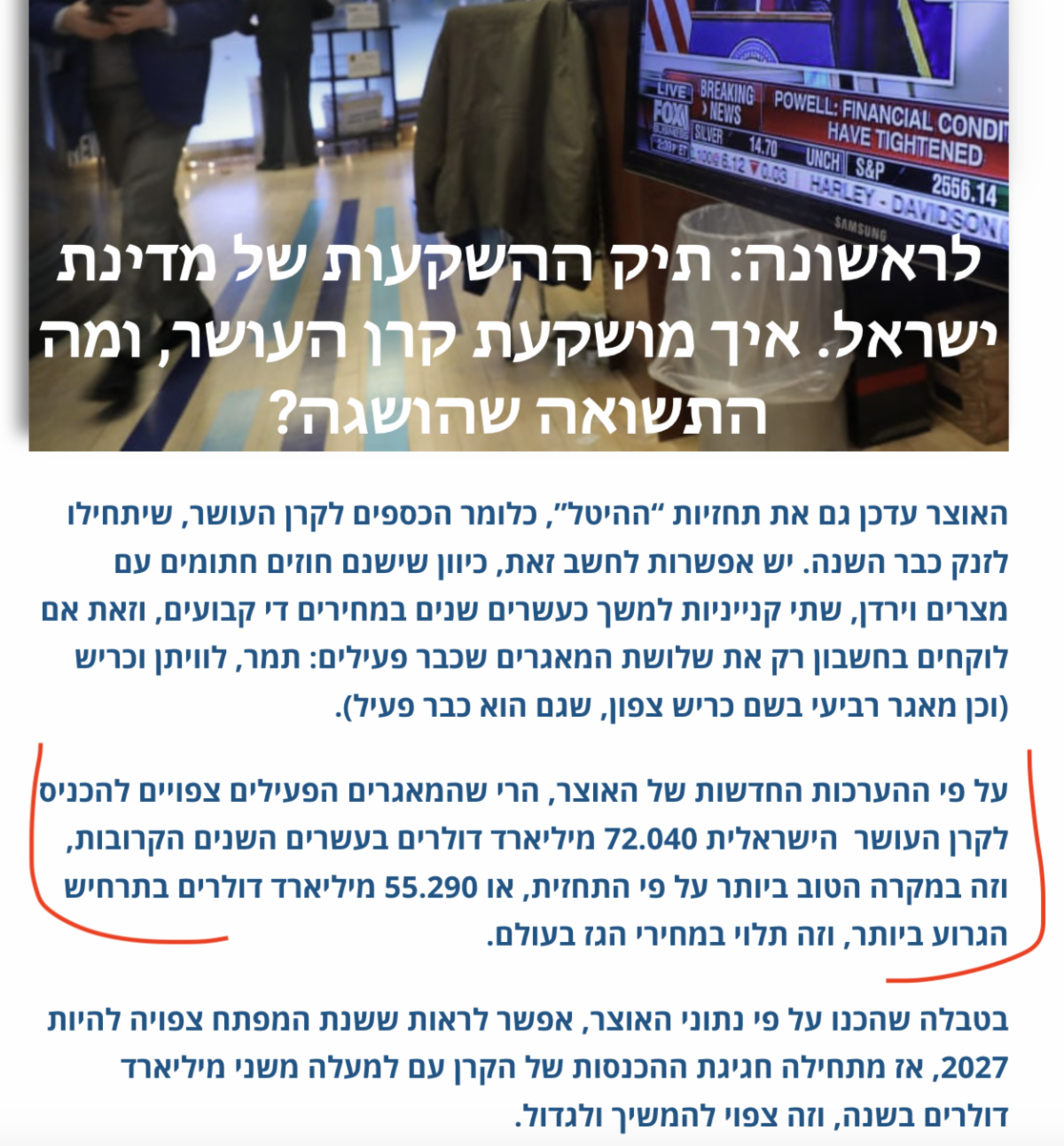
One of the most critical lessons conveyed by the Parasha of the MERAGELIM (spies or explorers) is to learn to identify and communicate the good in the land of Israel. Unfortunately, not everyone has learned this lesson. Instead of focusing on the outstanding achievements of the Jewish state, many media outlets focus “solely” on its problems, conflicts, etc. Practically, an 80/20 ratio: four times more is said about Israel’s negatives than its positives in all aspects: military, economic, social, etc. And that does not truly reflect the reality seen here. Today, I will present a small example that will serve as a test regarding the selective information that normal, educated people know or ignore about the positive and extraordinary things happening in Israel. For the first time, I will talk to you about the economy! At the beginning of Parashah Bechukotai, HaShem began His promises of blessing to Bnei Yisrael by assuring that the land would have enormous prosperity. This cannot be natural because, as the Tora says, Israel does not have natural resources like Egypt, which has the Nile. But the Creator still assured us that His blessing would come to the promised land. And there would even be a surplus. However, to identify the extreme prosperity assured by the Tora, one must have imagination. And a lot of patience. WHERE TO LOOK FOR THE BLESSING? A few years ago, in 2010, an American non-Jew but a great follower of the Bible, John Brown, created the company Zion Oil & Gas and invested $130 million to search for oil in Israel. This was not a far-fetched search, as the Middle East is very generous in oil. I understand that his commercial initiative was based on the Torah describing the land of Asher, in the northwest of Israel, on the Mediterranean coast, as a land of SHEMEN (מאשר שמנה לחמו) “in the territory of Asher the ‘shemen’ will be his principal resource.” But what does shemen mean? The traditional Jewish interpretation is that this shemen is olive oil, and the land of the tribe of Asher produced this oil. It took eight days in the times of Hanukka to obtain new oil precisely because they had to go and bring it from the north, the territory of Asher, to Jerusalem, a four-day journey back and forth. But it seems that this good man, John Brown, with impeccable good intentions, was led by the English translation of the word shemen: “oil.” And the problem is that in English, “oil” means “oil /edible oil” and also means “oil / fossil fuel”! And that’s why Mr. Brown started looking for oil there. In any case, and unfortunately, Mr. Brown found nothing. UNDER THE SEA, UNDER THE SEA… A few years later, Israel began exploring not in the territory of Asher but in the sea of Asher, the Mediterranean Sea, and a bit further south… And, oh, surprise! Israel found gigantic deposits of natural gas beneath the seabed. The government contracted international companies like Chevron to extract the gas. Also, it made a long-term agreement with Egypt, which found very little gas in its maritime territory so that the country would liquefy the gas and export it to Europe. The Jewish state earns and will continue to gain enormous profits from natural gas, which is completely changing Israel’s macro economy. Today, Israel is considered an “energy world power.” Who would have thought of a country without oil that was always considered very poor in natural resources? Who would have imagined that Bore Olam had these riches reserved for Israel in the most untouchable place for centuries? The commercial agreement with Egypt for 20 years also means that Israel constantly provides Egypt with natural gas. At this moment, this Arab country depends energetically on Israel. Apart from this treaty’s enormous economic impact, especially for Israel, these types of commercial alliances and energy dependence are essential to maintaining political stability. It is a way to strengthen the delicate peace agreement with the most powerful — and potentially most dangerous — Arab country for Israel. The same occurs with Jordan, which also supplies itself with Israeli gas. THE ECONOMIC FUTURE OF ISRAEL The profits from this industry are enormous, and they are helping to cover the tremendous cost of the war. However, the surplus of these royalties is enriching Israel’s National Treasury and its foreign currency reserve. To give you an approximate idea of what we are talking about, at this moment, Israel’s national treasury has foreign exchange reserves that are just a little less than those of the USA and almost double those of Spain or Canada. See here https://en.wikipedia.org/wiki/List_of_countries_by_foreign-exchange_reserves Gas royalties are estimated to bring between $55,290 billion and $72,040 billion dollars to Israel’s national treasury in the next 20 years! See this information from dr. Guy Bechor |
![]() |
|
WHY ISN’T THIS TALKED ABOUT? Returning to good news, I ask my readers to answer me honestly: how many of you have heard about Israel’s incredible energy development? About these gigantic natural resources? What about the enormous profits underwater natural gas will bring Israel in the coming years? No one says that Israel does not have problems. Or that the war will be easy. Or that the issue of the hostages will be magically resolved. But focusing all the time on that is ignoring the good news and being ungrateful to God for the generous blessings He grants us. Like Israel’s incredible strategic victory in Gaza, the record increase in Aliyah — against all odds — or economic prosperity. Ignoring the good news is equivalent to repeating the mistake of the meragelim. And of the people who cried infected by a viralized defeatism. Let us learn from Yehoshua and Caleb, who spoke בשבחה של ארץ ישראל of the blessings and wonders of the land of Israel. טובה הארץ מאוד מאוד With God’s help, Israel’s future is bright beyond what we dare to imagine. |
At some unspecified point in this week’s Parasha, Chuqat, the biblical text makes a leap in time, transporting us from the second year after the Exodus from Egypt to the 40th year. The new protagonists are the young generation of Am Israel, ready to fight and conquer the Promised Land.
The previous generation was born and lived their entire lives in slavery. They didn’t know how to fight or defend themselves. They were mentally tied to slavery, suffering from a fear of freedom. They missed Egypt and longed to return to a life of oppression. Despite witnessing and experiencing the most imposing miracles in history, both in Egypt and in the desert (the Ten Plagues, the parting of the sea, the revelation of God at Mount Sinai, the manna falling from the sky, etc.), they were only temporarily influenced. God was with them, but they did not see Him. Or they did not want to see Him, perhaps to avoid the many responsibilities that come with living as Jews. This defeatist generation defined themselves as locusts, unable to defend themselves against the enemy.
But this generation has now disappeared. Unfortunately, the change in the mentality of the Jewish people did not occur as a transition from slavery to freedom. It happened, as once mercilessly stated by U.S. Secretary of State Henry Kissinger: “In some societies, change does not take place through a slow process of learning, but funeral after funeral.”
The new people of Israel, the generation that did not grow up obeying Pharaoh but observing God’s will, begin their relentless campaign to conquer the Promised Land in this Parasha. The first challenge they face is highly relevant to our days. The Canaanites of the city of Arad in the Negev attack the Jews, and guess what they do? They take prisoners! What does the young Israeli army do in their first challenge? First, they pray, promising loyalty and gratitude to God if He grants them this first victory. Then they attack the terrorist kidnappers and rescue the hostages alive. The most important thing is to notice what they did not do: negotiate with the kidnappers. The Tora does not seem very much in favor of negotiating with terrorists.
They are now in what is today Jordan, on the eastern side of the Jordan River. Before crossing the river to reach Israel, they must pass through the territories of Sichon and Og, kings of the Amorites and Bashan, respectively.
Sihon was a powerful king, reputedly invincible, who had conquered the lands of the Moabites in a battle so fierce it was recorded by the poets of the time—and incidentally mentioned by the Tora—as an epic military victory, possibly intended to intimidate the enemy. Now, the commander-in-chief of the new Israeli army, Moshe Rabbenu, sends Sichon a “message of peace”: The people of Israel request your permission to cross your territory “without deviating from the main path, without ruining your fields or vineyards, and without intending to drink water from your wells. We do not seek war with you. We just want to pass through your territory to cross the Jordan River and reach our destination: the land of Israel, promised to us by God (Numbers 21:22). Surprisingly—or not—Sichon rejected Israel’s generous peace message and came out to attack Israel.
Why?
Reflecting on our present days, a few ideas occurred to me:
Without any provocation, Sichon attacked Israel. Ironically, the first military challenge for the new Israeli army was not to attack and conquer but to defend themselves from their attackers. We are facing the first battle of the Israeli DEFENSE Forces.
Sichon miscalculated: “Israel defeated him with the edge of the sword and inherited his territory, from Arnon to Jabbok, as far as the Ammonites…” These new lands extended along the upper half of the Dead Sea, continuing along the Jordan River’s shores to the current Golan Heights, now Israeli territory, where it bordered the lands of another powerful monarch: Og, king of Bashan.
Then came the second war the new Israeli army faced. Og, who did not learn from what happened to Sichon, also came out to attack Israel. “The people (of Israel) moved northward by the road to Bashan, but Og, the king of Bashan, came out with all his people to confront them in battle at Edrei. God said to Moshe: ‘Do not be afraid of him, for I have delivered him and all his people into your hands. You will do to him what you did to Sihon, king of the Amorites, who lived in Heshbon. The people of Israel defeated him, his sons, and all his people completely… and inherited his land…” (Numbers 21:33-35). This last phrase, “and inherited his land,” is also very important. If someone attacks you, you defend yourself and win; you do not have to return their territory; it is now considered your inheritance. The defeatist attitude of the old generation had been replaced by the optimistic attitude of their children. Imbued with solid EMUNA, trusting God’s providence and His help, they prevailed in the military battle against the kings of Transjordan. Thus, Israel emerged as a people prepared to settle in their land, exercise their national will, and always be ready to defend themselves against any enemy.
I can’t help but think of the brave young soldiers who, along with their leaders, fight valiantly today in Gaza with an indomitable BIBLICAL spirit. With a deep conviction that they are fighting what the Jewish Sages called MILCHAMOT HASHEM, “the wars that God’s enemies wage against His representatives, the people of Israel.”
The command line that today leads the armed forces fighting in Gaza are the commanders of the future army and also—I am convinced—the future political leaders of the State of Israel in the coming years. This new generation, which believes in themselves and their Divine mission, will replace the military leadership that will have to say goodbye to the armed forces and give way to the new generation to take responsibility. They have already accumulated nine months of combat and nine months of unity. They are very clear that their goal is victory over the enemy. They are directing a war of the most challenging and dangerous type, not against a regular army of a country in tank combat plains but against a terrorist organization, a hidden enemy, in tunnels in dense urban areas. It is a very difficult and dangerous war for commanders and fighters.
These soldiers also have a solid Emuna, faith that the God who brought us out of Egypt, defeated Pharaoh, and was with us when we defeated Sihon, Og, and all the peoples of Canaan is still with us today, closer than ever.