SUMMARY OF PARASHAT EQEB

This Parasha continues with Moshe Rabbenu’s long speech before separating from the people of Israel, since God will not allow him to enter the land of Israel with the rest of the people. Moshe speaks of the blessings that God will bring to Israel for keeping the Tora. And these blessings, in turn, will allow the people to fulfill the Tora in peace and without suffering material poverty. Moshe reminds them that HaShem is the one who will protect them and help them to conquer the land and to displace the enemies. He also warns them of the danger of forgetting God, when we think that we are strong and powerful. Or when we have a full stomach and we feel that we do not need Divine assistance. One of the ways to remember God is the recitation of Birkat Hamazon, the Mitsva of thanking God after eating a full meal.

Moshe warns the people about the dangers of prosperity, and how wealth can lead them to forget God and practice idolatry. Idolatry has always been associated with superstition. Sometimes, a person that possesses wealth and does not know how to credit God for his good fortune, and how to thank Him for His generosity, tends to look for “magical methods to protect his fortune”. Magic is directly or indirectly associated with idolatry, since it invokes powers unrelated to God. This addiction to superstitions will end up alienating this individual from God. We Jews must be humble, especially in times of economic and military prosperity and remember that it is God, and not our own power, who allows us success and well-being.

The people are about to enter the land of Israel, which they will have to conquer militarily. From Moshe’s words, it can be seen that the people were afraid of not being worthy of Divine assistance in the difficult battles that awaits them, because of the sins of their fathers. Moshe explains to them that after the sin of the golden calf, the Jewish people indeed lost part of their merit, especially the merit of inheriting the promised land, but he assures them that this should not demoralize them, since HaShem will still grant them an outstanding victory and with His help they will defeat the inhabitants of Canaan. Moshe tells them that the inhabitants of that land deserve to be expelled from the holy land for their own evil deeds, such as idolatry, murder, and promiscuity.  Moshe presents them with other factors that will also contribute to Israel’s future victory, despite not being worthy of it: first, that God promised Abraham, Yitzchaq, and Jacob that their descendants would inherit the land. And second, that if God does not grant them victory, God’s name will be profaned among the nations, as these nations would question God’s power to protect His own nation and fulfill His promise to them.

Moses presents the famous question: “What does God want from us?” And his answer is that God wants us to follow his paths of righteousness and justice, for our own good. Much of this Parasha is devoted to describing the beautiful characteristics of the land of Israel. And it is also explained, in what we know today as the second paragraph of the Shema Israel, that the land of Israel, which is directly supervised by God, will “react” by Divine instruction to our behavior: on the one hand, the land will reward our loyalty to God us with abundant rains and prosperity. On the other hand, the heavens will close, there will be no rain, and our life on God’s  land will be impossible if we betray our covenant with Him. As a consequence of poverty, we will have to leave the promised land and escape into exile.

The people of Israel will obtain victory over their enemies, and will be able to conquer the promised land and live in it forever if they listen to the Divine commandments and follow the ways of HaShem.


VAETCHANAN: The Perils Of Inherited Wealth

“When HaShem your God brings you to the land that He promised to your parents Abraham, Isaac and Jacob … you will inherit lands with great cities that you did not build; with houses full of all kinds of good things, that you did not work for them; with wells of water that you did not dig and with vines and olive groves that you did not plant, so when you eat and feel [comfortable and] satisfied, be careful not to forget HaShem, your God, who took out of Egypt, the house bondage! “
Deut. 6: 10-12
The people of Israel are getting ready to enter the Promised Land. They will have to fight to conquer it, but HaShem promised them that He will join them in the battlefield. On the military plane, thus, success is guaranteed. “With the help of God”, literally, they will conquer the land of Israel. In speaking to the people, Moshe is not concerned with war but with peace. And more specifically for the side effects of prosperity in times of peace.
The land they are going to be given is fully functional. Jews will not be forced to spend the next few years working hard to build their cities, their walls, their houses and sow their fields. After conquering the land they will “inherit” cities that are fully operative; wells and cisterns filled with water; fields with grain ready to be collected, and trees and vineyards bearing fruit. But this, which seems to be the fulfillment of every a man’s greatest dream, can become a trap from a spiritual or psychological point of view. The Tora warns the people of Israel against the phenomenon that some call “affluenza”.
On June 15, 2013, 16 years old Ethan Couch, killed four people while driving intoxicated. He was indicted on four counts of manslaughter. But was not sent to prison. Instead, the Judge sentenced him to 10 years of probation and therapy after this attorney argued that Couch suffered from “affluenza”, that is to say, he didn’t know boundaries because his rich parents didn’t set any, and he therefore needed rehabilitation instead of prison (this is , by the way, a great example of what Theodore Dalrymple mentions in his book: “Admirable Evasions, how psychology undermines morality”. Thanks to Dr Sauly Harari for getting me this great book!).
Those who are most exposed to contract affluenza are people who have everything they want “by inheritance.” These privileged individuals did not need to earn their money by working hard. The great effort was made by their parents. And many parents (wrongly) believe that allowing their children to enjoy material abundance without doing enough to deserve it, is good for their children. Parents innocently think that privileged children will always display great appreciation to their benefactors, and be eternally grateful to them. What’s more: many parents think that since their children have received so much, and know the great feeling of being the recipient of an abundance of blessings, they will be naturally inclined to be generous, considerate and magnanimous with others, imitating what their parents did for them.
But it often happens that, far from grateful, kind and considerate, by “giving them everything they want without demanding efforts from them” parents accomplished the exact opposite effect: their children become spoiled; do not appreciate or value what they receive because they tend to take everything for granted, and become selfish and self centered. Moreover: many children that get used to receiving everything effort-free, do not feel any need “to give” back or redistribute their privileges with others. Rather, they are always expecting to receive more. And behave as if the entire world is there to please them, like their parents did.
This was Moshe Rabbenu’s greatest fear. He worried that something similar could happen to the people of Israel with the inheritance that God is giving them for free. They might be affected by “affluenza” and become selfish, demanding, spoiled and ungrateful. And this is why he warns us: Beware of the effects of wealth, especially inherited wealth. Never forget “WHO” gave you everything you have.
The Tora expects us to do at least these two things to protect us from affluenza:
First, that we learn to value what we have, and express our appreciation permanently. So, for example, every time we enjoy or eat something we bless (= acknowledge) God before we benefit from it. And, every time we finish eating a meal we express our thanks to God, out loud and in an elaborate prayer called “Birkat haMazon.” These Mitzvot / gestures will keep our sense of appreciation awake and alert.
Second, beyond appreciation, HaShem also demands us to behave as He behaves. He has instructed us to “imitate His generosity” by sharing the gifts we received from Him with those who have less than us.
And when we give to others and share our blessings, we naturally learn to appreciate more what we have received and inherited from Him.


VAETCHANAN: The Jewish Pledge Of Allegiance

This week’s Parasha, Va’etchanan, contains two cardinal texts of the Jewish faith: the Ten Commandments and the first part of the Shema Israel. Today, we will briefly analyze the Shema’s first verse. (To learn more about the Ten Commandments, consult the link below.)

To begin with, let us remember that the Shema Israel is not formally a prayer. It is not a text in which we praise God or ask for His help. The Shema we recite daily contains our declaration of faith in God’s existence and unGod, educates us to love God, urges us to fulfill His commandments, and exhorts us to behave with morality and decency.

HOW DO YOU SAY “GOD EXISTS” IN HEBREW?

The first verse of the Shema Israel contains the three ideas that constitute the principles of our faith:

שמע ישראל ה אלוקינו ה אחד

“Hear, O Israel, HaShem is our God, HaShem is one.”

  • That God exists.
  • That we are the only witnesses of His revelation.
  • That God is one.

Ironically, the most significant word in this theme is not explicitly written in the verse (biblical verse). Our verse literally says, “Hear, O Israel, HaShem our God, HaShem one.” But the correct translation is: “Hear, O Israel, HaShem IS our God, HaShem IS one.” Why are these two verbs not explicitly included in this verse? Because in biblical Hebrew, verbs are not conjugated in the present tense like in other languages. To indicate the present, Hebrew uses only the pronoun and the noun. When I say, for example, ANI QORE, which is generally translated as “I read,” I am actually saying, “At this moment, ‘I am’ a reader.” That is why when one wants to say the verb “to be” in the present, “is,” or “am,” nothing is said! If I want to say, “This chair IS white,” I will say, “hakisé laban” = “The chair… white.” And when I want to say “HaShem IS our God,” I will say “HaShem… our God.”

Ironically, the idea of “BEING” that is hidden between the word “HaShem” and the word “our” conveys the main message of the entire Shema Israel: the affirmation that God “IS,” that is, that God “EXISTS,” which constitutes the number one principle of the Jewish faith.

HOW DO WE KNOW THAT GOD EXISTS?

The answer to this question is presented in the second part of this verse: “HaShem is ‘our God‘.” Here, the emphasis is not on the word “is but on the word “our.”

In Judaism, belief in God is based, first and foremost, on the fact that Jews are the only witnesses of Divine Revelation (אתם עדי). At Mount Sinai, when God chose us among all the nations and gave us His Torah, He revealed Himself to our ancestors, transmitting the first two commandments. The Divine revelation did not manifest through images. In fact, the Tora seriously warns us against creating imaginary visual images of Divine revelation, as other religions do. God’s revelation (in Hebrew: ma’amad har Sinai) is described thus: “and all the people saw the voices [that came from God]. The Torah uses exceptional language, “seeing the voices, to indicate an extrasensory, supernatural event, a kind of prophetic telepathy. This “shocking (even “traumatic”) event was imprinted in our genetic memory, and we thus became the only human group to have directly and collectively experienced Divine Revelation. Rabbi Yehuda haLevi mentioned about 1,000 years ago that other religions have not even falsely claimed to have experienced a collective revelation, a myth impossible to sustain. Gentile religions claim, instead, supposed “private revelations to individuals like Yeshu, Muhammad, or Joseph Smith.

Now we can better understand the second message of the Shema Israel: “HaShem is OUR God. God revealed Himself to us, the entire people of Israel, and this experience of divine revelation has transformed us to this day into the privileged witnesses of His existence.

Of course, we must develop this genetic faith by seeking a more personal knowledge of God, which is increased through studying His Torah and observing and admiring His creation. Both “books—the Torah and Creation—reveal a Wisdom that is not human and thus direct our minds and hearts towards a deeper recognition of the Author/Creator of both works.

WHAT DOES IT MEAN THAT GOD IS ONE?

Jewish monotheism, the belief that there is only one God and that there is no other power independent of Him, is probably the most revolutionary idea of the Torah. Why? Because monotheism was a totally counter-intuitive idea. Let us see. For ancient man, it was impossible to think that there was only one God. Human beings naturally perceive reality in terms of conflicting and opposing events: life and death, war and peace, joy and pain, etc. For the pagan mind, it was impossible to conceive that the complex spectrum of this reality comes from just one God! The most normal, intuitive, and logical conclusion is that the world is governed by multiple gods, each in charge of a particular power: this is the god of good and the god of evil, the god of light and the god of darkness. And those gods are in permanent conflict and fight against each other to overcome one another. From a psychological perspective, polytheism is also the most natural way of projecting the most violent aspects of human reality: the gods possess the same conflicts, interests, and appetites as the human beings who fight each other to impose themselves on one another.

Conceiving ONE GOD from whom all the contradictory and opposing aspects of our complex human reality derive is revolutionary and almost “insane.”

It may be difficult for us to perceive today the magnitude and incredible impact of monotheism on humanity simply because most of the civilized world has rejected polytheism and adopted the principle established in Shema Israel.

To summarize: The first verse of the Shema Israel is not a prayer that we recite to God. It is a biblical text directed towards us (Hear, O Israel). It reminds us of the three most essential principles of Judaism and exhorts us to remember them every day, reciting them as a proclamation of loyalty to our God.

Rabbi Yosef Bitton


SUMMARY OF PARASHAT VAETCHANAN

MOSHE’S SUPPLICATION AND GOD’S RESPONSE

Moshe Rabbenu tells us, in the first person, that he begged HaShem to allow him to enter the land of Israel. But God did not accept his request. God commanded Moshe to go up to a mountain from where he could see the Promised Land, but he would not enter it. Moshe instructs the Jewish people to follow the laws of God, without adding or subtracting anything to the Divine ordained precepts. Moshe also mentions what happened to Pinehas in Baal Pe’or to show the people that those who are faithful to God were protected from the epidemic and survived.

THE PRIVILEGE OF BEING THE CHOSEN PEOPLE

Moshe asks the people to take carefully observe the Tora, and appreciate the wisdom of its precepts and commandments. The Tora  brings us closer to God and allows us to know what He wants from us. Moshe also exhorts the people not to forget the day that God made a covenant with us on Mount Sinai. He asks them to recount this event to their children and grandchildren: God did not appear in a visual image or form. We only perceived His voice. Making or worshiping images that represent God is a very serious sin, which can lead the Jewish people to lose their right to the land of Israel and go to exile. But Moshe anticipates that even when the people are exiled, God will not abandon them. The people will eventually repent and return to God. The nation of Israel is the only one that has been freed from slavery directly by God, and it is the only people that God has chosen to reveal His commandments. Moses designates three cities of refuge on the east side of the Jordan River. These cities provided refuge for an individual who unintentionally murdered another person.

THE TEN COMMANDMENTS

The Tora reiterates the Ten Commandments, recalling that the Mount Sinai covenant is not limited to those who were physically present at Mount Sinai, but to their descendants as well. Moshe reminds the people that when they experienced God’s revelation, the voice of God, at Sinai they were frightened, and the leaders of Israel asked Moses that God not speak to them directly, because they felt as if they would die. It was an out of this world experience that they could not physically or mentally tolerate. They asked Moshe to act as an intermediary and  convey God’s words to them.

THE SHEMA ISRAEL

We also read in this Parasha the Shema Israel. It contains the fundamental principles of our Tora: the existence and oneness of God; the love we should have for God; the obligation to teach our children the Tora; and to remember our duties to God through Tefillin and Mezuza. God promises us a land of blessing and abundance (Israel). And Moses warns the people that when they inherit that abundance, they should not forget the Creator who provided them with this wealth. Parents should also teach their children that they should observe all of God’s commandments. Jews are at God’s service because in Egypt, we were slaves to Pharaoh until God brought us out of Egypt “to serve Him”.  The big difference between serving Pharaoh and serving God is that Pharaoh wanted us to serve him for his own benefit. HaShem however, is like a loving parent that asks us to serve them, that is: to obey His commandments, because His commandments are the recipe for a life of righteousness and happiness.  God asks us to serve Him, for our own benefit.


Destroying The Bet HaMiqdash to Build A Roman Circus

The Bet haMiqdash, the Great Temple of Jerusalem, was destroyed by the Roman army led by Titus, the son of Vespasian, on the 9th of Ab in the year 68 of the common era. Once in Rome, Titus was received as a great hero by his father, Emperor Vespasian. Together, they organized a victory procession to celebrate the defeat of such a bold and valiant enemy as the Jewish people, renowned for their intelligence, perseverance, and bravery in war.

Emperor Vespasian arranged a grand parade where the Jewish prisoners were publicly humiliated, and some of the treasures from the Bet haMiqdash were exhibited on display. Records show that the Romans displayed the shulchan hapanim, a ritual table made of pure gold, the Mizbach haQetoret, the incense altar, along with other artifacts made of pure gold. The crowning jewel was the menorah, the seven-branched oil lampstand, also made of pure gold.

The victory against the Jews was of immense significance for Rome. As such, it was celebrated in a highly distinctive manner. It is worth noting that during that time, the Romans also triumphed over the Greeks, the Macedonians, the Gauls, the Britons, and the Germans. They also conquered Spain, Sicily, and Carthage. Yet, only one victory was commemorated in a truly exceptional way: the defeat of the Jews. To immortalize this epic event, the Romans erected a monument that still stands to this day: the famous Arch of Titus on the Via Sacra. This arch depicts 12 Roman soldiers carrying the looted Menorah from the Bet haMiqdash. It was designed to humiliate the Jewish captives brought from Jerusalem, making them march underneath it as a symbol of their defeat.

Why was the fall of Jerusalem such a momentous milestone for Rome?

Because Jerusalem was not merely destroyed: it was plundered! The Romans greatly multiplied their wealth by seizing the enormous treasures of Judea and the Bet haMiqdash.

These are a few examples to understand the extent of the wealth found at the Bet haMiqdash:

  1. Herod
    We know that inside the temple there were hundreds of artifacts and thousands of decorations made of gold or silver. What is less known is what the 1st-century Jewish historian Josephus Flavius says about the exterior of the Temple that had recently been renovated by Herod. “There was nothing missing that could surprise either the soul or the eyes.” The exterior of the Temple “was completely covered by huge gold plates” and “when the sun came up, the walls radiated a blaze so fiery that people trying to look at it were forced to turn away from the sun, because the abundant gold reflected the solar rays.”

  2. Machatsit haSheqel
    Every year a tax was collected which was dedicated to the maintenance and operation of the Bet haMiqdash. This was the machatsit haSheqel, the half sheqel silver coin, each worth the equivalent of approximately 5 dollars today. Keep in mind that back then, according to Feldman, there were between 4 and 8 million Jews living in Israel.

  3. Donations
    Many Jews, as the Mishna in Sheqalim says, also donated houses and fields, or their proceeds, to the Bet haMiqdash.
    Donations did not come only from the Jews living in Israel. The Temple was the main (or the only) recipient of donations from all the Jews in the world. Although the majority of the Jews lived in Israel, in the first half of the 1st century, there were also important Jewish communities in Alexandria (Egypt), Rome, Turkey, Syria, Iran, Iraq, and North Africa. Many of these communities were very prosperous, and the Jews who resided there used to send gifts and offerings permanently for the maintenance and prosperity of the Bet haMiqdash. An illustration: Cicero relates that in the days of Flacus, a transport was seized carrying 220 pounds of gold that was sent by the Jews from four cities in Asia Minor to the Temple of Jerusalem.

Flavius Josephus, who lived during that time, wrote that when the Romans entered the Temple, they discovered “countless sums of silver and gold, innumerable quantities of finely woven fabrics with embedded jewels, and other precious metals”… as the Temple was a repository of many riches donated by Jews from all over the Middle East.

To grasp the economic impact the looting of the Bet haMiqdash had on the Roman Empire, it’s worth mentioning that after the Bet haMiqdash was plundered, there was so much wealth in the region “that the value of gold fell by half.”

Vespasian inherited an empire in bankruptcy due to the extravagances of his predecessor, the unpredictable and deranged Emperor Nero (who died in 67). However, after plundering Jerusalem, Rome experienced two decades of unprecedented abundance and prosperity thanks to the gold taken from Jerusalem.

What else did the Romans do with the spoils of the Bet haMiqdash?

A few years ago (2001), a Latin text was discovered stating that Vespasian financed the construction of the Colosseum in Rome with the treasures stolen from Jerusalem and the Bet haMiqdash.

How was it described that the Colosseum was funded with the spoils of the Bet haMiqdash? Professor Géza Alföldy from the University of Heidelberg, Germany, discovered an ancient inscription attributed to Titus, hidden behind a 5th-century marble block inscription that described certain repairs made to the Colosseum. In the past, it was not uncommon to write a new text on recycled stone or leather parchment. Parchments containing a new text written over an old “erased” text are known as “palimpsests.” In this case, the 5th-century inscription concealed an inscription written in honor of the dedication of the Colosseum in 80 AD (construction began in 72). The inscription indicated that the funds to build the world’s largest amphitheater came from the spoils of war. The key words were “ex manubiis,” meaning “from spoils of war.” The complete text said, “Emperor Titus Caesar Vespasian Augustus ordered the construction of the new amphitheater with what was obtained from the spoils of war.”

Today, there is an inscription in one of the entrances of the Colosseum that mentions this discovery:

Professor Louis Feldman z”l, an expert in classical history and languages from Yeshiva University in New York, demonstrated that this loot could not be anything other than what was obtained in the conquest of Jerusalem, specifically, the stolen treasures from the Temple of Jerusalem (for more details you can see his article here and or here).

The Romans not only used the money of the Jews to build the Colosseum but also spilled Jewish blood in its arena. Flavius Josephus reports that a total of 1,100,000 Jews were killed during the fall of Jerusalem in the years 66 to 68 of the Common Era.

Spanish journalist Manuel Villatoro calls this massacre “The Forgotten Holocaust of Emperor Vespasian” (See this).

Villatoro writes about the fate of the survivors and their terrible end. Titus captured 97,000 Jewish prisoners and took them to Rome. Adult men were forced into labor, while women and children under 17 were taken as prisoners and sold as slaves.

Slaves in Rome were traded like animals in the market. However, the Romans knew that Jewish slaves had a much higher value in the market. Why? Because free Jews living in Rome, Turkey, or Egypt would pay any price to free a fellow Jew from slavery. One of the most important commandments in the Tora, which takes precedence over any other precept, is “pidyon shebuyim,” the redemption of Jewish prisoners. The Sages recount dozens of stories about Jewish slaves in Rome. One of the most chilling is that of Rabbi Yehoshua Ben Chananiah. During one of his diplomatic visits to Rome, he heard that there was a Jewish boy who had been captured by the Romans. Rabbi Ishmael approached the poor captives waiting to be sold and recited the first part of a verse from Isaiah (42:24) that says: “Who allowed [the Jewish people] to be oppressed and humiliated…?”. Then he heard a boy from inside the prison completing the verse: “It was the Lord, against whom we sinned, and whose laws we did not follow.” At that moment, Rabbi Yehoshua said, “I am sure this boy will become a great sage among the Jewish people.” And he made the decision to “pay whatever necessary to rescue him.” And so it happened. Rabbi Yehoshua paid a fortune to the Romans to liberate this boy, who eventually became one of the greatest Sages of Israel: Rabbi Yishma’el ben Elisha. And this, which happened to him, probably occurred thousands of times with other Jewish slaves.

Feldman explains that the proceeds from the sale of Jewish slaves were also essential to finance the construction of the Colosseum. Villatoro adds another crucial fact to this point: the Roman Colosseum was not only built with “Jewish funds,” but also with Jewish blood!

Villatoro explains: the Jews that could not be sold as slaves were used for the “games” in the Roman circus. In these bloody spectacles, the miserable Jewish prisoners were brought to the arena and had to fight each other to the death or face wild animals that the Romans had starved for several days. The nobles enjoyed the spectacle of watching elderly Jews, Jewish women, and Jewish children trying to run for their lives desperately, fighting against the wild beasts in a battle they always inevitably lost. The death of the poor victims did not come quickly. The “refined” Romans witnessed in the Colosseum arena the spectacle of the Jewish victims devoured alive by the wild beasts… this was the delight of some 80,000 monstrous spectators.

According to the Spanish journalist:

“… 12,000 Jewish prisoners (or 20,000 according to other sources) were sent to Rome to finish building the Colosseum with their labor. This is confirmed, among others, by the Spanish researcher José María Zavala in his work The Secret Pages of History: ‘Vespasian began building the Colosseum in the year 69 of our era, and Titus finished it twelve years later. In reality, it was four years of intense work with the help of twelve thousand captive Jews brought to Rome by Titus after the conquest and destruction of Jerusalem.'”

Villatoro describes the final horror like this:

“And how did Titus reward the Jewish slaves who built the Colosseum? He used them for the circus, surely for the inauguration of the Colosseum, where the poor Jewish slaves perished in the arena devoured by the beasts in public games. This is how Caesar paid his [Jewish] slaves.”


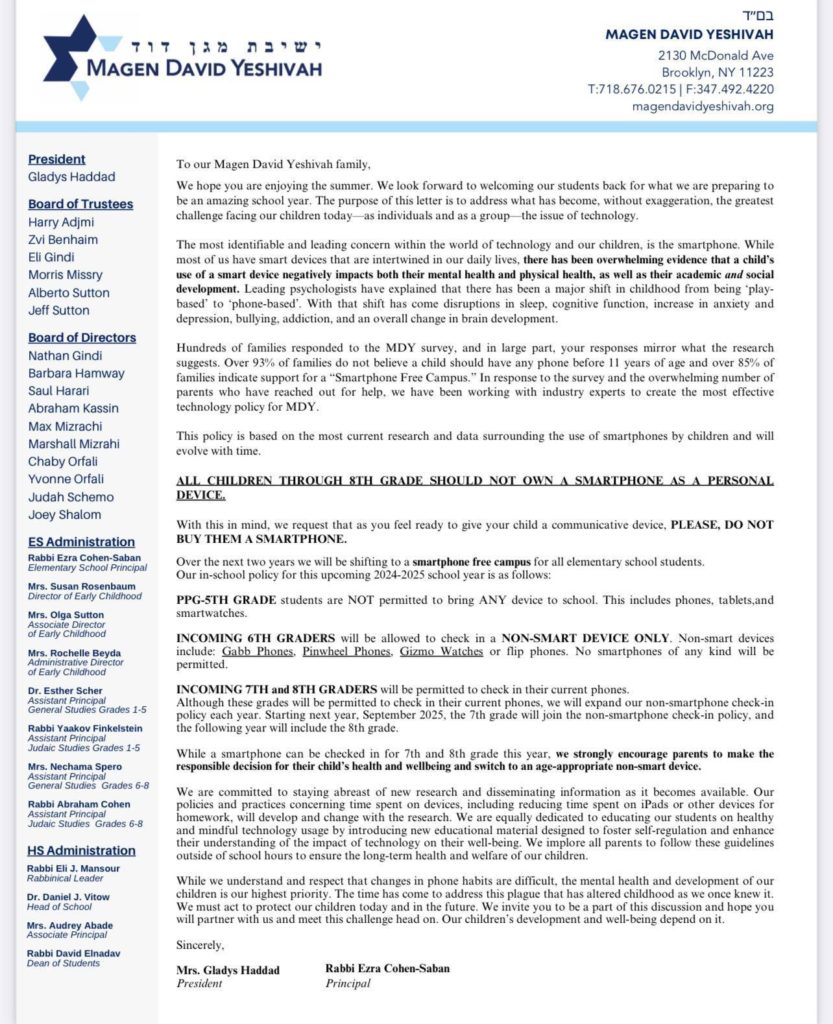
Social Media and our Children: Magen David Yeshiva


Protecting our children from Social Media


TISH’A BEAB: The Day Jerusalem Could Have Been Forgotten

כֹּה אָמַר ה ’צִיּוֹן שָׂדֶה תֵחָרֵשׁ, וִירוּשָׁלַיִם עִיִּים תִּהְיֶה

Yesterday we began to explain one of the five tragic events that we remember on the 9th of Ab, the day of national mourning for the Jewish people. This terrible event, perhaps the least known, is called in Hebrew: “the plowing of the city” of Jerusalem (חרישת העיר).

After the Roman emperor Hadrian retraced his steps and regretted his decision to authorize the Jews to rebuild the Bet haMiqdash, relations between the Jews and the Roman empire began to worsen.

One of the most tense moments was when the emperor traveled to the Middle East and (129-130 of the common era) and was horrified by one of the most common practices carried out by Gentiles in that region: castration, especially of slaves to make them eunuchs, and “taming” them. Let us clarify that castration is strictly prohibited by the Tora. Not only human castration but animal castration as well, something that was (and still is) fully accepted in the non-Jewish world. Adriano, then, prohibited human castration and penalized it with the death penalty.
However, an inexplicably, Hadrian extended the crime of castration to the jewish practice of Berit Mila or circumcision….
The Jewish Sages exhausted all venues to try to explain the nature of Jewish circumcision to the emperor’s representatives, and that it had nothing to do with castration. But nothing worked. Adriano banned circumcision and sentenced the transgressors to death. Some historians speculate that Hadrian was influenced by the early Christians, who for different reasons opposed the practice of circumcision and stated that it had been replaced by baptism. Abolishing circumcision was a great victory for their cause.
This decree, which took place around the year 129, further affected the spirits of the Jews, who were willing to sacrifice everything before failing to fulfill the first precept that corresponds to a Jewish child. It also led to collective despair. They had already given up hope of seeing the Bet haMiqdash rebuilt, and now they were seeing their people was in imminent danger of extinction. In despair, Ribbi Yishmael ben Elisha went on to say: “Perhaps the time has come for us to stop marrying and bringing children into the world (Baba Batrá 60 b)”.

The annulment of the Berit Mila was not the last straw that broke the camel’s back.
While Hadrian’s was visiting Judea he made another terrible determination: in order to prevent for good the rebuilding of the Temple he decided to remove even the ruins of the Holy City, which reminded the Jews of its destruction. Hadrian ordered to “erase all Jewish memory of the city, and to change its name, thus the Jews would finally forget “Yerushalayim”. Hadrian’s plan included the construction of a new Roman temple for Jupiter (a pagan god), in the same place where the Bet haMiqdash used to be….
This (provocative?) actions sparked a state of maximum outrage and motivated the Jews to plan a “suicide” rebellion against the empire. We will talk about Bar Kokhba’s rebellion later, and now we will concentrate on understanding why in Tisha beAb we remember “that the city was plowed”.

In 130 of the common era Hadrian decreed that the name “Yerushalayim” will be eradicated, and that the new city shall be called from now on: “Aelia Capitolina”. “Aelia”, in honor of Adriano, since it was one of his names (Aelio) and “Capitolina”, in honor of the Roman mythological idol, Jupiter capitoline, to whom the pagan shrines of the new city were to be dedicated.
Now, what did the Romans do, in general, to erase an old non Roman city and lay the foundations of a new city in that same place? The ceremony for consecrating a new Roman city consisted of plowing the previous city, more specifically, demarcating new edges of the city with carved furrows. The ceremony of the plowing of Jerusalem and the dedication of the new pagan city took place on the 9th of Ab of the year 130.
This “ceremony” was celebrated by the Romans by minting a commemorative coin. The text of the coin, as we can see in the image above says: “Col (onia) Ael (ia) Capit (olina)”. Representing Rome, Hadrian can be seen clearly on the left side, plowing the furrows of the new Roman city and demarcating its limits.

The plowing of the city of Jerusalem and the changing of its name shows us that the Goyim did everything in their hands, even 2,000 years ago, to eradicate every trace of memory of a Jewish Jerusalem, and ensure that we will never even dream to return and rebuild our Capital or our Temple.

Ironically, today, no one remembers Adriano י”ש and the name “Aelia capitolina” or the ceremonies of the mighty Roman Empire can only be found in history books and museums.
However, 1,900 years after this day, there is no human in this planet that has not heard the name “JERUSALEM”, our capital city, more beautiful than ever, that B”H is again in our hands.

God willing, the imminent reconstruction of the Bet HaMiqdash, is only a matter of time.

WE MUST BE VERY PROUD TO BELONG TO A NATION THAT NEVER ALLOWED ITS MEMORY TO BE ERASED AND WE HAVE TO BE VERY GRATEFUL TO THE ALMIGHTY FOR THE PRIVILEGE OF LIVING IN THESE TIMES, WHICH ONLY THE PROPHETS OF ISRAEL DARED TO DREAM OF.


YOM MEORI, a sad poem for Tisha beAb

יוֹם מְאוֹרִי

יוֹם מְאוֹרִי חָשַׁךְ בְּגֵרוּשׁ קַסְטִילְיָא אוֹי לִי עַל שִׁבְרִי שֶׁבֶר יְרוּשָׁלַיִם אַל תִּזְכְּרִי עוֹד אֲהָה עָלַי וְאוֹיָה לִי כִּי לְשֶׁבֶר קַאסְטִילְיָא לֹא נִמְצָא צֳרִי מִפּוֹרְטוּגַל נִשְׁמַע קוֹל נְהִי בְּמָרָה אֲהָה עָלַי וְאַלְלַי כִּי אֵין שֶׁבֶר כְּשִׁבְרִי וּמָזוֹר כִּמְזוֹרִי עַז פָּנִים מֶלֶךְ קָשֶׁה מְנֻוָּל שְׁמוֹ אֲהָה עָלַי וְאוֹיָה לִי שָׁכַח שֵׁם אֱלֹהֵי יִשְׁעִי וְאוֹרִי יְלָדִים הָאוֹמְרִים בְּכָל יוֹם שְׁמַע יִשְׂרָאֵל אֲהָה עָלַי וְאַלְלַי אוֹמְרִים לָעֵץ הָקִיצָה וְלָאֶבֶן עוּרִי הַמְיַחֲדִים בְּכָל יוֹם ה’ אֶחָד אֲהָה עָלַי וְאוֹיָה לִי אָמְרוּ אָב בֵּן וְרוּחַ אֲשֶׁר הוּא יוֹצְרִי קִיְּמוּ וְקִבְּלוּ אֲבוֹתָם כָּהֵם אֲהָה עָלַי וְאַלְלַי אָמְרוּ שְׁלוֹשָׁה אֵלֶּה הֵם כִּתְרִי וּנְזִירִי סִפְדוּ וּנְהוּ נְהִיָּה עַל בֵּית הַתְּפִלָּה אֲהָה עָלַי וְאוֹיָה לִי אֵיךְ סִפְרֵי הַקֹּדֶשׁ נִטְמְנוּ בַּעֲפָרִי וַחֲכָמִים חֲסִידִים וְאַנְשֵׁי מַעֲשֶׂה אֲהָה עָלַי וְאַלְלַי אָמְרוּ בְאִישׁ מֵת שַׂמְתִּי אֲנִי שִׂבְרִי נַחֲמֵנוּ הָאֵל בְּקָרוֹב בִּתְשׁוּעָה בִּמְקוֹם אֲהָהּ אָרִים בִּתְרוּעָה בְּבוֹא יִנּוֹן וְאֵלִיָּה גוֹאֲלִי

My day of light turned into darkness, with the expulsion of Castilla. Woe to me for my suffering!

Don’t remind me of the destruction of Jerusalem anymore, because for the destruction of [the Jewish communities of] Castilla I haven’t found a remedy.

From Portugal a voice is heard crying with bitterness, because there is no destruction like mine and exile like my exile.

The wicked and cruel king [of Portugal Manuel] “menuval” his name, imposed the uprooting of the name of my God, my Savior, my Light!

The children who used to say every day “Shema Israel” , now say to the wood [the cross] “Rise!” and to the stone [the statues of the christian saints] “wake up!” .

Those who used to say “God is one” now say “the father, the son and the spirit” are my creator.

Their parents [also] had to accept [the forced conversion to avoid death] and they had to say: “These three are my crown and my glory.”

Cry and decree mourning for the [abandoned] Synagogues, and for the sacred scrolls [of Tora] that had to be buried in the dust.

And for the pious sages and men of action, who have been forced to say: “In a dead man I put my hope.”

May God soon console us with His salvation, and that instead of crying “AHA” may we sing with joy, with the arrival of our Messiah and Eliahu HaNabi.


Jeremiah and the destruction of the First Temple

The first Bet haMiqdash, the Great Temple of Jerusalem, was destroyed on the 9th day of the month of Ab of the year 586 before the common era, about 2600 years ago.
 
THE ROD OF YEHUDA
 
Our Sages explained that the enemies of Israel are like the rod with which God punishes the people of Israel for their transgressions. Therefore, when we fast in memory of the destruction of the Bet haMiqdash, we do not do it to remember the lost battles or to demonstrate our resentment against the enemy, but to become aware of our collective responsibility in these events and reflect on what we did wrong to deserve God’s abandonment. HaShem’s presence departs from us when we abandon the Torah and its paths of goodness. And without His protection, we are exposed and vulnerable to the enemy.
 
The first Bet haMiqdash was destroyed for three main reasons: the Jews of that generation worshipped other gods (abodá zará), practice murder with impunity (shefikhut damim), and were involved in sexual promiscuity (gilui arayot). These are the three cardinal sins in Judaism.
 
To warn the people, God comminuted with his prophets, to warn His nation that they were heading down the wrong path. The prophets passionately spoke to the people, especially the king and the aristocracy, and conveyed “God’s point of view” about their behavior. The prophets denounced injustice and warned that if they continued down the wrong path, HaShem would distance Himself from them and they would fall into the hands of the enemy, who is always lurking. These adversaries of Israel will act without mercy and God warns that he will not prevent it.
But the Jewish people did not listen to the prophets… and the city of Jerusalem was destroyed.
 
THE PROPHET OF ANATOT
In the last years of the first Bet haMiqdash, the most prominent prophet was Yirmiyahu (Jeremiah) who lived in the times of Yoshiyahu, of Yoyaqín, of his son Yoyakhín, and of the last king of Yehuda: Tsidqiyahu.
 
Below we present a brief example of Jeremia’s words to the Jewish people, which show us the state of immorality that prevailed in the society of Yehudá.
Yirmiyahu warns the king and the people of the inevitable consequences of their wrong actions:
 
“Thus said HaShem, … Practice justice and righteousness, free the oppressed, do not humiliate or mistreat foreigners, orphans, and widows… do not shed innocent blood. … If [you reconsider, and you correct your actions] and do as I tell you, you will continue to have Jewish kings to govern you, kings who will continue to arrive in their luxurious chariots and horses at this beautiful palace, accompanied by officials and the people… But if you do not heed these warnings, [the enemy will take over this city, destroy it] and this beautiful palace will be turned into ruins.”Chapter 22:1-13
 
 
In another occasion, Yirmiyahu addresses the King and the royalty of Judea (Judea in Hebrew is “Yehuda”, the official name of the Jewish state in those times) and denounces two things: first, that the royalty abused the poor, and second, that they were exceeding in their materialism. It is very interesting to note that Yirmiyahu never criticized the comfort and luxury enjoyed by people who earn their money honestly. The Jewish prophet is clearly not advocating the king’s voluntary austerity. His message is, firstly, that all money should be earned honestly, and secondly, that the wealthy could not abuse their servants: that workers should be treated with dignity and respect.
 
Addressing the king and other members of the nobility, Jeremiah says in chapter 22:13-17 “Woe to you [the king, and the aristocrats], who build your palaces and tall buildings on the basis of abuse and injustice. You make others work without paying them their wages…you say: ‘I will build myself a large mansion, with large rooms on the upper floor’… you open windows, and cover your walls with cedar, and paint them red… Do you think that being a king consists of living surrounded by cedar? [True, your ancestors also] enjoyed a life [with luxury]; but [unlike you, they] acted with justice and righteousness… always attentive to protect the rights of the poor and oppressed… this is what is called “knowing God” [acting aware of the Divine presence] … but you only care about ill-gotten gains; you let the innocent die, and oppress and exploit [the poor of] your own people.”
 
HOW DID IT HAPPEN? 
To understand what led the people of Israel to abandon the Tora, we have to go back to the times of King Menashe. Menashe ruled in Judah. His reign was the longest, and in some ways, the worst of all. In his eagerness to make peace and enjoy the economics benefits of being part of the powerful Assyrian Empire, Menashe transformed Judah into an Assyrian province in every sense. He imported the Assyrian gods and cult, and systemically tried to eradicate the Tora and the observance of the Mitsvot. And he succeeded. Two generations of Jews were totally uprooted from any Jewish practice and distanced from God and His Tora. Yehuda never completely recovered from that. The Bet haMiqdash was used for the worship of idols, and the Kohanim (priests) who refused to serve idols were expelled or eliminated.
The Jewish judges, famous for their sense of fairness, also assimilated and no longer judged with the justice of the Tora. They followed Assyrian justice, which always favor the most powerful. After Menashe, his son Amon reigned. He was as bad as his father, but at least he ruled for a short period of time: two years.
Amon was succeeded by Josiah (Yoshiyahu 640-610 BCE). He implemented an extraordinary religious revolution to serve God again. The story of Josiah is fascinating. In his time, while making certain repairs on the walls of the Bet haMiqdash, they found a hidden Sefer Tora (Torah scroll). After more than 60 years of religious abandonment, it seems that there was no other book of Tora in existence. Upon reading the Tora for the first time in his life, King Josiah was moved and decided to serve HaShem again. Thus began a process of national Teshuba (repentance), which was partially successful.
This is when the prophet Jeremiah begins his mission, trying to convince the Jewish people to return to religious observance.
 
We will now see some illustrations of his prophecy and his warnings about the idolatrous immoral practices that the people were prcaticing from the times of Menashe.
 
In chapter 10 of Jeremiah we read:
“Do not follow the example of other nations, nor be frightened by the signs of heaven (=astrology), as those nations do. The practices of those people is vanity. They cut wood in the forest, a sculptor carves it with his chisel, then they adorn it with silver and gold, they secure it with nails and hammer so that it does not fall [and they worship this piece of wood as if it were a god!]. The idols are like scarecrows in a field planted with melons; they cannot speak, and they have to be carried because they do not walk. Do not fear [superstition] those idols, who do no harm or do good to anyone. [Understand that] HaShem is the true God, the God of life, the eternal King…
 
In chapter 17, we see how Jeremiah tries to persuade the people to observe Shabbat again. The Judeans were so assimilated that for them, Shabbat was just another day. The Assyrians, who were very sharp merchants, had contributed to this assimilation by mocking those Jews who did not work on Shabbat, accusing them of being lazy. HaShem orders Jeremiah to stand at the entrance of the Jerusalem market on Shabbat and say this to the people:
 
“King, and people of Judah, inhabitants of Jerusalem who enter through these gates, listen to the word of HaShem… on Shabbat, and for the sake of your own lives, do not bring your goods [to sell or trade] through the gates of Jerusalem… do no work on this day. Consecrate the Shabbat, just as I ordered your ancestors’…”
 
ABANDONMENT OF THE TORA
Jeremiah was very clear that the abandonment of religious observance was also responsible for the decay of the legal system and the cessation of social justice. Especially for the protection of the rights of the needy: the poor, widows, and orphans. There is a phrase that is repeated over and over again in the prophecies of Jeremiah: yedi’at HaShem, “knowing HaShem”. For Jeremiah, knowing HaShem means 1. Knowing that HaShem is permanently observing us and making us accountable for our actions. 2. “imitating God”, which is the highest expression of Jewish spirituality. 
 
But how does one imitate God? Jeremiah reminds the people what the Tora says: HaShem is the protector of orphans and widows, He bestows kindness with the needy and liberates the oppressed. This message is repeated dozens of times in the book of Jeremiah. In chapter 9 we see a very brief example: 
 
“Thus says HaShem, let not the wise man glory in his wisdom, nor the mighty man glory in his strength, nor the rich man glory in his riches. But let him who glories glory in this, that he understands and knows me, that I am the LORD who practices steadfast love, justice, and righteousness in the earth. For in these things, I delight, says HaShem.”
 
In the days of King Jehoiakim, HaShem spoke to the prophet Jeremiah and told him to go to the Bet haMiqdash and convey this message:
 
“God says, …thus you shall say… to all [those who come from] the cities of Judah …do not omit a single word [of what I tell you]. Perhaps they will listen and repent of their evil ways. If they do so, [I too] will desist from the evil I intended to do [to the Bet haMiqdash and Jerusalem] because of their evil deeds. You shall warn them that thus says HaShem: ‘If you do not obey me or abide by the law that I have given you, and if you do not listen to the words of my servants the prophets, whom I have sent time and time again and you have disobeyed, then I will do to this house what I did to Shiloh'”. Chap. 26: 1-6
 
Now, the prophet declares what his mission truly is. HaShem sent the prophets to save His people, to spare them from the consequences of their wrongdoing. The prophecy he announces is the destruction of the Bet haMiqdash (Temple), that could suffer the fate of the Tabernacle of Shiloh, which was destroyed by the Philistines during the time of the prophet Shemuel. However, if the people repent and if the leaders correct their actions, destruction of the Temple can be prevented…
 
THE MISSED OPPORTUNITY
But how did the people at the Bet haMiqdash react to the words of Jeremiah? Did they pay attention to Yirmiyahu’s warning to correct themselves? Exactly the opposite! The Priests and the false prophets, the leaders of the Bet haMiqdash, condemned Yirmiyahu to death! They claimed that the young prophet threatened their authority and leadership and they branded him as a rebel and an instigator. They accused Yirmiyahu of demoralizing the people and working for the enemy because while the false prophets announced that everything was fine, Yirmiyahu was indirectly inciting a rebellion against the established religious leadership of the Temple. With great hypocrisy, the priests and false prophets said: “How is it possible that this man says that the Bet haMiqdash will be destroyed? Does he think that HaShem does not have the power to prevent the destruction of His Sanctuary?” 
Yirmiyahu was publicly beaten and miraculously saved his life.
 
But as we have already explained, for HaShem the actual building of the Bet haMiqdash, its walls, its enclosures, and its stones mean nothing if the people did not behave with integrity! People who acted badly cannot come to the Bet haMiqdash to cleanse the sins they continue to commit. Religious ritual, if not accompanied by upright and honest behavior, is cynicism and sacrilege.
 
The strong words of Yirmiyahu against this hypocritical attitude speak for themselves:
 
“Correct your behavior and your actions, and I [God] will let you continue living in this land. Do not trust the deceptive words that [the false prophets] repeat: ‘This is the temple of the Lord! This is the temple of the Lord! This is the temple of the Lord! [that will never be destroyed]’. If you correct your behavior and your actions, if you practice justice with each other, if you do not oppress the foreigner or the orphan or the widow, if you do not shed innocent blood in this place, nor continue to worship other gods … then I will let you continue living in this land, the land that I gave to your ancestors forever… [but] you … keep stealing, killing, committing adultery, swearing falsely, burning incense to [the pagan god] Baal, and following [the immoral practices] of other foreign gods, and then come and stand before Me, in this house that bears My name [the Bet haMiqdash], and say: ‘[Here] we will be safe’ [God will protect us and not let anything happen to His house], only to continue committing all these abominations! Do you think this house that bears My name is a den of thieves [a refuge for criminals]?”. Cap 7: 3- 11
 
The Jews did not listen to Yirmiyahu and missed the opportunity to absorb the prophet’s message and repent. Shortly thereafter, the city of Jerusalem and its Temple were destroyed.
 
The words of Yirmiyahu, sadly, were not heeded in his generation. But they were written for future generations as a testimony for us all.
 
Tonight and tomorrow, we will observe the 9th of Ab, the day of national mourning, dedicating ourselves to introspection, to remember the mistakes of our ancestors to correct them and never repeat them again