What Type Of Shofar Should We Use For Rosh HaShana?

Listening to the Shofar is the most important Mitsva of Rosh haShana.

“Shofar” is the word used by the Tora to define an animal’s horn when used to emit sounds. For similar instruments made of metal, like trumpets, the Tora uses a different name:  “hatsotsrot”.

The question we will analyze today is: being that there are many animals with horns, and almost all those horns can be used to emit sounds, which one should we use for the Mitsva of the Shofar in Rosh haShana? Can any animal horn be used as long as it produces a sound, or does it have to be the horn of a specific animal?

For centuries, the typical Shofar used in Rosh HaShana is the ram’s horn (the ram is the male of the sheep), or qeren hakebasim..

Let’s see what our Sages discussed 2000 years ago. While in principle they prescribed the use of the ram’s horn for the Shofar, our Sages also evaluated the use of other horns to comply with this Mitsva. All rabbis agreed to ban the use of an ox or bull horn (the male of the cow, qeren shel para) for the Mitsva of Shofar. Beyond certain technicalities (eg, the stuffing of the bull’s horn is integrated into the horn, whereas the ram’s horn’s stuffing is separated from the horn) the bulls’ horn would be associated with the sin of the “golden calf” (the calf is a young bull), precisely during the day we ask God that our transgressions be “forgotten.”

The ram’s horn, on the other hand, brings a very positive memory: ‘aqedat Itshaq, the sacrifice of Itshaq Abinu. After our patriarch Abraham successfully passed his test and demonstrated that he was willing to sacrifice what he most loved in the world to do the will of HaShem, he found “a ram whose horns were caught in a thicket” and offered it to HaShem as a sacrifice instead of Itshaq. The ram’s horn, then, recalls the event that marked the last and most difficult of the tests that Abraham Abinu passed, after which he was blessed with a special berakha. Bereshit (Genesis 22: 17,18) “I will bless you and multiply your offspring as the stars of heaven and as the sand of the sea … and because you have obeyed Me, all the nations of the world will be blessed through your descendants.”

The ram’s horn, therefore, not only emits a beautiful sound but also brings to mind the blessing of HaShem to Abraham and the merit of our first patriarch. Something very appropriate for the day on which our merits are evaluated.

In our days, the antelope Shofar, also known as the ‘grand kudu” or “Yemenite Shofar, has become very popular. Its size is 3 or 4 times longer than the Shofar of ram, easier to blow and it produces a very deep sound.
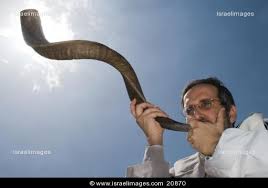
Now that we understand the importance of the ram’s Shofar we should ask ourselves: can we use the antelope horn or another Shofar in Rosh Hashana, or are we obliged to use exclusively a ram’s Shofar?

Antelope Shofar can be used without problems for Selichot during the month of Elul by those – Sepharadim or Ashkenazim – who use the Shofar during Elul.

In Rosh Hashana, however, the use of antelope Shofar is a controversial issue.

According to Maimonides’ opinion (MT Hilchot Shofar 1: 1), the only Shofar that can be used in Rosh Hashana is the ram’s Shofar. All other Shofarot are not appropriate for Rosh haShana.

In the opinion of the Shulhan Aruch (OJ 586: 1), in Rosh Hashana we should use in principle the ram’s Shofar. Only when there is no a ram’s Shofar available, the antelope’s Shofar could be used.


Rosh HaShanah and the Original Sin

Tonight, Friday, September 15th, marks the beginning of Rosh HaShanah, the Jewish New Year. Rosh HaShanah is a day of celebration and reflection. On this day, we begin the process of Teshuba, which means “repentance and change,” starting with the sounding of the Shofar.

Maimonides states that Teshuba consists of three steps:

HAKARAT HACHET, the acknowledgment of personal responsibility for what we’ve done wrong

VIDUY, confession, and verbalization of our bad habits and wrong deeds.

AZIBAT HACHET, the decision to leave our bad habits behind and correct our actions.

Hakarat hachet, admitting our mistakes, is the first step and is probably the most challenging hurdle we have to overcome to achieve Teshuba. Because naturally, we tend to justify and rationalize all the bad things we’ve done. Or perhaps because we fall into the oldest psychological trap in human history: “blaming others,” also known as “the blame transference syndrome”.

We all know that HaShem punished Adam and Eve by expelling them from paradise. But what sin did they commit? Was God punishing them because they ate from the forbidden fruit, as it is conventionally believed?

Try the following experiment. Place all kinds of treats, candies, and pastries on a table. In the center of the table, on a special and visible plate, put a fruit or a vegetable (It doesn’t have to be an apple; the Tora, actually, never mentioned the apple). It could be a tomato or something that generally doesn’t tempt children. Now, call a 5 or 6-year-old and tell them, “You can eat whatever you want, except for that tomato in the center of the table.” I assure you it’s only a matter of time until the child disobeys, abandons all the sweets and treats, and grabs the tomato. The forbidden fruit, just because it’s forbidden, awakens curiosity and an irresistible desire.

According to Rabbi Yosef Albo (Spain, 1480-44), the original sin of Adam and Eve was not that they ate from the forbidden fruit. In his opinion, HaShem knew that sooner or later, they would succumb to temptation. According to Rabbi Yosef Albo in his sefer haIqarim, HaShem, like a loving parent with their children, wanted to teach the first humans the important lessons for life. In this case, the path of Teshuba, that is, what to do when one makes a mistake. In this case, disobeying the single command. The Creator knows that humans have temptations and desires and make mistakes. And that’s why He created the scenario for Adam and Eve to “fall”, and in doing so, train them to recognize their mistakes, correct themselves, and thereby grow in experience and maturity! God knows that making mistakes is part of human nature; otherwise, there would be no “Mitsva” (commandment) to do Teshuba, to repent and correct oneself. HaShem gave the first man the opportunity to learn how to repair his relationship with Him through Teshuba.

For Rabbi Albo, therefore, the original sin was not Adam’s disobedience: but his denial, and refusal of taking responsibility for his mistakes. Instead of admitting personal responsibility, apologizing for disobeying God, and learning a valuable lesson, Adam shifted the blame to Eve, telling God, “The woman that YOU gave me” (“You”, referring to HaShem. In other words, Adam not only blamed Eve but indirectly he also blamed God!), “she tempted me to eat the fruit, and I ate.”

HaShem then asked Eve, but she also avoided personal accountability by blame-transference: “I didn’t do it,” she said, “it was the serpent.”

Blaming others for our mistakes is one of the main obstacles to Teshuba – repentance – and is the oldest excuse in history.


ON BEING A PROFITABLE INVESTMENT

Imagine you are a scientist, and you have an exceptional opportunity: a wealthy investor trusts your abilities and has decided to invest one million dollars per year in you, believing that you will find a cure for a deadly disease. But the contract he offers you is not unlimited: it renews annually. Each new year, you must go to his office and present a report of your accomplishments. He will decide whether to extend your contract for another year or cancel it. In that annual meeting, you must excel. Your job—your future—is at stake. The investor is on your side. He won’t demand that you have achieved the final result yet. He understands that this type of work takes time and dedication. But to continue funding you, he will want to be sure that you haven’t wasted his money or time and that you are doing everything possible to make progress and reach your goal. It is crucial that when you have your annual meeting with the investor, you are completely honest with him, especially about what didn’t go well in the past year. Even though admitting your failures may be uncomfortable, the investor wants to hear you talk about them. He has a lot of experience and knows that there is no better way to prevent you from repeating those mistakes in the future than by verbalizing your errors and admitting them in front of him. If you cannot admit your mistakes or verbalize your failures, you may likely repeat those mistakes and waste another valuable year. In that case, you would become a “high-risk investment.” If that happens, the investor may consider withdrawing his funding… Therefore, it is essential to be honest about your mistakes to secure his support and renew your contract for another year.

We are just a few hours away from Rosh HaShanah, the day that commemorates the creation of humanity. Our sages explained that on this day, the anniversary of the creation of man, the Creator examines each human being. One by one. And decides whether we deserve to be “inscribed in the book of life,” meaning whether He will grant us another year of life. This is the fundamental idea of Rosh HaShanah. The court is in session when we hear the Shofar. Our first mission is to acknowledge the Judge (or King, which in ancient Israel was the same entity) accept His authority over us, and realize that our life depends entirely on Him. When we hear the Shofar, we should not ask for our lives or needs. It is a moment of awe and great solemnity. As Maimonides explains, the Shofar should “awaken us” from our lethargy and remind us that at this moment, it is God who is asking something of us: that we take responsibility for what we have done in the past and will do in the future. When the Shofar sounds, it is not the time to ask for forgiveness. The time to ask for forgiveness is during the seven days following Rosh HaShanah, especially on Yom Kippur, which is why it is known as “the day of atonement.” On that day, we will present our strongest arguments to appeal any negative verdict that may have been issued on Rosh HaShanah and convince the Investor/Creator that we are a profitable investment. And that if we weren’t last year, we will be in the coming year.


SHOFETIM: Children and Bamboo Trees

כי האדם עץ השדה

Debarim 20:19

Towards the end of this week’s Parasha, the Tora addresses the laws of war and teaches the Jewish soldier to behave with respect and dignity, even on the battlefield. One of the most notable details refers to not destroying the city or the fields without reason. Trees are specifically mentioned, suggesting they should not be seen and attacked as “the enemy.” The unusual language used by the Tora on this occasion lends itself to metaphorical interpretations that arise when comparing men and trees.

Today I would like to extend this comparison to the area of our children’s education (parenting) and reflect on the inexhaustible patience that this task demands.

At times, our children seem to stagnate, not maturing at the pace we hoped for. This concern intensifies when they have brothers or sisters who do seem to progress. Parents sometimes do not understand the influence of time on the development of our children and find themselves caught up in worries, suffering unnecessary tensions. We forget what an expert once mentioned: that most of the behavioral problems of children are resolved over time.

I remember certain students from our Talmud Torah: in fifth and sixth grade, they were a constant challenge. Restless, they kept talking and interrupting. They bothered their peers, disobeyed the teachers, and often the only solution was to send them out of the classroom. They spent more time with the principal than with their classmates. But, over time, after 15 years or more, I have seen many of these “unbearable” children transform into exemplary parents, successful entrepreneurs, brilliant professionals, or people with admirable religious discipline.

What happened?

They were maturing at their own pace or, as neurologists say, “the brain needed time to build and strengthen the connections between its areas and hemispheres”.

Having patience does not mean that we parents will sit around waiting —and praying— for our children to mature. It is essential that we are always there to talk, guide, and encourage our children. We must never stop doing it.

To better understand the growth process many of our children go through and understand our role as parents in this process, I would like to share with you the story of the growth of the bamboo tree.

Initially, it is essential to prepare the soil, choose an optimal location with enough light and moisture. Then one sows the seeds. During the first year, the soil with the seeds is constantly watered, but nothing visible happens. In the second year, it is watered and fertilized, but still, not a single shoot sprouts. The third year continues watering and taking care of the area, hoping to see some change, but there are still no signs of bamboo. In the fourth year, you look at the ground and see no progress. The fifth-year comes, and, seeing no results, one might think they have failed in their attempt to grow bamboo. However, surprisingly, in the middle of that year, the bamboo starts to grow rapidly and, in just six months, reaches an impressive height of up to 30 meters!

The million-dollar question is: How long did it take the bamboo to grow? The immediate answer seems to be “six months”. But in reality, it took the bamboo five and a half years to grow. That is, to break through the ground, literally, and begin to grow. And once it started, nothing can stop it.

It should also be noted that, although the progress was not noticeable, during those five and a half years, the bamboo was growing downwards: it was forming a robust root system capable of supporting its great size.

Our children often experience a process similar to bamboo. Their growth requires constant care, “even if the results are not noticeable”, with inexhaustible patience. Remember the bamboo: if, during the first five years, one had given up and stopped watering or protecting the bamboo, that tree would never have emerged.

Every word of encouragement we give them, even in their moments of rebellion or immaturity, is uplifting. They are like water to the bamboo. Our children grow and develop in ways we don’t see. We don’t know when that internal growth will begin to manifest outwardly and reach surprising heights, sometimes even surpassing their siblings, who seemed to develop more quickly.

Like bamboo trees, our children need us to nurture them with love and care constantly.

Over time, and with divine help, they will mature and flourish.

Rabbi Yosef Bitton


SUMMARY OF PARASHAT SHOFETIM

HaShem commands us to appoint judges in all the cities of Israel. Judges must be fair and impartial and should never accept any bribe.

Idolatry, in all its forms, is prohibited and must be penalized with capital punishment. Sacrifices offered to God must be free from blemishes.

Jews are required to follow the decisions of the Sanhedrin, which is the Jewish Supreme Court. Rebelling against this rabbinical court is considered a capital offense.

The Tora provides instructions about the laws of the Jewish king. The overarching principle for the Jewish king is that he should act with the knowledge that God is the true King of Israel. The human king has limitations to ensure he remains mindful of his true role. He should not accumulate an excess of horses, have an abundance of women, or amass vast personal wealth. The king is obligated to write his own scroll of Tora – the constitution of the Jewish people – and carry that copy with him at all times (as if, in today’s context, the American president were required to carry a copy of the American Constitution permanently in his pocket). This ensures that the monarch remains humble and is constantly reminded that his primary duty is observing the Tora and enforcing God’s Law in his domain.

God chooses the Cohanim to serve Him in His Sanctuary. “God is their inheritance,” meaning that the Bet haMiqdash will be “their territory” (akin to their second home). Thus, their tribe, the Levites, will not receive a specific territory in the Land of Israel like the other tribes. So, how will the Cohanim and the Levites sustain themselves? The Priests and the descendants of the tribe of Levi will benefit from a series of taxes and tithes (in Hebrew: “priestly gifts”) that the people offer them: certain portions of the meat from specific sacrifices, the tithes of the harvest, fruits of the land, a share of the shearing, etc.

The Tora strictly forbids divination, occult practices, and future’s predictions. Maimonides contends that all these practices are illusory, simply tricks and deception, as paranormal phenomena are fictitious and often manipulated by charlatans to deceive and exploit the common people. In earlier times, these practices were deeply ingrained in idolatry and pagan culture. The Tora instructs us that we should place our faith and trust in the Creator rather than attempting to decipher the future.

We Jews are privileged to be guided by the Tora, and we’re also blessed that God sends His prophets to convey His words to us, as Moshe did. The prophets that God dispatches come with the mission to caution the people when they stray from the path of Tora. Naturally, their words must be heeded. However, the Tora also warns about those who falsely profess to speak in God’s name. These false prophets did not caution the people of their wrongdoings. Instead, much like skilled demagogues, they reassured them and criticized the genuine prophets, accusing them of being alarmist and pessimistic. One can recognize a false prophet when he advocates for suspending or altering any Tora commandment.

The Tora underscores the obligation to establish cities of refuge for unintentional manslaughter (a modern-day equivalent might be if someone inadvertently kills another in a car accident). Moses mandates the designation of six sanctuary cities.

For a civil or criminal trial to lead to a conviction, testimony from at least two witnesses is necessary. Those who bear false witness shall receive the very punishment they sought for the accused.

Toward the end of this Parasha, the Tora outlines some of the laws of warfare and military campaign protocols. For instance, who is exempted from military service? As soldiers approach the battlefield, one of the Cohanim must address them, assuring them not to fear the enemy since God supports the Israeli army in their conflicts. This Cohen also lists individuals who are to return home: someone recently engaged and about to marry; someone who has built a new home and hasn’t occupied it yet; or someone who has planted a vineyard and hasn’t yet enjoyed its fruits. The Cohen further advises anyone suffering from anxiety or panic to depart the battlefield to prevent demoralizing other soldiers. Before engaging the enemy, a peace proposal must be extended. Only if the enemy declines this overture does the conflict ensue. However, in wars against the Canaanite nations, these populations are to be entirely eradicated to prevent assimilation into pagan cultures.

This Parasha concludes with a description of the legal procedure to be executed when a body is found in a non-urban setting, and the perpetrator remains unidentified.


SHOFETIM: Kings, with limited powers

One of the main issues discussed in our Parasha is the role of the “king” of Israel. Unlike other monarchies around the world, for the Jewish people, the king was not the central figure. The Tora seems to “tolerate” the people’s desire to have a king but does not prescribe it as the ideal situation for the People of God. We see this reflected in the book of Shemuel, chapter 8:7, when God tells Samuel that the people are asking for a king because “they have rejected Me…”.

The Jewish king must maintain a low profile, which is in complete contrast to gentile kings who imposed their superiority on their subjects to earn respect. Gentile kings viewed themselves—and behaved—as “gods.” Egypt had many gods, but Pharaoh was considered above all of them. As Yechezqel (29:3) says of the Egyptian monarch: “The Great Crocodile [as Pharaoh referred to himself], who says: mine is the Nile River [also a supreme divinity in Egypt] and I created myself.” A similar situation existed with Roman kings and emperors, like Caligula, who presented himself as a god, even in the Roman Senate. In the Middle Ages, kings were not much different. They may not have claimed to be gods, but they often considered themselves the “spokesperson” of their gods, which made their decisions—no matter how immoral or arbitrary—seem divinely sanctioned and infallible (as is still the case with the Pope today). Gentile kings, in general, were above the law and not accountable to any higher authority because there was none. Obeying the king was seen as obeying God. This allowed countless abuses and atrocities to be committed by kings in the name of their gods. The Tora, however, is unique in this respect—absolutely revolutionary.

Our Parasha describes three unique characteristics of the king of Israel:

  1. The king of Israel has limitations. He cannot accumulate wealth, meaning he could not justify charging excessive taxes from the people. The Jewish king couldn’t have too many horses, so he would not build a more powerful army than necessary. He also couldn’t have too many wives, which, among other things, limited his ability to form alliances with neighboring gentile peoples (Debarim 17:16-17).
  2. The king of Israel had to be a talmid hakham, meaning a Tora scholar. He was required to write a Sefer Tora, or at least the book of Debarim (17:18), and carry it with him wherever he went, ensuring that he would always remember to remain faithful to the Divine law. The king of Israel had to study the Tora “all the days of his life” (17:19) to understand everything that HaShem expects of him and of each of his subjects. This study was not meant to show off his wisdom to nobles or commoners, but to improve his behavior and refine his character, as we will see below.
  3. Perhaps the most defining characteristic of the Jewish king was that he must behave with humility, in complete opposition to gentile kings—and even some contemporary presidents. The Tora explicitly states in Debarim 17:20: “[The king will have to read the Tora…] so that his heart does not exalt itself above his brothers and does not turn from the commandments to the right or to the left.” The key lesson of this verse is that the Tora does not say the king should not exalt himself above “his subjects,” but above his “brothers.” Why? Because in the Jewish people, the relationship between the king and his people was not vertical but horizontal. It was not “king/subjects” but “elder brother/brothers.” While in other nations the king was an exception to the law—free to change it at will due to his status as the spokesman for the gods—the king of Israel was the first to declare his submission to the law. In the Jewish nation, the king is not the “central figure” because the law does not depend on his authority. That is why the Tora does not include any specific mitzva to obey the human king: both the kings and the people of Israel are equally bound to obey the same law—the Tora.

The following sentence summarizes the key difference between the Jewish king and gentile kings:

While in other nations the king is god, for Israel, God is the King.

Shabbat Shalom!

Shabbat Shalom!


AWESOME CREATION, A Study Of The First Three Verses Of The Tora

The first three verses of the Torah are perhaps the best-known sentences of the Hebrew Bible. They may also very well be the least understood. In Awesome Creation, Rabbi Yosef Bitton delves into these verses with an open mind and an open heart. Drawing on classical Jewish sources as well as current scientific data, Rabbi Bitton offers a fresh reading of the initial words of Scripture. Among the subjects covered are the coincidences and differences between the Big Bang theory and the Biblical Creation story, the unexplored consequences of Creation ex nihilo, the controversies surrounding the age of the universe, the state of our planet upon its creation, the natural forces used by the Creator to reshape His world, and the enigma of the nature of primeval light. Throughout his book, Rabbi Bitton emphasizes the importance of an accurate comprehension of Biblical Hebrew, as explained by the Rabbis of the Talmud and the classical Torah commentators. Through a precise understanding of each word of these verses and thanks to today s modern scientific knowledge we are able to appreciate, as never before, the beauty and sophistication of the Biblical story of Creation.

2 REVIEWS OF “AWESOME CREATION”

IN AMAZON

THE TORAH PERSPECTIVE
By Ruth Sher
For as long as I can remember, I have always been fascinated by the mystery of creation. I used the creation story as the topic for my Bat Mitzvah speech, and I took a course in astrophysics at university. As a religious Jew, I believe in the Torah’s creation narrative, but as a scientist, I believe in the Big Bang. According to Rabbi Yosef Bitton, that is no contradiction.
In Awesome Creation, Rabbi Bitton presents my favourite consolidation of the creation narrative with Big Bang theory. Rather than trying to find Torah sources to support modern scientific thinking, Rabbi Bitton focuses on trying to understand the simple meaning of the Torah words. Only once he has established clearly what the Torah is saying does he present modern scientific theories for support. Rabbi Bitton is coming from the perspective of a ‘grammarian’, not a scientist, so he does not accept any scientific explanations (compelling though they might be) that break the precise rules of Hebrew grammar.
The backbone of Rabbi Bitton’s approach is the idea that creation was a gradual, yet accelerated, process. He derives the concept of gradual, accelerated creation from a midrash explaining the events of the sixth day of creation, and uses an analogy to explain it: If someone showed you two pictures of a watch, one in which the hands were pointing to 12 o’clock, and the other in which the hands were pointing to 2 o’clock, and asked you how much time had passed between the two pictures, the simplest answer would be that two hours had passed. That is based on our knowledge of how watches work under normal circumstances, without external influences. However, it is possible that someone manually wound the watch forward by two hours, in which case the two pictures could really have been taken seconds apart. The external influence caused the process to be accelerated, but it is still gradual in that the hands of the watch passed through every position between 12 o’clock and 2 o’clock.
In the creation story, science can describe the gradual process that had to take place, as well as the time that would have had to pass for that process to be completed naturally. But the Torah assumes the presence of an outside influence, namely G-d, which could cause the acceleration described in the Biblical narrative. This accounts for the difference in timing for creation, according to the two views. However the acceleration would only speed up the process, not change it. Rabbi Bitton explains the gradual process of creation as described by the Torah as follows:
• In the beginning, all the building blocks of matter were created (in a Big Bang event).
• The young Earth was formed with a toxic atmosphere, but it was equipped with wind and water.
• Intense sunlight penetrated the atmosphere and began to heat the water. (Day 1)
• The water evaporated, and the wind helped to begin the water cycle. (Day 2)
• The wind and rain together shaped the land into its current structure, and plants were able to emerge. (Day 3)
• Plants produced oxygen which cleared the toxic atmosphere and formed into an ozone layer, blocking out the intense sunlight so that the sun could become life-sustaining. (Day 4)
With the presence of a life-friendly environment, the creation of animals and humans (in days 5 and 6) would be possible. Although Rabbi Bitton does not discuss the emergence of life in any detail, he does mention in a footnote that it would be interesting to explore that in a separate book.
The book is laid out as an analysis of first three verses of the Torah. As each verse, and each word, is explored in detail, a view of the creation process emerges that is uncannily in line with current scientific thought.
HIGHLY RECOMMENDED
By Michelle Cohen
Awesome Creation is really a fantastic work. Highly recommend it to anyone interested in delving into the biblical story of creation. The work is divided into three parts, each analyzing a different verse from the beginning of Genesis. The verses are analyzed using Hebrew grammar, clsssical commentaries, modern Jewish thinkers, scientific findings, relevant biblical parallelisms and philosophical ideas.
I would say that there are three aspects which make this work stand out.
First, the attention given to Hebrew grammar. Often, modern Biblical commentaries are not versed enough in Dikduk to be able to give over a sophisticated and traditionally accurate reading of the Hebrew text. This is something which was always indicative of classical Sepharadic biblical scholarship and which Rabbi Bitton does a fantastic job of integrating in his work.
Second, the way the book integrates science and scientific findings to explicate the words of Bereshit. This is not a book which directly deals with the science vs. religion question. It does not seek to solve that dilemma. What Rabbi Bitton does instead is to highlight how modern science sheds new understanding on some biblical/talmudic ideas and concepts.
Third, this book brings to life many, many Rabbis which are to often absent from normative Jewish literature in America. He features writers like R Moshe Chefetz, R’ Menashe Ben Israel, R’ Morris Raphall and many others. These voices add nuances and new understandings which are currently not being heard in the scholarly and religious discourse around Biblical exegesis.
Overall, I found the book great. It presents very complex subjects in an accessible manner (especially since it has a summary to every chapter) and is also filled with inspiration of the divine genesis. I very much recommend Awesome Creation.


Rules for the 30 days and the year

MOURNING FOR PARENTS AND OTHER RELATIVES
The mourning periods differ depending on whether one is mourning for parents or other relatives. For a father or mother, the mourning period is twelve months, while for other relatives—husband, wife, brothers, and children—it is thirty days. We keep a stricter mourning period for our parents because it is part of the Mitzva of Kibbud Ab vaEm, honoring one’s parents, which does not expire when our parents pass away.

COUNTING THE 30 DAYS
The thirty days are always calculated from the day of burial. The day of the burial counts as day one. Then you count twenty-nine additional calendar days. When you reach the thirtieth day, the period of Shloshim is completed.

JEWISH HOLIDAYS AND THE CANCELLATION OF SHELOSHIM

When observing the thirty-day mourning period (Sheloshim) for a relative other than a parent, the arrival of a major Jewish holiday (such as Pesach, Shavuot, or Sukkot) cancels the remaining days of Sheloshim. In that case, the mourner may shave or get a haircut before the holiday, on the eve of the festival. However, when mourning for a father or mother, the thirty days must be fully completed before shaving or cutting hair is permitted. The festival does not cancel this particular restriction.

KADDISH
The most important honor rendered for the memory of a loved one is the recitation of Kaddish, which requires the sons to participate in daily Minyanim. Torah study—whether through courses, classes, study groups, or even self-study—in memory of the deceased is also a meaningful way to pay respect. It is equally meritorious to participate in charitable causes, educational projects, or religious volunteer work. According to our tradition, all these actions represent a tribute to our parents.

SHAVING, HAIRCUTS, AND NAILS
For thirty days, counting from the day of burial, mourners for parents or other relatives are forbidden to shave or cut their hair or nails. In the case of mourning for a father or mother, this period is extended by one additional day, according to the Mashadi tradition. Women may fix or cut their hair after seven days. However, the Mashadi tradition is that older women and widows refrain from cutting or dyeing their hair for thirty days, and the same rule applies to trimming nails. For men, a holiday cancels the prohibition against cutting nails and dyeing hair, but not against shaving.

RESTRICTIONS
Mourners should not wear any new garments during mourning: twelve months for a father or mother and thirty days for other relatives. They should also refrain from participating in festive events while the mourning period lasts. In most cases, these events are defined as occasions where happiness is expressed with festive music, especially live music.

CEREMONIES
If there is a wedding, the mourner may participate in the ceremony (Chupa) but not in the party. When the bride’s or groom’s parents are in mourning, one must consult a competent Rabbinic authority about the possibility of participating in the wedding celebrations.
A mourner may attend other religious ceremonies, such as a Brit Mila, Pidyon haBen, or any other Seudat Mitzva where music is not played. The exception is Sheba Berakhot: during the year of mourning, the mourner should not participate, even if no music is played. For Shabbat Aroussi—when the Sheba Berakhot falls on Shabbat and the presence of the mourner is meaningful for the bride and groom—the mourner may attend that Shabbat Sheba Berakhot.


PERASHAT REE: ¿How does HaShem open your hand?

There is a very well known pasuq (verse) in Tehiim. We say every day of the year, three times per day. And this pasuq has a particularity. It must be said with kavana, that is, thinking about what we are saying. To the point that if you did not recite this verse paying attention to its meaning, you should say it again. This verse is found in Tehila leDavid (ashré …), Psalm 145. Pasuq, 145: 16, reads: “poteakh et yadekha …”. The conventional translation is: “You open Your hand and satisfy all creatures according to their will” (or as per Rashi, “… according to Your will”). Either way, the traditional explanation is that this pasuq speaks of “the hands of God,” which is obviously a metaphor. And it means that in due time (be’itó) the Creator “opens His hands” and grants His blessing, providing food for all living things. HaShem has designed a miraculous, highly sophisticated mechanism, which scientists call “ecology” or “food chain”, through which food is assigned to all living creatures. It is no wonder then, that this pasuq should be read carefully, to reinforce our belief that our livelihood depends on the will of God as well.
As we all know, the Tora allows (or requires us) multiple interpretations. There are literal interpretations (peshat) and non-literal interpretations (derash). The difference is that while non literal readings could be expressed with a wide linguistic license, literal interpretations must fit the standard semantics of the Hebrew language. And usually, while non-literal interpretations are often very abundant and diverse, the literal meaning is reduced, usually, only to one possible reading.
Our pasuq in Tehilim is an exception to this rule. As it lends itself to an alternative (perhaps complementary) reading that adheres strictly to the literal sense of its words. How can that be? In Hebrew, verbs in the present tense are identical for the first, second and third person in singular. In Hebrew, “I write, you write or he writes,” is said in the same way “KOTEB”.
Now, the first word of this verse, POTEAH, is usually read: “[You, HaShem,] open Your hand and satisfy all creatures according to their will.” But the first three words in Hebrew can also be read in a different way, without violating the literal sense; “[HaShem] opens your hand, and satisfy all creatures according to their will.” In this second reading The Creator does not open His hand, He opens “our hands”, human hands, to satisfy all creatures.
According to this second reading, HaShem somehow opens our hands to help those who do not have what to eat and satisfy the hunger of others.
But, how is it that God opens our hands?
The answer is found in the Tora portion of this week, Re-e. In Chapter 15:7 the Tora speaks about the Mitsva of Tsedaqa. God asks us not to close our hand when our brothers needs help (לא תקפוץ את ידך מאחיך האביון). And in the next pasuq 15: 8, the Tora uses words that is impossible not to associate with our pasuq of Tehilim. Debarim 15: 8, says: “Rather, you must open your hand   [to your needy brother] and provide him all that he lacks”. In Hebrew” patoah tiftah et yedekhá it (פתוח תפתח את ידך לו) “.
According to this interpretation, God opens our hands through the Mitsva of Tsedaqá,  and by opening our hands, He grants each person what they need.
Thus, through  Tsedaqá, we become an instrument of God. We are part of this Divine Ecology, a human chain of hesed that HaShem established to give everyone what they need.
According to this interpretation, when we open our hands and say POTEAH ET YADEKHA, we are not thinking only of what our hands will receive. Rather, we focus on what our hands are going to give.
Shabbat Shalom!


REE: The Human Food Chain

מצות עשה ליתן צדקה לעניי ישראל כפי מה שראוי לעני, אם הייתה יד הנותן משגת–שנאמר  פתוח תפתח את ידך
 

~ Open your hands and satisfy all creatures according to Your will ~

There is a well known verse of Tehillim (Psalms) which we say three times a day.
This pasuq contains a particularity; it must be said with kavana- we must pay attention to the meaning, and internalize the message within it. Found in psalm 145, Tehila LeDavid (Ashre’), it is the 16th pasuq and reads, “Poteach ‘et yadecha, Umasbia lekhol chai ratson…” The conventional translation is: [You, HaShem,] Open Your hands, and satisfy all creatures according to Your will.” It seems to be that the pasuq here is referring to the hands of God- an obvious metaphor- and indicates that our Creator permanently “opens His hands,” providing the food and sustenance which all living beings need.
Within the animal kingdom, HaShem designed a highly sophisticated, miraculous mechanism. Scientists like to refer to it as the “food chain.” This ecological mechanism allows each creature of the forest, jungle, and sea alike, to have what to eat.

Similar to the other living creators, human beings also find our sustenance within plants and other animals. But there is one particular element corresponding exclusively to the human race; those who have food, or those who have extra; feed those who do not have food, or those who have less.
Not only do we not eat eachother, but we also have the capacity, which no other living being has, for solidarity and altruism.
So, returning to our verse, what role does our Creator play in the human food chain?

As we know, the Tora in its overall Text allows us (or rather, requires us) to multiple interpretations. There are literal interpretations (peshat), and non literal ones (derash). In this case, we will obtain an interpretation strictly conforming to the literal meaning of the Text that will provide us with an answer to our question.
In Hebrew vocabulary, verbs in the present tense are issued in the same form for first, second, or third person- singular. For example, “I write,” “you write,” or “he writes” are all translated into Hebrew as, “koteb.” In our case, the first word of our verse, “poteach,” can then be read as we did previously “[You, HaShem,] open Your hands and satisfy all creatures according to Your will.”
However, the first three words of this verse can be given a different interpretation, without violating its literal meaning. Let me suggest an alternate translation: “[HaShem] opens your (the readers) hand, and thus satisfies all creators according to His will.”
In this second reading, using “poteach,” as a transitive verb, the Creator opens our hands to satisfy the hunger of other human beings. HaShem opens our hands to help those who do not have what to eat.

How does God open our hands?
The answer is found in this week’s Perasha, Re-e. In 15:7, the Text mentions the misva of Tsedaqa. HaShem asks us not to close our hands when our fellow Israelite is in need, “לא תקפוץ את ידך מאחיך האביון.” And the words used in the next verse, 15:8, are impossible to not associate with our verse in Tehillim.
The eighth pasuq reads, “For you must open your hand… [to your brother in need] and you will provide him with all that he needs” (פתוח תפתח את ידך לו). According to our interpretation, HaShem is opening our hands through the misva of Tsedaqa; and by opening our hands, grants each person with the food that they need.
Through the misva of tzedaqa, we become an instrument of God in part of the human-chain. The chain of hessed, that HaShem has implemented through our hands so everyone has what to eat…
And thus, His will is fulfilled.
Shabbat Shalom.