Remembering the destruction of Yerushalayim when visiting the Western Wall

During the past few days we mentioned the customs and traditions of mourning which we keep year-round to remember the Bet-haMiqdash, especially during celebrations.
Before we proceed further, I will summarize these traditions, following Maimonides MT Ta’aniyot , chapter 5, 12-15.
1. Decorating the house, leaving an unfinished wall. See here
2. Leaving one food outside, and/or an empty space in the table. See  here.
3. Women should not wear all their jewelry at once. See this (Hebrew) . Ashes should be place on the head of the bridegroom.
4. Playing or listening to instrumental music. See this.
5. Wearing gold crowns over the heads of the groom and the bride.
6. “If one sees Jerusalem in its state of destruction…he should rend his clothing for the Temple” .
Regarding this last point, and paraphrasing Me’am Loez: When we visit and see one of the ruins of Biblical Jerusalem, we should say a special Psalm (Tehilim 79), which talks about destruction and desolation, and then recite a blessing that is usually said when a close relative passes away: Barukh Dayan haEmet. We should also tear our shirt apart, again, as a mourner would do when mourning for a close relative.  If one sees the Kotel again, within thirty days, he does not need to rend his garments again. However, if more than thirty days have elapsed , he should tear his clothing a second time.
Contemporary rabbis discussed the application in our days of this last tradition, tearing one’s clothes apart as a sign of mourning, when we visit the Western Wall.
I’m presenting very briefly two major opinions.
Rabbi Kook z”l and other rabbis said that once we have the State of Israel and we govern ourselves, this tradition should not be mandatory anymore. Why? Because the ruins of Jerusalem are not considered a reason for mourning, since it is now up to us to rebuild them.  Furthermore, he said, tearing our clothes apart (keriy’a)  might be considered an expression of ungratefulness to God, that gave us back our Medinat Israel.
Rabbis who hold this opinion, would still indicate to tear our garments upon seeing the place of the Bet-haMiqdash, where a gentile shrine stands, behind the Kotel.
Rabbi Obadia Yosef z”l and  other rabbis have a different opinion. We should be immensely thankful to HaShem for having Yerushalayim back in our hands, but the holiness of Yerushalayim will be completed only when the bet haMiqdash will be rebuilt and be active again.   Accordingly, when we visit Jerusalem and see the Kotel we still should tear our garments apart in sign of mourning for the Bet-haMiqdash. And we should do this until the day (B’H soon!) the Bet-haMiqdash will be physically rebuilt.
There is a way, also suggested by Rabbi Obadia Yosef, to avoid this debatable situation: visiting the Western Wall, the first time, during Shabbat or Rosh Hodesh. The holiness of Shabbat and Rosh Hodesh overrides any displaying of mourning. So, even for the stricter opinion, we don’t have to tear our garments when we see the ruins of the Bet haMiqdash on Shabbat or Rosh Hodesh, and during the following thirty days.


Leaving an unfinished wall


Although our official mourning for the destruction of the Bet haMiqdash ends the day after Tish’a BeAb, our rabbis established certain traditions of mourning that are maintained throughout the year, as a permanent reminder that the Bet haMiqdash has not yet been rebuilt.

The Gemara in Baba Batra 60b mentions that when a Jewish family builds a house, it should not cover the walls with ceramics, carpets, or other elaborate coverings. Maimonides codifies this as follows:

משחרב בית המקדש, תיקנו חכמים שהיו באותו הדור, שאין בונין לעולם בניין מסוייד ומכוייר, כבניין המלכים; אלא טח ביתו בטיט, וסד בסיד, ומשייר מקום אמה על אמה כנגד הפתח, בלא סיד.

“When our Bet haMiqdash was destroyed, the rabbis of that generation established that we should not build a building covered as the residences of kings. Rather, when plastering the walls with clay and lime, one should leave a space of one ama by one ama without lime.”

As we see, there are two elements to bear in mind when finishing a house:

  1. Not coating the walls of the house with luxurious materials.

  2. Leaving a space of the wall unfinished (Peninei Halakha, Ha’am veha-Arets, p. 186, according to Beit Yosef on Shulhan ‘Arukh 560).

Other rabbis, following the opinion of the Tur (Rabbenu Asher ben Yehiel), were more lenient and did not restrict the materials used to coat private Jewish homes. According to this view, all that is required is that, when building a house, one should leave at the entrance, facing the front door, a square of the wall unfinished and unpainted, so that every time we walk into our home, we remember that the house of haShem is still in ruins.

Most contemporary rabbis follow this second opinion.

The size of this uncoated section is approximately 1.5 ft by 1.5 ft (אמה על אמה). This area should be left unplastered and unpainted. Similarly, if one uses wallpaper instead of paint, this segment should be left without wallpaper.

If possible, the unfinished segment should be on the wall opposite the entrance or as close to the front door as possible, so that all who enter the house will see it. Among Ashkenazim, some leave the unfinished square above the main door.

If someone purchases a previously inhabited home, does he need to remove plaster to expose an unfinished section?

It depends. If the previous owner was Jewish, and thus obligated to leave the uncoated square and did not, the new Jewish owner is now responsible for fulfilling this obligation. However, if the previous owner was not Jewish—and therefore not obligated—the new Jewish owner is not required to leave an unfinished section (Shulhan ‘Arukh OH 560:1), although he may choose to do so voluntarily.

In this case, or in other situations where there is technically no obligation (such as a rented home), one may instead hang a picture or decorative piece featuring Yerushalayim, its walls, or the phrase:

אם אשכחך ירושלים
“If I forget thee, O Jerusalem…”

This serves to educate ourselves and our children to remember the Bet haMiqdash.


ZEKHER LAMIQDASH: The delicate balance between mourning and celebrations


Following the destruction of the Second Temple, a major change took place in Am Israel. It seemed that after the destruction and exile, it was no longer possible to live in a normal manner. The people could not conceive of pursuing a life with joy and celebrations without the Bet haMiqdash.

The Talmud (Baba Batra 60b) tells the following story:

“When the Temple was destroyed for the second time (68 CE), many Jews began living as ascetics, depriving themselves of eating meat or drinking wine. Rabbi Yehoshua said, ‘My children, why do you not eat meat or drink wine?’ They replied: ‘How can we eat meat, which used to be brought as an offering on the altar (mizbeach), now that the altar is ruined? How can we drink wine, which used to be poured as a libation on the altar, now that the altar is destroyed?’ He said to them, ‘If so, do not eat bread anymore, because the offering of bread (lechem haPanim) was also disrupted.’ They said: ‘[You’re right. From now on we will not eat bread;] we will consume only fruits.’ ‘Nor can you eat from the fruits of Israel,’ Rabbi Yehoshua told them, ‘because they are no longer being offered as first-fruits (bikkurim).’ ‘So we will eat other fruits of the earth (such as vegetables and legumes),’ they said. ‘But,’ he said to them, ‘you will not be able to drink water, because water was also poured on the altar (nisukh hamayim), and that has been disrupted too.’ At this point, they no longer found a possible answer. So Rabbi Yehoshua said, ‘My children, listen. Not to mourn for our Bet haMiqdash is impossible, but mourning excessively is also impossible, because we cannot impose restrictions that most people are not able to follow.’”

Rabbi Yehoshua went on to explain that we must continue living a normal life. We cannot allow our great mourning for the destruction of the Holy Temple to produce a permanent and eternal state of national mourning, and forbid eating meat or drinking wine, which are symbols of celebration. We need to find the delicate balance between national mourning and personal joy. There are some symbolic, discreet things we can do to remember the destruction of the Bet haMiqdash in times of celebration, so that while our Temple is in ruins, our happiness will never be complete.

Therefore, the Sages taught, for example, that on the wedding day, the groom should have the Bet haMiqdash in his mind above his personal joy, placing some ashes on his head as a discreet sign of mourning. Similarly, when a celebratory meal is prepared, we leave aside one dish in remembrance of the destruction of the Temple.


Remembering Yerushalayim when hosting a meal

The Sages who lived during the generation of the Bet haMiqdash instituted certain traditions related to grief, to help us remember—during moments of celebration—that our Bet haMiqdash is still in ruins. We mentioned, for example, the custom of placing ashes on the head of the bridegroom, leaving an unfinished segment of a new house’s wall, etc.

Today we will examine another such tradition—lesser known and, in many communities, nearly forgotten.

Rambam writes the following (Hilchot Ta’aniyot 5:13):

וכן התקינו שהעורך שולחן לעשות סעודה לאורחים מחסר ממנו מעט ומניח מקום פנוי בלא קערה מן הקערות הראויות לתת לשם

“Likewise, [our Sages] decreed that when one sets a table for a meal with guests, some food should be left out, and a space should be left empty [on the table] where a dish would normally be placed.”

To better understand this halakha, we will explain several of its details:

  1. This practice applies specifically to festive meals prepared for guests and does not refer to regular daily meals.

  2. Meals held on Shabbat or Jewish holidays are excluded from this practice, since on Shabbat and Yom Tob we are not permitted to show visible signs of grief.

  3. There is a discussion among the rabbis as to whether festive meals for personal religious celebrations (se’udot mitsva, such as a Berit Mila, Bar Mitsva, etc.) fall under this practice. Rabbi Eliezer Melamed and others maintain that they do. According to Rabbi Mordechai Eliyahu z”l and other authorities, they do not.

  4. In indicating our obligation to remember the Bet haMiqdash, the Sages clearly did not want us to engage in overt or heavy displays of mourning when hosting a festive meal. Rather, the intention was a discreet and indirect expression: the absence of a dish.

The challenge—and perhaps the reason this tradition has fallen into disuse—lies in how to implement it today in a meaningful way. The methods of presenting, displaying, and serving food have changed significantly since the time of the Mishnah (1st–2nd centuries CE). In that era, food presentation followed a well-established protocol, including a set number of dishes and a fixed arrangement. As a result, guests could easily notice that a specific dish was missing, recognizing this omission as a subtle reminder that the celebration was not entirely complete without the Bet haMiqdash.

Over time, the number and variety of dishes served at festive meals changed. It became increasingly difficult—or impossible—for guests to detect that a dish was intentionally left out. Thus, as Maimonides describes, the symbolic gesture became primarily the act of leaving a section of the table empty, rather than omitting a specific dish. Even in Maimonides’ time, this empty space could still be understood as a meaningful expression of grief.

Today, with such a wide variety of foods and styles of presentation, it would be nearly impossible for guests to notice that a specific dish is missing, or to recognize that an empty space on the table is a gesture of mourning.

Nevertheless, since this enactment was instituted by the Sages—and is not merely a popular custom—many contemporary rabbis believe it is appropriate to continue observing this practice, even if it is recognizable only to the hosts. For example, if a host plans to serve several types of dishes to entertain guests, they may choose, in memory of the Bet haMiqdash, to omit one of those planned dishes. Alternatively, when serving food buffet-style, they could leave a portion of the table empty, as described by the Rambam and Shulchan Arukh, even if this act is only understood by the host.

Some suggest that, from an educational perspective, when hosting a celebration, one could also place a discreet, decorative item on the table as a subtle reminder of Yerushalayim and the Bet haMiqdash.


WHEN TISHA BEAB BEGINS ON A SATURDAY NIGHT

This year, 2025, the fast of Tish’a BeAb begins on Saturday night, August 2, and ends on Sunday night, August 3, at 8:38pm in New York (some communities end at a different time—check your local times).

Like in 2022, we are once again faced with the unique situation of transitioning from Shabbat, a day of joy, into Tish’a BeAb, the saddest day of the Jewish calendar.

Here’s how we make that transition in practice:

🔹 SHABBAT MINCHA

On this special Shabbat, Mincha (the afternoon prayer) is held earlier than usual, to leave time for the final Shabbat meal to be eaten at home. This year, Se’uda Shelishit, the third meal of Shabbat, will not be held communally at synagogue but privately at home.

🔹 THE LAST MEAL

Typically, before the fast begins, we have the Seudat haMafseqet, a mourner-style meal: bread, lentils, and a hard-boiled egg, eaten while sitting on the ground. But when Tish’a BeAb begins on Saturday night, this meal is replaced by Se’uda Shelishit, which is a regular Shabbat meal.

You may eat meat, drink wine, sing zemirot, and learn Torah as usual.

The only restriction is time:
Se’uda Shelishit must be finished before sunset, which is at 8:09pm in New York on August 2.

After this time, no more food or drink may be consumed.

🔹 TRANSITION PERIOD (8:09pm – 8:59pm).

Shabbat is still in effect between 8:09pm (a few minutes before sunset) and 8:59pm (nightfall, please, notice that these are the times for UMJCA, Other communities would end Shabbat a few minutes earlier or later). See here: https://www.myzmanim.com/search.aspx?lang=en

We cannot perform any weekday (Melakha) or mourning activities (abelut).

We remain dressed in Shabbat clothing.

We do not yet change shoes or prepare for Tish’a BeAb.

We may not eat or drink, as the fast has already begun.

At 8:59pm, once night has fallen:

We privately say: “Barukh haMavdil ben qodesh lechol” (Blessed is He who separates between the holy and the mundane)

Only then do we begin the practices of mourning.

🔹 FIRST ACTS OF MOURNING

After verbally ending Shabbat:

We change from leather shoes to non-leather footwear.

We switch from Shabbat clothes to weekday attire.

Then we go to synagogue for the Tish’a BeAb night service.

Most synagogues delay Arbit slightly (15–20 minutes after Shabbat ends) to allow time for these transitions.

🔹 HABDALA ON TISHA BEAB

We do not recite the full Habdala ceremony on Saturday night.

Instead:

We say “Ata Chonantanu” during the Amida of Arbit.

We recite only the blessing of “Bore Me’ore haEsh” (over a flame) before reading Echa.

The full Habdala with wine (HaGefen and HaMabdil) is postponed until Sunday night, after the fast ends.

🔹 TISHA BEAB NIGHT IN THE SYNAGOGUE

The evening prayer begins with Psalm 137: Al Neharot Babel, the mournful psalm of the Babylonian exile.

Then we read:

Megillat Ekha (Lamentations), written by the Prophet Yirmiyahu (Jeremiah), which recounts the destruction of Jerusalem and the First Temple in 586 BCE.

This is followed by the recitation of Qinot (elegies), poetic laments for national tragedies throughout Jewish history.

The synagogue is dimmed. We sit on the floor, mourning not only ancient destruction, but also centuries of Jewish suffering.

Many communities conclude the night with a solemn announcement of the years that have passed since the destruction of our Second Bet Hamiqdash, which according to our account happened in the year 68. (חיים ):

“Listen, oh our brothers of the house of Israel… today we count 1957 years since the destruction of our Bet haMiqdash.”

May this be the last year we cry for Jerusalem.


Summary of Parashat Debarim


Moshe addresses the people of Israel —the new generation of Israelites who are about to enter the Land of Israel— in a long and powerful speech. His words begin by recalling the events that took place from the time of the Exodus from Egypt, forty years earlier, until the present moment.

Moshe also recounts the appointment of leaders and judges to assist him in guiding the people. This initiative would later serve as a foundational model for the judicial system of the nation of Israel, establishing the principle of shared responsibility and justice.

He then retells the story of the spies, and how —with the exception of Yehoshua and Caleb— they discouraged the nation, spreading fear and doubt, which led to a national crisis. As a consequence of this episode, that entire generation was denied entry into the Promised Land. This turning point caused the people of Israel to wander in the desert for forty years, awaiting the rise of a new generation.

God tells Moshe that the people had remained long enough in the mountainous region and that the time had come to move forward toward the Promised Land. He instructs them not to provoke or engage in conflict with the descendants of Esav, who lived in the land of Se’ir. Instead, they are commanded to purchase food and water from them —not to take anything by force— because God had not granted Israel any portion of the land of Se’ir.

Similarly, God commands Moshe not to harass the Moabites or the Ammonites, since their lands were given by God as an inheritance to the descendants of Lot. These nations were not to be disturbed, respecting the divine allotment of territories.

The Israelites then spent thirty-eight years journeying from Kadesh-Barnea to the crossing of the Zered River. During that time, the entire earlier generation —those who had rebelled— perished in the wilderness, just as God had decreed.

Moshe reminds the people that he had sent envoys to Sihon, the king of the Amorites, with a peaceful offer, requesting safe passage through his territory. However, Sihon refused and instead prepared for battle. The Israelites were then forced to engage in war with Sihon, king of Cheshbon, and they ultimately conquered his land.

The Torah then describes in detail the subsequent conquest of the territories of both Sihon and Og, king of Bashan, on the eastern side of the Jordan River. These newly acquired lands were allocated to the tribes of Reuven, Gad, and the half-tribe of Menasheh, establishing their inheritance on the eastern bank of the Jordan, even before crossing into the main body of the Promised Land.


Who is exempt from fasting?

All those individuals who are in good health should observe the fast of Tish’a beAb.
Some exceptions are explained below.
PREGNANT AND NURSING WOMEN
As in Yom Kippur, pregnant and nursing women should observe this fast day. In cases of complicated pregnancies or physical weakness, or if the pregnant or nursing mother thinks the fast may affect her health or her baby’s health, she should consult her doctor before the fast day and proceed as recommended by her doctor. If during the fast a pregnant woman feels ill, especially if she is vomiting or has any symptoms of dehydration, she should break the fast and drink or eat immediately without consulting a doctor. However, slight dizziness and nausea that can be remedied by sitting or lying down on a bed are considered normal and do not justify breaking the fast.
YOLEDET
During the first 30 days after childbirth or a miscarriage, a woman is exempt from the 9th of Ab fast.
CHOLE SHEEN BO SAKANA
People with a chronic illness such as diabetes or patients on some medical treatment, or someone with a high fever or with any symptoms of dehydration should not observe the fast. In some cases, when it is not possible to fast for 24 hours, it is recommended to fast from dawn  until the end of the day, as we do on the 17th of Tamuz or the 10th of Tebet.
ELDERLY
Elderly people should consult with their doctors to ensure that the fast does not affect their health. If the fast can affect their health, they are exempt (or prohibited) from fasting.
MINORS
In many Ashkenazi communities, children fast for a few hours during Tish’a beAb once they reach the age of nine because it is important to make them share the experience of national mourning.
According to Rabbi Obadia Yosef, however, the Sephardic custom is that boys under 13 and girls under 12 are totally exempt from fasting. His reasoning is that, unlike Yom Kippur, there is no need for children to fast, because fasting on Yom Kippur is part of the process of Teshuba (= repentance, improving our behavior), but fasting on Tish’a beAb is mainly related to mourning the destruction of our Bet haMiqdash. And even though we obviously educate our children to do Teshuba, many Sages understood that we are not obliged to educate our children to mourn for the Temple before they have the formal obligation to do so (12 or 13 years, קטן פטור מאבלות). Why? Because we hope that B”H this will be the last year we cry for not having our Bet-haMiqdash, and that next year, mourning for the Bet haMiqdash will not be necessary.
HOW TO PROCEED WHEN ONE NEEDS TO EAT ON TISHA BEAB?
On Yom Kippur, when eating is allowed for health reasons, food should be eaten in small portions. But Tish’a beAb is different, because, unlike Yom Kippur, it is not a biblical fast. Therefore, when for compelling reasons one must eat on Tish’a beAb, one can eat normally. But obviously, in consideration of the mourning we are observing, one should not eat tasty meals or in excess, but only what is necessary to feel well


LAWS AND CUSTOMS OF TISHA BEAB

MOURNING FOR TISH’A BEAB

During Tish’a beAb we behave as if we were in mourning for a loved one who has just passed away. To express and arrive at this emotional state of grief, we avoid participating in activities associated with physical pleasure or joy. We also set aside anything that distracts us from the mood of grief, which is the most appropriate for a mourner.
 
Some examples
 
RECHITSA (Washing): As in Yom Kippur, taking a shower, or bathing or washing is forbidden in Tish’a beAb. However, if part of our body gets dirty, we can wash it. The use of baby wipes (wipes) is allowed to clean the face, eyes, hands, etc., because this type of cleaning is not considered “washing”. Technically we could wash our hands normally in the morning for Netilat Yadayim, because we do it to fulfill a Mitsvá and not for pleasure. But the Sephardic custom is to wash only the fingers of the hand when we do Netilat Yadayim.
 
SIKHA (Use of creams or lotions): Using lotions or oils for pleasure is not allowed during Tish’a beAb. The use of prescription creams or ointments is allowed. Using deodorant is allowed.
 
NE’ILAT HASANDAL: Leather shoes are considered a luxury item (dress shoes), and since as we are in mourning, during Tish’a beAb we do not wear leather shoes. We can wear fabric sneakers or other types of plastic footwear, etc. Other leather items such as a belt or a leather Kipa are allowed.
 
TASHMISH HAMITA (Intimacy) Intimate relations are suspended on Tish’a beAb. If the Mikveh night falls on the night of Tish’a beAb, the Mikveh must be postponed until the following night.
 
LIMUD TORA: On Tish’a beAb we abstain from studying Torah, because studying Torah is a pleasurable activity. We can read and study books or texts connected with tribulations or sorrow, such as the book of Iyob (Job) or Echa, or some passages from the book of Yirmiyahu or some Psalms of Tehiim (for example, 44, 79, 137), or masekhet mo’ed qatán, etc.
 
WORK: On Tish’a beAb it is not recommended to work because work distracts our attention from mourning. Abstaining from work on Tish’a beAb, however, is not a formal prohibition, but rather a tradition that some communities have adopted and others have not (minhag hamaqom). The decision to work or not work during Tish’a beAb will also depend on the financial or professional situation of each individual. In any case, if by not working on Tish’a beAb one would incur significant economic losses or risk their job, they are allowed to continue working on Tish’a beAb.
 
TEFILIN: In Yerushalayim, Sephardim wear Talit and Tefilin normally during the morning of Tish’a beAb. However, in most of the diaspora communities, both Sephardim and Ashkenazim, it is customary not to wear Tefilin in the morning, since Tefilin is a sign of honor and distinction: like “a crown” (pe-er) on our head that declares that we are the people chosen by God. In some Sephardic communities, the tradition is that before going to the Synagogue in the morning, one puts on the Talit and Tefilin at home, says Qaddesh Li and Shema Israel and then goes to pray at the Synagogue.
 In the Mashadi community and in most communities, the Talit and Tefilin are worn exclusively in the afternoon at Mincha. 
 
SHE-ELAT SHALOM: On Tish’a beAb we do not greet friends and companions as we usually do, since our mood is (or we should lead it towards…) the mood of a mourner. If someone unintentionally or unknowingly greets us, we can appreciate the greeting with a respectful discreet gesture.
 
SITTING ON THE FLOOR: The general custom is that during the reading of the Megilat Ekhá people do not sit on the benches of the synagogue, but on the floor, just like the mourners do during the shib’a (the first seven days of mourning for a loved one). The Sephardic custom is that on the night of Tish’a beAb, the lights of the synagogue are turned off, only one candle is lit, everyone sits on the floor and literally cries when counting the years that have passed since the destruction of our second Bet haMiqdash.
 
This year 2025, we will count 1957 years since the destruction of the Bet haMiqdash, as according to our tradition, the Temple was destroyed and burned in the year 68 of the common era (in Hebrew חיים).


MATTOT – MAS’E: Tora and Human Sacrifices

וְאִם־לֹ֣א תוֹרִ֗ישׁוּ אֶת־יֹשְׁבֵי֙ הָאָ֣רֶץ מִפְּנֵיכֶ֔ם וְהָיָ֣ה אֲשֶׁ֣ר תּוֹתִ֗ירוּ מֵהֶם֙ לְשִׂכִּים֙ בְּעֵ֣ינֵיכֶ֔ם וְלִצְנִינִ֖ים בְּצִדֵּיכֶ֑ם וְצָֽרְרוּ֙ אֶתְכֶ֔ם עַל־הָאָ֖רֶץ אֲשֶׁ֥ר אַתֶּֽם־יֹשְׁבִ֖ים בָּֽהּ׃

Our Parasha tells us that when the people of Israel were about to enter the land of Canaan, the Torah warned them about a subtle and destructive danger: the naïve tolerance of pagan cultures and the mistake of allowing them to remain in the land.

The message was clear:

“…if you do not expel the inhabitants of the land when you settle in it, those you allow to remain will be like thorns in your eyes and like spikes in your sides, and they will cause you suffering in the land where you live.” (Bemidbar 33:55)

The Torah does not justify the expulsion of these nations because of abstract religious differences. The issue was that the peoples of Canaan had crossed an irreversible moral line. They practiced violence, human trafficking, ritual prostitution, and — especially — human sacrifice, including the immolation of their own children to their bloodthirsty idols.

In contrast, the Torah brought into the world an unprecedented ethical revolution. In a world where gods demanded human blood, the Torah proclaimed that serving God means helping others, elevating morality, and making sacrifices of all kinds — to preserve life! God taught Abraham Avinu that He does not want human sacrifices, but rather justice, compassion, and righteousness. From that moment on, Judaism became a beacon of morality in a world that applauded barbarism.

Is this message still relevant?

Unfortunately, yes. And it seems more than ever. Israel is surrounded by extremist ideologies that present themselves as monotheistic religions but act with the violence and immorality of the ancient pagan nations of Canaan. Hamas and other jihadist movements do not seek coexistence; their goal is genocide — the complete elimination of any Jewish presence from the “Islamic land,” as clearly demonstrated on October 7.

To achieve their goals, Hamas is willing to do anything: violence, lies, victimization, and especially their favorite weapon — human sacrifice.

HUNGER IN GAZA:

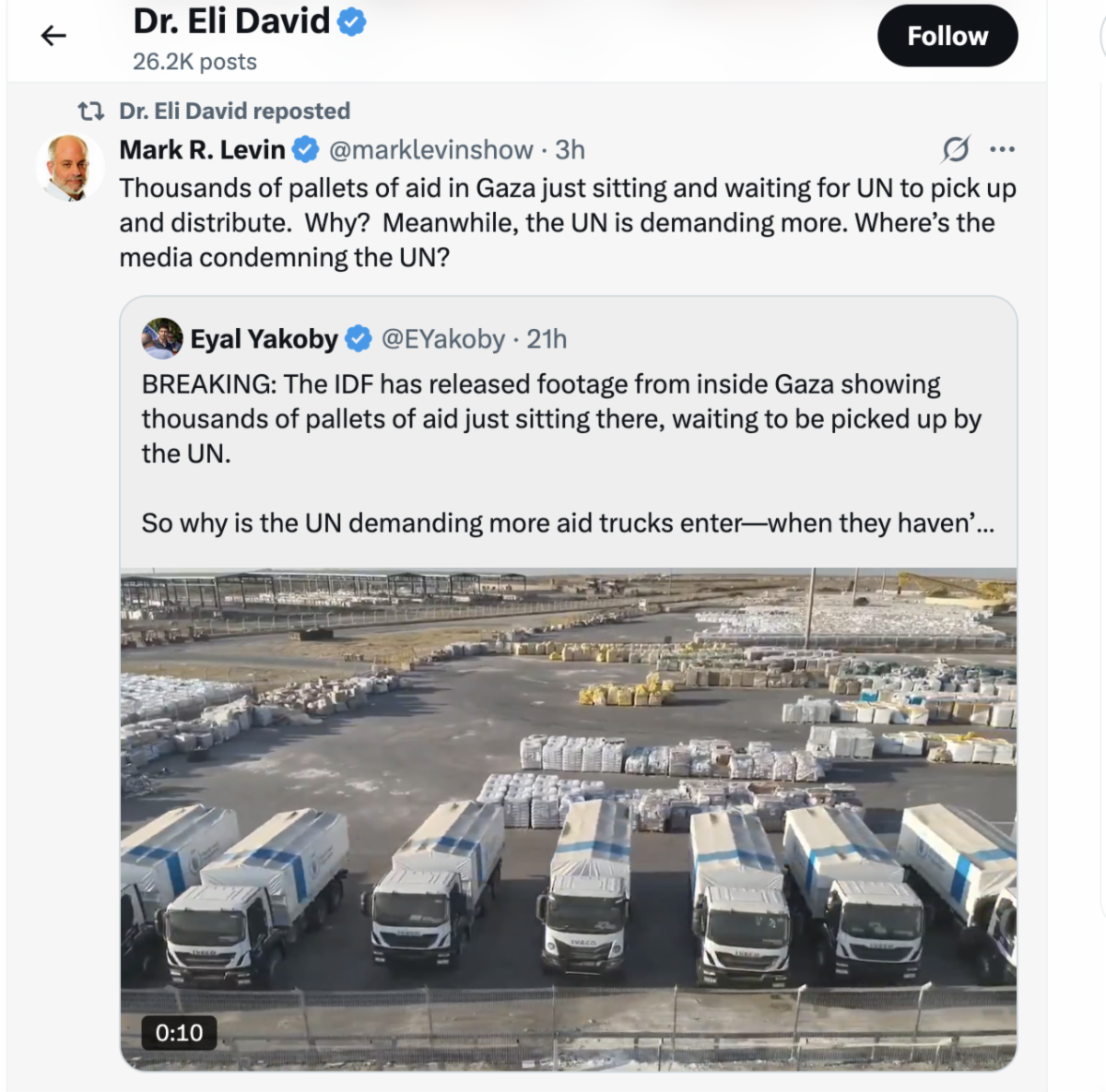
The lie of the international “hunger in Gaza” campaign is one example. According to official COGAT figures, from October 7, 2023 to July 2025, more than 520,000 tons of food, water, medicine, and humanitarian supplies have been transferred. This aid has been stolen by Hamas, who stockpile it and then sell it at exorbitant prices, taking advantage of their own civilians. Just two days ago, drone footage exposed thousands of aid trucks and containers parked inside Gaza, with food beginning to rot under the sun.

Why isn’t that food used to end hunger in Gaza? Because Hamas benefits from the narrative of hunger and has no problem letting its own people starve in the process.

They do not seek to alleviate suffering, but to create it, manipulate it, and export it as images for social media. Hamas films malnourished children in order to accuse Israel. The true cause of hunger in Gaza is not Israel. It is Hamas — and its pagan ideology of human sacrifice.

VICTIMIZATION

The entire world is calling for a ceasefire in Gaza. Appeals for “peace” and to end the “intolerable” suffering of Palestinian children multiply every day. And with unprecedented cynicism, the media blames Israel for this tragedy. Very few dare to say the obvious: all this suffering could end tomorrow if Hamas simply returned the Israeli hostages —20 alive and 30 bodies— that it has held since October 7.

I believe there is no clearer proof than this: blaming Israel —instead of Hamas— for the war in Gaza exposes Hamas’ cynicism and the antisemitic complicity of the rest of the world. There is no greater contrast, and no clearer evidence of the difference between Israel and Hamas, than the fact that Hamas is willing to sacrifice tens of thousands of human lives for a strategic victory, while Israel is willing to sacrifice territory, strategic advantages, prisoners —whatever it takes— to save the life of even one of its hostages.

Hamas does not want a ceasefire because it needs to keep feeding its narrative of victimization. The world is complicit and refuses to see that Hamas sacrifices its own children and celebrates their deaths as if its god were thirsty for their blood. This is not resistance. It is violent paganism disguised as religion.

THE CHILDREN OF GAZA

Hamas has turned the children of Gaza into human shields. It fires rockets from schools, hospitals, and residential neighborhoods, knowing that when Israel responds, it will be accused of war crimes. It does not protect its population — it deliberately places them in harm’s way in order to later exploit the images of dead children as a propaganda tool.

Thousands of civilians, including children, have been sacrificed by Hamas — not by mistake, but by strategic decision and theological justification (jihad).

Hamas indoctrinates children from a young age. It teaches them to hate Jews, to glorify death, to self-immolate. It trains them to become suicide bombers. In its education system, martyrdom is the goal. Palestinian childhood has been corrupted and replaced with a cult of death. Hamas does not educate children to live — it teaches them to kill and to die.

And they have crossed the Rubicon. There is no turning back. There is no way to fix this culture.

The more children suffer or die, incredibly, the more sympathy Hamas gains from those who hate Israel — and the more rewards it reaps from the international community, such as France’s recent recognition of a Palestinian state.

There is no other nation on the planet that uses its own children as cannon fodder with such coldness and systematic perversion. No one else trains children to die as human explosives. This is the 21st-century version of human sacrifice — practiced only by Israel’s enemies.

Solution?

The Torah stated it with absolute clarity more than three thousand years ago: when a society crosses these lines, there is no cure, no salvation, no possibility of redemption:

“If you do not expel the inhabitants of the land… they will be like thorns in your eyes and like spikes in your sides.” (Bemidbar 33:55)

Today, just as in biblical times, the solution is not the utopia of coexistence, nor peace agreements with those who are willing to kill their own children for political gain.

The only realistic path to peace for Israel is to adopt the plan proposed by the Trump administration and other leaders with a similar biblical vision: voluntary —or incentivized— emigration of the Palestinian population from Gaza.

And if I may suggest a destination where Palestinians could live in peace, harmony, and feel at home — I believe the best option is Macron’s France.

Bienvenue à tous

SHABBAT SHALOM


SUMMARY OF MATTOT – MAS’E

This Shabbat we read two biblical sections: Mattot and Mas’e.

In Mattot, several important topics are addressed. Firstly, the value of promises and how to cancel them when it becomes impossible to fulfill them is highlighted. Then, the Tora recounts what happened with the Midianites, who tried to attack Israel, and the capture of prisoners and the spoils of war. All the tribes increased their wealth and the number of animals grew.

The tribes of Reuben and Gad owned a large amount of livestock and requested from Moshe to settle east of the Jordan instead of entering the land of Israel with the rest of the people. Initially, Moshe refused, as the Jewish community had to face the powerful Canaanite peoples who lived there, and they needed a strong and united army. The fear was that the desertion of these tribes could cause frustration and weaken the unity of the people. However, the tribes of Reuben and Gad assured Moshe that they would actively participate in the war of conquest and that they would return to the other side of the Jordan River once they had won the war. They even offered to lead the front line.

In Mas’e, the Tora details the different stages of the Jewish people’s journey through the desert during the 40 years following their departure from Egypt. The places where the Israelites camped and the paths they took are listed in detail.

God commands Moshe to inform the children of Israel about the borders of the future land of Israel and the portion of land that each tribe will receive. Each tribe must give a part of their possessions, lands, and animals to the Levites and the cohanim (priests), who are dedicated to divine service and the teaching of the Tora. They must also establish cities of refuge for those accused of murder, where they will wait until their innocence or guilt is determined. There will be six cities of refuge, three on this side of the Jordan and three in Canaan.

Moshe informs the people about God’s specific laws regarding murder. If someone commits intentional murder, they must be sentenced to death, but only if at least two witnesses can confirm their guilt. No one can be sentenced to death based on the testimony of a single witness. If a death occurs unintentionally or accidentally, the responsible person will be taken to a city of refuge.

God asks that they not turn the Promised Land into a place of sins, lies, and injustice. They must keep the land pure, as God is watching over the Children of Israel.

After the promulgation of these laws on murder, the inheritance of the daughters of Zelophehad is clarified. When there are no male heirs, God tells Moshe that the inheritance of the land will pass to the daughters.