When A Rabbi Recommends To Work Out

In the fourth chapter of MT Hilkhot de’ot, Maimonides says that keeping a strong and healthy body helps to prevent sickness, allowing us to serve HaShem with all our strength.“Maintaining a healthy and sound body is among the ways of [serving] God , for one cannot understand or have any knowledge of the Creator, if he is ill.”In that chapter, Halakha 14, the great rabbi and Cordovan physician explains the importance of working out.De’ot 4, Halakha 14
There is another principle with regard to physical well-being: As long as one exercises, exerts himself greatly, and does not eat to the point of satiation … he will not suffer sickness and he will grow in strength….This Halakha, written more than 800 years ago,  resonates in our modern ears, and allows us to appreciate that our Rabbis anticipated a long time ago the main principles of preventive medicine.Maimonides wrote in Hilkhot de’ot a brief summary of his medical advises. What is perhaps less knows is that he also authored many medical treatises, for Jews and non Jews alike.

Today I like to share with you some of Maimonides’ advises on the importance of physical activity.  I will quote the words of Maimonides from the book ‘The life transforming diet’, by David Zulberg, which is based on Maimonides’ medical principles.

“Hippocrates taught that exercise is the cornerstone of the preservation of health and the prevention of most illness. There is nothing that can substitute for exercise in any way” (p. 99)

“Without exercise diet alone is not sufficient for the preservation of health, and eventually medical treatment will be needed” (p. 100)

‘Hippocrates said that someone who is used to physical activity, even if he has a sick body or is old, is able to tolerate [illness and recover from it] better than a healthy person who is not used to physical activity” (p. 102)

This text is from a letter Maimonides sent to one of this patients “As to what you mentioned, that you feel weak after exercises, the cause of this is the omission of regular exercises. If you resume exercising gradually, little by little, you will achieve…strength and vitality…” (p. 102)

De’ot 4, Halakha 15
… whoever sits idle and does not exercise, … even if he eats the proper foods and takes care to follow the rules of medicine, will suffer pain [and illness]… and his strength will fade away.

A list of Maimonides medical works

Maimonides wrote ten known medical works in Arabic.  They have been translated by Rabbi Fred Rosner into contemporary English.
1. Extracts from Galen,
or The Art of Cure, is essentially an extract of Galen’s extensive writings.
2. Commentary on the Aphorisms of Hippocrates combined with Maimonides own views.
3. Medical Aphorisms of Moses,
titled Fusul Musa in Arabic (“Chapters of Moses,” Pirkei Moshe in Hebrew) contains 1500 aphorisms and many medical conditions are described.
4. Treatise on Hemorrhoids
discusses also digestion and food.
5. Treatise on Cohabitation
contains the medical advices for a healthy sexual life.
6. Treatise on Asthma
discusses climates and diets and their effect on asthma and emphasizes the need for clean air.
7. Treatise on Poisons and Their Antidotes
a toxicology textbook .
8. Regimen of Health
is a discourse on healthy living and the mind-body connection.
9. Discourse on the Explanation of Fits
advocates healthy living and the avoidance of overabundance.
10. Glossary of Drug Names
a pharmacopeia a with 405 paragraphs with the names of drugs in Arabic, Greek, Syrian, Persian, Berber, and Spanish.


Traditions, for Birkat haGomel

Birkat haGomel is not a berakha that we say for Mitsvot; it is essentially a Birkat haShebah, a form of public expression of gratitude to HaShem.

Every community has its own traditions in the details of this berakha.

Let us see some of them.

MINORS: In many communities boys under 13 or girls under 12 do not recite haGomel. In some communities they do (Halakha Berura p.164 in the name of rabbi O. Yosef z”l, unlike what it says in Yalqut Yosef).

WOMEN: Women also say birkat haGomel, either in the Synagogue from the ‘azrat nashim (=the women’s balcony, Halakha Berura p.166) or in their homes, in the presence of ten men. According to Mishna Berura (Ashkenazi tradition) the husband can say haGomel for his wife. According to Bet Yosef (Sephardic tradition) the recitation of haGomel is not transferable, so a woman has to say haGomel by herself.

TWO TORA SCHOLARS: In principle, this berakha should be said in the presence of ten men from which two of them are Tora Scholars (=scholars that learn Halakhot). But if that is not possible, one can still say haGomel provided there is a Minyan. The tradition is to recite haGomel during or after the Tora reading which obviously requires the presence of  ten men.

TIME: The ideal time to recite haGomel is within three days of the event for which one is saying haGomel. The “three days rule” takes precedence over other considerations. Illustration: If a person recovered from illness Sunday and goes to the Synagogue Monday he should say haGomel then, even if he was not called to the Tora, and he knows that he will be called to the Tora Thursday.

EXPIRATION: If haGomel was not recited during the first three days, one can still say haGomel at a later time. The shulhan ‘arukh (219:6) takes a lenient position and says that if one did not say haGomel during the first three days, one can still say it any time he wants (kol zeman sheyrtze). Some rabbis are of the opinion that when not recited on time, haGomel could be said only for the next thirty days. Some say for one year, and some say even after a year. In principle, one should say haGomel as soon as possible, while the memory of the event for which he is thanking HaShem for, is still fresh in his memory (Penine Halakha).

HAGOMEL FOR SOMEBODY ELSE: Although we explained that haGomel is not transferable, as with any other blessing, a person could be included in someone else’s performance, with the condition that the one who says haGomel has him in his mind when he recites the blessing.  Illustration, if two, three or more people need to say haGomel, one of them could say haGomel for all of them, if he keeps them in his mind when he recites his berakha.  Those who are included should be standing while listening and, in principle, they have to answer “Amen”.

Again, because there are so many traditions in the details of this berakha, in case of any doubt, one should ask his or her own rabbi and follow the local custom.


EMUNA: Can you design 7,275,650,514 different faces?


אין צור כאלקינו

Last week we explained what the Hebrew word Tsur (צור) means when used referring to HaShem. We said that Tsur means “rock”, and it is sometimes used to refer to God as our Protector, like the rock that protects the soldier from the arrows of his enemies. But in its original metaphorical sense, Maimonides said, Tsur alludes to the rocky mountain, or the Mother-Rock from which all stones originate. Thus, when we refer to HaShem as Tsur, we mean to say that He is our Origin, our Creator. For example, in the Amida, we used this beautiful expression: TSURENU, TSUR HAYENU to say that “HaShem is our Creator, the Source/Creator/Origin of our lives. ”

Let us see now a third explanation of the word Tsur. This explanation is based on the fact that the word TSUR is grammatically associated with the word TSURA, form o design, and TSAYAR, designer, artist.

The Gemara in Berakhot analyzes the verse in Shemuel (I 2: 2) in which Hanna praises HaShem saying אין צור כאלקינו “There is no Tsur like our God.” Here, again, one could understand Tsur as Source or Origin.  Hanna used this word in gratitude to God Who gave her a son, Shemuel. However our Rabbis made a derasha, a non-literal (or a literary) interpretation of the word Tsur. They said: Here we should understand Tsur (=creator) as Tsayar (=Artist or Designer). “There is no craftsman like our God.” The Gemara elaborates and says that while a human being can design nice figures or sculptures, only HaShem can design something as perfect as a human being, who breathes and thinks (like baby Shemuel, that HaShem just gave to Hanna!). The Sages particularly praised the wisdom (or art) of our Creator referring to the phenomenon of pregnancy: HaShem can create a human being who breathes (Shemuel), inside another human being (Hanna).

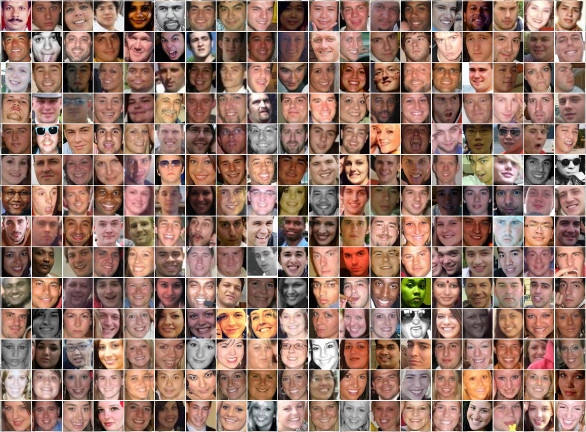
In Masekhet Sanhedrin (38a) the Hakhamim formulated a similar idea, inspired by the same pasuq. They said: “when a person wedges coins, using the same mold, all are identical, but when HaShem designs people with the same mold, they all look different. ”  HaShem uses the same exact mold: a nose, two eyes and a mouth, and with these few elements he designs over 7 billion different faces!

אין צור כאלקינו – אין צייר כאלקינו

When we say Tsur referring to HaShem, we need to remember that He is the Supreme Creator, the incomparable Designer of the world and its unique creatures.


Maimonides’ Diet

לעולם לא יאכל אדם אלא כשהוא רעב ולא ישתה אלא כשהוא צמא

Maimonides begins the fourאי chapter of his Hilkhot De’ot explaining the religious obligation to keep ourselves healthy4:1: “Maintaining a healthy and sound body is among the ways of God… one must avoid that which harms the body and accustom himself to that which is healthful and helps the body becomes stronger”.
Keeping a good health requires staying away from bad habits. The very first sensitive area to improve according to Maimonides is our eating habits.
Maimonides teach us that we should eat in moderation. Eat to live and not live to eat.
In Chapter 4, Halakha 2 Maimonides refers to overeating, in Hebrew akhila gasa, i.e., gluttony .4:2: “One should not eat until his stomach is full. Rather, [he should stop eating when] he has eaten close to three quarter’s of his full satisfaction.”  In other words, it is not bad to stay a bit hungry after we are done eating. It is actually a desirable habit.
We live in a time in which B”H most of us have no problem getting food in our tables. In America, for example, the main problem related to public health is not malnutrition (=not having enough food)  but overeating. Obesity has become epidemic and it is said to be the number one health hazard for millions of people.
Maimonides said this explicitly more than 800 years ago:
4:15: “Overeating (akhila gasa) is like poison to anyone’s body. It is the main source of all illness. Most illnesses which afflict a man are caused by harmful foods or by his filling his stomach and overeating, even of healthful foods. This was implied by King Solomon in his wisdom: ‘Whoever guards his mouth and his tongue, guards his soul from distress’ Proverbas, Mishle, 21:23. ‘Guards his mouth’, from eating harmful food or overeating and guards ‘his tongue’ from speaking [about things] other than his needs.”
I left for the end of this Halakha what I consider to be the most comprehensive and practical of Maimonides’ statements referring to the habit of eating.
4:1 “Do not eat unless you’re hungry”.


Clint Eastwood, Shlomi and the Jewish people

November 21st, 2014

Two days ago, as Coty and I were leaving ‘Mamila’, near the Old City we met Shlomi, a young ‘cool’ Israeli taxi driver, probably 30 years old, didn’t look very religious. He had a sign in his windshield with his phone number (xxx 827 8120) and a smaller sign saying ‘Lo beShabbat’ which means, ‘this Taxi does not work on Shabbat…’

Knowing that Israeli taxi drivers are talkative, very friendly, and always updated about Israeli politics, I asked him about the military situation in the North: Hizbullah claims to have 20,000 missiles ready to attack; Syria is deploying its forces and of course, Iran is threatening Israel as a response to the US sanctions…

Very relaxed and with a big smile Shlomi said: “Don’t worry, my friend, nothing bad is going to happen..…”. And I said: “Why? Do you know anything about the Israeli army that the press doesn’t know or is not telling us?”

Surprisingly, he asked me: “Do you know who Clint Eastwood is?” I said: “Yes!”

He said: “Have you ever watched a Clint Eastwood movie”. Thinking about a ‘cowboys’ movie, I said: “Yes”.

And then Shlomi said:  “Have you ever seen Clint Eastwood dying in the movie? No. Right?. He can’t die because he is the main actor. The whole movie revolves around Clint Eastwood’s character. Without Clint Eastwood, the movie wouldn’t make any sense…. and we, AM ISRAEL -my friend- we are the ‘Clint Eastwood’ of the world’s movie. God, our Almighty movie Director, will never let Clint Eastwood disappear”. 

Shlomi, the taxi driver, calmed me down and strengthened my EMUNA, articulating the most amazing philosophical and uplifting argument about the role of the Jewish people I’ve ever heard in my life.


BIRKAT HAGOMEL Summary of the four cases

As we have explained last week, there is a fundamental difference between Sephardim and Ashkenazim regarding the recitation of haGomel. In the Ashkenazi tradition, haGomel is recited only when one has recovered or was saved from some sort of a life-threatening or dangerous situation. For the Sephardic custom, haGomel is recited in four scenarios: imprisonment, illness, sea- sailing and traveling, even if one’s life has not been compromised.  For the Sephardic tradition these four cases represent an exhaustive list of the cases in which haGomel is recited, while for the Ashkenazi tradition these four cases are examples of “dangerous situations”, and haGomel should be recited in similar scenarios.  For example, a car accident, or when one is a victim of an armed robbery or an attack by a wild animal, etc.  These two opinions are brought explicitly in the shulhan ‘arukh 219:9

Let us see now a summary of the rules of haGomel according to the Sephardic tradition.

Prison. If a person was imprisoned, kidnapped or deprived of his physical freedom, when released, has to recite haGomel.

Illness: As we have explained, once recovered from an illness that required bed-rest, one has to recite haGomel even if one’s life or health was not compromised (shulhan ‘arukh 219:8). A woman who gave birth, yoledet, belongs to this category. According to Ben Ish Hay haGomel should be recited only if one had to be in bed-rest for three or more days.

Sea-sailing: When going in a cruise, a ship or even in a fishing boat, into the open sea for 72 minutes or more, one has to recite haGomel when back from the trip (“open-sea” to this effects is considered when one cannot see the shore anymore,  Halakha Berura, V.11, p 208).

Traveling: The basic rule is that when traveling from one city to another city, traveling at least for 72 minutes outside the city, haGomel should be recited.  This rule applies for traveling by car or by plane. The application of this halakha is relatively easy in places like Israel where the definition of “the city” is simple. In big cities like Los Angeles or New York, it is more difficult to define “the city” that one has left, to the effects of this halakha: if you travel, for example, from Manhattan Beach NY, to Deal NJ, is Manhattan Beach considered “the city” that you just left? Or is it Brooklyn? Or is it New York State to the effects of this berakha?

In this last case and other similar cases, when we are not sure if the particulars of our traveling fit into the above mentioned categories, the best suggestion would be to ask the local rabbinic authorities about the halakhic precedents (=the Minhag) of the community, or to be included in the recitation of haGomel of someone who for sure has to say haGomel.


EMUNA: Where do stones come from?

One of the names by which we call HaShem is TSUR (צור). This name or attribute of God appears many times in the Tora and in the Tanakh, especially in the book of Psalms. The word TSUR referring to God is also used very often in our Tefila, for example at the end of the Amida (ה ‘צורי וגואלי).

In Hebrew, the word TSUR means “rock.” When God commanded Moshe to extract water from the rock, the Tora used two words interchangeably: one is sela ‘(סלע, or “stone” BeMidbar 20: 8) and the other is TSUR (or rock, Shemot 17: 6).

But why would the Tora call HaShem “rock”?

Three explanations. Not possible but complementary.

The first explanation, which seems to be the peshat (=the literal meaning) is brought by Maimonides in his More Nebukhim (1:16).  HaRambam explains that the word TSUR is used metaphorically to refer to God as “our source”. As we all know, the Jews in the time of the Tanakh were experts in extracting, transporting and working the stone. The land of Israel is arid and mountainous, and stone extraction was one of the most common industries then. Until today there is a unique stone, famous in the world, called in Hebrew EBEN YERUSHALMI, the typical stone of Yerushalayim, the stones of the Kotel and the only stone that is permitted to be used when building in the Old city of Jerusalem.
People were very familiar with the origin of stones. All stones have ONE origin. The Rock (=rocky-mountain) or “quarry”. According to this beautiful Biblical metaphor, we are to HaShem what the stones are to the “rocky mountain”. This is what Yesha’ayahu (51:1) told explicitly the people of Israel, urging them to return to God: “Hear, you, who pursue righteousness and who seek HaShem; watch The Rock (צור חוצבתם) from which you were cut… . “.

According to this explanation, when we say TSUR in reference to HaShem we should think that He is The Source of all that exists. The Tora uses the word TSUR to refer to God as YOTSER, the Creator of everything and everyone (the beautiful word TSURI means:  “My Creator”).

The second explanation (or application) of the word TSUR referring to Hashem can be learned from David HaMelekh. In Tehilim 144, for example, the Psalm in which David prays (or talks) to HaShem in the battlefield. In the first pasuq David calls HaShem TSURI. There, David is not referring  to HaShem (only?) as his Creator but as his Protector. On the battlefield, the rock helps the soldier to hide and to protect himself from the arrows of the enemy. David HaMelekh understood that what protected him from the enemy’s weapons, and what made him invisible to the eyes of the enemy, was not a stone but HaShem, “his Rock”, his Protector.

Here TSUR is used to say that HaShem, beyond being our Creator, is also our Protector.

(to be continued …).


Rabbi Emanuel Abohab (1555-1628) and the Jewish “Mental Law”

Rabbi Emanuel Abohab was born in the city of Porto, Portugal, in 1555. He was the great-grandson of the famous rabbi Isaac Abohab, also known as the Gaon of Castile (d. 1493).

Rabbi Abohab lost his parents at an early age and he was raised by his grandfather, Abraham Abohab. In Portugal the Jews had to live like anusim (crypto-Jews) or Marranos, unable to practice Judaism. In 1585 he emigrated to Italy and since then he dedicated his life to encouraging anusim living as Catholics to escape from Portugal and Spain and embrace Judaism in Italy and, from 1596, in Amsterdam, Netherlands.

He lived for  short time in various Italian cities, such as Pisa and Spoleto. His writing career began in an unusual way. In 1608 he wrote a treatise on the famous Latin phrase “Humanum est peccare, angelicum se emendare, diabolicum perseverare”, “To err is human, to amend [our mistakes] is angelic, and to persevere [in one’s sin] is perverse.” In this short treatise Rabbi Abohab exposed this sentence from the Jewish perspective of Teshuba. By doing this, he wished to to reach out to the crypto-Jews, who knew Latin better than Hebrew, and persuade them to amend their ways and come back to Judaism.

In 1615 he established himself in Venice,  a major center of Jewish life at the time, where he was invited to serve as the rabbi of the Jewish-Portuguese community of that city. That year he began his most important book, “Nomology or Legal Discourses”.

Towards the end of his life, Rabbi Abohab led a group of Yehudim to Erets Israel and he finally settled in Yerushalayim. There, he also continued his work to encourage anusim to come back to their origins. He died in 1628.

“NOMOLOGIA O DISCURSOS LEGALES”

This book was originally written in Spanish and first published in Amsterdam in 1629, a year after the author’s death. The book “Nomology or Legal Discourses” deals primarily with the subject of Tora she be’al pe, commonly known as the “Oral Law”, which Rabbi Abohab with an excellent judgment calls “Mental Law”, i.e., the explanation, exposition and application of the Mitsvot, as our Sages taught.

This topic was very critical for the anusim since most of them were educated in convents, and although they knew very well the Biblical text, all they had learned was the Christian explanations of it, and they lacked the mental apparatus to process the Tora in the original Jewish way.

One example: In his book Rabbi Abohab dedicates two chapters (Section 2, Chapter 18 and 19) to denounce how contemporary Catholic translations deliberately deviated from the literal meaning of the Biblical text to suit their dogmas of faith. This sort of things contributed to the “mental” switch, from the Jewish to the gentile mode of understanding the Bible.

The book “Nomologia” (nomology means “the science of the laws of the mind”) is divided into two sections.

The first section contains 25 chapters and 30 chapters the second section.

Some illustrations

Section 1

1: 9: (original text) “En el qual se prueva como es impossible entenderse el perfecto modo de la observancia de los preceptos divinos sin la doctrina de los Sabios”(“In which it is shown that it is impossible to understand  the perfect way for the observance of the divine precepts without the doctrine of the Elders”)

From Chapter 15 to 21 the author shows that the Mental Law is necessary for the observance of mitsvot, and as an example he brings the Rabbis’ calculation of the complex Hebrew calendar, which combines the cycles of the sun and moon.

In chapters 22, 23 and 24 he exposes the 13 principles of Halakhic interpretation (hermeneutics) of Rabbi Yshma’el.

Section 2

This section explains that HaShem gave us the written Tora and the “Mental Law”; how is the level of prophecy reached; the superior level of Moshe Rabbenu’s prophecy and the history of the uninterrupted transmission of the “Mental Law” since Moses until his own days. One of the last rabbanim mentioned is Rabbi Yosef Caro (1488-1575)

More, from the original Spanish text:

Chapter 14 (on the authority of the Sanhedrin). “En el que se trata el principio y institucion del Supremo magistrado de los setenta y un Senadores [Sanhedrín] y de la obediencia que le devia todo el pueblo de Israel”

Chapter 26 (on the Expulsion of the Jews from Spain) “En el que se cuenta el destierro de los iudios de los reynos de Castilla en el año de cinco mil y dozientos y cinquenta y dos, y el de Portugal que sucedió de alli a seis años,las causas que movieron a aquellos reyes a desterrarlos etc.”

To download the book “Nomologia” click  here

NOTE: When reading this book, the reader should know that in old Spanish (and English) the letter “S” at the beginning or in the middle of the word, is used to be written taller than today’s “s”, and it gives the feeling of being an “f”.


Rabbi Shelomo ibn Verga (ca. 1460-1540) and “La vara de Yehuda”

Shelomo Ibn Verga was a rabbi, an historian, an astronomer and a famous physician.  He was born in Spain (probably Sevilla) in 1460. He was the nephew of rabbi Yehuda ibn Verga, and the father of rabbi Yosef ibn Verga, author of the famous book she-erit Yosef, a book on the methodology of the Talmud (the Sephardic last name “Ergaz” comes from this prestigious family).
In 1492, the year of the expulsion of Spain, he was one of the many Jews (probably, more than 100 thousand) that abandoned Spain and went to Portugal where the king Joao welcomed them.  As we know, in 1496 the new King Manuel reversed this good attitude toward the Jews, converted them forcefully to Christianity and set the tribunals of the Inquisition to ban and punish any form of Jewish practice.
Among many important things he did, Rabbi Verga went in a mission to the Spanish communities to collect funds for the ransom of the Jewish prisoners of Malaga. He also attempted to save the Jewish children that were kidnapped in Portugal by the order of King Manuel to be sent to the island of Saint Tome and converted to Christianity.   Rabbi Ibn Verga also witnessed the massacre of the Jews of Lisbon, in 1506.  That year, he escaped to Turkey where he completed his book Shebet Yehuda, “The scepter of Juda.”
THE BOOK SHEBET YEHUDA


In this book the author describes the persecutions, tribulations, expulsions, massacres and pogroms that the Jews suffered since the times of Marco Antonio (1st Century BCE) until his own days (the beginning of the 16th century). The book was published by the author’s, son Rabbi Yosef ibn Verga,  in Adrianople  in 1554.
Shebet Yehuda contains 64 chapters. Except for two chapters (chapter 42 which describes the ceremony of the installation of the Babylonian exilarch o resh galuta, and chapter 64 where he describes the Bet haMiqdash built by Shelomo haMelekh)the book deals with the persecutions and massacres of the Jews in Spain, but the author also refers to the progroms and expulsions of the Jews in Italy, France, England, Germany and all over Europe as well as North Africa and Middle East.
A significant part of the book is dedicated to the account of the theological debates between Jews and Christians. Chapter 40, for example narrates the story of the Disputation of Tortosa.  In many instances, but particularly in chapter 63, Rabbi Ibn Verga asks himself about the causes for the persecutions of the Jews, especially the Jews from Spain, who up until his days “suffered from persecutions more than any other people”. He brings many arguments philosophical, theological and historical reasons.  He also does not endeavor to conceal the faults of the Jews. In this way,  as he said in his introduction, he tries to exhort his people to  turn to God in order to end their persecutions and tribulations.
Click here to download the book Shebet Yehuda from Hebrewbooks.org.  (in the last pages of this edition you can find a priceless detailed index of names)


SHABBAT: Having guests and parenting, by Coty Bitton

This Friday you can feel a sense of excitement at our home. My husband told me that this Shabbat we are hosting a group of young teenagers from South America, who we do not know, and need a place to say.  Besides our weekly preparations for Shabbatthere is plenty of extra work.  More beds are needed, may be. And we will have to add an extra table in the dining room. And more shopping, of course. We want to make this Shabbat’s menu special in honor of our guests.

This is my personal “Shabbat magic time”.  My daughter is singing while she sets the table. My son, who had to leave his room for our guests, drove already twice to the supermarket, but did not complain even once.  Everybody is willing to help, and happily! We have made the Mitsva of hakhnasat orehim part of our family’s mission statement.

But there is also a little bit of concern…. We don’t know how many guests are coming… “What if they are too many, mom? What if there is no room in the table for all of us”, my youngest daughter asks me.   The Mishna portrays the residents of Yerushalayim as very hospitable. During the three festivals they opened their homes for their brothers who would came from every corner of the land of Israel. And “No person ever said in Yerushalayim, the place is too small for me”. I think that this describes not only the feelings of the guests but also what the hosts felt. I explain my daughter that no place could ever be too small, because kindness expands your mind, and allows you to see that your house is as big as you want it to be.

“But, ima, do we know these boys or their families?”. No, I said, but what a great opportunity to meet Yehudim you never met before.  Remember in this week’s parasha the story of Ribqa? Did she know Eliezer? And still she acted with extreme kindness to him.”

In our Shabbat table our job will be to make our guests feel comfortable. Giving them the feeling that they are welcomed. We must engage in conversations that will be interesting for them. The focus of tonight’s dinner will shift from our own gratification to our guests well-being. We will allow them to have a glimpse at our family time. And at the same time we will be exposed to their lives and experiences.

And I think to myself: the reason of this Mitsva is to do hesed  (=kindness) with our guests. To help others, who we might not know, give them food to eat and a place to sleep. But hakhnasat orhim is transformative for my own family as well!  The real hesed is done with us, with my children.   One the most beautiful gifts I can give my children is the feeling that they are needed. Specially today, when entitlement is epidemic, this beautiful Mitsva allows each of my kids to unfocus on the “I” and refocus selflessly on the other.  Receiving guests is a priceless opportunity to open the doors to our homes and the windows into our lives to, sometimes our unknown brothers and sisters from Am Israel.

When Eliezer asked for a place to stay, Ribqa generously offered to host him, his men and his camels at her parents home. Now Eliezer realizes that she is the one that will keep the tent of Sara wide open.  Ribqa is the woman who will be capable of filling the empty space left after Sarah’s departure from this world.

Today, I see my children walking in the same path that Abraham and Sara, Ytshaq and Ribqa, walked a long time ago. Thanks to the Mitsva of hakhnasat orehim they will learn once again that to be a good Jew you need to be, first and mostly, kind and caring.